Maharashtra Board Class 6 English Solutions Chapter 1.6 The Peacock and the Crane

Balbharti Maharashtra State Board Class 6 English Solutions Chapter 1.6 The Peacock and the Crane Notes, Textbook Exercise Important Questions and Answers.

Maharashtra State Board Class 6 English Solutions Chapter 1.6 The Peacock and the Crane

Class 6 English Chapter 1.6 The Peacock and the Crane Textbook Questions and Answers

1. Read the following sentences carefully and choose the correct meanings.

Question a.
The peacock had gorgeous tail like no other bird.
1. No other bird had a tail. [ ]
2. The Peacock’s tail was more beautiful than any other bird’s. [ ]
3. All birds had gorgeous tails. [ ]
Answer:
2. The Peacock’s tail was more beautiful than any other bird’s. [✓]

Question b.
Fine feathers don’t make fine birds.
1. You cannot use feathers to make birds. [ ]
2. You can judge something by its outward beauty. [ ]
3. Something that looks beautiful may not really be useful. [ ]
Answer:
3. Something that looks beautiful may not really be useful. [✓]

Maharashtra Board Class 6 English Solutions Chapter 1.6 The Peacock and the Crane

2. Read the story aloud (or present it) in groups of three – the narrator, the peacock and the crane.

The Peacock And The Crane Questions And Answers Question 1.
Read the story aloud (or present it) in groups of three – the narrator, the peacock and the crane.

3. Imagine you are the Crane. What actions and words of the Peacock would you not like’? Write about it in short.

The Peacock And The Crane Story Question 1.
Imagine you are the Crane. What actions and words of the Peacock would you not like’? Write about it in short.
Answer:
I didn’t like the way the peacock scoffed at my colourless and dull feathers, calling it pale, and the way he flaunted his colourful tail to make me feel inferior.
I also did not like the way he boasted about his colourful feathers and the remark that he was dressed like a king.

Maharashtra Board Class 6 English Solutions Chapter 1.6 The Peacock and the Crane

4. Discuss what a friendly and good- natured peacock would say to a crane. Write his speech. (5-8 lines)

Peacock And Crane Story Question 1.
Discuss what a friendly and good- natured peacock would say to a crane. Write his speech. (5-8 lines)
Answer:
Hello dear friend crane, people call me gorgeous and praise my colourful feathers. But I understand that it is not our outward appearance which matters. What matters are our innate abilities and our inner beauty. I am proud of the fact that you, my friend crane, can fly and scale such great heights and enjoy the beauty of the earth in all its magnificence. Go bird! Explore the world.

5. Find one more example which shows that a beautiful appearance is not enough.

Peacock Questions Answers Question 1.
Find one more example which shows that a beautiful appearance is not enough.
Answer:
We as individuals may have extremely beautiful appearance. But if we don’t have a heart to reach out and make a difference in the lives of others, how can we call ourselves beautiful? Inner beauty too is important.

6. List five adjectives and five nouns from the story.

Question 1.
List five adjectives and five nouns from the story.
Answer:

AdjectivesNouns
conceitedpeacock
gorgeoustail
colourlessbird
dullcrane
ownday

Maharashtra Board Class 6 English Solutions Chapter 1.6 The Peacock and the Crane

7. Find five adjectives that end with (a) – ‘ful’ and (b) – “less’ then write the antonym of each.

Question 1.
Find five adjectives that end with (a) – ‘ful’ and (b) – “less’ then write the antonym of each.
Answer:

Adjectives with ‘ful’WordsAntonyms
carefulcareless
beautifulugly
cheerfulgrumpy
faithfulunfaithful
harmfulharmless
Adjectives with ‘less’thoughtlessthoughtful
colourlesscolourful
mercilessmerciful
uselessuseful
hopelesshopeful

8. Start a collection of proverbs. A proverb is a short, well-known sentence or phrase that gives advice or tells you what is generally true. For example, ‘A stitch in time saves nine’ means ‘If one does something in time or immediately, it saves a lot of work later’. A proverb is also known as a saying. Here are some proverbs for your collection.

  1. Appearances can be deceptive.
  2. Do not judge by appearance; a rich heurt may be under a poor coat.
  3. All that glitters is not gold.
  4. You can’t tell a book by its cover.
  5. Clothes do not make the man.

Answer:

  1. Try, try till you succeed.
  2. Slow and steady wins the race.
  3. Still waters run deep.
  4. Make hay while the sun shines.
  5. Pride goes before a fall.

Maharashtra Board Class 6 English Solutions Chapter 1.6 The Peacock and the Crane

9. Visit a library. This story is a fable. Find two more fables. Share them with your friends.

Question 1.
Visit a library. This story is a fable. Find two more fables. Share them with your friends.

Class 6 English Chapter 1.6 The Peacock and the Crane Additional Important Questions and Answers

Answer the following questions in one or two sentences.

Question 1.
How was the peacock in the story unique?
Answer:
The peacock in the story was unique as he had a gorgeous tail like no other bird.

Question 2.
Why did the peacock spread his own colourful tail?
Answer:
The peacock spread his own colourful tail to show off and for the crane to see and admire.

Question 3.
Which line in the extract tells us that the peacock was extremely pompous?
Answer:
The line: ‘I am dressed like a king!’ tells us that the peacock was extremely pompous.

Maharashtra Board Class 6 English Solutions Chapter 1.6 The Peacock and the Crane

Question 4.
What did the crane compare the peacock to?
Answer:
The crane compared the peacock to any other cock.

Question 5.
What did you learn from this fable?
Answer:
I learnt from this fable that our physical appearance has very little significance as compared to our capacities, capabilities, abilities and our inner strength.

Reading Skills, Vocabulary and Grammar

Read the following extract and answer the questions given below.

Question 1.
State whether the following statements are true or false:
a. The peacock was extremely humble and polite.
b. The crane’s feathers shone in all colours of the rainbow.
Answer:
a. False
b. False

Question 2.
Who does the fable deal with?
Answer:
The fable deals with the conceited peacock and the crane.

Maharashtra Board Class 6 English Solutions Chapter 1.6 The Peacock and the Crane

Question 3.
What tells us that the peacock was extremely boastful?
Answer:
The peacock spread its shiny feathers in all colours of the rainbow for crane to see and admire. He also compared it to the crane’s pale feathers. He added that he was dressed like a king. This tells us that he was extremely boastful.

Question 4.
How did the crane react to the peacock’s criticism?
Answer:
The crane agreed with the peacock that his feathers were pale but added that he could fly high above, among the clouds and stars. He could see the beauty of the earth in all its glory, while the peacock lived down there just like any other cock.

Maharashtra Board Class 6 English Solutions Chapter 1.6 The Peacock and the Crane

Question 5.

Question a.
What did the peacock scoff at?
Answer:
The peacock scoffed at the crane’s colourless and dull feathers.

Question b.
Fine feathers don’t make fine birds. (Separate the subject and predicate)
Answer:
Subject:
Fine feathers Predicate: don’t make fine birds

Question c.
Find the odd word: other, own, my, so
Answer:
so: The rest are used as adjectives.

Maharashtra Board Class 6 English Solutions Chapter 1.6 The Peacock and the Crane

Question 6.
Complete the list of adjective words associated with nature:
Answer:
a. bird               Bird
b. ……………………. Rainbow
c. …………………….. Clouds
d. …………………….. Stars

Language Study

Do as directed:

Question 1.
There was once a very conceited peacock who had a gorgeous tail like no other bird.
(State the parts of speech of the underlined words.)
Answer:
once, very: Adverbs conceited, gorgeous: Adjectives

Maharashtra Board Class 6 English Solutions Chapter 1.6 The Peacock and the Crane

Question 2.
Look at my feather. (State the type of sentence)
Answer:
Imperative sentence.

Question 3.
I am dressed like a king! (Pick out the article)
Answer:
a

Question 4.
That’s true. (Pick out the contraction and state what it stands for.)
Answer:
that’s : that is

Question 5.
Fine feathers don’t make fine birds. (Add a question tag)
Answer:
Fine feathers don’t make fine birds, do they?

Maharashtra Board Class 6 English Solutions Chapter 1.6 The Peacock and the Crane

Make sentences using the following phrases.

  1. to be conceited: We should not be conceited as it mars our beauty, our personality.
  2. to admire: I admire our freedom fighters who sacrificed their lives for the sake of our motherland.
  3. to boast: India can boast of the progress it made in the last few years in the field of science and technology.

Question 7.
Give the noun forms of:
Answer:
a. conceited : conceit
b. dull : dullness
c. see : sight
d. admire : admiration
e. pale : paleness
f. true : truth
g. high : height

Question 8.
Give the adjective forms of:
Answer:
a. beauty : beautiful
b. glory : glorious

Maharashtra Board Class 6 English Solutions Chapter 1.6 The Peacock and the Crane

Letter writing:

Write a letter to your friend who is friendless and all alone because your classmates consider her to be arrogant and proud.

A/1934 Prakruti Sadan,
Sahara Road,
Andheri (East),
Mumbai – 400 099
20th June, 2016.

Dear Rita,
I know it is funny writing to you! After all we meet in school everyday.
I am writing this letter as a continuation of the conversation we had yesterday, wherein you said you were depressed because not many in the class are friendly to you.
Dear friend, remember the real reason lies in your nature. Not to me, but to many, you appear as a person filled with excessive pride. I know they are wrong, but at the same time it is important to come across as a friendly and approachable person.
The way we deal with people and our choice of words, all contribute towards our acceptance by others.
Please don’t misunderstand me, but your words and your actions sometimes forces others to conclude that you are an extremely arrogant and proud girl. So, one way to make more friends is to change your nature.
Remember, I am and will always be your friend.
With love.

Your friend,
XYZ

The Peacock and the Crane Summary in English

The peacock boasted of having the most gorgeous tail, which shine in all colours of the rainbow, but that too has its own limitations.
The crane possessed colourless and dull feathers, but he was not affected by the peacock’s display of its colourful tail. He was fully aware of its inner potential and what he was capable of. Unlike the peacock, he could fly high above, among the clouds and stars and witness the beauty of the earth in all its splendour.

Introduction:

“The Peacock and the Crane’ through the character of a proud peacock conveys the moral: ‘Fine feathers don’t make fine birds’. In other words, our external appearance has no value if we lack beauty and strength within.

Aware of his blessings, he could happily take the peacock’s criticism in his stride.
Let us remember to develop our self-esteem and self-confidence by understanding that it is not how we look, but what we are capable of, which makes all the difference.

Maharashtra Board Class 6 English Solutions Chapter 1.6 The Peacock and the Crane

Glossary:

  1. conceited (adj) – very proud, vain, arrogant
  2. gorgeous (adj) – beautiful, magnificent, stunning
  3. scoffed (v) – laughed at rudely and scornfully
  4. dull, pale (adj) – not bright
  5. glory (n) – beauty and splendour
  6. fine feathers don’t make fine birds (phr) – good looks or flashy clothes may not be very important after all.
  7. pompous (adj) – exhibiting self-importance
Maharashtra Board Class 6 Hindi Solutions Chapter 4 साेना और लोहा

Balbharti Maharashtra State Board Class 6 Hindi Solutions Sulabhbharati Chapter 4 साेना और लोहा Notes, Textbook Exercise Important Questions and Answers.

Maharashtra State Board Class 6 Hindi Solutions Chapter 4 साेना और लोहा

Hindi Sulabhbharti Class 6 Solutions Chapter 4 साेना और लोहा Textbook Questions and Answers

अध्ययन कौशल:

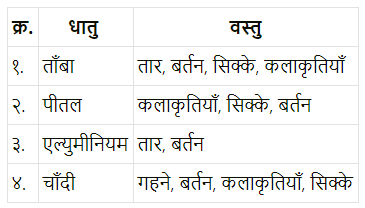
विभिन्न धातुओं के नाम और उनसे बनने वाली वस्तुएँ लिखो।
Answer:
Maharashtra Board Class 6 Hindi Solutions Chapter 4 साेना और लोहा 1

Maharashtra Board Class 6 Hindi Solutions Chapter 4 सोना और लोहा

विचार मंथन:

आराम हराम है
Answer:
‘आराम हराम है।’ यह नारा देश के पहले प्रधानमंत्री पं. जवाहरलाल नेहरू ने दिया था। नेहरू जी ने यह नारा उस समय दिया था, जब देश स्वतंत्र हुआ था। आलस करना या अत्यधिक आराम करना हमारे लिए नुकसानदेह हो सकता है। परीक्षा का समय हो, तो डटकर पढ़ाई करनी चाहिए। किसी प्रकार की प्रतियोगिता हो, तो उसकी तैयारी करनी चाहिए। सोचो यदि हम परीक्षा की तैयारी करने के बजाय आराम करते हैं, तो परीक्षा में असफल भी हो सकते हैं। हम छोटे से जीव चींटी से भी परिश्रम की सीख ले सकते हैं। वह दिन-रात मेहनत कर अपना भोजन इकट्ठा करती है और बरसात के वक्त आराम से अपनी मेहनत का लाभ उठाती है।

भाषा की ओर:

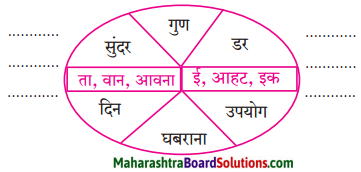
निम्नलिखित शब्दों में प्रत्यय लगाकर लिखो।
Maharashtra Board Class 6 Hindi Solutions Chapter 4 साेना और लोहा 2
Answer:

  1. सुंदरता
  2. गुणवान
  3. डरावना
  4. उपयोगी
  5. घबराहट
  6. दैनिक

Maharashtra Board Class 6 Hindi Solutions Chapter 4 सोना और लोहा

सुनो तो जरा |

बस/रेल स्थानक की सूचनाएँ ध्यानपूर्वक सुनकर सुनाओ।
Answer:
१. बस स्थानक की सूचना:

स्थान: माथेरान एस टी बस स्टैंड।
यात्रीगण कृपया ध्यान दें। माथेरान से मुंबई जाने वाली दो बसों के समय में परिवर्तन किया गया है। सुबह ९ बजकर ३० मिनट पर रवाना होने वाली बस अब १० बजकर ११ मिनट पर रवाना होगी तथा सुबह ११ बजे रवाना होने वाली बस दोपहर १२ बजे रवाना होगी। यात्रियों को होने वाली | असुविधा के लिए हमें खेद है। धन्यवाद!

२. रेल स्थानक की सूचना:

स्थान: दादर रेलवे कार्यालय।
नमस्कार! हम दादर के केंद्रीय कार्यालय से बोल रहे हैं। ट्रैक नंबर दो पर मरम्मत-कार्य चालू होने के कारण आज दोपहर चार बजे तक सी. एस. टी. से माटुंगा की दिशा में जाने वाली सभी डाउन गिाड़याँ ट्रैक नंबर एक से चलाई जाएँगी। यात्रियों को होने वाली असुविधा के लिए हमें खेद है। धन्यवाद!

बताओ तो सही।

थर्मामीटर में किस धातु का प्रयोग होता है, बताओ।
Answer:
पारा

Maharashtra Board Class 6 Hindi Solutions Chapter 4 सोना और लोहा

मेरी कलम से

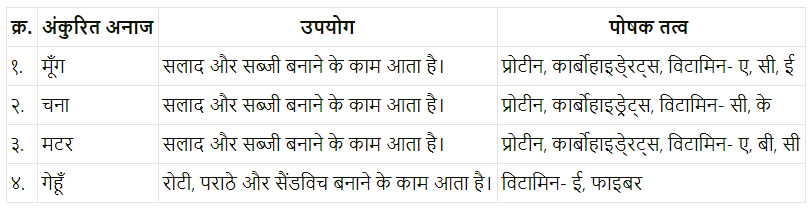
अंकुरित अनाजों की सूची बनाओ और उपयोग लिखो।
Answer:
Maharashtra Board Class 6 Hindi Solutions Chapter 4 साेना और लोहा 3

सदैव ध्यान में रखो।

प्रत्येक का अपना-अपना महत्त्व होता है।
Answer:
प्रत्येक वस्तु का अपना-अपना महत्त्व होता है। कोई भी छोटा अथवा बड़ा नहीं होता। बड़ी चीज जितनी उपयोगी है, छोटी चीज भी उतने ही काम की है। बड़ी-बड़ी मशीनों के कल-पूजों को जोड़नेवाले नट-बोल्ट छोटे-छोटे ही होते हैं। सोना अगर कीमती धातु है, तो लोहा मजबूत और रोजाना काम आने वाली धातु है।

जरा सोचो ….. चर्चा करो

यदि खनिज तेल का खजाना समाप्त हो जाए तो…
Answer:
यदि खनिज तेल का खजाना समाप्त हो जाए, तो यातायात व्यवस्था ठप हो जाएगी। खनिज तेल से पेट्रोल, डीजल, मिट्टी का तेल, कुकिंग गैस, वैसलीन आदि बनते हैं। खनिज तेल के समाप्त होने से सड़कों पर गिाड़याँ नहीं दौड़ पाएँगी। हम यात्रा नहीं कर पाएँगे। रोज-रोज पैदल चलना कठिन काम होगा। ट्रक न चलने से घरों, दूकानों, बाजारों तक सामान नहीं पहुँच पाएगा। हम भूखे-प्यासे रह जाएँगे। एलपीजी गैस जिससे खाना बनाया जाता है, उसके बिना घरों में खाना नहीं बन पाएगा। खनिज तेल कई दवाइयों के निर्माण में काम आते हैं। इनके बिना दवाइयाँ भी नहीं बन पाएँगी। इस तरह खनिज तेल समाप्त हो जाने पर पूरी दुनिया का काम-काज रुक जाएगा।

Maharashtra Board Class 6 Hindi Solutions Chapter 4 सोना और लोहा

अध्याय

सही या गलत बताओ।

सोना और लोहा प्रश्न उत्तर Question 1.
युद्ध में लोहे के अस्त्र – शस्त्र काम देते हैं।
Answer:
सही

Sona Aur Loha Question Answer Question 2.
रोटियाँ भी सोने के तवे पर सेंकी जाती हैं। ङ्के
Answer:
गलत

Class 6th Hindi Sona Aur Loha Question 3.
श्रम में ही जीवन की सफलता है।
Answer:
सही

Sona Aur Loha 6 Standard Question 4.
जो काम करेंगे, उन्हीं का अब सम्मान नहीं होगा।
Answer:
गलत

Maharashtra Board Class 6 Hindi Solutions Chapter 4 सोना और लोहा

Sona Aur Loha Hindi Question 5.
आराम हराम है।
Answer:
सही

सोना और लोहा हिंदी पाठ Question 6.
हमें घमंड करना चाहिए।
Answer:
गलत

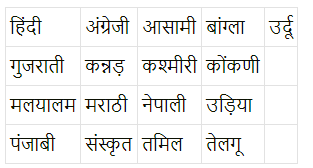
खोजबीन:

रुपयों (नोट) पर लिखी कीमत कितनी और किन भाषाओं में अंकित है, बताओ।
Answer:
Maharashtra Board Class 6 Hindi Solutions Chapter 4 साेना और लोहा 4

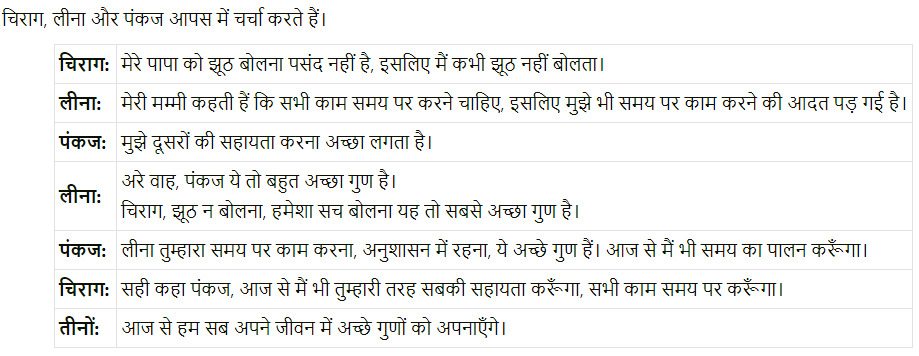
स्वयं अध्ययन:

सदगुणों को आत्मसात करने के लिए क्या करोगे, इसपर आपस में चर्चा करो।
Answer:
Maharashtra Board Class 6 Hindi Solutions Chapter 4 साेना और लोहा 5

Maharashtra Board Class 6 Hindi Solutions Chapter 4 सोना और लोहा

व्याकरण

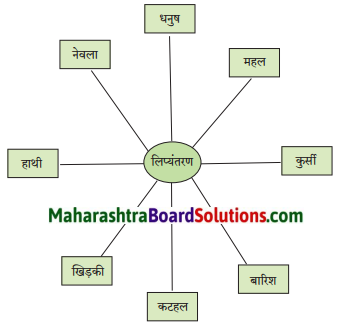
निम्नलिखित शब्दों का रोमन लिपि में लिप्यंतरण करो।
Maharashtra Board Class 6 Hindi Solutions Chapter 4 साेना और लोहा 6
Answer:
i. Dhanush
ii. Mahal
iii. Kursi
iv. Barish
v. Katahal
vi. Khidki
vii. Hathi
viii. Nevala

Maharashtra Board Class 6 Hindi Solutions Chapter 4 सोना और लोहा

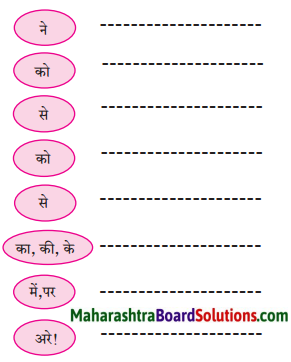
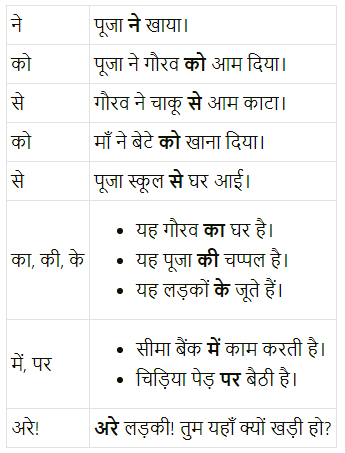
निम्नलिखित कारकों का अपने वाक्यों में प्रयोग करो।

Maharashtra Board Class 6 Hindi Solutions Chapter 4 साेना और लोहा 7
Answer:
Maharashtra Board Class 6 Hindi Solutions Chapter 4 साेना और लोहा 8

Maharashtra Board Class 6 Hindi Solutions Chapter 4 सोना और लोहा

Hindi Sulabhbharti Class 6 Solutions Chapter 4 साेना और लोहा Additional Important Questions and Answers

निम्नलिखित शब्दों में से सही शब्द चुनकर रिक्त स्थानों की पूर्ति कीजिए:

(रक्षा, मूल्य, सेवा, आराम, लद)

6th Standard Hindi Lesson Sona Aur Loha  Question 1.
राजाओं के दिन ……………… गए।
Answer:
लद

Sona Or Loha 6 Standard Question 2.
तेरी ……………… का भार मुझ पर है।
Answer:
रक्षा

Question 3.
मैं तो ……………… से रहना चाहता हूँ।
Answer:
आराम

Question 4.
रुपयों में किसी वस्तु का ……………… लगाना व्यर्थ
Answer:
मूल्य

Question 5.
गरीबों की ……………… करने में मुझे सुख मिलता है।
Answer:
सेवा

Maharashtra Board Class 6 Hindi Solutions Chapter 4 सोना और लोहा

निम्नलिखित बाक्य सही हैं या गलत लिखिए:

Question 1.
युद्ध में लोहे के अस्त्र – शस्त्र काम देते हैं।
Answer:
सही

Question 2.
रोटियाँ भी सोने के तवे पर सेंकी जाती हैं।
Answer:
गलत

Question 3.
श्रम में ही जीवन की सफलता है।
Answer:
सही

Question 4.
जो काम करेंगे, उन्हीं का अब सम्मान नहीं होगा।
Answer:
गलत

Question 5.
आराम हराम है।
Answer:
सही

Question 6.
हमें घमंड करना चाहिए।
Answer:
गलत

Maharashtra Board Class 6 Hindi Solutions Chapter 4 सोना और लोहा

निम्नलिखित प्रश्नों के उत्तर एक-एक शब्द में लिखिए:

Question 1.
सोना किन लोगों का लाड़ला है?
Answer:
राजाओं और धनिकों का।

Question 2.
अब किन लोगों के दिन आए हैं?
Answer:
श्रमिकों के।

Question 3.
लोहा किन लोगों का प्यारा है?
Answer:
किसानों और मजदूरों का।

Question 4.
लोहा किसकी रक्षा करता है?
Answer:
सोने की।

Question 5.
सोने का रंग कैसा है?
Answer:
पीला।

Maharashtra Board Class 6 Hindi Solutions Chapter 4 सोना और लोहा

निम्नलिखित वाक्य किसने, किससे कहे?

Question 1.
संसार में मैं सबसे सुंदर हूँ।
Answer:
सोने ने लोहे से कहा।

Question 2.
अच्छा, तू राजा और मैं नौकर?
Answer:
लोहे ने सोने से कहा।

Question 3.
अरे, लोहे से कैसे पेट भरता है।
Answer:
सोने ने लोहे से कहा।

Question 4.
मुझसे तो मेहनत नहीं होती।
Answer:
सोने ने लोहे से का।

Question 5.
छोड़ दूँगा भैया, मगर मेरी रक्षा करना।
Answer:
सोने ने लोहे से कहा।

Maharashtra Board Class 6 Hindi Solutions Chapter 4 सोना और लोहा

निम्नलिखित प्रश्नों के उत्तर एक-एक वाक्य में लिखिए:

Question 1.
सबको किसकी चाह होती है।
Answer:
सबको सोने की चाह होती है।

Question 2.
राजा की रक्षा कौन करते हैं?
Answer:
राजा की रक्षा उसके नौकर – चाकर करते हैं

Question 3.
रोटियाँ किस पर सेकी जाती है।
Answer:
रोटियाँ लोहे के तवे पर सेंकी जाती है।

Question 4.
जीवन की सफलता किसमें होती है?
Answer:
जीवन की सफलता श्रम करने में होती है।
Question 5.
लोहे ने सोने को कौन-सा वचन दिया?
Answer:
लोहे ने सोने को उसकी रक्षा करने का वचन दिया।

Maharashtra Board Class 6 Hindi Solutions Chapter 4 सोना और लोहा

व्याकरण और भाषाभ्यास

निम्नलिखित शब्दों के दो-दो पर्यायवाची शब्द लिखिए:

  1. राजा
  2. रात
  3. श्रम
  4. नौकर
  5. मकान

Answer:

  1. नृप, नरेश
  2. रात्रि, निशा
  3. कष्ट, मेहनत
  4. सेवक, चाकर
  5. घर, गृह

Maharashtra Board Class 6 Hindi Solutions Chapter 4 सोना और लोहा

निम्नलिखित शब्दों के विरुद्धार्थी लिखिए:

  1. राजा
  2. दिन
  3. भीतर
  4. गुण
  5. भला

Answer:

  1. रंक
  2. रात
  3. बाहर
  4. दोष
  5. बुरा

Maharashtra Board Class 6 Hindi Solutions Chapter 4 सोना और लोहा

निम्नलिखित वाक्यों में कारक को रेखांकित करके उनके भेद लिखिए:

Question 1.
मेरे एक चाँटे से तेरा रूप बदल जाएगा।
Answer:
से – करण कारक

Question 2.
राजा की रक्षा उसके नौकर – चाकर करते हैं।
Answer:
की – संबंध कारक

Question 3.
तू तिजोरी से बाहर क्यों आया?
Answer:
से – अपादान कारक

Question 4.
कोई बड़ा काम करना हो, लोहे के बिना हो ही नहीं सकता।
Answer:
के – संबंध कारक

Question 5.
श्रम में ही जीवन की सफलता है।
Answer:
Answer:
में – अधिकरण

Maharashtra Board Class 9 Hindi Lokbharti Solutions Chapter 6 निसर्ग वैभव

Balbharti Maharashtra State Board Class 9 Hindi Solutions Lokbharti Chapter 6 निसर्ग वैभव Notes, Textbook Exercise Important Questions and Answers.

Maharashtra State Board Class 9 Hindi Lokbharti Solutions Chapter 6 निसर्ग वैभव (पूरक पठन)

Hindi Lokbharti 9th Std Digest Chapter 6 निसर्ग वैभव Textbook Questions and Answers

पठनीय :

प्रश्न 1.
निम्न शब्द पढ़िए। शब्द पढ़ने के बाद जो भाव आपके मन में आते हैं वे कक्षा में सुनाइए।

Maharashtra Board Class 9 Hindi Lokbharti Solutions Chapter 6 निसर्ग वैभव

कल्पना पल्लवन :

प्रश्न 1.
किसी कार्यालय में नौकरी पाने हेतु साक्षात्कार देने वाले और लेने वाले व्यक्तियों के बीच होने वाला संवाद लिखिए।
उत्तर:

  • उम्मीदवार – नमस्ते श्रीमान।
  • अधिकारी – नमस्ते। आइए बैठिए।
  • उम्मीदवार – जो शुक्रिया।
  • अधिकारी – आपका नाम?
  • उम्मीदवार – श्री राजेश तिवारी
  • अधिकारी – आप अपने कार्य अनुभव के बारे में बताइए।
  • उम्मीदवार – इस समय मैं वेद कंपनी में क्लर्क के पद पर काम कर रह्य हूँ। इस पद पर काम करते हुए मुझे तीन वर्ष पूर्ण हो गए हैं। इस प्रकार मेरे पास तीन वर्ष का अनुभव है।
  • अधिकारी – क्या आप बता सकते हैं कि एक आदर्श कर्मचारी की कौन-कौन-सी विशेषताएँ होती हैं?
  • उम्मीदवार – एक आदर्श कर्मचारी के पास अपने काम के प्रति निष्ठा लगन एवं मेहनत से काम करने का जज्बा होता है।
  • अधिकारी – यदि हम आपको कंपनी में क्लर्क के पद पर नियुक्त करेंगे तो आप किस प्रकार स्वयं को अन्य कर्मचारियों से श्रेष्ठ साबित कर सकेंगे?
  • उम्मीदवार – मैं अपनी पूरी लगन एवं ईमानदारी से अपने कार्य को पूर्ण करूंगा। कंपनी के प्रत्येक कार्य को मैं बड़े चाव के साथ पूरा करने का प्रयास करूंगा। इस प्रकार मैं अपनी मेहनत से अपने आप को अन्य कर्मचारियों से श्रेष्ठ साबित करने का प्रयास करूंगा।
  • अधिकारी – ठीक है। धन्यवाद!
  • उम्मीदवार – धन्यबाद ! श्रीमान महोदय।

Maharashtra Board Class 9 Hindi Lokbharti Solutions Chapter 6 निसर्ग वैभव

पाठ के आँगन में :

1. सूचना के अनुसार कृतियाँ पूर्ण कीजिए :

प्रश्न क.
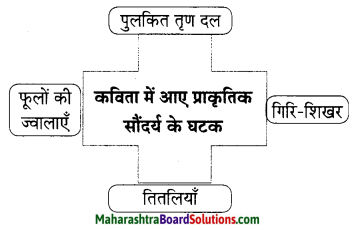
संजाल
Maharashtra Board Class 9 Hindi Lokbharti Solutions Chapter 6 निसर्ग वैभव 1
उत्तर:
Maharashtra Board Class 9 Hindi Lokbharti Solutions Chapter 6 निसर्ग वैभव 2

प्रश्न ख.
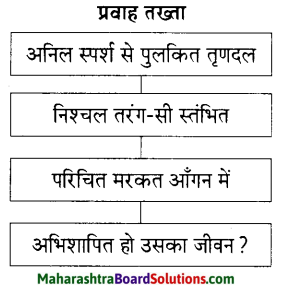
कविता की पंक्तियों को उचित क्रमानुसार लिखकर प्रवाह तत्जा पूर्ण कीजिए।
1. परिचित मरकत आँगन में
2. अभिशापित हो उसका जीवन?
3. अनिल स्पर्श से पुलकित तृणदल
4. निश्चल तरंग-सी स्तंभित
Maharashtra Board Class 9 Hindi Lokbharti Solutions Chapter 6 निसर्ग वैभव 3
उत्तर:

Maharashtra Board Class 9 Hindi Lokbharti Solutions Chapter 6 निसर्ग वैभव 4

2. कविता द्वारा प्राप्त संदेश लिखिए। 

प्रश्न 1.
कविता द्वारा प्राप्त संदेश लिखिए।
उत्तरः
प्रस्तुत कविता के माध्यम से कवि ने मनुष्य के हृदय में प्रकृति प्रेम उत्पन्न करने का प्रयास किया है। प्रकृति में चारों ओर सौंदर्य भरा पड़ा है और उस सौंदर्य की अनुभूति कराने के लिए मनुष्य को प्रकृति की ओर जाना चाहिए। मनुष्य को प्रकृति से हमेशा खुश एवं प्रसन्न रहने की प्रेरणा लेनी चाहिए। मनुष्य को एक-दूसरे से नफरत नहीं करनी चाहिए। उसे अपने मन से क्षुद्र भावों को त्यागकर प्रकृति की भाँति विशाल हृदय रखना चाहिए। मानव के मन से वैश्विक प्रेम व परोपकार की भावना साकार करना ही इस कविता का उद्देश्य है।

3. कविता के तृतीय चरण का भावार्थ सरल हिंदी में लिखिए। 

प्रश्न 1.
कविता के तृतीय चरण का भावार्थ सरल हिंदी में लिखिए।
उत्तर:
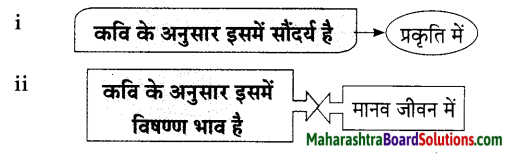
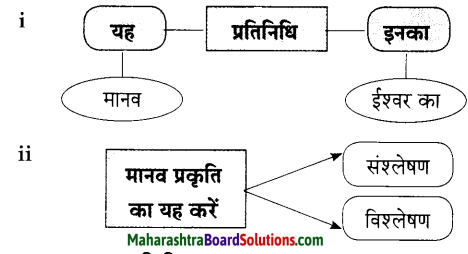
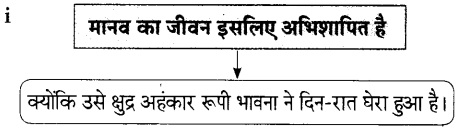
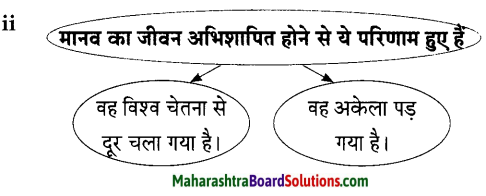
पर्वत जीवन पर बिखरी हुई प्राकृतिक सुषमा का आनंद लूटते समय कवि को सहज ही एक बात याद आ जाती है। वह यह कि जड़ जीवन में यानी प्रकृति में अपार सौंदर्य भरा पड़ा है पर मानव जीवन में दुख का भाव क्यों है? उसका मन विषण्णता से भरा क्यों पड़ा है? अत: कवि मनुष्य को कहता है कि, उसे प्रकृति से सीख लेनी चाहिए। उसे मानव प्रकृति का पुन: संश्लेषण-विश्लेषण करना चाहिए। देखा जाए तो मनुज ईश्वर का प्रतिनिधि है फिर भी उसका जीवन अभिशापित है। शायद इसलिए कि उसे क्षुद्र अहंकार रूपी भावना ने दिन-रात घेरा हुआ है। इसी कारण वह विश्व चेतना से दूर चला गया है और वह अकेला पड़ गया है।

Maharashtra Board Class 9 Hindi Lokbharti Solutions Chapter 6 निसर्ग वैभव

श्रवणीय :

प्रश्न 1.
नीरज जी द्वारा लिखित कोई कविता यू ट्यूब पर सुनिए और उसके केंद्रीय भाव पर चर्चा कीजिए।

भाषा बिंदु :

प्रश्न 1.
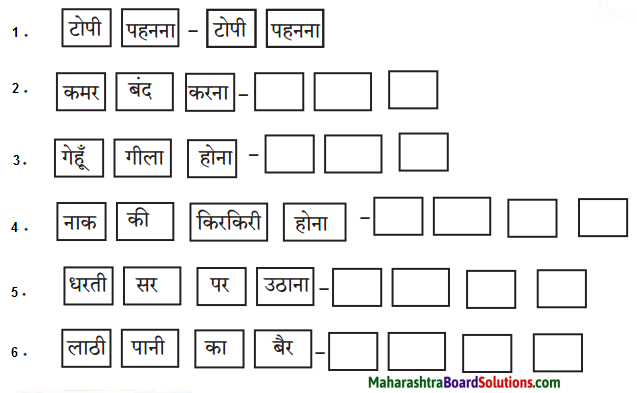
निम्नलिखित मुहावरे या कहावतों में से अनुपयुक्त शब्द काटकर उपयुक्त शब्द लिखिए।
Maharashtra Board Class 9 Hindi Lokbharti Solutions Chapter 6 निसर्ग वैभव 5
उत्तर:

  1. टोपी पहनाना।
  2. नजर बंद करना।
  3. आटा गीला होना।
  4. आँख की किरकिरी होना।
  5. आसमान सर पर उठाना।
  6. आग-पानी का बैर।

Maharashtra Board Class 9 Hindi Lokbharti Solutions Chapter 6 निसर्ग वैभव

Hindi Lokbharti 9th Answers Chapter 6 निसर्ग वैभव Additional Important Questions and Answers

(क) पद्यांश पढ़कर सूचना के अनुसार कृतियाँ कीजिए।

कृति (1) आकलन कृति

प्रश्न 1.
समझकर लिखिए।
उत्तर:
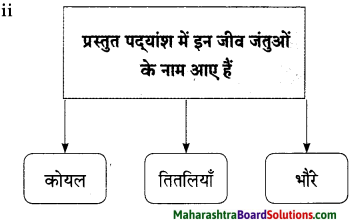
Maharashtra Board Class 9 Hindi Lokbharti Solutions Chapter 6 निसर्ग वैभव 7
Maharashtra Board Class 9 Hindi Lokbharti Solutions Chapter 6 निसर्ग वैभव 8

प्रश्न 2.
समझकर लिखिए।
उत्तर:
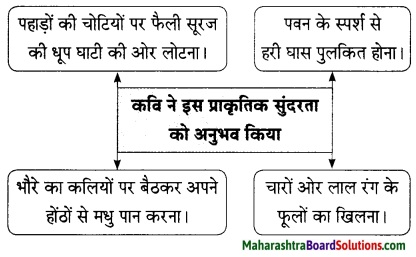
Maharashtra Board Class 9 Hindi Lokbharti Solutions Chapter 6 निसर्ग वैभव 9

प्रश्न 3.
संजाल पूर्ण कीजिए।
उत्तरः
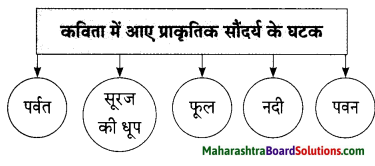
Maharashtra Board Class 9 Hindi Lokbharti Solutions Chapter 6 निसर्ग वैभव 10

कृति (2) स्वमत अभिव्यक्ति

प्रश्न 1.
‘आपका देखा हुआ प्राकृतिक स्थल’ इस विषय पर अपने विचार व्यक्त कीजिए।
उत्तरः
प्राकृतिक स्थल पर घूमने जाने का मला ही कुछ और है। मैंने कौसानी की यात्रा की थी। कौसानी उत्तराखंड में स्थित एक प्राकृतिक स्थल है। चारों ओर हरियाली व सघन वृक्षों को देखकर मानव मन प्रफुल्लित हो जाता है। रंग-बिरंगे फूल और आस-पास मैंडराने वाले भौरे देखकर बहुत प्रसन्नता होती है। कोहरा हट जाने पर कौसानी से हिमालय के दर्शन होते हैं। श्वेत बर्फ की राशि देखकर मानव मन बाग-बाग हो जाता है। सचमुच धरती पर अगर कहीं स्वर्ग है तो बस वह कौसानी में ही है।

Maharashtra Board Class 9 Hindi Lokbharti Solutions Chapter 6 निसर्ग वैभव

(ख) पद्यांश पढ़कर सूचना के अनुसार कृतियाँ कीजिए।

कृति (1) आकलन कृति

प्रश्न 1.
समझकर लिखिए।
उत्तरः
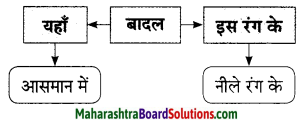
Maharashtra Board Class 9 Hindi Lokbharti Solutions Chapter 6 निसर्ग वैभव 11

प्रश्न 2.
कृति पूर्ण कीजिए।
उत्तरः
Maharashtra Board Class 9 Hindi Lokbharti Solutions Chapter 6 निसर्ग वैभव 12

प्रश्न 3.
प्रस्तुत पद्यांश पढ़कर ऐसे दो प्रश्न तैयार कीजिए कि
जिनके उत्तर निम्न शब्द हों
i. साँझ
ii. नीले
उत्तर:
i. पर्वतों की घाटियों में कौन छिप जाती है?
ii. छाया कौन-से रंग की है?

Maharashtra Board Class 9 Hindi Lokbharti Solutions Chapter 6 निसर्ग वैभव

कृति (2) स्वमत अभिव्यक्ति

प्रश्न 1.
‘प्रकृति अपने अनंत हाथों से मनुष्य पर उपार करती आ रही है।’ इस कथन की सार्थकता स्पष्ट कीजिए।
उत्तरः
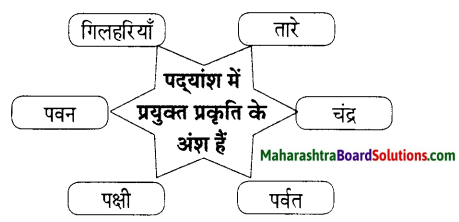
प्रकृति साक्षात ईश्वर का दूसरा रूप है। प्रकृति मानव पर उपकार करती आ रही है। नदी, तालाब, सागर, पेड, फूल-फल, जंगल, पहाड़, पवन, सूर्य की किरण ये सब प्रकृति के अंश हैं। इनके माध्यम से प्रकृति ने मनुष्य को बहुत कुछ दिया है और दे रही है। मनुष्य को जीवन जीने के लिए अन्न, पानी एवं अन्य मूलभूत वस्तुएँ प्रकृति से ही मिलती है। मनुष्य को साँस लेने के लिए जिस प्राणवायु की जरूरत होती है वह भी प्रकृति से ही प्राप्त होती है। आयुर्वेदिक दवाएँ प्रकृति से मिलती हैं। अतः प्रकृति अपने अनंत ह्यथों से मनुष्य पर उपकार करती आ रही है। यह विधान पूर्णत: सत्य है।

(ग) पद्यांश पढ़कर सूचना के अनुसार कृतियाँ कीजिए।

कृति (1) आकलन कृति

प्रश्न 1.
आकृति पूर्ण कीजिए।
उत्तरः
Maharashtra Board Class 9 Hindi Lokbharti Solutions Chapter 6 निसर्ग वैभव 13

प्रश्न 2.
कृति पूर्ण कीजिए।
उत्तरः
Maharashtra Board Class 9 Hindi Lokbharti Solutions Chapter 6 निसर्ग वैभव 14

प्रश्न 3.
सत्य-असत्य लिखिए।
i. पक्षी फल चखना शुरू कर देते हैं।
ii. गिलहरियाँ फूलों को कुतरना शुरू कर देती है।
उत्तर:
i. सत्य
ii. असत्य

Maharashtra Board Class 9 Hindi Lokbharti Solutions Chapter 6 निसर्ग वैभव

कृति (2) स्वमत अभिव्यक्ति

प्रश्न 1.
‘पर्वतीय जीवन में अनोखा व अद्भुत आनंद भरा होता है।’ इस कथन पर अपने विचार व्यक्त कीजिए।
उत्तरः
पर्वतीय प्रदेश सभी को अच्छे लगते हैं। सभी पर्वतीय प्रदेशों की यात्रा करना पसंद करते हैं। पर्वतीय प्रदेशों का आरोह व अवरोहण करना सभी को भाता है। पर्वतीय प्रदेश में चारों ओर हरियाली होती है। बड़े-बड़े वृक्ष एवं उन पर कलरव करने वाले पक्षियों को देखकर हमारे आँखों की तृप्ति हो जाती है। पर्वतीय प्रदेशों में बहने वाली हवा शीतल होती है। वह मानव के मन में अद्भुत प्रेरणा निर्माण करती है। पर्वतीय प्रदेश मानव हृदय को उमंग, ताजगी व उल्लास से भर देते हैं। अत: पर्वतीय जीवन में अनोखा व अदभुत आनंद भरा होता है।

(घ) पद्यांश पढ़कर सूचना के अनुसार कृतियाँ कीजिए।

कृति (1) आकलन कृति

प्रश्न 1.
कृति पूर्ण कीजिए।
उत्तरः
Maharashtra Board Class 9 Hindi Lokbharti Solutions Chapter 6 निसर्ग वैभव 15

प्रश्न 2.
कृति पूर्ण कीजिए।
उत्तरः
Maharashtra Board Class 9 Hindi Lokbharti Solutions Chapter 6 निसर्ग वैभव 16

प्रश्न 3.
समझकर लिखिए।
उत्तरः
Maharashtra Board Class 9 Hindi Lokbharti Solutions Chapter 6 निसर्ग वैभव 17
Maharashtra Board Class 9 Hindi Lokbharti Solutions Chapter 6 निसर्ग वैभव 18

Maharashtra Board Class 9 Hindi Lokbharti Solutions Chapter 6 निसर्ग वैभव

कृति (2) स्वमत अभिव्यक्ति

प्रश्न 1.
‘मानव प्रकृति से दूर चला जा रहा है।’ क्या आप इस कथन से सहमत हैं ? अपने विचार लिखिए।
उत्तर:
जी हाँ, आज मानव प्रकृति से दूर चला जा रहा है। विज्ञान एवं तकनीकी के इस युग में मानव ने भले ही आसमान को छू लिया है। फिर भी प्रकृति के साथ खिलवाड़ कर उसने धरती को सौदर्यहीन कर दिया है। मानव ईया, दवेष, जलन, नफरत एवं अहंकार के कारण इतना स्वार्थी हो गया है कि वह प्रकृति के एहसान को भी भूल गया है। अपना स्वार्थ पूर्ण करने के लिए मानव एक-दूसरे का लहू बहाने से भी पीछे नहीं हटता है। अपनी इच्छाएं पूर्ण न होने के कारण वह हृदय से विषण्ण एवं दुखी हो जाता है। प्रकृति में सर्वत्र सौदर्य बिखरा हुआ है। इस तथ्य को भी वह भूल जाता है। अत: स्पष्ट है कि मानव प्रकृति से दूर चला जा रहा है।

निसर्ग वैभव Summary in Hindi

कवि-परिचय :

जीवन-परिचय : सुमित्रानंदन पंत का जन्म २0 मई 1900 को कौसानी उत्तराखंड में हुआ था। आप प्रकृति के सुकुमार कवि थे। आप छायावादी युग के चार स्तंभों में से एक हैं। आपको प्रकृति ने ही कविता लिखने की प्रेरणा दी थी। आपको साहित्य के सर्वश्रेष्ठ ज्ञानपीठ पुरस्कार से सम्मानित किया गया है।
प्रमुख कृतियाँ : काव्य संग्रह – ‘वीणा’, ‘गुंजन’, ‘पल्लव’, ‘ग्राम्या’, ‘चिदंबरा’, ‘कला और बूढ़ा चाँद’ आदि, उपन्यास – ‘हार’.
आत्मकथात्मक संस्मरण – ‘साठ वर्ष : एक रेखांकन’

पद्य-परिचय :

कविता : भावों का आविष्कार कराने वाली, हृदय में आनंद की अनुभूति निर्माण कराने वाली एवं रस का साक्षात्कार कराने वाली साहित्य की विधा ‘कविता’ कहलाती है। कविता मनुष्य के भावों की सहज अभिव्यक्ति है।

प्रस्तावना : प्रस्तुत कविता में महाकवि पंत जी ने प्राकृतिक सुषमा का बड़ा ही मनोहारी एवं अद्भुत वर्णन किया है। प्रकृति के प्रत्येक अंश में सौंदर्य भरा पड़ा है। उस अनुभूति का एहसास मनुष्य को तभी होगा जब वह प्रकृति की ओर आकर्षित होगा।

Maharashtra Board Class 9 Hindi Lokbharti Solutions Chapter 6 निसर्ग वैभव

सारांश :

प्रस्तुत कविता प्राकृतिक सौंदर्य के प्रति मनुष्य के मन में आकर्षण निर्माण करती है। प्रकृति में ही ईश्वर का अंश विराजमान है, इस तथ्य को साकार करने वाली यह रचना है। महाकवि पंत जी प्रकृति के पुजारी थे। उन्होंने इस कविता के द्वारा प्रकृतिरम्य अनुभूति का साक्षात्कार तो करवाया ही है साथ में प्राकृतिक सौंदर्य का वर्णन करते समय आध्यात्मिकता की ओर पाठकों का ध्यान खींचकर उन्हें दुख, दर्द, व्यथा, नैराश्य एवं विषण्णता आदि पर विचार करने के लिए भी विवश कर दिया है।

प्रकृति के कण-कण में अपार सौंदर्य भरा पड़ा है। देखा जाए तो प्रकृति जड जग का अंश है और मानव जीवन तो चेतन जग का रूप है। फिर भी मानव जीवन में सर्वत्र विषण्णता छायी हुई है। ऐसा क्यों? मनुज को ही स्वयं इसका उत्तर ढूँढ़ने के लिए कवि ने विवश कर दिया है। इसीलिए यह कविता छायावाद का एक अनुपम उदाहरण है।

भावार्थ :

कितनी सुंदरता बिखरी ………………. वन प्रिय कोयल!
पंत जी प्रकृति के सुकुमार कवि थे। वे जानते हैं कि प्रकृति जगत में सौंदर्य बिखेरने वाला ईश्वर ही है। अतः कवि ईश्वर को संबोधित करते हुए कहते हैं, “हे ईश्वर ! प्राकृतिक जगत में सुंदरता बिखरी हुई है। पहाड़ों की चोटियों पर फैली सूरज की धूप घाटी की ओर लोट रही है और उसके डाँव में स्वयं को चुपचाप लिपटाए हुई है। धूप और छाँव का मानो मिलन हो रहा है। “हवा सर्वत्र बह रही है। उसके स्पर्श से हरी घास पुलकित यानी रोमांचित हो गई है। नदी मधुर संगीत का गान करती हुई स्वच्छंद बह रही है। प्रतिदिन प्रकृति की अनुपम शोभा का आनंद वन-भू उठा रही है।”

“चारों ओर लाल रंग के फूल खिले हुए हैं। फूलों का लाल रंग ज्वालाओं का निर्माण कर रहा है। उन्हें देखकर मनुष्य के आँखों की तृप्ति होती है यानी मनुष्य के आँखों को ठंडक मिलती है। भौरे भी अपने दल के साथ आकर गुंजन कर रहे हैं। वे फूलों की कलियों पर बैठकर अपने होंठों से मधु पान कर रहे हैं। लाल रंग के फूलों ने तितलियों को भी अपनी ओर आकर्षित कर लिया है। वे भी फूलों पर मंडरा रही हैं। ऐसे में दूर किसी पेड़ की पत्तियों की छाँव में बैठकर वन प्रिय कोयल रुक-रुककर अपना गीत गा रही है।”

लेटी नीली ………………. कर संध्यावंदन!
कवि पंत प्रकृति की सुषमा का वर्णन करते हुए कहते हैं, “आसमान में सर्वत्र नीले रंग के बादल दिखाई दे रहे हैं। इसी कारण नीले रंग की छाया दिखलाई पड़ती है। इस नीले रंग की छाया ने सूर्य के किरणों को अपने आप में समा लिया है। सूर्य के किरणों का सुनहरा रंग नीली छाया के साथ एकाकार हो गया है। इस विहंगम दृश्य को देखने के बाद ऐसा प्रतीत होता है कि नीले व सुनहरे रंग का आवरण निश्चल तरंग की तरह आसमान में निर्माण हुआ है।

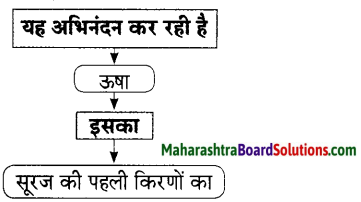
ऐसे में सवेरा होने से पहले सर्वप्रथम सुनहरी किरण सर्वत्र छा जाती है। मानो उसका अभिनंदन करने के लिए ऊषा तैयार हो जाती है। इस अद्भुत दृश्य को देखने के लिए साँझ भी उत्सुक रहती है। इसीलिए वह वहीं आकर छिप जाती है। ऐसा प्रतीत होता है कि ऊषा निर्जन वन में संध्या को भी वंदन करती है।”

अपलक तारापथ ………………. मरकत आँगन में!
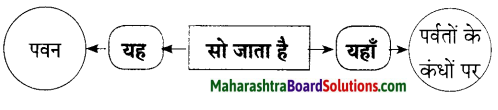
कवि पंत कहते हैं, “संध्या के बाद रात्रि का समय शुरू हो जाता है। आसमान में बिना पलक झपकाए असंख्य तारे दिखाई देने लगते हैं। उनके साथ चंद्रमा भी आसमान में आ जाता है। उस पूर्ण रूप में आसमान में बहुत की सुंदर तारे दिखलाई देने लगते हैं। ऐसा लगता है मानो वह एक दर्पण ही हो जिसमें असंख्य तारे अपने आप को निहार रहे हों। रात्रि के समय पर्वतों पर बहने वाली हवा भी पर्वतों के कंधों पर सो जाती है। पर्वतों पर दिखाई देने वाली यह प्राकृतिक सुषमा सभी को सम्मोहित कर देती है।

सचमुच पर्वत जीवन में अद्भुत एवं अनोखा विस्मय भरा पड़ा हुआ है। रात्रि के पश्चात फिर से सवेरा हो जाता है। पक्षी फल चखना शुरू कर देते हैं। गिलहरियाँ नए पत्तों को कुतरना शुरू कर देती हैं। धरती रूपी रत्न पर सभी वन-पशु प्रसन्न दिखाई देने लगते हैं।”

स्वाभाविक ………………. मानव मन निश्चित!
पर्वत जीवन पर बिखरी हुई प्राकृतिक सुषमा का आनंद लुटते समय कवि को सहज ही एक बात याद आ जाती है। वह यह कि जड़ जीवन में यानी प्रकृति में अपार सौंदर्य भरा पड़ा है पर मानव जीवन में दुख का भाव क्यों है? उसका मन विषण्णता से भरा क्यों पड़ा है? अतः कवि मनुष्य से कहते हैं कि उसे प्रकृति से सीख लेनी चाहिए। मनुष्य को प्रकृति का संश्लेषण-विश्लेषण करना चाहिए। देखा जाए तो मनुष्य ईश्वर का प्रतिनिधि है फिर भी उसका जीवन अभिशापित है। शायद इसलिए कि उसे क्षुद्र अहंकार रूपी भावना ने दिन-रात घेरा हुआ है। इसी कारण वह विश्व चेतना से दूर चला गया है और वह अकेला पड़ गया है।

Maharashtra Board Class 9 Hindi Lokbharti Solutions Chapter 6 निसर्ग वैभव

शब्दार्थ :

  1. श्लक्ष्ण – मधुर
  2. अनिल – पवन
  3. अहरह – प्रतिदिन
  4. मुकुल – कली
  5. मँझधार – बीचोबीच, लहरों के बीच
  6. शैल – पर्वत
  7. समीरण – पवन
  8. मरकत – पन्ना (एक रत्न)
  9. निर्जन – वीरान
  10. अपलक – बिना पलक झपकाए
  11. वैचित्र्य – अनोखापन
  12. गिरि शिखर – पहाड़ों की चोटियाँ
  13. वन-भू – जंगल या कानन
  14. शीतल – ठंड
  15. ऊषा – सुबह होने से पूर्व आसमान में सूर्य की लाल आभा फैल जाती है वह समय
  16. खग – पक्षी
  17. जड़ जग – सृष्टि
  18. चेतन जग – संसार
  19. विषण्ण – व्यथित या निराश

Maharashtra Board Class 8 History Solutions Chapter 13 Fulfillment of Struggle for Independence

Balbharti Maharashtra State Board Class 8 History Solutions Chapter 13 Fulfillment of Struggle for Independence Notes, Textbook Exercise Important Questions and Answers.

Maharashtra State Board Class 8 History Solutions Chapter 13 Fulfillment of Struggle for Independence

Class 8 History Chapter 13 Fulfillment of Struggle for Independence Textbook Questions and Answers

1. Rewrite the statements by choosing the appropriate options:

Fulfillment Of Struggle For Independence Question 1.
There were more than six hundred small and big …………….. in India.
(a) states
(b) villages
(c) princely states
(d) cities
Answer:
(c) princely states

Fulfillment Of Struggle For Independence Class 8 Question 2.
All the princely states merged with India except the states of Junagad, ……………. and Kashmir.
(a) Aundh
(b) Jhansi
(c) Vadodara
(d) Hyderabad
Answer:
(d) Hyderabad

2. Explain the following statements with reasons :

Struggle Chapter 13 Question 1.
Junagad merged with India.
Answer:

  1. Junagad was a princely state in Saurashtra.
  2. The Nawab of Junagad wanted to merge the state with Pakistan.
  3. It was opposed by the people vigorously as they wanted the merger with India.
  4. Due to this, the Nawab fled to Pakistan and Junagad was merged with India in February, 1948.

Maharashtra Board Class 8 History Solutions Chapter 13 Fulfillment of Struggle for Independence

13 Fulfillment Of Struggle For Independence Question 2.
The Indian government started police action against the Nizam.
Answer:

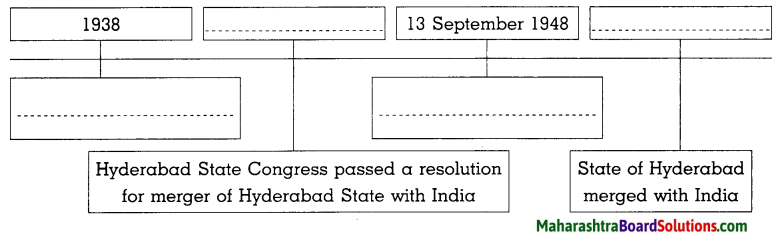
  1. Hyderabad State Congress passed a resolution for a merger of Hyderabad state with India in July 1947.
  2. The Nizam took an anti-India stand and tried for a merger with Pakistan.
  3. The Razakar organisation of Kasim Rizvi committed atrocities on Hindus as well as Muslims who supported the democratic movement.
  4. The Nizam did not respond to the appeal of the Government of India for peaceful negotiations.
  5. At last, the Government of India started police action on 13 September, 1948 and the state of Hyderabad was merged with India.

Class 8 History Chapter 13 Questions And Answers Question 3.
Hari Singh signed the Instrument of Accession with India.
Answer:

  1. Hari Singh the ruler of Kashmir, had decided to retain the independence of Kashmir.
  2. Pakistan was keen to secure the merger of Kashmir with itself.
  3. So, Pakistan began to put pressure on Hari Singh for this purpose.
  4. At the instigation of Pakistan, the armed intruders attacked Kashmir in October, 1947.

Therefore, Hari Singh signed the ‘Instrument of Accession’ with India.

3. Answer the following in Brief:

Question 1.
Explain the contribution of Sardar Vallabhbhai Patel in the integration of the Princely States in India.
Answer:

  1. The problem of the merger of the princely states was very tactfully handled by Sardar Vallabhbhai Patel, the then Home Minister of India.
  2. He convinced the Princes that the merger of their states with India was in their interest.
  3. He prepared the ‘Instrument of Accession’, acceptable to all.
  4. The Princes accepted the proposal and all the states except Junagad, Kashmir and Hyderabad were merged with India.
  5. These three states, too, were merged with India subsequently.
  6. Thus, he took a firm stand and solved the issue of merger of princely states.

Maharashtra Board Class 8 History Solutions Chapter 13 Fulfillment of Struggle for Independence

Question 2.
Explain the contribution of Swami Ramananda Tirth in the struggle for liberation of Hyderabad.
Answer:

  1. Hyderabad was the largest princely state in India.
  2. The autocratic ruler, Nizam had denied civil and political rights to the people.?
  3. In 1938, Swami Ramananda Tirth formed Hyderabad State Congress.
  4. As Nizam banned his organisation, a struggle began for getting recognition to Hyderabad State Congress and democratic rights.
  5. In July, 1947 a resolution was passed by the Hyderabad State Congress for its merger with India.
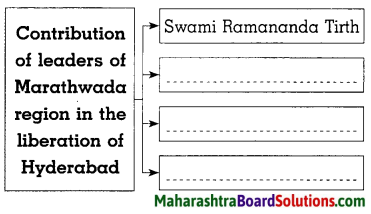
  6. Swami Ramananda Tirth was assisted by Narayan Reddy and Siraj-ul-Hasan Tirmiji in his efforts.

Project:

Gather information and pictures related to the struggle for liberation of Hyderabad. Organise a Poster Exhibition based on it in the history department.

Class 8 History Chapter 13 Fulfillment of Struggle for Independence Additional Important Questions and Answers

Rewrite the statements by choosing the appropriate options:

Question 1.
Due to the influence of …………….., there was beginning of political awakening among the princely states.
(a) Champaranya Satyagraha
(b) Civil Disobedience Movement
(c) Non-Co-operation Movement
(d) Quit India Movement
Answer:
(c) Non-Co-operation Movement

Maharashtra Board Class 8 History Solutions Chapter 13 Fulfillment of Struggle for Independence

Question 2.
Junagadh was a princely state in ……………… .
(a) Kutch
(b) Saurashtra
(c) South Gujarat
(d) East Gujarat
Answer:
(b) Saurashtra

Question 3.
Through ‘Vande Mataram’ movement ……………… participated in the struggle for liberation of Hyderabad.
(a) farmers
(b) workers
(c) students
(d) Nizam’s army
Answer:
(c) students

Question 4.
……………… is celebrated as ‘Marathwada Mukti Din’.
(a) 13 September
(b) 19 December
(c) 2 August
(d) 17 September
Answer:
(d) 17 September

Question 5.
There was significant contribution of ……………… Samaj in the Hyderabad Mukti Sangram.
(a) Arya
(b) Satyashodhak
(c) Brahmo
(d) Prarthana
Answer:
(a) Arya

Question 6.
The youth of Azad Gomantak Dal made an armed attack and liberated the territories of ……………… from Portuguese rule.
(a) Diu and Daman
(b) Goa
(c) Dadra and Nagar Haveli
(d) Chandianagai and Mahe
Answer:
(c) Dadra and Nagar Haveli

Maharashtra Board Class 8 History Solutions Chapter 13 Fulfillment of Struggle for Independence

Question 7.
In 1949, France held a plebiscite in ………………
(a) Mahe
(b) Karaikal
(c) Puducheri
(d) Chandranagar
Answer:
(d) Chandranaga

Question 8.
……………… was an aggressive leader in this struggle for liberation of Goa.
(a) Swami Ramananda Tilth
(b) Govindbhai Shioff
(c) Mohan Ranade
(d) Babasaheb Paianjpe
Answer:
(c) Mohan Ranade

Name the following:

Question 1.
Founder of ‘Razakar’ in Princely state of Hyderabad.
Answer:
Kasim Rizvi

Question 2.
Founder of Hyderabad State Congress.
Answer:
Swami Ramananda Tirth

Question 3
Founder of Goa Congress Committee.
Answer:
Dr. T.B. Cunha

Question 4.
Took a firm stand in solving the issue of Princely States.
Answer:
Sardar Vallabhbhai Patel.

Answer the following questions in one sentence :
Question 1.
Which European powers had control over some parts of India after Independence?
Answer:
The Portuguese and French powers had control over some parts of India after Independence.

Maharashtra Board Class 8 History Solutions Chapter 13 Fulfillment of Struggle for Independence
Question 2.
What are Praja Mandals?
Answer:
People formed organisations like Prajamandals which worked for people’s interests in the princely states and for securing political rights for them.

Question 3.
Which languages were spoken in the princely state of Hyderabad?
Answer:
Telugu, Kannada and Marathi were the languages spoken in the princely state of Hyderabad.

Question 4.
What is ‘Operation Polo’?
Answer:
Indian government started the police action against the Nizam to merge the princely state of Hyderabad with India. It was symbolically called ‘Operation Polo’.

Maharashtra Board Class 8 History Solutions Chapter 13 Fulfillment of Struggle for Independence

Question 5.
Which organisations were formed by people to secure civil and political rights in princely state of Hyderabad?
Answer:
To secure civil and political rights in Hyderabad princely state, people formed organisations such as Andhra Parishad in Telangana region, Maharashtra Parishad in the Marathwada region and Karnataka Parishad in the Karnataka region.

Do as Directed :

Complete the concept map :

Question 1.
Maharashtra Board Class 8 History Solutions Chapter 13 Fulfillment of Struggle for Independence 1
Answer:
Maharashtra Board Class 8 History Solutions Chapter 13 Fulfillment of Struggle for Independence 2

Question 2.
Maharashtra Board Class 8 History Solutions Chapter 13 Fulfillment of Struggle for Independence 3
Answer:
Maharashtra Board Class 8 History Solutions Chapter 13 Fulfillment of Struggle for Independence 4

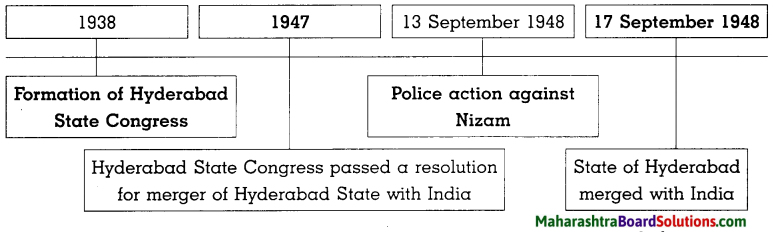
Show the events during merger of Hyderabad princely states on timeline:

Question 1.
Maharashtra Board Class 8 History Solutions Chapter 13 Fulfillment of Struggle for Independence 5
Answer:
Maharashtra Board Class 8 History Solutions Chapter 13 Fulfillment of Struggle for Independence 6

Answer the following in Brief :

Question 1.
Write about contribution of Marathwada in the struggle for liberation of Hyderabad.
Answer:
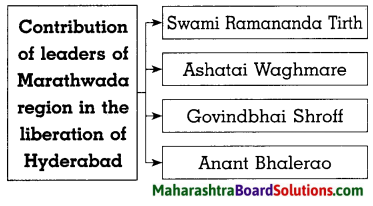
The contribution of Marathwada in the liberation of Hyderabad is as follows :

  1. To secure civil and political rights of the people in the region, MaharashtraParishad was formed.
  2. Many eminent leaders like Ved Prakash, Govind Pansare, etc. from Marathwada led the Hyderabad liberation struggle.
  3. Through ‘Vande Mataram’ Movement many students participated in the movement.
  4. Many sacrificed their lives in this historical struggle.
  5. The people and leaders of Marathwada had a lion’s share in Hyderabad liberation struggle.

Question 2.
Why was the struggle for independence not over in spite of India gaining independence?
Answer:

  1. When India got independence, there were more than six hundred princely states.
  2. The French and Portuguese powers too controlled some parts of India.
  3. It was essential to merge these regions with India.

Therefore, the struggle for independence continued in spite of India gaining independence.

Maharashtra Board Class 8 History Solutions Chapter 13 Fulfillment of Struggle for Independence

Question 3.
Write about the contribution of Dr. T. B. Kunha for the liberation of Goa.
Answer:

  1. Dr. T. B. Kunha was in the forefront of the struggle to liberate Goa from the Portuguese rule.
  2. He worked to bring about awakening among the people against the Portuguese Government.
  3. With an objective of carrying out the struggle, he founded the Goa Congress Committee.
  4. He founded the Goa Youth League in Mumbai in 1945.
  5. He entered Goa in 1946 and was sentenced to eight years imprisonment for the violation of the ban on public speeches.

Explain the following statements with reasons :

Question 1.
Merger of the Princely States was essential.
Answer:

  1. When India got independence there were more than six hundred princely states in India.
  2. If the princely states had remained independent, India would have been split into hundreds of territorial fragments.
  3. The dream of Indian National Congress of undivided India would have remained incomplete.
  4. Moreover, the organisations in the princely states had started movements to secure rights.
  5. It was necessary to free the people from the autocratic rule in the princely states.
  6. Some princely states started carrying out movements for merging with Pakistan.

Question 2.
All India States People’s Conference was formed in 1927.
Answer:

  1. There was political awakening among the people of princely states due to influence of non-co-operation movement.
  2. Praja Mandals were formed to secure the political rights for the people in the Princely states and to work for their interest.
  3. All the Praja Mandals came together and formed an “All India States People’s Conference, in 1927 which gave an impetus to the freedom movement.

Question 3.
Many organisations were formed in the Hyderabad Princely State.
Answer:

  1. There were Telugu, Kannada and Marathi speaking regions in princely state of Hyderabad.
  2. There was absence of civil and political rights under the autocratic rule of the Nizam.
  3. To secure these rights organisations were formed in the princely states of Hyderabad.

Maharashtra Board Class 8 History Solutions Chapter 13 Fulfillment of Struggle for Independence

Answer the following in detail:

Question 1.
Give information about Goa Liberation Movement.
Answer:

  1. Portuguese refused to hand over territories under its possession to India.
  2. Dr. T. B. Kunha was in the forefront to lead the struggle.
  3. He formed the organisation like ‘Goa Congress Committee’ and ‘Goa Youth League’.
  4. He worked to bring about an awakening of the people against the Portuguese government.
  5. He was arrested and imprisoned in 1946 for violating a ban on public speeches.
  6. Dr. Ram Manohar Lohia started a Satyagraha for liberation of Goa.
  7. He was deported by the Portuguese as he violated a ban and delivered a public speech at Madgaon in Goa in 1946.
  8. The youths of the Azad Gomantak Dal liberated Dadra and Nagar Haveli from the Portuguese rule on 2 August, 1954.
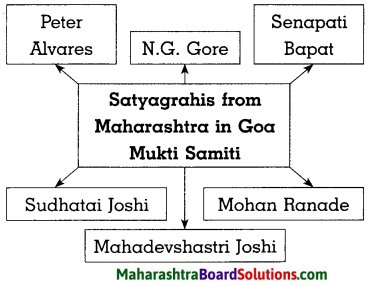
  9. The Portuguese rulers committed unlimited tyranny and atrocities on the Satyagrahis sent by Goa Mukti Samiti from Maharashtra in 1954.
  10. As the negotiations between the Government and the Portuguese did not succeed, the Indian government unwillingly took the decision of using military force.
  11. On 19 December, 1961, Goa was finally liberated from the dominion of the Portuguese.

Question 2.
How was the integration of the French occupied territories brought about?
Answer:

  1. Even after the independence of India, the regions of Chandranagar, Puduchcheri, Karaikal, Mahe and Yaman were in the possession of the French.
  2. People were keen to merge with India.
  3. The Indian Government demanded that these territories should be handed over to it.
  4. In 1949, the French-occupied territory of Chandranagar was transferred to India in view of the result of the plebiscite undertaken there.
  5. Thereafter, the remaining territories in the French possession were also handed over to India without any problem.

Question 3.
What would have happened if the Princely States would not have merged with India?
Answer:
Had the Princely States remained independent, the following could have been the result :

  1. The people in the princely states would never have got freedom and they would have faced injustice.
  2. The feeling of unity would have never developed among Indians due to the independent princely states.
  3. They would have created trouble in the development of India.
  4. Even the boundaries of India would not have remained safe.
  5. Injustice on the population, encroachment by the princely states and many other issues would have risen.
  6. Thus, It would have threatened the peace and security of India.

Maharashtra Board Class 10 Hindi Lokvani Solutions Chapter 7 दो लघुकथाएँ

Balbharti Maharashtra State Board Class 10 Hindi Solutions Hindi Lokvani Chapter 7 दो लघुकथाएँ Notes, Textbook Exercise Important Questions and Answers.

Maharashtra State Board Class 10 Hindi Lokvani Solutions Chapter 7 दो लघुकथाएँ

Hindi Lokvani 10th Std Digest Chapter 7 दो लघुकथाएँ Textbook Questions and Answers

स्वाध्याय :

सूचना के अनुसार कृतियाँ कीजिए :

प्रश्न 1.
संजाल पूर्ण कीजिए।
Maharashtra Board Class 10 Hindi Lokvani Solutions Chapter 7 दो लघुकथाएँ 1
उत्तर:
Maharashtra Board Class 10 Hindi Lokvani Solutions Chapter 7 दो लघुकथाएँ 2

2. घटनाक्रम के अनुसार वाक्य लिखिए। .

प्रश्न 1.
घटनाक्रम के अनुसार वाक्य लिखिए। .

  1. बचपन में बाबू जी से की फरमाइशों का पुलिंदा था।
  2. आज शाम वह बचपन के अपने कमरे में घुसा।
  3. झटपट कागज की एक पर्ची बनाई।
  4. वह एक-एक इबारत पढ़ने लगा।

उत्तर:

  1. आज शाम वह बचपन के अपने कमरे में घुसा।
  2. बचपन में बाबू जी से की फरमाइशों का पुलिंदा था।
  3. वह एक-एक इबारत पढ़ने लगा।
  4. झटपट कागज की एक पर्ची बनाई।

Maharashtra Board Class 10 Hindi Lokvani Solutions Chapter 7 दो लघुकथाएँ

3. कृति पूर्ण कीजिए।

प्रश्न 1.
कृति पूर्ण कीजिए।
Maharashtra Board Class 10 Hindi Lokvani Solutions Chapter 7 दो लघुकथाएँ 3
उत्तर:
Maharashtra Board Class 10 Hindi Lokvani Solutions Chapter 7 दो लघुकथाएँ 4

4. रिश्ते लिखिए। काका

प्रश्न 1.
रिश्ते लिखिए। काका

  1. अनिता – राघवेंद्र = …………………..
  2. अम्मा – अनिता = …………………..
  3. बच्चे – बाबूजी = …………………..
  4. बाबू जी – अनिता = …………………..

उत्तर:

  1. पली-पति
  2. सास व बहू
  3. पोते व दादा जी
  4. ससुर व बहू गद्यांश:

Maharashtra Board Class 10 Hindi Lokvani Solutions Chapter 7 दो लघुकथाएँ

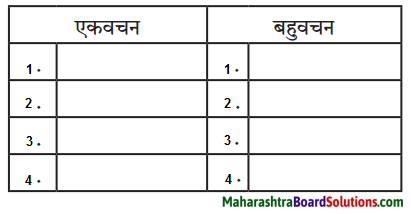
5. पाठ में प्रयुक्त एकवचन और बहुवचन शब्दों की सूची बनाइए। 

प्रश्न 1.
पाठ में प्रयुक्त एकवचन और बहुवचन शब्दों की सूची बनाइए।
Maharashtra Board Class 10 Hindi Lokvani Solutions Chapter 7 दो लघुकथाएँ 5
उत्तर:

एकवचनबहुवचन
1. वर्ष1. लघुकथाएँ
2. कस्बा2. महीने
3. एलबम3. कोने
4. बॉक्स4. पर्चियाँ
5. जलेबी5. आँखों
6. पेंसिल6. परिजनों
7. शूज7. बुजुर्गों
8. वस्तु8. बच्चों
9. पर्ची9. फरमाइशों
10. जेब10. किताबें

Maharashtra Board Class 10 Hindi Lokvani Solutions Chapter 7 दो लघुकथाएँ

अभिव्यक्ति :

प्रश्न 1.
‘व्यवहार से संस्कार झलकते हैं।’ इस विधान को सोदाहरण स्पष्ट कीजिए।
उत्तर:
हम संसार में जो कुछ करते हैं वह व्यवहार है। व्यवहार हमारे व्यक्तित्व को दर्शाता है। संस्कार सनातन होता है। व्यक्ति के हर रोज के व्यवहार में संस्कार के दर्शन होने चाहिए। जिस व्यक्ति के व्यवहार से संस्कार झलकते हैं, उसे सभी याद करते हैं। ऐसा व्यक्ति मृत्यु के बाद भी अमर हो जाता है। भारत के भूतपूर्व राष्ट्रपति एवं महान वैज्ञानिक डॉ. अब्दुल कलाम जी का भी सभी के साथ बहुत ही अच्छा व्यवहार था। उनके व्यवहार से सादगी एवं माधुर्य था। उनका जीवन व्यवहार एवं संस्कारों का ऐसा अद्वितीय मिश्रण था जिससे संपूर्ण दुनिया में वे प्रसिद्ध हुए। सभी के साथ प्रेम व शांति से पेश आना, दूसरों की मदद करने के लिए सदैव तत्पर रहना व दूसरों के दुख व दर्द को समझना; यह सबसे अच्छा व्यवहार है और इसी व्यवहार से व्यक्ति के संस्कार झलकते हैं।

Maharashtra Board Class 10 Hindi Lokvani Solutions Chapter 7 दो लघुकथाएँ

उपयोजित लेखन :

प्रश्न 1.
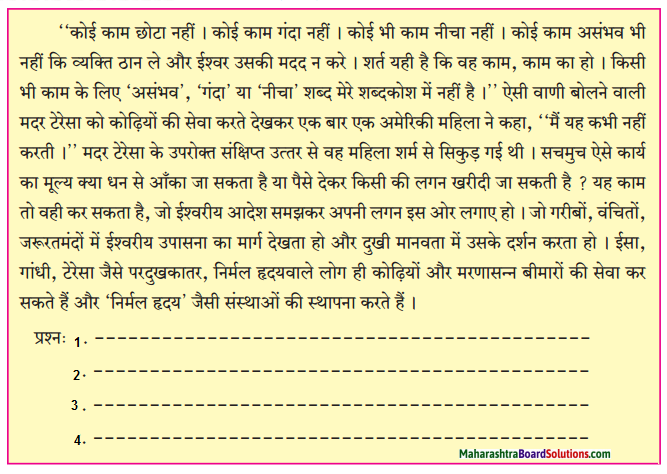
निम्नलिखित परिच्छेद पढ़कर इस पर आधारित ऐसे चार प्रश्न तैयार कीजिए जिनके उत्तर एक-एक वाक्य में हों।
Maharashtra Board Class 10 Hindi Lokvani Solutions Chapter 7 दो लघुकथाएँ 6.1
उत्तरः

  1. कोढ़ियों की सेवा कौन करती थी?
  2. परदुखकातर व निर्मल हृदय वाले लोगों के नाम बताइए।
  3. गद्यांश में कौन-सी संस्था का उल्लेख हुआ है?
  4. लेखक के शब्दकोश में कौन-से शब्द नहीं है?

Hindi Lokvani 10th Std Textbook Solutions Chapter 7 दो लघुकथाएँ Additional Important Questions and Answers

(अ) निम्नलिखित गद्यांश पढ़कर दी गई सूचनाओं के अनुसार कृतियाँ कीजिए।

कृति अ (1): आकलन कृति

प्रश्न 1.
कृति पूर्ण कीजिए।
उत्तर:
Maharashtra Board Class 10 Hindi Lokvani Solutions Chapter 7 दो लघुकथाएँ 7

प्रश्न 2.
ऐसे प्रश्न तैयार कीजिए जिनके उत्तर निम्नलिखित शब्द हों
i. पाँच
ii. मुंबई
उत्तर:
i. राघवेंद्र ने कितने कमरों का फ्लैट खरीदा है?
ii. राघवेंद्र का फ्लैट कौन से शहर में है?

Maharashtra Board Class 10 Hindi Lokvani Solutions Chapter 7 दो लघुकथाएँ

प्रश्न 3.
निम्नलिखित असत्य विधान को सत्य करके लिखिए।)
i. मुंबई ही बाबू जी के लिए जन्म और कर्मभूमि रही है।
उत्तर :
पैतृक कस्बा ही बाबू जी के लिए जन्म और कर्मभूमि रही है।

प्रश्न 4.
किसने, किससे कहा?
i. “हमें वहाँ के अलावा और कहीं ज्यादा अच्छा नहीं लगता।”
उत्तर :
बाबू जी ने राघवेंद्र से कहा।

प्रश्न 5.
संजाल पूर्ण कीजिए।
उत्तर:
Maharashtra Board Class 10 Hindi Lokvani Solutions Chapter 7 दो लघुकथाएँ 8

कृति अ (2) : शब्द संपदा

प्रश्न 1.
निम्नलिखित शब्दों के अर्थ लिखिए।
i. पैतृक
ii. कस्बा
उत्तर:
i. पुश्तैनी
ii. छोटा शहर या नगर

Maharashtra Board Class 10 Hindi Lokvani Solutions Chapter 7 दो लघुकथाएँ

प्रश्न 2.
निम्नलिखित अनेक शब्दों के लिए एक शब्द लिखिए।

  1. पिता संबंधी या पुरखों का –
  2. जुड़ा या मिला हुआ –
  3. बड़ा नगर –

उत्तरः

  1. पैतृक
  2. संयुक्त
  3. महानगर

प्रश्न 3.
विलोम शब्द लिखिए।

  1. जन्म × ……….
  2. कम × ………….
  3. इच्छा × ……….
  4. प्यार × ………..

उत्तर :

  1. मरण
  2. ज्यादा
  3. अनिच्छा
  4. नफरत

प्रश्न 4.
गद्यांश में से विदेशी शब्द ढूँढ़कर लिखिए।
उत्तर :
i. फ्लैट

Maharashtra Board Class 10 Hindi Lokvani Solutions Chapter 7 दो लघुकथाएँ

प्रश्न 5.
निम्नलिखित शब्दों में उचित प्रत्यय लगाकर नए शब्द तैयार कीजिए।
i. दिन
ii. वर्ष
उत्तर :
i. दिन + इक = दैनिक
ii. वर्ष + इक = वार्षिक

प्रश्न 6.
निम्नलिखित शब्दों के समोच्चारित भिन्नार्थक शब्द लिखिए।

  1. कम
  2. दिन
  3. दस

उत्तर:

  1. काम
  2. दीन
  3. दास

कृति अ (3) : स्वमत अभिव्यक्ति

प्रश्न 1.
‘संयुक्त परिवार के लाभ’ इस विषय पर अपने विचार लिखिए।
उत्तर :
एक परिवार में जब सभी परिवार के सदस्य दूसरी पीढ़ी के सदस्यों के साथ मिल-जुलकर रहते हैं तब हम उसे संयुक्त परिवार कहते हैं। संयुक्त परिवार समस्याओं में हमारा सहायक बनता है। विपत्ति के समय सभी एक-दूसरे की सहायता करने के लिए आगे आते हैं। इस प्रकार संयुक्त परिवार में भावनात्मक सहयोग होता है। जब परिवार एक साथ रहता है तब त्योहार मनाने की खुशी कुछ अलग ही होती है। संयुक्त परिवार में आपसी समायोजन होता है।

संयुक्त परिवार में प्रत्येक व्यक्ति अपने विचार साझा करता है और एक सही निर्णय लिया जाता है जिससे सबका भला हो । संयुक्त परिवार में बुजुर्ग का मार्गदर्शन बहुत ही महत्त्वपूर्ण होता है। संयुक्त परिवार में रहने से बच्चे अधिक आज्ञाकारी एवं संस्कारी होते हैं। संयुक्त परिवार में रहने से कुल-व्यय बहुत ही कम होता है।

Maharashtra Board Class 10 Hindi Lokvani Solutions Chapter 7 दो लघुकथाएँ

(आ) गद्यांश पढ़कर दी गई सूचनाओं के अनुसार कृतियाँ

कृति आ (1) : आकलन कृति

प्रश्न 1.
संजाल पूर्ण कीजिए।
उत्तर:
Maharashtra Board Class 10 Hindi Lokvani Solutions Chapter 7 दो लघुकथाएँ 9

प्रश्न 2.
निम्नलिखित गलत विधान सही करके लिखिए।
i. राघव ने पर्ची पर लिखा कि बाबू जी और अम्मा उसके 4. साथ पैतृक कस्बे में आकर रहें।
उत्तर:
राधव ने पर्ची पर लिखा कि बाबू जी और अम्मा उसके साथ मुंबई में आकर रहें।

ii. राघव को विश्वास था कि बाबू जी उसकी अर्जी को अस्वीकार कर देंगे।
उत्तरः
राघव को विश्वास था कि बाबू जी उसकी अर्जी को स्वीकार कर देंगे।

कृति आ (2) : शब्द संपदा

प्रश्न 1.
निम्नलिखित शब्दों के पर्यायवाची लिखिए।
i. खारिज
ii. बक्सा
iii. अर्जी
उत्तर:
i. अस्वीकृत
ii. डिब्बा
iii. प्रार्थनापत्र, निवेदन

Maharashtra Board Class 10 Hindi Lokvani Solutions Chapter 7 दो लघुकथाएँ

प्रश्न 2.
अनेक शब्दों के लिए एक शब्द लिखिए।

  1. कागज, कपड़े आदि की बँधी बड़ी गठरी –
  2. वाक्य की बनावट या रचना –
  3. निवेदन अथवा प्रार्थना करने के लिए लिखा गया पत्र –
  4. जिसे आश्वासन मिला हो –

उत्तर:

  1. पुलिंदा
  2. इबारत
  3. अर्जी
  4. आश्वत

प्रश्न 3.
विलोम शब्द लिखिए।

  1. पुरानी × ……………….
  2. अंदर ×…………………
  3. खारिज × ……………….

उत्तर:

  1. नई
  2. बाहर
  3. स्वीकृत

Maharashtra Board Class 10 Hindi Lokvani Solutions Chapter 7 दो लघुकथाएँ

प्रश्न 4.
गद्यांश में से विदेशी शब्द छाँटकर लिखिए।
उत्तर:

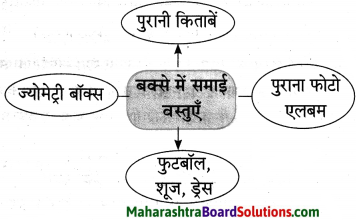
  1. पॉलीथिन
  2. कोर्स
  3. फुटबॉल
  4. बॉक्स
  5. एक्स्ट्रा
  6. ड्रेस
  7. शूज

प्रश्न 5.
निम्नलिखित शब्दों के श्रुतिसम भिन्नार्थक शब्द लिखिए।

  1. जेब
  2. कम
  3. डाल
  4. लकड़ी

उत्तर:

  1. जब
  2. काम
  3. दाल
  4. लड़की

Maharashtra Board Class 10 Hindi Lokvani Solutions Chapter 7 दो लघुकथाएँ

कृति आ (3) : स्वमत अभिव्यक्ति

प्रश्न 1.
‘बचपन के वे दिन सुहावने’ विषय पर अपने विचार लिखिए।
उत्तर:
बचपन के दिन बहुत प्यारे होते हैं। वे कभी भुलाए नहीं जा सकते। जैसे-जैसे हम बड़े होते जाते हैं, वैसे-वैसे बचपन के दिन पीछे छुट जाते हैं। फिर भी हम बचपन के उन यादगार पलों को नहीं भूल सकते हैं। बार-बार हमें उनकी याद आती रहती है। बचपन की अपनी मधुर यादों में माता-पिता, भाई-बहन, यारदोस्त, स्कूल के दिन, मौज-मस्ती आदि सब कुछ याद आता रहता है।

बचपन में दिन भर गुल्ली-डंडा खेलना, दोस्तों के साथ धूम मचाना, आम के पेड़ पर चढ़ना आदि के स्मरण से ‘कोई लौटा दे मेरे वे बीते हुए दिन’ इस गीत की याद आ जाती है। बचपन में सभी चिंतामुक्त जीवन जीते हैं। बचपन में खेलने व उछलने-कूदने में बड़ा आनंद आता है। यही कारण है कि सबको बचपन के दिन सुहावने लगते हैं।

(इ) गद्यांश पढ़कर दी गई सूचनाओं के अनुसार कृतियाँ कीजिए।

कृति इ (1): आकलन कृति

प्रश्न 1.
ऐसे प्रश्न तैयार कीजिए जिनके उत्तर निम्नलिखित शब्द हों –
i. सुरेश
ii. बुजुर्गों
उत्तर:
i. अशोक के पारिवारिक मित्र का नाम बताइए?
ii. सुरेश ने बचपन में अपने परिजनों को किसकी सेवा करते देखा है?

Maharashtra Board Class 10 Hindi Lokvani Solutions Chapter 7 दो लघुकथाएँ

कृति इ (2) : शब्द संपदा

प्रश्न 1.
गद्यांश में से शब्द-युग्म ढूँढकर लिखिए।
उत्तर:
i. बुरा-भला
ii. दिन-रात

प्रश्न 2.
वचन बदलिए।
i. बात
ii. पैसा
उत्तर:
i. बातें
ii. पैसे

प्रश्न 3.
गद्यांश में से विदेशी शब्द छाँटकर लिखिए।
उत्तर :
i. इन्वेस्टमेंट
ii. सेंटर

प्रश्न 4.
गद्यांश में से विलोम शब्द ढूँढकर लिखिए।
उत्तर:
i. बुरा × भला
ii. दिन × रात

Maharashtra Board Class 10 Hindi Lokvani Solutions Chapter 7 दो लघुकथाएँ

प्रश्न 5.
निम्नलिखित शब्दों में उचित प्रत्यय लगाकर नए शब्द तैयार कीजिए।

  1. ईमानदार
  2. परिवार
  3. भारत

उत्तर:

  1. ईमानदार + ई = ईमानदारी
  2. परिवार + इक = पारिवारिक उत्तर. शापवर्गीय
  3. भारत + ईय = भारतीय

प्रश्न 6.
‘परिजन’ इस शब्द में से उचित उपसर्ग पहचानिए और संबंधित उपसर्ग से दो नए शब्द बनाइए।
उत्तरः
i. परिजन : उपसर्ग : परि
ii. नए शब्द : परिसंवाद, परिवर्तन

प्रश्न 7.
पर्यायवाची शब्द लिखिए।
i. अचरज
ii. फीकी
उत्तर:
i. आश्चर्य
ii. नौरस

Maharashtra Board Class 10 Hindi Lokvani Solutions Chapter 7 दो लघुकथाएँ

प्रश्न 8.
निम्नलिखित शब्द का अनेकार्थी शब्द लिखिए। प्रत्यय
i. फीकी
उत्तरः
नीरस, स्वादहीन, धुंधला, दुर्बल, सामान्य

दो लघुकथाएँ Summary in Hindi

लेखिक-परिचय :

जीवन-परिचय : संतोष सुपेकर जी का जन्म 1967 में मध्य प्रदेश के उज्जैन शहर में हुआ। ये एक आधुनिक हिंदी साहित्यकार हैं। इन्होंने पत्रकारिता एवं जनसंचार क्षेत्र में उल्लेखनीय कार्य किया है। पत्र, कविता, लघुकथा, कहानी, समीक्षा, व्यंग्यलेख आदि साहित्य की विधाओं में इन्होंने लेखन कार्य किया है। इनके द्वारा लिखे गए लेख विविध पत्र-पत्रिकाओं में प्रकाशित होते रहते हैं।
प्रमुख कृतियाँ : ‘साथ चलते हुए’, ‘हाशिए का आदमी’, ‘बंद आँखों का समाज’, ‘हँसी की चीखें” (लघुकथा संग्रह), ‘चेहरों के आरपार’, ‘यथार्थ के यक्ष प्रश्न’ (काव्य संग्रह) आदि।

गद्य-परिचय :

लघुकथा : लघुकथा कहानी से लघु होती है। भले ही वह आकार से लघु होती है, पर वह गागर में सागर भरने का काम करती है। वह पाठकों को चिंतन करने के लिए प्रेरित करती है।
प्रस्तावना : अर्जी : इस लघुकथा में बेटे का अपने माता-पिता के प्रति अपनापन, माता-पिता का अपने बच्चे के प्रति स्नेह तथा उनका
अपनी जन्मभूमि के प्रति जुड़ाव को अभिव्यक्त किया गया है। इन्वेस्टमेंट : इस लघुकथा में जीवन में संस्कारों का होना बहुत ही महत्त्वपूर्ण होता है, संस्कारों के बिना जीवन परिपूर्ण नहीं बन सकता और व्यक्ति के व्यवहार से संस्कार झलकने चाहिए, इसे उदाहरण के द्वारा स्पष्ट किया है।

Maharashtra Board Class 10 Hindi Lokvani Solutions Chapter 7 दो लघुकथाएँ

सारांश :

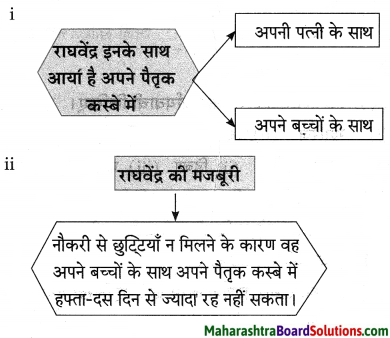
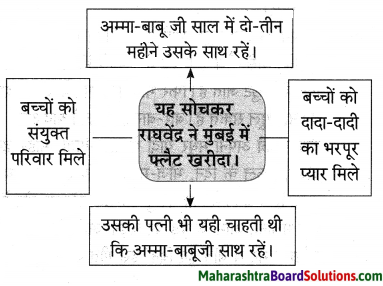
अर्जी : ‘अर्जी’ का अर्थ है – निवेदन अथवा प्रार्थना। प्रस्तुत लघुकथा का नायक राघव अपनी पत्नी व बच्चों के साथ मुंबई में रहता है। वह अपने बच्चों को दादा-दादी का प्यार देना चाहता है। इसी कारण उसने मुंबई में पाँच कमरों का फ्लैट खरीदा है। लेकिन राधव के माता-पिता को अपने पैतृक कस्बे में ही रहना अच्छा लगता है।

वे महानगर में चार-आठ दिनों से ज्यादा नहीं रह सकते हैं। हर वर्ष की तरह राघव अपनी पत्नी व बच्चों के साथ पैतृक कस्बे में आया हुआ है। वह बचपन में जिस कमरे में रहता था उस कमरे में जाकर अपना बक्सा खोलता है जिसमें उसकी पुरानी किताबें, पुरानी फोटो एलबम आदि हैं।

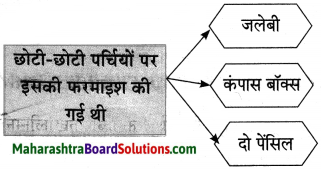
उसमें एक पॉलीथिन की एक थैली में कुछ पर्चियाँ भी हैं। उन पर्चियों को देखकर उसकी बचपन की यादें तरोताजा हो जाती हैं। बचपन में उसे जो भी कुछ चाहिए होता था, उसे वह पर्ची पर लिखकर अपने पिता की जेब में डाल देता था। उन पर्थियों को पढ़ते समय उसकी आँखों से आँसू आने लगते हैं। उसके बाबू जी भी उसकी माँगों को पूरा करते थे।

अब राघव बड़ा हो गया है। अब वह चाहता है कि उसके माता-पिता साल में कम से कम दो-तीन महीने तक उसके पास मुंबई में आकर रहें। वह झटपट कागज की एक पर्ची पर अपनी चाह को लिखकर अपने अम्मा-बाबू को मुंबई में साथ रहने के लिए कहता है और उस पर्ची को अपने बाबूजी के कुर्ते की जेब में डाल देता है।

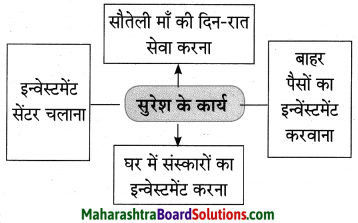
उसे आशा है कि इस बार भी उसके बाबूजी उसे निराश नहीं करेंगे और वे उसकी अर्जी जरूर मान जाएंगे। इन्वेस्टमेंट : इस लघुकथा में सुरेश के व्यवहार एवं उसके कार्य के बारे में जानकर हमें उसके संस्कारी होने का पता चलता है। उसकी सौतेली माँ है। वह हमेशा उसे बुरा-भला कहती थी। फिर भी वह उसकी दिन-रात सेवा करता है। वह इन्वेस्टमेंट सेंटर चलाता है।

बाहर पैसे का इन्वेस्टमेंट करना उसका कार्य है। ठीक उसी प्रकार वह अपने घर में भी संस्कारों का इन्वेस्टमेंट करता है। उसने बचपन से सीखा है कि बुजुर्गों की सेवा करनी चाहिए। इसी कारण वह भी अपनी माँ की सेवा करता है। उसे आशा है कि उसे सेवा करते देखकर उसके बच्चों में भी भारतीय संस्कार विकसित होंगे।

Maharashtra Board Class 10 Hindi Lokvani Solutions Chapter 7 दो लघुकथाएँ

शब्दार्थ :

  1. पतृक – पुश्तैनी
  2. कस्बा – छोटा शहर
  3. खारिज – अस्वीकृत, बहिष्कृत
  4. बक्सा – डिब्बा
  5. अर्जी – प्रार्थनापत्र
  6. अचरज – आश्चर्य
  7. फीकी – नीरस
  8. सब्र – धीरज, सहन
  9. आश्वस्त – जिसे आश्वासन मिला हो, जिसे तसल्ली दी गई हो।

Maharashtra Board Class 7 English Solutions Chapter 3.1 Tartary

Balbharti Maharashtra State Board Class 7 English Solutions Chapter 3.1 Tartary Notes, Textbook Exercise Important Questions and Answers.

Maharashtra State Board Class 7 English Solutions Chapter 3.1 Tartary

Class 7 English Chapter 3.1 Tartary Textbook Questions and Answers

1. Find the words that mean the following, from the first stanza.

3.1 Tartary Question And Answer Question 1.
Gold hammered into a flat, thin shape : ………………..
Answer:
beaten gold

Maharashtra Board Class 7 English Solutions Chapter 3.1 Tartary

Tartary Poem Std 7 Question Answer Question 2.
Show off proudly : ………………..
Answer:
flaunt

Tartary Poem 7th Standard Question 3.
Tilt, move at an angle : ………………..
Answer:
slant

3.1 Tartary Answer Question 4.
Across, especially in a slanting direction : ………………..
Answer:
athwart

2. Find the names of the exotic musical instruments and animals mentioned in the poem.

Tartary Poem Std 7 Questions And Answers Question 1.
Find the names of the exotic musical instruments and animals mentioned in the poem.
Answer:
Exotic musical instruments mentioned in the poem are harp, flute and mandoline. Animals mentioned are fishes, zebras, tigers and peacock.

Maharashtra Board Class 7 English Solutions Chapter 3.1 Tartary

3. In the last stanza, there are three-four letter words that refer to a beautiful valley.

3.1 Tartary Question 1.
In the last stanza, there are three-four letter words that refer to a beautiful valley. They are:
1. ………………
2. ………………
3. ………………
Answer:
1. dale,
2. vale,
3. glen.

4. From the poem, find three lines that use comparisons.

Tartary Poem Questions And Answers Question 1.
From the poem, find three lines that use comparisons.
1. …………….
2. …………….
3. …………….
Answer:
1. Her trembling lake like foamless seas.
2. Yellow as honey, red as wine.
3. And, clustered thick as seeds.

Maharashtra Board Class 7 English Solutions Chapter 3.1 Tartary

5. Colour, sound and images from nature add to the beauty of a poem.

Tartary Poem Std 7 Question 1.
Colour, sound and images from nature add to the beauty of a poem: ‘Tartary’ is a perfect example of the above. Pick out lines that contain:
1. colour,
2. sound,
3. images of native:
Answer:
1. Colour:

  • her rivers silver pale!
  • In every purple vale!
  • And in the evening lamp would shine. Yellow as honey red as wine
  • I’d wear a robe of beads & gold

2. Sound:

  • Trumpeters everyday. To every meal would summon me.
  • While harp and flute and mandoline made music sweet and gay

3. Images from the nature:

  • Her flashing stars, her scented breeze.
  • Her river silver pale!
  • And in my pools great fishes slant.
  • Her bird-delighting citron trees.
  • Glen, thicket, wood and dale.

Maharashtra Board Class 7 English Solutions Chapter 3.1 Tartary

6. Complete the following phrases with the help of the poem.

Tartary Question And Answers Question 1.
Complete the following phrases with the help of the poem.

  1. ……………. music
  2. ……………. rivers
  3. ……………. breeze
  4. ……………. lake
  5. ……………. citron-trees

Answer:

  1. sweet and gay music
  2. silver-pale river
  3. scented breeze
  4. trembling lake
  5. bird-delighting citron-trees

7. Write about the daily routine of the ‘Lord of Tartary’ in 8-10 lines.

7th Std English Poem Tartary Question 1.
Write about the daily routine of the ‘Lord of Tartary’ in 8-10 lines.
Answer:
The Lord of Tartary would get up very early in the morning. He would wear a dress of green, white and gold beads. These beads would be placed very close to each other just like seeds. And before the waning of the morning star he would wear his robe, take his sword, and then go out in the valley in his carriage drawn by seven zebras. At meal time, be summoned by trumpeters. In the evening, he would enjoy the shining lamps and sweet music played by musicians. At night he would enjoy the flashing stars and the scented breeze by the lakeside lined with citron-trees.

Maharashtra Board Class 7 English Solutions Chapter 3.1 Tartary

8. Using your imagination write about a beautiful region – its landforms, water bodies, flora and fauna, night sky, people etc.

Question 1.
Using your imagination write about a beautiful region – its landforms, water bodies, flora and fauna, night sky, people etc.
Answer:
My mind races to a beautiful mountain range full of huge tall trees with winding creepers. A few monkeys could be seen jumping from the branches across trees as if engaged in a game. The crisp chirping of birds could be heard. The setting sun cast a reddish-yellow glow on the horizon and I could see the gurgling stream flowing down the slopes of the mountain as if to reach a destination.

Through the winding paths, one could see villages with loads of household goods trekking up the way to their homes nestled in the slopes of the mountain. As the night grew, the dim lights from the modest homes seemed to complete with the bright shining stars, far away in the sky. The occasional cool breeze, faithfully carried the fragrance of the trees, leaves and the blooms with if it was a blissful feeling – away from the din and noise of the crowded city life.

9. Language Study.

Question 1.
Consonance: Consonance is repetition of one or more consonant sounds especially at the end of words. Consonance is usually pleasant lo the ear.
Examples:

  • Piller-patter, pitter-patter
  • Rivers silver-pale
  • The lint was sent with the tent.
  • All’s well that ends well.

Find at least two examples of consonance from poems that you study in this book.
Answer:
e.g.
1. pitter-patter
2. gold and green
Give Similar examples.

Class 7 English Chapter 3.1 Tartary Additional Important Questions and Answers

Match the Columns.

Question 1.

Columns ‘A’Columns ‘B’
1. Zebrasa. delight the birds
2. Lakesb. summon the Lord to every meal
3. Citron treesc. draw carriage
4. Trumpetersd. flaunt their feathers
5. Peacockse. tremble like a sea
6. Tigersf. beat gold
g. haunt the forests

Answer:

Columns ‘A’Columns ‘B’
1. Zebrasc. draw carriage
2. Lakese. tremble like a sea
3. Citron treesa. delight the birds
4. Trumpetersb. summon the Lord to every meal
5. Peacocksd. flaunt their feathers
6. Tigersg. haunt the forests

Maharashtra Board Class 7 English Solutions Chapter 3.1 Tartary

Reading Skills and Poetic Device.

Question 1.
Complete the sentences.

  1. My bed should be
  2. And in my forests
  3. Yellow as honey,

Answer:

  1. of ivory
  2. tigers haunt
  3. red as wine

Complex Factual Questions.

Question 1.
How does the poet begin the poem?
Answer:
The poet begins the poem on the assumption that if he were the Lord of Tartary and wants all things beautiful for himself like a little child “myself and me alone.”

Maharashtra Board Class 7 English Solutions Chapter 3.1 Tartary

Question 2.
The poet expresses his desire for certain things specifically. According what do you what do the following signify?

  1. Ivory
  2. peacocks
  3. tigers
  4. shining lamps
  5. harp and flute

Answer:

  1. luxury
  2. beauty and majesty
  3. strength / power
  4. decor aesthetics brightness beauty
  5. ear for music.

Question 3.
Who will summon the Lord to every meal?
Answer:
The trumpeters will summon the Lord to every meal.

Poetic Device.

State and explain the figures of speech in the given lines.

Question 1.
of beaten gold my throne
Answer:
Inversion: The word order has been changed. The correct word order is ‘my throne of beaten gold’.

Maharashtra Board Class 7 English Solutions Chapter 3.1 Tartary

Question 2.
And in my court should peacocks flaunt.
Answer:
Inversion: The word order has been changed. The correct word order is ‘And in my court peacock should flaunt’.

Question 3.
Yellow as honey, red as wine.
Answer:
Simile – Lamp’s yellow shine is directly compared to honey and its red shine is compared to wine.

Question 4.
White harp and flute and mandolin
Answer:
Repetition – The word ‘and is repeated for poetic effect.

Maharashtra Board Class 7 English Solutions Chapter 3.1 Tartary

Question 5.
Made music sweet and gay.
Answer:
Alliteration – The sound of’m’ in words made and music is used to add beauty to the poem.

Simple Factual Questions.

Complete the sentences.
1. The lake of Tartary trembles like
2. The purple dale has
Answer:
1. foamless seas
2. bird-delighting citron trees

Complex Factual Questions.

Question 1.
How does the poet want his robe to be?
Answer:
The poet wants his robe to be made of white, golden and green coloured beads placed quite close to one another.

Maharashtra Board Class 7 English Solutions Chapter 3.1 Tartary

Question 2.
What does he want to do before the morning star is out of sight?
Answer:
Before the morning star is out of sight, the poet wants to wear his robe and ride through the dark open spaces in the forests. He hopes to travel in his car drawn by seven zebras.

Question 3.
How does the poet portray the natural beauty of Tartary.
Answer:
The poet imagines a variety of fruits, silver pale rivers, valleys of dense forests and bushes, flashing stars, scented breeze, shining stars in the sky and citron trees habited by delightful birds in his Kingdom of Tartary.

Poetic Device.

Question 1.
And clustered thick as seeds
Answer:
Simile – There is a direct comparison between the beads in the robe to a cluster of seeds to add to the poetic effect.

Maharashtra Board Class 7 English Solutions Chapter 3.1 Tartary

Question 2.
And zebras seven should draw my car
Answer:
Inversion – The prose order is changed for poetic effect.

Question 3.
Glen, thicket, wood, and dale
Answer:
Tautology – The words ‘glen’ and ‘dale’ which mean the same are used in the same line for a better poetic effect.

Question 4.
Her trembling lake like foamless sea.
Answer:
Simile: The lake is directly compared to a sea for a better poetic effect.
Personification: Inanimate object ‘lake’ is given the human quality of trembling for a better poetic effect.
Alliteration: The sound of T is repeated in words ‘lake’ and ‘like’ for a better poetic effect.

Question 5.
Her rivers silver-pale!
Answer:
Exclamation – A strong emotion is expressed for a better poetic effect.

Question 6.
And ere should wane the morning star.
Answer:
Inversion – The word order has been changed. The correct word order is ‘and ere the morning- star should wane’.

Maharashtra Board Class 7 English Solutions Chapter 3.1 Tartary

Question 7.
Pick out two pairs of rhyming words from the poem.
Answer:

  1. pale-dale
  2. beads-seeds

Tartary Summary in English

The poet says that if he were the Lord of the imaginary kingdom called ‘Tartary’, he would be the sole ruler of this great land. He would sleep on bed made of ivory, sit on a throne made of gold. All types of birds and animals would visit his court. The peacocks would proudly show off its beautiful form and the well-built tigers would take a walk in the forests. The fishes would tilt and swim with their fins shining in the pools.

Further ahead, the poet says that as the Lord of Tartary, he would be treated royally. With trumpeters calling him for every meal, shining lamps displaying yellow and red colours. Musicians would entertain him by playing exotic musical instruments such as harp, flute and mandoline.

He wishes to wear a robe of beads of white gold & green. Before the morning stars wane, he would wear his robe and with a sword in his hand, go around the valley in a carriage drawn by seven zebras.
As the lord of Tartary, he would own all the juicy fruits the silver-pale rivers, hills full of bushes and trees. In the night, he would enjoy the beauty of the shining stars and the sweet fragrance of the breeze. The purple valley with citron-trees that delight the birds would add to the beauty of Tartary.

Introduction:

The poet Walter de la Mare paints a vivid picture of an imaginary kingdom, ‘Tartary’ and takes us on a journey as the Lord of the mighty kingdom.

Maharashtra Board Class 7 English Solutions Chapter 3.1 Tartary

Glossary:

  1. Tartary – an imaginary land
  2. ivory (n) – tusk teeth of an elephant which is hard and creamy white in colour
  3. beaten gold (adj) – gold hammered into flat thin shape
  4. throne (n) – chair for a king or queen metal strings
  5. flaunt (v) – show off proudly
  6. haunt (v) – come frequently
  7. slant (v) – tilt, at an angle which is not straight (here) move at an angle.
  8. athwart (prep) – across, from side to side in a slanting direction
  9. summon (v) – call
  10. bray (v) – make a loud harsh cry
  11. harp (n) – a musical instrument with strings
  12. mandoline (n) – a musical instrument with metal strings
  13. gay (adj) – happy, light-hearted
  14. robe (n) – a loose garment reaching the ankles
  15. clustered (v)- similar things grouped together and placed closely
  16. ere (prep) – before (in time) – old usage
  17. wane (v) – disappear
  18. don (v) – put on clothing
  19. scimitar (n) – short sword with a curved blade
  20. glades (n) – open spaces in a forest
  21. glen (n) – a narrow valley
  22. thicket (n) – dense group of bushes or trees
  23. dale (n) – a valley
  24. flashing (v) – shine with bright, irregular light
  25. vale (n) – a valley

Maharashtra Board Class 9 Hindi Lokbharti Solutions Chapter 4 सिंधु का जल

Balbharti Maharashtra State Board Class 9 Hindi Solutions Lokbharti Chapter 4 सिंधु का जल Notes, Textbook Exercise Important Questions and Answers.

Maharashtra State Board Class 9 Hindi Lokbharti Solutions Chapter 4 सिंधु का जल

Hindi Lokbharti 9th Std Digest Chapter 4 सिंधु का जल Textbook Questions and Answers

संभाषणीय :

प्रश्न 1.
‘जल ही जीवन है’ विषय पर कक्षा में गुट बनाकर चर्चा कीजिए।
उत्तरः
अध्यापक (निर्देश): बच्चों आज हम ‘जल ही जीवन है।’ इस विषय पर कक्षा में चर्चा करेंगे।

  • नरेशः जल ही जीवन है। यदि जल नहीं तो कल नहीं।
  • रमेश: ‘जल’ इस शब्द के पहले अक्षर ‘ज’ का अर्थ है – जीवन और दूसरे अक्षर ‘ल’ का अर्थ है ‘लकीर’। इसका मतलब जीवनरूपी लकीर यानी ‘जल’।
  • ताराः जल इंसान के लिए बहुत उपयोगी है। जल के बिना मानव जीवन संभव नहीं।
  • सीता: जल के कारण ही यह धरती सुजलाम् सुफलाम् बन गई है।
  • विजय: जल मानव जीवन का प्रमुख आधार है। इसलिए हमें जल का सही इस्तेमाल करना चाहिए।
  • राधाः हमें जल को भविष्य के लिए बचाकर रखना चाहिए। यदि ऐसा नहीं किया गया, तो आगे चलकर हमें बहुत बड़ी समस्या का सामना करना पड़ेगा।
  • दीपक: आज ग्लोबल वार्मिग के कारण ठीक से वर्षा नहीं हो रही है। इस कारण सभी परेशान हैं। हमारे देश के कई किसान आत्महत्या कर रहे हैं। इसलिए सभी को इस बात का ध्यान रखना चाहिए और जल का कम-से-कम अपव्यय करें।
  • नंदाः कम से कम अपव्यय नहीं। बिल्कुल भी अपव्यय नहीं करना चाहिए।
  • सुरेशः इसके लिए सभी लोगों की मानसिकता में बदलाव आना चाहिए। अन्यथा सब कुछ व्यर्थ है।

सभीः इसीलिए हम सभी मिलकर शपथ लेते हैं कि हम जल का व्यर्थ में दुरूपयोग नहीं करेंगे और ना किसी को करने देंगे। आखिर जल ही जीवन है। वह ही हमारा तन मन धन है।

पठनीय :

प्रश्न 1.
रवींद्रनाथ टैगोर की कोई कविता पढ़कर ताल और लय के साथ उसका गायन कीजिए।

Maharashtra Board Class 9 Hindi Lokbharti Solutions Chapter 4 सिंधु का जल

श्रवणीय :

प्रश्न 1.
अंतरजाल/यू ट्यूब से ‘जल संधारण’ संबंधी जानकारी सुनकर उसका संकलन कीजिए।

कल्पना पल्लवन :

प्रश्न 1.
‘मैं हूँ नदी’ इस विषय पर कविता कीजिए।
उत्तरः
Maharashtra Board Class 9 Hindi Lokbharti Solutions Chapter 4 सिंधु का जल 1

पाठ के आँगन में :

1. सूचना के अनुसार कृतियाँ पूर्ण कीजिए :

प्रश्न क.
आकृति पूर्ण कीजिए।
Maharashtra Board Class 9 Hindi Lokbharti Solutions Chapter 4 सिंधु का जल 2
उत्तरः
Maharashtra Board Class 9 Hindi Lokbharti Solutions Chapter 4 सिंधु का जल 3

Maharashtra Board Class 9 Hindi Lokbharti Solutions Chapter 4 सिंधु का जल

प्रश्न ख.
पूर्ण कीजिए।
पावन जल स्नान करने वालों से नहीं पूछता –
उत्तरः
कृति ख (1) की आकलन कृति देखिए।

2. भारत के मानचित्र में अलग-अलग राज्यों में बहने वाली नदियों की जानकारी निम्न मुद्दों के आधार पर तालिका में लिखिए।

Maharashtra Board Class 9 Hindi Lokbharti Solutions Chapter 4 सिंधु का जल

प्रश्न 1.
भारत के मानचित्र में अलग-अलग राज्यों में बहने वाली नदियों की जानकारी निम्न मुद्दों के आधार पर तालिका में लिखिए।
Maharashtra Board Class 9 Hindi Lokbharti Solutions Chapter 4 सिंधु का जल 4
उत्तरः

नदी का नामउद्गम स्थलराज्यबाँध का नाम
1. गंगागंगोत्रीउत्तरांचलफरक्का बाँध
2. यमुनायमुनोत्रीउत्तरांचलओखला बाँध
3. कोयनामहाबलेश्वरमहाराष्ट्रकोयना बाँध

3. पाठ से ढूँढकर लिखिए।

प्रश्न च.
संगीत-लय निर्माण करने वाले शब्द।
उत्तरः
प्रत्येक पद्यांश की कृति देखिए।

Maharashtra Board Class 9 Hindi Lokbharti Solutions Chapter 4 सिंधु का जल

प्रश्न छ.
भिन्नार्थक शब्दों के अर्थ लिखिए और ऐसे अन्य दस शब्द ढूंढिए।
उत्तरः

  • अलि : भौंरा अली : सखी
  • तुरंग : घोड़ा तरंग : लहर
  • नीड़ : घोंसला नीर : पानी
  • ओर : दिशा और : तथा
  • प्रसाद : कृपा प्रासाद : महल
  • चपल : चंचल चपला : बिजली
  • बदन : शरीर वदन : मुख
  • भवन : धर भुवन : संसार
  • धान : चावल धान्य : कोई भी अनाज
  • दीन : गरीब दिन : दिवस
  • द्रव : वस्तु द्रव्य : तरल पदार्थ

पाठ से आगे :

प्रश्न 1.
‘नदी जल मार्ग योजना’ के संदर्भ में अपने विचार लिखिए ।

Maharashtra Board Class 9 Hindi Lokbharti Solutions Chapter 4 सिंधु का जल

भाषा बिंदु :

प्रश्न 1.
प्रेरणार्थक क्रिया का रूप पहचानकर उसका वाक्य में प्रयोग कीजिए।

क. जिसे वहाँ से जबरन हटाना पड़ता था।
उत्तर:
हटाना पड़ता: प्रेरणार्थक क्रिया रूप वाक्य: उस झोपड़ी को वहाँ से जबरन हटाना पड़ेगा।

ख. महाराज उम्मेद सिंह द्वारा निर्मित होने से ‘उम्मेद भवन’ कहलवाया जाता है।
उत्तर:
कहलवाया: प्रेरणार्थक किया रूप वाक्य: ‘अब मैं गलती नहीं करूंगा” यह वाक्य उससे हजार बार कहलवाया गया।

Maharashtra Board Class 9 Hindi Lokbharti Solutions Chapter 4 सिंधु का जल

प्रश्न 2.
सहायक क्रिया पहचानिए।

च. हम मेहरान गढ़ किले की ओर बढ़ने लगे।
उत्तरः
लगे : लगना : सहायक क्रिया

छ. काँच का कार्य पर्यटकों को आश्चर्यचकित कर देता है।
उत्तरः
देता : देना : सहायक क्रिया

Maharashtra Board Class 9 Hindi Lokbharti Solutions Chapter 4 सिंधु का जल

प्रश्न 3.
सहायक क्रिया का वाक्य में प्रयोग कीजिए।
(त) होना : ………………………..
(थ) पड़ना : ………………………..
(द) रहना : ………………………..
(ध) करना : ………………………..
उत्तरः
(त) होना : वहाँ पर एक सुंदर कुटी बनी हुई है।
(थ) पड़ना : वह जमीन पर गिर पड़ा।
(द) रहना : वह अपना कार्य कर रहा था।
(ध) करना : तुम सुबह-शाम टहला करो।

Hindi Lokbharti 9th Answers Chapter 4 सिंधु का जल Additional Important Questions and Answers

(क) पद्यांश पढ़कर दी गई सूचना के अनुसार कृतियाँ कीजिए।

कृति (1) आकलन कृति

प्रश्न 1.
समझकर लिखिए।
उत्तर:
Maharashtra Board Class 9 Hindi Lokbharti Solutions Chapter 4 सिंधु का जल 5

प्रश्न 2.
कृति पूर्ण कीजिए।
उत्तर:
Maharashtra Board Class 9 Hindi Lokbharti Solutions Chapter 4 सिंधु का जल 6

कृति (2) आकलन कृति

प्रश्न 1.
सत्य-असत्य लिखिए।
i. नदियों के तटों पर संस्कृतियाँ जन्म लेती हैं।
ii. नदी का पानी निरंतर गतिशील नहीं होता है।
उत्तर:
i. सत्य
ii. असत्य

Maharashtra Board Class 9 Hindi Lokbharti Solutions Chapter 4 सिंधु का जल

प्रश्न 2.
सही शब्द चुनकर वाक्य फिर से लिखिए।
i. नदी का जल पावन / अपावन होता है।
उत्तरः
नदी का जल पावन होता है।

ii. नदी का जल गीली हलचल / कल-कल होता है।
उत्तर:
नदी का जल गीली हलचल होता है।

कृति (3) भावार्थ

प्रश्न 1.
“सतत प्रवाहमान …………… आदि बिंदु।” इस पद्यांश का भावार्थ लिखिए।
भावार्थः
सिंधु नदी का जल हमसे कह रहा है; “मैं सिंधु नदी का पावन जल हूँ। मैं निरंतर गतिशील रहता हूँ। मैं आपके जीवन की पहचान हूँ। मैं एक गीली हलचल हूँ यानी मुझमें भी आपके भाँति संवेदनाएँ है। मेरे स्वर में कल-कल है। मैं सिंधु नदी का जल हूँ। आप जानते हैं कि सिंधु नदी भारत की एक पुरातन नदी है और धरती पर जब सभ्यताओं का जन्म होने लगा था; उसकी साक्षी सिंधु नदी रही है। इसीलिए मैं सिंधु नदी का जल होने के कारण धरती पर निर्माण हुए सभ्यताओं का आदि बिंदु

Maharashtra Board Class 9 Hindi Lokbharti Solutions Chapter 4 सिंधु का जल

(ख) पद्यांश पढ़कर सूचना के अनुसार कृतियाँ कीजिए।

कृति (1) आकलन कृति

प्रश्न 1.
कृति पूर्ण कीजिए।
उत्तर:
Maharashtra Board Class 9 Hindi Lokbharti Solutions Chapter 4 सिंधु का जल 7

कृति (2) आकलन कृति

प्रश्न 1.
जोड़ियाँ मिलाइए।

(अ)(ब)
1. जीवन(क) लहरें
2. सांस्कृतिक(ख) मर्म
3. उछलती(ग) नदियाँ

उत्तर:

(अ)(ब)
1. जीवन(ख) मर्म
2. सांस्कृतिक(ग) नदियाँ
3. उछलती(क) लहरें

Maharashtra Board Class 9 Hindi Lokbharti Solutions Chapter 4 सिंधु का जल

प्रश्न 2.
सत्य-असत्य लिखिए।
i. पावन जल प्यास बुझाने वाले से पहले पूछता है कि वह व्यक्ति उसका दोस्त है या दुश्मन।
ii. . पावन जल पर सभी का अधिकार होता है।
उत्तर:
i. असत्य
ii. सत्य

प्रश्न 3.
समझकर लिखिए।
उत्तर:
Maharashtra Board Class 9 Hindi Lokbharti Solutions Chapter 4 सिंधु का जल 8

कृति (3) भावार्थ

प्रश्न 1.
“मैं नहाने वाले. ………… मचलती है।” इस पद्यांश का भावार्थ लिखिए।
भावार्थ:
मेरे पास आकर नहाने वाले मुसाफ़िर से मैं उसकी जाति, मजहब या धर्म के बारे में नहीं पूछता हूँ। कोई भी मेरे पास बेरोक टोक आकर नहा सकता है लेकिन मैं उनसे उनकी जाति, मज़हब या धर्म नहीं पूछता हूँ। इंसानियत से बढ़कर कोई धर्म नहीं होता है और जीवन के इस मर्म से मैं भली भाँति परिचित हूँ। सिंधु नदी में अचानक उत्पन्न होने वाली लहरें सदा उछलती रहती है मानो वह नित्य जीवन की ओर बढ़ने का प्रयास करती रहती हैं।

Maharashtra Board Class 9 Hindi Lokbharti Solutions Chapter 4 सिंधु का जल

(ग) पद्यांश पढ़कर दी गई सूचना के अनुसार कृतियाँ कीजिए।

कृति (1) आकलन कृति

प्रश्न 1.
आकृति पूर्ण कीजिए।
उत्तर:
Maharashtra Board Class 9 Hindi Lokbharti Solutions Chapter 4 सिंधु का जल 9

कृति (2) आकलन कृति

प्रश्न 1.
सत्य-असत्य लिखिए।
i. सिंधु का पावन जल विधवा के दुख-दर्द को समझता है।
ii. सिंधु के किनारे तलवारें गरजती हैं।
उत्तर:
i. सत्य
ii. असत्य

Maharashtra Board Class 9 Hindi Lokbharti Solutions Chapter 4 सिंधु का जल

प्रश्न 2.
समझकर लिखिए।
उत्तर:
Maharashtra Board Class 9 Hindi Lokbharti Solutions Chapter 4 सिंधु का जल 10

कृति (3) भावार्थ

प्रश्न 1.
‘ऐसे बहूँ. ………… इंदु हूँ।’ इस पद्यांश का भावार्थ लिखिए।
भावार्थ:
मैं सिंधु का जल हूँ। निरंतर बहना मेरा कार्य है। लेकिन अब मैं कैसे बहूँ? ऐसे या वैसे । मेरी कुछ समझ में नहीं आता है। हे मनुष्य! तुम तो समझदार हो। इसलिए तुम ही मुझे बताओ कि मैं कैसे बहूँ? आखिर मैं सिंधु में जल की बूंद हूँ और एक-एक बूंद से ही सिंधु तैयार हो गई है। मैं हमेशा लहराता रहता हूँ। मुझमें चंद्र का प्रतिबिंब गिरता है। मेरे लहराने के कारण वह भी लहराता रहता है और लहराता-लहराता वह झिलमिलाता भी रहता है। मानो मैं ही लहराते बिंबों में चमकता हुआ चंद्रमा हूँ।

Maharashtra Board Class 9 Hindi Lokbharti Solutions Chapter 4 सिंधु का जल

पद्य-विश्लेषण :

  • कविता का नाम – सिंधु का जल
  • कविता की विधा – नई कविता
  • पसंदीदा पंक्ति – प्यास बुझाने से पहले मैं नहीं पूछता दोस्त है या दुश्मन

पसंदीदा होने का कारण –
उपर्युक्त पंक्ति मुझे बेहद पसंद है। इस पंक्ति के माध्यम से बताया गया है कि सिंधु का जल पर प्यास बुझाने के लिए आने वाले व्यक्ति से यह नहीं पूछता कि दोस्त है या दुश्मन। अर्थात बिना भेदभाव के वह परोपकार करता है।

कविता से प्राप्त संदेश या प्रेरणा –
प्रस्तुत कविता से प्रेरणा मिलती है कि व्यक्ति को अपने जीवन में इंसानियत को अपनाना चाहिए। सर्वधर्म समभाव के तत्त्व का पालन करना चाहिए व दूसरों की पीड़ा दूर करने के लिए प्रयास करना चाहिए। व्यक्ति को अपनी संस्कृति एवं सभ्यता के विकास के लिए सतत प्रयास करना चाहिए।

सिंधु का जल Summary in Hindi

कवि-परिचय :

जीवन-परिचय : चक्रधर जी का जन्म 8 फरवरी 1951 को खुर्जा, उत्तर प्रदेश में हुआ। हिंदी साहित्य में उनके उत्कृष्ट योगदान के कारण उन्हें ‘पद्म श्री’ व ‘यश भारती पुरस्कार’ से सम्मानित किया गया है। हिंदी साहित्य में आधुनिक कवि हास्य व्यंग्यकार, निबंधकार, नाटककार एवं पटकथाकार रूप में श्रीमान अशोक चक्रधर जी का नाम उल्लेखनीय है। बच्चों के लिए कहानी एवं हास्य व्यंग्य लिखना आपका प्रिय शौक हैं।
प्रमुख कृतियाँ : ‘बूढ़े’, ‘बच्चे’, ‘तमाशा’, ‘खिड़कियाँ’, ‘बोल-गप्पे’, ‘जो करे सो जोकर’ आदि कविता संग्रह।

Maharashtra Board Class 9 Hindi Lokbharti Solutions Chapter 4 सिंधु का जल

पद्य-परिचय :

नई कविता : आधुनिक हिंदी साहित्य में नई कविता का प्रवाह गतिशील है। नई कविता मानवीय संवेदनाओं का चित्रण करती है और साथ में वह मानव को परिवेश के प्रति सचेत करती है। अनुभूति की सच्चाई व यथार्थ बोध, दृष्टि की उन्मुक्तता तथा मानवतावाद नई कविता की प्रमुख विशेषताएँ हैं।
प्रस्तावना : “सिंधु का जल’ इस कविता में नदी के जल के माध्यम से कवि अशोक चक्रधर जी ने हमारी सभ्यता, संस्कृति, मानवता, सर्वधर्म समभाव एवं दूसरों के दुख को दूर करने के भाव का वर्णन किया है। कवि ने हमें मानवीय गुणों को स्वीकार करने के लिए कहा है।

सारांश :

प्रस्तुत कविता में भले ही एक नदी का वर्णन आया हो लेकिन उसके माध्यम से लेखक ने हमें हमारी सभ्यता, संस्कृति, इंसानियत सर्वधर्म समभाव व परदुखकातरता आदि मानवीय गुणों को स्वीकार करने के लिए कहा है। नदी के किनारे पर सभ्यता एवं संस्कृति का विकास होता है। उसी के कगार पर इनसानियत के यज्ञ किए जाते हैं। नदी में बहने वाला जल पवित्र होता है। वह अपने पास आने वाले किसी व्यक्ति से उसका मजहब व धर्म नहीं पूछता है।

युद्ध में मारे गए वीर पुरुषों का लहू उसी के पास बहते हुए आता है। वह सबके घाव धोता है। उससे दूसरों का दुख देखा नहीं जाता। जिस प्रकार नदी के जल के पास गुण होते हैं; वैसे गुण मनुष्य में भी होने चाहिए। मनुष्य को मानवीय गुणों को स्वीकार करना चाहिए। इस कविता के द्वारा कवि ने परोपकार का संदेश दिया है।

Maharashtra Board Class 9 Hindi Lokbharti Solutions Chapter 4 सिंधु का जल

भावार्थ :

सतत प्रवाहमान …… आदि बिंदु।
सिंधु नदी का जल हमसे कह रहा है, मैं सिंधु नदी का पावन जल हूँ। मैं निरंतर गतिशील रहता हूँ। मैं आपके जीवन की पहचान हूँ। मैं एक गीली हलचल हूँ यानी मुझमें भी आपके भाँति संवेदनाएँ हैं। मेरे स्वर में कल-कल है। मैं सिंधु नदी का जल हूँ। आप जानते हैं कि सिंधु नदी भारत की एक पुरातन नदी है और धरती पर जब सभ्यताओं का जन्म होने लगा था उसकी साक्षी सिंधु नदी रही है। इसीलिए मैं सिंधु नदी का जल होने के कारण धरती पर निर्माण हुए सभ्यताओं का आदि बिंदु हूँ।

मेरे ही किनारे ………………. पावन जल हूँ।
सिंधु नदी का जल होने के कारण मैं निरंतर प्रवाहमान हूँ। मेरे ही किनारे पर कई संस्कृतियाँ निर्माण हुई हैं। मेरे ही तटों पर इंसानियत के यज्ञ हुए हैं यानी संस्कृतियों की निर्मिती होने के पश्चात लोगों ने मानवता को अपना ध्येय बनाया था और मेरे ही तटों पर एक-दूसरे के साथ प्रेम से रहना सीख लिया था। मेरी गति कभी-भी कम नहीं हुई है। मेरी गति में चंचलता है। आगे-ही-आगे बढ़ने की होड़ है। फिर भी मेरी भावनाएँ अचल है। एक ही जगह पर स्थिर हैं। आखिर मैं सिंधु नदी का पवित्र जल हूँ।

मैं नहाने ……………….. मचलती हैं।
मेरे पास आकर नहाने वाले मुसाफिर से मैं उसकी जाति, मजहब या धर्म के बारे में नहीं पूछता हूँ। कोई भी मेरे पास बेरोक टोक आकर नहा सकता है क्योंकि इंसानियत से बढ़कर कोई धर्म नहीं होता है और जीवन के इस मर्म से मैं भली भांति परिचित हूँ। सिंधु नदी में अचानक उत्पन्न होने वाली लहरें सदा उछलती रहती है मानो वह नित्य जीवन की ओर बढ़ने का प्रयास करती रहती हैं।

प्यास बुझाने ………………. घुल-मिल जाती है।
मेरे पास प्यास बुझाने हेतु आने वाले मुसाफिर से मैं नहीं पूछता कि वह मेरा दोस्त है या दुश्मन। किसी को अपने शरीर का मैल हटाने अर्थात नहाने से पहले मैं उसे नहीं पूछता कि वह हिंदू है या मुसलमान। यानी भले ही उस इंसान के मन में दूसरों के प्रति द्वेषभाव हो फिर भी मैं उसे अपना पानी पिलाता हूँ। मैं तो सभी के लिए हूँ और जो जितना चाहे जी भर के मेरा जल पिए। मैं विशाल नदी हूँ और मुझमें कई छोटी-छोटी सांस्कृतिक नदियाँ आकर समा जाती हैं। मानो वे अपने साथ अपनी सभ्यताएँ लेकर आती है और मुझमें समा जाती है यानी मैं उनकी सभ्यताओं से परिचित हो जाता हूँ।

लेकिन क्या ………………. तो रोता हूँ।
सिंधु नदी का पावन जल होने के बावजूद भी मैं हृदय से दुखी हूँ। मेरे घाटों पर रक्तपात होता है। लोगों का लहू बहता हुआ आता है। लोग एक-दूसरे को मारने के लिए तैयार हो जाते हैं। तलवारें खनकने लगती हैं। तोपें गरजने लगती हैं। घोड़ों के टापों की आवाज गूंजने लगती है। भयंकर युद्ध छिड़ जाता है। कई वीर शहीद हो जाते हैं। उस वक्त घायल हुए बहादुरों से मैं नहीं पूछता कि वे कौन-से प्रांत से हैं। वे किसी भी प्रांत से हो, मुझे इससे कुछ सरोकार नहीं होता। मैं तो उनके घाव दूर करने के लिए तत्पर हो जाता हूँ और अपने पानी से मैं उनके घाव धोता हूँ। वह मैं ही हूँ जो विधवा के दुख-दर्द को जानता हूँ। वास्तव में मैं ही उसके आँखों में आँसू बनकर रोता रहता हूँ यानी उसके दुख की अनुभूति को मैं अपने हृदय में महसूस करता हूँ।

ऐसे बहूँ ………………. इंदु हूँ।
मैं सिंधु का जल हूँ। निरंतर बहना मेरा कार्य है। लेकिन अब मैं कैसे बहूँ? ऐसे या वैसे। मेरी कुछ समझ में नहीं आता है। हे मनुष्य! तुम तो समझदार हो। इसलिए तुम ही मुझे बताओ कि मैं कैसे बहूँ ? आखिर मैं सिंधु में जल की बूंद हूँ और एक-एक बूँद से ही सिंधु तैयार हो गई है। मैं हमेशा लहराता रहता हूँ। मुझमें चंद्र का प्रतिबिंब गिरता है। मेरे लहराने के कारण वह भी लहराता रहता है और झिलमिलाता रहता है। मानो मैं ही लहराते बिंबों में चमकता हुआ चंद्रमा हूँ।

Maharashtra Board Class 9 Hindi Lokbharti Solutions Chapter 4 सिंधु का जल

शब्दार्थ :

  1. प्रवाहमान – गतिशील, निरंतर, प्रवाहित
  2. मजहब – धर्म मर्म
  3. सार टा . घोड़ों के पैरों के जमीन पर पड़ने का शब्द
  4. रणबांकुरे – बहादुर, वीर, योद्धा
  5. बिंब – छाया, आभास
  6. इंद्रु – चंद्रमा
  7. घाव धोना – मरहमपट्टी करना, घाव साफ करना
  8. स्वर – ध्वनि
  9. गति – वेग
  10. अचल – स्थिर

Maharashtra Board Class 9 Hindi Lokbharti Solutions Chapter 8 उड़ान

Balbharti Maharashtra State Board Class 9 Hindi Solutions Lokbharti Chapter 8 उड़ान Notes, Textbook Exercise Important Questions and Answers.

Maharashtra State Board Class 9 Hindi Lokbharti Solutions Chapter 8 उड़ान

Hindi Lokbharti 9th Std Digest Chapter 8 उड़ान Textbook Questions and Answers

पठनीय:

प्रश्न 1.
‘दहेज’ जैसी सामाजिक समस्याओं को समझते हुए इसके संदर्भ में जनजागृति करने हेतु घोषवाक्यों का वाचन कीजिए।

Maharashtra Board Class 9 Hindi Lokbharti Solutions Chapter 8 उड़ान

श्रवणीय:

प्रश्न 1.
हिंदी-मराठी भाषा के प्रमुख गजलकारों की गजल रचना सुनिए और सुनाइए।

कल्पना पल्लवन:

प्रश्न 1.
‘मैं चिड़िया बोल रही हूँ इस विषय पर स्वयंप्रेरणा से लेखन कीजिए।

आसपास:

प्रश्न 1.
अंतरजाल की सहायता लेकर कोई कविता पढ़िए और निम्न मुद्दों के आधार पर आशय स्पष्ट कीजिए:
Maharashtra Board Class 9 Hindi Lokbharti Solutions Chapter 8 उड़ान 1

पाठ के आँगन में…

1. सूचना के अनुसार कृतियाँ कीजिए।

प्रश्न 1.
सही पर्याय चुनकर लिखिए।
परों में शक्ति हो तो ………..
उत्तर:
(क) उपलब्ध नभ को नापना है।
(ख) उपलब्ध जल को नापना है।
(ग) भू को नापना है।

Maharashtra Board Class 9 Hindi Lokbharti Solutions Chapter 8 उड़ान

प्रश्न 2.
सुलगते आप, बाहर से …………
(क) तपन नहीं माँगा करते।
(ख) अगन नहीं माँगा करते।
(ग) बुझन नहीं माँगा करते।
उत्तर:
1. परों में शक्ति हो तो उपलब्ध नभ को नापना है।
2. सुलगते आप, बाहर से अगन नहीं माँगा करते।

प्रश्न 3.
निम्नलिखित काव्य पंक्तियों का सरल भावार्थ लिखिए। अँधेरे के इलाके में ………….. नमन माँगा नहीं करते।
भावार्थ:
प्रस्तुत गजल में कवि कहते हैं, “इंसान के पास स्वाभिमान का होना बेहद जरूरी होता है। उसे अँधेरे के इलाके में किरण नहीं माँगनी चाहिए। यानी जब संकट की स्थिति आ जाएँ; तब इंसान को स्वयं ही उसके साथ संघर्ष करना चाहिए। किसी से मदद नहीं मांगनी चाहिए। जहाँ पर कंटकों का यानी काँटों का बन होता है; वहाँ पर काँटों के अलावा कुछ नहीं होता है। वहाँ पर सुमन नहीं हो सकते हैं। अर्थात संकट की परिस्थितियों में सर्वत्र काँटे-ही-काँटे होते हैं। वहाँ पर दुख-दर्द व पीड़ा ही होती है। वहाँ पर हम सुख की अपेक्षा नहीं कर सकते।”

“जो व्यक्ति सचमुच आदर का अधिकारी है उसके सामने दुसरे लोगों के मस्तक अपने आप झुक जाते हैं। ऐसे व्यक्ति को किसी से नमन या आदर मांगने की जरूरत नहीं होती बल्कि उसे तो अपने आप आदर मिल जाता है। व्यक्ति के पास विनम्रता होनी चाहिए।”

प्रश्न 4.
कविता द्वारा दिया गया संदेश अपने शब्दों में लिखिए।
उत्तरः
प्रस्तुत कविता के माध्यम से कवि ने व्यक्ति को मानवीय गुणों को स्वीकार करने के लिए कहा है। स्वाभिमान, विनम्रता, दूरदृष्टि, बुलंद हौसले आदि गुणों को स्वीकार करने से व्यक्ति प्रगति की ऊंची उड़ान भर सकता है। फिर उसके लिए कुछ भी असंभव नहीं होगा। जिस व्यक्ति के पास मानवीय गुण होते हैं उन्हें किसी के भी पास हाथ फैलाने की आवश्यकता नहीं होती है। ऐसे लोगों को समाज में मान-सम्मान कीर्ति व यश अपने आप मिल जाता है। अत: व्यक्ति के पास मानवीय गुणों का होना जरूरी होता है।

प्रश्न 5.
कविता में प्रयुक्त विरामचिह्नों के नाम लिखकर उनका वाक्य में प्रयोग कीजिए।
उत्तरः
(,) – अल्पविराम
बाक्य: राम ने दुकान से शक्कर, मिठाई व खजूर लाए।
(|) – पूर्णविराम
वाक्य: अजय शहर गया है।

Maharashtra Board Class 9 Hindi Lokbharti Solutions Chapter 8 उड़ान

प्रश्न 6.
संजाल
Maharashtra Board Class 9 Hindi Lokbharti Solutions Chapter 8 उड़ान 2
उत्तरः
Maharashtra Board Class 9 Hindi Lokbharti Solutions Chapter 8 उड़ान 3

कल्पना पल्लवन:

प्रश्न 1.
“”मैं चिड़िया बोल रही हूँ।” इस विषय पर स्वयंप्रेरणा से लेखन कीजिए।
उत्तरः
“पंछी बनू उड़ती फिरूं मस्त गगन में
आज मैं आजाद हूँ दुनिया के चमन में।”

मुझे आज भी याद है पुरानी फिल्म का यह गीत । सचमुच पंछी बनकर खुले आसमान में विचरण करना सभी को अच्छा लगेगा। किसी की कुछ भी रोक-टोक नहीं और नहीं किसी-का कुछ झंझट । बस सिर्फ आसमान में स्वच्छंद होकर उड़ना। बताओ किसे अच्छा नहीं लगेगा? संध्या समय पीपल के नीचे बैठकर मेरे मन में ये विचार आ ही रहे थे तभी अचानक पीपल के पेड़ पर बैठी एक चिड़िया ने ची-चीं करते हुए मुझे आवाज दी और वह मेरे समक्ष आकर बैठ गई। फिर अपने बारे में कहने लगी।

“मैं हूँ नन्ही-सी, प्यारी-सी चिड़िया। इस पेड़ पर ही मेरा निवास है। देख रही हो वह घोंसला? कितने प्यार से मैंने बनाया है! उसका निर्माण करने के लिए मुझे तकरीबन एक महीना लगा है। न जाने मैंने कहाँ-कहाँ से उसे तैयार करने के लिए सामग्री इकट्ठा की है? बस ईश्वर ही इस बात का साक्षी है। मैंने अपनी चोंच में तिनका-तिनका लाकर स्वयं के लिए सुंदर भवन का निर्माण किया है। उस घोंसले में मेरे दो अंडे हैं। अब जल्द ही दो नन्हे-मुन्ने बच्चे मेरे घर आएँगे। अब मैं उन्हीं का इंतजार कर रही हूँ।

पीपल के इस पेड़ पर पहले मेरे कई भाई-बहन रहा करते थे। तोता, मैना आदि मेरे भाई बहन मनुष्य द्वारा निर्मित प्रदूषण के शिकार हो गए। अब न इस पेड़ पर कोई तोता आकर बैठता है और न कोई मैना। कौओं की भी काँव-काँव अब पहले जैसे सुनाई नहीं दे रही है। मनुष्य ने अपने स्वार्थ के लिए पेड़ों की अंधाधुंध कटाई की। इसका परिणाम यह हुआ कि पक्षियों की संख्या कम होती गई। अब तो शहरों से पक्षी नदारद हो गए हैं।

मैंने सुना है कि कुछ संस्थाएँ पक्षी-दर्शन जैसे कार्यक्रमों का आयोजन करती रहती हैं और कर्नाला पक्षी अभयारण्य जैसे स्थलों पर जाती रहती है। लेकिन मेरी प्यारी बहना, सच कहूँ तो वहाँ पर भी अब पहले जैसे पंछी नहीं रहें। पहले जैसे पंछियों का कलरव अब सुनाई नहीं देता है। इसके लिए इंसान ही जिम्मेदार है। यह सब उसी के कार्य का परिणाम है। यदि इंसान अपने किए कराए से बाज नहीं आएगा; तो भविष्य में अपने लिए गड्ढा स्वयं ही खोद लेगा।

हम ही इस सुंदर धरती का अंश हैं। हमें भी जीवन जीने का अधिकार है। आखिर हम भी एक जीव हैं। इंसान को कोई अधिकार नहीं है कि वह हमारे अधिकार को छीन लें। उसे प्राकृतिक संतुलन के बारे में सोचना चाहिए। जब इंसान “जिओ और जीने दो” इस सूत्र को अपनाएगा तब उसका जीवन भी खुशहाल हो जाएगा और यह प्यारी धरती फिर से ‘सुजलाम् सुफलाम्’ बन जाएगी।

Maharashtra Board Class 9 Hindi Lokbharti Solutions Chapter 8 उड़ान

Hindi Lokbharti 9th Answers Chapter 8 उड़ान Additional Important Questions and Answers

(क) पद्यांश पढ़कर दी गई सूचना के अनुसार कृतियाँ कीजिए।

कृति (1) आकलन कृति

प्रश्न 1.
आकृति पूर्ण कीजिए।
उत्तर:
Maharashtra Board Class 9 Hindi Lokbharti Solutions Chapter 8 उड़ान 4

कृति (2) आकलन कृति

प्रश्न 1.
समझकर लिखिए।
उत्तर:
Maharashtra Board Class 9 Hindi Lokbharti Solutions Chapter 8 उड़ान 5

कृति (3) भावार्थ

प्रश्न 1.
निम्नलिखित पंक्तियों का भावार्थ अपने शब्दों में लिखिए। परों में शक्ति …………….. गगन माँगा नहीं करते।
भावार्थः
प्रस्तुत गजल में कवि कहते हैं, “जिनके पंखों में शक्ति होती है वे संपूर्ण आसमान को नाप लेते हैं। यानी जिनके पास साहस व वीरता होती है या जिनके हौसले बुलंद होते हैं; वे असंभव कार्य को संभव करते हैं। जैसे कि आसमान में विचरण करना या उड़ना तो पंछियों का काम होता है और वे तो गगन में नित्य संचार करते रहते हैं। उन्हें उड़ने के लिए किसी से गगन माँगने की आवश्यकता नहीं होती है अर्थात जहाँ चाह, वहाँ राह अपने आप निर्माण हो जाती है।’

Maharashtra Board Class 9 Hindi Lokbharti Solutions Chapter 8 उड़ान

(ख) पद्यांश पढ़कर सूचना के अनुसार कृतियाँ कीजिए।

कृति (1) आकलन कृति

1. सही विकल्प चुनकर लिखिए।

प्रश्न 1.
व्यक्ति को इसके सपने अपने आप आते हैं ……………
उत्तर:
(क) जिससे वह मन व प्राण से प्यार करता है।
(ख) जिससे वह नफरत करता है।
(ग) जिससे वह सहायता की अपेक्षा करता है।

प्रश्न 2.
ये अग्नि की माँग नहीं करते हैं …….
(क) जिन्होंने पश्चात्ताप की अग्नि में जलना स्वीकार किया है।
(ख) जिन्होंने पश्चात्ताप की अग्नि में जलना अस्वीकार किया है।
(ग) जन्होंने पश्चात्ताप की अग्नि में दूसरों को जलाना तय किया
उत्तर:
1. व्यक्ति को इसके सपने अपने आप आते हैं जिससे वह मन व प्राण से प्यार करता है।
2. ये अग्नि की माँग नहीं करते हैं जिन्होंने पश्चात्ताप की अग्नि में जलना स्वीकार किया है।

कृति (2) आकलन कृति

प्रश्न 1.
पद्यांश पढ़कर ऐसे दो प्रश्न तैयार कीजिए जिनके उत्तर
निम्न शब्द हों।
1. निमंत्रण
2. पश्चात्ताप
उत्तर:
1. किसके बिना सपने अपने आप आते हैं?
2. पद्यांश में किस अग्नि में जलने की बात हो रही है?

Maharashtra Board Class 9 Hindi Lokbharti Solutions Chapter 8 उड़ान

कृति (4) भावार्थ

प्रश्न 1.
निम्नलिखित पंक्तियों का भावार्थ अपने शब्दों में लिखिए। जिसे मन प्राण …………….. माँगा नहीं करते।
भावार्थ:
जिन लोगों ने अपने आप को पश्चात्ताप की आग में जलना स्वीकार कर लिया है, उन्हें कैसे कोई रोक सकता है? ऐसे लोग पश्चात्ताप की अग्नि में अंदर से सुलगते रहते हैं; लेकिन वे बाहर से अग्नि की माँग नहीं करते हैं। पश्चात्ताप की अग्नि से बढ़कर कोई दूसरी अग्नि नहीं हो सकती।

(ग) पद्यांश पढ़कर सूचना के अनुसार कृतियाँ कीजिए।

कृति (1): आकलन कृति

प्रश्न 1.
समझकर लिखिए।
उत्तर:
Maharashtra Board Class 9 Hindi Lokbharti Solutions Chapter 8 उड़ान 6

प्रश्न 2.
आकृति पूर्ण कीजिए।
उत्तर:
Maharashtra Board Class 9 Hindi Lokbharti Solutions Chapter 8 उड़ान 7

कृति (3): भावार्थ

प्रश्न 1.
निम्नलिखित पंक्तियों का भावार्थ अपने शब्दों में लिखिए। खुशबू देती है …………….. धूपदान होती है।
भावार्थ:
प्रस्तुत पंक्ति ‘उड़ान’ इस गजल से ली गई है और इसके कवि चंद्रसेन विराट जी हैं। धूप जब जलता है; तब वह सभी को खुशबू देता है। शायर की जिंदगी भी धूपदान की तरह होती है। वह अपनी शायरी से लोगों के जीवन में खुशबू भर देता है।”

Maharashtra Board Class 9 Hindi Lokbharti Solutions Chapter 8 उड़ान

पद्य-विश्लेषण:

  • कविता का नाम – उड़ान
  • कविता की विधा – गजल
  • पसंदीदा पंक्ति – एक बहरे को एक गूंगा दे, जिंदगी वो बयान होती है।
  • पसंदीदा होने का कारण – उपर्युक्त पंक्ति मुझे बेहद पसंद है क्योंकि उसमें एकदूसरे की सहायता करने से जिंदगी बड़े आराम से कटती है।
  • कविता से प्राप्त संदेश या प्रेरणा – प्रस्तुत कविता से प्रेरणा मिलती है कि व्यक्ति को स्वाभिमानी व विनम्र होना चाहिए। उसके हौसले बुलंद होने चाहिए। उसे मानवीय गुणों को अपनाकर स्वयं का जीवन सुंदर बनाना चाहिए।

उड़ान Summary in Hindi

कवि-परिचय:

जीवन-परिचय: कवि चंद्रसेन विराट जी हिंदी साहित्य के आधुनिक रचनाकारों में से एक हैं। इनका जन्म ३ दिसंबर १९३६ को इंदौर मध्य
प्रदेश में हुआ। ये हिंदी साहित्य जगत में गजलकार के रूप में प्रसिद्ध हैं। इन्होंने अपनी गजलों में आम आदमी के जीवन
को अभिव्यक्त करने का सफल प्रयास किया है। इन्होंने गजल के साथ-साथ गीतों का भी लेखन किया है।

प्रमुख कृतियाँ: गीत संग्रह – ‘मेंहदी रची हथेली’, ‘स्वर के सोपान’, ‘मिट्टी मेरे देश की’, ‘धार के विपरीत’ आदि; गजल संग्रह – ‘आस्था
के अमलतास’, ‘कचनार की टहनी’, ‘न्याय कर मेरे समय’ आदि; मुक्तक संग्रह – कुछ पलाश कुछ पाटल, ‘कुछ सपने’, ‘कुछ सच’ आदि।

पदय-परिचय:

गजल: गजल काव्य विधा का एक प्रकार है। एक ही बहर और वजन के अनुसार लिखे गए शेरों के समूह को ‘गजल’ कहते हैं। गजल
के पहले शेर को ‘मतला’ और अंतिम शेर को ‘मकता’ कहते हैं।

प्रस्तावना: ‘उड़ान’ इस गजल में गजलकार चंद्रसेन विराट जी ने मानवीय मूल्यों के दर्शन करवाए हैं। व्यक्ति के पास स्वाभिमान, विनम्रता, दूरदृष्टि व बुलंद हौसले होने चाहिए। इन गुणों से ही जीवन में व्यक्ति ऊँचा उठता है।

सारांश:

प्रस्तुत कविता गजल विधा में लिखी गई है। व्यक्ति के पास मानवीय गुणों का होना बहुत जरूरी होता है। मानवीय गुणों के कारण व्यक्ति का व्यक्तित्व विकसित होता है। व्यक्ति के पास स्वाभिमान का होना बेहद जरूरी होता है। स्वाभिमान के कारण व्यक्ति ऊँचा उठता है। जिसके पास विनम्रता होती है; उसे समाज में आदर अपने आप मिलता है। जिनके हौसले बुलंद होते हैं; उनके लिए असंभव कुछ भी नहीं होता। जीवन में व्यक्ति को एक-दूसरे की सहायता करनी चाहिए। जीवन में सभी को खुशी देने का प्रयास करना चाहिए। आखिर चार दिन की जिंदगी होती है। उसी में स्वयं खुश रहकर दूसरों के भी जीवन में खुशियाँ भर देनी चाहिए।

Maharashtra Board Class 9 Hindi Lokbharti Solutions Chapter 8 उड़ान

शब्दार्थ:

  1. अगन – अग्नि, आग
  2. सायबान – छाया देने वाला
  3. बयान – वक्तव्य
  4. तीर – बाण
  5. कमान – धनुष
  6. इलाका – क्षेत्र
  7. कंटक – काँटा
  8. आदर – सम्मान
  9. पर – पंख
  10. थकान – थकावट
  11. शायर – शायरी लिखने वाला

भावार्थ:

अँधेरे के इलाके में ………………. सुमन माँगा नहीं करते।

प्रस्तुत गजल में कवि कहते हैं, “इंसान के पास स्वाभिमान का होना बेहद जरूरी होता है। उसे अँधेरे के इलाके में किरण नहीं माँगनी चाहिए। यानी जब संकट की स्थिति आ जाए; तब इंसान को स्वयं ही उसके साथ संघर्ष करना चाहिए। किसी से मदद नहीं माँगनी चाहिए। जहाँ पर कंटकों का यानी काँटों का वन होता है वहाँ पर काँटों के अलावा कुछ नहीं होता है। वहाँ पर सुमन नहीं हो सकते हैं। अर्थात संकट की परिस्थितियों में सर्वत्र काँटे-ही-काँटे होते हैं। वहाँ पर दुख-दर्द व पीड़ा ही होती है। वहाँ पर हम सुख की अपेक्षा नहीं कर सकते।

Maharashtra Board Class 9 Hindi Lokbharti Solutions Chapter 3 इनाम

Balbharti Maharashtra State Board Class 9 Hindi Solutions Lokbharti Chapter 3 इनाम Notes, Textbook Exercise Important Questions and Answers.

Maharashtra State Board Class 9 Hindi Lokbharti Solutions Chapter 3 इनाम

Hindi Lokbharti 9th Std Digest Chapter 3 इनाम Textbook Questions and Answers

मौलिक सृजन :

प्रश्न 1.
“प्राकृतिक संसाधन मानव के लिए वरदान।’ इस विषय पर स्वमत लिखिए।
उत्तरः
सच ही कहा गया है कि प्राकृतिक संसाधन मानव के लिए वरदान होता है। सूर्य की रोशनी, हवा, मिट्टी, पानी, लकड़ी, तेल, कोयला, जीवश्म, ईधन, खनिज, वनस्पति और अन्य पदार्थ प्राकृतिक संसाधन होते हैं क्योंकि ये सन्न प्रकृति द्वारा इसान को उपहार के रूप में मिले हैं। ये प्रकृति में प्राकृतिक रूप में पाए जाते हैं। इन्हें मनुष्य द्वारा निर्मित नहीं किया जा सकता। मानव सभ्यता, शहरीकरण, तकनीकीकरण, औद्योगिकीकरण के लिए इन संसाधनों का इस्तेमाल करता है।

इंसान की मूलभूत आवश्यकताओं को पूरा करने का कार्य प्राकृतिक संसाधन करते हैं। इनके कारण ही आज मनुष्य प्रगति कर सका है। इंसान के जीवन को खुशहाल एवं समृद्ध करने में प्राकृतिक संसाधन सहायता करते हैं। इनके कारण ही इस धरती पर जीवन संभव हुआ है। अत: प्राकृतिक संसाधन मानव के लिए वरदान हैं।

Maharashtra Board Class 9 Hindi Lokbharti Solutions Chapter 3 इनाम

आसपास :

प्रश्न 1.
आपके गाँव-शहर को जहाँ से बिजली आपूर्ति होती है, उस केंद्र के बारे में जानकारी प्राप्त करके टिप्पणी तैयार कीजिए।

संभाषणीय :

प्रश्न 1.
‘ईधन की बचत, समय की माँग है।’ इस विषय पर अपना मत व्यक्त कीजिए।

Maharashtra Board Class 9 Hindi Lokbharti Solutions Chapter 3 इनाम 1
उत्तरः
सचमुच आज के इस तकनीकी युग में ईधन की बचत समय की माँग हो गई है। यदि हमने आने वाले समय में ईंधन की बचत नहीं की तो हमें बहुत बड़ी समस्या का सामना करना पड़ेगा। हमारे देश में ईंधन की सौमित मात्रा ही उपलब्ध है। अत: मानव का दायित्व है कि वह उसकी बचत करे। ईंधन की बचत करने के लिए हमें पब्लिक बस या रेल से सफर करना चाहिए। अपनी गाड़ियों को व्यर्थ में चालू करके नहीं छोड़ना चाहिए। हमें छोटी दूरी के लिए साइकिल का इस्तेमाल करना चाहिए। अगर हम ईंधन की बचत करेंगे; तो वह आगे आने वाले पीढ़ी को उपलब्ध हो सकेगा। ईधन की बचत करने से हम पर्यावरण को भी दूषित होने से बचा सकते हैं।

Maharashtra Board Class 9 Hindi Lokbharti Solutions Chapter 3 इनाम

लेखनीय :

प्रश्न 1.
समुद्री लहरों से विद्युत निर्मिति के बारे में टिप्पणी तैयार कीजिए। संदर्भ यू ट्यूब से लीजिए।
उत्तरः
समुद्री लहरों से विद्युत की निर्मिति की जाती है। इसे ‘जलविद्युत ऊर्जा’ कहते हैं। समुद्र की लहरें ऊर्जा का एक प्रमुख स्रोत है। भारत एक उष्ण कटिबंधीय देश है। इसी कारण सतह के पानी व गहरे समुद्र के बीच तापमान में लगातार भिन्नता रहती है। इसका फायदा ऊर्जा निर्माण करने के लिए किया जाता है। समुद्री धाराओं में बड़े पैमाने पर फ्लोटिंग विलवणीकरण संयंत्र का कार्यान्वयन किया जा रहा है जिस कारण जलविद्युत ऊर्जा की निर्मिती हो रही है।

पठनीय :

प्रश्न 1.
दैनंदिन जीवन में उपयोग में लाए जाने वाले विविध उपकरणों के आविष्कारकों और उनके कार्यो की जानकारी प्राप्त करके पढ़िए ।

Maharashtra Board Class 9 Hindi Lokbharti Solutions Chapter 3 इनाम

पाठ के आँगन में :

1. सूचना के अनुसार कृतियाँ पूर्ण कीजिए :

प्रश्न क.
पाठ में आए और हिंदी में प्रयुक्त होने वाले पाँच-पाँच विदेशी एवं संकर शब्दों की सूची।
Maharashtra Board Class 9 Hindi Lokbharti Solutions Chapter 3 इनाम 2
उत्तर:

विदेशी शब्दसंकर शब्द
1. रेफ्रीजरेटरमोहल्लेदार
2. टेलीफोनछायादार
3. एक्सपर्टलाठीचार्ज
4. क्यूबवर्षगाँठ
5. आइसक्रीमरेलगाडी

Maharashtra Board Class 9 Hindi Lokbharti Solutions Chapter 3 इनाम

प्रश्न ख.
वाक्य में कि, की के स्थान को स्पष्ट कीजिए।
‘माँ ने कहा कि बच्चों ने आम की आईसक्रीम तैयार की।’
उत्तर:
कि – समुच्चयबोधक अव्यय
की – संबंधकारक
की – क्रिया

प्रश्न ग.
रेफ्रीजरेटर आने के पूर्व घरवालों के विचार।
उत्तर:
Maharashtra Board Class 9 Hindi Lokbharti Solutions Chapter 3 इनाम 3

प्रश्न घ.
रेफ्रीजरेटर आने के बाद घर की स्थिति।
उत्तरः
कृति ग (1) का आकलन देखिए।

पाठ से आगे :

प्रश्न 1.
प्रशंसापत्र/पुरस्कार/इनाम के प्रसंग का कक्षा में वर्णन कीजिए।

Maharashtra Board Class 9 Hindi Lokbharti Solutions Chapter 3 इनाम

भाषा बिंदु :

प्रश्न 1.
दिए गए आकृति के अनुसार रचना की दृष्टि से सरल, संयुक्त, मिश्र अन्य वाक्य पाठ से खोजकर तालिका पूर्ण कीजिए।
Maharashtra Board Class 9 Hindi Lokbharti Solutions Chapter 3 इनाम 4
उत्तरः
छात्र स्वयं पाठ में से सरल, संयुक्त एवं मिश्र वाक्य ढूँढ़कर लिखेंगे।

Maharashtra Board Class 9 Hindi Lokbharti Solutions Chapter 3 इनाम

Hindi Lokbharti 9th Answers Chapter 3 इनाम Additional Important Questions and Answers

(क) परिच्छेद पढ़कर सूचना के अनुसार कृतियाँ कीजिए।

कृति (1) आकलन कृति

प्रश्न 1.
आकृति पूर्ण कीजिए।
उत्तरः
Maharashtra Board Class 9 Hindi Lokbharti Solutions Chapter 3 इनाम 5

प्रश्न 2.
समझकर लिखिए।
उत्तरः
Maharashtra Board Class 9 Hindi Lokbharti Solutions Chapter 3 इनाम 6

कृति (2) आकलन कृति

प्रश्न 1.
आकृति पूर्ण कीजिए।
उत्तरः
Maharashtra Board Class 9 Hindi Lokbharti Solutions Chapter 3 इनाम 7

प्रश्न 2.
किसने, किससे कहा?
i. “तुम तो खयाली पुलाव पका रहे हो।”
उत्तर:
लेखक ने अपनी पत्नी से कहा।

ii. “हमारे टेलीफोन तो तुम ही हो।”
उत्तरः
लेखक की पत्नी ने लेखक से कहा।

प्रश्न 3.
सत्य-असत्य लिखिए।
i. लेखक की पत्नी के अनुसार जिसका उत्तर सबसे अच्छा होगा, उसे इनाम मिलेगा।
ii. रेफ्रीजरेटर के लिए घरेलू पावर की जरूरत होती है।
उत्तर:
i. असत्य
ii. सत्य

Maharashtra Board Class 9 Hindi Lokbharti Solutions Chapter 3 इनाम

कृति (3) शब्द संपदा

प्रश्न 1.
समानार्थी शब्द लिखिए।
i. प्रतियोगिता
ii. जुगाड़
iii. पत्नी
iv. रात
उत्तर :
i. स्पर्धा
ii. व्यवस्था
iii. भार्या
iv. निशा

प्रश्न 2.
विरुद्धार्थी शब्द लिखिए।
i. दिन × …
ii. देसी × …..
उत्तरः
i. रात
ii. विदेशी

Maharashtra Board Class 9 Hindi Lokbharti Solutions Chapter 3 इनाम

प्रश्न 3.
वचन बदलिए।
i. लॉटरी
ii. दाम
उत्तर:
i. लॉटरियाँ
ii. दाम

प्रश्न 4.
निम्नलिखित शब्दों में प्रयुक्त प्रत्यय पहचानिए।
i. प्रतियोगिता
ii. विदेशी
उत्तर:
i. ‘ता’ प्रत्यय
ii. ‘ई’ प्रत्यय

प्रश्न 5.
निम्नलिखित शब्दों में उचित प्रत्यय लगाकर नए शब्द तैयार कीजिए।
i. अच्छा
ii. भारत
उत्तर:
i. अच्छा + आई – अच्छाई
ii. भारत + ईय – भारतीय

प्रश्न 6.
‘कल्पना में खोए रहना।’ इस अर्थ का गद्यांश में प्रयुक्तं मुहावरा है।
उत्तरः
खयाली पुलाव पकाना।

Maharashtra Board Class 9 Hindi Lokbharti Solutions Chapter 3 इनाम

कृति (4) स्वमत अभिव्यक्ति

प्रश्न 1.
क्या खयाली पुलाव पकाना अच्छी बात होती है ? इस पर आधारित अपने विचार लिखिए।
उत्तरः
‘खयाली पुलाव पकाना’ यानी कल्पना में खोए रहना। कल्पना में खोए रहना उचित बात नहीं होती है। कल्पना के सहारे जीने से किसी भी प्रकार का लाभ नहीं होता है। इंसान को कल्पना जरूर करनी चाहिए पर उस कल्पना को यथार्थ में लाने का निश्चय भी करना चाहिए। सिर्फ कल्पना करके खयाली पुलाव पकाना यानी कि जीवन की सच्चाई से दूर भागना होता है। अत: स्पष्ट है कि खयाली पुलाव पकाना अच्छी बात नहीं होती है।

(ख) परिच्छेद पढ़कर दी गई सूचना के अनुसार कृतियाँ कीजिए।

कृति (1) आकलन कृति

प्रश्न 1.
समझकर लिखिए।
उत्तर:
Maharashtra Board Class 9 Hindi Lokbharti Solutions Chapter 3 इनाम 8

प्रश्न 2.
सही पर्याय चुनकर लिखिए।
अमिता खिलखिलाई क्योंकि ……………………।
(क) वह रेफ्रीजरेटर में बर्फ जमाएगी।
(ख) वह रेफ्रीजरेटर में रोजाना आइसक्रीम जमाएगी।
(ग) वह रेफ्रीजरेटर से रोजाना ठंडा पानी पीएगी।
उत्तर:
अमिता खिलखिलाई क्योंकि वह रेफ्रीजरेटर में रोजाना आइसक्रीम जमाएगी।

Maharashtra Board Class 9 Hindi Lokbharti Solutions Chapter 3 इनाम

कृति (2) आकलन कृति

प्रश्न 1.
कृति पूर्ण कीजिए।
उत्तर:
Maharashtra Board Class 9 Hindi Lokbharti Solutions Chapter 3 इनाम 9

प्रश्न 2.
सहसंबंध लिखिए।
पहले आने वालों के लिए : शिंकजी :: शौकीनों के लिए :
उत्तरः
चाय

प्रश्न 3.
समझकर लिखिए।
उत्तर:
Maharashtra Board Class 9 Hindi Lokbharti Solutions Chapter 3 इनाम 10

कृति (3) शब्द संपदा

प्रश्न 1.
वचन बदलिए।

  1. ताली
  2. बोतलें
  3. पत्नी
  4. बहू

उतर:

  1. तालियाँ
  2. बोतल
  3. पत्नियाँ
  4. बहुएँ

Maharashtra Board Class 9 Hindi Lokbharti Solutions Chapter 3 इनाम

प्रश्न 2.
लिंग बदलिए।
i. पड़ोसी
ii. बहू
उत्तर:
i. पड़ोसन
ii. बेटा

प्रश्न 3.
निम्नलिखित शब्दों में उचित उपसर्ग लगाकर नए शब्द तैयार कीजिए।
i. शक
ii. नम
उत्तर:
i. बे + शक – बेशक
ii. वि + नम् = विनम्

प्रश्न 4.
प्रत्यय पहचानिए।
i. खिलखिलाई
ii. रोजाना
iii. भाग्यवान
उत्तर:
i. आई
ii. आना
iii. वान

प्रश्न 5.
समानार्थी शब्द लिखिए।
i. किस्मत
ii. शक
उत्तर:
i. भाग्य
ii. संशय

Maharashtra Board Class 9 Hindi Lokbharti Solutions Chapter 3 इनाम

प्रश्न 6.
मानक वर्तनी के अनुसार शब्द लिखिए।
i. परबंध
ii. ठण्डा
उत्तर:
i. प्रबंध
ii. ठंडा

कृति (4) स्वमत अभिव्यक्ति

प्रश्न 1.
‘यदि रेफ्रीजरेटर न होते …..’ अपने विचार लिखिए।
उत्तरः
रेफ्रीजरेटर खाद्य पदार्थों को ठंडा बनाए रखता है एवं उन्हें खराब होने से बचाता है। यदि रेफ्रीजरेटर नहीं होते, तो खाद्य पदार्थों को ठंडा बनाए रखने में समस्या निर्माण हो जाती और फिर वे खराब हो जाते। रेफ्रीजरेटर के न होने से इंसान को ठंडा पानी भी पीने के लिए उपलब्ध नहीं होता। आज बाजार में आइसक्रीम के जो फैमिली पैक मिल रहे हैं। वे उपलब्ध नहीं होते। रेफ्रीजरेटर के न होने से आइसक्रीम भी तैयार नहीं हो सकती थी। गर्मियों के दिनों में इंसान की हालत बिगड़ जाती। शरबत व फलों के जूस बहुत दिनों तक नहीं रहते। इस प्रकार रेफ्रीजरेटर नहीं होते, तो इंसानों को बहुत तकलीफ होती थी।

(ग) परिच्छेद पढ़कर सूचना के अनुसार कृतियाँ कीजिए।

कृति (1) आकलन कृति

प्रश्न 1.
समझकर लिखिए।
उत्तरः
Maharashtra Board Class 9 Hindi Lokbharti Solutions Chapter 3 इनाम 11

प्रश्न 2.
सत्य-असत्य लिखिए।
i. हेमंत के अनुसार देवी की मानता का आशीर्वाद था रेफ्रीजरेटर।
ii. अरुण का रिश्तेदार रेफ्रीजरेटर कंपनी में नौकरी करता है।
उत्तर:
i. असत्य
ii. सत्य

Maharashtra Board Class 9 Hindi Lokbharti Solutions Chapter 3 इनाम

कृति (2) आकलन कृति

प्रश्न 1.
किसने, किससे कहा?
i. “मैंने फिर दुबारा दिमाग पर जोर नहीं डाला।”
उत्तरः
कुढ़मगज ने लेखक से कहा।

ii. “हमें भी बता दें।”
उत्तर:
पड़ोस की एक महिला ने लेखक से कहा।

प्रश्न 2.
समझकर लिखिए।
उत्तरः
Maharashtra Board Class 9 Hindi Lokbharti Solutions Chapter 3 इनाम 12

कृति (3) शब्द संपदा

प्रश्न 1.
निम्नलिखित शब्दों के भिन्नार्थक शब्द लिखिए।
i. अरुण
ii. तिरछा
उत्तर:
i. लाल, सूर्य
ii. टेढा, वक्र, बाँका

Maharashtra Board Class 9 Hindi Lokbharti Solutions Chapter 3 इनाम

प्रश्न 2.
समानार्थी शब्द लिखिए।

  1. बिजली
  2. बेटा
  3. हाथी

उत्तर:

  1. विदयुत
  2. पुत्र
  3. गज, हस्ती

प्रश्न 3.
प्रत्यय पहचानिए।
i. रिश्तेदार
ii. पूलकर
उत्तर:
i. ‘दार’ प्रत्यय
ii. ‘कर’ प्रत्यय

Maharashtra Board Class 9 Hindi Lokbharti Solutions Chapter 3 इनाम

प्रश्न 4.
‘अनु’ उपसर्ग से निर्मित दो शब्द लिखिए।
उत्तर:
i. अनुबंध
ii. अनुचित

प्रश्न 5.
निम्नलिखित मुहावरे का अर्थ लिखकर उसका वाक्य में प्रयोग कीजिए।
i. जली-कटी सुनाना
उत्तर:
अर्थ : खरी-खोटी सुनाना।
वाक्यः रामू से गलती क्या हो गई, सभी उसे जली-कटी सुनाने लगे।

प्रश्न 6.
निम्नलिखित शब्द मानक वर्तनी के अनुसार लिखिए।

  1. शककी
  2. इन्क
  3. मुफ्त
  4. काण्टा

उत्तर:

  1. शक्की
  2. इंक
  3. मुफ्त
  4. काँटा

Maharashtra Board Class 9 Hindi Lokbharti Solutions Chapter 3 इनाम

कृति (4) स्वमत अभिव्यक्ति

प्रश्न 1.
‘पड़ोसियों की आदत होती है, निंदा करने की!’ क्या आप इस कथन से सहमत हैं? अपने विचार लिखिए।
उत्तर:
संकट की घड़ी में पड़ोसी अपने रिश्तेदारों की अपेक्षा तुरंत सहायता के लिए उपस्थित हो जाते हैं। भले ही यह बात सच हो लेकिन अपने पास में रहने वालों की निंदा करने से भी वे कभी बाज नहीं आते। आप कितनी भी अच्छी तरह से उनके साथ रहें या उनके साथ अच्छा व्यवहार करें; फिर भी वे आपकी निंदा करना नहीं छोड़ेंगे। निंदा करना उनकी आदत होती है।

अपने पड़ोस में रहने वाले किसी व्यक्ति ने नई गाड़ी खरीदी हो या कुछ अन्य नई वस्तु घर पर लाई हो; तो वे जल-भूनकर राख हो जाते हैं और उस व्यक्ति के बारे में भला-बुरा कहने लगते हैं। इसलिए उपर्युक्त वाक्य से मैं सहमत हूँ। (विद्यार्थी अपने व्यक्तिगत विचार स्वतंत्र रूप से भी लिख सकते हैं।)

(घ) परिच्छेद पढ़कर दी गई सूचना के अनुसार कृतियाँ कीजिए।

कृति (1) आकलन कृति

प्रश्न 1.
कृति पूर्ण कीजिए।
उत्तर:
Maharashtra Board Class 9 Hindi Lokbharti Solutions Chapter 3 इनाम 13
Maharashtra Board Class 9 Hindi Lokbharti Solutions Chapter 3 इनाम 14

प्रश्न 2.
सहसंबंध लिखिए।
i. शांति बुआ : आटा :: लाला दीनदयाल : ……………
उत्तर:
मिठाई का बोइया

Maharashtra Board Class 9 Hindi Lokbharti Solutions Chapter 3 इनाम

कृति घ (2): आकलन कृति

प्रश्न 1.
समझकर लिखिए।
उत्तर:
Maharashtra Board Class 9 Hindi Lokbharti Solutions Chapter 3 इनाम 15

प्रश्न 2.
सही पर्याय चुनकर लिखिए।
i. लाला जी ने आइस्क्रीम नहीं खाई क्योंकि ………….।
(क) उन्हें सर्दी हो जाती है।
(ख) उन्हें बुखार चढ़ जाता है।
(ग) उनके दाँत चीसने लगते हैं।
उत्तर:
(ग) उनके दाँत चीसने लगते हैं।

ii. पत्नी का दिल बाग-बाग हो गया क्योंकि ………….।
(क) शांति बुआ आटे का कटोरा रेफ्रीजरेटर में रखना चाहती थी।
(ख) शांति बुआ बिना बुलाए लेखक के घर आई थी।
(ग) शांति बुआ रेफ्रीजरेटर का ठंडा पानी पीना चाहती थी।
उत्तर:
(क) शांति बुआ आटे का कटोरा रेफ्रीजरेटर में रखना चाहती थी।

कृति (3) शब्द संपदा

प्रश्न 1.
निम्नलिखित शब्दों के अर्थ गद्यांश से ढूँढकर लिखिए।

  1. प्रसन्नता
  2. संध्या
  3. दया

उत्तर:

  1. खुशी
  2. शाम
  3. कृपा

Maharashtra Board Class 9 Hindi Lokbharti Solutions Chapter 3 इनाम

प्रश्न 2.
लिंग बदलिए।
i. भगवान
ii. लाला
उत्तर:
i. भगवती
ii. ललाइन

प्रश्न 3.
बचन बदलिए।
i. चिंता
ii. तश्तरी
उत्तर:
i. चिंताएँ
ii. तश्तरियाँ

प्रश्न 4.
प्रत्यय पहचानिए।
i. जल्दबाज
उत्तर:
‘बाज’ प्रत्यय

प्रश्न 5.
उपसर्ग लगाकर नए शब्द लिखिए।
i. कृपा
ii. दुआ
उत्तर:
i. अवकृपा
ii. बदुआ

Maharashtra Board Class 9 Hindi Lokbharti Solutions Chapter 3 इनाम

प्रश्न 6.
मुहावरे का अर्थ लिखकर उसका वाक्य में प्रयोग कीजिए।
i. मिसरी घोलकर बोलना
उत्तरः
अर्थः मीठी-मीठी बातें करना।
वाक्यः रामलाल अपने स्वार्थ हेतु सभी से मिसरी घोलकर बोलते हैं।

(छ) परिच्छेद पड़कर दी गई सूचना के अनुसार कृतियाँ कीजिए।

कृति (1) आकलन कृति

प्रश्न 1.
आकृति पूर्ण कीजिए।
उत्तरः
Maharashtra Board Class 9 Hindi Lokbharti Solutions Chapter 3 इनाम 16

प्रश्न 2.
सहसंबंध लिखिए।
i. लखनऊ : चमनलाल :: कोलकाता : ….
उत्तर:
बनर्जी

कृति (2) आकलन कृति

प्रश्न 1.
गद्यांश के आधार पर ऐसे प्रश्न तैयार कीजिए कि जिनके उत्तर निम्न शब्द हो।
i. सिंधी आलू
ii. स्कूल
उत्तर:
i. कैलाश को क्या अच्छे लगते हैं?
ii. हेमंत-अमिता कहाँ गए थे?

Maharashtra Board Class 9 Hindi Lokbharti Solutions Chapter 3 इनाम

प्रश्न 2.
सत्य-असत्य लिखिए।
i. सिल्वर क्रीम बनर्जी बाबू ने खाई।
ii. सिंधी आलू लेखक की पत्नी ने बनवाए थे।
उत्तर:
i. असत्य
ii. असत्य

कृति (3) शब्द संपदा

प्रश्न 1.
लिंग बदलिए।
i. भाभी
ii. पत्ति
उत्तर:
i. भैया
ii. पत्नी

प्रश्न 2.
प्रत्यय पहचानिए।
i. मूर्खता
ii. बिगड़कर
उत्तर:
i. ‘ता’ प्रत्यय
ii. ‘कर’ प्रत्यय

प्रश्न 3.
विलोम शब्द लिखिए।
i. वास्तव × ……….
ii. फायदा × …………
उत्तरः
i. काल्पनिक
ii. नुकसान

Maharashtra Board Class 9 Hindi Lokbharti Solutions Chapter 3 इनाम

प्रश्न 4.
समानार्थी शब्द लिखिए।

  1. स्कूल
  2. निराश
  3.  आँख
  4. लाचारी

उत्तर:

  1. विद्यालय
  2. उदास
  3. नयन
  4. बेबसी

प्रश्न 5.
गोश में ‘महत्त्वहीन’ इस अर्थ से संबंधित कहावत है।
उत्तरः
ऐरा-गैरा नत्थू खैरा

कृति (4) स्वमत अभिव्यक्ति

प्रश्न 1.
‘आधुनिक युग में समाचार उड़ती बीमारी से भी तेज फैलते हैं।’ अपने विचार लिखिए।
उत्तर:
आधुनिक युग विज्ञान व तकनीकी का युग है। आज मानव सभ्यता प्रगति की ओर अग्रसर है। इस युग में संचार माध्यमों का अत्यधिक प्रचार-प्रसार हुआ है। संचार माध्यमों ने विश्व की दूरियों को समेटकर बहुत छोटा कर दिया है। जितनी जल्दी से कोई भी संक्रामक बीमारी नहीं फैल सकती है; उतनी जल्दी से समाचार देश के कोने-कोने में फैलते हैं। दूरदर्शन के विविध चैनल, समाचार पत्र, मोबाइल फोन, एस. एम. एस., ट्विटर, ई-मेल आदि के जरिए समाचार तुरंत पलभर में संपूर्ण देश में फैल जाते हैं। आज हम अपने देश में बैठे हुए भी दूसरे देशों में होने वाली घटनाओं से तुरंत अवगत हो जाते हैं।

Maharashtra Board Class 9 Hindi Lokbharti Solutions Chapter 3 इनाम

(च) परिच्छेद पढ़कर सूचना के अनुसार कृतियाँ कीजिए।

कृति (1) आकलन कृति

प्रश्न 1.
जोड़ियाँ मिलाइए।

(अ)(ब)
1. रमा(क) मिठाई
2. रामानुज(ख) पराठे
3. शांति बुआ(ग) साग
4. चक्रवर्ती(घ) पनीर

उत्तरः

(अ)(ब)
1. रमा(ख) पराठे
2. रामानुज(क) मिठाई
3. शांति बुआ(घ) पनीर
4. चक्रवर्ती(ग) साग

कृति (2) आकलन कृति

प्रश्न 1.
घटनाक्रमानुसार वाक्य लिखिए।

  1. अब लेखक के घर के पास भी कोई नहीं फटकता है।
  2. लेखक ने पनीर फेंक दिया था।
  3. लेखक की पत्नी ने पराठे साधु को दिए थे।
  4. लेखक ने मिठाई घर पर पधारे अपने मित्रों को दे दी।

उत्तर:

  1. लेखक ने पनीर फेंक दिया था।
  2. लेखक ने मिठाई घर पर पधारे अपने मित्रों को दे दी।
  3. लेखक की पत्नी ने पराठे साधु को दिए थे।
  4. अब लेखक के घर के पास भी कोई नहीं फटकता है।

Maharashtra Board Class 9 Hindi Lokbharti Solutions Chapter 3 इनाम

प्रश्न 2.
आकृति पूर्ण कीजिए।
उत्तरः
Maharashtra Board Class 9 Hindi Lokbharti Solutions Chapter 3 इनाम 17

कृति (3) शब्द संपदा

प्रश्न 1.
निम्नलिखित शब्दों के अर्थ गद्यांश से ढूँड़कर लिखिए।

  1. आशीर्वाद
  2. वर्षा
  3. परेशान
  4. वस्तु

उत्तर:

  1. आशीष
  2. बारिश
  3. तंग
  4. चीज

Maharashtra Board Class 9 Hindi Lokbharti Solutions Chapter 3 इनाम

प्रश्न 2.
बिलोम लिखिए।
i. कल x ………….
ii. विश्वास x …………
उत्तर:
i. आज
ii. अविश्वास

प्रश्न 3.
वचन बदलिए।
i. बीमारी
i. शंका
उत्तर:
i. बीमारियाँ
ii. शंकाएँ

Maharashtra Board Class 9 Hindi Lokbharti Solutions Chapter 3 इनाम

प्रश्न 4.
प्रत्यय पहचानिए।
i. बीमारी
ii. लाचारी
उत्तर:
i. ‘ई’ प्रत्यय
ii. ‘ई’ प्रत्यय

प्रश्न 5.
लिंग बदलिए।

  1. साधु
  2. चाचा
  3. बुआ

उत्तर:

  1. साध्वी
  2. चाची
  3. फूफा

कृति (4) स्वमत अभिव्यक्ति

प्रश्न 1.
‘जैसे के साथ तैसा व्यवहार करना चाहिए।’ इस पर आधारित अपने विचार लिखिए।
उत्तर:
‘जैसे के साथ तैसा’ यह एक कहावत है। इसका अर्थ है कि जो व्यक्ति आपके साथ जिस प्रकार का व्यवहार करता हो, ठीक उसी प्रकार आपको भी उसके साथ व्यवहार करना चाहिए। यदि कोई व्यक्ति आपसे आत्मीयता एवं सादगी से पेश आता है, तो आपको भी उसके साथ आत्मीयता एवं सादगी से पेश आना चाहिए। यदि कोई आपको सभी के सामने भला बुरा कहे और आपका अपमान करें, तो आपको भी उसके साथ उसी प्रकार का व्यवहार करना चाहिए और सभी के समक्ष उसे खरी-खोटी सुनानी चाहिए। जब आप ऐसा करेंगे; तब वह व्यक्ति दुबारा आपके साथ दुर्व्यवहार करने की नहीं सोचेगा। कभी-कभी हमें दूसरों की अक्ल ठिकाने लाने के लिए उनके साथ वैसा ही व्यवहार करना पड़ता है।

भाषाई कौशल पर आधारित पाठगत कृतियाँ

प्रश्न 1.
अव्ययों का अपने बाक्यों में प्रयोग कीजिए।
i. कि
ii. अब
उत्तर:
i. मैंने कहा कि तुम अपना काम करो।
ii. अब तो मुझे चलना चाहिए।

Maharashtra Board Class 9 Hindi Lokbharti Solutions Chapter 3 इनाम

प्रश्न 2.
काल परिवर्तन कीजिए।

  1. भारत में धूम मच गई है। (अपूर्ण भूतकाल)
  2. तुम तो खयाली पुलाव पका रहे हो। (सामान्य भूतकाल)
  3. तुम्हारे पराठे दे दिए। (सामान्य भविष्यकाल)
  4. अब मेरे घर के पास भी कोई नहीं फटक रहा था। (अपूर्ण वर्तमानकाल)
  5. चिंता ने चेतन की चिता सजा दी। (पूर्ण वर्तमानकाल)
  6. मैं जगह कर लूँगा। (पूर्ण भूतकाल)
  7. साधु आशीष देकर चला गया। (संयुक्त वाक्य)
  8. सबेरे एक साधु आ गए। (मिश्र वाक्य)

उत्तर:

  1. भारत में धूम मच रही थी।
  2. तुमने तो खयाली पुलाव पकाया।
  3. तुम्हारे पराठे दे दूंगा।
  4. अब मेरे घर के पास भी कोई नहीं फटक रहा है।
  5. चिंता ने चेतन की चिता सजा दी है।
  6. मैंने जगह कर ली थी।
  7. साधु ने आशीष दिया और चला गया।
  8. जैसे ही सबेरा हुआ वैसे ही एक साधु आ गए।

प्रश्न 3.
निम्नलिखित वाक्यों के रचना की दृष्टि से भेद लिखिए।

  1. जैसे ही एक जाता था; वैसे ही दो आते थे।
  2. यह सब लॉटरी का प्रताप था।
  3. “सुना है तुम्हारा रेफ्रीजरेटर आ गया है?”
  4. मुझसे नहीं खाई जाएगी।

उत्तर :

  1. मिश्र वाक्य
  2. साधारण वाक्य
  3. प्रश्नार्थक वाक्य
  4. निषेधार्थक वाक्य

प्रश्न 4.
रेखांकित शब्दों के भेद पहचानिए।
i. मैं बर्फ के क्यूब चूसूंगा।
ii. कुछ शौकीनों के लिए चाय बनी।
उत्तर:
i. मैं – सर्वनाम; बर्फ – द्रव्यवाचक संज्ञा
ii. कुछ – अनिश्चित संख्यावाचक विशेषण;
बनी – सकर्मक क्रिया

Maharashtra Board Class 9 Hindi Lokbharti Solutions Chapter 3 इनाम

प्रश्न 5.
अव्यय पहचानिए।
i. जरा इधर तो सुन।
ii. कटोरा ले लिया गया और रेफ्रीजरेटर में रख दिया गया।
उत्तर:
i. इधर – क्रियाविशेषण अव्यय
ii. और – समुच्चयबोधक अव्यय

इनाम Summary in Hindi

लेखक-परिचय :

जीवन-परिचय : अरुण जी का जन्म 3 जनवरी 1928 को मेरठ, उत्तर प्रदेश में हुआ था। आधुनिक हिंदी लेखकों में इनका महत्त्वपूर्ण स्थान है। हिंदी साहित्य में आधुनिक कहानीकार एवं उपन्यासकार के रूप में श्रीमान अरुण जी का नाम उल्लेखनीय है। कहानियाँ एवं उपन्यास लिखना आपका शौक है। आपके समग्र साहित्य की 14 पुस्तकों का संकलन प्रकाशित हो चुका है। आपकी कलम ने साहित्य के विविध विधाओं को अनुग्रहित किया है।
प्रमुख कृतियाँ : एकांकी संकलन – ‘मेरे नवरस’; कहानी संग्रह – ‘बृहद हास्य संकलन’।

गद्य-परिचय :

हास्य-व्यंग्यात्मक निबंध : ‘हास्य-व्यंग्य’ का अर्थ ही है उपहास करना। अत: इस प्रकार के निबंध में उपहास को प्रधानता दी जाती है। इसमें किसी विषय का तार्किक एवं बौद्धिक विवेचनापूर्ण लेखन किया जाता है।
प्रस्तावना : प्रस्तुत कहानी ‘इनाम’ के माध्यम से लेखक अरुण जी ने रेफ्रीजरेटर को माध्यम बनाकर लोगों के आचरण एवं व्यवहार पर करारा व्यंग्य किया है।

Maharashtra Board Class 9 Hindi Lokbharti Solutions Chapter 3 इनाम

सारांश :

प्रस्तुत पाठ एक हास्य-व्यंग्यात्मक निबंध है। भारतीय समाज में तरह-तरह की विसंगतियाँ पाई जाती हैं। इस पाठ के द्वारा लेखक ने रेफ्रीजरेटर का आधार लेकर समाज में पाई जाने वाली विसंगतियों पर हास्य के माध्यम से करारा व्यंग्य किया है। एक भारतीय कंपनी रेफ्रीजरेटर की प्रसिद्धि के लिए विदेशी विज्ञापन पद्धति का सहारा लेती है। इसके लिए प्रतियोगिता का आयोजन करती है। लेखक भी इसमें सम्मिलित होते हैं और वे जीत जाते हैं। इसी कारण उन्हें एक रेफ्रीजरेटर मुफ़्त में मिल जाता है।

मुफ़्त में मिले रेफ्रीजरेटर को देखने के लिए उनके घर में पास-पड़ोस एवं सगे-संबंधियों का तांता लग जाता है। घर आए लोगों की आव-भगत एवं उन्हें रेफ्रीजरेटर का ठंडा पानी पिलाते-पिलाते लेखक का परिवार तंग आ जाता है। इतना ही नहीं, आस-पास रहने वाले लोग उनके फ्रीज में ढेर सारी चीजें रखते हैं। अंत में लेखक को एक तरकीब सूझती है और वे लोगों द्वारा रखी गई चीज़ों का इस्तेमाल करना शुरू कर देते हैं। इस कारण अब लोग उनकी फ्रीज में अपनी चीजें रखना बंद कर देते हैं।

शब्दार्थ :

  1. जुगाड़ – व्यवस्था, प्रबंध
  2. दरख्वास्त – अर्ज, अरजी
  3. भंभड़ – शोरशराबा
  4. अमानत – धरोहर
  5. प्रतियोगिता – स्पर्धा
  6. प्रतियोगी – प्रतिस्पर्धी
  7. बिजली – विद्युत
  8. लाचारी – बेबसी

मुहावरे :

  • जली-कटी सुनाना – खरी-खोटी सुनाना।
  • मिसरी घोलकर बोलना – मीठी-मीठी बातें करना।
  • खयाली पुलाव पकाना – कल्पना में खोए रहना, स्वप्नरंजन करना।

कहावत :

ऐरे गैरे नत्थू खैरे – महत्त्वहीन

Maharashtra Board Class 7 Geography Solutions Chapter 6 Natural Regions

Balbharti Maharashtra State Board Class 7 Geography Solutions Chapter 6 Natural Regions Notes, Textbook Exercise Important Questions and Answers.

Maharashtra State Board Class 7 Geography Solutions Chapter 6 Natural Regions

Class 7 Geography Chapter 6 Natural Regions Textbook Questions and Answers

1. Read the following statements carefully. Correct the wrong ones and write them down:

Natural Regions Class 7 Geography Question 1.
Due to its mild and warm climate, people from the West European region are not energetic.
Answer:
False – Due to its mild and warm climate people from the West European region are industrious and energetic.

Std 7 Geography Chapter 6 Natural Regions Question 2.
The prairie region is called the wheat basket of the world.
Answer:
True.

Maharashtra Board Class 7 Geography Solutions Chapter 6 Natural Regions

Natural Regions Class 7 Questions And Answers Question 3.
The trees in the Mediterranean region have oily leaves and the bark is quite thick. There is a high rate of transpiration.
Answer:
False – The trees in the hot desert region have oily leaves and the bark is quite thick. There is high rate of transpiration.

Natural Regions Class 7 Question 4.
The camel is an important animal of the hot desert region as it can survive without water and is useful for transport.
Answer:
True.

Class 7 Geography Chapter 6 Natural Regions Question 5.
Carnivorous animals like tigers and lions are found in large numbers in the equatorial regions.
Answer:
False – Carnivorous animals like tigers and lions are found in large numbers in the grassland region (Sudan).

2. Give geographical reasons:

6 Natural Regions Question 1.
People in monsoon region are mainly engaged in agriculture.
Answer:
(i) The monsoon region is located in tropical & subtropical belt between 10° & 30°N & parallels which receives almost perpendicular rays of the sun for most part of the year.

(ii) The summers temperature are hot with between 27° & 32°C & the winters are mild with temperatures between 15° to 24°C.

(iii) This region receives rainfall during specific season from the south west monsoon winds and the rainfall varies between 250 to 2500 mm.

(iv) Thus as the climatic conditions are such that they favour growth of variety of crops.

(v) Thus, people in the monsoon region are engaged in agriculture.

Natural Regions Std 7 Question 2.
Trees in equatorial forests grow tall.
Answer:
(i) The equatorial forest are found in regions between 50°N & 50°S of the equator. This region receives perpendicular rays of the sun throughout the year.

(ii) The climate of the equatorial region is hot & it receives rainfall throughout the year. Annual rainfall in this region is between 2500 & 3000 mm.

(iii) Hence, dense evergreen forests are found here. Due to dense vegetation sunlight does not reach the ground & the trees compete for sunlight.

(iv) Thus, trees in equatorial forests grow tall.

Maharashtra Board Class 7 Geography Solutions Chapter 6 Natural Regions

Question 3.
Vegetation is short-lived in the Tundra region.
Answer:
(i) Tundra region is located between 65°N to 90°N parallels due to which the climate here is very cold.
(ii) The mean summer temperatures is between 20°C to 30°C.
(iii) Very cold climate of winter does not support growth of vegetation but short grass, small shrubs, flowers, lichen, moss etc. grow during short summer period here
(iv) Thus, vegetation is short-lived in the Tundra region.

3. Answer the following questions:

Question 1.
What is the latitudinal extent of the Taiga . region?
Answer:
Taiga region extends from 55° to 65° N latitudes from Alaska to the Atlantic coast & in parts of Eurasia.

Question 2.
Name any three herbivorous animals from the Sudan region. What has nature endowed them with for self-protection?
Answer:

  • Sudan region has zebras, elephant and giraffe.
  • Nature has gifted them with speedy legs.
  • The skin of the animals here have colourful spots or stripes/bands.

Question 3.
What are the characteristics of the Monsoon region?
Answer:
The characteristics of the Monsoon region are as follows:

  • The summer temperature is between 27° and 32°C & the winter temperature is 15° to 24°C.
  • Rainfall varies between 250 to 2500 mm. This region gets rain in specific seasons from the SW Monsoon.
  • Rainfall here is highly variable and distribution is quite uneven.
  • Semi-evergreen and deciduous forests are found in this region. Vegetation depends on the distribution of rainfall.
  • Agriculture is the main occupation of the people here.
  • Large number of small hamlets are found. There is considerable difference in the diet & costumes of the people in the monsoon region.
  • Population here is mostly engaged in primary occupation

4. Show the following items on an outline map of the world. Prepare the index:

  • Colorado Desert
  • British Columbia
  • Downs Grassland
  • Inhabited part of Greenland
  • Mediterranean Sea
  • Congo basin
  • Llanos and Campos

Maharashtra Board Class 7 Geography Solutions Chapter 6 Natural Regions 3
Answer:
Maharashtra Board Class 7 Geography Solutions Chapter 6 Natural Regions 2

Activity:

Using the Internet, check the information given in this lesson. Collect pictures of the flora and fauna and the human life of the various natural regions. Make a collage by pasting these pictures on the world map.

Class 7 Geography Chapter 6 Natural Regions InText Questions and Answers

Can you tell:

Observe the picture given on Pg. no. 30 of Geography textbook and answer the following question given below.
Maharashtra Board Class 7 Geography Solutions Chapter 6 Natural Regions 5

Maharashtra Board Class 7 Geography Solutions Chapter 6 Natural Regions

Page no: 31
Maharashtra Board Class 7 Geography Solutions Chapter 6 Natural Regions 6
Question 1.
Why are the house types shown in the pictures not seen in our surrounding?
Answer:
All the house types shown in the pictures are not seen in our surroundings because house types differ from place to place. They are built taking into consideration rainfall, temperature and raw material available for building houses.

Question 2.
Which are the regions where such types of houses are found?
Answer:
In cities, we find buildings and bungalows built of concrete material. An igloo is found in the Tundra or Taiga region. Huts are found in grassland or forested areas.

Question 3.
Would you like to stay in a house built of ice? Why don’t we build such houses?
Answer:
Yes, I would like to stay in an ice house. We can’t build it here because the temperature is high which will melt the ice and we don’t have snowfall in Maharashtra.

Question 4.
What brings about difference in people’s clothing?
Answer:
There is difference in people’s clothing because firstly it depends upon the climate of the place. Secondly it depends upon the culture & tradition as well as the raw material available or textile industries that are set up a particular region.

Question 5.
Where do you think Khubz, insects and ants also form a part of the diet of the people?
Answer:
Human beings eat whatever is edible & does not harm their digestive system.
Previously Khubz, insects & ants were consumed mainly by tribal people or people living in underdeveloped countries, but today it is consumed by people for protein, or for tradition or even as exploratory cuisine.

Question 6.
Can the animals from polar region like polar bears and penguins be kept in the tropical zoos?
Answer:
No, polar bear and penguins survive only in colder regions. They cannot bear the tropical heat and may die. Therefore, they are not kept in tropical zoos.

Maharashtra Board Class 7 Geography Solutions Chapter 6 Natural Regions

Question 7.
Are all the plants shown in the pictures found in our surroundings? If not, where do you think they can be found?
Answer:
TB pg 30 – The tree shown in 1 st picture is found in the coastal area. The tree in the 2nd picture is found in the equatorial region. The plant in the 3rd picture is found in the hot desert region.
TB pg 31 – The tree in the 1st picture is found in grassland regions.
The tree in 2nd picture is found in the monsoon region
The tree in the 3rd picture is found in the Taiga region.

Think about it:

Question 1.
Why are animals like lions not found in Equatorial forests?
Answer:
(i) Equatorial regions have hot & humid climate & it rains throughout the year. So, dense multilayered evergreen forests are found here.

(ii) As the sunlight does not reach the ground the trees compete to get sunlight & hence trees grow very tall.

(iii) Mainly animals which can survive in swampy & marshy environment of forests are arboreal animals found in equatorial forests.
Hence animals like lions are not found in equatorial forests.

Question 2.
Why are the hot deserts mainly located along the western side of the continents?
Answer:
The planetary winds shed their moisture in the eastern parts of the continents and become dry by the time they reach the western margins. Therefore, hot deserts are mainly located along the western side of the continents.

Question 3.
Why are people in the hot deserts engaged mostly in animal rearing?
Answer:
Hot deserts have very scanty rains and high temperature which does not favour agriculture, therefore people in the hot deserts are mostly engaged in animal rearing.

Question 4.
Why do people in hot deserts live a nomadic life?
Answer:
People in hot deserts rear animals for a living. Therefore they move from place to place in search of water and fodder for their animals.

Question 5.
Why are carnivorous animals found in the grasslands?
Answer:
In the grassland region there are a large number of herbivorous animals. Therefore carnivorous animals are found in large numbers.

Make friends with maps!

Observe the map and answer the following questions
Maharashtra Board Class 7 Geography Solutions Chapter 6 Natural Regions 4

Question 1.
Which natural regions are found in India?
Answer:
Monsoon region is the natural region found in India.

Question 2.
Which continent comprises a major portion of the hot desert type of region?
Answer:
Continent of Africa comprises a major portion of hot desert type region.

Maharashtra Board Class 7 Geography Solutions Chapter 6 Natural Regions

Question 3.
Which continent has the highest diversity in terms of natural regions?
Answer:
Continent of Asia has the highest diversity in terms of natural region.

Question 4.
Why are there fewer natural regions in the southern hemisphere than those in the northern hemisphere?
Answer:
Because the land in the southern hemisphere is less and have only in two temperature zones.

Question 5.
Which natural region occupies the largest area in the world.
Answer:
Taiga region occupies the largest area in the world.

Question 6.
Where else do we find conditions similar to the continent of Antarctica?
Answer:
Greenland has conditions similar to continent of Antarctica.

Question 7.
Throughout which natural regions does the Prime Meridian pass?
Answer:
The Prime Meridian passes through Hot deserts, Mediterranean type of climate, Taiga, West European type region.

Observe the table of natural region on Pg. 33 of textbook, then answer the following questions:

Maharashtra Board Class 7 Geography Solutions Chapter 6 Natural Regions 9
Maharashtra Board Class 7 Geography Solutions Chapter 6 Natural Regions 10

Question 1.
Which natural region consists of short-lived vegetation?
Answer:
Tundra region consists of short-lived vegetation.

Question 2.
In which natural region will you find the kraals?
Answer:
We will find the kraals in Sudan type grassland region.

Maharashtra Board Class 7 Geography Solutions Chapter 6 Natural Regions

Question 3.
Which region has winter rains?
Answer:
The Mediterranean region has winter rains.

Question 4.
In which natural regions are gorillas and chimpanzees found?
Answer:
Gorillas and Chimpanzees are found in the Equatorial region.

Question 5.
In which natural region is the land surface in the forests devoid of vegetation?
Answer:
Hot deserts region is devoid of vegetation.

Question 6. Which regions favour dairy farming?
Answer:
Grassland (Prairie and Steppes) favour dairy farming.

Question 7.
Which region is favourable for fruit production?
Answer:
Mediterranean region is favourable for fruit production.

Class 7 Geography Chapter 6 Natural Regions Additional Important Questions and Answers

Fill in the blanks choosing the correct option from the bracket:

Question 1.
The ______ people live in the Steppes grassland and they live a nomadic life. (Zulu, Pygmies, Kirgiz)
Answer:
Zulu

Question 2.
Monsoon region gets rains from the ____ winds. (NE monsoon, SW monsoon, SE monsoon)
Answer:
SW monsoon

Question 3.
_____ cause cyclonic rain in the West European region. (Westerlies, Easterlies, Polar)
Answer:
Westerlies

Question 4.
Sailors and explorers are mainly found in the ______ region. (Mediterranean, Monsoon, West European)
Answer:
Mediterranean

Maharashtra Board Class 7 Geography Solutions Chapter 6 Natural Regions

Question 5.
The _______ type of forest is found in the Equatorial region.(Coniferous, Evergreen, Deciduous)
Answer:
Evergreen

Question 6.
The ________ region receives rainfall in winter. (Mediterranean, Equatorial, Taiga)
Answer:
Mediterranean

Question 7.
Seat of Greek and Roman civilization is found in the ______ region. (Taiga, Hot desert, Mediterranean)
Answer:
Mediterranean

Question 8.
In Monsoon region, ______ is the main occupation of the people. (agriculture, animal husbandary, secondary)
Answer:
agriculture

Match the pair correctly:

Question 1.

RegionLatitudinal extent
(1) Tundra region(a) 5° to 20° N and S
(2) Taiga region(b) 20° to 30° N and S
(3) Grassland (Steppes and Prairies(c) 30° to 55° N and S
(4) Hot Desert(d) 55° to 65° N and S
(5) Grassland (Sudan type)(e) 65° to 90° N and S

Answer:
1 – e
2 – d
3 – c
4 – b
5 – a

Do the following tasks:
Question 1.
Write the important occupation of the region in the following table:

Answer:
Maharashtra Board Class 7 Geography Solutions Chapter 6 Natural Regions 8

Question 2.
Find the location of the following regions from the world map and write down in the table given below:
Answer:

RegionsLocation
(1) Tundra region(a) Greenland, N. Canada, N. Europe, North Asia.
(2) Taiga region(b) Alaska to the Atlantic coast, Parts of Eurasia.
(3) Grasslands (Steppes and Prairies)(c) Steppes (Eurasia), Velds (South Africa), Pampas (S. America), Prairies (N. America), Down (Australia), etc.
(4) Hot Desert region(d) In the western parts of continents, Sahara (N. Africa), Colorado (N.America), Atacama (S.America), Kalahari (S. Africa), Thar (Asia), etc.
(5) Grasslands (Sudan type)(e) Savanna (Africa), Queensland (Australia), the Parkland (Africa), Llanos and Campos (S.America) and other grasslands.
(6) Equatorial region(f) Malaysia, Indonesia, Singapore, Guinea, Cango basin, Amazon basin.
(7) Monsoon region(g) Indian subcontinent, Philippines, West Indies, N. Australia, E. Africa, E. America etc.
(8) Mediterranean region(h) Portugal, Spain, Algeria, Turkey, California, Central Chile, SW and NE Australia, etc.
(9) West European region(i) Norway, Denmark, Ireland, British Colombia, South Chile, New Zealand, etc.

Who am I. (Type of region):

Question 1.
I am found in Indonesia and Guinea
Answer:
Equatorial Region

Maharashtra Board Class 7 Geography Solutions Chapter 6 Natural Regions

Question 2.
I am found as Llanos and Campos
Answer:
Grasslands (Sudan type)

Question 3.
I am found in the Colorado and the Atacama
Answer:
Hot Desert region

Question 4.
I am found in South America and North America
Answer:
Grassland (steppes and prairies)

Question 5.
I am found from the Alaska to the Atlantic coast
Answer:
Taiga region

Question 6.
I am found in Greenland and North Canada
Answer:
Tundra region

Question 7.
I am found in California.
Answer:
Mediterranean region.

Name the following:

Question 1.
Any two animals of Tundra region
Answer: Reindeer, Polar bears.

Question 2.
Any 2 types of trees of the Taiga region.
Answer:
Spruce, Pine.

Question 3.
A tribe found in the Steppes and Prairies grassland who are no more nomadic.
Answer:
Kirghiz

Question 4.
Any two tribes found in Sudan type grassland region.
Answer:
Zulu, Hausa

Question 5.
Any three hot deserts
Answer:
Sahara (N. Africa), Thar (Asia), Colorado (N. America)

Answer in one sentence:

Question 1.
What is the mean winter temperature in the Tundra region?
Answer:
The mean winter temperature in the tundra region is approximately -20° to -30°C.

Question 2.
How are the summers and winters in Sudan region?
Answer:
In the Sudan region, summers are hot and humid where as winters are warm and dry.

Question 3.
What are the annual rainfall in the Equatorial region?
Answer:
The annual rainfall in the equatorial region is between 2500 and 3000 mm.

Question 4.
Which animal is commonly found in the hot deserts? Why?
Answer:
Camels are commonly found in the hot deserts. as they can survive for days without water.

Maharashtra Board Class 7 Geography Solutions Chapter 6 Natural Regions

Question 5.
What are the characteristics of plants in the hot desert region?
Answer:
Their vegetation is in the form of thorny bushes with hardly any leaves; also the leaves are narrow, oily & the plants have a thick bark.

Question 6.
What type of forest are found in the Taiga region?
Answer:
Mainly coniferous forests are found in the Taiga region.

Give Geographical reasons for:

Question  1.
In hot desert region, animals like camels survive for days without water.
Answer:
(i) In Hot desert region mean summer temperature is 30° to 45°C.
(ii) The heat is tremendous & the rainfall is very low.
(iii) Camels have adapted themselves to such extreme conditions. When there is food & water a camel can eat & drink large amounts & store it as fat in the hump. Hence in hot desert region, animals like camels survive for days without water.

Question 2.
The Mediterranean region is known for its rainfall in winters.
Answer:
(i) The Mediterranean region lies between 30°and 40° parallels in both the hemispheres on the western side of continents.
(ii) Therefore, the Mediterranean region comes under the influence of westerlies.
(iii) Hence, it receives rainfall in winter.

Question 3.
Taiga region, lumbering is the main occupation.
Answer:
(i) The Taiga region has a cool climate. The summer temperature ranges between 15° to 20°C & the winter temperature falls below 0°C.
(ii) Hence, mainly coniferous forests are found here.
(iii) The wood of the trees here is light & soft.
(iv) Hence, lumbering is the main occupation in the Taiga region.

Question 4.
As one travels from the equator to the poles the spectrum of biodiversity narrows down.
Answer:
(i) In Equatorial region the occupation is based on forest produce, for eg. gathering of gum, rubber, etc.

(ii) Whereas towards the poles, the availability of natural resources adversely affects the human occupations.

(iii) The availability of sunlight and water keep on changing from equator to the polar region therefore as one travels from the equator to the poles, the spectrum of biodiversity narrows down.

Question 5.
There are variations in the biodiversity in different parts of the world.
Answer:
(i) Difference in landforms, climate and soil greatly influence the flora, fauna and human life.
(ii) Therefore it give rise to variations in the biodiversity in different parts of the world.

Question 6.
Equatorial region has a number of diseases.
Answer:
Equatorial region has a number of diseases because of the hot and humid climate which ,decomposes and causes vegetal litter.

Maharashtra Board Class 7 Geography Solutions Chapter 6 Natural Regions

Answer the following questions in short:

Question 1.
Describe coniferous trees in the Taiga region.
Answer:

  • Coniferous trees have light and soft wood
  • Leaves are narrow and pointed.
  • Branches are leaning towards the ground.

Question 2.
Describe the vegetation in the Mediterranean region.
Answer:

  • Grass is found in low rainfall regions whereas coniferous forests are found in mountainous region.
  • Trees have thick barks and thick, small and oily leaves.

Question 3.
What types of forests are found in the Monsoon region?
Answer:
In the Monsoon region, semi-evergreen and deciduous forest are found.

Answer the following questions in detail:

Question 1.
What are the characteristics of the West European Region?
Answer:
The characteristics of the West European Region are as follows

  • Mean Summer temperature is around 20°C, mean winter temperature is around 5°C.
  • Mean rainfall is between 500 and 2500 mm.
  • The rainfall is mostly in the form of cyclones associated with westerlies.
  • It rains throughout the year.
  • Climate is mild.
  • Green grass is seen all the year round.
  • Trees shed their leaves in winter.
  • Coniferous trees and short-grasses grow here.

Question 2.
What are the characteristics of the Mediterranean region?
Answer:
The characteristics of the Mediterranean region are as follows :

  • Dry summers and rainfall in winter and mean summer temperature from 21 °C to 27°C.
  • Winter temperature between 10°C and 14°C.
  • Mean annual rainfall is 500 to 1000 mm.
  • It rains in winter.
  • Thick small oily leaves.

Arrange the name of the region given in the semicircular globe depending on the parallels they lie:

Question 1.
Maharashtra Board Class 7 Geography Solutions Chapter 6 Natural Regions 7
Answer:

  • Tundra region – Between 65° to 90° parallels.
  • Taiga region – Between 55° and 65°N parallels.
  • Prairie grassland – Between 30° and 55° N and S parallels.
  • Hot Desert region – Between 20° and 30° N and S parallels.
  • Sudan grassland – Between 5° to 20° N & S parallels.
  • Equatorial region – Between 5° N to 20° S of the equator.