Maharashtra Board 11th OCM Important Questions Chapter 2 Trade

Balbharti Maharashtra State Board 11th OCM Important Questions Chapter 2 Trade Important Questions and Answers.

Maharashtra State Board 11th Commerce OCM Important Questions Chapter 2 Trade

Select the correct option and rewrite the sentence

Question 1.
A retailer purchase goods from ……………….
(a) wholesaler
(b) producer
(c) customer
Answer:
(a) wholesaler

Question 2.
One price shop sells the goods at ………………. price.
(a) high
(b) low
(c) fixed
Answer:
(c) fixed

Maharashtra Board 11th OCM Important Questions Chapter 2 Trade

Question 3.
There is no salesman in the ………………. shop.
(a) Departmental
(b) Supermarket
(c) Chain stores
Answer:
(b) Supermarket

Question 4.
Maximum shopping convenience is available to the customers at ……………….. Stores.
(a) Departmental
(b) Chain
(c) One price
Answer:
(a) Departmental

Match the pairs

Question 1.

Group AGroup B
(a) Cheap Jacks(1) Pre-import stage
(b) Export(2) Trade within the country
(c) Shipment Advice(3) Permanent stalls
(d) Street traders(4) Particular line of goods
(e) Speciality shops(5) Changing place of business
(6) Selling goods to other countries
(7) Situated near residential areas
(8) Moving from market to market
(9) Selling on busy Streets
(10) Import stage

Answer:

Group AGroup B
(a) Cheap Jacks(5) Changing place of business
(b) Export(6) Selling goods to other countries
(c) Shipment Advice(1) Pre-import stage
(d) Street traders(8) Moving from market to market
(e) Speciality shops(4) Particular line of goods

Question 2.

Group AGroup B
(a) Speciality Shop(1) Goods of higher prices
(b) Departmental Store(2) One line of particular product
(c) Market Trader(3) Most common shop
(d) General Shop(4) Fixed Prices
(e) One price shop(5) Business in market days
(6) Not fixed price
(7) Carry goods on head
(8) Carry goods on cart
(9) Fluctuating price
(10) Goods of lower price

Answer:

Group AGroup B
(a) Speciality Shop(2) One line of particular product
(b) Departmental Store(1) Goods of higher prices
(c) Market Trader(5) Business in market days
(d) General Shop(3) Most common shop
(e) One price shop(4) Fixed Prices

Question 3.

Group AGroup B
(a) Wholesaler(1) Purchases goods from wholesaler
(b) Retailer(2) Link between manufacture and retailer
(c) No salesmen(3) Purchase goods from agents
(d) Speciality shops(4) Trade in same country
(e) Internal Trade(5) Specialised goods
(6) Super market shop
(7) Departmental Stores
(8) General Goods
(9) Trade with different countries
(10) General Stores

Answer:

Group AGroup B
(a) Wholesaler(2) Link between manufacture and retailer
(b) Retailer(1) Purchases goods from wholesaler
(c) No salesmen(6) Super market shop
(d) Speciality shops(5) Specialised goods
(e) Internal Trade(4) Trade in same country

Give one word/phrase/term

Question 1.
A store where different shops are located under one roof.
Answer:
Departmental stores

Question 2.
The ultimate persons who is in need of goods.
Answer:
Consumers

Maharashtra Board 11th OCM Important Questions Chapter 2 Trade

Question 3.
The last link in the chain of distribution.
Answer:
Retailer

Question 4.
A trader who purchases goods from wholesalers.
Answer:
Retailer

Question 5.
A trade activity conducted between two or more countries.
Answer:
Import/Exports

Question 6.
The agent who has to make payment to customs authorities.
Answer:
Clearing and Forwarding agent

Question 7.
The shop where only specialized goods are sold.
Answer:
Speciality shops

Question 8.
A seller who links the manufacturers and retailers.
Answer:
Wholesaler

Question 9.
A store where day to day required goods are sold.
Answer:
General stores

Question 10.
A trader dealing in large quantity and in particular line of goods.
Answer:
Wholesaler

Question 11.
A trader who operates in a central market.
Answer:
Wholesaler

Question 12.
A person who buys in bulk and sells in small quantities.
Answer:
A wholesaler

Question 13.
The trader who stabilizes the prices.
Answer:
A wholesaler

Question 14.
The first link in the system of distribution.
Answer:
A wholesaler

Question 15.
A trader who sells goods in small quantities.
Answer:
A retailer

Question 16.
Retailers who carry goods on head or back.
Answer:
Peddlers

Question 17.
Retailers who carries goods on pack animal or hand cart or wheeled cart.
Answer:
Hawkers

Question 18.
A retailer who hire place of business on temporary basis.
Answer:
Cheap Jacks

Maharashtra Board 11th OCM Important Questions Chapter 2 Trade

Question 19.
Retailer who sells goods preferably in residential areas at fixed place.
Answer:
General Stores

Question 20.
A person who moves from place to place to sell goods.
Answer:
Mobile Retailers

Question 21.
A retail shop which operates through branches.
Answer:
Chain Shop

Question 22.
A shop where there are no salesman.
Answer:
Super Market

Question 23.
A store where many speciality shops are located under one roof.
Answer:
Departmental store

Question 24.
A shop where all the goods are available at same fixed prices.
Answer:
One price shop.

State True or False

Question 1.
Retailer is the first link in the chain of distribution.
Answer:
False

Question 2.
Chain stores requires very less financial investment.
Answer:
False

Question 3.
A wholesaler purchases small quantities of goods.
Answer:
False

Question 4.
A wholesalers is a connecting link between retailer and consumer.
Answer:
False

Question 5.
Retailers operate in wholesale markets.
Answer:
False

Question 6.
Departmental stores provide credit.
Answer:
False

Question 7.
The wholesaler can be eliminated.
Answer:
False

Question 8.
Wholesalers turnover is less.
Answer:
False

Question 9.
A retailer sells goods in bulk quantities.
Answer:
False

Question 10.
Peddlers carry their goods on hand carts.
Answer:
False

Question 11.
The market trader sells goods only on particular days.
Answer:
True

Maharashtra Board 11th OCM Important Questions Chapter 2 Trade

Question 12.
A retailer attends to customers personally.
Answer:
True

Question 13.
A retailer is indifferent to customers needs.
Answer:
False

Question 14.
The cheap jack does not have a permanent place.
Answer:
True

Question 15.
Street stall holders are permanent established shop keepers.
Answer:
False

Question 16.
Departmental stores approach customers.
Answer:
False

Question 17.
Chain stores deal in variety of goods.
Answer:
False

Question 18.
Supermarkets are known as Cash and Carry stores.
Answer:
True

Question 19.
One price shops sell low priced articles.
Answer:
False

Question 20.
Self-service is the features of super market.
Answer:
True

Question 21.
Departmental stores prefer central location.
Answer:
True

Find the odd one.

Question 1.
Super Market Shop
Big Bazaar, D-mart, Bata Stores, Reliance Fresh.
Answer:
Bata Stores

Question 2.
Chain Stores:
Bata Stores, Raymond Stores, Vijay Sales, Reliance Fresh.
Answer:
Reliance Fresh

Question 3.
Features of One Price Shop
Uniform Price, Credit Sales, Low Price, Less Capital.
Answer:
Credit Sales,

Question 4.
Shipment stage
Shipment Advice, Processing Document, Examination of Goods, Leading of Goods.
Answer:
Shipment Advice

Question 5.
Import stage
Receipt of Document, Bill of Entry, Delivery Order, Exporter Payment.
Answer:
Exporter Payment

Question 6.
Peddlers
Household Articles, Vegetable, Fish, Soap
Answer:
Household Articles

Maharashtra Board 11th OCM Important Questions Chapter 2 Trade

Question 7.
Fixed Shop Retailers
Supermarket Stores, Authorized Dealer, Speciality Shop, Cheap Jacks.
Answer:
Cheap Jacks.

Complete the sentences.

Question 1.
First link in the chain of distribution is ……………….
Answer:
Wholesaler

Question 2.
The retailer provides information of the market to the wholesaler and ……………..
Answer:
consumer

Question 3.
Market traders and street traders are …………………. retailers.
Answer:
Itinerant

Question 4.
Wholesaler links and ……………….
Answer:
producer and consumer

Question 5.
Wholesaler operates in ……………….. market.
Answer:
central

Question 6.
Wholesaler helps to ………………. prices.
Answer:
stabilise

Question 7.
Internal trade can be divided into ………………… and Retail trade.
Answer:
Wholesale trade

Question 8.
Retail trade is restricted to ………………… area.
Answer:
local

Question 9.
The person who conducts the retail trade is known as ………………..
Answer:
retailer

Question 10.
The hawkers carry the goods in …………………
Answer:
wheel carts

Question 11.
Speciality shop deals in ……………….. goods.
Answer:
particular line of goods

Question 12.
Chain shop sells goods at ………………… prices.
Answer:
fixed

Question 13.
Street stall holder is a type of ………………….
Answer:
Type of Small Scale Retailer

Question 14.
Mobile retailers have no …………………. shop.
Answer:
fixed

Question 15.
The peddlers carry the goods on their ………………. or ……………….
Answer:
back or head

Question 16.
Peddlers are ………………….. retailers.
Answer:
mobile

Question 17.
One price shops sells goods at ………………. price.
Answer:
one

Question 18.
Supermarket resemble ……………….
Answer:
Departmental stores.

Select the correct option

Question 1.
Hawkers are (mobile / immobile) retailers.
Answer:
mobile

Maharashtra Board 11th OCM Important Questions Chapter 2 Trade

Question 2.
Retailer sell (small / large) quantity of goods.
Answer:
small

Question 3.
Price in one price shops are (fixed / different).
Answer:
fixed

Question 4.
Wholesaler purchase goods on (small / large) scale.
Answer:
large

Question 5.
Retailer is (first / last ) link in the chain of distribution.
Answer:
last

Question 6.
Departmental store requires (large / small) capital.
Answer:
large

Question 7.
Chain store operate (inside /outside) the city.
Answer:
inside

Question 8.
Trade between two states or cities is called (internal / external) trade.
Answer:
internal

Question 9.
The person engaged in wholesale trade is known as (retailer / wholesaler)
Answer:
Wholesaler

Question 10.
A wholesaler maintains price (instability / stability)
Answer:
stability

Question 11.
(Manufacturers / Retailers) get direct information from wholesalers.
Answer:
Manufacturers

Question 12.
Retailers are normally situated (residential / non-residential) areas.
Answer:
residential

Question 13.
Supermarket Stores is a (small scale / large scale) fixed retailer.
Answer:
large scale

Question 14.
Peddlers carry goods in (baskets / hand cart)
Answer:
baskets

Question 15.
Market Traders are also called as (weekly / monthly) market.
Answer:
weekly

Question 16.
Chain stores are owned by (multiple / single) organization.
Answer:
single

Question 17.
Sale of goods and services to foreign country is called (export / internal trade)
Answer:
export.

Answer in one sentence

Question 1.
What do you mean by trade?
Answer:
Buying and selling of goods or services with an object to earn profit is called a trade.

Question 2.
Who creates link between producers and consumers?
Answer:
Trade creates link between producers and consumers.

Question 3.
Name the channel of distribution in trade?
Answer:
Channel of distribution in trade consists of Producer to Wholesaler, Wholesaler to Retailer and Retailer to Consumer.
Producer → Wholesaler → Retailer → Consumer

Question 4.
What is wholesale trade?
Answer:
Buying of goods from manufacturer or producer in large quantities is called as wholesale trade.

Maharashtra Board 11th OCM Important Questions Chapter 2 Trade

Question 5.
Name the marketing functions of wholesaler.
Answer:
The marketing functions of wholesaler includes assembling, warehousing, transporting, grading, packing, advertising and financing.

Question 6.
Define Retail Trade.
Answer:
According to William Stanton – “Retail trade includes all activities directly related to the sale of goods and services to the ultimate consumer for personal and non-business use”.

Question 7.
Who is retailer?
Answer:
A person engaged in retail trade is called as retailer.

Question 8.
Name the oldest type of retailers.
Answer:
The oldest type of retailers are – Hawkers and Peddlers.

Question 9.
Who are street traders?
Answer:
Retailers doing business as footpaths of busy streets of cities and towns are called as Street traders.

Question 10.
Who are itinerant retailers?
Answer:
Itinerant retailers are those retailers who do not have a fixed place or fixed shop for their business.

Question 11.
Who are fixed shop retailers?
Answer:
Retailers who do not move from one place to another for selling their goods are called fixed shop retailers.

Question 12.
Give examples of super market shop.
Answer:
Examples of super market shops are – Big Bazaar, D-mart, Reliance fresh, etc.

Question 13.
What is international trade?
Answer:
Trading activities conducted between two or more countries is called as international trade.

Question 14.
Name the stages involved in export trade.
Answer:
The stages involved in export trade are Preliminary Stage, Pre-shipment Stage, Shipment Stage and Post Shipment Stage.

Question 15.
What is letter of credit?
Answer:
Letter of credit is a letter given by importers bank showing the credit worthiness of the importer.

Question 16.
Who is C & F agent?
Answer:
C & F agent is a custom house agent who is responsible for forwarding of goods in export procedure.

Question 17.
What is entrepot trade?
Answer:
Entrepot trade is referred to as a seaport or warehouse where goods are imported for storage or process before re-export.

Correct the underlined word and rewrite the following sentences

Question 1.
Fixed shop retailers do not have fixed place of business.
Answer:
Itinerant shop retailers do not have fixed place of business.

Question 2.
Itinerant retailers give credit facility to customer.
Answer:
Itinerant retailers do not give credit facility to customer.

Question 3.
General Store spend more an advertisement.
Answer:
Speciality shop spend more an advertisement.

Question 4.
Cost of operating is very high in Chain store.
Answer:
Cost of operating is very high in Departmental store.

Maharashtra Board 11th OCM Important Questions Chapter 2 Trade

Question 5.
A person who does wholesale business is called retailer.
Answer:
A person who does retail business is called retailer. .

Question 6.
Internal trade is affected bv tariff rates of various countries.
Answer:
Foreign trade is affected by tariff rates of various countries.

Question 7.
Retailer is first link in chain of distribution.
Answer:
Retailer is last link in chain of distribution.

Question 8.
Shopper Shop is an example of small scale fixed retailers.
Answer:
Medical Store is an example of small scale fixed retailers.

Question 9.
Market Traders have their independent shops having temporary setup.
Answer:
Cheap Jacks have their independent shops having temporary setup.

Question 10.
Cheap jacks sells fruits, tovs. daily utensil, etc.
Answer:
Cheap jacks sells cutlery, crockery, socks, etc.

Question 11.
General Stores sells second hand and used goods.
Answer:
Second hand goods shops sells second hand and used goods.

Question 12.
Speciality shops have authorised dealership of particular manufacturer’s goods.
Answer:
Authorised dealers have authorised dealership of particular manufacturer’s goods.

Question 13.
Cheap Jacks accepts credit cards payment.
Answer:
Departmental Stores accepts credit cards payment.

Question 14.
Modern shopping mall is an African term.
Answer:
Modern shopping mall is an American term.

Question 15.
Export trade refers to purchase of goods and services to foreign country.
Answer:
Export trade refers to sale of goods and services to foreign country.

Arrange in proper order

Question 1.
Import License, Registration, Follow up, Bill of Entry.
Answer:
Registration, Import License, Bill of Entry, Follow up.

Question 2.
Purchase, Selling, Transport, Storage.
Answer:
Purchase, Transport, Storage, Selling.

Question 3.
Presentation of Documents, Follow-up, Shipment Advice, Realization of Export Incentive.
Answer:
Shipment Advice, Presentation of Documents, Realization of Export Incentive, Follow-up.

Question 4.
Preshipment Finance, Receipt of Order, GST formalities, ECGC Cover.
Answer:
Receipt of order, Preshipment finance, ECGC Cover, GST formalities.

Question 5.
Order Placement, Shipment Advice, Quota Certificate, Letter of Credit.
Answer:
Quota Certificate, Order Placement, Letter of credit, Shipment Advice.

Explain the following terms /concepts.

Question 1.
Online Retail Trade.
Answer:

  1. It is a modern form of trade which is done through internet.
  2. It is becoming move popular in Indian market.
  3. It saves time and cost of management.
  4. E.g. Flipkart, Amazon, Shop clues, Myntra, etc.

Question 2.
Hawkers.
Answer:

  1. It is oldest types of retailers.
  2. They move from place to place, carrying goods in hand cart.
  3. It requires limited capital.
  4. They deal in seasonal vegetables, fruits, etc.

Study the following case/situation and express your opinion.

1. A bazar where in old books are sold is organized every Saturday on the streets of Fort, Mumbai.

Question 1.
Name this form of retailing.
Answer:
Market Traders, a form of Itinerant retailer.

Question 2.
What is market traders also called as?
Answer:
It is also called as “weekly market”.

Question 3.
Give an example of such market.
Answer:
Jumma Bazaar in Mumbai, is an e.g. of such markets.

Maharashtra Board 11th OCM Important Questions Chapter 2 Trade

2. Tata have opened CROMA store in different locations. These stores sell consumers electronic items.

Question 1.
Name these type of retail trade?
Answer:
Speciality shops

Question 2.
Which type of retailer are they?
Answer:
Small Scale Fixed retailer.

3. Mr. Ashutosh wants to do multiple shoppings – like groceries, stationery, clothes, etc. He visited Big Bazarsituated near his home and his requirement were fulfilled.

Question 1.
What kind of retail store in Big-bazaar.
Answer:
Big Bazaar is a kind of super market.

Question 2.
What is a feature of super market?
Answer:
It is a large retail organisation selling wide variety of food, groceries and many other consumer goods.

Question 3.
Give an e.g. of other such stores.
Answer:
Other such stores found are D-mart, Reliance fresh, etc.

Distinguish between the following

Question 1.
Departmental Store and Super Market Store.
Answer:

Departmental StoreSuper Market Store
(1) MeaningIt is a large scale retail shop having different departments and sections for different types of goods.It is a large scale retail organisation which sells a wide variety of goods to the customers on basis of self service.
(2) CapitalRequires large scale of capitalRequires less capital than departmental store.
(3) Articles soldCustomers belonging to high and middle income class.Customers are belonging to all types of classes.
(4) UtilityPrices of goods are generally higher than market price.Prices of goods are generally lower than market price.
(5) SalesmanGoods are sold by Salesman.There is no salesman for sale.

Answer in brief.

Question 1.
Explain the post import stage of import.
Answer:
Various duties have to paid in order to take the goods out of port are:

  1. Port Trust Dues : The clearing and forwarding agent has to make the payment of port trust dues.
  2. Customer Duty : Also paid by the clearing and forwarding agent to the custom authorities.
  3. Insurance Premium : Under the FOB (Free of Board) impact, the importer has to make the payment of Insurance Premium.
  4. Payment of Freight : The shipping contract will lay down the amount of freight to be paid and it has to be paid by the importer for getting clearance of goods.
  5. Exporters Payment : The exporter draws a Bill of Exchange on the importer according to the terms and conditions of the contract.
  6. Follow Up : It is the duty of the importer to take a follow up of the goods. If there are any discrepancies in the order or goods it has to be intimated to the exporter. Thus, the procedure of importing goods comes to an end.

Question 2.
Explain the pre-shipment stage of export procedure.
Answer:

  1. Receipt of Order : When the exporter receives an order he has to check the details of the order. He also check the restriction of import in the importer’s country.
  2. Letter of Credit : The exporter has to obtain a letter of credit from the importer, which is used to clear the foreign exchanges and other restrictions.
  3. Pre-shipment Finance : The exporter has to meet his working capital needs and for that he has to obtain the pre-shipment finance from his bankers.
  4. Production of goods : If the exporter is a manufacturer, then he has to produce the goods according to the order placed by the importer, otherwise he has get the necessary goods arranged from his suppliers.

Justify the following statements

Question 1.
The wholesaler cannot be eliminated.
Answer:

  1. Wholesaler act as a link between the manufacturer and the retailer.
  2. The wholesaler performs different functions in the process of distribution of goods and services.
  3. They enable the producer to reach consumers spread over the nation.
  4. Thus, wholesaler cannot be eliminated.

Question 2.
Wholesaler is not the last link in the channel of distribution.
Answer:

  1. Wholesaler buys goods from the manufacturer in large scale and sells the goods to the retailers as per their requirement.
  2. Retailer is the last link in the chain of distribution.
  3. Wholesaler acts as an middlemen.
  4. The wholesaler acts as a link between the manufacturer and the retailer.
  5. Thus, wholesaler is not the last link in the chain of distribution.

Maharashtra Board 11th OCM Important Questions Chapter 2 Trade

Question 3.
There is need of retailer in case of perishable goods.
Answer:

  1. In case of perishable goods retailer act as a. very important factor.
  2. Because the life of perishable goods is very less there is no possibility of moving goods from producer to wholesaler and then to retailer.
  3. Retailers directly sells the perishable goods to customers.
  4. Thus, there is need of retailer in case of perishable goods.

Question 4.
The cheap jack does not have a permanent place.
Answer:

  1. Cheap Jacks are mobile retailers.
  2. They hire temporary places for business in residential areas.
  3. If they do not get good response they move to other places.
  4. Thus, the cheap jack does not have a permanent place.

Question 5.
Retail prices are higher than wholesale prices.
Answer:

  1. Retail price are always higher than wholesale price.
  2. Retailer purchases goods from wholesaler then he adds his profit and finally he sells it to-the customers.
  3. Thus, retail price is higher than wholesale price.

Question 6.
Cheap Jacks are not reliable and dependable.
Answer:

  1. Cheap Jacks are mobile retailers.
  2. They do not have fixed place of business. They hire temporary place of business in residential area for short period.
  3. They go on changing their place of business.
  4. Thus, they are not reliable and dependable.

Question 7.
There is limited choice to customers in a chain shop.
Answer:

  1. Chain stores have limited range of goods.
  2. Each branch of chain stores deal in same commodity or in the same line of products.
  3. Thus, there is limited choice to customers.

Question 8.
Departmental stores is a collection of speciality shops under one roof.
Answer:

  1. Departmental stores is a large scale organization situated in central place and divided into several departments.
  2. Each department deals in on or two lines of goods.
  3. Thus, there is a collection of speciality shops under one roof.

Question 9.
Purchases in chain shops are centralized.
Answer:

  1. In chain shops the head office buys the product on a large scale and then distributes them to the branches.
  2. The branches sells the goods by following a common sales policy.
  3. There is centralised buying and decentralised selling.
  4. Thus, purchases in chain shops are centralized.

Question 10.
Super markets sell all types of goods.
Answer:

  1. Super market sells wide variety of goods.
  2. The types of articles generally sold by supermarkets are goods of everyday necessities like fruits, stationery, cutlery, etc.
  3. At times goods which are not available with small retailers are available in super market.
  4. Thus, super markets sell all types of goods.

Question 11.
Self-service is the features of super market.
Answer:

  1. Supermarket is a large scale retail organization specialising in necessaries and convenience goods.
  2. There is no salesman or sales assistants.
  3. The customers themselves are guides to their shopping efforts. Therefore, supermarkets are called “self service stores”.
  4. Thus, self-service is the features of super market.

Question 12.
Super market shops do not offers home delivery facilities to customers.
Answer:

  1. Supermarket does not give home delivery facility.
  2. In supermarket there are no salesman or assistants also.
  3. Consumers themselves assembles the goods on a wheeled trolley and at the gate customer is billed and charged for the goods. They carry goods themselves.
  4. Thus, super market shops do not offers home delivery facilities to customers.

Question 13.
Retailer in a link between manufacturer and wholesaler.
Answer:

  1. Retailer is a link between wholesaler and customer.
  2. Retailer is the last link in the chain of distribution.
  3. They come in direct contact with customers. They also purchase goods from wholesaler and comes in direct contact with him.
  4. Thus, retailer in a link between manufacturer and wholesaler.

Maharashtra Board 11th OCM Important Questions Chapter 2 Trade

Attempt the following.

Question 1.
Explain any four services of wholesalers to retailers.
Answer:

  1. Financial Support : Wholesaler provides credit facility, discount facility and financial assistance to their retailers.
  2. Market Information : Wholesaler provides market information to retailers as he has link with various manufacturers. This information is very useful to retailers for purchase of goods.
  3. Risk Bearing : Retailer holds limited stock of goods and avoids the risk of spoilage of goods. Retailer get protected from increase or decrease of prices of goods and fluctuation of demand.
  4. Stock of Goods : Wholesaler stores the stock of goods for retailers, then retailer supply these goods to customers as per their demands.
  5. Warehousing and Transport : Wholesaler provides the facility of storing of goods as well as transport facility to retailers. They also do home delivery of goods to retailers.
  6. Regular Supply : Wholesaler assures regular supply of goods to the retailers. Risk of shortage of goods and price fluctuation is reduced.
  7. Sales Promotion : Wholesaler provides promotional facility to the retailer. He advertises on behalf of retailers and this helps the retailers to increase the sales.

Question 2.
Explain any four services of retailers to wholesalers.
Answer:

  1. Create demand : Retailers attracts consumers attention towards new products and arrivals in the market through personal salesmanship.
  2. Helps to Distribute : Retailer helps distributing perishable goods which are having short life. He also performs assembling, grading and packing function.
  3. Marketing : Retailers sometimes carry marketing function for the wholesalers i.e. handling transportation, solving shortage problems, advertise goods, etc.
  4. Financing : Wholesaler collects order from customers and take advances from them. Then places order to manufacturer. Retailer collects sales proceeds from customers and passes it to the wholesaler and finally it reaches the manufacturer.
  5. Attracts Consumers : Retailer makes an advertising of goods by displaying in the showroom and thus promote sales. This activity directly helps the wholesaler to sell the product.

Question 3.
Explain Pre-import stage of import procedure.
Answer:
(i) Import License / Quota Certificate : The Export Import (EXIM) Policy of our country indicates which goods need license for import and which can be imported freely. For goods that require a license, the importer should get a quota certificate and acquire the license. At the time of importing goods, the IEC number is to be mentioned.

(ii) Foreign Exchange Clearance : The exporter has to be paid in foreign exchange by the importer as he resides in a foreign country. For this the Indian currency has to be exchanged for foreign currency. This is done by Exchange Control Department of the Reserve Bank of India (RBI). The importer has to get the foreign exchange sanctioned. For this he applies in a prescribed form to a bank authorised by RBI. After scrutiny of the documents, the necessary foreign exchange is sanctioned.

(iii) Placing an Order : Once the foreign exchange clearance is obtained from RBI the importer places an import order with the exporter for supply of goods. This order contains information on all aspects relating to the goods to be imported. These include quality, quantity, size, grade, price, packing and shipping, ports of shipment, insurance, delivery schedule and modes of payment. This order is called as indent.

Question 4.
Explain the shipment stage of export procedure.
Answer:
(i) Processing of Document: The exporter prepares the shipping bill and gets all the documents processed at the customs house as required for the export of good.

(ii) Examination of Goods : The clearing and forwarding agents obtain a document called ‘carting order’ from the Port Trust Authorities, which allows the exporter to take the goods inside the dock area.

(iii) Loading of Goods : On examination of the goods, the ‘Customs Examiner’ issues order called ‘Let Export’ order. This is given to the clearing and forwarding agent by the ‘Customers Preventative Officer’ (CPO). The goods are then loaded on the ship and the captain of the ship issue a receipt called the ‘Mates Receipt’. Then the C & F agent obtain the Bill of Lading.

Maharashtra Board 11th OCM Important Questions Chapter 2 Trade

Question 5.
What are the features of retailers?
Answer:
Features of Retailers:

  1. He acts as a link between the wholesaler and consumers.
  2. He generally operates in the local markets.
  3. He deals in large variety of goods.
  4. He sells the goods in smaller quantity as per the need of consumer.
  5. He requires less investment as he deals in smaller quantities.
  6. He bear less risk and earns low amount of profit as compared to wholesaler.
  7. He provides various important services to wholesaler as well as consumers.

Maharashtra Board Class 11 Secretarial Practice Important Questions Chapter 5 Members of a Company

Balbharti Maharashtra State Board Class 11 Secretarial Practice Important Questions Chapter 5 Members of a Company Important Questions and Answers.

Maharashtra State Board 11th Secretarial Practice Important Questions Chapter 5 Members of a Company

1A Select the correct answer from the options given below and rewrite the statements.

Question 1.
Every person domiciled in India will be a major when he completes ____________ years of age.
(a) 16
(b) 20
(c) 18
Answer:
(c) 18

Question 2.
____________ is an institution where securities are held in electronic form.
(a) Depository
(b) Partnership
(c) One person company
Answer:
(a) Depository

Maharashtra Board Class 11 Secretarial Practice Important Questions Chapter 5 Members of a Company

Question 3.
____________ is a legal person.
(a) Company
(b) Trust
(c) Partnership firm
Answer:
(a) Company

Question 4.
____________ person is eligible for membership of a company.
(a) Foreigner
(b) Lunatic
(c) Insolvent
Answer:
(a) Foreigner

1B. Match the pairs.

Question 1.

Group ‘A’Group ‘B’
(a) Member(1) Ownership of shares of the company
(b) Shareholder(2) Cannot become a member
(c) Register of member(3) List of members
(d) Partnership Firm(4) Transfer of shares by operation of law
(e) Forfeiture of shares(5) Persombelow the age of 18 years
(6) Voluntary sale of shares
(7) Termination of membership
(8) Entry of the name in Register of members
(9) Transfer of shares
(10) Record of particulars of all the members of the company

Answer:

Group ‘A’Group ‘B’
(a) Member(8) Entry of the name in Register of members
(b) Shareholder(1) Ownership of shares of the company
(c) Register of member(10) Record of particulars of all the members of the company
(d) Partnership Firm(2) Cannot become a member
(e) Forfeiture of shares(7) Termination of membership

1C. Write a word or a term or a phrase that can substitute each of the following statements.

Question 1.
A person can enter into a share purchase transaction on behalf of a minor.
Answer:
A guardian

Question 2.
The firm cannot be a member of the company.
Answer:
Partnership firm

Maharashtra Board Class 11 Secretarial Practice Important Questions Chapter 5 Members of a Company

Question 3.
In this family, shares can be registered only in the name of its ‘Karta’.
Answer:
Hindu Undivided Family

Question 4.
Being a registered entity, it can be a member of the company.
Answer:
Co-operative society

Question 5.
They can buy shares of an Indian company.
Answer:
Foreigner

Question 6.
Transfer of shares by operation of law.
Answer:
Transmission of Shares

Question 7.
Cancellation of shares by a company.
Answer:
Forfeiture of Shares

Question 8.
Shares are paid back after a certain period of time.
Answer:
Redeemable Preferences Shares

Question 9.
Holding securities in Electronic form.
Answer:
Dematerialization

Question 10.
Share of profit distributed to shareholders.
Answer:
Dividend

1D. State whether the following statements are True or False.

Question 1.
The member who is the subscriber to the Memorandum of Association of a company is a shareholder.
Answer:
True

Maharashtra Board Class 11 Secretarial Practice Important Questions Chapter 5 Members of a Company

Question 2.
A person below the age of 18 years is called a minor.
Answer:
True

Question 3.
The process of removing the name of a member from the Register of member is call admission of a partner.
Answer:
False

Question 4.
A person who has been allotted shares of the company is called a shareholder.
Answer:
True

Question 5.
Transfer of shares is by operation of law.
Answer:
False

1E. Find the odd one.

Question 1.
Minor, Not completed 18 years, Membership of a Company
Answer:
Membership of a company

Question 2.
Co-operative society, Limited Liability, Partnership Firm
Answer:
Partnership Firm

Maharashtra Board Class 11 Secretarial Practice Important Questions Chapter 5 Members of a Company

Question 3.
Operation of Law, Death, and Insolvency, Wrongly entered in the Register of members.
Answer:
Wrongly entered in the Register of member

1F. Complete the sentences.

Question 1.
Member invest money in company in return of ____________
Answer:
dividend

Question 2.
Shareholder has right to attend ____________
Answer:
all General Meeting

Question 3.
Member also have right to remove the ____________
Answer:
Auditors

Question 4.
Member means a person whose name is entered in ____________
Answer:
the Register of Members

Question 5.
The investor who owns securities in electronic form is called ____________
Answer:
Beneficial owner

Maharashtra Board Class 11 Secretarial Practice Important Questions Chapter 5 Members of a Company

Question 6.
Depository is an institution where securities are held in ____________
Answer:
electronic form/dematerialised form

Question 7.
Foreigner can buy shares subject to provision of ____________
Answer:
FEMA, 1999

1G. Select the correct option from the bracket.

Question 1.

Group ‘A’Group ‘B’
(1) Transmission of shares………………………
(2) ……………………..The foreigner can buy shares

(Compulsory transfer of shares, FEMA Act, 1999)
Answer:

Group ‘A’Group ‘B’
(1) Transmission of sharesCompulsory transfer of shares
(2) FEMA Act, 1999The foreigner can buy shares

Question 2.

Group ‘A’Group ‘B’
(1) Major……………………….
(2) Limited Liability Partnership………………………
(3) Hindu Undivided Family ……………………..
(4) …………………..Official Receiver
(5) Depository……………………..

(Juristic person, Insolvency of a member, Can hold companies share, NSDL/CDSL, Karta)
Answer:

Group ‘A’Group ‘B’
(1) MajorCan hold companies share
(2) Limited Liability PartnershipJuristic person
(3) Hindu Undivided FamilyKarta
(4) Insolvency of a memberOfficial Receiver
(5) DepositoryNSDL/CDSL

Question 3.

Group ‘A’Group ‘B’
(1) Owns securities in Electronic-form……………………
(2) ………………………..Legally competent to manage one’s own affair
(3) Cannot be a member…………………….
(4) ……………………….Voluntary return of shares by member
(5) Additional shares offered free of cost…………………….

(Lunatic/Insolvent, Bonus Shares, Beneficial owner, Sui-juris, Surrender of Shares)
Answer:

Group ‘A’Group ‘B’
(1) Owns securities in Electronic-formBeneficial owner
(2) ‘Sui-JurisLegally competent to manage one’s own affair
(3) Cannot be a memberLunatic/Insolvent
(4) Surrender of SharesVoluntary return of shares by member
(5) Additional shares offered free of costBonus Shares

1H. Answer in one sentence.

Question 1.
What do you mean by Forfeiture of shares?
Answer:
Forfeiture means the cancellation of shares by a company.

Question 2.
What do you mean by Dematerialized form?
Answer:
It means holding Financial Securities in Electronic form and not in physical form.

Maharashtra Board Class 11 Secretarial Practice Important Questions Chapter 5 Members of a Company

Question 3.
What does FEMA stand for?
Answer:
Foreign Exchange Management Act 1999.

Question 4.
Who is a depository?
Answer:
The depository is an institution that holds securities in electronic form/dematerialized form and NSDL and CDSL.

Question 5.
Who is the beneficial owner?
Answer:
The beneficial owner is an investor who owns securities in electronic form and has an interest in the securities.

Question 6.
What is FEMA?
Answer:
FEMA 1999, is an Act that aims at facilitating external trade and promote the foreign exchange market in India.

Question 7.
What is the transmission of shares?
Answer:
Compulsory transfer of shares to the legal heir of deceased shareholders is called as the transmission of shares.

Question 8.
Who looks after the shares of an insolvent member?
Answer:
Official Receiver or Assignee looks after the shares of an insolvent member.

Question 9.
What is Class Action Suit?
Answer:
When a group of people with similar harm caused to them sue the opposition party for redressal of harm, is called a Class Action Suit.

Maharashtra Board Class 11 Secretarial Practice Important Questions Chapter 5 Members of a Company

Question 10.
What do you mean by the membership of Principal of Estoppel?
Answer:
A member who has disposed (sold) of his shares and yet knowingly allows his name to remain on the register of members and otherwise exercises his membership is estopped from denying that he is a member and is held responsible for the liabilities of membership.

1I. Correct the underlined word and rewrite the following sentences.

Question 1.
Co-operative Society cannot be a member of a company.
Answer:
Karta of HUF cannot be a member of a company.

Question 2.
A foreigner can buy shares subject to provisions of FERA, 1999.
Answer:
A foreigner can buy shares subject to provisions of FEMA, 1999.

Question 3.
Partnership firm is a juristic person.
Answer:
Limited Liability Partnership is a juristic person.

Question 4.
Beneficial owner is an institution that holds a share in electronic form.
Answer:
Depository is an institution that held a share in electronic form.

Maharashtra Board Class 11 Secretarial Practice Important Questions Chapter 5 Members of a Company

Question 5.
Transfer of shares is compulsory to transfer of shares to the legal heir of the deceased member.
Answer:
Transmission of shares is compulsory to transfer of shares to the legal heir of the deceased member.

Question 6.
Surrender of Shares means cancellation of shares by the company.
Answer:
Forfeiture of Shares means cancellation of shares by the company.

Question 7.
Right Issue means shares given to existing shareholders free of cost.
Answer:
Bonus Issue means shares given to existing shareholders free of cost.

Question 8.
Part of the profit given to its shareholder is called Interest.
Answer:
Part of the profit given to its shareholder is called a Dividend.

2. Explain the following Terms/Concepts.

Question 1.
Class Action Suit
Answer:
A group of people with similar harm caused, when sues the oppositions party jointly is called Class Action Suit.

Question 2.
Dividend
Answer:
It means a share in the profit of a company which is distributed to equity shareholders and preference shareholders.

Maharashtra Board Class 11 Secretarial Practice Important Questions Chapter 5 Members of a Company

Question 3.
Right Issue
Answer:
Right issue means an issue of additional shares to exist equity shareholder again certain price. It is not issued at free of cost.

Question 4.
Bonus Issue
Answer:
Bonus issue means, issue of additional shares to existing equity shareholders free of cost. It is generally done to capitalize the reserves of the company.

Question 5.
Covenants of the Article
Answer:
It means the contents and clauses of the Articles of Association of the company.

3. Answer in brief.

Question 1.
Who can become a Member of the Company?
Answer:

  1. A Person: Any person who is competent to enter into a contract i.e. he is above the age of 18 years, and not an insane/lunatic or not an insolvent can become a member of a company.
  2. Partnership Firm: A partnership firm can not be registered as a member of the company but the partners may hold the shares of a company in their individual name or as Joint Shareholders.
  3. Hindu Undivided Family: As Karta is the head of the Hindu Undivided family business, he can buy shares of the company on behalf of the Hindu Undivided Family, but HUF itself cannot be a member of the company.
  4. A Company: If the Memorandum of Association grants, then one company can buy the shares of another company and become a member, but the company itself cannot invest in the shares of its own company.
  5. Society: A society that is registered under the Societies Act, can buy the shares of a company and become a member.
  6. Trust: A registered trust can become a member of a company in its own name.
  7. Non-Resident/Foreigner: A non-resident Indian (NRI) can buy shares in a company. It has to fulfill the conditions specified in the FEMA Act, 1999.
  8. Limited Liability Partnership: LLP can become a member of a company as it is a juristic person.

Maharashtra Board OCM 11th Commerce Solutions Chapter 4 Forms of Business Organisation – I

Balbharti Maharashtra State Board Organisation of Commerce and Management 11th Textbook Solutions Chapter 4 Forms of Business Organisation – I Textbook Exercise Questions and Answers.

Maharashtra State Board 11th Organisation of Commerce and Management Solutions Chapter 4 Forms of Business Organisation – I

1. (A) Select the Correct option and rewrite the sentence

Question 1.
A sole trading concern ensures ……………….. business secrecy.
(a) maximum
(b) minimum
(c) limited
Answer:
(a) maximum

Question 2.
The members of Hindu undivided family business are called ………………..
(a) carpenter
(b) co-parcener
(c) parceners
Answer:
(b) co-parcener

Maharashtra Board OCM 11th Commerce Solutions Chapter 4 Forms of Business Organisation – I

Question 3.
The head of Joint Hindu Family Business is called as ………………..
(a) KARTA
(b) owner
(c) manager
Answer:
(a) KARTA

Question 4.
Registration of partnership firm is ………………. in Maharashtra.
(a) voluntary
(b) compulsory
(c) easy
Answer:
(b) compulsory

Question 5.
The liability of the shareholders in Joint Stock Company is ………………
(a) limited
(b) unlimited
(c) restricted
Answer:
(a) limited

Question 6.
A Joint Stock Company is an artificial person created by ………………….
(a) Law
(b) Articles
(c) Memorandum
Answer:
(a) Law

Question 7.
Registration of a Joint Stock Company is ………………..
(a) compulsory
(b) free
(c) not required
Answer:
(a) compulsory

Question 8.
Liability of member of a Co-operative Society is ………………
(a) limited
(b) restricted
(c) maximum
Answer:
(a) limited

Question 9.
Indian Co-operative Society’s Act was passed in ………………
(a) 1912
(b) 1913
(c) 1911
Answer:
(a) 1912

Question 10.
…………………. acts as a signature of the company.
(a) Common seal
(b) Common sign
(c) Common image
Answer:
(a) Common seal

1. (B) Match the pairs

Group AGroup B
(a) Private Company(1) Karta
(b) Public Company(2) Local Market
(c) Common Seal(3) 1932
(d) Partnership Act(4) Maximum 200 members
(e) Joint Hindu Family Firms(5) One Man Show
(F) Subject-matter of insurance(6) Minimum Seven members
(7) Minimum 10 members
(8) Signature of Company
(9) Maximum 100 members
(10) Manager

Answer:

Group AGroup B
(a) Private Company(4) Maximum 200 members
(b) Public Company(6) Minimum Seven members
(c) Common Seal(8) Signature of Company
(d) Partnership Act(3) 1932
(e) Joint Hindu Family Firms(1) Karta

1. (C) Give one word/phrase/term.

Question 1.
An elected body of representatives of co-operative Society for its day to day administrations.
Answer:
Managing Committee

Question 2.
The owner is the sole manager and decision maker of his business.
Answer:
Sole Trader

Question 3.
One man show type of business organisation.
Answer:
Sole trading concern

Question 4.
The members of the Joint Hindu Family firm.
Answer:
Co-parceners

Question 5.
A partner who gives his name to partnership firm.
Answer:
Nominal partner

Question 6.
There is free transferability of shares in this company.
Answer:
Public Company

Maharashtra Board OCM 11th Commerce Solutions Chapter 4 Forms of Business Organisation – I

Question 7.
A partnership agreement in writing.
Answer:
Partnership Deed

Question 8.
The motto of the co-operative society.
Answer:
Service

Question 9.
An organization which is service oriented.
Answer:
Co-operatives Society

1. (D) State True or False

Question 1.
Sole trader is the decision maker of the business.
Answer:
True

Question 2.
Sole trading concern operates in local markets.
Answer:
True

Question 3.
Sole proprietorship is useful for small business.
Answer:
True

Question 4.
The liability of KARTA is unlimited.
Answer:
True

Question 5.
The maximum number of members is unlimited in Joint Hindu Family Firm.
Answer:
True

Question 6.
Joint Stock company can raise huge amount of capital.
Answer:
True

Question 7.
There is a separation of ownership and management in Joint Stock Company.
Answer:
True

Question 8.
Board of Directors manage the business of Joint Stock Company.
Answer:
True

Question 9.
Partnership agreement may be oral or written.
Answer:
True

Question 10.
In partnership firm, the liability of every partner is limited, joint and several.
Answer:
False

Question 11.
The main motto of co-operative society is to render services to its shareholders.
Answer:
False

Question 12.
The membership of a co-operative society is compulsory.
Answer:
False

1. (E) Find the odd one

Question 1.
Sole proprietorship, Joint Hindu Family, Non-Government Organization (NGO), Partnership firm.
Answer:
NGO

Question 2.
Active partner, Shareholder, Nominal partner, Secret partner.
Answer:
Shareholder

1. (F) Complete the sentences

Question 1.
Private sector enterprises are owned and managed by the …………………
Answer:
Private entities

Question 2.
There is only one owner in …………………
Answer:
Sole Trading Concern

Question 3.
Admission of new individual into existing business has given birth to …………………
Answer:
Partnership Firm

Question 4.
A partner who takes active participation in the day to day working of the business is known as …………………
Answer:
active partner

Question 5.
When there is no provision in partnership agreement regarding time period for partnership then it is known as …………………
Answer:
Partnership at will

Question 6.
The property of JHF business is jointly owned by the …………………
Answer:
KARTA

Question 7.
The management of Co-operative society is based on …………………
Answer:
democratic principles

Question 8.
The rule for voting in Co-operative society is …………………
Answer:
one member one vote

Question 9.
The rule for voting in Joint Stock company is …………………
Answer:
one share one vote

Question 10.
The face value of the shares of Co-operative society is very …………………
Answer:
less

Maharashtra Board OCM 11th Commerce Solutions Chapter 4 Forms of Business Organisation – I

Question 11.
Consumer’s co-operatives are formed by the …………………
Answer:
consumers

Question 12.
Registration of Joint Stock Company is compulsory according to the Companies Act …………………
Answer:
2013

1. (G) Complete the following table

Question 1.
(Public company, Private company, Co-operative Society, Partnership Firm, Sole Trading Concern)

Group AGroup B
(i) Minimum 2 and maximum 200……………..
(ii) Minimum 10 and maximum no limit…………….
(iii) ………………Minimum 7 and maximum unlimited
(iv) Form of business organisation having only one member…………………
(v) Minimum 2 and maximum 50………………..

Answer:

Group AGroup B
(i) Minimum 2 and maximum 200Private Limited Compmay
(ii) Minimum 10 and maximum no limitCo-operative Society
(iii) Public companyMinimum 7 and maximum unlimited
(iv) Form of business organisation having only one memberSole Trading Concern
(v) Minimum 2 and maximum 50Partnership Firm

1. (H) Answer in one sentences

Question 1.
What is Sole Trading Concern?
Answer:
Sole Trading Concern is a type of business which is owned, managed and controlled by one person.

Question 2.
What do you mean by partnership firm?
Answer:
A business owned and managed by two or more persons sharing profits and losses is called a partnership firm.

Question 3.
What is the meaning of Joint Stock Company?
Answer:
Joint Stock Company is an artificial person created by law, having an independent legal status, owned by shareholders and managed by Board of Directors.

Question 4.
What is Joint Hindu Family business?
Answer:
A Joint Hindu Family is a form of business organization which runs from one generation to another according to the Hindu Law.

Question 5.
What do you mean by Co-operative Society?
Answer:
Co-operative Society is a voluntary association of individuals which is formed for providing services to members.

Question 6.
What do you mean by minor partner?
Answer:
A minor partner is a partner who is admitted into the partnership firm for the benefit of the firm with the consent of all partners.

Question 7.
What is Quasi Partner?
Answer:
Quasi partner is a partner of the partnership firm who has retired from the firm but has left his capital behind in the firm.

Question 8.
What do you mean by partner-in-profits only?
Answer:
A partner-in-profits only is a partner who gets into an agreement to share only the profits of the partnership firm and not the losses.

Question 9.
What do you mean by general partnership?
Answer:
General partnership is a form of partnership where, the liability of all the partners is unlimited, joint and several. Every partner has an equal right and it can be formed under the Partnership Act of 1932.

Question 10.
What is the meaning of Private company?
Answer:
A Private Limited company is a company which by its articles restricts the right to transfer share, limits the maximum number of members to 200.

Question 11.
What do you mean by Public company?
Answer:
A public company means a company which is not a private company.

1. (I) Correct the underlined word and rewrite the following sentences.

Question 1.
In Public company, shares are not freely transferable.
Answer:
In Private company, shares are not freely transferable.

Question 2.
In Private company, there are minimum 3 (Three) directors.
Answer:
In Private company, there are minimum 2 (Two) directors.

Maharashtra Board OCM 11th Commerce Solutions Chapter 4 Forms of Business Organisation – I

Question 3.
Registration of Joint Stock company is not compulsory.
Answer:
Registration of Joint Stock company is compulsory.

Question 4.
There is less secrecy in Sole Trading concern.
Answer:
There is maximum secrecy in Sole Trading concern.

Question 5.
In Partnership firm, minimum three members are required.
Answer:
In partnership firm, minimum two members are required.

Question 6.
In Joint Hindu Family business, the senior most member of family is called as Co-parcener.
Answer:
In Joint Hindu Family business, the senior most member of family is called as Karta.

Question 7.
Indian Partnership Act, 1940 is applicable in India.
Answer:
Indian Partnership Act, 1932 is applicable in India.

2. Explain the following terms/concepts

Question 1.
Sole Trading Concern.
Answer:

  1. It is a form of business organization which is owned, managed and controlled by one person.
  2. It need not be registered.
  3. It does not have a legal status i.e. It does not have a stable life.
  4. Maximum secrecy can be maintained in Sole Trading concern.

Question 2.
Partnership Firm.
Answer:

  1. It is a voluntary association of two or more persons with a common objective.
  2. It is formed by an agreement called Partnership deed.
  3. It is governed by Indian Partnership Act, 1932.
  4. Registration of partnership firm is optional as per Partnership Act, 1932.
  5. In Maharashtra, registration of partnership firm is made compulsory.

Question 3.
Joint Hindu Family Firm.
Answer:

  1. It is a form of business organization which is carried from one generation to another generation.
  2. It comes into existence by operation of Hindu Law.
  3. This form of organization is found in India only.
  4. The seniormost member of the family is called ‘Karta’ while other members are called ‘Co-parceners’.

Question 4.
Co-operative Society.
Answer:

  1. It is a voluntary association of individuals which is formed for providing services to members.
  2. Its main motto is ‘service’ rather than ‘profit’.
  3. It runs on principle of ‘One member One Vote’.
  4. It enjoys an independent legal status, distinct from its members.

Question 5.
Joint Stock Company.
Answer:

  1. It is an incorporated association created by law, having an independent legal status, owned by shareholders and managed by Board of Directors.
  2. The main motive of Joint Stock company is maximisation of profit.
  3. It works as principle of “One share One vote”.
  4. It has to follow Indian Companies Act, 2013.

Question 6.
Karta.
Answer:

  1. Karta is a seniormost member of the family, who runs the Joint Hindu Family Business.
  2. The Karta has unlimited liability in such type of business.
  3. Karta has the right to manage the business.
  4. Karta need not consult any body about business decisions.

Question 7.
Managing Committee.
Answer:

  1. Managing committee is a group of members of a Co-operative society, who looks after the working of Co-operative society.
  2. They are elected by the shareholders of Co-operative society.
  3. All important decisions are taken by the managing committee.
  4. In short, they look after day to day administration of the Society.

Question 8.
Nominal Partner.
Answer:

  1. A partner who only lends his name and reputation to the partnership firm is called as nominal partner.
  2. He is simply obliging his friends by allowing the firm to use his name as a partner.
  3. He may or may not be given any share in the profits of the firm.
  4. He does not contribute to the capital of the business.
  5. He is liable to the debts of the firm.

3. Study the following case/situation and express your opinion

1. Mr. Raghunath is running business from last 30 years. This business is ancestoral business of Mr. Raghunath. Kiran and Naman, two sons of Mr. Raghunath are helping him along with their wives.

Question 1.
Find out the type of business.
Answer:
Joint Hindu Family Firm.

Question 2.
Who is Raghunath?
Answer:
Raghunath is the Karta.

Maharashtra Board OCM 11th Commerce Solutions Chapter 4 Forms of Business Organisation – I

Question 3.
What Kiran and Naman are called?
Answer:
Kiran and Naman are called as co-parceners.

2. Mr. Sawant a Chartered Accountant by profession and Mrs. Tambe, an Architect by profession running a firm namely ‘ST Firms’ in Nagpur.

Question 1.
Identify the form of business organisation in the above examples.
Question 2.
Is it a registered organisation?
Question 3.
What is the Profession of Mr. Sawant?

4. Distinguish between the following

Question 1.
Private Limited Company and Public Limited Company
Answer:

Private Limited CompanyPublic Limited Company
(1) MeaningA Private Limited Company is a company which by its articles, restricts the right to transfer share, limits the maximum number of members to 200 and prohibits the issue of prospectus.A Public Company means a company, which is not a Private Company.
(2) Name of the CompanyName of the company must end with the word ‘Private Limited’.Name of the company must end with the word ‘Limited’.
(3) Number of MembersThere are minimum 2 members. Maximum members are 200.There are minimum 7 members. Maximum members are unlimited.
(4) Transfer of SharesShares of the company are not freely transferable.Shares of the company are freely transferable.
(5) Issue of ProspectusThe company cannot issue prospectus. Statement in lieu of prospectus is issued.The company has to issue prospectus compulsory.
(6) Number of DirectorsMinimum 2 Directors are needed in a Private Limited Company.Minimum 3 Directors are needed in a Public Limited Company.
(7) Statutory MeetingA Private Limited Company need not hold a Statutory Meeting.A Public Limited Company must hold a Statutory Meeting compulsorily.
(8) CapitalMinimum paid up capital is one lakh rupees.Minimum paid up capital is five lakh rupees.
(9) Commencement of BusinessThe business can be started after getting ‘Incorporation Certificate’.The business can be started after getting ‘Commencement Certificate’.

Question 2.
Sole Trading Concern and Partnership Firm.
Answer:

Sole Trading ConcernPartnership Firm
(1) MeaningSole proprietorship is owned and controlled by one person.Partnership firm is owned and controlled by two or more persons called as ‘Partners’.
(2) FormationSole trading concern can be formed easily. It is started as soon as the owner decides.Partnership firm is formed by an agreement between two or more persons.
(3) Numbers of MembersSole trading concern is owned by a single person.Minimum 2 members are needed for starting business. The maximum number is 50.
(4) RegistrationThere is no need for registration of sole trading concern.A partnership firm may or may not be registered. However, it is always desirable for the firm to be registered. It is compulsory in Maharashtra.
(5) SecrecyIt is possible to have maximum business secrecy.Secrecy is shared among all the partners.
(6) LiabilityLiability of a sole trader is unlimitedLiability of a partner is unlimited, joint and several.
(7) ManagementThe sole trader looks after management of business. He is manager of the business.All partners take part in management of the firm according to their skills.
(8) CapitalThe entire capital is contributed by the sole trader, comparatively limited.Partners contribute capital to the firm, comparatively more.
(9) Act/LawThere is no special Act governing the Sole Trading concern.Partnerships are governed by the Indian Partnership Act, 1932.
(10) Sharing of ProfitThe sole trader alone enjoys all the profits of business.Partners share the profits of business as per the ratio given in the agreement.
(11) RiskIn this form of business organization, the risk is assumed by sole trader alone.In partnership firm, the risk is shared by all the partners.
(12) DisputesThere is no room for disputes among owners, as there is only a single owner.There can be disputes among partners.

Question 3.
Partnership Firm and Joint Hindu Family.
Answer:

Partnership FirmJoint Hindu Family
(1) MeaningPartnership firm is controlled by two or more persons called as ‘Partners’.In Joint Hindu Family Firm, the Joint Hindu Family conducts business according to Hindu Laws.
(2) Number of MembersMinimum two members are needed for starting business. The maximum number is fifty.Membership of the firm depends upon the birth and death in the family. There is no limit on membership. A person adopted into the family also becomes a member.
(3) RegistrationRegistration is not compulsory in India, but it is compulsory in Maharashtra.Registration is not compulsory.
(4) LiabilityThe liability of partners is unlimited, joint and several.Karta has unlimited liability and Co-parceners have limited liability.
(5) CapitalComparatively more, as it is contributed by all partners.The whole capital comes from ancestral property.
(6) SecrecySecrets share by all partners.Secrecy can be maintained within family.
(7) ManagementAll partners takes part in management of the firm according to their skills.Karta looks after the management of the business. All Co-parceners follow his decision.
(8) StabilityStability of business is affected by death, lunacy or insolvency of a partner.Comparatively, more stable as business is not affected by death of Karta or Co-parceners.
(9) ActPartnerships are governed by the Indian Partnership Act, 1932.Joint Hindu Family firm follows the Hindu Succession Act, 1956.
(10) FormationPartnership firm is formed by an agreement between two or more persons.Joint Hindu Family Firm comes into existence by operation of Hindu Laws.
(11) Sharing of Profits/ LossesThe profits and losses are shared by partners as per the ratio given in the agreement.The profits and losses are shared between Karta and Co-parceners.
(12) Inspection of books of AccountsA partner has a right to inspect books of accounts of the firm.A co-parcener has no right to inspect books of accounts of the firm.
(13) ImpliedAuthority Every partner has implied authority to act on behalf of the other partners.Karta has implied authority to act on behalf of the firm.

Maharashtra Board OCM 11th Commerce Solutions Chapter 4 Forms of Business Organisation – I

Question 4.
Co-operative Society and Joint Stock Company.
Answer:

Co-operative SocietyJoint Stock Company
(1) MeaningCo-operative Society is a voluntary association of individuals which is formed for providing services to members.Joint Stock Company is an incorporated association created by law, having an independent legal status, owned by shareholders and managed by board of directors.
(2) Number of MembersMinimum ten members and maximum number of members is unlimited.Private company-

Minimum – 2

Maximum – 200

Public company-

Minimum – 7

Maximum – No limit

(3) CapitalA Co-operative society has less capital as compared to Joint Stock company.Joint Stock company has large capital.
(4) ManagementManaging Committee manages Co-operative society.Board of Directors manages Joint Stock company.
(5) ActCo-operative Societies have to follow Co-operative Societies Act, 1912. In Maharashtra, the societies have to follow Maharashtra State Co-operative Societies Act, 1960.Companies have to follow Indian Companies Act, 2013.
(6) FormationFormation of a Co-operative society is comparatively cheaper and easier.Formation of a Joint Stock Company is costly, difficult and time – consuming.
(7) Voting RightThe principle of “One member One vote” is followed.The principle of “One share One vote” is followed.
(8) MottoThe main motto of a Co-operative society is to give services to the people.The main motto of Joint Stock company is to make maximum profit.
(9) Transferability of SharesShares are not transferable. They can be surrendered to the society.Shares of a Public Company are freely transferable.
(10) RemunerationMembers of Managing Committee work on honorary basis.Board of Directors are paid salary and given fees for attending board meetings.
(11) Area of BusinessNormally, the co-operatives have a limited area of business.Companies have a larger area of business operation.
(12) ProxiesIn a Co-operative society, proxies are not allowed in the meetings.In a Joint Stock company, proxies are allowed to vote in the meetings.

Question 5.
Joint Hindu Family Firm and Joint Stock Company.
Answer:

Joint Hindu Family FirmJoint Stock Company
(1) MeaningIn Joint Hindu Family Firm, the Joint Hindu Family conducts business according to Hindu Laws.Joint Stock Company is an incorporated association created by law, having an independent legal status, owned by shareholders and managed by Board of Directors.
(2) Number of MembersMembership of the firm depends upon the birth and death in the family. There is no limit on membership.Private company-

Minimum – 2

Maximum – 200

Public company-

Minimum – 7

Maximum – No limit

(3) RegistrationRegistration is not requiredRegistration is compulsory.
(4) LiabilityKarta has unlimited liability and Co-parceners have limited liability.The liability of shareholders is limited upto the extent of unpaid amount on shares by them.
(5) CapitalThe whole of ancestral property used as capital.The company has huge capital.
(6) SecrecySecrecy can be maintained within the family.Books of accounts have to be published. Business secrecy cannot be maintained.
(7) ManagementKarta manages the business and he is assisted by co-parceners.Board of Directors manages the Joint Stock company.
(8) Government ControlThere is limited government interference.There is strict government control.
(9) ActJoint Hindu Family Firms are governed by the Hindu Succession Act, 1956.Joint Stock Companies are governed by Indian Companies Act, 2013.
(10) FormationIt is comparatively easy to form.Formation of a Joint Stock Company is difficult, costly and time-consuming.
(11) Legal ExistenceA Joint Hindu Family firm does not have a separate legal existence independent of its members.A Joint Stock Company has a separate legal existence. It is distinct from its members.
(12) Minor MemberMinors can become a member of the firm.Minors cannot become a member of the company.

Question 6.
Co-operative Society and Partnership Firm.
Answer:

Co-operative SocietyPartnership Firm
(1) MeaningCo-operative Society is a voluntary association of individuals which is formed for providing services to its members.Partnership firm is formed by two or more persons to do business and share profits.
(2) Number of MembersMinimum ten persons and maximum no limit.Minimum two persons and maximum fifty persons.
(3) RegistrationIt is compulsory.It is not compulsory in India, but compulsory is Maharashtra.
(4) LiabilityLiability of members is limited upto the extent of unpaid amount on shares held by them.Liability of partners is unlimited, joint and several.
(5) SecrecyIt is not possible to maintain secrecy in a Co-operative Society.It is possible to maintain secrecy to some extent in the firm.
(6) ManagementManaging Committee manages the society according to its bye-laws.All partners are involved in the management of the firm.
(7) StabilityStability is not affected by death, insolvency or lunacy of a member.Stability of a firm is affected by death, insolvency or lunacy of a partner.
(8) Government ControlThere is a lot of government supervision and control.There is minimum government supervision for a partnership firm.
(9) ActCo-operative Societies have to follow Partnership firms are governed by the Indian Co-operative Societies Act, 1912. In Maharashtra, the societies have to follow Maharashtra Co-operative Societies Act, 1960.Indian Partnership Act, 1932.
(10) MotiveThe motive is to give maximum services to the peopleThe motive is to earn profits.
(11) Legal StatusA Co-operative Society enjoys an independent legal status, distinct from its members.Partnership firms do not have an independent legal status. Partners and the firm are one and the same.
(12) Transfer of SharesMembers can surrender shares to the society.Partners cannot transfer the shares without the consent of other partners.

5. Answer in brief

Question 1.
State any four features of Sole Trading Concern.
Answer:
(i) Suitable for some Special Business : Sole trading concern is suitable for business where personal attention and individual skill is needed e.g., Beauty parlour, groceries, fashion designing, sweet shops, tailoring, restaurants etc.

(ii) Unlimited Liability : Liability of the sole trader is unlimited. In case business assets are not sufficient to meet business expenses, private property of the sole trader will be used. There is no difference made between private property and business property of sole trader.

(iii) No Sharing of Profits and Risks : A sole trader enjoys all the profits of business. As he is the single owner of business he assumes full responsibility in business. He alone bears all the losses or risks involved in business.

(iv) Business Secrecy : Maximum business secrecy can be maintained in a sole trading concern. A sole trader is responsible only to himself. He need not discuss any matter of business with outsiders. Moreover, there is no legal compulsion for sole trader to publish books of accounts of business.

Question 2.
State any four types of partners.
Answer:
The different types of partners are:
(i) Active or Working Partners : In practice one or two partners take active part in the management. Such partners are called active or working partners. They contribute capital, shares profits or losses, and has unlimited, joint and several liability. They take an active interest in the day to day working of the firm. These partners are also known as ordinary / general / actual partners.

(ii) Dormant or Sleeping Partners : A dormant or sleeping partner is one who contributes capital to the firm. He does not take any active part in the management of the firm. He shares the profits and losses of the firm like any other partner. He voluntarily surrenders the right of management. However, he is liable for the debts of the firm.

(iii) Nominal Partners : A nominal partner is one who does not contribute any capital to the firm. He lends his name to the firm. He is simply obliging his friends by allowing the firm to use his name as a partner. He may or may not be given any share in the profits of the firm. His goodwill is used to attract business. However, he is liable for the debts of the firm.

(iv) Minor as Partner : According to the Indian Contract Act 1872, a person below 18 years is called a minor. But according to the Indian Partnership Act 1932, a minor can be admitted for the benefit of the firm with the consent of all other partners. He has a right to inspect the books of accounts. Minor partner has limited liability and is not liable for losses. He has the option to continue as a full-fledged partner or discontinue as a partner on attaining the age of majority. If he wishes to discontinue, he must give a public notice within 6 months from the age of majority.

Question 3.
Describe any four types of Co-operative Society.
Answer:
Types of Co-operative Society are as follows:
(i) Consumer Co-operative Societies : A consumer co-operative is a business owned by its customers. They purchase in large quantities from wholesalers and supply in small quantities to customers. Goods are provided to buyers at reasonable prices and also provide services to them. Members get a share in the profit. The consumer society is formed to eliminate middlemen from distribution process e.g.-Apana Bazar, Sahakari Bhandar.

(ii) Credit Co-operative Societies : Members pool their savings together with the aim of obtaining loans from their pooled resources for productive purposes and non-productive purposes. They may be established in rural areas by agriculturist or artisans called as a Rural Credit Society. They may be established by salary earners or industrial areas called as Urban Banks, Salary Earners Society or Workers Society.

(iii) Marketing Co-operatives Societies : These co-operatives find better markets for members produce. They also provide credit and other inputs to increase members production levels. They perform marketing functions such as standardising, grading, branding, packing, advertising etc. The proceeds are then distributed among members depending on the quantities sold.

(iv) Co-operative Farming Societies: Farmers voluntarily come together and pool their land. The agricultural operations are carried out jointly. They make use of scientific method of cultivation.

Maharashtra Board OCM 11th Commerce Solutions Chapter 4 Forms of Business Organisation – I

Question 4.
State any four merits of Joint Hindu Family Firm.
Answer:
Merits of Joint Hindu Family are as follows:
1. Easy Formation : Joint Hindu Family Firm can be easily formed. The formation is simple. Registration is also not compulsory. There is no limit on minimum or maximum members in the business. Family members become co-parceners by birth in the family.

2. Quick Decision : Only the Karta is involved in the decision making process. This helps to take quick decisions in business. If decisions are taken quickly there can be prompt actions.

3. Business Secrecy : Complete business secrecy can be maintained. All decisions are taken by Karta only. Co-parceners cannot even inspect books of accounts. There is no compulsion to publish books of accounts.

4. Co-parceners Liability : The liability of co-parceners is limited. It is to the extent of their share in Joint Family Business. Private property of co-parceners cannot be attached to business property.

Question 5.
State any four demerits of Joint Stock Company.
Answer:
The demerits of Joint Stock Company are as follows:
1. Rigid Formation : The formation of a joint stock company is lengthy, difficult and time consuming. There are many legal formalities for starting business. Promoters have to prepare documents like Articles of Association, Memorandum of Association, etc. A private company has to go through two stages in formation. A public company has to go through four stages in formation.

2. Delay in Decision Making Process : In company form of organization no single individual can make a policy decision. All important decisions are taken by Board of Directors. Decision taking process is time consuming. Business may lose opportunities because of delay in decision making.

3. Lack of Secrecy : The management of companies remain in the hands of many persons. Everything is discussed in the meetings of Board of Directors. All important documents are available at registered office for inspection. Thus, there is no secrecy in business matters.

4. Excessive Government Control: A large number of rules are framed for the working of companies. The companies will have to follow rules for internal working. The government tries to regulate the working of the companies because large public money is involved. In case regulations are not complied with, large penalties are involved.

6. Justify the following statements

Question 1.
The Liability of a ‘Sole trader’ is Unlimited.
Answer:

  1. One of the main features of a sole traders is unlimited liability.
  2. If the sole trader becomes insolvent and if his business assets are insufficient to pay off his business debts, he will have to use his private property in order to pay off his creditors.
  3. There is no distinction between business property and private property in case of a sole trading concern.
  4. Thus, liability of a sole trader is unlimited.

Question 2.
Karta is the sole manager of‘Joint Hindu Family Business’.
Answer:

  1. The Karta is the eldest or senior most person in the family business.
  2. Karta has unlimited liability.
  3. He has the entire decision making power and he is not binding on the views of the co-parceners.
  4. Thus, the Karta is the sole manager of Joint Hindu Family business.

Question 3.
The main objective of Co-operative society is to provide services to its members.
Answer:

  1. The Co-operative Society is a voluntary association of persons formed for the purpose of promoting the interest of its members. It is different from all other organizations.
  2. The main objective of a co-operative organization is not to make profit but to give service to its members.
  3. The co-operative society is formed for the welfare of the people.
  4. Co-operative societies are rightly called as service oriented organization. Maximisation of profit is not the aim.
  5. Thus, the main objective of Co-Operative society is to provide services to its members.

Question 4.
A Joint Stock Company can raise huge capital.
Answer:

  1. A Joint Stock Company is an incorporated association.
  2. It has a legal status independent of its members.
  3. A Joint Stock Company has large membership. There is no maximum limit.
  4. Shares are available in the open market.
  5. Large number of investors are interested in buying shares.
  6. Shares are freely transferable and members have limited liability.
  7. Thus, a Joint Stock Company can raise huge capital.
  8. Capital can also be raised by company from financial institutions.

Question 5.
The liability of Co-parceners is limited in ‘Joint Hindu Family Business’.
Answer:

  1. In a Joint Hindu Family Business, there are two types of members – Karta and Co-parceners.
  2. The karta has unlimited liability and he is the only decision making authority. The co-parcerns have limited liability and therefore cannot take part in the management of the firm. They can only share the profit but cannot challenge decisions taken by the Karta.
  3. The liability of co-parceners is limited upto the extent of their share in the Joint Hindu Family Business.
  4. The personal property of co-parceners is not used for payment of the liability of the Joint Hindu Family business.
  5. Thus, the liability of Co-parcerners is limited in ‘Joint Hindu Family Business’.

Question 6.
Sole proprietorship is useful for small business.
Answer:

  1. Sole trading concern is owned by only one person.
  2. He uses his own skill and intelligence for his business.
  3. Sole trader brings capital from his own savings. He may borrow from friends and relatives. However, capital collected is limited.
  4. He alone takes decisions of business. Therefore, managerial ability is also limited.
  5. Because of limited capital and limited managerial ability, it is not possible to expand business beyond a certain limit.
  6. Thus, sole proprietorship is useful for small business where limited capital and less managerial ability is needed.

Question 7.
Co-operative society follows democratic principles.
Answer:

  1. The members of a Co-operative organisation form the general body which manages the co-operatives. This body exercises the power through annual general meetings. They elect their representatives who look after the day to day management which is collectively known as Managing Committee.
  2. ‘One member One vote’ is the principle followed by Co-operative Societies.
  3. All these denote that it follows democratic principles.
  4. Thus, Co-operative society follows democratic principles.

Question 8.
There is separation of ownership and management in Joint Stock Company.
Answer:

  1. The shareholders are the owners of the company. The company is managed by the Board of Directors who are elected representatives of the shareholders.
  2. There is separation of ownership and management because of the following reasons:
    (a) Scattered membership (b) Large membership (c) Disinterested shareholder (d) Heterogenous members (e) Separate legal entity.
  3. Thus, ownership is in the hands of shareholders and the management is with the Board of Directors who are paid employees of the company.

Question 9.
Shares of Private Limited company are not freely transferable.
Answer:

  1. According to the Companies Act, the right to transfer shares is restricted by its articles.
  2. Only a public limited company has right to transfer shares freely.
  3. Thus, shares of Private Limited company are not freely transferable.

Question 10.
All partners are joint owners of Partnership firm.
Answer:

  1. According to the Indian Partnership Act, 1932, all the partners are joint owners of the property of the partnership firm.
  2. No partner can use the property of the firm for his personal interest.
  3. No partner is allowed to take any decision without the consent of all the partners.
  4. No partners can make any secret profit in the business.
  5. Profits and losses are shared among the partners in the profit sharing ratio mentioned in the deed.
  6. Thus all partners are joint owners of Partnership firm.

Question 11.
Active partners take active part in day to day management of partnership firm.
Answer:

  1. Active partner is also called a working partner. He brings in capital and also takes active part in the business of the firm.
  2. He has unlimited liability and shares the profits and losses of the firm. He is also called a managing partner.
  3. Thus, active partners take active part in day to day management of partnership firm.

7. Attempt the following

Question 1.
Explain various types of Co-operative Society.
Answer:
Types of Co-operative Society are as follows:
(i) Consumer Co-operative Societies : A consumer co-operative is a business owned by its customers. They purchase in large quantities from wholesalers and supply in small quantities to customers. Goods are provided to buyers at reasonable prices and also provide services to them. Members get a share in the profit. The consumer society is formed to eliminate middlemen from distribution process e.g.-Apana Bazar, Sahakari Bhandar.

(ii) Credit Co-operative Societies : Members pool their savings together with the aim of obtaining loans from their pooled resources for productive purposes and non-productive purposes. They may be established in rural areas by agriculturist or artisans called as a Rural Credit Society. They may be established by salary earners or industrial areas called as Urban Banks, Salary Earners Society or Workers Society.

(iii) Producer’s Co-operatives : Producer’s Co-operatives are voluntary associations of small producers and artisans who come together to face competition and increase production. These societies are of two types:
(a) Industrial Service Co-operatives : This society supply raw materials, tools and machinery to the members. The producers work independently and sell their industrial output to the co-operative society. The output of members is marketed by the society.

(b) Manufacturing Co-operatives : In this type, producer members are treated as employees of the society and are paid wages for their work. The society provides raw material and equipment to every member. The members produce goods at a common place or in their houses. The society sells the output in the market and its profits is distributed among the members.

(iv) Marketing Co-operatives Societies : These co-operatives find better markets for members produce. They also provide credit and other inputs to increase members production levels. They perform marketing functions such as standardising, grading, branding, packing, advertising etc. The proceeds are then distributed among members depending on the quantities sold.

(v) Co-operative Farming Societies: Farmers voluntarily come together and pool their land. The agricultural operations are carried out jointly. They make use of scientific method of cultivation.

(vi) Housing Co-operative Societies : Housing Co-operatives are owned by residents. The society purchases land and develops it. Houses are constructed for residential purpose on ownership basis. They aim at establishing houses at fair and reasonable rents to members. For construction purposes loans are made available from Governmental or Non-Governmental sources. The society also looks after the maintenance of its buildings.

Maharashtra Board OCM 11th Commerce Solutions Chapter 4 Forms of Business Organisation – I

Question 2.
Explain the features of Joint Stock Company.
Answer:
The features of Joint Stock Company are as follows:
(i) Common Seal : A company being an artificial person cannot sign on its own. The law requires every company to have a seal and have its name engraved on it. Common seal is a symbol of company’s incorporate existence. As common seal is the signature of the company, it has to be affixed on all important documents of the company. When the seal is used it has to be witnessed by two Directors of the Company. The common seal is under the custody of Company Secretary.

(ii) Registration : The registration of Joint Stock Company is compulsory. All the companies have to be registered under Indian Companies Act, 2013. A private limited company can start its business immediately after getting ‘Incorporation Certificate’ while public limited company has to obtain. “Certificate of Commencement of Business” before it starts business.

(iii) Artificial Legal Person : A company is an artificial person created by law. It has an independent legal status. It has a separate name. It can enter into contracts, buy and sell property in its name. The company is distinct from its members.

(iv) Membership : A company is an association of persons. A private limited company must have atleast two persons and a public limited company must have atleast seven persons. The maximum limit of members for private company is 200. A public company can have unlimited members.

(v) Perpetual Succession : A Joint Stock company enjoys a long and stable life. There is continuity in existence, which means perpetual existence. Life of the company is not affected by life of the shareholders. If a shareholder dies, becomes insolvent or insane, the company will not be closed down. “Members may come and members may go but a company goes on forever”.

(vi) Separation of Ownership and Management: Persons investing in the shares of the company are called as shareholders. They are the owners of the company. They receive a share in the profits of the company called “dividend”. The large number of shareholders cannot manage business. They elect representatives who are collectively called as Board of Directors. They manage business of the Company.

(vii) Registered Office : Registered office of the company is a place where all the important documents of the company are kept e.g., Register of Members, Annual Returns, Minute Books, etc. All correspondence work of the company is done through registered office. The address of the registered office has to be mentioned in the domicile clause of the company.

(viii) Transferability of Shares : Shareholders are the owners of the company. Shares of a public limited company are freely transferable. There is a high degree of liquidity involved in buying shares of the company. Members can buy or sell shares as needed. However, there are restrictions on transferability of shares of a private company.

(ix) Voluntary Association : Any person can purchase shares and become a member of the company. The company is a voluntary association. No difference is made on the basis of religion, caste, creed, etc.

(x) Limited Liability : The liability of shareholders is limited. It depends upon the unpaid amount of shares held by them. Shareholders cannot be held personally liable for the debts of the company.

(xi) Separate Legal Status : The company is created by law. It has a separate legal entity. A company acts independently. The company can take legal action against anybody in its individual capacity.

Question 3.
Describe the features of Co-operative Society.
Answer:
(i) Limited Liability : The liability of members is limited. It depends upon the value of shares purchased by members. Therefore, their personal property is not used for payment of society’s debt.

(ii) Management : Elected representatives of members form the Managing Committee. The Managing Committee works according to bye-laws. Collective decisions are taken after conducting meetings. The organisation is managed on democratic principles.

(iii) Service Motive : The main motive of co-operative organisation is to give service to the people. It is not profit oriented. Utmost importance is given to the welfare of the people. In that sense, a co-operative society differs from other forms of organisation.

(iv) Surplus Profit: Profits are made in the course of business after payment of dividend to shareholders. A percentage of profit is always used for welfare of the people. Bonus is given to employees and as bonus on purchase made by members.

(v) Separate Legal Status : A Co-operative Society is formed according to Co-operative Societies Act, 1912, which gives it independent legal status. It is distinct from its members. Therefore it can enter into contract purchase property, etc. in its name.

(vi) Equal Voting Rights : All the members in a Co-operative Societies have equal voting rights irrespective of number of shares held by them.

(vii) Number of Members : Minimum 10 members are required for the formation of Co-operative Society. There is no limit on maximum number of members.

(viii) Democratic Principle : Democracy is followed in the working of co-operatives. Equality of voting rights is the main principle of the organisation. The principle of ‘One member One vote’ is followed. All members are equal in society.

(ix) Voluntary Association and Open Membership : Co-operative organisation is a voluntary association of individuals. Membership is voluntary. Any person can become a member of the organisation. No difference is made on the basis of language, religion, caste, etc. There is open membership. A person can become a member on his own free will and terminate membership whenever he wants.

(x) Registration : Registration of a Co-operative organisation is compulsory under Co-operative Society’s Act, 1912. Registration is done according to the Act of every state. In Maharashtra, Societies are registered under Maharashtra State Co-operative Societies Act, 1960.

(xi) State Support : Co-operatives receive support from the government. They are under the control and supervision of the State. All of them are registered under the Co-operative Societies Act, 1912. They get a corporate status. They get concessions from government in purchase of land, payment of tax etc. They get legal and financial assistance also.

8. Answer the following

Question 1.
Explain the features of Sole Trading Concern.
Answer:
A sole trading concern is one of the oldest and simplest form of organisation. An individual owns the entire business. The individual is the owner, controller and manager of the firm. Such an individual is called a Sole Trader or Sole Proprietor. This type of business is a one-man show.
(1) According to Prof. J. Hanse, “Sometimes known as one man business, it is a type of business unit where one person is solely responsible for providing the capital, for bearing the risk of the enterprise and for the risk of ownership”.

(2) According to Prof. James Lundy : “The sole proprietorship is an informal type of business owned by one person.” The features of Sole Trading Concern are as follows:
(i) Suitable for some Special Business : Sole trading concern is suitable for business where personal attention and individual skill is needed e.g., Beauty parlour, groceries, fashion designing, sweet shops, tailoring, restaurants etc.

(ii) Unlimited Liability : Liability of the sole trader is unlimited. In case business assets are not sufficient to meet business expenses, private property of the sole trader will be used. There is no difference made between private property and business property of sole trader.

(iii) No Sharing of Profits and Risks : A sole trader enjoys all the profits of business. As he is the single owner of business he assumes full responsibility in business. He alone bears all the losses or risks involved in business.

(iv) Business Secrecy : Maximum business secrecy can be maintained in a sole trading concern. A sole trader is responsible only to himself. He need not discuss any matter of business with outsiders. Moreover, there is no legal compulsion for sole trader to publish books of accounts of business.

(v) Local Market Operations : A sole trader has limited capital and limited managerial skills, which forces him to operates in local are market only.

(vi) Individual Ownership : A sole trader is the single owner of business. He owns all the property and assets of the concern. He brings in the required capital for business. A sole trading concern is a ‘One man show”.

(vii) No separate legal status : Sole trader and his business are considered one and the same in the eyes of . law. Thus, it does not enjoy separate legal status.

(viii) Direct Contacts with Customers and Employees : A sole trader directly deals with customers and employees. A sole trader can pay personal attention to his customers. This helps him to maintain good relations with his customers. He can serve customers according to their likes and dislikes. As there are less number of employees, he can build good relations with them. He can listen to their grievances and try to solve them.

(ix) Self-employment : Such business form is best suitable for self-employment. Instead of being remaining unemployed one can start such business as it requires low capital and has less legal formalities.

(x) Freedom in Selection of Business : A sole trader has freedom to select any type of business. Business selected must be allowed legally. A sole trader can use any method of maintaining books of accounts.

(xi) Minimum Government Regulations : Sole trading concern need not follow any special Act. There are not much legal formalities needed for forming and closing a sole trading concern. Only the general law of the country has to be followed.

Question 2.
Explain different types of Partnership Firms.
Answer:
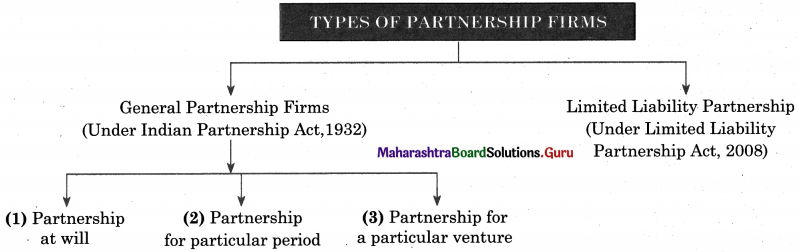
Maharashtra Board OCM 11th Commerce Solutions Chapter 4 Forms of Business Organisation – I 1
(i) General Partnership : These partnership can be formed under the Indian Partnership Act, 1932, where the liability of all partners are unlimited, joint and several.
General Partnership can be divided into three Kinds:
(a) Partnership at will: Such partnership are formed and continued as per the will of the partners. They are formed for an indefinite period. Any partner can terminate the partnership by giving a notice to the firm. Such firms exists so long as there is mutual trust and co-operation among the partners.

(b) Partnership for a particular period : Such partnerships are formed for a particular period of time. On the completion of the duration, the partnership firm automatically dissolves irrespective of the venture being complete.

(c) Partnership for a venture or particular partnership : Such partnerships are formed for a particular venture or job. It comes to an end on the completion of the venture. For e.g. construction of roads, dams, bridges, buildings, etc.

(ii) Limited Liability Partnership : This kind of partnership is formed under the Limited Liability Partnership Act 2008. There are 2 kinds of partners.

  • Designated Partner : Limited liability partnership is one where there are atleast two partners of which one must be a resident of India.
  • General Partner : In limited liability partnership a apart from the designated partners all other partners have limited liability. They are called general partners.

Question 3.
Explain different types of Partners.
Answer:
The different types of partners are:
(i) Active or Working Partners : In practice one or two partners take active part in the management. Such partners are called active or working partners. They contribute capital, shares profits or losses, and has unlimited, joint and several liability. They take an active interest in the day to day working of the firm. These partners are also known as ordinary / general / actual partners.

(ii) Dormant or Sleeping Partners : A dormant or sleeping partner is one who contributes capital to the firm. He does not take any active part in the management of the firm. He shares the profits and losses of the firm like any other partner. He voluntarily surrenders the right of management. However, he is liable for the debts of the firm.

(iii) Nominal Partners : A nominal partner is one who does not contribute any capital to the firm. He lends his name to the firm. He is simply obliging his friends by allowing the firm to use his name as a partner. He may or may not be given any share in the profits of the firm. His goodwill is used to attract business. However, he is liable for the debts of the firm.

(iv) Minor as Partner : According to the Indian Contract Act 1872, a person below 18 years is called a minor. But according to the Indian Partnership Act 1932, a minor can be admitted for the benefit of the firm with the consent of all other partners. He has a right to inspect the books of accounts. Minor partner has limited liability and is not liable for losses. He has the option to continue as a full-fledged partner or discontinue as a partner on attaining the age of majority. If he wishes to discontinue, he must give a public notice within 6 months from the age of majority.

(v) Partner in Profits only : A partner may clearly state that he will have a share only in the profits of the firm and that he will not share losses. Such a partner is known as “Partner in Profits Only”. He has no rights of management. He may not take active participation in the management of the firm.

(vi) Partner with Limited Liability : A limited partner has limited liability. A partner whose liability depends upon the extent of investment is called a limited partner. He has no right to take part in the day to day work. But such a partnership must have at least one partner having unlimited liability.

(vii) Secret Partner : A person is a partner of the firm and not known to general public is a secret partner. Secret partners have all the features like other partners. He brings capital to the firm and also gets a share in profit. He has unlimited liability. He can take part in the working of the business.

(viii) Sub-Partner : A partner when agrees to share his own profit derived from the firm with third person, it is known as sub-partner. A sub-partner cannot call himself as a partner in the firm.

(ix) Quasi Partner : A retired partner leaving his capital with the firm is called as Quasi Partner. He does not participate in the working of the firm, but share profit of the firm. He is also liable for the debts of the firm.

Maharashtra Board OCM 11th Commerce Solutions Chapter 4 Forms of Business Organisation – I

Question 4.
Explain the five features of Joint Stock Company.
Answer:
The features of Joint Stock Company are as follows:
(i) Common Seal : A company being an artificial person cannot sign on its own. The law requires every company to have a seal and have its name engraved on it. Common seal is a symbol of company’s incorporate existence. As common seal is the signature of the company, it has to be affixed on all important documents of the company. When the seal is used it has to be witnessed by two Directors of the Company. The common seal is under the custody of Company Secretary.

(ii) Artificial Person : A company is an artificial person created by law. It has an independent legal status. It has a separate name. It can enter into contracts, buy and sell property in its name. The company is distinct from its members.

(iii) Registration: The Registration of Joint Stock Company is compulsory. All companies have to be registered under Indian Companies Act, 2013.

(iv) Membership : A company is an association of persons. A private limited company must have atleast two persons and a public limited company must have atleast seven persons. The maximum limit of members for private company is 200. A public company can have unlimited members.

(v) O wnership and Management: Persons investing in the shares of the company are called as shareholders. They are the owners of the company. They receive a share in the profits of the company called “dividend”. The large number of shareholders cannot manage business. They elect representatives who are collectively called as Board of Directors. They manage business of the Company.

(vi) Limited Liability : The liability of shareholders is limited. It depends upon the unpaid amount of shares held by them. Shareholders cannot be held personally liable for the debts of the company.

Question 5.
Explain the merits of a Co-operative Society.
Answer:
The merits of a Co-operative Society are as follow:
(i) E asy Formation: It is easy to form a Co-operative organisation. Minimum ten members are needed to form the organisation. It does not involve much legal formalities. It is compulsory to register the organisation. However, the procedure for registration is simple and the fees are nominal.

(ii) Tax Concession : Co-operatives always get support of the government. As they play an important role in economic and social development, government gives them concessions in payment of tax.

(iii) Open Membership : Membership of a Co-operative organisation is open to all. A person can become a member by purchasing shares. No difference is made on the basis of language, religion, caste, etc. A person can become a member whenever he wants and terminate membership at his own will. Membership is voluntary.

(iv) Stability : A Co-operative organisation enjoys a long and stable life. The life of the organisation is distinct from the life of its members. If any member dies, becomes insolvent or insane, business is not closed.

(v) Self Financing and Charity : After providing 15% dividend to members, surplus amount is used for self-financing by the Co-operative Societies. Some amount of leftover profit is used for charity, social activities and for the growth of the co-operative society.

(vi) Less O perating Expenses: Cost of operation is low as salary is not paid to members who manage business. Members of Co-operative organisations work on honorary basis. They are not given any remuneration for their services. There are no expenses on advertising and publicity. This helps to increase profit.

(vii) Limited Liability : The liability of members is limited. It depends upon the value of shares purchased by members. Therefore, people are interested in investing in a Co-operative organisation.

(viii) Democratic Management: Democracy is followed in the management of co-operative organisation. All members are equal. The principle of “One member One vote” is followed. Members elect representatives who form the managing committee. They work according to bye-laws. The managing committee looks after day to day administration. Decisions are taken collectively in meetings.

(ix) Supply of Goods at Cheaper Rate : Goods are sold at lesser price through a Co-operative store. This is because the organisation is service – oriented. The store does not make use of services of middlemen and there are no expenses on advertising. So goods are sold at cheap rates.

Question 6.
Explain the demerits of Partnership firm.
Answer:
The demerits of Partnership firm are as follows:
(i) Non-transferability of Interest: In a partnership firm no one partner can transfer his share of interest to another outsider without the consent of all the partners.

(ii) Limited Capital: There is a limitation in raising additional capital for business. The business resources are limited to personal funds of the partners. Borrowing capacity of partners is limited. The maximum number of partners is fifty only. So financial capacity is less.

(iii) Absence of Legal Status : The Indian Partnership Act, 1932 does not give a legal status to a partnership firm. There is no independent legal status. The firm and its partners are one and the same.

(iv) Problem of Continuity : The partnership firm is not a separate legal entity. The firm is dependent oh mutual trust between partners. If a partner dies, becomes insolvent or insane, the firm has to be dissolved compulsorily whether the partners wish or not.

(v) Risk of Implied Authority : A partner works in two capacities. He has a dual role – Principal and Agent. He acts as an agent of the business. He can enter into contract with third party. However, a wrong decision can result in heavy losses, which has to be borne by all partners.

(vi) Limitations on Number of Partners : No partnership can go beyond maximum number prescribed (i.e. 50 members) by Indian Partnership Act. This restriction effects the raising of capital for further expansion.

(vii) Disputes : It is difficult to maintain harmony among partners. They may have different opinions and may not agree on certain matters. Partners may have conflicts if some partners work for self interest. This reduces team spirit and may finally lead to dissolution of the firm.

(viii) Difficulty in Admission of Partner : As consent of all partners is required to take any decision in the partnership firm, it becomes difficult to admit a new partner. This is a disadvantage to the firm as it cannot bring in new talent if the other partners are not agreeing to it.

(ix) Unlimited Liability : The liability of partners is unlimited. There is no difference between business property and personal property of partners. If business assets are not enough to meet business expenses, personal property can be used.

(x) Problem of Secrecy : Partnership firms lack complete business secrecy as some secrets may be disclosed by some partner to the competitor for personal benefit.

Question 7.
Explain the merits of Joint Stock Company.
Answer:
The merits of Joint Stock Company are as follows:
(i) Transferability of Shares : Shares of a public company can be transferred easily and freely. There is a high degree of liquidity in shares. Permission of directors or members need not be taken for buying and selling shares. This helps to attract investors to public company.

(ii) Relief in Taxation : The tax burden in the company is less. Provisions of Income Tax Act says that companies have to pay tax at flat rate. This is less than taxes paid by individuals earning very high income. If company is started in backward areas, the company gets relief in the form of tax holding.

(iii) More Scope for Expansion : The capital raising capacity of the company is high. The company has a lot of funds at its disposal. A part of the profit is also ploughed back for business. This enables growth and expansion of business.

(iv) Public Confidence : Joint Stock Company has to publish books of accounts. Which is audited by CA. Annual reports of the company have to be published. The activities of the Company are regulated by the provision of Companies Act, 2013. Therefore, the company gets public support.

(v) Limited Liability : The liability of shareholders is limited. It is to the extent of unpaid value of shares. Shareholders cannot be liable for the debts of the company. Features of limited liability attract more investors to business.

(vi) Expert Services : Joint Stock Company an appoint experts for managing their huge business operations. They appoint experts like Legal advisors, management experts, auditors, consultants, etc.

(vii) Democratic Management: Management of a company is democratic. Shareholders elect representatives called as Board of Directors. They manage business. Directors are accountable to shareholders. Policy decisions are taken by Directors but have to be approved by shareholders. The shareholders can also remove inefficient Directors.

(viii) Perpetual Succession : Joint Stock Company enjoy long and stable life. Its stability is not affected by death insolvency or retirement, of any of its members.

(ix) Professional Management : Large funds are at the disposal of the companies. Therefore, experts can be appointed in different areas of business. As good salaries can be paid, highly qualified personnel like Cost Accountants, Sales Experts, Market Experts, etc. can be appointed. Even Board of Directors have competent persons who manage business efficiently.

(x) Large Amount of Capital: A company can collect large amount of capital. There is no limit on maximum number of members. Due to features of limited liability, transferability of shares and liquidity, many investors are attracted to become shareholders of the company. Loans are also available to Joint Stock Companies.

Question 8.
Explain the features of partnership firm.
Answer:
The features of partnership firm are as follows:
(i) Lawful Business : Business undertaken by partnership should be lawful. It cannot undertake business forbidden by state. The definition of partnership also does not permit any association like club or charitable institution. Illegal business like smuggling or gambling is not allowed.

(ii) Agreement : Partnership is a result of agreement between partners. There could be a written or oral agreement between partners. A written agreement is preferred so that it can be used as a proof in the court of law if needed.

(iii) Number of Partners : Minimum two members are needed to start a partnership firm. The maximum number of members is 50.

(iv) Dissolution : A Partnership Firm can be dissolved through agreement between partners. If a partner wants, he can dissolve the firm by giving 14 days notice to the firm. The firm can be dissolved if a partner dies, becomes insolvent or insane.

(v) Sharing of Profits and Losses : The purpose of partnership is to earn profit. Its object cannot be a charitable one. Partners have to share profits and losses according to the ratio given in the agreement. If the agreement is silent about the proportion then profit and loss sharing will be equal.

(vi) Termination of Partner : A partner may resign by giving proper notice in writing to the other partners. A partner can also be removed if he has been found doing any fraudulent activities.

(vii) Joint Ownership : Each partner is the joint owner of the property of the firm. All partners are equal owners of business property. No partner can use property for personal use.

(viii) Registration : It is not compulsory as per Indian Partnership Act, 1932. However, in the State of Maharashtra, it has been made compulsory to get register with ‘Registrar of Firms’ of the state.

(ix) Joint Management: All partners have equal rights in managing the firm. Some partners take interest in management of the firm and others voluntarily surrender their management rights. However, all partners are jointly responsible for the management of the firm.

(x) Unlimited Liability : The liability of partners is unlimited joint and several. If assets of business is not sufficient to pay liabilities, personal property of partners can be used. If any one of the partners is declared insolvent, his liability will be borne by the solvent partners.

(xi) Principal and Agent : Each partner works in two capacities – Principal and Agent. A partner acts as principal when within the firm and acts as an agent while dealing with outsider. The partners play a dual role.

(xii) Restriction on Transfer of Interest : A partner cannot transfer or sell his interests in the firm to outsider without the prior consent of all other partners in the firm.

Question 9.
Explain the types of co-operative societies.
Answer:
Types of Co-operative Society are as follows:
(i) Consumer Co-operative Societies : A consumer co-operative is a business owned by its customers. They purchase in large quantities from wholesalers and supply in small quantities to customers. Goods are provided to buyers at reasonable prices and also provide services to them. Members get a share in the profit. The consumer society is formed to eliminate middlemen from distribution process e.g.-Apana Bazar, Sahakari Bhandar.

(ii) Credit Co-operative Societies : Members pool their savings together with the aim of obtaining loans from their pooled resources for productive purposes and non-productive purposes. They may be established in rural areas by agriculturist or artisans called as a Rural Credit Society. They may be established by salary earners or industrial areas called as Urban Banks, Salary Earners Society or Workers Society.

(iii) Producer’s Co-operatives : Producer’s Co-operatives are voluntary associations of small producers and artisans who come together to face competition and increase production. These societies are of two types:
(a) Industrial Service Co-operatives : This society supply raw materials, tools and machinery to the members. The producers work independently and sell their industrial output to the co-operative society. The output of members is marketed by the society.

(b) Manufacturing Co-operatives : In this type, producer members are treated as employees of the society and are paid wages for their work. The society provides raw material and equipment to every member. The members produce goods at a common place or in their houses. The society sells the output in the market and its profits is distributed among the members.

(iv) Marketing Co-operatives Societies : These co-operatives find better markets for members produce. They also provide credit and other inputs to increase members production levels. They perform marketing functions such as standardising, grading, branding, packing, advertising etc. The proceeds are then distributed among members depending on the quantities sold.

(v) Co-operative Farming Societies: Farmers voluntarily come together and pool their land. The agricultural operations are carried out jointly. They make use of scientific method of cultivation.

(vi) Housing Co-operative Societies : Housing Co-operatives are owned by residents. The society purchases land and develops it. Houses are constructed for residential purpose on ownership basis. They aim at establishing houses at fair and reasonable rents to members. For construction purposes loans are made available from Governmental or Non-Governmental sources. The society also looks after the maintenance of its buildings.

Maharashtra Board OCM 11th Commerce Solutions Chapter 4 Forms of Business Organisation – I

Question 10.
Explain the demerits of Joint Stock Company.
Answer:
The demerits of Joint Stock Company are as follows:
1. Rigid Formation : The formation of a joint stock company is lengthy, difficult and time consuming. There are many legal formalities for starting business. Promoters have to prepare documents like Articles of Association, Memorandum of Association, etc. A private company has to go through two stages in formation. A public company has to go through four stages in formation.

2. Delay in Decision Making Process : In company form of organization no single individual can make a policy decision. All important decisions are taken by Board of Directors. Decision taking process is time consuming. Business may lose opportunities because of delay in decision making.

3. Lack of Secrecy : The management of companies remain in the hands of many persons. Everything is discussed in the meetings of Board of Directors. All important documents are available at registered office for inspection. Thus, there is no secrecy in business matters.

4. Excessive Government Control: A large number of rules are framed for the working of companies. The companies will have to follow rules for internal working. The government tries to regulate the working of the companies because large public money is involved. In case regulations are not complied with, large penalties are involved.

5. High Cost of Management : The management of joint stock company form of organization is costly. Services of experts like share brokers, underwriters, solicitors, bankers is needed which is costly. Highly qualified staff is needed. They are paid good salaries. Dissolution of the firm is also costly.

6. Reckless Speculation: Directors look after management of the company. They have full information about the progress of the company. They use these details for speculation in shares. This results in fluctuations in share prices. This affects public confidence.

7. No Personal Contact : There are large number of employees in the organization. There is no personal contact of owners and managers with employees. Lack of appreciation demotivates employees. Similarly, managers and directors are not able to maintain personal contacts with their customers. Thus, customers likes and dislikes are ignored.

8. No Direct Effort Reward Relationship : Joint Stock Company is owned by shareholders and managed – by Board of Directors. Board of Directors are paid for managing and profit is shared by shareholders. There is no direct relation between efforts and rewards. Directors may not take a lot of interest in the working of the company.

Maharashtra Board Class 11 Secretarial Practice Solutions Chapter 5 Members of a Company

Balbharti Maharashtra State Board Class 11 Secretarial Practice Solutions Chapter 5 Members of a Company Textbook Exercise Questions and Answers.

Maharashtra State Board Class 11 Secretarial Practice Solutions Chapter 5 Members of a Company

1A. Select the correct answer from the options given below and rewrite the statements.

Question 1.
____________ is a person whose name is entered in the Register of Members.
(a) Member
(b) Creditors
(c) Registrar
Answer:
(a) Member

Question 2.
A person can be called as a Member when the name is entered in ____________
(a) Register of charges
(b) Register of Members
(c) List of Members
Answer:
(b) Register of Members

Maharashtra Board Class 11 Secretarial Practice Solutions Chapter 5 Members of a Company

Question 3.
A ____________ cannot be a member of a company.
(a) foreigner
(b) woman
(c) minor
Answer:
(c) minor

Question 4.
When a person buys shares of a company by filling up an application form, a person becomes a member by ____________
(a) Application and Allotment of shares
(b) Subscribing to Memorandum
(c) Transmission of Shares
Answer:
(a) Application and Allotment of shares

Question 5.
____________ means a person ceases being a member of the company of membership.
(a) Termination of membership
(b) Acquisition of membership
(c) Subscription to membership
Answer:
(a) Termination of membership

Question 6.
A member has right to participate in General Meetings means, he has a right to ____________
(a) receive dividends
(b) receive notice and agenda of a meeting
(c) to transfer his shares
Answer:
(b) receive notice and agenda of a meeting

1B. Match the pairs.

Question 1.

Group ‘A’Group ‘B’
(a) Insane person(1) Transfer of shares by operation of law
(b) Foreigner(2) Cannot be a member
(c) Transmission of shares(3) Cessation of membership
(d) Surrender of shares(4) To get copies of Auditor’s, Directors’ Report, etc.
(e) Right of Members(5) Can be a Member
(6) To attend a board meeting
(7) Duties of member
(8) Surrendering all assets to the company
(9) Demand or claim money from the company
(10) Transfer of shares by order of Secretary

Answer:

Group ‘A’Group ‘B’
(a) Insane person(2) Cannot be a member
(b) Foreigner(5) Can be a Member
(c) Transmission of shares(1) Transfer of shares by operation of law
(d) Surrender of shares(3) Cessation of membership
(e) Right of Members(4) To get copies of Auditor’s, Directors’ Report, etc.

1C. Write a word or a term or a phrase that can substitute each of the following statements.

Question 1.
End of membership of a person.
Answer:
Termination of membership

Question 2.
A person whose name is entered in the Register of Members.
Answer:
Member

Question 3.
Book in which names of all members are entered.
Answer:
Register of Members

Maharashtra Board Class 11 Secretarial Practice Solutions Chapter 5 Members of a Company

Question 4.
Becoming a member of a company.
Answer:
Acquisition of membership

Question 5.
The subscribers of this document are considered Members of the company.
Answer:
Memorandum of Association

1D. State whether the following statements are True or False.

Question 1.
Buying shares is the most common way to become a Member of the company.
Answer:
True

Question 2.
Both individuals and body corporates can be members of the company.
Answer:
True

Question 3.
Legal competency to enter into contracts is one of the criteria to become a member of the company.
Answer:
True

Question 4.
Limited Liability Partnership cannot be a member of the company.
Answer:
False

Maharashtra Board Class 11 Secretarial Practice Solutions Chapter 5 Members of a Company

Question 5.
Karta of HUF can be a member of the company.
Answer:
True

Question 6.
Member of the company is conferred with several rights.
Answer:
True

Question 7.
Member is entitled to profits of the company when a dividend is declared.
Answer:
True

Question 8.
Members of the company can attend general and Board meetings of the company.
Answer:
False

Question 9.
The right to appoint Director is given to Members.
Answer:
True

Question 10.
Minor can be a member of the company.
Answer:
False

1E. Find the odd one.

Question 1.
Subscribing to Memorandum, Forfeiture of Shares, Application, and allotment of shares.
Answer:
Forfeiture of shares

Maharashtra Board Class 11 Secretarial Practice Solutions Chapter 5 Members of a Company

Question 2.
Death or insolvency of member, Application, and allotment of shares. Surrender of shares.
Answer:
Application and Allotment of shares

1F. Complete the sentences.

Question 1.
A person whose name is entered in the Register of Member of a company is called ____________
Answer:
Member

Question 2.
In case of death or insolvency of a member, he will cease to be a ____________
Answer:
Member of a Company

Question 3.
Members have a right to appoint and remove the ____________
Answer:
Director

1G. Select the correct option from the bracket.

Question 1.

Group ‘A’Group ‘B’
(1) Minor……………………..
(2) Co-operative society………………………
(3) ……………………Can hold shares in the name of partners

(Partnership firm, Cannot become a member of a company, Can become a member of a company)
Answer:

Group ‘A’Group ‘B’
(1) MinorCannot become a member of a company
(2) Co-operative societyCan become a member of a company
(3) Partnership FirmCan hold shares in the name of partners

1H. Answer in one sentence.

Question 1.
Which individuals cannot become a member of a company?
Answer:
Minor, insolvent, insane, or lunatic cannot become a member of a company.

Maharashtra Board Class 11 Secretarial Practice Solutions Chapter 5 Members of a Company

Question 2.
What is the common way of becoming a member of a company?
Answer:
Buying shares is the common way of becoming a member of a company.

1I. Correct the underlined word and rewrite the following sentences.

Question 1.
A Minor can be a member of a company.
Answer:
A Guardian/Mai or person can be a member of a company.

Question 2.
Partnership Firm can be a member of the company.
Answer:
The Partnership firm cannot be a member of a company.

2. Explain the following terms/concepts.

Question 1.
Member
Answer:
A person who is a subscriber to the Memorandum of Association of a Company is called a member.
OR
A person whose name is entered in the Register of Members of the company is called a member of a company.

Question 2.
Transmission of shares
Answer:
Transmission of shares refers to the transfer or passing of property or titles in shares by the operation of law from a member to his legal representative. When transmission of shares takes place the membership of the original shareholder is terminated.

Question 3.
Cessation of Membership
Answer:
Cessation of Membership of a company means the discontinuation of membership. The name of the old member is removed from the Register of the member.

Question 4.
Acquisition of Membership
Answer:
Any person who is competent to contract can become a member after fulfilling certain requirements for the membership of the company.

Maharashtra Board Class 11 Secretarial Practice Solutions Chapter 5 Members of a Company

Question 5.
Eligibility of Membership
Answer:
Buying shares amount to making a contract, so any entity i.e. person/organization competent to make contact can be a member of the company.

3. Study the following case/situation and express your opinion.

1. Mrs. & Mr. A work in a Bank. They have a daughter named Ms. Z who is 11 years old.

Question (a).
Can Mrs. & Mr. A invest in shares of the company?
Answer:
Yes, Mrs & Mr. A can invest in shares of the Company.

Question (b).
Can they buy shares in the name of their daughter Ms. Z?
Answer:
Yes, Mrs. A and Mr. A can buy shares in the name of their daughter Ms. Z.

Question (c).
Justify your answer in (a) & (b) in one sentence only.
Answer:
Justification:
Mrs. A and Mr. A can invest in shares of the Company as they are major citizens.
Similarly, they can buy shares on behalf of their daughter as they are guardians of Ms. Z.

2. M/s. ABC is a Partnership firm owned by Dr. A, Dr. B, Dr. C. The doctors want to invest the profits of ABC in the shares of a company.

Question (a).
Can M/s ABC buy the shares of the company?
Answer:
Yes M/s ABC can buy the shares of the company.

Question (b).
Can profits of M/s. ABC be invested in shares held in the names of Dr. A or Dr. B or Dr. C?
Answer:
They can invest profit of M/s ABC in the names of Dr. A or Dr. B or Dr.C.

Question (c).
Are the doctors eligible to invest in shares of the company?
Answer:
Yes, doctors are eligible to invest in shares of the company.

Maharashtra Board Class 11 Secretarial Practice Solutions Chapter 5 Members of a Company

3. ZEN Limited has some investible profits. Please guide Zen limited with respect to the following?

Question (a).
Can ZEN Limited invest in the shares of itself?
Answer:
No, ZEN Limited cannot invest in the shares of itself.

Question (b).
Can ZEN Limited invest in the shares of TEN Limited?
Answer:
Yes, ZEN Limited can invest in the shares of TEN Limited.

Question (c).
Justify your answers in (a) & (b) in one sentence only.
Answer:
Justification:
ZEN limited being a legal person can be a member of another company TEN Limited. It cannot be a member of its own company as per the Companies act.

4. Answer in brief.

Question 1.
State any four ways of acquiring membership of a company.
Answer:
Any person who is competent to contract can become a member after fulfilling certain requirements for membership in a company.
The different ways to acquire membership of a company are explained below:
(i) By Subscription:

  • The subscriber to the Memorandum of Association of a company, who are signatories to the Memorandum of the company is deemed to have agreed to become the members of the company.
  • When the company is registered, their names are entered as the members in the Register of Members. In this case, neither an application nor the allotment of shares is important to become a member.

(ii) By Application and Allotment of shares:

  • This is one of the methods of acquiring membership. An application for shares is made by an applicant in response to the invitation given by the company through its prospectus.
  • The company then allots the shares as an acceptance to his application and offers the shares. The applicant then becomes the shareholder and his name is entered in the ‘ Register of Members’.

(iii) By Transfer of shares:

  • After acquiring the shares by way of sale or gift, the buyer (transferee) is required to get the shares registered in his name in the Register of Members of the company.
  • For this an instrument of transfer signed by the buyer and the seller accompanied by the share certificate is to be lodged (sent to) with the company.
  • When the company approves the transfer, the name of the transferee is entered in the Register of Members and thus, be becomes a member of a company. The name of the earlier member is struck off from the Register.

(iv) By Transmission of shares:

  • In the event of the death or lunacy of a member, his legal heir or representative automatically becomes the shareholder.
  • He is entitled to have his name entered in the Register of Members. He can do so by making an application to the company, supported by legal evidence of his title.
  • When the company approves the title the name of the legal representative is entered in the Register of Members and thus, he becomes a member of a company.
  • This transfer of shares by the operation of law is called the transmission of shares.

Maharashtra Board Class 11 Secretarial Practice Solutions Chapter 5 Members of a Company

Question 2.
State any four ways of cessation of membership of a company.
Answer:

  • Cessation/Termination of a member means the discontinuation of membership. His relationship with the company comes to an end.
  • The name of the members is removed from the Register of Members as cessation.
  • The original member is thus prevented from exercising his rights of membership.

The membership of a person may be terminated in any one of the following ways:

  • Winding up of a company: When a company is ‘winding up’ or exists no more due to the process of law, the membership of all the members stands terminated or cessation automatically.
  • Surrender of shares: When the company accepts surrender of partly paid-up shares, if permitted by its Articles, the membership of the shareholder is terminated.
  • Transmission of shares: Transmission of shares refers to the transfer or passing of property or titles in shares by the operation of law from a member to his legal representatives. Such an automatic transfer of shares takes place in the event of the death or lunacy of a shareholder. When the transmission of shares takes place, the membership of the original shareholder is terminated.
  • Transfer of shares: The transfer of shares is effected by registering an instrument called ‘Instrument of Transfer’ with the company. When the company approves the transfer, the Secretary cancels the name of the seller from the Register of Members and thus the membership of the shareholder is terminated.
  • Forfeiture of shares: When the company forfeits the shares on account of non-payment of call money, the membership of the shareholder whose shares are forfeited comes to an end.

Question 3.
State the rights of members with regard to participation in general meeting.
Answer:
As an integral part of a company, a member enjoys certain rights and has to fulfill certain duties and liabilities.
Following are the rights of members:

  • Right to receive the notice and agenda of all general meetings, attend them in person or appoint a proxy, speak and vote at the meeting, demand to call Extra-Ordinary General meeting and pass resolutions.
  • Right to receive the copy of annual reports, auditors’ reports, statutory reports, and the annual account are on his registered address.
  • Right to transfer shares, if any, imposed by the Article of Association.
  • Right to receive bonus shares whenever issued by the company.
  • Right to get the name entered in the Register of members and be registered as a member of the company,
  • Right to receive a share in the surplus property and assets of the company on winding up of the company after all other claims have been paid.

5. Justify the following statements.

Question 1.
Member and Shareholder are interchangeable terms.
Answer:

  • A person whose name is entered in the register of members of a company is called a member and a person who owns shares of a company and holds actual possession of shares is called a shareholder of a company.
  • A shareholder becomes a member of a company only when his name is recorded in the Register of Members. A person who buys a share in an open market is a shareholder. But he cannot be called a member until the procedure of transfer of shares in his name is completed.
  • In the case of death, or lunacy of a member of a company, his legal representative becomes the shareholder but he cannot be called a member until the procedure for transmission of shares in his name is completed.
  • A shareholder who transfers his share to another person is not a member until the transfer is registered and the name of the transferee is recorded in the Register of Members.
  • A person who subscribes to the Memorandum of Association may not be called a member until the shares are actually allotted to them. Thus, I agree with the above statement.

Maharashtra Board Class 11 Secretarial Practice Solutions Chapter 5 Members of a Company

Question 2.
A foreigner can invest in shares of an Indian company.
Answer:

  • A foreigner can enter into contract.
  • Foreigners can buy shares and become a member of an Indian company, subject to provisions of FEMA Act 1999.
  • ‘FEMA’ aims at facilitating external trade and promote the foreign exchange market in India.
  • Foreigner falls under the category of individual eligibility to be a member of a company.
  • Thus, I agree with the above statement.

Question 3.
The insolvent person ceases to be a member of the company.
Answer:
Yes, I agree with the statement.

  • On, becoming insolvent, a person’s beneficial rights of shareholders passes to Official Receiver or Assignee.
  • Thus, the insolvent person stops being a member of the company on his insolvency.
  • Official Receiver is an officer appointed by the court, to deal with the property and assets of the insolvent person.
  • On being insolvent a member ceases to be a member of the company and thus he can neither attend Annual General
  • Meeting nor can he vote on matters of the company.
  • Thus, I agree with the above statement.

Question 4.
The Co-operative Society is eligible to be a member of the company.
Answer:

  • The Co-operative Society falls under the category of Organizations eligible for membership of a company.
  • Co-operative Societies are registered under the State Co-operative Societies Act of respective states.
  • A Co-operative Society is a registered entity, it can become a member of the company.
  • Thus, it can invest in shares of the company and also enjoys all the rights of membership.
  • It also has a right to receive notice of meeting, attend the meeting, vote in meeting, etc.
  • Thus, I agree with the above statement.

Question 5.
Subscribers to the Memorandum of Association are the first members of the Company.
Answer:

  • There are different ways for the acquisition of membership in a company.
  • Subscribing to Memorandum of Association is one is of the way of acquiring membership in a company,
  • Subscribers to the Memorandum of Association of companies are different in different cases i.e. Seven (7) members in the case of a Public Company, Two (2) members in the case of a Private company, and One (1) in case of One Person Company.
  • Thus, I agree with the above statement.

Maharashtra Board Class 11 Secretarial Practice Solutions Chapter 5 Members of a Company

Question 6.
The nominee of the member of OPC becomes its member on the death of the member.
Answer:

  • In an acquisition of membership, there are different ways to become a member of the company.
  • In the case of One Person Company, the name of the nominee is given beforehand in the Memorandum of One Person Company.
  • So, in case of the death of a member, his nominee automatically becomes the sole owner of the company.
  • But he cannot be called as a member of the company until all procedure of transmission of shares is completed.
  • Thus, I agree with the above statement.

Question 7.
Members of the company are entitled to several rights.
Answer:

  • Being an integral part of a company, members enjoy certain rights and have to fulfill the duties and liabilities.
  • Member has the right of accessing books and documents of a company. He can make copies of the Memorandum and Article of Association. He has the right to appoint Auditors and Directors and decide their salary and remuneration.
  • He can inspect the Register of Members and Debentureholders register.
  • He has right to make a Fundamental Corporate Decision like – Change of Registered office of the company, increase authorized capital, change in the object of the company, make amendment in Articles of Association, right of winding up the company, etc.
  • He has the right to receive the notice and agenda of a meeting. He can attend the Annual General Meeting in personal or he can send his proxy to attend the meeting.
  • Thus, I agree with the above statement.

Question 8.
Members of the company have some fundamental corporate decision-making rights.
Answer:

  • Members hold powers to decide at meetings on important matters.
  • He has certain fundamental rights like a change of registered office of the company.
  • He can increase the authorized capital of the company.
  • He can change the objects of the company because he is a member of the company as well as the owner of the company.
  • He also has a right to amend the Articles of Association.
  • He also has a right to acquisitions, mergers, and takeovers by the company. He can appoint sole selling agents for the company.
  • He also has a fundamental right to close or wind up the company.
  • Thus, I agree with the above statement.

Maharashtra Board Class 11 Secretarial Practice Solutions Chapter 5 Members of a Company

Question 9.
Transfer of shares results in termination of membership.
Answer:

  • On termination of membership, the name of the member is removed from the Register of Members.
  • Companies Act empowers every shareholder to transfer his share in the manner laid down in the Articles and in accordance with the provisions of the law.
  • A transfer of share takes place when a registered shareholder transfers his shares by sale or gift to another person voluntarily.
  • Transfer of shares by operation of law in event of death or insolvency of members is called the transmission of shares. The legal representative/heir in case of death, official receiver in case of insolvency, and administrator in case of insanity replaces the concerned member.
  • When the company approves the transfer, the Secretary cancels the name of the seller i.e. (transferor) from the Register of Members, and the membership of the shareholder stands terminated after transferring the shares.
  • Thus, I agree with the above statement.

6. Answer the following questions.

Question 1.
Explain the circumstances when Member is not a shareholder and vice-versa.
Answer:
An organization is formed for purpose of education, sports, health, business with well-defined objectives and relationships. The organization is by ‘members’ and ‘only for members.’
“Member means a person whose name is entered in the Register of Members of the company and are the holder of equity shares and are a beneficial owner in the records of Depository.
Buying shares is the most common and easy way where a person becomes a member of the company.

Following are different circumstances when Member is not a shareholder:

  • Member without being a shareholder:
    • Signatories to the Memorandum of Association: They are members of the company but not shareholders till the shares are not allotted to them.
    • Company Limited by Guarantee Amount: This company does not have any share capital. Therefore, it has only members, not the shareholders.
    • Transfer of shares: Transferor (seller) of shares continue to be a member of the company, till his name is removed from the Register of Members and is replaced by transferee’s (buyer)name.
    • On the death of a member: On the death of a member, his legal heir becomes the holder of deceased member shares. But he is not a member of a company until the procedure of transmission of shares is completed.
    • On insolvency of member: Shares of insolvent member are held by court-appointed Official Receiver.
      So the insolvent person continues to be a member but not the shareholder.
  • Shareholder without being a member: The buyers of the shares, Official Receiver in case of insolvency; legal heir in case of death as explained above are shareholders but not the members of the company.

Question 2.
Explain the eligibility of memberships of a company.
Answer:

  • The organization is formed and managed by persons termed as ‘Member’.
  • So it is rightly said organization is by ‘member’ and ‘only for members’.
  • Any entity i.e. person or organization who is competent to make a contract can become a member of the company.
  • Subject to provisions of the Companies Act, 2013, Memorandum of Association, and Articles of Association, any person who is legally competent to manage their own affairs (‘Sui-Juris) can become a member of the company.

Eligibility Criteria:
(A) Individuals:

  • Major person: Any person domiciled (staying) in India, having completed 18 years of age, having a sound mind, and not be disqualified by law can become a member of the company.
  • Minor: A minor cannot be a member of a company but a guardian can be a member of a company on behalf of a minor.
  • Insolvent: Insolvent person cannot be a member of a company as his beneficial rights of shareholding are held by the Official Receiver, an officer appointed by the court.
  • Insane/Lunatic: Insane/Lunatic person is unable to enter into a contract which makes him ineligible to be a member of a company.
  • Foreigner: A foreigner or Non-resident Indian can become a member of a company, subject to provisions of FEMAAct, 1999.

(B) Organizations:

  • Company: A company being a legal person can be a member of another company if authorized by its Memorandum of Association. It cannot be a member of its own company.
  • Co-operative Society: Since co-operative societies are registered entity, they can be a member of the company.
  • Limited Liability Partnership (LLP): Such, firms are treated as a juristic person, hence it can be a member of the company.
  • Hindu Undivided Family: HUF firm is prohibited to be a member of a Company, but ‘Karta’ can buy a share in his name on behalf of Hindu Undivided Family firm.
  • Partnership Firm: Since the partnership firm is not a registered entity. It cannot be a member of the company. But partners themselves can buy shares in their individual names.
  • Trust: Registered trust can become a member of a company in its own name.

Maharashtra Board Class 11 Secretarial Practice Solutions Chapter 5 Members of a Company

Question 3.
Explain different ways to acquire membership of the company briefly.
Answer:
Any person who is competent to contract can become a member after fulfilling certain requirements for membership in a company.
The different ways to acquire membership of a company are explained below:
(i) By Subscription:

  • The subscriber to the Memorandum of Association of a company, who are signatories to the Memorandum of the company is deemed to have agreed to become the members of the company.
  • When the company is registered, their names are entered as the members in the Register of Members. In this case, neither an application nor the allotment of shares is important to become a member.

(ii) By Application and Allotment of shares:

  • This is one of the methods of acquiring membership. An application for shares is made by an applicant in response to the invitation given by the company through its prospectus.
  • The company then allots the shares as an acceptance to his application and offers the shares. The applicant then becomes the shareholder and his name is entered in the ‘ Register of Members’.

(iii) By Transfer of shares:

  • After acquiring the shares by way of sale or gift, the buyer (transferee) is required to get the shares registered in his name in the Register of Members of the company.
  • For this an instrument of transfer signed by the buyer and the seller accompanied by the share certificate is to be lodged (sent to) with the company.
  • When the company approves the transfer, the name of the transferee is entered in the Register of Members and thus, be becomes a member of a company. The name of the earlier member is struck off from the Register.

(iv) By Transmission of shares:

  • In the event of the death or lunacy of a member, his legal heir or representative automatically becomes the shareholder.
  • He is entitled to have his name entered in the Register of Members. He can do so by making an application to the company, supported by legal evidence of his title.
  • When the company approves the title the name of the legal representative is entered in the Register of Members and thus, he becomes a member of a company.
  • This transfer of shares by the operation of law is called the transmission of shares.

(v) By holding shares in the Dematerialized form:
The person holding shares in dematerialized form and has his name as a beneficial owner in the records of Depository is treated as a member of the company.

(vi) Nominee of One Person Company (OPC):
In the case of One Person Company, the name of the nominee is given beforehand in the Memorandum of One Person Company. He becomes the sole owner of the shareholdings of the deceased member.

(vii) By Acquiescence:
If a person is wrongly entered in the Register of Members or holds or allows his name as the Register of Members without informing the company about its mistake, he is treated and made liable as a member in the event of liquidation of a company.

Question 4.
Explain how membership of the company terminates.
Answer:
Cancellation of membership of a shareholder is called Termination or Cessation of membership. On termination of membership, all rights of a member are canceled.

Following are the ways of Termination of membership:
(i) Transfer of shares: Transfer of shares is effected by registering an instrument called Instrument of Transfer with the company. The secretary cancels the name of the seller from the Register of Members and thus the membership of the shareholder is terminated.

(ii) Transmission of shares: Transmission of shares refers to the transfer of shares by operation of law. This is an automatic transfer of a share in the event of death or lunacy of a shareholder. When the transmission of shares takes place, the membership of an original shareholder is terminated.

(iii) Winding up: When a company is winding up, the membership of all the members stands terminated automatically.

(iv) Forfeiture of shares: When a company forfeits the shares on account of non-payment, of calls on shares, shareholder’s shares are forfeited and he ceases to be a member of the company.

(v) Surrender of shares: When a company accepts surrender of partly paid-up shares if permitted by its Articles, the membership of the shareholder is terminated.

(vi) Redemption of Preference shares: When the redeemable preference shares are redeemed (repaid) to the shareholder by the company as per the terms of issue, the membership comes to an end.

(vii) Right of lien as shares: When a shareholder has some obligation towards the company, it is said to be lien on shares by the company. It means shareholders cannot sell their shares until they clear their dues or obligations if any. In case of his failure to pay his dues company cancels his shares and his membership comes to an end.

Maharashtra Board Class 11 Secretarial Practice Solutions Chapter 5 Members of a Company

Question 5.
Explain the Rights of a Member of a company.
Answer:
Being a part of a company, a member enjoys certain rights and has to fulfill certain duties.
Right of members are as follows:

  1. Right of accessing books and documents: A member can get copies of Memorandum and Articles of Association, Auditors and Directors Reports, Balance Sheet and Profit and Loss A/c. Members can also check the Register of members.
  2. Right to participate in General meetings: Members have the right to receive notice and agenda of all general meetings, attend the meeting personally or appoint a proxy, vote at the meeting, etc.
  3. Right to appoint and remove a Director: Member of a company has the right to appoint and remove the directors.
  4. Shareholding rights: Shareholders have the right to receive a share certificate, transfer his shares, to get right issue and bonus issue shares.
  5. Right to Class Action Suit: The Act confers the right of Class Action Suit to members against the company or their directors in the time of any unlawful or wrongful act. They can file a petition to wind up the company.
  6. Right to receive surplus assets: In the event of the winding-up of the company, the member has the right to get a share in surplus assets of the company.
  7. Right with respect to the company’s accounts and its audit: Members have the right to approve the annual accounts at the Annual General Meeting. He can appoint auditors, fix their salary, and has a right to remove the auditors.
  8. Right to participate in the profit of the company: Members invest money in the company and expect a certain return in form of dividends. They have the right to receive dividends within 30 days of its declaration in the Annual General Meeting.
  9. Right to make Fundamental Corporate Decision: Members hold powers to decide at a meeting on important matters like a change of Registered office of the company, increase authorized capital of the company, change the objects of the company, to amend an Articles of Association, right of acquisitions, mergers and takeovers by the company, appoint a sole selling agents for the company, rights to close or wind up the company.

Activity (Textbook Page No. 72)

Find the composition of shareholding of a listed public company.
Answer:
“Listed Public Companies” means a public company that has any of its securities listed in any recognized stock exchange. One of the advantages to the shareholder(s) of a Public Company is free transferability of shares and in the case of Listed Companies such free transferability also ensures quick liquidity of the investment. However, such liquidity is only possible when there is an existence of buyers and sellers in the market. In many Listed Companies, a large chunk of the paid-up capital is held by the promoter group which reduces the public shareholding to a great extent.

Maharashtra Board Class 11 Secretarial Practice Solutions Chapter 5 Members of a Company

The promoter group usually refrains from trading in their shares which in turn reduces the number of buyers and sellers in the market and the liquidity factor also gets affected. In order to ensure a minimum level of Public Shareholding in Listed Public Companies and to provide liquidity to the investors, the Ministry of Finance amended the Securities Contracts (Regulation) Rules, 1957 [SCCR, 1957] twice in the year 2010. The press note released by the Ministry of Finance upon the first amendment of SCCR, 1957 stated “A dispersed shareholding structure is essential for the sustenance of a continuous market for listed securities to provide liquidity to the investors and to discover fair prices”.

Maharashtra Board Class 11 Secretarial Practice Solutions Chapter 6 Directors and Key Managerial Personnel of a Company

Balbharti Maharashtra State Board Class 11 Secretarial Practice Solutions Chapter 6 Directors and Key Managerial Personnel of a Company Textbook Exercise Questions and Answers.

Maharashtra State Board Class 11 Secretarial Practice Solutions Chapter 6 Directors and Key Managerial Personnel of a Company

1A. Select the correct answer from the options given below and rewrite the statements.

Question 1.
_____________ comprises of a team of Directors.
(a) Board of Directors
(b) Board of Trustees
(c) Board of Managers
Answer:
(a) Board of Directors

Question 2.
_____________ can be a director.
(a) An Individual
(b) A Firm
(c) A Body corporate
Answer:
(a) An individual

Maharashtra Board Class 11 Secretarial Practice Solutions Chapter 6 Directors and Key Managerial Personnel of a Company

Question 3.
Upto _____________ as maximum directors are allowed to a company.
(a) five
(b) fifteen
(c) fifty
Answer:
(b) fifteen

Question 4.
A maximum of _____________ Directorships is allowed to a person.
(a) two
(b) ten
(c) twenty
Answer:
(c) twenty

Question 5.
A maximum of _____________ Directorships of a public company is allowed to a person.
(a) one
(b) ten
(c) twenty
Answer:
(b) ten

Question 6.
_____________ is a unique identification number required to be a Director.
(a) PIN
(b) DIN
(c) TIN
Answer:
(b) DIN

Question 7.
_____________ powers are the powers given to Board under the Act.
(a) Statutory
(b) Managerial
(c) Administrative
Answer:
(a) Statutory

Question 8.
Director represents company in his role as _____________
(a) Agent
(b) Managing Partner
(c) employee
Answer:
(a) Agent

Maharashtra Board Class 11 Secretarial Practice Solutions Chapter 6 Directors and Key Managerial Personnel of a Company

Question 9.
Managing Director is appointed for a period of _____________ years
(a) 5
(b) 10
(c) 15
Answer:
(a) 5

Question 10.
_____________ is required to work under superintendence, control, guidance of the Board.
(a) Government
(b) ROC
(c) Managing Director
Answer:
(c) Managing Director

Question 11.
_____________ is an employee of the company.
(a) Alternate director
(b) Non-executive Director
(c) Whole-time director
Answer:
(c) Whole time Director

Question 12.
_____________ need not be a director of the company.
(a) Manager
(b) Managing Director
(c) Whole-time director
Answer:
(a) Manager

Question 13.
_____________ needs a whole time director.
(a) Listed company
(b) Partnership
(c) OPC
Answer:
(a) Listed company

Question 14.
To provide guidance to Board is _____________ duty of Company Secretary.
(a) Personal
(b) General
(c) Statutory
Answer:
(c) Statutory

Question 15.
Only a member of _____________ can be a practicing Company Secretary.
(a) ICAI
(b) ACCA
(c) ICSI
Answer:
(c) ICSI

Maharashtra Board Class 11 Secretarial Practice Solutions Chapter 6 Directors and Key Managerial Personnel of a Company

Question 16.
_____________ is to be prepared in prescribed form MR-3.
(a) Annual Report
(b) Auditors Report
(c) Secretarial Audit Report
Answer:
(c) Secretarial Audit Report

1B. Match the pairs.

Question 1.

Group ‘A’Group ‘B’
(a) Board of Directors(1) Nominated by the Board
(b) Managing Director(2) Assists and advises the Board
(c) Company Secretary(3) Automatic Appointment
(d) First Directors(4) Appointed by ROC
(e) Alternate Director(5) Extensive Powers of management
(6) Substantial Powers of management
(7) Appointed by Promoter
(8) Assist and Advises the Government
(9) Negligible Powers of management
(10) Nominated by Council

Answer:

Group ‘A’Group ‘B’
(a) Board of Directors(5) Extensive Powers of management
(b) Managing Director(6) Substantial Powers of management
(c) Company Secretary(2) Assists and advises the Board
(d) First Directors(7) Appointed by Promoter
(e) Alternate Director(1) Nominated by the Board

Question 2.

Group ‘A’Group ‘B’
(a) Public company(1) Arises due to death of Director
(b) Private company(2) Collective Powers
(c) Secretarial Auditor(3) Individual Powers to Directors
(d) Casual Vacancy of a Director(4) Arises due to additional work
(e) Powers of the Board(5) Appointed by Managing Director
(6) At least 2 (two) Directors
(7) At least 3 (three) Directors
(8) At least 15 (fifteen) Directors
(9) At least 1 (one) Director
(10) Appointed by the Board

Answer:

Group ‘A’Group ‘B’
(a) Public company(7) At least 3 (three) Directors
(b) Private company(6) At least 2 (two) Directors
(c) Secretarial Auditor(10) Appointed by the Board
(d) Casual Vacancy of a Director(1) Arises due to death of Director
(e) Powers of the Board(2) Collective Powers

1C. Write a word or a term or a phrase that can substitute each of the following statements.

Question 1.
The organization with distinct features of separate ownership and management.
Answer:
Joint-stock company

Question 2.
The officer is responsible for the company’s finances.
Answer:
Chief Financial Officer

Question 3.
The body of elected representatives of the company.
Answer:
The Board of Directors

Question 4.
The officer is a statutory and administrative officer and also acts as co-ordinator of the company.
Answer:
Company Secretary

Question 5.
Qualification required to be a Company Secretary.
Answer:
Member of ICSI

Maharashtra Board Class 11 Secretarial Practice Solutions Chapter 6 Directors and Key Managerial Personnel of a Company

Question 6.
Agents, Trustees, and Managing Partners of the company.
Answer:
The Board of Directors

Question 7.
The audit which checks compliances of different legislations.
Answer:
Secretarial audit

Question 8.
This KMP signs documents of the company requiring authentication by the company.
Answer:
Company Secretary

Question 9.
The nature of the relationship of Directors with the company.
Answer:
Fiduciary

Question 10.
Name the Secretarial Standard – 1.
Answer:
Secretarial Standards on meetings of the BOD

Question 11.
Name the Secretarial Standard – 2.
Answer:
Secretarial Standards on General Meeting

Question 12.
Name the Secretarial Standard – 3.
Answer:
Secretarial Standards on Dividend

1D. State whether the following statements are True or False.

Question 1.
A large number of shareholders necessitates the company to have a separate managerial body.
Answer:
True

Question 2.
The maximum number of Directors allowed to a company is 15 (fifteen).
Answer:
True

Maharashtra Board Class 11 Secretarial Practice Solutions Chapter 6 Directors and Key Managerial Personnel of a Company

Question 3.
A public company should have a minimum of 10 (ten) directors.
Answer:
False

Question 4.
DIN is required for Secretaryship.
Answer:
False

Question 5.
Executive Director is called an outside Director.
Answer:
False

Question 6.
The promoter of a company cannot be the Independent Director.
Answer:
True

Question 7.
Only individuals can be directors.
Answer:
True

Question 8.
The casual vacancy of the Board is filled by the members.
Answer:
False

Question 9.
To function as per Articles of Association of the company is the statutory duty of the Board.
Answer:
True

Question 10.
A Director is an employee of the company.
Answer:
False

Question 11.
The Managing Director is appointed by a resolution.
Answer:
True

Question 12.
The minimum and maximum age to be a Managing Director is 21 and 70 respectively.
Answer:
True

Maharashtra Board Class 11 Secretarial Practice Solutions Chapter 6 Directors and Key Managerial Personnel of a Company

Question 13.
A company may appoint more than one M.D.
Answer:
True

Question 14.
Indian companies prefer a Managing Director over a Manager.
Answer:
True

1E. Find the odd one.

Question 1.
Woman Director, Promoter, Executive Director.
Answer:
Promoter

Question 2.
Absent at Board Meeting, failure to disclose an interest, DIN.
Answer:
DIN

1F. Complete the sentences.

Question 1.
Separate ownership and management is a unique feature of _____________
Answer:
Company

Question 2.
Minimum number of Directors for a private company should be _____________
Answer:
Two

Question 3.
Minimum number of Directors for a public company should be _____________
Answer:
Three

Question 4.
Minimum number of Directors for an OPC should be _____________
Answer:
One

Maharashtra Board Class 11 Secretarial Practice Solutions Chapter 6 Directors and Key Managerial Personnel of a Company

Question 5.
First Directors of a company are appointed by _____________
Answer:
Promoter

Question 6.
At least one Woman Director is required by _____________ company.
Answer:
Listed Company

Question 7.
Casual vacancy on Board is filled by _____________
Answer:
Board

Question 8.
Director is the guardian of interest of company as _____________
Answer:
Trustees

Question 9.
First Secretary is appointed by _____________
Answer:
Promoters

Question 10.
The audit which checks the compliance of Companies Act is called as _____________
Answer:
Secretarial Audit

1G. Select the correct option from the bracket.

Question 1.

Group ‘A’Group ‘B’
(1) Rotational Director…………………..
(2) ……………………….Alternate Director
(3) Woman Director…………………..
(4) ……………………….First Director

(Every Listed Company, Appointee by Promoters, Appointed in Place of a director who is absent, Retire by Rotation)
rotation)
Answer:

Group ‘A’Group ‘B’
(1) Rotational DirectorRetire by Rotation
(2) Appointed in Place of a director who is absentAlternate Director
(3) Woman DirectorEvery Listed Company
(4) Appointee by PromotersFirst Director

1H. Answer in one sentence.

Question 1.
Who is the officer responsible for the company’s financial plan?
Answer:
Chief Financial Officer is responsible for the company’s financial plan.

Question 2.
What is the importance of Secretarial Standards?
Answer:
The main aim of Secretarial Standards is to standardize all diverse secretarial practices prevailing in the corporate world.

Maharashtra Board Class 11 Secretarial Practice Solutions Chapter 6 Directors and Key Managerial Personnel of a Company

Question 3.
Who provides guidance to the Board of Directors?
Answer:
Company Secretary provides guidance to the Board of Directors.

Question 4.
What is the tenure of ‘Managing Director?
Answer:
The tenure of the Managing director is Five Years.

1I. Correct the underlined word and rewrite the following sentences.

Question 1.
A public company must have a minimum of 15 directors.
Answer:
A public company must have a minimum of 03 directors.

Question 2.
First Directors are appointed by ROC.
Answer:
First Directors are appointed by Promoters.

Question 3.
Secretarial Standards are given by the Companies Act, 2013.
Answer:
Secretarial Standards are given by the Institute of Company Secretaries of India.

2. Explain the following terms/concepts.

Question 1.
Director
Answer:
Director is a person appointed to manage, direct and supervise the company. According to Sec-2(34) of the act, “Director means a director appointed to the Board of the company”.

Question 2.
Managing Director
Answer:
Managing Director is a director appointed by virtue of an agreement with the company; or by passing a resolution in the general meeting or by its Board of Directors or by virtue of Memorandum of Associations or Articles of Association. He is entrusted with substantial powers of management of the affairs of the company. He is appointed for a period of 5 years.

Maharashtra Board Class 11 Secretarial Practice Solutions Chapter 6 Directors and Key Managerial Personnel of a Company

Question 3.
Independent Director
Answer:
As per section 149 of the Companies Act, 2013, any director other than a managing director, whole-time director, or a nominee director is termed as an independent director.

Question 4.
Executive Director
Answer:
Executive Director is also called as ‘Whole Time Director’, He is in full-time employment with the company. He plays an important role in the day-to-day management of the company.

Question 5.
Non-Executive Director
Answer:
Non-Executive Director is known as ‘Outside Director’. Non-Executive Director is not involved in the day-to-day management of the company. He is appointed to get second opinions from the board.

Question 6.
Alternate Director
Answer:
Alternate Director is a director who is nominated by the board in the place of absence director. He is appointed for a minimum of 3 months.

Question 7.
Casual vacancy of Director
Answer:
The casual vacancy is created due to the death of a director, which is filled by the board at the board meeting. It is valid till the vacating director’s incomplete term.

Question 8.
Chief Financial officer
Answer:
An officer responsible for the company’s finances is called Chief Financial Officer. He need not be a director of the company. He has to compulsory sign the audited financial statements of the company.

Question 9.
Company Secretary
Answer:
The company secretary is appointed to perform functions of the company and he is appointed by a resolution of the Board. He has to follow the terms and conditions decided by the board. He should be a member of ICSI.

Question 10.
Secretarial Standard
Answer:
It is formulated by ICSI and approved by Central Government through the Ministry of Corporate Affairs (MCA). The main purpose of setting Secretarial Standards is to standardized fine corporate government practices prevailing in companies.

Maharashtra Board Class 11 Secretarial Practice Solutions Chapter 6 Directors and Key Managerial Personnel of a Company

Question 11.
Secretarial Audit
Answer:
It is an audit that monitors the compliance requirements of the company. The main aim of such an audit is to detect errors and mistakes in compliance with the rules and regulations of the Companies Act. It builds confidence among regulators, management, and shareholders of the company.

Question 12.
The Board of Directors
Answer:
Representatives elected by the Equity Shareholder in their Annual General Meeting are called as Board of Directors. They are allotted certain powers to control and manage the business of the firms.

3. Study the following case/situation and express your opinion.

1. Mr. A is a commerce graduate. He has vast experience in the field of finance and the financial market. He wishes to become a director of PQR Co. Ltd.

Question (a).
Is he required to obtain DIN?
Answer:
He was required to obtain DIN. It is compulsory to acquire DIN for every Director.

Question (b).
Can PQR Co. Ltd. object to his directorship on lack of specialized qualification?
Answer:
The company act has not prescribed any academic or professional qualification for directors, so he can obtain directorship.

Question (c).
If he is appointed as director of PQR Co. Ltd, is he entitled to remuneration?
Answer:
The managerial position entitles him to get managerial remuneration so if Mr. A is appointed as director of PQR Co. Ltd then he is entitled to remuneration.

2. Mr. Z is a member of the Institute of Company Secretaries of India.

Question (a).
Can Mr. Z be appointed as pro-tem Secretary of LMN Ltd. which is under formation?
Answer:
Yes, Mr. Z can be appointed as pro-tem secretary of LMN Ltd. which is under formation. The First Secretary is appointed by the promoters of the company.

Question (b).
Can Mr. Z work as Secretarial Auditor?
Answer:
Yes, Mr. Z can work as Secretarial Auditor because he is a member of ICSI.

Question (c).
Mr. Z wishes to be employed as whole time Secretary in companies ABC Ltd. and OPC Ltd. Is he allowed?
Answer:
Mr. Z, as a whole-time secretary, cannot hold office in more than one company. So, Mr. Z can be employed either in ABC Ltd or One Person Company and not in both.

Maharashtra Board Class 11 Secretarial Practice Solutions Chapter 6 Directors and Key Managerial Personnel of a Company

3. Mr. M wishes to be the Managing director of QRS Ltd.

Question (a).
The age of Mr. M is 30 years. Can he be appointed as MD of a company?
Answer:
Yes, Mr. M is 30 years old and the age required to be completed for MD’s post is 21 years. So he can be appointed as MD of a Company.

Question (b).
Is it necessary that Mr. M should be one of the directors on the Board of QRS Ltd?
Answer:
Yes, It is necessary that Mr. M should be one of the directors on the board of QRS Ltd. He should be appointed by the board.

Question (c).
For how long a period QRS Ltd. can appoint Mr. M. as a Managing Director?
Answer:
QRS Ltd can appoint Mr. M. as a managing director for a period of 5 years.

4. Distinguish between the following.

Question 1.
Director and Managing Director
Answer:

BasisDirectorManaging Director
1. MeaningDirector is the elected representative of the shareholders of the company.The managing director represents the board in the day-to-day activities of the business.
2. AppointmentHe is elected at the Annual General Meeting by the members of the company.He is appointed by the board of directors.
3. TenureDirectors of public companies retire by rotation. Maximum tenure is of 3 years, 1/3 of Independent Director is not liable to retire by rotation.The tenure of managing director is for a term of five years.
4. RemunerationRemuneration for services is given as per specific provisions. The director is given sitting fees to attend the board meeting which may extend up to ₹ 1 lakh plus remuneration.M.D is entitled to either a monthly salary or 5 % of the net profit. If more than one M.D. is appointed then maximum remuneration cannot be more than 10% of the net profit.
5. StatusDirectors are elected representatives of the shareholders managing company in absence of shareholders. They can be agents of the company but not employees of the company.Managing Director has dual status i.e. a director and a manager (employee).
6. Positions heldDirector is the only member or person on the board.The managing director is the director on the Board. M.D. is the whole time manager in the company.
7. Number of companiesDirector can work in 20 companies at a time wherein a maximum of 10 public companies at a time.A person can be an M.D. of a maximum of 2 companies at a time.

Question 2.
Managing Director and Manager
Answer:

BasisManaging DirectorManager
1. MeaningThe Managing Director is appointed by the Board to look after the day-to-day administration of the company.The manager is in charge of the whole management affairs of the company.
2. AppointmentThe managing director is appointed by an agreement with the company or by resolution passed by the company in a Board meeting or by virtue of its Articles of Associations of the company.The manager is appointed under a contract of service.
3. RemunerationMD is entitled to either a monthly salary or 5% of net profit. If there is more than one managing director, the maximum remuneration payable is 10% of the net profit.Maximum remuneration to a manager cannot be more than 5% of the net profit.
4. Number of postsA company may have more than one Managing Director. He can be M.D. in maximum of 2 companies.The company can have only one post of manager.
5. PowerHe is given substantial powers of management.He is entrusted with whole powers of management.
6. Position heldThe managing director must be the director of the company.The manager need not be a director of the company.

Question 3.
Managing Director and Whole Time Director
Answer:

BasisManaging DirectorWhole Time Director
1. MeaningThe managing director represents the board in the day-to-day management of the company.The whole time director devotes whole time to the working of the company.
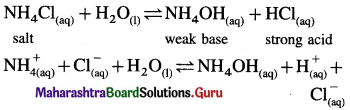
2. PowersThe Managing Director is given substantial powers of management.A whole-time director does not have the power to take decisions on policy matters.
3. Number of postsA person can be an M.D. of a maximum of 2 companies at a time.More than one whole-time directorship is not possible at a time.
4. PerformanceHe manages the affairs and business of the company.He performs important administrative functions of the company.

5. Answer in brief.

Question 1.
What is DIN?
Answer:

  • It means Director Identification Number.
  • DIN is a Unique Identification Number for an existing director or person intending to be the director of a company.
  • It is compulsory to acquire DIN by Director.
  • It helps in the detection and handling of offenses committed by a director.
  • It is obtained through an online process by filing an application.

Maharashtra Board Class 11 Secretarial Practice Solutions Chapter 6 Directors and Key Managerial Personnel of a Company

Question 2.
State any four powers of the Board of Directors.
Answer:

  • Director is a person appointed to manage, direct and supervise the affairs of the company.
  • The power of the Board of Directors are as follows:
  • To appoint or remove key managerial personnel: The Board of Directors has the power to appoint and remove key managerial personnel.
  • To recommend dividend: The board of directors recommends the dividend to the shareholders.
  • To fill a casual vacancy in the Board: Casual vacancy in the board arises due to different reasons such as the death of a director who is filled by the Board at the Board meeting.
  • To issue securities whether in India or abroad: Board of Director’s issue securities means shares, debentures, bonds) in India and abroad also.

Question 3.
Mention any four ways in which the office of a director becomes vacant.
Answer:
The office of a Director shall automatically become vacant in the following ways:

  • Any disqualification: A person cannot be appointed as a director if he is of unsound mind or insolvent or convicted by the court.
  • Absentee at Board meeting: Director who has been absent in the meeting of the board of directors held during the period of 12 months with or without taking leave of absence of the Board.
  • Disqualification by Court or Tribunal: Director has to vacate office if he has been disqualified by an order of a court or the Tribunal.
  • Provision of the Act: Director has to vacate office if he is removed under the provisions of the Companies Act.

Question 4.
State the powers of a Managing Director.
Answer:
As it is stated in the definition itself the Managing Director is entrusted with the substantial powers of management, which clearly indicates that he has been given certain important powers of routine business matters of a company.
The powers exercised by him are fellows:

  • To act as a link between the Board of Directors and the managerial staff.
  • To look after the management and administration of a company.
  • To appoint the company employees.
  • To participate in policymaking as well as policy execution.
  • To sign contracts on behalf of a company.
  • To decide about the investment of funds of a company.
  • To receive remuneration from a company.

Question 5.
State the statutory duties of a company secretary.
Answer:
Secretary is an employee of the company. He enjoys the power and advises the management.
Statutory duties of a company secretary are as follows:

  • To organize meetings and be present at all the meetings of the company.
  • To maintain the minutes of all meetings.
  • To issue notices and circulars to the members of the company.
  • To maintain and update the Register of members and debenture holders and other books of the company.
  • To file all necessary returns with the Registrar of Companies.
  • To communicate with the shareholders on various matters.

Maharashtra Board Class 11 Secretarial Practice Solutions Chapter 6 Directors and Key Managerial Personnel of a Company

6. Justify the following statements.

Question 1.
Directors are managing partners.
Answer:

  • Directors have to work as a team as Board of Directors, not as an individual.
  • The powers by Board are subject to provisions of the Companies Act and Memorandum and Articles of Associations.
  • Director is required to perform his functions.
  • He represents shareholders to conduct and manage the business of the company on their behalf.
  • They are entrusted with vast powers of management and perform several functions which are proprietary in nature like allotment of shares, raising of loans, investing funds of the company.
  • This is because they themselves are significant shareholders of the company.
  • In fact, they are the most active shareholders of the company.
  • Thus, Directors are the managing partners of the company.

Question 2.
A Director is an agent of the company.
Answer:

  • Since the company is an artificial person, it needs to be represented by the Director.
  • They deal on behalf of the company.
  • Directors should deal skillfully, carefully, and diligently.
  • Directors are held liable as an, while company is held liable as the principal.
  • A Director is an agent as he acts between the company and shareholders.
  • Thus, a director is an agent of the company.

Question 3.
The company has a distinct feature of separate ownership and management.
Answer:

  • The company has a unique feature of separate ownership and management.
  • Shareholders are its owner and Directors are its managers.
  • Being an artificial person, it needs a human agent to manage and control the working of the company.
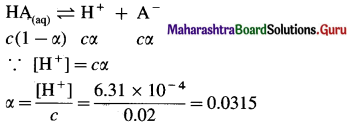
  • Shareholders are scattered all over therefore management of the company by them is not possible.
  • Also, the shareholders are not interested in the management of such a big organization.
  • The company as an artificial person having no physical existence needs humans to control its affair.
  • Thus, the company has a distinct feature of separate ownership and management.

Maharashtra Board Class 11 Secretarial Practice Solutions Chapter 6 Directors and Key Managerial Personnel of a Company

Question 4.
DIN helps investors of the company.

Answer:

  • DIN is a unique identification number for an existing director or person intending to be the director of the company.
  • It is compulsory to acquire DIN by every Director.
  • Din is Pre-require for e-filling of company’s documents.
  • It helps the investors of the company to make a more accurate and informed decisions because they get to known the composition of the top management of the company.
  • It also helps to handle the problems created due to a company after collecting or raising money from the public.
  • Thus, I agree with the given statement.

Question 5.
Directors have to work as a team.
Answer:

  • Directors have to work as a team of “Board of Directors” and not individually.
  • He exercises the power as a Board which is subject to provision of the Act.
  • Director is a representative of shareholders so he has to work collectively in the best interest of the company and its shareholders.
  • He cannot take decisions alone on behalf of the company.

  • Thus, directors have to work as a team.

Question 6.
Directors play a triple role.
Answer:

  • Directors play a triple role i.e. in the form of an agent, as a managing partner, and as a trustee.
  • As an agent, the director deals skillfully, carefully, and elegantly while representing the company with outsiders.
  • As a managing partner, the director acts as a representative of the shareholder and manages the company on their behalf.
  • As a trustee, the director acts as a guardian of the interest of shareholders and a company.
  • They use the company’s funds in the most appropriate manner and cautiously.
  • They are also the trustee of all the assets of the company.

  • Thus, directors play a triple role.

Question 7.
Company Secretary plays a triple role.
Answer:

  • Company Secretary plays a three-fold role in the form of – as a statutory officer, as a coordinator, and as an administration officer.
  • As a statutory officer, the secretary signs the document for authentication, files annual returns to ROC, maintains various statutory registers and ensures compliance with the law.
  • As a coordinator, the secretary acts as a network between the Board of Directors and other executive officers at different levels. He acts as an internal as well as external coordinator for the company.

  • As an administrative officer, the secretary ensures the implementation of various policies of the company and also supervises and controls the functioning of various departments of the company.

  • Thus, Company Secretary plays a triple role.

Maharashtra Board Class 11 Secretarial Practice Solutions Chapter 6 Directors and Key Managerial Personnel of a Company

Question 8.
A director cannot be called an employee of the company.

Answer:

  • Directors are elected representatives of the company’s shareholders.
  • The status of an employee is within the limits of his contract and service.
  • His employer holds the ultimate control to guide his activities and functions.
  • These limits of an employee cannot be applied to a director.
  • So a director cannot be called an employee of the company.
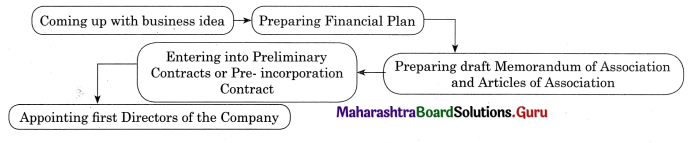
  • Thus, a director cannot be called an employee of the company.

Question 9.
The managing Director has substantial powers of management.
Answer:
As it is stated in the definition itself the Managing Director is entrusted with the substantial powers of management, which clearly indicates that he has been given certain important powers of routine business matters of a company.

The powers exercised by him are as follows:

  • To act as a link between the Board of Directors and the managerial staff.
  • To look after the management and administration of a company.

  • To appoint the company employees.
  • To participate in policymaking as well as policy execution.
  • To sign contracts on behalf of a company.
  • To decide about the investment of funds of a company.
  • To receive remuneration from a company.

Question 10.
Indian companies prefer to appoint a Managing Director than a Manager.
Answer:

  • Indian company prefers to appoint managing director rather than manager because Managing Directors holds dual authorities and he is able to influence the board of director in a better way.
  • Manager need not be a director of a company while the managing director has to be director of a company,
  • The company cannot have more than one manager, while it can have more than one managing director.
  • Thus, Indian companies prefer to appoint a managing director than a manager.

Question 11.
Pro-tem secretary is helpful to the company.
Answer:

  • The first secretary of the company is appointed by the promoters of the company.
  • The first secretary is called as ‘pro-tem’ secretary.
  • Pro-tem secretary appointed by promoters may or may not be appointed as full-time or regular Secretary.
  • Pro-tem secretary helps in fulfilling different formalities during the formation of the company.
  • Thus, the Pro-tem secretary is helpful to the company.

Question 12.
Secretarial Standards should be in conformity with the Act.
Answer:

  • The Secretarial Standards are formulated by the Institute of Company Secretaries of India and approved by the Central Government through the Ministry of Corporate Affairs.
  • The Companies Act, 2013, makes compliance with the Secretarial Standard mandatory.
  • It leads to provide better monitoring of compliances of law, strengthening the process of the Board, and create confidence in investors.
  • The Secretarial Standards aim at achieving integrating, harmonizing, and standardizing fine corporate governance practices across all companies.
  • Thus, Secretarial Standards should be in conformity with the Act.

Maharashtra Board Class 11 Secretarial Practice Solutions Chapter 6 Directors and Key Managerial Personnel of a Company

Question 13.
Secretarial Standards lead to better legal compliance.
Answer:

  • Companies follow diverse practices based on differing business cultures and varied usages over a period of time.
  • The Secretarial Standards aim at achieving integrating, harmonizing, and standardizing fine, corporate governance across all companies
  • It leads to provide better monitoring of compliance of the law, strengthening the process of the Board, and create confidence in investors.
  • Secretarial Standards are reviewed by Secretarial Standard Board (SSB) once a year or whenever changes are made in the law.
  • Thus, Secretarial Standards lead to better legal compliance

Question 14.
A secretarial Audit is required under the laws.
Answer:

  • It is an audit that checks the compliance of various legislation including the Companies Act, other Corporate Acts, and economic laws.
  • It aims at detecting errors and mistakes in the compliance mechanisms.
  • It gives confidence to regulators, management authorities, and shareholders that the company is following a disciplined approach of evaluation and improve effectiveness and risk management.
  • Thus, Secretarial Audit is required under the laws.

7. Answer the following questions.

Question 1.
Explain the Role of Directors.
Answer:
Director is a person appointed to manage, direct and supervise the affairs of the company.
The elected representatives of the shareholders are called Directors.

Role of the Directors:

  • He helps the investors to take accurate decision.
  • He has to fill casual vacancies on the board.
  • He has to recommend dividends.
  • He has to issue securities in India or abroad.
  • He manages a company on behalf of the shareholder.
  • He appoints the first auditor of the company.
  • He can appoint or remove Key Managerial Personnel.
  • He can borrow the money on behalf of the company.
  • His role is full of trust, loyalty, care, and good faith.
  • Directors act as a trustee, agent and managing partner for the company.

Question 2.
Explain the duties of a Director.
Answer:
A director’s relationship with a company is regarded as fiduciary in nature. It means his duty is full of trust, care, and good faith.
The duties of directors can be categorized into two heads:

  1. Statutory Duties:
    • To file a return of Allotment.
    • To act in accordance with the Articles of the company.
    • To disclose an interest in a transaction.
    • To attend Board meetings.
    • To appoint first Auditors of the company.
  2. General Duties:
    • Duty of good faith i.e. he must act in the best interest of the company.
    • Duty of care i.e. he must take utmost care in the performance of work assigned.
    • Duty not to delegate i.e. he is required to perform his function personally. He may delegate in case of emergency.

Maharashtra Board Class 11 Secretarial Practice Solutions Chapter 6 Directors and Key Managerial Personnel of a Company

Question 3.
Explain the Managing Director.
Answer:
Definition: The Companies Act, has defined a Managing Director as “A Director who by virtue of an agreement with the company or of a resolution passed by a company in the general meeting or by its Board of Directors or by virtue of its Memorandum or Articles of Association, is entrusted with substantial powers of management of the company”.

Disqualification:

  • Any person less than 21 years of age and more than 70 years of age.
  • A person who is an undischarged insolvent person or has at any time been adjudged as an insolvent.
  • A person who has suspended payment to his creditors or made a composition with them.
  • A person who is, or has been convicted by a court of an offense with a sentence of more than 6 months period.

Appointment:
A Managing Director may be appointed by any one of the following ways:

  • by an agreement with a company.
  • by the resolution passed at the general meeting.
  • by the Board of Directors.

Term of office:
The term of office of the Managing Director cannot exceed 5 years at a time, but he can be reappointed as such for a further period of five years.

The number of Managing Directorship:
A Managing Director can not act as such for more than two companies at the same time.

Remuneration:
The remuneration paid to the Managing Director is subject to the maximum limit of 5% of the net profit of a company or a monthly salary. If a company has more than one Managing Director then total remuneration paid to them (all) shall not exceed 10% of the net profit.

Powers of a Managing Director:

  • To act as a link between the Board of Directors and the managerial staff.
  • To look after the management and administration of a company.
  • To appoint the company employees.
  • To participate in policymaking as well as policy execution.
  • To sign contracts on behalf of a company.
  • To decide about the investment of funds of a company.
  • To receive remuneration from a company.

Duties of a Managing Director:

  • To act on behalf (agent) of the Board of Directors.
  • To implement the decision of the Board.
  • To supervise, direct, control, and guide the day-to-day affairs of the business.
  • To guide the senior executives in their administrative work.
  • To report to the Board about programmes made or any problem faced by a company.
  • To chair the Board meetings and general meetings, if necessary.
  • To manage routine work of a company.
  • To sign all the contracts and documents on behalf of the company.

Question 4.
Explain the Company Secretary.
Answer:
Meaning:

  • Secretary is an employee of the company and he is appointed to perform functions of a company secretary,
  • He should be a member of the Institute of Company Secretaries of India (ICSI).
  • The first secretary is appointed by the promoter of the company and he is called a ‘pro-tem’ secretary.
  • He holds liable for non-compliance with the provisions of the Act.

Duties of a Company Secretary:
It is categorized as (A) Statutory Duties and (B) General Duties.

(A) Statutory Duties:

  • To organize and attend meetings of the company.
  • To prepare minutes of meetings.
  • To communicate with shareholders on various matters.
  • To issue notices and circulars to the members of the company.
  • To maintain various Registers and books of the company
  • To file returns with the ROC.

(B) General Duties:

  • To provide guidance to the Board of Directors as needed.
  • To discharge duties towards regulators and authorities of the company.
  • To assist the Board of Directors in conducting the business of the company.
  • To perform duties allotted by the Board.

Rights of a Secretary:

  • To control and supervise the working of departments of the company.
  • To get indemnified by the company, if any loss is suffered by the secretary.
  • To sign documents requiring authentication.
  • To get remuneration from the company.

Maharashtra Board Class 11 Secretarial Practice Solutions Chapter 6 Directors and Key Managerial Personnel of a Company

Question 5.
Explain the role of the Company Secretary.
Answer:
The company secretary plays a crucial and important role in the administration of the company.
The emphasis on good governance has increased the role of the secretary in protecting the interest of investors.

Role of Company Secretary:

  • Secretary as a Statutory officer:
  • To sign documents for authentication.
  • To sign and deliver Annual Returns and other documents and to the Registrar of Companies.
  • To maintain different statutory registers like
    • Minutes of General and Board meetings of the company.
    • Registers of Members and Debenture holders Register of Directors and KMP and their shareholdings.
  • To ensure compliance with the law

(ii) Secretary as a Co- ordinator:

  • To implement policies framed by the Board.
  • To act as a link between the Board and other executives at different levels.
  • To act as a mouthpiece or spokesperson of the Board.
  • To act as an internal and external coordinator.

(iii) Secretary as an Administration officer:

  • To ensure implementation of the policies of the company.
  • To supervise and control the functioning of different departments of the company.
  • To take an overall view of different aspects of the company’s administration and develop a strong and efficient organizational setup.
  • To contribute to the administration of the company.

Maharashtra Board Class 11 Biology Important Questions Chapter 1 Living World

Balbharti Maharashtra State Board 11th Biology Important Questions Chapter 1 Living world Important Questions and Answers.

Maharashtra State Board 11th Biology Important Questions Chapter 1 Living World

Question 1.
What are the basic principles of life?
Answer:
The basic principles of life are as follows:

  1. Metabolism: Metabolism is breaking of molecules (catabolism) and making of new molecules (anabolism). An organism performs metabolism in order to obtain energy and various chemical molecules essential for survival.
  2. Growth and development: Organisms tend to grow and develop in a well-orchestrated process from birth onwards.
  3. Ageing: It is the process during which molecules, organs and systems begin to lose their effective working and become old.
  4. Reproduction: For continuity of race (species), organisms reproduce (asexually or sexually) to produce young ones like themselves. However, mules and worker bees do not reproduce, yet are living.
  5. Death: As the body loses its capacity to perform metabolism, an organism dies.
  6. Responsiveness: Living organisms respond to thermal, chemical or biological changes in their surroundings.

Maharashtra Board Class 11 Biology Important Questions Chapter 1 Living World

Question 2.
Enlist the characters of living organisms.
Answer:
The basic principles of life are as follows:

  1. Metabolism: Metabolism is breaking of molecules (catabolism) and making of new molecules (anabolism). An organism performs metabolism in order to obtain energy and various chemical molecules essential for survival.
  2. Growth and development: Organisms tend to grow and develop in a well-orchestrated process from birth onwards.
  3. Ageing: It is the process during which molecules, organs and systems begin to lose their effective working and become old.
  4. Reproduction: For continuity of race (species), organisms reproduce (asexually or sexually) to produce young ones like themselves. However, mules and worker bees do not reproduce, yet are living.
  5. Death: As the body loses its capacity to perform metabolism, an organism dies.
  6. Responsiveness: Living organisms respond to thermal, chemical or biological changes in their surroundings.

Question 3.
What are taxonomical aids? Give examples.
Answer:
Taxonomical aids are used to study biodiversity, e.g. Herbaria, botanical gardens, museums, biodiversity parks, etc.

Question 4.
What is a herbarium?
Answer:
Herbarium is a dried plant specimen that is pressed, treated and mounted on a standard size sheet in order to preserve it.
[Note: Herbarium is a collection of dried, pressed and labelled plant specimens arranged by a classification system.]

Maharashtra Board Class 11 Biology Important Questions Chapter 1 Living World

Question 5.
What information is mentioned in the label of a plant specimen preserved in herbarium?
Answer:
It is also essential to record the date, place of collection along with detailed classification and highlighting with its ecological peculiarities, characters of the plant on a sheet. Local names of plant specimens and name of the collector may be added. This information is given at lower right comer of sheet and is called ‘label’.

Question 6.
What are botanical gardens?
Answer:
Botanical gardens are places where plants of different varieties collected from different parts of the world are grown in vivo in a scientific and systematic manner.

Question 7.
Define biodiversity.
Answer:
Biodiversity is the degree of variation of life forms in an ecosystem.

Question 8.
Define conservation.
Answer:
Conservation involves attempting to slow down, stop or even reverse the loss in the natural habitat of an organism.

Question 9.
What is a museum? What are the various specimens found in a museum?
Answer:
1. Museums are places where collections of preserved plant and animal specimens are kept.
2. The different types of specimens found in a museum include;
(a) Plant and animal specimens preserved in formalin (10% to 40% formaldehyde) in transparent jars.
(b) Larger animals like birds and mammals, usually stuffed and preserved.
(c) Certain specimens in dried forms are also kept in a museum.
(d) Systematic collections of shells, skeletons of animals and insect boxes are also found in museums.

Maharashtra Board Class 11 Biology Important Questions Chapter 1 Living World

Question 10.
What is taxidermy?
Answer:
Taxidermy is a science in which larger animals like birds and mammals are usually stuffed and preserved.

Question 11.
Write a note on zoological park.
Answer:

  1. Zoological park (zoo) is a place where wild animals are kept in captivity.
  2. Wild animals are kept in a protected environment and care is taken to provide conditions similar to their natural habitat.
  3. It is a form of ex situ conservation of species i.e. away from their natural habitat.
  4. A naturalist can study the food habits and behaviour of animals in a zoological park.

Question 12.
Mention some tools of maintaining biodiversity records.
Answer:
Flora, manuals, monographs and catalogues are some tools of maintaining biodiversity records.

Question 13.
Explain the different tools used for maintaining biodiversity records.
Answer:
The different tools used for maintaining biodiversity records are as follows:

  • Flora: It is the plant life occurring in a particular area at a particular time.
  • Monograph: It describes any one selected biological group.
  • Manual: It provides information and keys about identification of species found in a particular area.

Maharashtra Board Class 11 Biology Important Questions Chapter 1 Living World

Question 14.
Define biodiversity park.
Answer:
Biodiversity park is an ecological assemblage of species that form self-sustaining communities on degraded/ barren landscape, e.g. Uttamrao Patil Biodiversity Park, Gureghar, Mahabaleshwar.

Question 15.
Write a note on ‘key’ used as a taxonomical aid.
Answer:

  1. Key is a taxonomical aid used in the classification of plants and animals.
  2. Keys are based on contrasting characters. One of the contrasting characters gets accepted and the other gets rejected.
  3. The statement in a key is called a lead.
  4. Normally keys are analytical in nature.

Question 16.
Name the following.

  1. A collection of dried plant specimen that are pressed, treated and mounted on a standard size sheet in order to preserve it.
  2. Places where collections of preserved plant and animal specimens are kept.
  3. Taxonomical aid used for classification of plants and animals which is based on contrasting characters.

Answer:

  1. Herbarium
  2. Museum
  3. Key

Question 17.
Fill in the blanks:

  1. The extent of complexity and density of ________ can be regarded as a measure of health of an ecosystem.
  2. In a museum, plant and animal specimens are preserved in _________ in transparent jars.
  3. A naturalist can study food habits and behaviour of animals in a ___________.
  4. Study of _________ is a must, to understand interrelations between organisms and maintain harmony on planet earth.
  5. The statement in a key is called a _________.

Answer:

  1. biodiversity
  2. formalin
  3. zoo/ zoological park
  4. biodiversity
  5. lead

Maharashtra Board Class 11 Biology Important Questions Chapter 1 Living World

Question 18.
Rakesh went for a study tour to the nearest national park. There he found some different plant species. He was not aware about their names and family. He wanted to bring that plants to his college and keep them for longer period of time, so that he can study them thoroughly. What should he do in such a situation?
Answer:
1. Rakesh can press and mount the plant specimen on the herbarium sheet and can preserve the dried plant material.
2. He can also write any information he knows about the plant on herbarium sheet, which can be used for further studies.

Question 19.
While doing his Ph.D. in Plant Taxonomy your friend has come across a plant, which he feels is a new species. How can he confirm the same?
Answer:
1. The newly discovered plant can be identified with the help of taxonomic keys, monographs, floras, herbaria and preserved plant specimens.
2. A separate taxonomic key is available for each taxonomic category.
3. The individual would have to study the morphological and anatomical features of the plant and compare it with the existing information available in the scientific literature.
Conservation of Biodiversity

Question 20.
Quick Review:
Answer:
Maharashtra Board Class 11 Biology Important Questions Chapter 1 Living World 1
Maharashtra Board Class 11 Biology Important Questions Chapter 1 Living World 2

Question 21.
Multiple Choice Questions:

Question 1.
Which one of the following aspects is an inclusive characteristic of living things?
(A) Isolated metabolic reactions occurring in vitro
(B) Reproduction
(C) Irritability
(D) Increase in mass by accumulation of material on surface
Answer:
(C) Irritability

Maharashtra Board Class 11 Biology Important Questions Chapter 1 Living World

Question 2.
Which of the following property is shown by both living and non-living things?
(A) Growth
(B) Consciousness
(C) Ageing
(D) Metabolism
Answer:
(A) Growth

Question 3.
Herbarium is
(A) a collection of living plants which are medicinally important
(B) a place where plants collected from different parts of the world are grown
(C) a garden where herbs are cultivated
(D) a collection of dried and preserved plants
Answer:
(D) a collection of dried and preserved plants

Question 4.
A zoological park does not
(A) have wild animals in captivity under human care.
(B) provide conditions similar to their natural habitat of animals.
(C) have a systematic collection of shells and skeletons of animals
(D) enable naturalists to study the food habits and behaviour of wild animals.
Answer:
(C) have a systematic collection of shells and skeletons of animals

Maharashtra Board Class 11 Biology Important Questions Chapter 1 Living World

Question 5.
A naturalist can study food habits and behaviour of animals in a
(A) museum
(B) zoological park
(C) botanical garden
(D) herbarium
Answer:
(B) zoological park

Question 6.
Which of the following is NOT a tool of maintaining biodiversity records?
(A) Flora
(B) Monograph
(C) Fauna
(D) Manual
Answer:
(C) Fauna

Question 7.
Which of the following tools provides information for identification of names of species found in a particular area?
(A) Catalogues
(B) Manuals
(C) Flora
(D) Monographs
Answer:
(B) Manuals

Question 8.
Keys are taxonomical aids that
(A) are used to identify plants and animals based on similarities and dissimilarities.
(B) contains the account of habitat and distribution of plants in a given area.
(C) provides an index to the plant species found in a particular area.
(D) provide information for identification of species found in an area.
Answer:
(A) are used to identify plants and animals based on similarities and dissimilarities.

Maharashtra Board Class 11 Biology Important Questions Chapter 1 Living World

Question 22.
Competitive Corner:

Question 1.
Match the items given in Column I with those in Column II and select the correct option given below: [NEET (UG) 2018]
Answer:

Column IColumn II
1. Herbarium(a) It is a place having a collection of preserved plants and animals
2. Key(b) A list that enumerates methodically all the species found in an area with brief description aiding identification
3. Museum(c) It is a place where dried and pressed plant specimens mounted on sheets are kept
4. Catalogue(d) A booklet containing a list of characters and their alternates which are helpful in identification of various taxa.

(A) i-b, ii-d, iii-c, iv-a
(B) i-c, ii-b, iii-a, iv-d
(C) i-a, ii-d, iii-c, iv-b
(D) i-c, ii-d, iii-a, iv-b
Answer:
(D) i-c, ii-d, iii-a, iv-b

Question 2.
The label of a herbarium sheet does not carry information on
(A) height of the plant
(B) date of collection
(C) name of collector
(D) local names
Answer:
(A) height of the plant

Question 3.
Which one of the following is NOT a correct statement? [NEET 2013]
(A) Herbarium houses dried, pressed and preserved plant specimens.
(B) Botanical gardens have collection of living plants for reference.
(C) A museum has collection of photographs of plants and animals.
(D) Key is a taxonomic aid for identification of specimens.
Answer:
(C) A museum has collection of photographs of plants and animals.

Maharashtra Board Class 11 Biology Important Questions Chapter 1 Living World

Question 23.
Basic Principles of Life

Question 1.
Define metabolism.
Answer:
Metabolism: Metabolism is breaking of molecules (catabolism) and making of new molecules (anabolism). An organism performs metabolism in order to obtain energy and various chemical molecules essential for survival.

Question 2.
Enlist the basic principles of life.
Answer:
The basic principles of life are as follows:
(i) Metabolism: Metabolism is breaking of molecules (catabolism) and making of new molecules (anabolism). An organism performs metabolism in order to obtain energy and various chemical molecules essential for survival.
(ii) Growth and development: Organisms tend to grow and develop in a well-orchestrated process from birth onwards.
(iii) Ageing: It is the process during which molecules, organs and systems begin to lose their effective working and become old.
(iv) Reproduction: For continuity of race (species), organisms reproduce (asexually or sexually) to produce young ones like themselves. However, mules and worker bees do not reproduce, yet are living.
(v) Death: As the body loses its capacity to perform metabolism, an organism dies.
(vi) Responsiveness: Living organisms respond to thermal, chemical or biological changes in their surroundings.

Question 3.
Reproduction is not an inclusive character of life. Explain.
Answer:
No, we cannot call reproduction as an inclusive character of life. Certain organisms like mules and worker bees do not reproduce and are still living. Thus, reproduction cannot be considered as an all inclusive defining characteristic of living organisms.

Question 4.
Define taxonomical aids and give two examples
Answer:
Taxonomical aids are used to study biodiversity, e.g. Herbaria, botanical gardens, museums, biodiversity parks, etc.

Question 5.
1. Define herbarium.
2. Mention any four essentials of a good herbarium.
Answer:
1. Herbarium is a dried plant specimen that is pressed, treated and mounted on a standard size sheet in order to preserve it.
[Note: Herbarium is a collection of dried, pressed and labelled plant specimens arranged by a classification system.]

2. The essentials of a good herbarium are as follows:
(i) It is essential to identify and label the collected specimen correctly.
(ii) Specimens should be stored in a dry place.
(iii) The plants are usually pressed and mounted on the sheet of paper known as herbarium sheets. Some plants are not suitable for pressing or mounting, like succulents, seeds, cones, etc. They need to be preserved in suitable liquid like formaldehyde, acetic alcohol, etc.
(iv) In order to preserve the specimen for longer durations, acid-free paper, special glues and inks must be used to mount the specimen so that the specimen does not deteriorate.

Maharashtra Board Class 11 Biology Important Questions Chapter 1 Living World

Question 6.
Shanaya found a unfamiliar plant on her visit to Tamil Nadu. She wants to study the plant thoroughly in her laboratory? How can she do so?
Answer:
1. Riya can press and mount the plant specimen on a herbarium sheet and preserve the dried plant material, until she returns back from her visit.
2. She can also write any available information regarding the collected specimen on the herbarium sheet, which can be useful for further studies with her biology teacher.
3. Various taxonomical aids can be useful to get information about this peculiar plant.
[Note: In order to conserve the local flora, Riya can collect photographs ofplant and describe it’s structure to her teacher.]

Question 7.
Manas wants to prepare a herbarium of plants.
1. What is a herbarium?
2. What are the essentials he should keep in mind to prepare a good herbarium?
3. What information should be added on the label of a herbarium?
Answer:
1. Herbarium is a dried plant specimen that is pressed, treated and mounted on a standard size sheet in order to preserve it.
[Note: Herbarium is a collection of dried, pressed and labelled plant specimens arranged by a classification system.]

2. (i) It is essential to identify and label the collected specimen correctly.
(ii) Specimens should be stored in a dry place.
(iii) The plants are usually pressed and mounted on the sheet of paper known as herbarium sheets. Some plants are not suitable for pressing or mounting, like succulents, seeds, cones, etc. They need to be preserved in suitable liquid like formaldehyde, acetic alcohol, etc.
(iv) In order to preserve the specimen for longer durations, acid-free paper, special glues and inks must be used to mount the specimen so that the specimen does not deteriorate.
(v) The specimens should be dried well before preparing a herbarium in order to prevent rotting of specimen.

3. It is also essential to record the date, place of collection along with detailed classification and highlighting with its ecological peculiarities, characters of the plant on a sheet. Local names of plant specimens and name of the collector may be added. This information is given at lower right comer of sheet and is called ‘label’.

Maharashtra Board Class 11 Biology Important Questions Chapter 1 Living World

Question 8.
Can humans help in conservation of biodiversity? Explain your answer.
Answer:

  1. Due to rapid increase in human population and industrialization, humans have over utilized natural resources; leading to degradation of the environment and hence only humans can help conserve the ecosystem.
  2. Humans are capable of conserving and improving the quality of nature and thus, can play a major role in biodiversity conservation.
  3. In order to conserve biodiversity and its environmental resources, humans must use the resources rationally and avoid excessive degradation of environment.
  4. Human beings are stakeholders of the environment and need to come together to overcome pollution and improve the environment quality in order to conserve biodiversity.

E.g. Ban or limit on use of harmful products (plastic, chemicals, etc.) that are toxic to various birds, animals, etc. Human beings also play a role in conservation of biodiversity by establishment of various sites for in situ (national parks, wildlife sanctuaries and biosphere reserves) and ex situ (botanical gardens, culture collections and zoological parks) conservation.

Question 9.
Write a note on botanical gardens.
Answer:
Botanical gardens are places where plants of different varieties collected from different parts of the world are grown in vivo in a scientific and systematic manner.
The importance of botanical gardens is as follows:

  1. It is a place where there is an assemblage of living plants maintained for botanical teaching and research purpose.
  2. Botanical gardens are important for their records of local flora.
  3. Botanical gardens provide facilities for the collection of living plant materials for botanical studies.
  4. Botanical gardens also supply seeds and material for botanical investigations.
  5. The development of botanical gardens in any country is associated with its history of civilization, culture, heritage, science, art, literature and various other social and religious expressions.
  6. Botanical gardens besides possessing an outdoor garden may contain herbaria, research laboratory, greenhouses and library.
  7. Botanical gardens are not only important for botanical studies, but also to develop tourism in the country.

Maharashtra Board Class 11 Biology Important Questions Chapter 1 Living World

Question 10.
Botanical gardens are important in botanical studies. Justify.
Answer:
Metabolism can be considered as an all-inclusive (defining) feature of life since it is exhibited by all living organisms and does not take place in non-living things. Another all-inclusive characteristic of life is responsiveness or irritability. This is a unique property of living beings since all living beings are conscious of their surroundings.

Question 11.
Suggest any three measures you can take to prevent loss of biodiversity.
Answer:
The essentials of a good herbarium are as follows:

  1. It is essential to identify and label the collected specimen correctly.
  2. Specimens should be stored in a dry place.
  3. The plants are usually pressed and mounted on the sheet of paper known as herbarium sheets. Some plants are not suitable for pressing or mounting, like succulents, seeds, cones, etc. They need to be preserved in suitable liquid like formaldehyde, acetic alcohol, etc.
  4. In order to preserve the specimen for longer durations, acid-free paper, special glues and inks must be used to mount the specimen so that the specimen does not deteriorate.
  5. The specimens should be dried well before preparing a herbarium in order to prevent rotting of specimen.
  6. It is also essential to record the date, place of collection along with detailed classification and highlighting with its ecological peculiarities, characters of the plant on a sheet.

Local names of plant specimens and name of the collector may be added. This information is given at lower right comer of sheet and is called ‘label’.

Question 12.
1. Define biodiversity.
2. How does loss of biodiversity affect the ecosystem?
Answer:
1. Biodiversity is the degree of variation of life forms in an ecosystem.
2. (i) The loss of biodiversity is an moral and ethical issue.
(ii) Biodiversity helps to maintain stability in an ecosystem.
(iii) Humans share the environment with various other organisms and harm to these species can result in loss of biodiversity.
(iv) The loss of even one variety of organisms can affect the entire ecosystem.
Hence, due to all these reasons, loss of biodiversity matters.

Maharashtra Board Class 11 Biology Important Questions Chapter 1 Living World

Question 13.
Define botanical garden and write a note on importance of greenhouses in botanical gardens.
Answer:
Botanical gardens are places where plants of different varieties collected from different parts of the world are grown in vivo in a scientific and systematic manner.

  1. Greenhouse is a structure with suitable walls and a roof in which plants are grown under regulated climatic conditions.
  2. Most botanical gardens exhibit ornamental plants which require stringent/ optimum climatic conditions for their growth and/or flowering.
  3. The greenhouse associated with botanical gardens are also used to grow and propagate those plants that may not survive seasonal changes.

Question 14.
Which science is used to animals at museums? preserve larger
Answer:
Taxidermy is a science in which larger animals like birds and mammals are usually stuffed and preserved.

Question 15.
What is a museum?
Answer:
Museums are places where collections of preserved plant and animal specimens are kept.

Question 16.
What chemical is used to preserve plant and animal specimens in transparent jars at museums?
Answer:
Plant and animal specimens preserved in formalin (10% to 40% formaldehyde) in transparent jars.

Maharashtra Board Class 11 Biology Important Questions Chapter 1 Living World

Question 17.
Define the following terms:
1. Flora
2. Monograph
3. Manual
Answer:
The different tools used for maintaining biodiversity records are as follows:
1. Flora: It is the plant life occurring in a particular area at a particular time.
2. Monograph: It describes any one selected biological group.
3. Manual: It provides information and keys about identification of species found in a particular area.

Question 18.
Define the following terms:

  1. Botanical garden
  2. Zoological parks
  3. Biodiversity parks
  4. Museum
  5. Herbarium

Answer:

  1. Botanical gardens are places where plants of different varieties collected from different parts of the world are grown in vivo in a scientific and systematic manner.
  2. Zoological park (zoo) is a place where wild animals are kept in captivity.
  3. Biodiversity park is an ecological assemblage of species that form self-sustaining communities on degraded/ barren landscape, e.g. Uttamrao Patil Biodiversity Park, Gureghar, Mahabaleshwar.
  4. Museums are places where collections of preserved plant and animal specimens are kept.
  5. Herbarium is a dried plant specimen that is pressed, treated and mounted on a standard size sheet in order to preserve it.

[Note: Herbarium is a collection of dried, pressed and labelled plant specimens arranged by a classification system.]

Maharashtra Board Class 11 Biology Important Questions Chapter 1 Living World

Question 19.
On what characters is the ‘key’ based on? taxonomical aid
Answer:

  1. Key is a taxonomical aid used in the classification of plants and animals.
  2. Keys are based on contrasting characters. One of the contrasting characters gets accepted and the other gets rejected.
  3. The statement in a key is called a lead.
  4. Normally keys are analytical in nature.

Maharashtra Board Class 11 Biology Solutions Chapter 1 Living world

Balbharti Maharashtra State Board 11th Biology Textbook Solutions Chapter 1 Living world Textbook Exercise Questions and Answers.

Maharashtra State Board 11th Biology Solutions Chapter 1 Living world

1. Choose correct option.

Question (A)
Which is not a property of living beings?
(a) Metabolism
(b) Decay
(c) Growth
(d) Reproduction
Answer:
(b) Decay

Maharashtra Board Class 11 Biology Solutions Chapter 1 Living world

Question (B)
A particular plant is strictly seasonal plant. Which one of the following is best suited if it is to be studied in the laboratory?
(a) Herbarium
(b) Museum
(c) Botanical garden
(d) Flower exhibition
Answer:
(a) Herbarium

Question (C)
A group of students found two cockroaches in the classroom. They had a debate whether they are alive or dead. Which life property will help them to do so?
(a) Metabolism
(b) Growth
(c) Irritability
(d) Reproduction
Answer:
(c) Irritability

Question 2.
Distinguish between botanical gardens, zoological parks and biodiversity parks with reference to characteristics.
Answer:

Botanical GardensZoological ParksBiodiversity Parks
1. Plants of different varieties collected from different parts of the world are grown in vivo in a scientific and systematic manner in a botanical garden.Zoological parks are places where wild animals are kept in captivity.It is an assemblage of species that      form    self-sustaining

communities on degraded/ barren landscape.

2. It is a type of ex situ conservation.It is a type of ex situ conservation.It is a type of in situ conservation.
3. It is related to conservation of various flora.It is related to conservation of various fauna.It is related to conservation of all biodiversity.

Maharashtra Board Class 11 Biology Solutions Chapter 1 Living world

3. Answer the following questions

Question (A)
Jijamata Udyan, the famous zoo in Mumbai has acclimatised Humboldt penguins. Why should penguins be acclimatised when kept at a place away from their natural habitat?
Answer:

  1. Zoological park (zoo) is a type of ex-situ conservation in which wild animals are kept in captivity.
  2. Humboldt penguins are native to South America and the surrounding environment differs significantly at Jijamata Udyan (zoo) in Mumbai.
  3. In order to ensure that these penguins survive longer and are healthy they need to be acclimatised (adjust) to their new environment slowly.
  4. If they are not acclimatised or the facilities in the zoo where the penguins are kept are not optimal/ suitable, they may develop abnormal stress and exhibit unusual behaviours due to it.
  5. These penguins may also be more prone to contracting certain diseases, since they are suited to living in a particular climatic condition.
  6. The enclosure of these penguins consists of water pool, air handling units and a chiller system to maintain temperatures between 12 – 14°C, where the penguins were kept for around 8 to 10 days to get acclimatised to their new environment before allowing any visitors inside the zoo.

Hence, Humboldt penguins need to be acclimatised to their new surroundings, when kept at a place away from their natural habitat.

Question (B)
Riya found a peculiar plant on her visit to Himachal Pradesh. What are the ways she can show it to her biology teacher and get information about it?
Answer:

  1. Riya can press and mount the plant specimen on a herbarium sheet and preserve the dried plant material, until she returns back from her visit.
  2. She can also write any available information regarding the collected specimen on the herbarium sheet, which can be useful for further studies with her biology teacher.
  3. Various taxonomical aids can be useful to get information about this peculiar plant.

[Note: In order to conserve the local flora, Riya can collect photographs ofplant and describe it’s structure to her teacher.]

Question (c)
At Andaman, authorities do not allow tourists to collect shells from beaches. Why must it be so?
Answer:

  1. Seashells are an important part of the coastal ecosystem and are crucial for the survival of various marine creatures.
  2. They provide material for building nests of birds and also act as a substratum for attachment of algae, sea grass, sponges and various microbes.
  3. Fishes use shells for hiding from predators, whereas hermit crabs use shells as temporary shelters.
  4. Removal of seashells from seashores may also indirectly affect the rate of shoreline erosion.

Hence, in an attempt to protect the ecosystem, authorities in Andaman do not allow tourists to collect shells from beaches.

Maharashtra Board Class 11 Biology Solutions Chapter 1 Living world

Question (D)
Why do we have greenhouse in botanical gardens?
Answer:

  1. Greenhouse is a structure with suitable walls and a roof in which plants are grown under regulated climatic conditions.
  2. Most botanical gardens exhibit ornamental plants which require stringent/ optimum climatic conditions for their growth and/or flowering.
  3. The greenhouse associated with botanical gardens are also used to grow and propagate those plants that may not survive seasonal changes.

Question (E)
What do you understand from terms like in situ and ex situ conservation?
Answer:
1. In situ conservation: It includes conservation of species in their natural habitats. Grazing, cultivation and collection of products from the forests is banned in such areas. Legally protected areas include national parks, wildlife sanctuaries and biosphere reserves.
2. Ex situ conservation: It includes conservation of species outside their natural habitats. Species are conserved in botanical gardens, culture collections and zoological parks.

4. Write short notes

Question (A)
Write a short note on role of human being in biodiversity conservation.
Answer:

  1. Due to rapid increase in human population and industrialization, humans have over-utilized natural resources; leading to degradation of the environment and hence only humans can help conserve the ecosystem.
  2. Humans are capable of conserving and improving the quality of nature and thus, can play a major role in biodiversity conservation.
  3. In order to conserve biodiversity and its environmental resources, humans must use the resources rationally and avoid excessive degradation of environment.
  4. Human beings are stakeholders of the environment and need to come together to overcome pollution and improve the environment quality in order to conserve biodiversity. E.g. Ban or limit on use of harmful products (plastic, chemicals, etc.) that are toxic to various birds, animals, etc.
  5. Human beings also play a role in conservation of biodiversity by establishment of various sites for in situ (national parks, wildlife sanctuaries and biosphere reserves) and ex situ (botanical gardens, culture collections and zoological parks) conservation.

Question (B)
Importance of botanical garden
Answer:
The importance of botanical gardens is as follows:

  1. It is a place where there is an assemblage of living plants maintained for botanical teaching and research purpose.
  2. Botanical gardens are important for their records of local flora.
  3. Botanical gardens provide facilities for the collection of living plant materials for botanical studies.
  4. Botanical gardens also supply seeds and material for botanical investigations.
  5. The development of botanical gardens in any country is associated with its history of civilization, culture, heritage, science, art, literature and various other social and religious expressions.
  6. Botanical gardens besides possessing an outdoor garden may contain herbaria, research laboratory, greenhouses and library.
  7. Botanical gardens are not only important for botanical studies, but also to develop tourism in the country.

Maharashtra Board Class 11 Biology Solutions Chapter 1 Living world

Question 5.
How can you, as an individual, prevent the loss of biodiversity?
Answer:
As individuals, we can prevent loss of biodiversity in the following ways:

  1. Increasing awareness about environmental issues. Making posters that provide more information about biodiversity conservation, to raise public awareness.
  2. Increased support and/ or active participation in government policies and actions laid down for conservation of biodiversity.
  3. Protect various plant and animal species in our surrounding.
  4. Set up bird and bat houses wherever possible.
  5. Prevent felling of trees especially native plants or trees in a particular area.
  6. Reduce, recycle and reuse resources. Especially, reduce pollution and use of plastic bags and other materials that are potential threats for the environment.
  7. Use environment friendly products, segregate and dispose garbage correctly.
  8. Convince people about the importance of trees and the need to participate in tree plantation campaign.
  9. Obey the rules that fall under Biodiversity Act.

[Students can use the given points as reference and mention additional preventive measures on their own.]

Practical / Project:

Question 1.
Make a herbarium under the guidance of your teacher.
[Students are expected to perform the given activity by themselves under the guidance of their teacher.]

Question 2.
Find out information about any one sacred grove (Devrai) in Maharashtra.
Answer:
Sacred groves in Maharashtra are located in districts like Ahmednagar, Bhandara, Chandrapur, Jalgaon, Kolhapur, Nashik, Pune, Raigad, Ratnagiri, Sangli, Satara, Sindhudurg, Thane, Yavatmal.
[Source: Data as per C.P.R. Environment Education Centre, Chennai.]
e. g. Sacred grove of Parinche valley, Pune district of Maharashtra:

The Parinche valley region is comprised of the inaccessible rear part of the Purandhar fort and its surrounding valley region and is situated about 63 km to the southeast of Pune city and 18 km from Saswad town. The total area of the valley region is about 132 sq. km. Parinche is the biggest village and a nodal place in the valley. The majority (12) of the documented groves are located in the Kaldari and Pangare zones. The size of the sacred groves has however reduced due to various human related activities that have taken place in recent years.

The biggest sacred grove in the Parinche valley belongs to Buvasaheb of Tonapewadi and spreads over an area of 4.80 hectares. The forest types are unique to the groves. Presence of key species in the sacred groves varies from region to region. Two key tree species, i.e. Terminalia bellerica and Ficus spp., are present in these sacred groves which have almost disappeared from the surrounding areas.

Large buttressed trees are another important feature of well-preserved sacred groves. The presence of these tree species indicates the vegetation of the past and also the type of potential vegetation that can be regenerated in these regions.
[Source: Waghchaure, C. K., Tetali, P., Gunale, V. R., Antia, N. H., & Birdi, T. J. (2006). Sacred Groves of Parinche Valley of Pune District of Maharashtra, India and their Importance. Anthropology & Medicine, 13(1), 55-761
[Students can refer the given answer and search for more information about other sacred groves on their own.]

11th Biology Digest Chapter 1 Living world Intext Questions and Answers

Can you recall? (Textbook Page No. 01)

Whether all organism are similar? Justify your answer.
Answer:
No, all organisms are not similar.

  1. Organisms on the earth exhibit great diversity.
  2. Organisms are grouped as microbes, plants (autotrophs), animals (heterotrophs) and decomposers.
  3. Different microbes and decomposers have various shapes and sizes.
  4. Plants can be further classified on their shape, size, structure, mode of reproduction, etc. Plants also differ greatly based on the locations in which they are found, e.g. Snowy, desert, forest, aquatic, etc.
  5. Even animals show a high degree of variation. They are classified as unicellular, multicellular, invertebrates, vertebrates, etc. Also, based on the environment in which they live, they are classified as terrestrial, aerial, aquatic and amphibians.

Maharashtra Board Class 11 Biology Solutions Chapter 1 Living world

Can you tell? (Textbook Page No. 01)

Whether all organisms prepare their own food?
Answer:
No, all organisms do not prepare their own food. Organisms that prepare their own food are known as autotrophs (e.g. Green plants, certain microbes). These organisms prepare their own food in the presence of sunlight, water and carbon dioxide.

Can you recall? (Textbook Page No.01)

what is the difference between living and non-living things?
Answer:

Living ThingsNon-living Things
(a) Living things show growth from within.Non-living things show growth by accumulation of materials on their surface.
(b) They reproduce asexually or sexually, except mules, sterile worker bees, infertile males.They do not reproduce.
(c) They perform metabolism in order to obtain energy.No metabolic changes occur in non-living things.
(d) They show irritability and respond to changes in their surroundings.They do not show irritability.
(e) They undergo ageing and eventually die.Non-living things do not have a finite life span.

Can we call? (Textbook Page No. 01)

Can we call reproduction as inclusive character of life?
Answer:
No, we cannot call reproduction as an inclusive character of life. Certain organisms like mules and worker bees do not reproduce and are still living. Thus, reproduction cannot be considered as an all inclusive defining characteristic of living organisms.

Maharashtra Board Class 11 Biology Solutions Chapter 1 Living world

Can you tell? (Textbook Page No. 01)

Which feature can be considered as all-inclusive characteristic of life? Why?
Answer:
Metabolism can be considered as an all-inclusive (defining) feature of life since it is exhibited by all living organisms and does not take place in non-living things. Another all-inclusive characteristic of life is responsiveness or irritability. This is a unique property of living beings since all living beings are conscious of their surroundings.

Think about it. (Textbook Page No. 01)

(i) Can metabolic reactions demonstrated in a test tube (called ‘in vitro’ tests) be called living?
Answer:
(a) The sum total of all the chemical reactions occurring in the body is known as metabolism and no non-living object exhibits metabolism.
(b) However, metabolic reactions can be demonstrated outside the body in a test tube (cell-free medium).
(c) Thus, isolated metabolic reaction (s) outside the body of an organism, performed in a test tube is neither living nor non-living.
(d) Metabolic reactions occurring in vitro are living reactions but not living things.

(ii) Now a days patients are declared ‘brain dead’ and are on life support. They do not show any sign of self-consciousness. Are they living or non-living?
Answer:
The brain controls all life processes. Hence, when a patient is declared as ‘brain dead’, he does not carry out any of the inclusive defining characters of living things (e.g. metabolism, consciousness, etc.) and is completely dependent on machines. Since, such patients do not show any sign of self-consciousness, these patients cannot exactly be called as living.

Can you tell? (Textbook Page No. 01)

How can we study large number of organisms at a glance?
Answer:
Systematic study of organisms with the help of taxonomical aids can be used to study a large number of organisms at a glance.

Maharashtra Board Class 11 Biology Solutions Chapter 1 Living world

Can you tell? (Textbook Page No. 03)

What are the essentials of a good herbarium?
Answer:
The essentials of a good herbarium are as follows:

  1. It is essential to identify and label the collected specimen correctly.
  2. Specimens should be stored in a dry place.
  3. The plants are usually pressed and mounted on the sheet of paper known as herbarium sheets. Some plants are not suitable for pressing or mounting, like succulents, seeds, cones, etc. They need to be preserved in suitable liquid like formaldehyde, acetic alcohol, etc.
  4. In order to preserve the specimen for longer durations, acid-free paper, special glues and inks must be used to mount the specimen so that the specimen does not deteriorate.
  5. The specimens should be dried well before preparing a herbarium in order to prevent rotting of specimen.
  6. It is also essential to record the date, place of collection along with detailed classification and highlighting with its ecological peculiarities, characters of the plant on a sheet.

Local names of plant specimens and name of the collector may be added. This information is given at lower right comer of sheet and is called ‘label’.

Why does the loss of biodiversity matter? (Textbook page no. 03)
Answer:

  1. The loss of biodiversity is an moral and ethical issue.
  2. Biodiversity helps to maintain stability in an ecosystem.
  3. Humans share the environment with various other organisms and harm to these species can result in loss of biodiversity.
  4. The loss of even one variety of organisms can affect the entire ecosystem. Hence, due to all these reasons, loss of biodiversity matters.

Find out. (Textbook Page No. 04)

Human being is at key position in maintaining biodiversity of earth. Find out more information about the following.

(i) Laws to protect and conserve biodiversity in India.
Answer:
a. Forest (Conservation) Act, 1980
b. Biological Diversity Act, 2002
c. Wildlife (Protection) Act, 1972
d. Environment Protection Act, 1986
[Students can find out more laws to protect and conserve Biodiversity in India]

(ii) Environmental effects of ambitious projects like connecting rivers or connecting cities by constructing roads.
Answer:
Connecting rivers or connecting cities by constructing roads have the following environmental effects:
(a) They form barriers to animals.
(b) Construction of roads requires cutting down of trees and results in large scale deforestation.
(c) They occupy large land resources resulting in loss of habitat of various species.
(d) It can alter the water flow pattern and damage many ecosystems.
(e) Increase in air, water, soil and noise pollution can disturb various animals and birds, thus affecting their behavioural pattern.

(iii) Did bauxite mining in Western Ghats affect critically endangered species like – Black panther, different Ceropegia spp., Eriocaulon spp. ?
Answer:
(a) The Western Ghats, is one of the global biodiversity hotspots and retains more than 30% of all plant, aquatic, reptile, amphibian and mammal species found in India.
(b) Recently, this ecologically sensitive region has been subjected to various developmental activities that have adversely affected the flora and fauna of the region.
(c) Bauxite mining is one such activity which has had significant negative impact on the local environment. To access bauxite ore deposits, the above-ground vegetation needs to be completely removed, causing large scale deforestation. The vegetation in the adjoining area is also affected due to dumping.
(d) The major threats of this activity include vegetation loss, forest fragmentation and biodiversity loss.
(e) Since most mines fall in Eco-Sensitive Zones (ESZ), it has seriously affected the flora and fauna of the Western Ghats.
(f) Black panthers have frequently been spotted at various locations in the Western Ghats and mining in these areas can seriously affect their health and numbers.
(g) Certain species of Ceropegia and Eriocaulon that are endemic in the area have been reported to be critically endangered.
[Source: Chandore A. (2015) Endemic and threatened flowering plants of Western Ghats with special reference to Konkan region of Maharashtra. Journal of Basic Sciences. 2 (21-25)]
Hence it is most likely that bauxite mining in Western Ghats has adversely affected the critically endangered species like – Black panther, different Ceropegia spp., Eriocaulon spp.

Maharashtra Board Class 11 Biology Solutions Chapter 1 Living world

Internet my friend. (Textbook Page No. 02)

Collect information about Prof. Almeida, Prof. V. N. Naik, Dr. A. V. Sathe, Dr. P. G. Patwardhan with reference to their taxonomic work and biodiversity conservation.
Answer:
1. Prof. Almeida:
Prof. (Dr.) Marselin R. Almeida was a renowned Plant Taxonomist and Medicinal Plant Consultant of India. He was a curator at the Blatter Herbarium (Mumbai). He discovered four new species of pteridophytes from Bombay presidency. His work includes – Pteridophytes of Maharashtra and Flora of Mahabaleshwar. He has contributed to the Flora of Maharashtra, Sawantwadi and its adjoining areas along with Dr. S. M. Almeida.

2. Prof. V. N. Naik:
Prof. V. N. Naik is a renowned ‘Angiosperms Taxonomist’ of India. He completed the Flora of Marathwada. He has produced 15 Ph.D., 110 research articles and 6 books. His book on ‘Taxonomy of Angiosperms’ (Tata McGraw-Hill Education, 1984) is widely used throughout the world. He is currently a faculty of Dr. Babasaheb Ambedkar Marathwada University, Aurangabad.

3. Dr. A. V. Sathe:
Collection and taxonomic studies of mushrooms in Maharashtra started around 1974. Prof. A.V. Sathe and his team were amongst the first to begin these studies. They recorded 75 species distributed in 43 genera. These species were collected from Maharashtra, Karnataka and Kerala. The collection of these species was documented in the form of a Monograph on Agaricales.
[Source: Borkar P., Doshi A., Navathe D. (2015) Mushroom diversity of Konkan region of Maharashtra, India. Journal of Threatened Taxa. 7(10): 7625-7640]

4. Dr. P. G. Patwardhan:
Dr. Patwardhan and his associates at the M.A.C.S. Research Institute, Pune-renamed as Agharkar Research Institute (ARI), Pune have performed detailed studies on lichens. His school is in possession of over 600 species of crustose lichens, obtained after intensive collection programmes. These specimens have been deposited in the Ajarekar Mycological Herbarium in the Department of Mycology and Plant Pathology at the M.A.C.S. Research Institute, Pune.
[Source:
http://lib.unipune.ac.in:8080/xmlui/bitstreamfhandle/l23456789/7451/07_introduction.pdf? sequence=7&is Allowedly]
[Students are expected to find more information on their own.]

Can you tell? (Textbook Page No. 03)

Why should we visit botanical gardens, museums and zoo?
Answer:

  1. Botanical gardens, museums and zoos are taxonomical aids which can be used to study biodiversity.
  2. Botanical gardens have a wide range of plant species that are protected and preserved which can be observed and studied.
  3. Museums help gain information about various plants and animals that are preserved and may even be extinct. They act as reference hubs for biodiversity studies.
  4. Zoos provide information about various animals.

They also harbour certain endangered animals and help us understand the role of biodiversity conservation. They can also be visited to study the food habits and behaviour of animals. Hence, we should visit botanical gardens, museums and zoos.

Maharashtra Board Class 11 Biology Solutions Chapter 1 Living world

Can you tell? (Textbook Page No. 03)

What is ‘ex-situ’and ‘in-situ’ conservation?
Answer:
1. In situ conservation: It includes conservation of species in their natural habitats. Grazing, cultivation and collection of products from the forests is banned in such areas. Legally protected areas include national parks, wildlife sanctuaries and biosphere reserves.
2. Ex situ conservation: It includes conservation of species outside their natural habitats. Species are conserved in botanical gardens, culture collections and zoological parks.

Internet my friend. (Textbook Page No. 04)

(a) Collect information about botanical gardens, zoological parks and biodiversity hotspots in India.
Answer:
a. Botanical gardens in India:

1. Acharya Jagadish Chandra Bose Indian Botanic GardenKolkata
2. Lloyd Botanical GardenDarjeeling
3. National Botanical Research InstituteLucknow
4. Botanical Garden of the Forest Research InstituteDehradun
5. The State Botanical GardenOdisha
6. Botanical GardenSaharanpur
7. Government Botanical GardenOotacamund

b. Zoological Parks in India:

Zoological parksLocationType of animals
1. Rajiv Gandhi Zoological ParkPune [Katraj]Reptiles, mammals, birds. They have a snake park.
2. Jijamata UdyanMumbaiEndangered species of animals and birds.
3. Nehru Zoological ParkHyderabad3500 species of birds, animals and reptiles.
4. Indira Gandhi Zoological ParkVishakhapatnamPrimates, carnivores, small mammals, reptiles and birds.
5. Padmja Naidu Himalayan Zoological ParkDarjeelingEndangered animals like snow leopards, red pandas, gorals (mountain goat), Siberian tigers and a variety of endangered bird species.
6. Allen Forest ZooKanpurHyena, Bear, Rhinoceros, Hippopotamus, Langoor, Musk deer. Ostrich, Emu, Crane etc.
7. Lucknow ZooLucknowRoyal Bengal Tiger, White Tiger, Gibbon, Black Bear, Asiatic Elephant, Great pied, Horn Bill etc.
8. Alipore Zoological GardensKolkataRoyal Bengal Tiger, African Lion, Hippopotamus, Great Indian One-homed Rhinoceros.
9. The Madras Crocodile Bank TrustChennaiCrocodiles and many species of turtles, snakes and lizards.
10. Parassinikkadavu Snake ParkKannurSpectacled Cobra, King Cobra, Russell’s Viper, Krait and Pit Viper.

Maharashtra Board Class 11 Biology Solutions Chapter 1 Living world

c. Biodiversity hotspots in India:

Biodiversity Hotspots
1. The Eastern Himalayas (Arunachal Pradesh, Bhutan, Eastern Nepal)
2. Indo – Burma (Purvanchal Hills, Arakan Yoma, Eastern Bangladesh)
3. The Western Ghats and Srilanka

[Students are expected to use the given table as reference and collect more information on their own.]

(ii) Collect information of endemic flora and fauna of India.
Answer:
(a) Endemic flora:
Albizia sikharamensis (Mimosaceae), Argvreia arakuensis (Convolvulaceae), Arundinella setosa (Poaceae), Acacia diadenia (Mimosaceae), Citrus assamensis (Rutaceae), Magnolia bailloni (Magnoliaceae), etc.

(b) Endemic fauna:
Bare Bellied Hedgehog (Paraechinus nudiventris), Andaman Shrew (Crocidura andamanensis), Aruanchal Macaque (Macaca munzala), Car Nicobar Rat (Rattus palmarum), Peter’s Tube-nosed Bat (Harpiola grisea) etc.
[Source: http://faunaofindia.nic.in/PDFVolumes/spb/056/index.pdf]
[Students are expected to use the given sources and find more information on their own.

Maharashtra Board Class 12 Chemistry Solutions Chapter 3 Ionic Equilibria

Balbharti Maharashtra State Board 12th Chemistry Textbook Solutions Chapter 3 Ionic Equilibria Textbook Exercise Questions and Answers.

Maharashtra State Board 12th Chemistry Solutions Chapter 3 Ionic Equilibria

1. Choose the most correct answer :

Question i.
The pH of 10-8 M of HCl is
(a) 8
(b) 7
(c) less than 7
(d) greater than 7
Answer:
(c) less than 7

Question ii.
Which of the following solution will have pH value equal to 1.0?
(a) 50 mL of 0.1M HCl + 50mL of 0.1 M NaOH
(b) 60 mL of 0.1M HCl + 40mL of 0.1 M NaOH
(c) 20 mL of 0.1M HCl + 80mL of 0.1 M NaOH
(d) 75 mL of 0.2M HCl + 25mL of 0.2 M NaOH
Answer:
(d) 75 mL of 0.2M HCl + 25mL of 0.2 M NaOH

Question iii.
Which of the following is a buffer solution ?
(a) CH3COONa + NaCl in water
(b) CH3COOH + HCl in water
(c) CH3COOH + CH3COONa in water
(d) HCl + NH4Cl in water
Answer:
(c) CH3COOH + CH3COONa in water

Question iv.
The solubility product of a sparingly soluble salt AX is 5.2 x 10⁻¹³. Its solubility in mol dm-3 is
(a) 7.2 × 10⁻⁷
(b) 1.35 × 10⁻⁴
(c) 7.2 × 10⁻⁸
(d) 13.5 × 10⁻⁸
Answer:
(a) 7.2 × 10⁻⁷

Maharashtra Board Class 12 Chemistry Solutions Chapter 3 Ionic Equilibria

Question v.
Blood in human body is highly buffered at pH of
(a) 7.4
(b) 7.0
(c) 6.9
(d) 8.1
Answer:
(a) 7.4

Question vi.
The conjugate base of [Zn(H2O)4]2+ is
(a) [Zn(H2O)4]2+ NH3
(b) [Zn(H2O)3]2+
(c) [Zn(H2O)3OH]+
(d) [Zn(H2O)H]3+
Answer:
(c) [Zn(H2O)3OH]+

Question vii.
For pH > 7 the hydronium ion concentration would be
(a) 10-7 M
(b) < 10-7 M
(c) > 10-7 M
(d) ≥ 10-7 M
Answer:
(b) < 10-7 M

2. Answer the following in one sentence :

Question i.
Why cations are Lewis acids ?
Answer:
Since cations are deficient of electrons they accept a pair of electrons, hence they are Lewis acids.

Question ii.
Why is KCl solution neutral to litmus?
Answer:

  1. Since KCl is a salt of strong base KOH and strong acid HCl, it does not undergo hydrolysis in its aqueous solution.
  2. Due to strong acid and strong base, concentrations [H3O+] = [OH] and the solution is neutral.

Maharashtra Board Class 12 Chemistry Solutions Chapter 3 Ionic Equilibria

Question iii.
How are basic buffer solutions prepared?
Answer:

  1. Basic buffer solution is prepared by mixing aqueous solutions of a weak base like NH4OH and its salt of a strong acid like NH4Cl.
  2. A weak base is selected according to the required pH or pOH of the solution and dissociation constant of the weak base.

Question iv.
Dissociation constant of acetic acid is 1.8 × 10⁻⁵. Calculate percent dissociation of acetic acid in 0.01 M solution.
Answer:
Given : Ka = 1.8 x 10⁻⁵; C = 0.01 M
Percent dissociation = ?
Maharashtra Board Class 12 Chemistry Solutions Chapter 3 Ionic Equilibria 1
∴ Percent dissociation = α × 100
= 4.242 × 10-2 × 102
= 4.242%
Percent dissociation = 4.242%

Question v.
Write one property of a buffer solution.
Answer:
Properties (or advantages) of a buffer solution :

  • The pH of a buffer solution is maintained appreciably constant.
  • By addition of a small amount of an acid or a base pH does not change.
  • On dilution with water, pH of the solution doesn’t change.

Question vi.
The pH of a solution is 6.06. Calculate its H+ ion concentration.

Question vii.
Calculate the pH of 0.01 M sulphuric acid.
Answer:
Given : C = 0.01 M H2SO4, pH = ?
\(\mathrm{H}_{2} \mathrm{SO}_{4(\mathrm{aq})} \longrightarrow 2 \mathrm{H}_{(\mathrm{aq})}^{+}+\mathrm{SO}_{4(\mathrm{aq})}^{2-}\)
∴ [H3O+] = 2 × 0.01 = 0.02 M
PH = -log10 [H3O+]
= -log10 0.02
= –\((\overline{2} .3010)\)
= 2 – 0.3010
= 1.6990
pH = 1.6990.

Question viii.
The dissociation of H2S is suppressed in the presence of HCl. Name the phenomenon.
Answer:
The weak dibasic acid H2S is dissociated as follows :
Maharashtra Board Class 12 Chemistry Solutions Chapter 3 Ionic Equilibria 2
When HCl is added, it increases the concentration of common ion H3O+.
\(\mathrm{HCl}_{(\mathrm{aq})}+\mathrm{H}_{2} \mathrm{O}_{(\mathrm{l})} \rightarrow \mathrm{H}_{3} \mathrm{O}_{(\mathrm{aq})}^{+}+\mathrm{Cl}_{(\mathrm{aq})}^{-}\)
Hence by Le Chaterlier’s principle, the equilibrium is shifted from right to left, suppressing the dissociation of weak electrolyte H2S.

Question ix.
Why is it necessary to add H2SO4 while preparing the solution of CuSO4?
Answer:
CuSO4 is a salt of strong acid H2SO4 and weak base Cu(OH)2. CuSO4 in aqueous solution undergoes hydrolysis and forms a precipitate of Cu(OH)2 and solution becomes turbid.
CuSO4 + 2H2O ⇌ CU(OH)2↓ + H2SO4
OR
CuSO4 + 4H2O ⇌ Cu(OH)2 + 2H3O+ + \(\mathrm{SO}_{4}^{2-}\)
When H2SO4 is added, the hydrolysis equilibrium is shifted to left hand side and Cu(OH)2 dissolves giving clear solution.

Maharashtra Board Class 12 Chemistry Solutions Chapter 3 Ionic Equilibria

Question x.
Classify the following buffers into different types :
a. CH3COOH + CH3COONa
b. NH4OH + NH4Cl
c. Sodium benzoate + benzoic acid
d. Cu(OH)2 + CuCl2
Answer:
(a) Acidic buffer (CH3COOH + CH3COONa)
(b) Basic buffer (NH4OH + NH4Cl)
(c) Acidic buffer (Sodium benzoate + benzoic acid)
(d) Basic buffer (Cu(OH)2 + CuCl2)
[Note : Cu(OH)2 being insoluble is not used to prepare a buffer solution.]

3. Answer the following in brief :

Question i.
What are acids and bases according to Arrhenius theory ?
Answer:
According to Arrhenius theory :
Acid : It is a substance which contains hydrogen and on dissolving in water produces hydrogen ions (H+) E.g. HCl
\(\mathrm{HCl}_{(\mathrm{aq})} \rightleftharpoons \mathrm{H}_{(\mathrm{aq})}^{+}+\mathrm{Cl}_{(\mathrm{aq})}^{-}\)

Base : It is a substance which contains OH group and on dissolving in water produces hydroxyl ions (OH). E.g. NaOH
\(\mathrm{NaOH}_{(\mathrm{aq})} \rightleftharpoons \mathrm{Na}_{(\mathrm{aq})}^{+}+\mathrm{OH}_{(\mathrm{aq})}^{-}\)

Question ii.
What is meant by conjugate acid-base pair?
Answer:
Conjugate acid-base pair : A pair of an acid and a base differing by a proton is called a conjugate acid-base pair.
Maharashtra Board Class 12 Chemistry Solutions Chapter 3 Ionic Equilibria 3

Question iii.
Label the conjugate acid-base pair in the following reactions
a. HCl + H2O ⇌ H3O+ + Cl
b. \(\mathrm{CO}_{3}^{2-}\) + H2O ⇌ OH + \(\mathrm{HCO}_{3}^{-}\)
Answer:
Maharashtra Board Class 12 Chemistry Solutions Chapter 3 Ionic Equilibria 4

Question iv.
Write a reaction in which water acts as a base.
Answer:
Maharashtra Board Class 12 Chemistry Solutions Chapter 3 Ionic Equilibria 5
Since water accepts a proton, it acts as a base.

Question v.
Ammonia serves as a Lewis base whereas AlCl3 is Lewis acid. Explain.
Answer:

  • Since ammonia molecule, NH3 has a lone pair of electrons to donate it acts as a Lewis base.
  • AlCl3 is a molecule with incomplete octet hence it is electron deficient and acts as a Lewis acid.

Maharashtra Board Class 12 Chemistry Solutions Chapter 3 Ionic Equilibria

Question vi.
Acetic acid is 5% ionised in its decimolar solution. Calculate the dissociation constant of acid.
Answer:
Given : C = 0.1 M; Dissociation = 5%, Ka=2 Percent dissociation
Maharashtra Board Class 12 Chemistry Solutions Chapter 3 Ionic Equilibria 6
Dissociation constant of acid = Ka = 2.63 × 10⁻⁴

Question vii.
Derive the relation pH + pOH = 14.
Answer:
The ionic product of water, Kw is given by,
Kw = [H3O+] × [OH]
At 298 K, Kw = 1 × 10-14
∴ pKw = -log10Kw = log10 1 x 10-14 = 14
∵ [H3O+] × [OH] = 1 × 10-14
Taking logarithm to base 10 of both sides,
log10 [H3O+] + log10 [OH] = log10 1 x 10-14
Multiplying both the sides by -1,
-log10 [H3O+] -log10 [OH] = -log10 1 x 10-14
∵ pH = -log10 [H3O+]; pOH = -log10 [OH];
pKw = – log10 Kw
∴ pH + pOH = pKw
OR pH + pOH =14

Question viii.
Aqueous solution of sodium carbonate is alkaline whereas aqueous solution of ammonium chloride is acidic. Explain.
Answer:
(A) (i) Sodium carbonate is a salt of weak acid and strong base.
(ii) In aqueous solution it undergoes hydrolysis.
Maharashtra Board Class 12 Chemistry Solutions Chapter 3 Ionic Equilibria 7
(iii) Strong base dissociates completely while weak acid dissociates partially since [OH] > [H3O+], the solution is basic.

(B) (i) Ammonium chloride is a salt of strong acid and weak base.
(ii) In aqueous solution it undergoes hydrolysis
Maharashtra Board Class 12 Chemistry Solutions Chapter 3 Ionic Equilibria 8
(iii) Since [H+] or [H3O+ ] > [OH] the solution is acidic.

Question ix.
pH of a weak monobasic acid is 3.2 in its 0.02 M solution. Calculate its dissociation constant.
Answer:
Given : pH = 3.2; C = 0.02 M; Ka = ?
pH = -log10 [H+]
∴ [H+] = Antilog – pH
= Antilog – 3.2
= Antilog \(\overline{4} .8\)
= 6.31 × 10⁻⁴M
Maharashtra Board Class 12 Chemistry Solutions Chapter 3 Ionic Equilibria 9
Ka = cα2
= 0.02 × (0.0315)2
= 1.984 × 10⁻⁵
Dissociation constant = Ka = 1.984 × 10⁻⁵

Maharashtra Board Class 12 Chemistry Solutions Chapter 3 Ionic Equilibria

Question x.
In NaOH solution [OH] is 2.87 × 10⁻⁴. Calculate the pH of solution.
Answer:
Given : [OH] = 2.87 × 10⁻⁴ M, pH = ?
pOH = -log10 [OH]
= -log10 2.87 × 10-4
= –\((\overline{4} .4579)\)
= (4 – 0.4579)
= 3.5421
∵ pH + pOH = 14
∴ pH = 14 – pOH = 14 – 3.5421 = 10.4579
pH = 10.4579.

4. Answer the following :

Question i.
Define degree of dissociation. Derive Ostwald’s dilution law for the CH3COOH.
Answer:
(A) Degree of dissociation :
It is defined as a fraction of total number of moles of an electrolyte that dissociate into its ions at equilibrium.
It is denoted by a and represented by,
α = \(\frac{\text { number of moles dissociated }}{\text { total number of moles of an electrolyte }}\)
Or α = \(\frac{\text { Per cent dissociation }}{100}\)
∴ Per cent dissociation = α × 100

(B) Consider V dm3 of a solution containing one mole of CH3COOH. Then the concentration of acid is, C = \(\frac{1}{V}\) mol dm3. Let α be the degree of dissociation
Maharashtra Board Class 12 Chemistry Solutions Chapter 3 Ionic Equilibria 10
Maharashtra Board Class 12 Chemistry Solutions Chapter 3 Ionic Equilibria 11
This is Ostwald’s dilution law.

Question ii.
Define pH and pOH. Derive relationship between pH and pOH.
Answer:
(1) pH : The negative logarithm, to the base 10, of the molar concentration of hydrogen ions, H+ is known as the pH of a solution.
pH = -log10 [H+]

(2) pOH : The negative logarithm, to the base 10, of the molar concentration of hydroxyl ions, OH is known as the pOH of a solution.
pOH = -log10 [OH]

Relationship between pH and pOH:
The ionic product of water, Kw is given by,
Kw = [H3O+] × [OH]
At 298 K, Kw = 1 × 10-14
∴ pKw = -log10Kw = log10 1 x 10-14 = 14
∵ [H3O+] × [OH] = 1 × 10-14
Taking logarithm to base 10 of both sides,
log10 [H3O+] + log10 [OH] = log10 1 x 10-14
Multiplying both the sides by -1,
-log10 [H3O+] – log10 [OH] = -log10 1 x 10-14
∵ pH = -log10 [H3O+]; pOH = -log10 [OH];
pKw = – log10 Kw
∴ pH + pOH = pKw
OR pH + pOH =14

Maharashtra Board Class 12 Chemistry Solutions Chapter 3 Ionic Equilibria

Question iii.
What is meant by hydrolysis ? A solution of CH3COONH4 is neutral. why ?
Answer:
Hydrolysis : A reaction in which the cations or anions or both the ions of a salt react with water to produce acidity or basicity or sometimes neutrality is called hydrolysis.

A salt of weak acid and weak base for which Ka = Kb:
Consider hydrolysis of CH3COONH4.
Maharashtra Board Class 12 Chemistry Solutions Chapter 3 Ionic Equilibria 12
Since Ka = Kb, the weak acid CH3COOH and weak base NH4OH dissociate to the same extent, hence, [H3O+] = [OH] and the solution reacts neutral after hydrolysis.

Question iv.
Dissociation of HCN is suppressed by the addition of HCl. Explain.
Answer:
The weak acid HCN is dissociated as follows :
\(\mathrm{HCN}_{(\mathrm{aq})}+\mathrm{H}_{2} \mathrm{O}_{(\mathrm{l})} \rightleftharpoons \mathrm{H}_{3} \mathrm{O}_{(\mathrm{aq})}^{+}+\mathrm{CN}_{(\mathrm{aq})}^{-}\)
The dissociation constant Ka is represented as,
Ka = \(\frac{\left[\mathrm{H}_{3} \mathrm{O}^{+}\right] \times\left[\mathrm{CN}^{-}\right]}{[\mathrm{HCN}]}\)
When HCl is added, it increases the concentration of H3O+, hence in order to keep the ratio constant, then by Le Chatelier’s principle, the equilibrium is shifted from right to left, suppressing the dissociation of HCN.

Question v.
Derive the relationship between degree of dissociation and dissociation constant in weak electrolytes.
Answer:
Expression of Ostwald’s dilution law in the case of a weak electrolyte : Consider the dissociation of a weak electrolyte BA. Let V dm3 of a solution contain one mole of the electrolyte. Then the concentration of a solution is, C = \(\frac{1}{V}\)mol dm-3. Let α be the degree of dissociation of the electrolyte.
Maharashtra Board Class 12 Chemistry Solutions Chapter 3 Ionic Equilibria 13
Applying the law of mass action to this dissociation equilibrium, we have,
Maharashtra Board Class 12 Chemistry Solutions Chapter 3 Ionic Equilibria 14
As the electrolyte is weak, α is very small as compared to unity, ∴ (1 – α) ≈ 1.
Maharashtra Board Class 12 Chemistry Solutions Chapter 3 Ionic Equilibria 15
This is the expression of Ostwald’s dilution law. Thus, the degree of dissociation of a weak electrolyte is directly proportional to the square root of the volume of the solution containing 1 mole of an electrolyte.

Question vi.
Sulfides of cation of group II are precipitated in acidic solution (H2S + HCl) whereas sulfides of cations of group IIIB are precipitated in ammoniacal solution of H2S. Comment on the relative values of solubility product of sulfides of these.
Answer:
(1) In qualitative analysis, the cations of group II are precipitated as sulphides, namely HgS, CuS, PbS, etc., while cations of group IIIB are precipitated as sulphides, namely, CoS, NiS, ZnS.

(2) The sulphides of group II have extremely low solubility product (Ksp) about 10-29 to 10-53 while the sulphides of group IIIB have slightly higher Ksp values about 10-20 to 10-23.

(3) In group II, sulphides are precipitated by adding H2S in acidic solution while in IIIB group they are precipitated in a basic solution like ammonical solution.

(4) In acidic medium due to common ion H+, H2S is dissociated to very less extent but gives sufficient S2- ion to exceed solubility product of group II sulphides of cations and precipitate them.
\(\mathrm{HCl}_{(\mathrm{aq})} \longrightarrow \mathrm{H}_{(\mathrm{aq})}^{+}+\mathrm{Cl}_{(\mathrm{aq})}^{-} ; \mathrm{H}_{2} \mathrm{~S}_{(\mathrm{aq})} \rightleftharpoons 2 \mathrm{H}_{(\mathrm{aq})}^{+}+\mathrm{S}_{(\mathrm{aq})}^{2-}\)

(5) In basic medium, H+ from H2S are removed by OH in solution, or by NH4OH, increasing the dissociation of H2S and concentration of S2-, so that IP > Ksp.
Maharashtra Board Class 12 Chemistry Solutions Chapter 3 Ionic Equilibria 16
(6) Therefore group II cations are precipitated in an acidic medium while cations of group IIIB are precipitated in ammonical solution.

Question vii.
Solubility of a sparingly soluble salt get affected in presence of a soluble salt having one common ion. Explain.
Answer:
Consider the solubility equilibrium of a sparingly soluble salt, AgCl.
\(\mathrm{AgCl}_{(\mathrm{s})} \rightleftharpoons \mathrm{Ag}_{(\mathrm{aq})}^{+}+\mathrm{Cl}_{(\mathrm{aq})}^{-}\)
The solubility product, Ksp is given by,
Ksp = [Ag+] × [Cl]
Consider addition of a strong electrolyte AgNO3 with a common ion Ag+.
\(\mathrm{AgNO}_{3(\mathrm{aq})} \longrightarrow \mathrm{Ag}_{(\mathrm{aq})}^{+}+\mathrm{NO}_{3(\mathrm{aq})}^{-}\)
The concentration Ag+ in the solution is increased, hence by Le Chatelier’s principle the equilibrium of AgCl is shifted to left hand side since the value of Ksp is constant.
Thus in the presence of a common ion, the solubility of a sparingly soluble salt is suppressed.

Maharashtra Board Class 12 Chemistry Solutions Chapter 3 Ionic Equilibria

Question viii.
The pH of rain water collected in a certain region of Maharashtra on particular day was 5.1. Calculate the H3O+ ion concentration of the rain water and its percent dissociation.
Answer:
Given : pH = 5.1, [H3O+] = ?
PH = -log10 [H3O+]
∴ log10 [H3O+] = -pH
∴ [H3O+] = Antilog – pH
= Antilog – 5.1
= Antilog \(\overline{6} .9\)
= 7.943 × 10⁻⁶ M
(H3O+ in rainwater is due to dissolved gases, CO2, SO2, etc. forming acids which dissociate giving H3O+ and acidity to rainwater.)
[H3O+] = 7.943 × 10⁻⁴ M

Question ix.
Explain the relation between ionic product and solubility product to predict whether a precipitate will form when two solutions are mixed?
Answer:
If ionic product and solubility product are indicated by IP and Ksp respectively then,
(I) When IP = Ksp, the solution is saturated.
(II) When IP > Ksp, the solution is supersaturated and hence precipitation will occur, when two solutions are mixed.
(Ill) When IP < Ksp, the solution is unsaturated and precipitation will not occur, when two solutions are mixed.

12th Chemistry Digest Chapter 3 Ionic Equilibria Intext Questions and Answers

Use your brain power (Textbook Page No. 47)

Question 1.
Which of the following is a strong electrolyte ?
HF, AgCl, CuSO4, CH3COONH4, H3PO4.
Answer:
CH3COONH4 is a strong electrolyte since in aqueous solution it dissociates completely. Sparingly soluble salts AgCl, CuSO4 are also strong electrolytes.

Use your brain power (Textbook Page No. 49)

Question 1.
All Bronsted bases are also Lewis bases, but all Bronsted acids are not Lewis acids. Explain.
Answer:
NH3 is a Bronsted base since it can accept a proton while it is also a Lewis base since it has a lone pair of electrons to donate.
Maharashtra Board Class 12 Chemistry Solutions Chapter 3 Ionic Equilibria 17
(2) HCl is a Bronsted acid since it can donate a proton but it is not a Lewis acid since it can’t accept a pair of electrons.
Maharashtra Board Class 12 Chemistry Solutions Chapter 3 Ionic Equilibria 18

Use your brain power (Textbook Page No. 53)

Question 1.
Suppose that pH of monobasic and dibasic acid is the same. Does this mean that the molar concentrations of both acids are identical ?
Answer:
Even if monobasic acid and dibasic acid give same pH, their molar concentrations are different. One mole of monobasic acid like HCl gives 1 mol of H+ while one mole of dibasic acid gives 2 mol of H+ in solution. Hence the concentration of dibasic acid will be half of the concentration of monobasic acid. For example, for same pH. [Monobasic acid] = [Dibasic acid]/2

Maharashtra Board Class 12 Chemistry Solutions Chapter 3 Ionic Equilibria

Question 2.
How does pH of pure water vary with temperature ? Explain.
Answer:
Since the increase in temperature, increases the dissociation of water, its pH decreases.

Can you tell ? (Textbook Page No. 54)

Question 1.
Why (i) an aqueous solution of NH4Cl is acidic.
(ii) while that of HCOOK basic ?
Answer:
(i) (i) Ammonium chloride is a salt of strong acid and weak base.
(ii) In aqueous solution it undergoes hydrolysis
Maharashtra Board Class 12 Chemistry Solutions Chapter 3 Ionic Equilibria 19
(iii) Since [H+] or [H3O+] > [OH] the solution is acidic.

(ii) HCOOK is a salt of weak acid HCOOH and strong base KOH. In aqueous solution it undergoes hydrolysis giving weak acid and strong base KOH which dissociates completely,
Maharashtra Board Class 12 Chemistry Solutions Chapter 3 Ionic Equilibria 20
∴ [OH] > [H3O+], and the solution reacts basic.

Can you think ? (Textbook Page No. 56)

Question 1.
Home made jams and jellies without any added chemical preservative additives spoil in a few days whereas commercial jams and jellies have a long shelf life. Explain. What role does added sodium benzoate play ?
Answer:
Sodium benzoate added to jams and jellies in commercial products maintains the pH constant and acts as a preservative. Hence jams and jellies are not spoiled for a very long time unlike homemade products.

Can you tell ? (Textbook Page No. 56)

Question 1.
It is enough to add a few mL of a buffer solution to maintain its pH. Which property of buffer is used here ?
Answer:
The important property of reserve acidity and reserve basicity of a buffer solution is used to maintain constant pH. Weak acid or weak base along with ions (cations or anions) from salt react with excess of added acid (H+) or base [OH] and maintain pH constant.

Maharashtra Board Class 12 Chemistry Solutions Chapter 3 Ionic Equilibria

Use your brain power (Textbook Page No. 59)

Question 1.
What is the relationship between molar solubility and solubility product for salts given below : (i) Ag2CrO4 (ii) Ca3(PO4)2 (iii) Cr(OH)3.
Answer:
Maharashtra Board Class 12 Chemistry Solutions Chapter 3 Ionic Equilibria 21
Maharashtra Board Class 12 Chemistry Solutions Chapter 3 Ionic Equilibria 22

Can you tell ? (Textbook Page No. 60)

Question 1.
How is the ionization of NH4OH suppressed by addition of NH4Cl to the solution of NH4OH ?
Answer:
Ionisation of NH4OH is represented as follows :
\(\mathrm{NH}_{4} \mathrm{OH}_{(\mathrm{aq})} \rightleftharpoons \mathrm{NH}_{4(\mathrm{aq})}^{+}+\mathrm{OH}_{(\mathrm{aq})}^{-}\)
It has ionisation constant,
Kb = \(\frac{\left[\mathrm{NH}^{4+}\right] \times\left[\mathrm{OH}^{-}\right]}{\left[\mathrm{NH}_{4} \mathrm{OH}\right]}\)
Kb has constant value at constant temperature. When strong electrolyte NH4Cl is added to its solution, it dissociates completely.
\(\mathrm{NH}_{4} \mathrm{Cl}_{(\mathrm{aq})} \longrightarrow \mathrm{NH}_{4(\mathrm{aq})}^{+}+\mathrm{Cl}_{(\mathrm{aq})}^{-}\)
Due to common ion \(\mathrm{NH}_{4}^{+}\), by Le Chatelier’s principle, the equilibrium is shifted from right to left, suppressing the ionisation of NH4OH.

Maharashtra Board Class 12 Chemistry Important Questions Chapter 16 Green Chemistry and Nanochemistry

Balbharti Maharashtra State Board 12th Chemistry Important Questions Chapter 16 Green Chemistry and Nanochemistry Important Questions and Answers.

Maharashtra State Board 12th Chemistry Important Questions Chapter 16 Green Chemistry and Nanochemistry

Question 1.
Define the following:
a. Atom economy.
Answer:
Atom economy : Atom economy is a measure of the amount of atoms from the starting materials that are present
in the final product at the end of chemical process.

Maharashtra Board Class 12 Chemistry Important Questions Chapter 16 Green Chemistry and Nanochemistry Important Questions

Question 2.
How will you prevent the generation of waste or by-products?
Answer:
To prevent generating waste, there is the need to develop the zero waste technology (ZWT). ZWT in a chemical synthesis should result in waste product being zero or minimum. To use the waste product of one system as the raw material for other system is also the aim of ZWT.

For example :

  • Cement and brick industry can use the bottom ash of thermal power station as the raw material.
  • Thermal power station can use the effluent coming out from cleansing of machinery parts as coolant water.

Question 3.
(1) Calculate the atom economy of the following:
(At mass of C = 12, 11 = 1 ,0 = 16)
Maharashtra Board Class 12 Chemistry Solutions Chapter 16 Green Chemistry and Nanochemistry 3
Answer:
Maharashtra Board Class 12 Chemistry Solutions Chapter 16 Green Chemistry and Nanochemistry 2
Formula weight of ethanol = 46
ethene 28
water= 18
% atom economy = \(\frac{28}{46}\) x 100 = 60.9%

(2) Calculate the atom economy of fermentation of sugar (glucose) to ethanol.
Maharashtra Board Class 12 Chemistry Solutions Chapter 16 Green Chemistry and Nanochemistry 4
Answer:
Maharashtra Board Class 12 Chemistry Solutions Chapter 16 Green Chemistry and Nanochemistry 5
Formula wt of glucose = 180
Formula Wi of ethanol =46
Relative massiwt of desired useful product in thc equation = 2 x 46 =92
% Atom economy = 92/180 x 100 = 51.1%

Maharashtra Board Class 12 Chemistry Important Questions Chapter 16 Green Chemistry and Nanochemistry Important Questions

Question 4.
ExpLain less hazardous chemical synthesis with suitable example.
Answer:

  1. To avoid formation of hazardous waste from chemical processes, the chemical reactions and synthesis routes should be designed to be as safe as possible.
  2. Earlier used insecticide DDT (Dichlorodiphenyltrichloroethanc) was found to be harmful for human beings. So DDT has been replaced by benzenc hexachioride (BHC) as an insecticide, one of the y-isomer (gamma) of BHC is called gammexane or lindane.

Question 5.
How will you develop products that are less toxic or which require less toxic raw materials ?
Answer:

  • There is a need to design safer chemicals to prevent the workers in chemical industries from being exposed to toxic environment.
  • Adipic acid is extensively used in polymer industry. In synthesis of adipic acid, benzene is used as the starting material, but benzene is carcinogenic and being volatile organic compound (VOC) it pollutes the air and environment.
  • To overcome this health hazard Green technology developed by Drath and Frost, adipic acid is enzymatically synthesised from glucose.

Question 6.
How to apply the principle of green chemistry to achieve energy efficiency?
Answer:

  • Energy requirements during chemical synthesis is huge. To minimize the energy use it is better to carry out reactions at room temperature and pressure.
  • This can be achieved by applying the principle of green chemistry i.e. use of catalyst, use of micro-organisms or biocatalyst and use of renewable materials, etc.
  • The use of less energy can be achieved by improving the technology of heating system, use of microwave, etc.

Question 7.
Explain the use of renewable feed stocks.
Answer:

  • Industries use a lot of non-renewable feed stocks like petroleum. These resources are depleting fast and the future generation will be deprived. The excessive use of these resources have also put a burden on the environment.
  • If renewable resources like agricultural or biological products are used, this will ensure the sharing of resources by future generations. This practice will also not put a burden on the environment.
  • The products and waste produced are generally biodegradable and environmental friendly hence leading to a sustainable future.

Question 8.
Explain the need to design degradable chemicals.
Answer:

  • Environment protection is the prime concern which has lead to the need for designing chemicals that degrade and can be discarded easily. These chemicals and their degradation products should be non-toxic, non-bioaccumulative or should not be environmentally persistent.
  • This principle aims at waste product being automatically degradable to clean the environment. Thus the preference for biodegradable polymers and pesticides.
  • To make the separation and segregation easier for the consumer an international plastic recycle mark is printed on larger items.

Question 9.
Define the role of real time analysis in pollution prevention.
Answer:

  • There is a dire need to develop improvised analytical methods to allow for real time, in process monitoring and control prior to the formation of hazardous substances.
  • It is very much important for the chemical industries and nuclear reactors to develop or modify analytical
    methodologies so that continuous monitoring of the manufacturing and processing unit is possible.

Maharashtra Board Class 12 Chemistry Important Questions Chapter 16 Green Chemistry and Nanochemistry Important Questions

Question 10.
Define the role of safer chemistry in accident prevention.
Answer:
(1) It is needed to develop chemical processes that are safer and minimize the risk of accidents. It is important to select chemical substances used in a chemical reaction in such a way that they can minimize the occurrence of chemical accidents, explosions, fire and emissions.

(2) For example : Chemical process that works with the gaseous substances can lead to relatively higher possibilities of accidents including explosion as compared to the system working with nonvolatile liquid and solid substances.

Question 11.
Green chemistry plays an important role in sustainable development. Explain.
Answer:
Sustainable development is a development that protects the environment and the world’s resources. We can achieve sustainable development by adapting the twelve principles of green chemistry.

Green chemistry designs safer chemicals which are less toxic. It normally leads to low cost, use of less energy, environmentally friendly solvents and less production of waste. Green chemistry works on the principle of atom economy and minimum or no waste production. It encourages the use of renewable feed stocks and reduces the use of toxic and hazardous chemicals. It eliminates majorly stoichiometry reactions and prefers to use catalysis. It preserves the environment and safety requirements with added benefit of cost reduction.

Question 12.
How are nanomaterials classified ?
Answer:
Nanoparticles, nanowires and nanotubes can be classified according to dimensions. The nano structured materials may be large organic molecules, inorganic cluster compounds and metallic or semiconductor particles.

Question 13.
What are zero, one and two dimensional nanoscale system ?
Answer:

  • Zero-Dimensional Nanostructures : A zero-dimensional structure is one in which all three dimensions are in the nanoscale.
    For example : Nanoparticles.
  • One-Dimensional Nanostructures : A one-dimensional nanostructure is one in which two dimensions are in the nanoscale. For example : Nanowires and Nano rods.
  • Two-Dimensional Nanostructures : A two-dimensional nanostructure is one in which one dimension is in the nanoscale. For example : Thin films.

Question 14.
State the different characteristic features of nanoparticles.
Answer:
The nanoparticle science is special as at such a small scale, different laws dominate than what we experience in our everyday life.

The characteristic features like optical properties, catalytical activities, have huge surface area and good thermal properties mechanical strength electrical conductivity vary than that of bulk material.

(1) Colour : At nanoscale this optical property behaves differently. Elemental gold has nice shining yellow colour, but nanoparticles of gold show red colour.

(2) Catalytic activity : Since the surface area of nanoparticles is large they show increased catalytic activity. They are usually heterogenous catalyst that means catalysts are solid form and the reactions occur on the surface of the catalyst. These catalysts can be easily separated and recycled. For example : Pd, Pt metal nanoparticles used in hydrogenation reactions. Ti02, ZnO are used in photocatalysis. Gold in bulk is unreactive but the nanoparticles of gold behave as very good catalyst for organic reactions.

(3) Surface area : High surface-to-volume ratio is a very important characteristic of nanoparticles. Bulk material if subdivided into a group of individual nanoparticles, the total volume remains the same, but the collective surface area is largely increased. With large surface area for the same volume, these small particles react much faster because more surface area provides more number of reaction sites, leading to more chemical reactivity. Explanation of increase in surface area with decrease in particle size.

(4) Thermal strength : The melting point of nanomaterial changes drastically with size.

For example : Sodium clusters (Nan) of 1000 atoms melts at 288 K, 10000 atoms melt at 303 K and bulk sodium melts at 371 K.

(5) Mechanical strength : The mechanic al strength of nano clusters increase the hardness of the metal.

For example : nanoparticles of copper and palladium clusters with diameter in the range of 5-7 nm have hardness up to 500 r. greater than the bulk metal.

(6) Electrical conductivity : At nanoscale level the electrical conductivity changes. For example : Carbon nanotubes behave as a conductor or semiconductor whereas carbon is nonconductor.

Maharashtra Board Class 12 Chemistry Important Questions Chapter 16 Green Chemistry and Nanochemistry Important Questions

Question 15.
Describe the two methods of synthesising nanomaterials (nanoparticles).
Answer:
The two methods of synthesising nanomaterials :
(1) Bottom-up and
(2) Top down methods :

(1) Bottom-up method : Synthesis of nanoparticles in the bottom-up approach molecular components arrange themselves into more complex assemblies atom by atom, molecule by molecule and cluster by cluster from the bottom. Example : synthesis of nanoparticles by colloidal dispersion.

Maharashtra Board Class 12 Chemistry Solutions Chapter 16 Green Chemistry and Nanochemistry 7

(2) Top-down method : In the top-down approach, involves nanomaterials being synthesised from bulk material by breaking the material. The bulk solids are disassembled into finer pieces until they are constituted of only few atoms. Example : Nanoparticles are synthesised by colloidal dispersion.

Question 16.
Discuss the various analytical tools used for characterization of nanoparticles.
Answer:
The analytical tools used for characterization of nanoparticles are

  • U.V visible spectroscopy – It gives the preliminary confirmation of formation of nanoparticles.
  • X-ray Diffraction (XRD) – The information given by this tool is about particle size, crystal structure and geometry.
  • Scanning electron microscopy (SEM) : This is used to study the structure of surface of material that is the morphology of the material.
  • Transmission electron microscopy (TEM) gives information about the particles size.
  • (FTIR) Fourier transform infrared spectroscopy gives information about absorption of functional groups and binding nature of the nanomaterial.

Question 17.
Give evidence of use of nanoparticles by humans in ancient times with appropriate examples.
Answer:
There is enough evidence that nanomaterials have been produced and used by humans in ancient times. For example :

  • Gold and silver nanoparticles trapped in the glass matrix gives ruby red colour in some ancient glass paintings.
  • The decorative glaze or metallic film known as lustre found on some medieval pottery is due to certain spherical metallic nanoparticles.
  • Carbon black is a nanostructured material that is used in tyres of car to increase the life of tyre. (Discovery in 1900). Carbon nanotubes are made up of graphite sheets with nanosized diameter. They have highest strength.
  • Fumed silica, a component of silicon rubber, coatings, sealants and adhesives is also a nanostructured material.

Question 18.
Explain the different applications of nanoparticles.
Answer:
The contribution of nanochemistry in number of innovative products in various disciplines due to their unique physical, chemical, optical, structural, catalytic properties. Few applications are as follows :

  • Nanoparticles contribute to stronger, lighter, cleaner and smarter surfaces and systems. They are used in the manufacture of scratchproof eyeglasses, transport, sunscreen, crack resistant paints, etc.
  • Used in electronic devices like Magnetoresistive Random Access Memory (MRAM).
  • Nanotechnology plays an important role in water purification techniques. Silver nanoparticles are used in water purification system to get safe drinking water.
  • Self cleansing materials : Lotus is an example of self cleansing. Nanostructures on lotus leaves repel water which carries dirt as it rolls off. Lotus effect is the basis of self cleaning windows.

Maharashtra Board Class 12 Chemistry Important Questions Chapter 16 Green Chemistry and Nanochemistry Important Questions

Question 19.
State the advantages of nanoparticles and nanotechnology.
Answer:

  • Nanotechnology has revolutionalized electronics and computing.
  • Nanotechnology has benefited the energy sector by making solar power more economical and energy storage more efficient.
  • Nanotechnology has transformed the medical field with the manufacture of smart dmgs which help cure the life threatening diseases like cancer and diabetes faster and without side effects.

Question 20.
State the disadvantages of nanoparticles and nanotechnology.
Answer:
Despite the benefits that nanotechnology offers to the world, it is accompanied by certain disadvantages and potential risks.

The standard of living has been raised by nanotechnology but at the same time it has increased the environmental pollution. The kind of pollution caused by nanotechnology is very dangerous for living organism, it is called nano pollution.

Nanoparticles can be potential health hazard depending on the size, chemical composition and shape. They can be inhaled and can be deposited in the human respiratory tract and in the lungs, causing lung damage.

Question 21.
Name the development that meets the needs of the present, without compromising the ability of future generation to meet their own need.
Answer:
Sustainable development

Question 22.
Give name of father of green chemistry.
Answer:
Paul T. Anastas

Question 23.
Environmentally safe chemistry is known as.
Answer:
Green chemistry

Question 24.
How many principles does green chemistry have ?
Answer:
Twelve

Question 25.
Which principle of green chemistry has its perspective largely towards petrochemicals?
Answer:
Use of renewable feedstocks.

Question 26.
Name the chemical which leachs out of plastic packaging materials.
Answer:
Phthalate

Question 27.
Name the materials having structural components with at least one dimension in the nanometer scale.
Answer:
Nanomaterials.

Question 28.
Name the class of nanomaterial i.e. nanotubes, fibres, nanowires belong to.
Answer:
Two dimensions are in the nanoscale.

Question 29.
Name the nanoparticles used in sunscreen.
Answer:
Zinc oxide (ZnO) and Titanium dioxide (TiO2).

Question 30.
What is the colour of gold nanoparticles ?
Answer:
Red

Question 31.
Name the nanoparticles used as catalyst in hydrogenation reaction.
Answer:
Palladium and Platinum.

Question 32.
Name the two approaches used to synthesize nanomaterials.
Answer:
Bottom up and Top down.

Question 33.
Give the name of the wet chemical synthetic process for nanomaterials.
Answer:
Sol-gel process.

Maharashtra Board Class 12 Chemistry Important Questions Chapter 16 Green Chemistry and Nanochemistry Important Questions

Question 34.
Give the steps involved in preparation of nanoparticle using sol-gel process.
Answer:
Hydrolysis, polycondensation, drying, thermal decomposition.

Question 35.
Name the analytical techniques used for characterisation of nanomaterials.
Answer:
u.v-visible spectroscopy, x-ray diffraction (XRD), scanning electron microscopy (SEM), Transmission electron microscopy (TEM), Fourier transform infrared spectroscopy (FTIR).

Question 36.
Name the technique used to analyse particle size, crystal structure and geometry of a nanoparticle.
Answer:
x-ray diffraction (XRD)

Question 37.
Name the analytical technique used to study the morphology (structure of surface) of a material.
Answer:
Scanning electron microscopy (SEM)

Question 38.
Which innovative material has been developed using the lotus effect ?
Answer:
Self cleansing material

Question 39.
Which are the sectors that are revolutionalized by nanoparticles ?
Answer:
Electronics, energy sector and medical fields.

Question 40.
What are the disadvantages of nanotechnology ?
Answer:
Nano pollution and lung damage.

Question 41.
Name the scientist who coined the word nanotechnology.
Answer:
Nario Taniguchi (University professor at Tokyo in 1974).

Question 42.
Select and write the most appropriate answer from the given alternatives for each subquestion:

1. The measure of the amount of atoms from the starting materials that are present in the useful product at the end of chemical process is known as
(a) catalyst
(b) atom economy
(c) design of safer chemicals
(d) design for efficient energy
Answer:
(b) atom economy

2. The atom economy of the following reaction is CH3 – CH2 – CH2 – CH2 – OH + NaBr + H2SO4 → CH3 – CH2 – CH2 – CH2 – Br + NaHSO4 + H2O
(a) 49.81%
(b) 49%
(c) 50%
(d) 100%
Answer:
(a) 49.81%

3. Green chemistry reduces risk by
(a) developing the process for reuse and recycle of solvents and chemicals
(b) inventing technologies to clean the environ-ment
(c) minimize the use of chemicals
(d) reducing or eliminating the use or generation of hazardous chemicals in chemical products and process
Answer:
(d) reducing or eliminating the use or generation of hazardous chemicals in chemical products and process

4. Chemical synthesis should be designed to mini-mizes the use of
(a) liquid fuels
(b) solid fuels
(c) gaseous fuels
(d) energy
Answer:
(d) energy

5. The chemistry that applies across the life cycle of a chemical product like design, manufacture and use is called
(a) eco-friendly chemistry
(b) green chemistry
(c) environmental chemistry
(d) inorganic chemistry
Answer:
(b) green chemistry

Maharashtra Board Class 12 Chemistry Important Questions Chapter 16 Green Chemistry and Nanochemistry Important Questions

6. According to the principles of green chemistry the chemicals involved in the production must be
(a) non-hazardous
(b) toxic
(c) polluting
(d) highly toxic
Answer:
(a) non-hazardous

7. Which of the following is not one of the twelve principles of green chemistry ?
(a) using renewable feedstocks
(b) designing safer chemicals and products
(c) maximizing atom economy
(d) avoiding the use of catalysts
Answer:
(d) avoiding the use of catalysts

8. Chemical synthesis based on principle of green chemistry encourages the use of
(a) hazardous chemicals
(b) reactions with low atom efficiency
(c) catalyst
(d) high energy requirements
Answer:
(c) catalyst

9. The plastic bottles made of HDPE are used to store household cleaner and shampoo can be recycled to make
(a) carpets, furniture, new containers
(b) detergent bottles, fencing, floor tiles, pens
(c) custom-made products
(d) cables, mudflaps, panelling, roadway gutters
Answer:
(b) detergent bottles, fencing, floor tiles, pens

10. The plastic ketch-up bottles and syrup bottles made from polypropylene (pp) can be recycled to make
(a) battery cables, brooms, ice scrapers, rakes
(b) envelopes, floor tiles, lumber
(c) custom-made products
(d) carpet, furniture, new containers
Answer:
(a) battery cables, brooms, ice scrapers, rakes

11. The role of green chemistry aims to
(a) design chemical processes and products that maximize profits
(b) design safer chemicals and products by reduc¬ing or eliminating the use and generation of hazardous substances
(c) design processes and products that work efficiently
(d) utilize non-renewable feedstocks
Answer:
(b) design safer chemicals and products by reducing or eliminating the use and generation of hazardous substances

12. The study of phenomena and manipulation of materials of atomic, molecular and macromolecular scales where properties differ significantly from those at a large scale is called
(a) nanoscience
(b) nanochemistry
(c) nanotechnology
(d) nanomaterial
Answer:
(a) nanoscience

13. The term nanotechnology was first used by whom and when ?
(a) Richard Feynman, 1959
(b) Nario Taniguchi, 1974
(c) Eric Drexter, 1986
(d) Sumia Lijima, 1991
Answer:
(b) Nario Taniguchi, 1974

14. Which one of these statements is NOT true ?
(a) Gold at the nanoscale is red.
(b) A very highly useful application of nanochem¬istry is medicine.
(c) Sunscreen contains nanoparticles of zinc oxide (ZnO) and (SiO2) silicon oxide.
(d) Silicon at nanoscale is not an insulator
Answer:
(c) Sunscreen contains nanoparticles of zinc oxide (ZnO) and (SiO2) silicon oxide.

Maharashtra Board Class 12 Chemistry Important Questions Chapter 16 Green Chemistry and Nanochemistry Important Questions

15. Which of the historical works mentioned below contain nanotechnology?
(a) Lycurgus cup
(b) Medieval stained glass windows in churches
(c) Damascus steel swords
(d) All of the above
Answer:
(d) All of the above

16. The nanometer scale is conventionally defined as
(a) 10 – 100nm
(b) 1 – 100nm
(c) 1 – 1000 nm
(d) 1 – 10000 nm
Answer:
(b) 1-100 nm

17. The material synthesized on the nanometer scale possess
(a) same bulk properties
(b) different bulk properties
(c) unique optical, magnetic, electrical properties
(d) no change in properties
Answer:
(c) unique optical, magnetic, electrical properties

18. Nanomaterials of zero dimension is
(a) one in which all three dimensions are in the nanoscale
(b) one in which two dimensions are in the nanoscale
(c) one in which one dimension is in the nanoscale
(d) None of the above
Answer:
(a) one in which all three dimensions are in the nanoscale

19. The science which deals with the design and synthesis of material on nanoscale with different size and shape is called
(a) nanoscience
(b) nanochemistry
(c) nanophysics
(d) nanotechnology
Answer:
(b) nanochemistry

20. Elemental has a shining yellow colour, but the colour of nanoparticles of gold is
(a) green
(b) yellow
(c) red
(d) blue
Answer:
(c) red

21. The surface area of nanoparticles
(a) is the same as in bulk
(b) increases with the same volume of the bulk
(c) decreases with the same volume of the bulk
(d) does not change with particle size
Answer:
(b) increases with the same volume of the bulk

22. The nanomaterial based catalyst are usually
(a) homogeneous catalyst
(b) heterogeneous catalyst
(c) good catalyst
(d) bad catalyst
Answer:
(b) heterogeneous catalyst

23. The catalyst used in photocatalysis is
(a) gold
(b) Raney Ni
(c) TiO2
(d) AI2O3
Answer:
(c) TiO2

Maharashtra Board Class 12 Chemistry Important Questions Chapter 16 Green Chemistry and Nanochemistry Important Questions

24. Nanosized copper clusters have the mechanical strength of
(a) less than the bulk copper wire
(b) 100% more than the bulk metal
(c) 200% more than the bulk metal
(d) 500% more than the bulk metal
Answer:
(d) 500% more than the bulk metal

25. The most common method used for synthesis of nanomaterials is
(a) sol-gels method
(b) only sol method
(c) only gel method
(d) colloidal dispersion method
Answer:
(a) sol-gels method

26. What is the information obtained from uv-visible spectroscopy when used for nanomaterials ?
(a) morphology of structure
(b) preliminary conformation of formation of nanoparticle
(c) particle size
(d) functional group present
Answer:
(b) preliminary conformation of formation of nanoparticle

27. What information of the nanoparticles is obtained from transmission electron microscopy technique ?
(a) structure
(b) functional group
(c) particle size
(d) geometry
Answer:
(c) particle size

28. The analytical tool used to study the structure of surface of nanoparticle i.e. morphology is
(a) Absorption spectroscopy
(b) Scanning electron microscopy
(c) Emission spectroscopy
(d) Nuclear magnetic resonance spectroscopy
Answer:
(b) Scanning electron microscopy

29. The constituents of carbon nanotubes are
(a) nanosized graphite sheets
(b) nanosized carbon black
(c) nanosized coal black
(d) None of the above
Answer:
(a) nanosized graphite sheets

30. Self cleansing windows are example of the
(a) Nanoparticle effect
(b) Crompton effect
(c) Lotus effect
(d) Tyndal effect
Answer:
(c) Lotus effect

Maharashtra Board Class 12 Chemistry Important Questions Chapter 16 Green Chemistry and Nanochemistry Important Questions

31. Which highly effective and cost effective nano-particles are used for water purification ?
(a) gold nanoparticle
(b) copper nanoparticle
(c) silver nanoparticle
(d) silica nanoparticle
Answer:
(c) silver nanoparticle

32. The sectors revolutionalized by nanotechnology are
(a) electronics and computing
(b) energy
(c) medicine
(d) All of the above
Answer:
(d) All of the above

33. Name the body part that gets affected by the hazardous nano pollution.
(a) heart
(b) brain
(c) lungs
(d) eyes
Answer:
(c) lungs

34. The pollution caused by nanotechnology is known as
(a) air pollution
(b) nano pollution
(c) ground pollution
(d) environmental pollution
Answer:
(b) nano pollution.

Maharashtra Board Class 11 Secretarial Practice Solutions Chapter 3 Formation of a Company

Balbharti Maharashtra State Board Class 11 Secretarial Practice Solutions Chapter 3 Formation of a Company Textbook Exercise Questions and Answers.

Maharashtra State Board Class 11 Secretarial Practice Solutions Chapter 3 Formation of a Company

1A. Select the correct answer from the options given below and rewrite the statements.

Question 1.
A company is ____________
(a) a human being
(b) an artificial person created by law
(c) a natural individual
Answer:
(b) an artificial person created by law

Question 2.
____________ are the persons who undertake the process of formation of a company.
(a) Promoters
(b) Directors
(c) Registrar of companies
Answer:
(a) Promoters

Maharashtra Board Class 11 Secretarial Practice Solutions Chapter 3 Formation of a Company

Question 3.
A ____________ company needs minimum two or more members.
(a) Public
(b) Private
(c) One person Company
Answer:
(b) Private

Question 4.
In a public company there must be minimum ____________ or more members.
(a) one
(b) two
(c) seven
Answer:
(c) seven

Question 5.
____________ refers to contracts entered into by the promoters on behalf of a proposed company.
(a) Pre-incorporation/Prehminary contracts
(b) Fiduciary contracts
(c) Memorandum of Association
Answer:
(a) Pre-incorporation/Preliminary contracts

Question 6.
A Director must have a ____________ to be appointed as a Director of a company.
(a) PAN
(b) DIN
(c) CIN
Answer:
(b) DIN

Question 7.
____________ has 21 digit alpha-numeric code which is a unique number assigned to every company at the time of
Incorporation.
(a) DIN
(b) PIN
(c) CIN
Answer:
(c) CIN

Maharashtra Board Class 11 Secretarial Practice Solutions Chapter 3 Formation of a Company

Question 8.
____________ is a document that invites the public to buy the shares of a company.
(a) Articles of Association
(b) Prospectus
(c) Certificate of Incorporation
Answer:
(b) Prospectus

1B. Match the pairs.

Question 1.

Group ‘A’Group ‘B’
(a) Minimum 7 members(1) Persons who conceive the idea of setting up a company
(b) DIN(2) Public company
(c) Preliminary contracts(3) Promoters
(d) Fiduciary duties towards the company(4) Eight Digit alpha-numeric number
(e) CIN(5) Private company
(6) Unique number assigned to each Director
(7) ROC
(8) 21 digit alpha-numeric code number
(9) One Person Company
(10) Contracts entered by Promoters with third parties

Answer:

Group ‘A’Group ‘B’
(a) Minimum 7 members(2) Public company
(b) DIN(6) Unique number assigned to each Director
(c) Preliminary contracts(10) Contracts entered by Promoters with third parties
(d) Fiduciary duties towards the company(3) Promoters
(e) CIN(8) 21 digit alpha-numeric code number

1C. Write a word or a term or a phrase that can substitute each of the following statements.

Question 1.
A term which means registering a company as per provisions of Companies Act, 2013.
Answer:
Incorporation

Question 2.
Persons who undertake the necessary steps to set up a company.
Answer:
Promoters

Question 3.
The term refers to contracts entered into by Promoters with third parties on behalf of the proposed company.
Answer:
Preliminary contracts

Question 4.
The Birth Certificate of a company.
Answer:
Certificate of Incorporation

D. State whether the following statements are True or False.

Question 1.
A company is an artificial person.
Answer:
True

Maharashtra Board Class 11 Secretarial Practice Solutions Chapter 3 Formation of a Company

Question 2.
To form a Public company, there must be minimum of 2 persons/promoters.
Answer:
False

Question 3.
Promoters are persons who take the necessary steps to set up a company.
Answer:
True

Question 4.
Promoters can make secret profits while setting up a company.
Answer:
False

Question 5.
In India, companies have to be incorporated as per the provisions of the Companies Act, 2013.
Answer:
True

Question 6.
DSC is needed by Directors when they have to sign documents for e-filing.
Answer:
True

Question 7.
A company can be registered even without submitting a Memorandum of Association and Articles of Association.
Answer:
False

Maharashtra Board Class 11 Secretarial Practice Solutions Chapter 3 Formation of a Company

Question 8.
Every Director has to quote his DIN while giving his consent to be a Director of a company.
Answer:
True

Question 9.
ROC issues CIN only to certain companies.
Answer:
False

Question 10.
All companies need a Certificate of Incorporation.
Answer:
True

Question 11.
All companies need a Certificate of Commencement of business.
Answer:
False

1E. Find the odd one.

Question 1.
CIN, DIN, PAN
Answer:
PAN

Question 2.
Promoter, Prospectus, Incorporation of a company
Answer:
Prospectus

1F. Complete the sentences.

Question 1.
Promoters are the persons who undertake the process of ____________
Answer:
Formation of a company

Question 2.
The document issued by the Registrar of Companies when a company is incorporated is called as ____________
Answer:
Certificate of Incorporation

Maharashtra Board Class 11 Secretarial Practice Solutions Chapter 3 Formation of a Company

Question 3.
On incorporation of a company the ROC allows a unique identity number called as ____________
Answer:
Corporate Identity Number (CIN)

Question 4.
On behalf of a proposed company, preliminary contracts with third parties are entered by ____________
Answer:
Promoters

1G. Select the correct option from the bracket.

Question 1.

Group ‘A’Group ‘B’
(1) Promoter……………………
(2) …………………….Certificate of Incorporation
(3) CIN……………………
(4) RUN is used for…………………..

(Corporate Identity Number, Reserving name of a company, Formation of a company, Birth certificate of a company)
Answer:

Group ‘A’Group ‘B’
(1) PromoterFormation of a company
(2) Birth Certificate of a companyCertificate of Incorporation
(3) CINCorporate Identity Number
(4) RUN is used forReserving name of a company

1H. Answer in one sentence.

Question 1.
Who is a Promoter?
Answer:
A person/a group of persons who take initiative efforts for a formation of a company is/are called as ‘Promoter/s’.

Question 2.
What is CIN?
Answer:
It is the Corporate Identity Number, issued by ROC at the time of incorporation of the Company.

Question 3.
Which company needs a Certificate of Commencement of Business?
Answer:
Public and Private companies having share capital and which are incorporated after 2nd November 2018 need a Certificate of Commencement of Business.

Maharashtra Board Class 11 Secretarial Practice Solutions Chapter 3 Formation of a Company

Question 4.
What are Preliminary Contracts?
Answer:
Promoter entering into a contract with third parties on behalf of the company before incorporation is called as Preliminary Contracts.

1I. Correct the underlined word and rewrite the following sentences.

Question 1.
ROC prepares draft Memorandum and Articles of Association.
Answer:
Promoter prepares draft Memorandum and Articles of Association.

Question 2.
Certificate of Commencement of Business is like a birth certificate of a company.
Answer:
Certificate of Incorporation is like a birth certificate of a company.

1J. Arrange in proper order.

Question 1.
(a) Appoint First Directors
(b) Prepare Draft Memorandum of Association and Articles of Association.
(c) Come up with the business idea
Answer:
(a) Come up with the business idea
(b) Appoint first Directors
(c) Prepare draft Memorandum of Association and Article of Association.

Maharashtra Board Class 11 Secretarial Practice Solutions Chapter 3 Formation of a Company

Question 2.
(a) Incorporation of a company
(b) Commencement of a company
(c) Promotion
Answer:
(a) Promotion
(b) Incorporation of a company
(c) Commencement of Business

2. Explain the following terms/concepts.

Question 1.
Promoters
Answer:
A person who take lead to form the company is called a “Promoter”. As per Companies Act, 2013; Section 2(69) Promoter is defined as,

  • A person, who has been named in the prospectus or identified by the company in Annual Return or
  • Who has control on company’s affairs directly or indirectly whether as a shareholder, director or otherwise or
  • In accordance with whose advice, directions, or instructions, the Board of Directors is accustomed to act.

Question 2.
Promotion
Answer:
It is the first stage of Company formation. It means taking necessary steps to incorporate a company as per the provisions of the Companies Act, 2013.

Question 3.
Certificate of Incorporation
Answer:
It is a certificate issued by the ROC, after verifying all the documents and information provided by the promotors. It is like the Birth Certificate of the company. The company becomes a legal person or a body corporate having perpetual succession on getting incorporation certificate.

Maharashtra Board Class 11 Secretarial Practice Solutions Chapter 3 Formation of a Company

Question 4.
Simplified Proforma for Incorporating Company Electronically (SPICe)
Answer:
As per new rule 38 of Companies (Incorporation) (Fourth Amendment) Rules, only one form like FORM INC-32 (SPICe) needs to be submitted at the time of incorporation.
SPICe is to be filed for applying for:

  • Reservation of Name of Company
  • Incorporation of the new company
  • DIN for Directors
  • PAN and TAN for a new company.

Question 5.
Corporate Identity Number (CIN)
Answer:
The company needs to incorporate with the Registrar of Companies. Such ROC gives CIN to the company. It is a unique identity number. CIN is a 21 digit alphanumeric code. It is to be quoted in every form and correspondence. CIN includes details of the company like listed or unlisted, industry code, state of the location, year of registration, type of ownership, and registration number.
E.g. CIN of Air India Ltd. – U62100DL1992GOI048581

3. Study the following case/situation and express your opinion.

1. Mr. Ram, Mr. Sam, and Mr. Tom who are partners have come together to convert their business into a company. They have finalized all the details about the business they want to do, the capital needed, etc. However, they do not know how to proceed with the legal formalities. Hence they appoint Mr. Shah who is a Practicing Company Secretary to help them prepare documents needed for incorporating the proposed company.

Question (a).
Can Mr. Ram, Mr. Sam, and Mr. Tom convert their partnership firm into a company?
Answer:
Mr. Ram, Mr. Sam, and Mr. Tom can convert their partnership firm into a company easily.

Question (b).
Name 2 most important documents needed to incorporate a company.
Answer:
Memorandum of Association and Articles of Association are the two most important documents for the Incorporation of the Company.

Question (c).
Will Mr. Shah be considered a Promoter of the Company? Why?
Answer:
Mr. Shah will not be considered a Promoter. Mr. Shah is an advising company secretary and will help to prepare documents needed for incorporation. Promoter means a person or group of persons who take initiative efforts for the formation of the company. Here Mr. Ram, Mr. Sam, and Mr. Tom are in the role of Promoter.

2. Mr. T along with his 5 friends have submitted all the necessary documents for incorporation of TRIM private limited company.

Question (a).
How many minimum promoters are needed to incorporate a private company?
Answer:
Minimum 2 promoters/persons are needed to incorporate a private company.

Question (b).
When can TRIM Private limited company be said to have come into existence?
Answer:
After getting Incorporating Certificate, TRIM Private limited company be said to have come into existence.

Question (c).
Name the two most important documents that must be submitted at the time of Incorporation of a company.
Answer:
There are various documents, which are needed for the Incorporation of a company like Memorandum of Association, Articles of Association, Director’s consent, etc.

Maharashtra Board Class 11 Secretarial Practice Solutions Chapter 3 Formation of a Company

3. Sagar company limited got its Certificate of Incorporation on 1st September 2018. The application for Incorporation was submitted on 16th August 2018. There were 10 promoters who took the steps to incorporate the company.

Question (a).
State the date on which Sagar company limited came into existence legally?
Answer:
Sagar Company Limited came into existence legally after receiving an incorporation certificate on 1st September 2018.

Question (b).
On which date will the company get its Corporate Identity Number?
Answer:
At the time of issuing the Incorporation Certificate, ROC allows a CIN to the company, which is 1st September 2018.

Question (c).
How many minimum promoters are needed for incorporating a public company?
Answer:
There are three types of companies like Public Company, Private Company and One Person Company, in which Public Company needs minimum 7 Promoters/Persons for incorporating.

4. Answer in brief.

Question 1.
State the contents of the Certificate of Incorporation.
Answer:
Contents of Certificate of Incorporation:

  • The name of the company.
  • Date of issue of Certificate of Incorporation.
  • Corporate Identity Number (CIN).
  • Permanent Account Number (PAN) and Tax Deduction and Collection Account Number (TAN) of the company.
  • Signature of Registrar with the date and his seal.

Question 2.
State the importance of the Certificate of Incorporation.
Answer:
Importance of Certificate of Incorporation:

  • Certificate of Incorporation is like a Birth Certificate of a Company.
  • It is proof by which company comes into existence.
  • After getting an Incorporation Certificate, the company becomes a legal person distinct from its members.
  • It is a document that gives status to the company about its perpetual succession from its date of Incorporation.
  • After getting such a certificate, the company can sue and be sued by others.

Maharashtra Board Class 11 Secretarial Practice Solutions Chapter 3 Formation of a Company

Question 3.
Write a note on – Role of the Promoter.
Answer:
Role of Promoter:

  • To conceive (discover) the idea of forming a business.
  • To decide aims and objects of business, amount of capital, scale/size of business, etc.
  • Drafting the ‘Memorandum of Association’ and ‘Articles of Association’.
  • Drafting Prospectus to invite investors.
  • To appoint first directors and first subscribers to Memorandum of Association and Articles of Association.
  • To enter into ‘Preliminary Contract’ like hiring office premises, preparing and drafting Memorandum of Association and Articles of Association.

Question 4.
Draw the flow chart of steps in the promotion of a company.
Answer:
Steps in promotion of a company:
Maharashtra Board Class 11 Secretarial Practice Solutions Chapter 3 Formation of a Company 4 Q4

5. Justify the following statements.

Question 1.
Certificate of Incorporation is like a Birth Certificate of a company.
Answer:

  • Certificate of Incorporation is issued by ‘Registrar of Companies, after successful completion of the Incorporation step of formation.
  • It is proof by which company comes into existence.
  • An incorporation Certificate brings legal status to the company.
  • After getting the Incorporation Certificate company achieves the status of ‘Perpetual Succession’.
  • The company can sue and can be sued after getting an Incorporation Certificate.
  • The company can enter into various contracts.
  • After getting an Incorporation Certificate, the company is considered an artificial person.
  • Thus, a Certificate of incorporation is like a Birth Certificate of a company.

Question 2.
Every Company on incorporation gets a CIN.
Answer:

  • CIN means Corporate Identity Number.
  • ROC allots CIN to every company at the time of issue of Incorporation Certificate after completion of all formalities.
  • It is a unique identification number that is given to every company.
  • It shows details like whether a company is listed or unlisted, industrial code, state-wise location, year of incorporation, type of ownership, and registration number.
  • All correspondence with ROC is conducted on basis of such CIN.
  • It is compulsory given to all types of companies.
  • Thus, every company gets CIN on incorporation.

Maharashtra Board Class 11 Secretarial Practice Solutions Chapter 3 Formation of a Company

Question 3.
Promoters play important role information of a company.
Answer:

  • Promoter discovers the idea of business formation.
  • Promoter decides aims and objects of business, amount of capital, scale/size of business.
  • Drafting the ‘Memorandum of Association’ and ‘Articles of Association’.
  • Drafting prospectus to invite investors.
  • To appoint first directors and first subscribers of Memorandum of Association and Articles of Association,
  • To enter into ‘Preliminary Contracts’ like hiring office premises, etc.
  • To protect and promote the interest of the proposed company.
  • Thus, promoters play important role in theformation of a company.

6. Answer the following questions.

Question 1.
Explain briefly the steps involved in the incorporation of a company.
Answer:
(i) Obtaining Digital Signature Certificate (DSC): Promoters and the proposed first directors has to obtain a DSC for e-filing.

(ii) Register DSC in the name of the Director with MCA: DSC has to be registered with MCA (Ministry of Corporate Affairs). MCA maintains details of every Director including their DIN, personal details, etc.

(iii) Obtain Director Identification Number (DIN): Proposed first Directors must apply for DIN in electronic form SPICe-32 at the time of incorporation. Every director must have DIN.

(iv) Apply for Reservation of Name: Promoter has to get the name of company approved from Central Registration Centre (CRC) by filling form RUN (Reserve Unique Name) along with prescribed fees on MCA portal. Promoters have to suggest more than one name in order of their preference. CRC will approve the name within 20 days from the date of application.

(v) Finalize Memorandum of Association and Articles of Association: It states the aims and objectives of the business. It contains legal and technical information. The promoter should finalize it. The promoters finalize both the documents with the help of the Company Secretary, legal experts, etc.

(vi) Signing, Stamping, and Dating of Memorandum and Articles of Association: Both documents must be signed by each subscriber and shall add his name, detailed address, occupation, etc. The signature of at least one witness is needed. Due stamp duty as per the Indian Stamp Duty Act, 1899 is required to be paid at the time of incorporation.

(vii) Preparation of other necessary documents for incorporation:

  • Consent of Directors: Directors should give written consent in the prescribed format, about their approval to act as a director.
  • Details of manager, secretary, etc Articles of Association include the names of the manager, secretary, etc.
  • Declaration by subscribers to the Memorandum and First Directors: A declaration by first Directors should be taken who has subscribed to Memorandum of Association stating that he is not convicted of any offense in connection with the promotion, formation of company and has not found guilty of any fraud, etc.

(viii) Address for communication and notice of Registered office address: A company is required to have a Registered office within 30 days of incorporation. The promoter has to provide an address for communication at the time of incorporation.

(ix) Obtain a statutory declaration from Declaration by Company Secretary, Chartered Accountant, advocates, etc. is also necessary to be obtained along with Director, manager, etc. declaration status that all necessary requirements are fulfilled related to incorporation.

(x) Filing of application and document for incorporation of a company: Finally, after preparation of all documents, it has to be submitted to ROC in the prescribed form along with necessary prescribed fees for incorporation.

Maharashtra Board Class 11 Secretarial Practice Solutions Chapter 3 Formation of a Company

Question 2.
Promoters play an important role in the formation of a company. Explain.
Answer:
Promoters:
A person who take lead to form the company is called a “Promoter”.
As per Companies Act, 2013; Section 2(69) Promoter is defined as.

  • A person who has been named in the prospectus or identified by the company in Annual Return or
  • Who has control on company’s affairs directly or indirectly whether as a shareholder, director or otherwise or
  • In accordance with whose advice, directions, or instructions, the Board of Directors is accustomed to act.

Role of Promoters:

  • To conceive (discover) the idea of forming a business.
  • To decide aims and objects of business, amount of capital, scale/size of business, etc.
  • Drafting the ‘Memorandum of Association’ and ‘Articles of Association’.
  • Drafting Prospectus to invite investors.
  • To appoint first directors and first subscribers to Memorandum of Association and Articles of Association.
  • To enter into ‘Preliminary Contract’ like hiring office premises, preparing and drafting Memorandum of Association and Articles of Association.

Activity (Text Book Page No. 42)

From the following CIN, identify the type of companies:

Question 1.
U74999TN20140PC098340
Answer:
Maharashtra Board Class 11 Secretarial Practice Solutions Chapter 3 Formation of a Company Activity 1

Question 2.
L28920MH1945PLC004520
Answer:
Maharashtra Board Class 11 Secretarial Practice Solutions Chapter 3 Formation of a Company Activity 1.1

Maharashtra Board Class 11 Secretarial Practice Solutions Chapter 3 Formation of a Company

Question 3.
U72900KA2003PTC033028
Answer:
Maharashtra Board Class 11 Secretarial Practice Solutions Chapter 3 Formation of a Company Activity 1.2