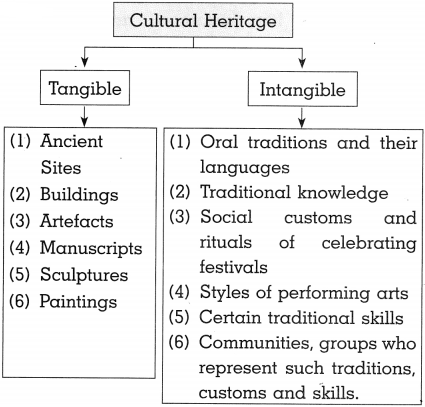
Maharashtra Board Class 10 History Solutions Chapter 3 Applied History

Balbharti Maharashtra State Board Class 10 History Solutions Chapter 3 Applied History Notes, Textbook Exercise Important Questions and Answers.

Maharashtra State Board Class 10 History Solutions Chapter 3 Applied History

Question 1.
(a) Choose the correct option from the given options and complete the statement.
(1) The earliest museum in the world was discovered in the excavations at the city of ……………..………. .
(a) Delhi
(b) Harappa
(c) Ur
(d) Kolkata
Answer:
(c) Ur

Maharashtra Board Solutions

(2) The National Archives of India is in ……………..………. .
(a) New Delhi
(b) Kolkata
(c) Mumbai
(d) Chennai
Answer:
(a) New Delhi

(b) Identify and write the wrong pair in the following set.
(1) Kootiyattam- Sanskrit theatre, Kerala
(2) Ramman- Dance form in West Bengal
(3) Ramlila- Traditional Performance of the Ramayana in Uttar Pradesh
(4) Kalbelia- Folk songs and dances of Rajasthan.
Answer:
(2) Wrong pair: Ramman – Dance form in West Bengal

Question 2.
Explain the following concepts :
(1) Applied History
Answer:

  •  When one subject is applied to different fields and conclusions are derived, it is known as application of that subject.
  • When objectives of History are applied to other subjects; new conclusions are obtained.
  • This is known as ‘Applied History’. It is also known as Public History.
  • We get insights of the events that took place in the past through history.
  • Applied History is concerned with application of knowledge of history to provide guidance in finding solutions.
  • Contemporary social issues and include them in social planning.
  • Thus Applied History’ is a field of study concerned with the application of history for the benefit of people in contemporary and future times.

Maharashtra Board Solutions

(2) Archives
Answer:

  •  A place where historical documents are preserved is called an ‘Archive’.
  • Many old documents, official records, old films, records of treaties are kept at this place.
  • We get references of original documents because of Archives.
  • A study of historical events of a particular period is possible.
  • We come to know about language, script used in a particular period/era.
  • The National Archives of India is in Delhi. It is the largest Archive in Asia.
  • Every state in India maintains its archives independently.

Question 3.
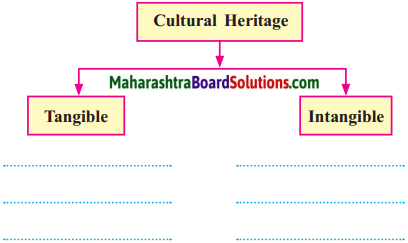
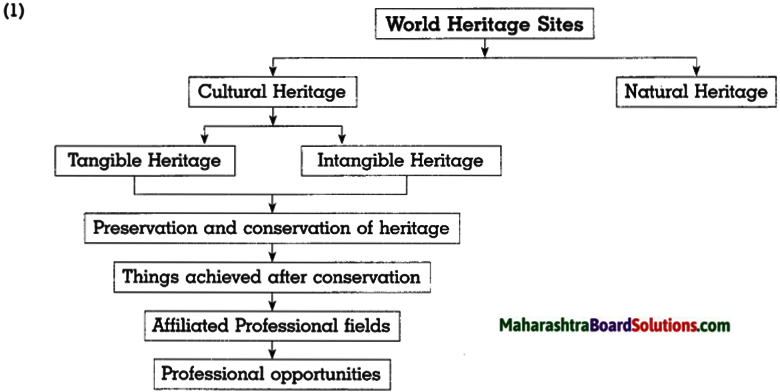
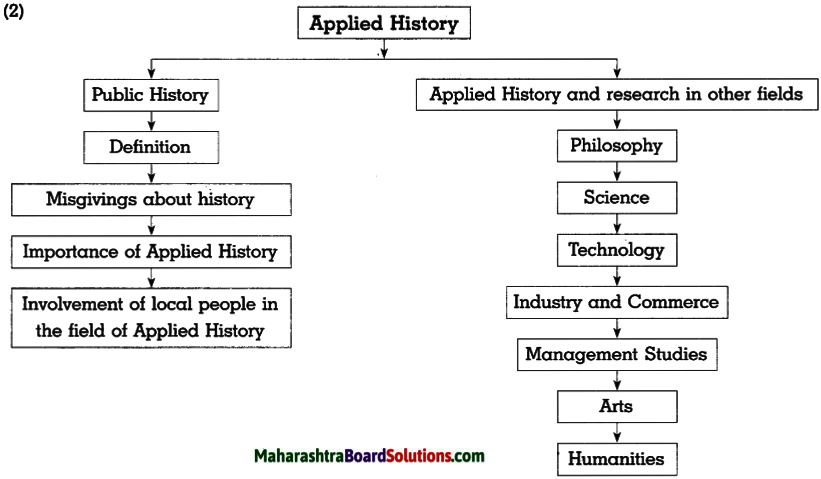
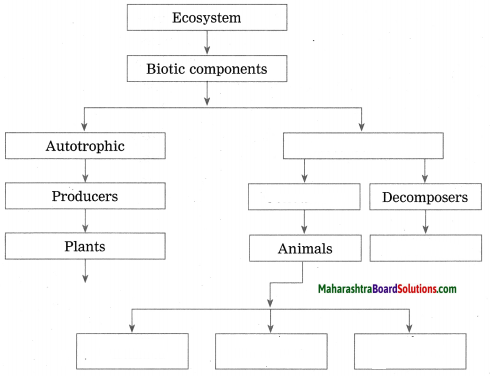
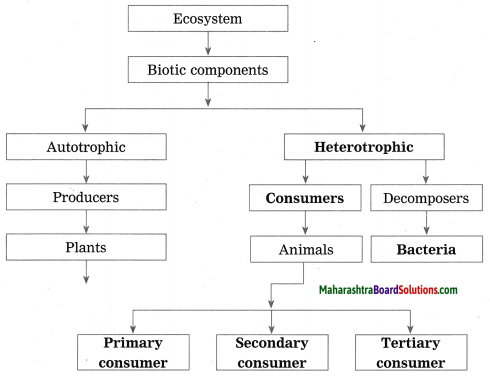
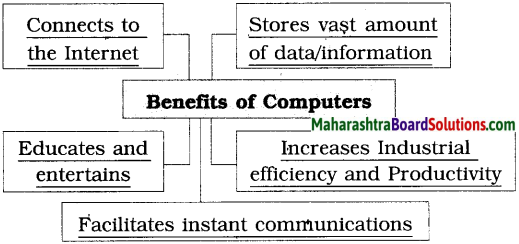
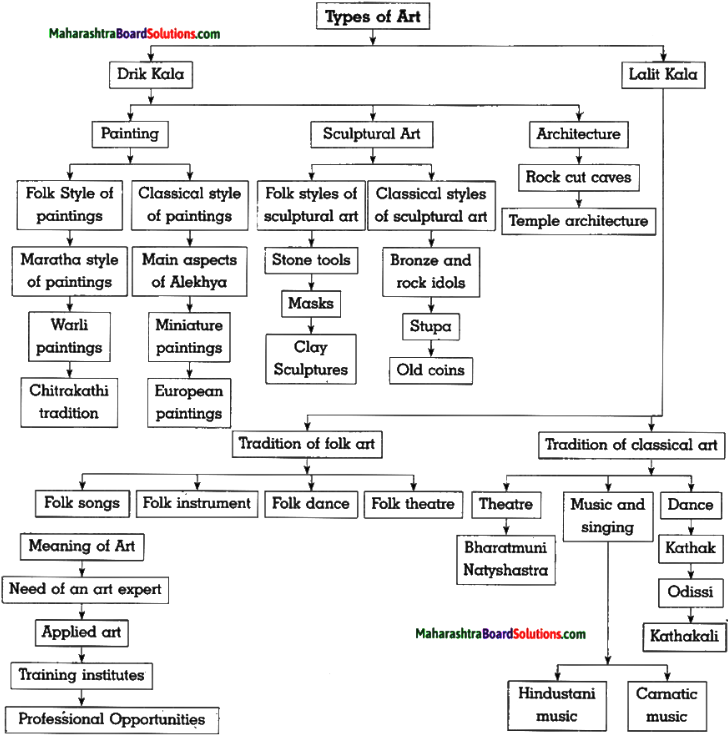
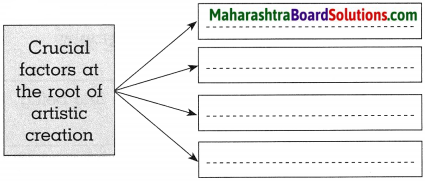
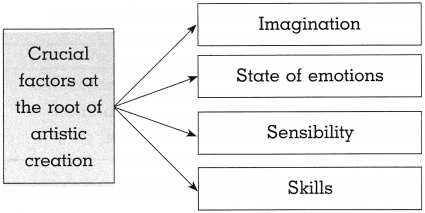
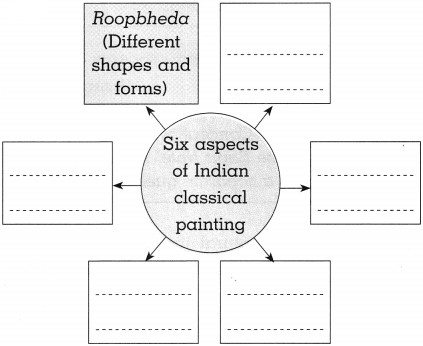
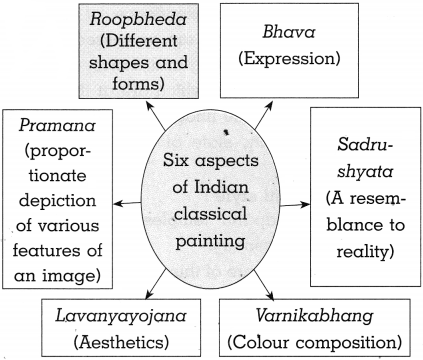
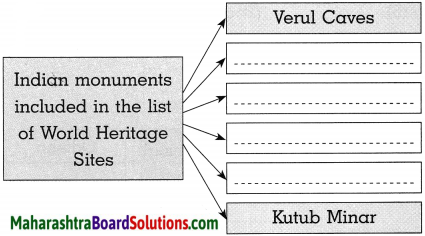
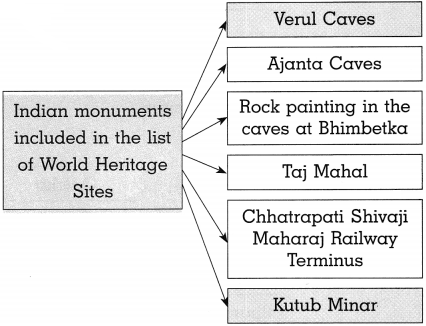
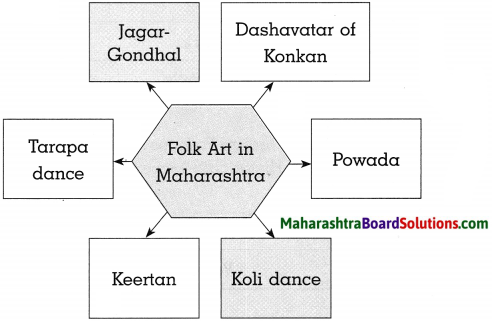
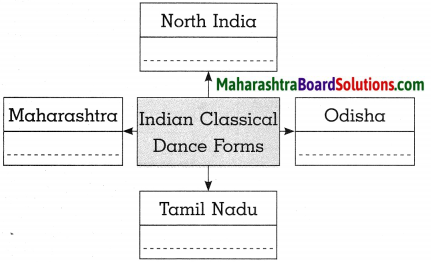
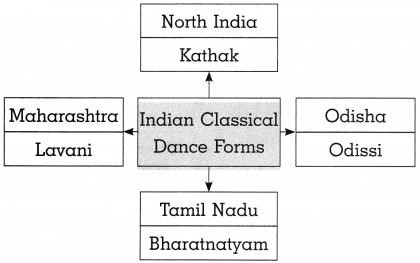
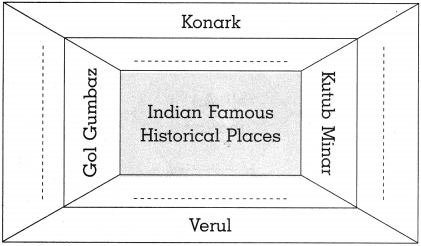
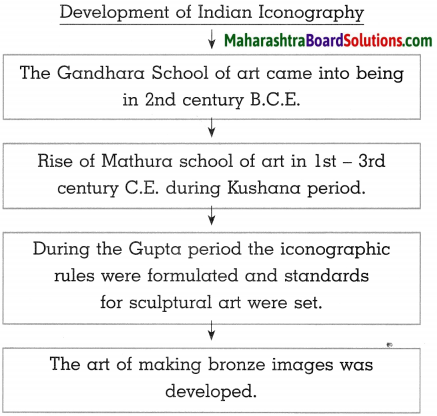
Complete the following concept chart.
Maharashtra Board Class 10 History Solutions Chapter 3 Applied History 1
Answer:
Maharashtra Board Class 10 History Solutions Chapter 3 Applied History 2

Question 4.
Explain the following statements with reasons.
(1) It is essential to study the history of technology.
Answer:

  • Man acquired different skills at various stages in his evolution process.
  • From mxking stone tools to developing new techniques of agriculture production, he learnt many skills and entered in the age of science.
  • Agricultural production, commodity production, architecture, engineering, etc.
  • underwent several changes. Production increased manifold bcause of technology.
  • Hence, it is necessary to know the history of technology in order to understand the development in mechanisation and mutual dependence between science and technology.

Maharashtra Board Solutions

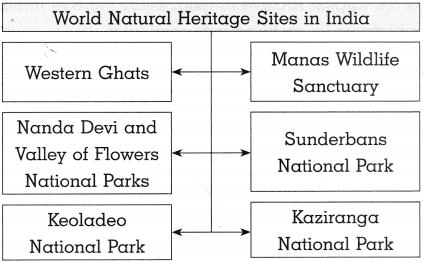
(2) The list of world Heritage Sites is announced by UNESCO.
Answer:

  • Cultural heritage is a form of human creation. It is a cultural treasure that has been inherited from our ancestors.
  • We feel connected to it and hence preserve and conserve it.
  • This heritage is our asset that binds us to our past and hence we should preserve it for the benefit of future generations.
  • In order to save this heritage, UNESCO has announced some directives.
  • On the basis of those directives, list of sites, and traditions are declared as ‘World Heritage’.
  • It has helped us in promoting these sites as tourist places.

Question 5.
Write elaborate answers
(1) How is the method of history useful in the research of
(a) Science
(b) Arts
(c) Management Studies
Answer:
Each field has its own history of building’ knowledge. The direction of development in every field is dependent on the stcrte of available knowledge in that field. The method of history has proved valuable in the research of various fields.

(a) Science: Scientific discoveries /invenfions take place because of humdn efforts to satisfy needs and curiosity. These efforts are based on scientific knowledge that already existed. Knowledge of the history of science helps in understanding the reasons, chronology and factors that facilitated a scientific invention/discovery. Knowledge of history of science helps in every field.

(b) Art: Development of any style of art lies in their expression through intellectual, emotional and cultural traditions. While studying any art form we have to understand the history of its traditions, the key to the expressions in it, and emotional temperament of the artist. Prevalent art style in the given period can be understood with the help of cultural history.

(c) Management Studies: All components like means of production, human resources, processes of production, the chain of market and sales, etc. are interrelated and require management.

Different social and economic institutions are involved in these industrial and commercial processes. Knowledge of similar functional systems of the past is essential to bring about changes, improvements and make the management smooth and efficient. It becomes necessary to know its history.

(2) How can we correlate applied history with our present?
Answer:
History gives us knowledge about the events that happened in past. Applied history helps us in understanding how the knowledge can be put to use for our benefit as well as for the benefit of future generations. Applied history is correlated with our present in the following ways:

(1) Knowledge of our past helps us in deciding our course of action in present. The.heritage of our ancestors exists in tangible and intangible- form. We have the curiosity to know more about our part because they represent the creative thoughts and traditions of that period.

(2) With the help of applied history we can not only come to know about the heritage but also conserve and preserve it.

(3) We can be better equipped to face social challenges in the present because the knowledge of history can provide guidance in finding solutions to contemporary social issues and incorporate them in the ’social planning.

(4) The direction of future development is S decided when we rightly analyse our present with our knowledge of the past acquired through applied history.

Maharashtra Board Solutions

(3) Suggest at least 10 solutions for the preservation of the sources of history.
Answer:
There are three types of sources which are used to study history. They are written, oral and material sources. These sources are preserved in different ways. According to me, the following measures should be taken to preserve the sources:

  1. A regular repair and maintenance work of forts, memorials and palaces should be carried out. Timely action should be taken to avoid vandalisation of historic and public places.
  2. Historical coins, weapons should be handled with precaution and utmost care. They should be kept in a safe place to avoid the possibility of theft.
  3. Social awareness regarding the conservation and preservation of our cultural and natural heritage should be created. People will develop affinity towards the heritage and feel connected.
  4. Variations in environment and climatic conditions pose a threat to monumental structures. Humidity, dampness, moulds and pollution cause irrevocable damage to manuscripts, rare artefacts, statues, coins, etc.
  5. To protect them, special arrangements have to be made like rooms with controlled temperature or sanitising and detoxing the rooms.
  6. Oral literature like owis, folk songs should be compiled and written down.
  7. Public training programmes should be conducted for understanding the importance of history.
  8. Experts from different fields should be involved in preservation and conservation projects. S Stringent laws should be enacted to protect the monuments.
  9. Above all, people’s participation in conservation and preservation process is paramount.

(4) What objectives can be fulfilled through the heritage projects.
Answer:
The following objectives can be fulfilled through the heritage projects:

  • Preservation, conservation and development of heritage sites can be done without any change in its original state/ structure.
  • The local social structure and psychology of the local people, challenges they face in the present situations and their expectations can be surveyed.
  • In the process of completing the project of conservation, preservation and development of a heritage site due precaution should be taken to avoid hurting the sentiments of the local people.
  • Participation of the local people in the proposed project can be facilitated.
  • In order to engage and employ the local skills in a creative way and create better opportunities of livelihood, it becomes easier to design systematic plans.

Project
Show the Indian heritage sites on the map of India.
Answer:

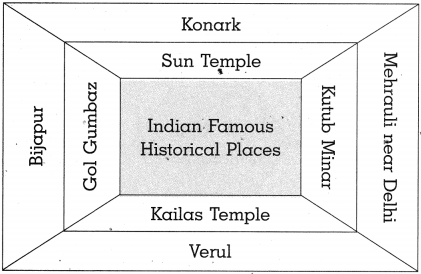
Memory Map
Maharashtra Board Class 10 History Solutions Chapter 3 Applied History 3

Question 6.
Complete the sentences by choosing the correct option:
(a) ……………………… Institute of Art, Design and Technology at Bengaluru has an independent department named ‘Centre for Public History’.
(a) Pitch
(b) INTACH
(c) Shrushti
(d) AIMS
Answer:
(c) Shrushti

Maharashtra Board Solutions

(b) ……………………… is the mother of science and all other branches of knowledge.
(a) Philosophy
(b) History
(c) Technology
(d) Mythology
Answer:
(a) Philosophy

(c) In order to preserve and conserve cultural and natural heritage for the benefit of future generations ……………………… has given directives.
(a) UNICEF
(b) UN
(c) UNESCO
(d) INTACH
Answer:
(c) UNESCO

(d) The ……………………… in the Satara District of the Western Ghats is included in the list of World Natural Heritage.
(a) Balaghat Mountain
(b) Melghat
(c) Masai Plateau
(d) Kas Plateau
Answer:
(d) Kas Plateau

(e) The main office of the National Film Archives of India is situated at ……………………… .
(a) Delhi
(b) Mumbai
(c) Pune
(d) Nagpur
Answer:
(c) Pune

(f) Excavations at the city of ‘Ur’ in Mesopotamia were conducted by ……………………… .
(a) Nathaniel Wallick
(b) Ennigaldi
(c) Leonard Wolley
(d) Sir John Marshall
Answer:
(c) Leonard Wolley.

Question 7.
Identify the wrong pair in the following, and write it:

(1) Kootiyattam(a) Sanskrit theatre, Kerala
(2) Ramman(b) Dance form in West Bengal
(3) Ramlila(c) Traditional performance of Ramayana in Uttar Pradesh
(4) Kalbelia(d) Folk songs and dances of Rajasthan

Answer:
Wrong pair: Ramman – Dance form in West Bengal

Maharashtra Board Solutions

(2)

Cultural HeritagePlace
(1) Red Fort(a) Udaipur
(2) Jantar Mantar(b) Jaipur
(3) Brihadeeshvara Temple(c) Thanjavur
(4) Capital Complex(d) Chandigarh

Answer:
Wrong pair: Red Fort – Udaipur

Question 8.
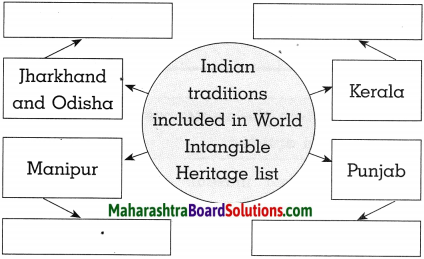
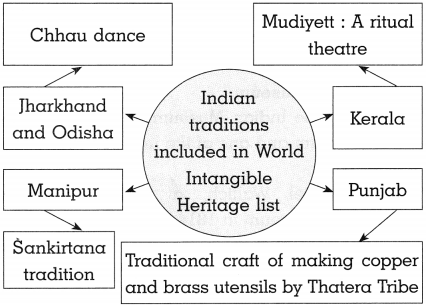
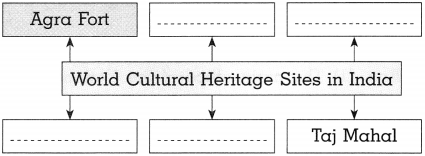
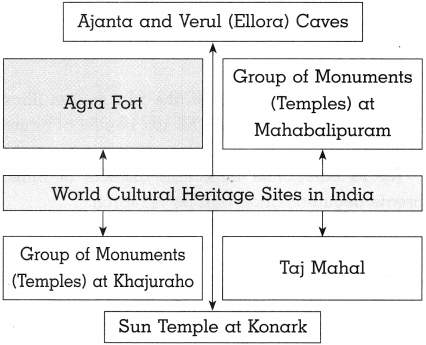
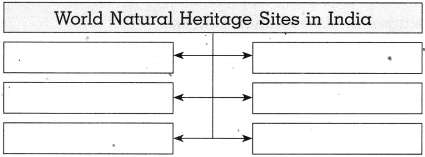
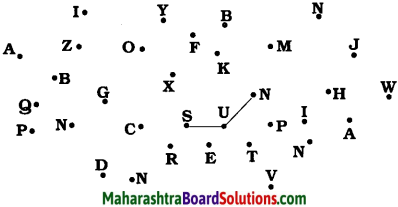
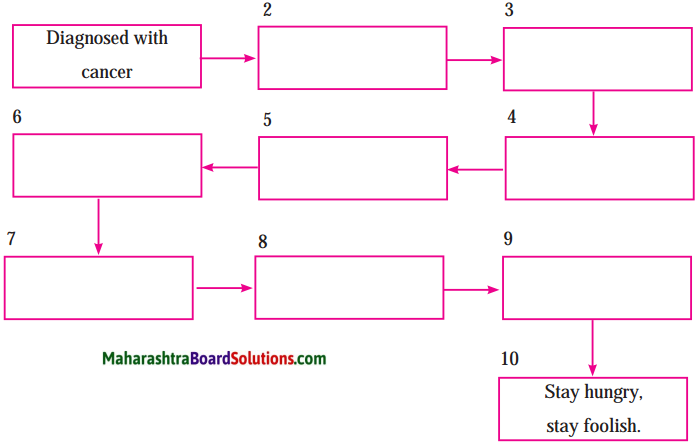
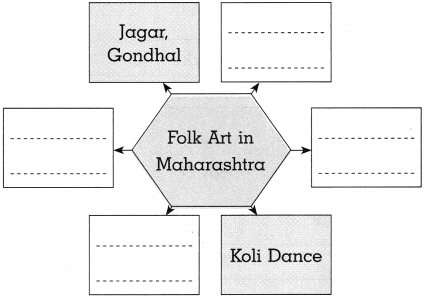
Complete the graphical presentation:
(1)

Answer:

(2)

Answer:

Maharashtra Board Solutions

(3)

Answer:

Question 9.
Explain the following concept:
(a) Natural Heritage:
Answer:

  • In Cultural heritage what we inherit is man-made but Natural heritage is bestowed upon us by Nature.
  • The concept of natural heritage gives importance to the thought of biodiversity.
  • The following things are included in natural heritage:
    • Fauna
    • Flora
    • Ecology required for sustaining animal and plant life, flora and fauna of a particular region.
    • Geomorphic characteristics, sanctuaries, mountain ranges, river valleys, lakes and dams are all part of natural heritage.

Question 10.
Write short notes:
(a) Importance of Applied History:
Answer:

  • Applied History is a field of study which helps us understand our ancient heritage.
  • We realise the importance of preserving our heritage.
  • The process of preservation and conservation of tangible and intangible heritage sites generate employment opportunities.
  • The study of Applied History help us to get a better understanding of the present and can provide guidance for the future.

Maharashtra Board Solutions

(b) Preservation of cultural heritage of India:
Answer:
Conservation and preservation of India’s cultural heritage is done at different levels:

  1. Archaeological Survey of India (ASI) is an important body of Indian government which mainly does the work of conservation and preservation along with State Departments of Archaeology.
  2. INTACH (Indiqn National Trust for Art and Cultural Heritage) is actively working in this field.
  3. Local self-government bodies, social institutions all over India, people who have love for history are seen involved in the work of preservation of our heritage.
  4. The work of conservation and preservation of cultural and natural heritage requires participation of experts from various fields as well as local people.

(c) Indian Museum:
Answer:

  • The Indian Museum at Kolkata is the oldest museum and one of the important heritage sites of India.
  • Nathaniel Wallich, a Danish botanist, founded the museum in 1814 C.E. He was also its first curator.
  • The museum has three main departments Arts, Archaeology and Anthropology.
  • Other affiliated departments are conservation, publication, photography, exhibition- presentation, model-making, training, library and security.

(d) National Film Archives:
Answer:

  • The main office of the National Rim Archives of India is located at Pune and was established in 1964.
  • It functions as the Media Unit of the Ministry of Information and Broadcasting of the Indian Government.
  • It was established with the view of three objectives. They are:
    • To search and obtain the rare Indian films and preserve our heritage for the benefit of future generations.
    • To categorise important aspects of films, create documentation and do research.
    • To establish a centre for dissemination of ‘films culture’.

Question 11.
Explain the following statements giving reasons:
(a) It is essential to study the history of philosophy.
Answer:

  • With the passage of time, many schools of thought came into existence with different ideologies.
  • These ideologies had their effect on people and society as a whole.
  • What led to the origin of various ideologies, the intellectual tradition giving rise to those ideologies and their historical development needs to be researched.
  • To know about the progress of those ideologies, their development and expansion or downfall we need to have knowledge of the history of philosophy.

(b) It is important to know the history of Industry and Commerce.
Answer:

  • With the growth of industry and trade, the field of mutual social transactions also expand.
  • It promoted development of the network of cultural interactions.
  • As the nature of market and commerce changed sp did the nature of human relationships and the social organisation.
  • This series of changes is influenced by prevalent culture, social structure and economic system.
  • All this is an integral part of the industrial and commercial management.

Therefore, it becomes important to know the history of Industry and Commerce.

Maharashtra Board Solutions

(c) It is necessary to preserve and conserve our natural and cultural heritage.
Answer:

  • The visible and invisible relics of the past exist in the present.
  • They represent the thought and traditions of our ancestors.
  • We nurture some kind of curiosity and attraction towards them.
  • The history of our heritage links us with our origin.

Therefore, it becomes necessary to preserve and conserve for our future benefit as well as for the benefit of future generations.

Question 12.
Answer the following in 25-30 words:
(a) Explain the concept of ‘Public History’.
Answer:

  • Public History also known as ‘Applied History’ is a field of study concerned with the application of history for the benefit of people in the contemporary and future life.
  • It provides solutions to the contemporary social issues and incorporate them in social planning.
  • It helps to overcome misgivings about history and makes history meaningful in everyday life connecting people to history.

(b) What is the role of UNESCO in the context of heritage sites?
Answer:
The role of UNESCO, the global agency of United Nations, is as follows:

  • For preservation and conservation of natural and cultural heritage which is in a ruined state because of years of neglect, UNESCO has announced some directive principles.
  • The organisation announces list which includes the names of sites and traditions which meet the criteria.
  • On the basis of those directives it declares a list of site and traditions of world heritage.

(c) Find out the cultural heritage sites located in Maharashtra and write their names.
Answer:
The following places in Maharashtra are included in the list of cultural heritage sites declared by UNESCO:

  • Ajanta Caves
  • Verul (Ellora) Caves and Kailas Temple
  • Elephanta Caves
  • Chhatrapati Shivaji Maharaj Terminus, Mumbai.

Many forts like the Raigad, Devgiri, Janjira and Sindhudurg are part of the cultural heritage Of Maharashtra though they are not included in the list.

(d) What are the misgivings about history among the people?
Answer:
There are many misgivings about history among the people:

  • History is a subject only for historians and students who pursue higher studies in history.
  • It has no relevance or applicability in our day-to-day life.
  • History is nothing but piece of information about the battles fought by kings and politics.
  • History cannot be connected to an economically productive field.

Maharashtra Board Solutions

(e) Where can we trace the roots of philosophy?
Answer:

  • Ancient people all over the world tried to speculate the relationship between the universe and human existence.
  • This gave rise to various myths about origin of this world, universal order, human life.
  • Imagination about gods and goddesses, rituals to please them and philosophical explanation of rituals.
  • Thus, the roots of philosophy can be traced in these speculations and ponderings of mythological stories.

(f) What are the opportunities created by affiliated professional fields of Applied History?
Answer:
Affiliated fields of Applied History which include museums, archives, tourism ‘and hospitality, entertainment, mass media, etc. needs the following professionals:

  • Experts like Historians, Archaeologists, Sociologists, legal experts, etc. are assigned new projects.
  • Officers like Managers, Secretaries and Directors are taken into service.
  • Technicians like engineers, architects, skilled photographers, laboratory assistants, archive management professionals are hired.
  • Tourist guides, boarding and lodging, food services, entertainment and related business get a wide scope for flourishing.

(g) What are the main objectives of ‘National Film Archives’?
Answer:
The main objectives of ‘National Rim Archives’ are as follows:

  • To research and obtain the rare Indian films.
  • To preserve such films for the benefit of future generations.
  • To categorise the important aspects of films to create documentation, catalogue them -and carry out research in the field.
  • To establish a centre for dissemination of films culture.

(h) How can we increase people’s participation in the field of applied history?
Answer:

  • The field of applied history includes museums, archives, collection and maintenance of artefacts.
  • Tourism creates interest in history.
  • Awareness is created among people to preserve ancient monuments and sites in their vicinity.
  • This realisation increases people’s participation in the field of applied history.

(i) Write information on World Heritage sites in Maharashtra.
Answer:
Maharashtra is endowed with many natural and historical sites. Among them the prominent ones are Ajanta caves, Verul caves, Gharapuri/Elephanta caves and Chhatrapati Shivaji Maharaj Terminus Railway Station at Mumbai.

Chhatrapati Shivaji Maharaj Terminus is finest example of Indo-Gothic architecture emerged in India during British rule. It stands witness to the British empire, freedom struggle and transformation of our country into a modern nation. It needs conservation as it a architectural marvel which stood the test of times recently when there was a terror attack on Mumbai city.

Maharashtra Board Solutions

(j) What is the role of Applied History?
Answer:
The role of Applied History is as follows:

  • In public training programmes for understanding the importance of history.
  • Using knowledge of history, to create awareness regarding the conservation and preservation of our cultural and natural heritage.
  • To facilitate participation of people in various projects and programmes related to applied history even in their capacity as tourists.
  • To enhance professional skills of people and to develop industrial commercial field.
  • To carry out preparatory work and plan for effective implementation of heritage projects.

Question 13.
Read the given passage carefully and answer the questions given below:
(a) Who built this museum?
Answer:
This museum was built by Ennigaldi, the princess of Mesopotamia.

(b) Where was the earliest museum in the world discovered? Who discovered it?
Answer:
The earliest museum in the world was discovered in the city of ‘Ur’ in Mesopotamia. It was discovered by Leonard Woolley.

(c) What is a noteworthy feature of this museum?
Answer:
A noteworthy feature of this museum is the clay tablets inscribed with the descriptions of exhibited artefacts.

Question 14.
Write elaborate answers: OR Answer in detail:
(a) Who does the work of conservation and preservation of the cultural heritage of Indian?
Answer:
The preservation and conservation of Indian cultural heritage is done at various stages:

  • The work of preservation and conservation primarily falls under jurisdiction of the Archaeological Survey of India.
  • In addition, INTACH (Indian National Trust for Art and Cultural Heritage) is also actively working .in this field.
  • Experts from various fields and local people too participate in the work of conservation and preservation of natural and cultural heritage.

Question 15.
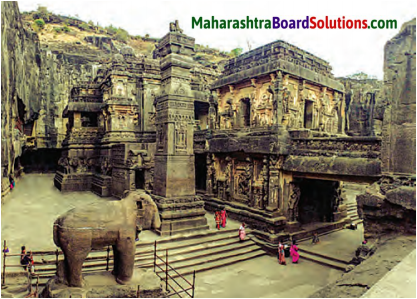
Observe the picture and write information about it:
Maharashtra Board Class 10 History Solutions Chapter 3 Applied History 5
Answer:

  • This picture is of the largest Indian rock-cut ancient Hindu temple located in the Ellora cave.
  • This famous rock-cut Shiva temple was constructed during the reign of Rashtrakuta king Krishna I.
  • It is regarded as a marvel of architecture.
  • It bears an eloquent testimony to the high level skill attained by India in the arts of sculpture and architecture under the Rashtrakuta patronage.
  • A sculpture of an elephant and a pillar can be seen in the picture.
  • The famous rock cut temple in Maharashtra was declared as a world heritage site by UNESCO in 1983.

Maharashtra Board Solutions

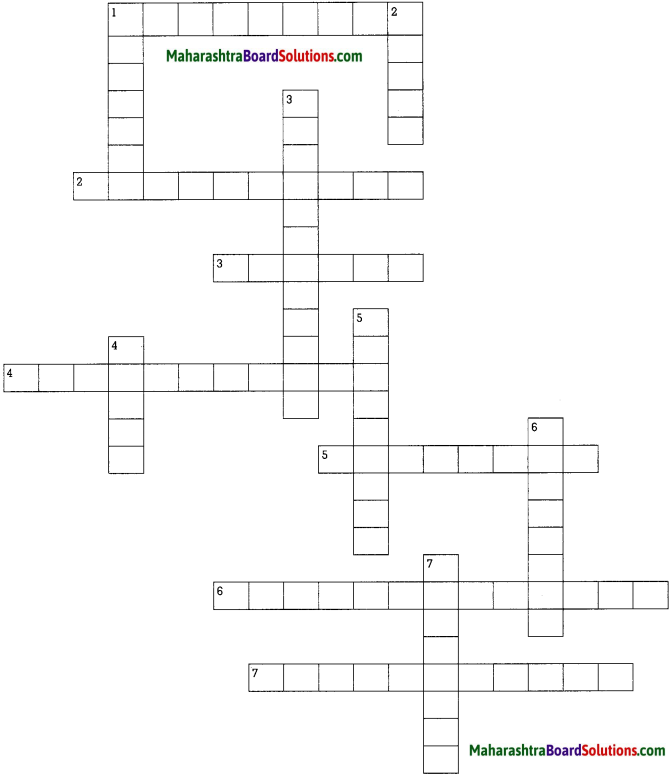
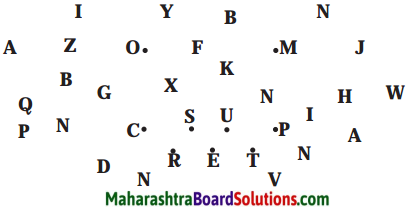
Brain Teaser

Hints:
Across:
(1) Queen’s stepwell at Patan
(2) Dancing, singing, drumming ritual of Manipur
(3) Religious festival and ritual theatre of Garhwal
(4) Archaeological site of Nalanda University
(5) World famous monument at Agra
(6) Famous city built by emperor Akbar marking his victory
(7) Sanskrit Theatre: Kerala

Down:
(1) The traditional performance of Ramayan in Uttar Pradesh
(2) Ellora caves also known as caves
(3) Observatory at Jaipur, Rajasthan
(4) Group of monuments at (place) in Karnataka
(5) Archaeological park at Pavagadh
(6) Folk songs and dances of Rajasthan
(7) A ritual theatre of Kerala
Maharashtra Board Class 10 History Solutions Chapter 3 Applied History 6

Maharashtra Board Class 10 Science Solutions Part 2 Chapter 1 Heredity and Evolution

Balbharti Maharashtra State Board Class 10 Science Solutions Part 2 Chapter 1 Heredity and Evolution Notes, Textbook Exercise Important Questions and Answers.

Maharashtra State Board Class 10 Science Solutions Part 2 Chapter 1 Heredity and Evolution

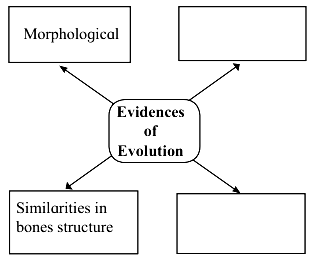
Question 1.
Complete the following diagram.
Maharashtra Board Class 10 Science Solutions Part 2 Chapter 1 Heredity and Evolution 1
Answer:
Maharashtra Board Class 10 Science Solutions Part 2 Chapter 1 Heredity and Evolution 2

Question 2.
Read the following statements and justify same in your own words with the help of suituble examples.
a. Human evolution began approximately 7 crore years ago.
Answer:

  • Approximately around 7 crore years back the ice age began on the earth. In such conditions, dinosaurs became extinct. The evolution and diversity of mammals started during this time. Due to change in climate the forest cover also declined rapidly.
  • Ancestors of monkey-like animals were Lemur like animals which evolved during this time period.
  • The tails of these monkey-like creatures started vanishing very gradually around 4 crore years ago.
  • The body and brain both increased in volume forming first ape like animals. The monkey like ancestors gave rise to two evolutionary links to apes and human like animals.
  • Later, the human evolution took place by changes in the brain volume, the ability to walk upright, excessive use of hand for manipulations.
  • This journey of human evolution began 7 crore years ago. But the true wise and intelligent man arose around 50,000 years ago.

b. Geographical and reproductive isolation of organisms gradually leads to speciation.
Answer:

  • Every species survives in specific geographical conditions. The requirements of food and habitat, is specific for each species. Their reproductive ability and period is also different.
  • Therefore, the individuals from one species cannot reproduce with individuals from other species.
  • When they are separated by a distance or geographical barriers they are said to be isolated geographically.
  • When they cannot reproduce with each other, they are said to be isolated reproductively.
  • The ancestor species of both these subspecies may be the same but due to isolation over a very long-time duration, there is genetic variation between the two. Therefore, the isolation leads to speciation.

c. Study of fossils is an important aspect of study of evolution.
Answer:
Answer:

  • Fossils offer palaeontological evidence for the evolutionary process.
  • Due to some natural calamities the organisms get buried during ancient times.
  • The impressions and remnants of such organisms remain preserved underground. The hot lava also traps some organisms or their impressions. All such formations form fossils.
  • Study of fossils help the researcher to understand the characteristics of the organisms that existed in the past.
  • Carbon dating method also helps in finding out exact age of the fossil. According to the structure of earth’s crust the fossils are obtained at specific depths.
  • The oldest ones are obtained at the depth while the relatively recent ones occupy the upper surface. Thus fossils of invertebrates were seen in very old Palaeozoic era. Later were seen fossils of Pisces, Amphibia and Reptilia. The Mesozoic era was dominated by reptiles while Coenozoic era showed presence of mammals.
  • In this way, study of fossils unfold the evolutionary secrets.

d. There is evidences of fatal Science among chordates.
[Please read the above question as: Among different chordates there are embryological evidences.]
Answer:

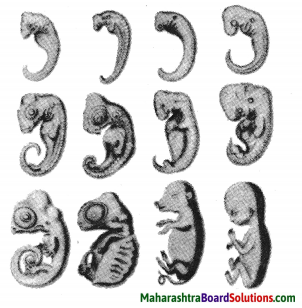
  • Very young embryos of fish, amphibians, reptiles, birds and mammals show quite similar structure in the early stages.
  • As the further growth takes place, they acquire different patterns.
  • The initial similarity between the vertebrate embryos is an evidence that during evolution, there was a common ancestor for all the vertebrate classes.
  • This is called embryological evidence for vertebrate evolution.

Maharashtra Board Class 10 Science Solutions Part 2 Chapter 1 Heredity and Evolution

Question 3.
complete the statements by choosing correct options from bracket.
(Genes, Mutation, Translocation, Transcription, Gradual development, Appendix)
a. The causality behind the sudden changes was understood due to ………… principle of Hugo de Vries.
Answer:
Mutation

b. The proof for the fact that protein synthesis occurs through ……….. was given by George Beadle and Edward Tatum.
Answer:
Genes

c. Transfer of information from molecule of DNA to mRNA is called as …………… process.
Answer:
Transcription

d. Evolution means ………….
Answer:
Gradual development

e. Vestigial organ ……….. present in human body is proof of evolution.
Answer:
Appendix

Question 4.
Write short notes based upon the information known to you.
a. Lamarckism.
Answer:
(1) Lamarckism consists of two theories which were proposed by Jean Baptiste Lamarck. These are as follows: (a) Use and disuse of the organs (b) Inheritance of acquired characters.
(2) In theory of use and disuse of organs, Lamarck says : The characters of organs develop because specific activities that the organisms perform. If such organ is not used it gets degenerated. Thus the morphological changes take place due to activities or inactivity of a particular organism.
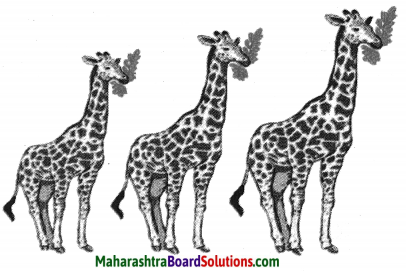
(3) To emphasise this theory, he quoted following examples. Due to constant extension of neck to eat foliage from the top of the trees, giraffe’s neck became long. Similarly blacksmith has strong arms due to constant work. Flightless ostrich and emu did not fly and hence their wings became useless. Aquatic birds like swan and duck made their feet suitable for swimming by living in water. Snake lost limbs as it tried burrowing mode.
(4) Such acquired characters are passed from one parental generation to the offspring. This is called inheritance of acquired characters.
(5) The theory of inheritance of acquired characters is not accepted as such transmission of acquired character does not take place. Only genetic characters are transmitted.

b. Darwin’s theory of natural selection.
Answer:

  • Charles Darwin proposed the theory of natural selection after making many observations on different specimens. He published a concept ‘Survival of the fittest’.
  • Darwin explains this concept as follows: All the organisms reproduce prolifically. Therefore, there is always a competition for food, mate, etc. Only adaptations for sustaining this struggle.
  • Natural selection plays important role by selecting only those organisms which are fit to live. Those that do not have better adaptations, perish. Selected sustaining organisms then perform reproduction and form new species in a very long period of time.
  • Darwin published his views in the book titled ‘Origin of Species’.

c. Embryology.
Answer:

  • Embryology is the study of developing embryos.
  • These embryos in their initial stages are very similar to each other.
  • These similarities decrease later in the development.
  • This similarity in initial stages indicate that these vertebrates have originated from a common ancestor.
  • In evolutionary science, comparative study of embryos of various vertebrates provide evidence for evolution.

d. Evolution.
Answer:

  • The sequential changes in the groups of living organisms that take place very gradually is called evolution.
  • Evolution is also described as the formation of new species due to natural selection.
  • The process of evolution takes millions of years for development and speciation of different organisms.
  • Changes in stars and planets in space and the changes in biosphere occurring on the Earth are all included under study of evolution.
  • Due to evolution organisms become fit, biodiversity is increased, and new species are created.
  • Different scientists have put forth theories to explain the process of evolution. Among these Charles Darwin’s theory of natural selection and speciation is accepted worldwide.

e. Connecting link.
Answer:
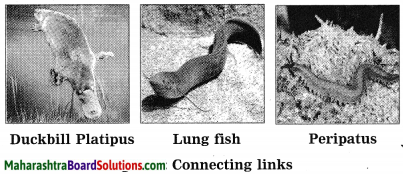
Some living organisms possess some characters in them which are the distinctive features of different groups or phyla. Such individuals connect these two groups by sharing the characters of both and hence they are known as connective links.

Examples: (1) Peripatus: Peripatus is the connecting link between Annelida and Arthropoda. It shows characters of both animal phyla. Like annelid worm, it shows segmented body, thin cuticle and parapodia. Like an arthropod, it shows open circulatory system and tracheal system for respiration.
(2) Duck Billed platypus: This is a connecting link between reptiles and mammals. Like reptiles it lays eggs but like mammals it has mammary glands and hairy skin.
(3) Lung fish: Lung fish is a connecting link between fishes and amphibians. Though a fish, it shows lungs for respiration as in amphibian animals.
(4) Connecting links indicate the direction and hierarchy of evolution.

Maharashtra Board Class 10 Science Solutions Part 2 Chapter 1 Heredity and Evolution

Question 5.
Define heredity. Explain the mechanism of hereditary changes.
Answer:
(1) Heredity: Heredity is the process by which the biological characters from parental generation are transmitted to the next generation through genes.

(2) The mechanism of hereditary changes:

  • Mutation: Sudden change in the parental DNA can cause mutations. This results into changes in the hereditary characters.
  • At the time of meiosis, the crossing over takes place. This creates new recombination of the genetic information. Therefore, the haploid gametes produced carry changed hereditary characters.

Question 6.
Define vestigial organs. Write names of some vestigial organs in human body and write the names of those animals in whom same organs are functional.
Answer:

  • Vestigial organs are degenerated or underdeveloped organs of organisms which do not perform any function.
  • According to the principle of natural selection, such organs are on the verge of disappearance. But it takes many millions of years for its complete vanishing.
  • The vestigial organs in one animal may be of use but to other kind of the animal as they still perform regular functions.
  • Appendix is vestigial for humans, it does not perform any function but in ruminant animals it is concerned with digestion.
  • Ear muscles are vestigial for us but in monkeys and cattle they are functional.
  • Names of vestigial organs in human body-Appendix, tail-bone or coccyx, wisdom teeth and body hair.

Question 7.
Answer the following questions.
a. How are the hereditary changes responsible for evolution?
Answer:
Hereditary characters are transmitted from parental generation to the offspring. These characters are maintained through inheritance. But the genes which are beneficial for the organisms in helping them to adapt to the environment are transmitted to the next generations in a greater proportion. This happens due to natural selection.

The process of evolution happens at a very slow pace. The favourable genes are preserved in the species as they bring about better survival of the individuals. Such individual reproduces more efficiently and evolve. The individuals with unfavourable genes are not selected by nature and are thus removed from the population through natural death. The fuel for evolution is thus truly supplied by the hereditary changes.

b. Explain the process of formation of complex proteins.
Answer:
The proteins are synthesised in following steps, viz. transcription, translation and translocation. Protein synthesis takes place according to the sequence of nucleotides present on the DNA molecule with the help of RNA molecules. This is known as central dogma of protein synthesis.

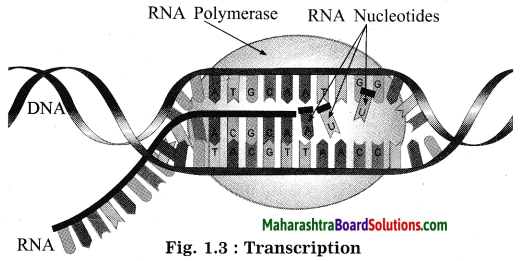
1. Transcription: In the process of transcription, mRNA is produced as per the nucleotide sequence on the DNA. For this the two strands DNA are separated. Only one strand participates in the formation of mRNA. The sequence of nucleotides which is complementary to that of present on DNA is copied on mRNA. Instead of thymine present in DNA, uracil is added on the mRNA. Transcription takes place in nucleus but the mRNA leaves nucleus, carries the genetic code and enters the cytoplasm. This genetic code is always in triplet form arid hence is known as triplet codon. The code for each amino acid always consists of three nucleotides.

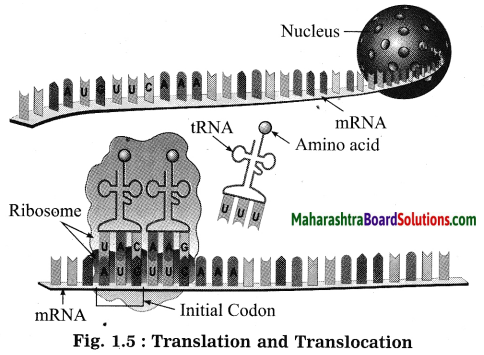
2. Translation: Each mRNA may carry thousands of codons. But each codon is specific for only one amino acid. The tRNA molecule brings the required amino acid as per the code present on mRNA. There is anticodon on each tRNA which is complementary to the codon on mRNA. This process is known as translation.

3. Translocation: In translocation, the ribosome keeps on moving from one end of mRNA molecule to other end by distance of one triplet codon. While this process is taking place, rRNA, helps in joining the amino acids together by peptide bonds. The peptide chains later come together to form complex protein molecules.

c. Explain the theory of evolution and mention the proof supporting it.
Answer:
1. Theory of evolution:

  • According to the theory of evolution, first living material was in the form of protoplasm which was formed in ocean.
  • Gradually, it gave rise to unicellular organisms. Changes took place in these unicellular organisms which made them evolve into larger and more complex organisms.
  • All evolutionary changes were very slow and gradual taking about 300 crore years to happen.
  • Different types of organisms were developed as the changes and development that occurred in living organisms wefts all round and multi-dimensional.
  • Hence, this overall process of evolution is called organizational and progressive.
  • Variety of plants and animals developed from the ancestors having different structural and functional organization during the process of evolution.

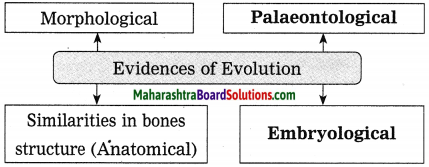
2. Proof here means evidences of evolution.
These evidences are as follows:

  • Morphological evidences
  • Anatomical evidences
  • Vestigial organs
  • Palaentological evidences
  • Connecting links
  • Embryological evidences.

d. Explain with suitable examples importance of anatomical evidences in evolution. (July 2019)
Answer:

  • There are similarities in the structure and anatomy of different animal groups. E.g. human hand, forelimb of bull, patagium of bat and flipper of whale are all similar in their internal anatomy. There is similarity in the bones and joints of all these specimens.
  • External morphology does not show any similarity. Use of each of the organ is also different in different animals. Structurally, they may not be related.
  • However, the similarities in the anatomy is an evidence that they may have a common ancestor.
  • In this way, the anatomical evidence throws light on the process of evolution.

e. Define fossil. Explain importance of fossils as proof of evolution.
Answer:

  • Fossils offer palaeontological evidence for the evolutionary process.
  • Due to some natural calamities the organisms get buried during ancient times.
  • The impressions and remnants of such organisms remain preserved underground. The hot lava also traps some organisms or their impressions. All such formations form fossils.
  • Study of fossils help the researcher to understand the characteristics of the organisms that existed in the.past.
  • Carbon dating method also helps in finding out exact age of the fossil. According to the structure of earth’s crust the fossils are obtained at specific depths.
  • The oldest ones are obtained at the depth while the relatively recent ones occupy the upper surface. Thus fossils of invertebrates were seen in very old Palaeozoic era. Later were seen fossils of Pisces, Amphibia and Reptilia. The Mesozoic era was dominated by reptiles while Coenozoic era showed presence of mammals.
  • In this way, study of fossils unfold the evolutionary secrets.

f. Write evolutionary history of modern man.
Answer:
(1) Ancestors of humans developed from animals which resembled lemur like animals.
(2) Around seven crore years ago, monkey-like animals evolved from some of these lemur like animals.
(3) Then after about 4 crore years ago, in Africa the tails of these monkey like creatures very gradually disappeared.
(4) Simultaneously, there was enlargement in their body and brain volume too. The hands also improved and were provided with opposable thumb. In this way, ape-like animals were evolved.
(5) These ape-like animals independently gave rise to two lines of evolution, one giving rise to apes like gibbon and orangutan in the South and North-East Asia and gorilla and chimpanzee which stayed in Africa around 2.5 crores of years ago.
(6) The other line of evolution gave rise to human like animals around 2 crore years ago.
(7) The climate became dry and this resulted into reduction of forest cover. This made arboreal apes to descend on the land and start terrestrial mode.
(8) Due to this, there were changes in the pefvic
girdle and vertebral column. The hands were also freed from locomotion and thus they became more manipulative.
(9) Later, journey of hominoid species started from around 2 crores years ago. The first record of human like animal is ‘Ramapithecus’ ape from East Africa.
(10) Ramapithecus → Australopithecus → Neanderthal man → Cro-Magnon are the important steps in human evolution.
(11) Neanderthal man was said to be the first wise man. The increasing growth of brain made man more and more intelligent and thinking animal.
(12) Later, more than biological evolution, it was cultural evolution, when man started agriculture, animal , rearing. There was development of civilizations, arts and science etc. About 200 years ago there were industrial inventions and thus man now rules the earth.

Project:

Project 1.
Make a presentation on human evolution using various computer softwares and arrange a group disscussion over it in the class room.

Project 2.
Read the book – ‘Pruthvivur Manus Uparcich’ written by Late Dr. Sureshchandra Nadkarni and note your opinion on evolution.

Maharashtra Board Class 10 Science Solutions Part 2 Chapter 1 Heredity and Evolution

Can you recall? (Text Book Page No. 1)

Question 1.
Which component of the cellular nucleus of living organisms carries hereditary characters?
Answer:
The chromosomes made up of nucleic acids and proteins, present in the nucleus of the cell are the components that carry hereditary characters in living organisms.

Question 2.
What do we call the process of transfer of physical and mental characters from parents to the progeny?
Answer:
The process of transfer of physical and mental characters from parents to the progeny is called inheritance or heredity.

Question 3.
Which are the components of the DNA molecule?
Answer:
DNA molecule is made up of two helical strands consisting of deoxyribose sugar, phosphoric acid and pairs of nitrogenous bases. These three together is called a nucleotide.

Choose the correct alternative and write its alphabet against the sub-question number:

Question 1.
Darwin has published a book titled …………..
(a) Natural selection
(b) Mutation
(c) Fall of a sparrow
(d) Origin of species
Answer:
(d) Origin of species

Question 2.
The …………. man evolved about 50 thousand years ago.
(a) Cro Magnon
(b) Neanderthal
(c) Java man
(d) Ramapithecus
Answer:
(a) Cro Magnon

Question 3.
About 10 thousand years ago, ………….. started to practise agriculture.
(a) Gorilla
(b) wise man
(c) Ramapithecus
(d) Australopithecus
Answer:
(b) wise man

Question 4.
………………. can be considered as the first example of wise-man.
(a) Australopithecus
(b) Ramapithecus
(c) Cro Magnon
(d) Neanderthal man
Answer:
(d) Neanderthal man

Question 5.
………. is a connecting link between Annelida and Arthropoda. (March 2019)
(a) Duck-billed platypus
(b) Peripatus
(c) Lung fish
(d) Whale
Answer:
(b) Peripatus

Question 6.
………… years ago human brain was sufficiently evolved to call him wise man.
(a) 50,000
(b) 30,000
(c) 20,000
(d) 10,000
Answer:
(a) 50,000

Question 7.
The process by which the gene in the nucleotide suddenly changes its position is called ………. (Board’s Model Activity Sheet)
(a) translation
(b) translocation
(c) mutation
(d) transcription
Answer:
(c) mutation

Maharashtra Board Class 10 Science Solutions Part 2 Chapter 1 Heredity and Evolution

Question 8.
…………. is not the vestigial organ in the human body. (Board’s Model Activity Sheet)
(a) appendix
(b) Coccyx
(c) Canine
(d) Wisdom teeth
Answer:
(c) Canine

Write whether the following statements are true or false with proper justification for your answer:

Question 1.
It takes thousands of years for a useful structure to disappear.
Answer:
False. (The useful structures of the body do not disappear. The functioning of the body is easier due to such organs. It takes thousands of years for a functionless organ to disappear.)

Question 2.
Dr. Har Govind Khorana was awarded Nobel prize for his invention and publication in the journal Radio carbon.
Answer:
False. (Willard Libby was awarded Nobel prize for his invention and publication in the journal Radio carbon.)

Question 3.
Mesozoic era was dominated by variety of mammals.
Answer:
False. (Mesozoic era dominated by variety of reptiles.)

Question 4.
It seems that invertebrates have been slowly originated from vertebrates.
Answer:
False. (Vertebrates have been slowly originated from invertebrates in course of evolution. The primitive type of organisms always give rise to complex life forms. The invertebrates from Palaeozoic era gradually gave rise to vertebrates.)

Question 5.
The decaying process of C-12 occurs continuously from the dead remains of living organisms.
Answer:
False. (The decaying process of C-14 occurs continuously from the dead remains of living organisms. C-12 is not radioactive and hence it does not show decaying process.)

Question 6.
The theory of natural selection which mentions ‘Survival of fittest’ is given by Lamarck.
Answer:
False. (The theory of natural selection which mentions ‘Survival of fittest’ is given by Darwin.)

Question 7.
Changes acquired during life time are transferred to next generation.
Answer:
False. (Changes acquired during life time are not heritable. They are not transferred to next generation. Only the genes are transferred to the next generation.)

Question 8.
Each species grows in specific geographical conditions and has specific food, habitat, reproductive ability and period.
Answer:
True. (Each species has specifically evolved characters due to evolution and speciation.)

Question 9.
Humans walking with upright posture were confined to Africa only during prehistoric period.
Answer:
False. (Humans walking upright existed in Africa and China, Indonesia of Asian continent too.)

Maharashtra Board Class 10 Science Solutions Part 2 Chapter 1 Heredity and Evolution

Question 10.
Industrial society was established about 200 years ago.
Answer:
True. (After the development and specialization of human brain, he started indulging in science and technology. Before; this period the idea of industrialization was not existing.)

Match the columns:

Question 1.

ScientistDiscovery
(1) Johann Gregor Mendel(a) Chromosomes of grasshopper
(2) Hugo de Vries(b) DNA is genetic material
(c) Pioneer of the modern genetics
(d) Mutational theory

Answer:
(1) Johann Gregor Mendel – Pioneer of the modern genetics.
(2) Hugo de Vries – Mutational theory.

Question 2.

ScientistDiscovery
(1) Walter, Sutton(a) Chromosomes of grasshopper
(2) Mclyn McCarthy(b) DNA is genetic material
(c) Pioneer of the modern genetics
(d) Mutational theory

Answer:
(1) Walter, Sutton – Chromosomes of grasshopper.
(2) Mclyn McCarthy – DNA is genetic material.

Question 3.

Evidences of evolutionExamples
(1) Morphological evidences(a) Duck billed Platypus and Peripatus
(2) Anatomical evidences(b) Remnants and impressions
(c) Human hand and fore limb of bull
(d) Shape and venation of leaf

Answer:
(1) Morphological evidences – Shape and venation of leaf.
(2) Anatomical evidences – Human hand and fore limb of bull.

Maharashtra Board Class 10 Science Solutions Part 2 Chapter 1 Heredity and Evolution

Question 4.

Evidences of evolutionExamples
(1) Palaeontological evidences(a) Duck billed Platypus and Peripatus
(2) Connecting links(b) Remnants and impressions
(c) Coccyx and wisdom tooth
(d) Human hand and fore limb of cat

Answer:
(1) Palaeontological evidences – Remnants and impressions.
(2) Connecting links – Duck billed Platypus and Peripatus.

Find the odd one out:

Question 1.
Transcription, Translation, Translocation, Mutation
Answer:
Mutation. (All others are stages of protein synthesis.)

Question 2.
Bones of the hands, structure of nostrils, position of eyes, structure of ear pinnae
Answer:
Bones of the hands. (All the others are morphological evidences.)

Question 3.
Venation, Shape of seeds, Leaf petiole, Leaf shape
Answer:
Shape of seeds. (All the others are morphological evidences in plants.)

Question 4.
Human hand, wing of cockroach, forelimb of bull, flipper of whale
Answer:
Wing of cockroach. (All others are anatomical evidences, they are homologous organs.)

Identify the correlation between the first two words and suggest the suitable words in the fourth place:

Question 1.
mRNA : Transcription :: tRNA :…………
Answer:
Translation

Question 2.
Peripatus : Connecting link :: Appendix :……….
Answer:
Vestigial organs

Question 3.
Open circulatory system : Arthropods :: Thin cuticle and parapodia :………..
Answer:
Annelida

Question 4.
Between Annelida and Arthropoda : Peripatus ::……….: Lungfish
Answer:
Pisces/Fish and Amphibia

Question 5.
Theory of natural selection : Charles Robert Darwin :: Theory of inheritance of acquired characters :…………
Answer:
Jean Baptiste Lamarck

Maharashtra Board Class 10 Science Solutions Part 2 Chapter 1 Heredity and Evolution

Question 6.
Survival of fittest : Darwin :: Acquired characters :……….
Answer:
Lamark

Question 7.
Wisdom teeth : Vestigial organs :: Lungfish :………..
Answer:
Connecting link.

Define the following:

Question 1.
Heredity.
Answer:
The transfer of biological characters from one generation to another through genes is called heredity.

Question 2.
Transcription.
Answer:

Question 3.
Translation.
Answer:
The process of bringing tRNA possessing anticodon that is complementary to the codon on mRNA for protein synthesis is called translation.

Question 4.
Translocation.
Answer:
The process of movement of the ribosome from one end of mRNA to other end by the distance of one triplet codon is called translocation.

Question 5.
Mutation.
Answer:
Sudden and drastic change that occurs in the genetic material is called mutation.

Question 6.
Species.
Answer:
The group of organisms that cap produce fertile individuals through natural reproduction is called a species.

Name the following:

Question 1.
Three Scientists who proved that except viruses, all living organisms have DNA as genetic material.
Answer:
Oswald Avery, Mclyn McCarthy and Colin MacLeod.

Question 2.
Genetic disorder caused due to mutation:
Answer:
Sickle cell anaemia.

Question 3.
Fish that can breathe with help of lungs:
Answer:
Lung fish.

Question 4.
Vestigial organs in human beings:
Answer:
Appendix, tail-bone or coccyx, wisdom teeth and body hair.

Maharashtra Board Class 10 Science Solutions Part 2 Chapter 1 Heredity and Evolution

Question 5.
Important stages in the journey of human evolution:
Answer:

  • Animals like Lemur
  • Egyptopithecus
  • Dryopithecus
  • Ramapithecus
  • Australopithecus
  • Skilled Human
  • Homo erectus i.e. Man with erect posture
  • Neanderthal man
  • Cro-Magnon man.

Distinguish between the following:

Question 1.
Transcription and Translation.
Answer:
Transcription:

  1. In the process of transcription, the sequence of nucleotides present on the DNA molecule is copied
    and carried to the cytoplasm by mRNA.
  2. The process of transcription takes place in nucleus.
  3. During transcription, RNA is produced from DNA.
  4. Only mRNA takes part in transcription.

Translation:

  1. In the process of translation, the specific amino acids are picked up according to the codons brought by mRNA.
  2. The process of translation takes place in ribosomes located in cytoplasm.
  3. During translation, proteins are produced with the help of RNA.
  4. mRNA, tRNA and rRNA take part in translation.

Question 2.
Ape and Human.
Answer:
Ape:

  1. Brain of the apes is smaller in size.
  2. Ape cannot walk upright.
  3. Ape is less intelligent as compared to human.
  4. Apes are arboreal in their habitat and they spend more time on the trees.
  5. The forelimbs of ape are longer than the hind limbs.

Human:

  1. Brain of humans is larger in size.
  2. Humans can walk upright.
  3. Human is considered to be the most intelligent animal.
  4. Humans are terrestrial in their habitat. They cannot stay on the trees.
  5. The forelimbs of humans are shorter than the hind limbs.

Give scientific reasons:

Question 1.
Some of the characters of parents are seen in their offspring.
Answer:

  • The parental genes are transferred to their progeny through male and female gametes.
  • These genes carry hereditary characters.
  • Since they are transmitted from the parents to their offspring, one can see the parental characters in their offspring.

Question 2.
Darwin’s work on evolution has been a milestone.
Answer:
(1) Darwin has proposed two very important theories of evolution, viz. Theory of natural selection and Theory of origin of species.
(2) The evolution has taken place on the earth for last many crores of years.
(3) The exact nature and process of these evolutionary changes become clear after studying Darwinism. (4) The observations made by Darwin at that time are now tested according to the modern development in science and are found to be correct. Thus, his work is said to be a milestone.

Question 3.
Peripatus is said to be a connecting link between Annelida and Arthropoda.
Answer:

  • Peripatus shows segmented body, thin cuticle, and parapodia-like organs.
  • These characters are typical of Annelids.
  • Similarly, it also shows tracheal respiration and open circulatory system which is a characteristic feature of Arthropods.
  • Since Peripatus shares both these characters, it is said to be a connecting link between j Annelida and Arthropoda.

Question 4.
Vertebrates have been slowly originated from invertebrates.
Answer:

  • When the carbon dating method was used to assess the age of fossils, it was understood that invertebrates were present on the earth much before the vertebrates.
  • The fossils of invertebrates are present in lower layers of earth’s strata.
  • They were seen in Palaeozoic era of geological time period. Vertebrates dominated during Coenozoic era.
  • Their fossils are seen in the upper strata of the earth’s crust.
  • The structural complexity also increased in vertebrates. All these facts indicate that Vertebrates have slowly originated from invertebrates.

Question 5.
During human evolution the hands became available for use.
Answer:

  • During human evolution, the climate of earth started becoming dry.
  • This resulted in loss of forest cover.
  • The apes which were arboreal on the trees thus descended and started walking on land.
  • The lumbar bones underwent change and the apes started walking upright on the grasslands.
  • The vertebral column also underwent change. Due to upright posture the forelimbs were freed from locomotion.
  • The legs started bearing the weight of the body and the hands became available for use.

Read the following statements and justify the same in your own words with the help of suitable examples:

Question 1.
Geographical and reproductive isolation of organisms gradually leads to speciation.
Answer:

  • Every species survives in specific geographical conditions. The requirements of food and habitat, is specific for each species. Their reproductive ability and period is also different.
  • Therefore, the individuals from one species cannot reproduce with individuals from other species.
  • When they are separated by a distance or geographical barriers they are said to be isolated geographically.
  • When they cannot reproduce with each other, they are said to be isolated reproductively.
  • The ancestor species of both these subspecies may be the same but due to isolation over a very long-time duration, there is genetic variation between the two. Therefore, the isolation leads to speciation.

Maharashtra Board Class 10 Science Solutions Part 2 Chapter 1 Heredity and Evolution

Question 2.
Study of fossils is an important aspect of study of evolution.
Answer:
(1) Fossils offer palaeontological evidence for the evolutionary process.
(2) Due to some natural calamities the organisms get buried during ancient times.
(3) The impressions and remnants of such organisms remain preserved underground. The hot lava also traps some organisms or their impressions. All such formations form fossils.
(4) Study of fossils help the researcher to understand the characteristics of the organisms that existed in the.past.
(5) Carbon dating method also helps in finding out exact age of the fossil. According to the structure of earth’s crust the fossils are obtained at specific depths.
(6) The oldest ones are obtained at the depth while the relatively recent ones occupy the upper surface. Thus fossils of invertebrates were seen in very old Palaeozoic era. Later were seen fossils of Pisces, Amphibia and Reptilia. The Mesozoic era was dominated by reptiles while Coenozoic era showed presence of mammals.
(7) In this way, study of fossils unfold the evolutionary secrets.

Question 3.
There is evidences of fatal Science among chordates.
[Please read the above question as: Among different chordates there are embryological evidences.]
Answer:

  • Very young embryos of fish, amphibians, reptiles, birds and mammals show quite similar structure in the early stages.
  • As the further growth takes place, they acquire different patterns.
  • The initial similarity between the vertebrate embryos is an evidence that during evolution, there was a common ancestor for all the vertebrate classes.
  • This is called embryological evidence for vertebrate evolution.

Question 4.
Human evolution began approximately 7 crore years ago.
Answer:

  • Approximately around 7 crore years back the ice age began on the earth. In such conditions, dinosaurs became extinct. The evolution and diversity of mammals started during this time. Due to change in climate the forest cover also declined rapidly.
  • Ancestors of monkey-like animals were Lemur like animals which evolved during this time period.
  • The tails of these monkey-like creatures started vanishing very gradually around 4 crore years ago.
  • The body and brain both increased in volume forming first ape like animals. The monkey like ancestors gave rise to two evolutionary links to apes and human like animals.
  • Later, the human evolution took place by changes in the brain volume, the ability to walk upright, excessive use of hand for manipulations.
  • This journey of human evolution began 7 crore years ago. But the true wise and intelligent man arose around 50,000 years ago.

Answer the following questions:

Question 1.
Answer the following questions: (March 2019)
(a) What do you mean by central dogma?
Answer:
Information about protein synthesis is present in DNA. As per this information, proteins are produced by DNA through RNA molecules. This is called central dogma.

(b) What is transcription?
Answer:
The process of synthesis of mRNA as per the nucleotide sequence present in DNA is called transcription. The nucleotide sequence on mRNA is complimentary to that of the single DNA strand used in synthesis. Instead of thymine, mRNA possesses uracil.

(c) What is meant by triplet codon?
Answer:
The code for each amino acids always consists of three nucleotides which is known as triplet codon.

Question 2.
Which animal is called a connecting link between Reptiles and Mammals? (Board’s Model Activity Sheet)
Answer:
Duck billed platypus is called a connecting link between Reptiles and Mammals.

Question 3.
In which way is science of heredity useful these days?
Answer:
The science of heredity is useful in the following ways:

  • For diagnosis of hereditary disorders.
  • For treatment of hereditary disorders
  • For prevention of hereditary disorders
  • For production of hybrid varieties of animals and plants
  • For using microbes in the industrial processes.

Maharashtra Board Class 10 Science Solutions Part 2 Chapter 1 Heredity and Evolution

Question 4.
What is meant by carbon dating method?
Answer:
(1) Carbon dating method is technique used for determining the age of fossils.
(2) After the death of the organisms, their consumption of carbon stops. But right from that moment the decaying process of C-14 occurs continuously.
(3) This results in change in the ratio between C-14 and C-12. C-12 is not radioactive as C-14.
(4) Thus the time passed since the death of a plant or animal is calculated by measuring the radioactivity of C-14 and ratio of C-14 to C-12 present in their body.
(5) The points noted during carbon dating are:

  • The period after the organism has been dead.
  • The activity of C-14 in the dead organism.
  • Ratio between C-14 and C-12.

Question 5.
Answer the following questions:
(a) Describe briefly the Darwin’s theory of natural selection.
Answer:
Charles Darwin (1809-1882) proposed the theory of natural selection.
Theory of natural selection: ‘The survival of fittest’, i.e., organisms which are fit for survival, evolve while those that are not, perish. The natural selection thus acts to produce new species.

(b) What were the objections raised against Darwinism?
Answer:
Objections raised against Darwinism:

  1. There are other factors too for evolution and just not the Natural Selection.
  2. Arrival of useful and useless modifications were not explained by Darwin, though he said about the survival of the fittest.
  3. He has not given any explanation about slow changes and abrupt changes occurring during evolution.

(c) Which book was published by Darwin to explain this theory? (Board’s Model Activity Sheet)
Answer:
Charles Darwin wrote the book ‘Origin of Species’.

Question 6.
What were the objections raised against Darwinism?
Answer:
Some of the main objections raised against Darwinism are as follows:

  • There are other factors too for evolution and just not the Natural Selection.
  • Arrival of useful and useless modifications were not explained by Darwin, though he said about the survival of the fittest.
  • He has not given any explanation about slow changes and abrupt changes occurring during evolution.

Question 7.
Answer the following questions:
(a) Explain in brief-Lamarck’s principle of ‘use or disuse of organs’.
Answer:
The theory of use and disuse of organs says that the morphological characters of organism develop because of specific activities that the organisms perform. If some organ is not used it gets degenerated. If excessively, used, it develops. Thus, the morphological changes take place due to activities or non-working of a particular body parts in an organism.

(b) Give two examples.
Answer:
Due to constant extension of neck to eat foliage from the top of the trees, giraffe’s neck became long. Similarly, blacksmith has strong arms due to constant work. The flightless ostrich and emu did not fly and hence their wings became useless. Aquatic birds like swan and duck made their feet suitable for swimming by living in water. Snake lost limbs as it tried burrowing mode.

(c) What are acquired characters?
Answer:
Acquired characters are those characters which are obtained during the life time by any organism and passed on to next generations.

Write short notes:
(OR)
Write short notes based upon the information known to you:

Question 1.
Theory of evolution.
Answer:

  • According to the theory of evolution, first living material was in the form of protoplasm which was formed in ocean.
  • Gradually, it gave rise to unicellular organisms. Changes took place in these unicellular organisms which made them evolve into larger and more complex organisms.
  • All evolutionary changes were very slow and gradual taking about 300 crore years to happen.
  • Different types of organisms were developed as the changes and development that occurred in living organisms was all round and multi-dimensional.
  • Hence, this overall process of evolution is called organizational and progressive.
  • Variety of plants and animals developed from the ancestors having different structural and functional organization during the process of evolution.

By choosing appropriate words given in the bracket, complete the paragraph:

Question 1.
(translation, anticodon, tRNA, mRNA, amino acids, triplet codon, transcription, DNA)
The …….. formed in nucleus comes in cytoplasm. It brings in the coded message from DNA. The message contains the codes for amino acids. The code for each amino acid consists of three nucleotides. It is called as ‘………..’. Each mRNA is made up of thousands of triplet codons. As per the message on mRNA, ……… are supplied by the ………. For this purpose, tRNA has ‘…………’ having complementary sequence to the codon on mRNA. This is called ‘………..’.
Answer:
The mRNA formed in nucleus comes in cytoplasm. It brings in the coded message from DNA. The message contains the codes for amino acids. The code for each amino acid consists of three nucleotides. It is called as ‘triplet codon’. Each mRNA is made up of thousands of triplet codons. As per the message on mRNA, amino acids are supplied by the tRNA. For this purpose, tRNA has ‘anticodon’ having complementary sequence to the codon on mRNA. This is called ‘translation’.

Maharashtra Board Class 10 Science Solutions Part 2 Chapter 1 Heredity and Evolution

Question 2.
(Cultural, agriculture, fire, brain, Cro-Magnon, Homo sapiens, Neanderthal)
Evolution of upright man continued in the direction of developing its ………. for the period of about 1 lakh years and meanwhile he discovered the ………. Brain of man, 50 thousand years ago had been sufficiently evolved to the extent that it could be considered as member of the species ………… Neanderthal man can be considered as the first example of wise-man. The ……….. man evolved about 50 thousand years ago and afterwards, this evolution had been faster than the earlier. About 10 thousand years ago, wise-man started to practise the ………. It started to rear the cattle-herds and established the cities. ………..development took place later.
Answer:
Evolution of upright man continued in the direction of developing its brain for the period of about 1 lakh years and meanwhile he discovered the fire. Brain of man 50 thousand years ago had been sufficiently evolved to the extent that it could be considered as member of the species Homo sapiens. Neanderthal man can be considered as the first example of wise-man. The Cro-Magnon man eyolved about 50 thousand years ago and afterwards, this evolution had been faster than the earlier. About 10 thousand years ago, wise-man started-to practise the agriculture. It started to rear the cattle-herds and established the cities. Cultural development took place later.

Read the paragraph and answer the questions given below:

With the help of RNA, the genes present in the form of DNA participate in the functioning of cell and thereby control the structure and functioning of the body. Information about protein synthesis is stored in the DNA and synthesis of appropriate proteins as per requirement is necessary for body. These proteins are synthesized by DNA through the RNA. This is called ‘Central Dogma’. mRNA is produced as per the sequence of nucleotides on DNA. Only one of the two strands of DNA is used in this process. The sequence of nucleotides in mRNA being produced is always complementary to the DNA strand used for synthesis. Besides, there is uracil in RNA instead of thymine of DNA. This process of RNA synthesis is called ‘transcription’.

Questions and Answers:

Question 1.
Which part of the cell control the structure and functioning of the body?
Answer:
Genes present in the form of DNA along with RNA control the structure and functioning of the body.

Question 2.
How is a specific protein synthesised in the cell?
Answer:
The information of protein synthesis is stored in the DNA which is utilised as per the requirement of the body. Later the proteins are synthesised by DNA through the RNA.

Question3.
What is the similarity between mRNA and DNA?
Answer:
The sequence of nucleotides on DNA is copied on mRNA. The nucleotide sequence on mRNA is thus complementary to DNA.

Question 4.
Give one difference between RNA and DNA.
Answer:
RNA has uracil instead of thymine which is present in DNA.

Question 5.
Define central dogma.
Answer:
Central dogma is the concept that proteins are synthesised by DNA through the RNA.

Diagram-based questions:

Question 1.
Observe the figure 1.3 of transcription given on page 9 in this chapter and answer the following questions:
Maharashtra Board Class 10 Science Solutions Part 2 Chapter 1 Heredity and Evolution 3
(1) What is the sequence of nucleotides present on one strand of the DNA?
Answer:
A T G C A A T T

(2) According to the above sequence on DNA, what will be the transcribed sequence on the mRNA molecule?
Answer:
U A C G U U A A

(3) Which enzyme is taking part in the above process of transcription?
Answer:
RNA polymerase takes part in the process of transcription.

Maharashtra Board Class 10 Science Solutions Part 2 Chapter 1 Heredity and Evolution

Question 2.
Observe the figure 1.5 of translation and translocation, given on page 9 this chapter and answer the following questions:
Maharashtra Board Class 10 Science Solutions Part 2 Chapter 1 Heredity and Evolution 4
(1) Which is the initiation codon? Where is it present?
Answer:
AUG is the initiation codon, which is present on the mRNA.

(2) What are the types of RNA present inside the ribosome? Which triplet codon is present on it?
Answer:
There are two molecules of tRNA present inside the ribosome. The triplet codons present on them are UAC and AAG respectively.

(3) Which genetic code is present on mRNA that is leaving the nucleus? What must be the sequence on the DNA to have such code on mRNA?
Answer:
The mRNA that leaves the nucleus has genetic code: A U G U U C A A A
The genetic code on DNA therefore should be as follows: T A C A A G T T T

Question 3.
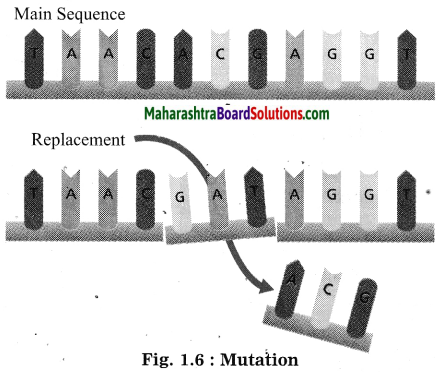
Observe the figure 1.6 given on page 10 from this chapter. Answer the following question based on your observations:
Maharashtra Board Class 10 Science Solutions Part 2 Chapter 1 Heredity and Evolution 5
What is the significance of this figure from the viewpoint of evolution? Explain in brief.
Answer:
In the figure, the process of mutation is shown. The original nucleotide sequence of TGC is replaced by new mutated sequence GAT. The change in the nucleotide sequence will change the DNA.

This will result in the change in genes and then changing the hereditary characters. Due to such change in genes, the evolution proceeds. The mutation so formed can be minor or major. The greater the impact of the change, the evolution takes place rapidly. The mutation thereby produce recombinations leading to diversity.

Question 4.
Observe the picture and answer the following questions:
Maharashtra Board Class 10 Science Solutions Part 2 Chapter 1 Heredity and Evolution 6
(1) Which evidence of evolution is shown in the picture?
Answer:
Embryological evidences of evolution are shown in this picture.

(2) What can be proven with this proof?
Answer:
The similarities in the initial embryonic stages of different vertebrates shows that there was a common origin of all of them. Thus embryological evidences prove that there was common vertebrate ancestor.

(3) Give one more example of evidence of evolution.
Answer:
Palaeontological evidences such as vestigial organs and connecting links are another examples of evolutionary evidences.

Maharashtra Board Class 10 Science Solutions Part 2 Chapter 1 Heredity and Evolution

Question 5.
Which concept/theory do you remember after seeing this picture of Giraffes? Describe it in brief.
Maharashtra Board Class 10 Science Solutions Part 2 Chapter 1 Heredity and Evolution 7
Answer:

  • The picture is based on the Lamarck’s principle of ‘use and disuse of organs’.
  • The morphological characters of organism develop because of specific activities that the organisms perform.
  • If some organ is not used it gets degenerated. If excessively used, it develops further.
  • Thus, the morphological changes take place due to activities or non-working of a particular body parts in an organism. Due to constant extension of neck to eat foliage from the top of the trees, giraffe’s neck became long.

Activity-based Questions:

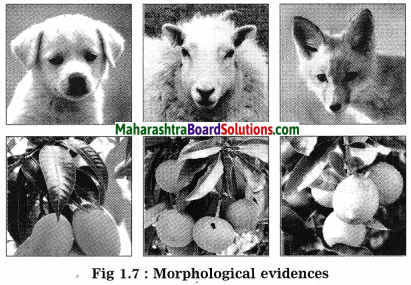
Try this: (Text Book Page No. 4)
Maharashtra Board Class 10 Science Solutions Part 2 Chapter 1 Heredity and Evolution 8
Observe the above images and note the similarities between given animal images and plant images.
Answer:
The above pictures of the animals show similarities such as structure of mouth, position of eyes, structure of nostrils and ear pinnae and body fur. In pictures of plants there are similarities in characters like leaf shape, leaf venation, leaf petiole, etc.
These above morphological evidences show that there may be a common ancestor for all of the species shown.

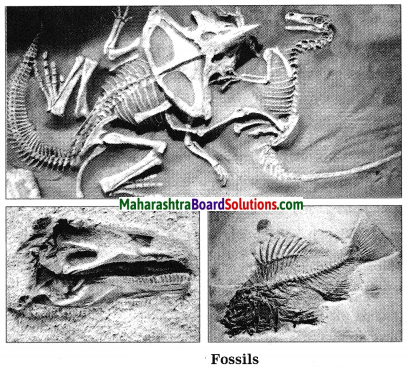
Observe and Discuss:

Question 1.
Observe the pictures given below. (Text Book Page No. 5)
Maharashtra Board Class 10 Science Solutions Part 2 Chapter 1 Heredity and Evolution 9
Answer:
(1) Fossils offer palaeontological evidence for the evolutionary process.
(2) Due to some natural calamities the organisms get buried during ancient times.
(3) The impressions and remnants of such organisms remain preserved underground. The hot lava also traps some organisms or their impressions. All such formations form fossils.
(4) Study of fossils help the researcher to understand the characteristics of the organisms that existed in the.past.
(5) Carbon dating method also helps in finding out exact age of the fossil. According to the structure of earth’s crust the fossils are obtained at specific depths.
(6) The oldest ones are obtained at the depth while the relatively recent ones occupy the upper surface. Thus fossils of invertebrates were seen in very old Palaeozoic era. Later were seen fossils of Pisces, Amphibia and Reptilia. The Mesozoic era was dominated by reptiles while Coenozoic era showed presence of mammals.
(7) In this way, study of fossils unfold the evolutionary secrets.

Question 2.
Observe the pictures given and discuss the characters observed. (Text Book Page No. 6)
Maharashtra Board Class 10 Science Solutions Part 2 Chapter 1 Heredity and Evolution 10
Answer:
Some living organisms possess some characters in them which are the distinctive features of different groups or phyla. Such individuals connect these two groups by sharing the characters of both and hence they are known as connective links.

Examples: (1) Peripatus: Peripatus is the connecting link between Annelida and Arthropoda. It shows characters of both animal phyla. Like annelid worm, it shows segmented body, thin cuticle and parapodia. Like an arthropod, it shows open circulatory system and tracheal system for respiration.
(2) Duck Billed platypus: This is a connecting link between reptiles and mammals. Like reptiles it lays eggs but like mammals it has mammary glands and hairy skin.
(3) Lung fish: Lung fish is a connecting link between fishes and amphibians. Though a fish, it shows lungs for respiration as in amphibian animals.
(4) Connecting links indicate the direction and hierarchy of evolution.

Maharashtra Board Class 10 Science Solutions Part 2 Chapter 1 Heredity and Evolution

Project: (Do it your self)

Project 1.
Internet is my friend: (Text Book Page No. 3)
Collect the information from the internet about Big-Bang theory related with the formation of stars and planets and present it in your class.

Project 2.
Use of ICT: (Text Book Page No. 4)
Collect the information of geological dating and present it in the classroom.

Project 3.
Use of ICT: (Text Book Page No. 5)
Find how the vestigial organs in certain animals are functional in others. Present the information in your class and send it to others.

Project 4.
Internet is my friend: (Text Book Page No. 8)
Collect the pictures and information of various species of monkeys from internet.

Maharashtra Board Class 10 Science Solutions Part 2 Chapter 4 Environmental management

Balbharti Maharashtra State Board Class 10 Science Solutions Part 2 Chapter 4 Environmental management Notes, Textbook Exercise Important Questions and Answers.

Maharashtra State Board Class 10 Science Solutions Part 2 Chapter 4 Environmental management

Question 1.
Reorganize the following food chain. Describe the ecosystem to which it belongs.
Grasshopper – Snake – Paddy field – Eagle – Frog.
Answer:

  • Correct food chain: Paddy field → Grasshopper → Frog → Snake → Eagle.
  • Such food chain is seen in the terrestrial ecosystem. There are many biotic factors in the terrestrial ecosystem, such as insects, birds, mammals etc.
  • The above example mentions about paddy field, so it must be in vicinity of coastal lands. There is water logging in the paddy fields. Therefore, it offers a habitat to the frogs.
  • In the above example, paddy fields are producers in the ecosystem. The primary consumer is grasshopper. Secondary consumer is frog, tertiary consumer is snake and the apex consumer is eagle. On every trophic level the bacteria, fungi and some scavenging worms can act as the decomposers.
  • In this ecosystem. the solar energy is transferred from the paddy crops to eagle in a step wise food
    chain.

Maharashtra Board Class 10 Science Solutions Part 2 Chapter 4 Environmental management

Question 2.
Explain the statement – ‘We have got this Earth planet on lease from our future generations and not as an ancestral property from our ancestors.’
Answer:

  • The earth was inhabited by older generations before us. We have replaced them.
  • But during their life time, they have created hazardous impact on the earth. The industrialization, the quest for more and more natural resources, wars fought, the construction activities such as dams, roads and bridges, extensive deforestation, etc. were their thoughtless activities.
  • All these activities were for development of mankind. But most of them have destroyed the delicate balance between the producers and different levels of consumers.
  • Due to ever increasing population of human beings there is shortage of food, clothing and shelter. To procure these basic needs, we have exploited many natural resources causing destruction of the earth’s natural ecosystem.
  • Now it is our turn to protect the earth as on the same planet the next generations have to survive. We have to hand over the ecosystems of the earth which are in perfect balance to the new generations.
  • The future generations need a good quality of air, water and land along with all other living organisms.
  • Due to problems like climate change, global warming, pollution, droughts, etc. the environment is impacted, thus in order to keep sustainability of earth, we have to remember that the earth has not been obtained only as ancestral property but we have to save it for future generations.

Question 3.
Write short notes.
a. Environmental conservation.
Answer:
Due to natural and man-made causes, there are many environmental problems on the earth. These problems affect the existence of various living organisms. In order to save these organisms and maintain the environmental balance, there is need for environmental conservation. If this is not done then there will not be any quality of life for the resident humans. For environmental conservation, the Government has formulated acts and rules. UN has established UNEP for the conservation programs.

The people’s participation in the conservation movement is essential. From school age, the environmental values are inculcated in the young minds. Conservation of environment is the social responsibility of everyone. Judicial use of natural resources conservation also way of environmental conservation.

b. Chipko Movement of Bishnoi.
Answer:
Chipko Movement of Bishnoi or Bishnoi Andolan:
Khejarli or Khejadli is a village in Rajasthan, where Bishnoi community is located. The name of the town is derived from Khejri trees.

The first event of Chipko Movement took place in Khejadli village in 1730 AD. In this village 363 Bishnois, led by Amrita Devi sacrificed their lives for protecting the trees of Khejri trees, which trees are considered as sacred by Bishnoi.

Amrita Devi said, “if a tree is saved even at the cost of one’s head, it’s worth it”. She was killed with the axes that were brought to chop off the trees. The three young daughters Asu, Ratna and Bhagubai also sacrificed their lives for trees.

83 Bishnoi villages came together and villagers sacrificed their lives after hearing about Amrita Devi’s sacrifice. Three hundred and sixty-three Bishnois were killed as they opposed the king. After realizing the mistake, the king ordered stoppage of the felling of trees. Honouring the courage of the Bishnoi community, the ruler of Jodhpur, Maharaja Abhay Singh, apologized. He issued a royal decree to protect trees and wild life.

Chipko movement of 20th century in Uttar Pradesh also followed the same pattern of embracing the trees and saving them from cutting.

c. Biodiversity.
Answer:
Biodiversity means the diverse life forms that inhabit any area. Biodiversity is seen due to variety of life forms and different ecosystems that lodge these organisms. In nature there is biodiversity on the three different levels, viz. genetic diversity, species diversity and ecosystem diversity. This means that there is diversity in the individuals belonging to the same specips due to genetic reasons, there is diversity among the different species of organisms and there is also a diversity in the ecosystems that are present in any region.

Due to development of mankind, the biodiversity is threatened. There are special efforts taken to restore the lost and threatened biodiversity. Some of these are establishing sanctuaries, National Parks, biodiversity hotspots and reserves etc. Certain endangered species are protected by carrying out conservation projects.

d. Sacred Groves.
Answer:
Sacred grove is the green patch of the forest which is conserved by local people in the name of God. It does not belong to forest department. It is like a sanctuary that is conserved by the common people and tribals in the area. It is rich in the biodiversity.

It is conserved as there is a faith that God or deity reside in the sacred grove. Hence in local language, they are known as Deorai. Due to this reason, people do not fell the trees. Also hunting of any wild life is not done here. More than 13000 sacred groves have been reported in India. Most of these are in Western Ghats in Maharashtra, Karnataka and Kerala. Also, in remaining parts of India sacred groves are reported. Role of sacred grove is tremendous in conserving the biodiversity.

e. Disaster and its management.
Answer:

  • To save human life from disasters. To help them for moving away from the place of disasters by rapid action.
  • To supply essential commodities to the affected people. This helps to reduce the gravity of disaster. People are given grains, water and clothes and other basic necessities under this objective.
  • To bring back the conditions of affected people to normalcy.
  • To rehabilitate the affected and displaced victims.
  • To think and execute the protective measures in order to develop capability to face the disasters in
    future.

Question 4.
How will you justify that overcoming the pollution is a powerful way of environmental management?
(OR)
“Solving the problem of pollution is an effective way of environmental management.” Justify the statement.
Answer:
1. Pollution is created only due to human activities. Air, water, soil, noise, radiation, thermal, light, plastic are different types of pollution.
2. All types of pollution affect environment and particularly threatening the survival of living organisms.
3. Pollution must be controlled in order to have good quality of the environment. E.g. When plastic is thrown anywhere, it causes pollution of the land, it clogs the rain water drains, it affects feeding of the animals. Plastic pollution can be completely stopped by us through proper management of plastic waste. By recycling or reusing, we can overcome the plastic pollution. This would be a powerful way of environmental management.
4. Similarly, when we reduce pollution of different types, we automatically help to regain the environmental health.

Question 5.
Which projects will you run in relation to environmental conservatioh? How?
(OR)
Write six strategies implemented by you for conservation of the environment.
Answer:
Initially, assessment of the environmental problems will be done. The nature and severity of these problems will be understood by detailed study of the same. Then the projects can be undertaken to combat these problems.

1. Tree plantation is one such easier project that can be undertaken to conserve environment. The further nurturing of the tree will also be our responsibility. While selecting the tree, the local and sturdy varieties will be selected. Such trees can survive in polluted environment too and even under the pressure of urbanization.

2. Solid waste management is another very important project that should be undertaken by every society, colony or school. Segregation of waste into dry and wet types and then its proper disposal will be taught to all the people in the neighbouring area.

3. To ban the plastic and make people aware about harmful effects of plastic is another very significant project.

4. Fossil fuels are non-renewable and polluting. Therefore, their use should be reduced as far as possible. Therefore, using bicycle, or walking down for shorter distances or using public transport systems are the better alternatives. The awareness drive about these facts will be taken up as a project.

5. To take care of stray animals, provide shelter, feeding endangered birds like sparrows and allowing them to survive with our support is also one of the essential act to conserve other species.

6. Attempts will be made for bringing awareness among minds of everyone. Such small acts can bring about major shift in the attitude of the people. This will certainly help in the environmental conservation.

Maharashtra Board Class 10 Science Solutions Part 2 Chapter 4 Environmental management

Question 6.
Answer the following:
a. Write the factors affecting environment.
Answer:

  • The biotic and abiotic- factors affect the environment. Among abiotic factors, the physical and chemical factors can alter the conditions of the environment.
  • Abiotic factors are either natural or man-made.
  • The various interrelationships between different living organisms can also affect environment.
  • The natural disasters such as earthquake, forest fires, cyclones, cloud bursting, drought, etc. change the environment.
  • The human activities such as deforestation, urbanisation, constructions etc. cause permanent damage to the ecosystems. Due to man-made impact, there can be large scale changes in the environment.

b. Human beings have important place in environment.
Answer:

  • Man came last on the earth during evolution of animals. But due to his intelligence, imagination, critical thinking and memory, he made progress in all fields.
  • By virtue of these qualities he became the supreme.
  • All the natural resources on the earth were very rapidly exploited by man.
  • Under the pretext of technology and. development he made degradation of almost all¬natural ecosystems.
  • He never obeys the rules of nature.
  • Phenomena like pollution, urbanization, industrialization and deforestation are exclusively his creations.
  • Hunting and poaching other animals were his contribution to the extinction of many other animals.
  • Except man no other organism on the earth can change the ecosystems in such a drastic way. Therefore, it is rightly said that human beings have important place in environment.

c. Write the types and examples of biodiversity.
Answer:
Biodiversity is documented on the following three levels, viz. genetic diversity, species diversity and ecosystem diversity.
1. Genetic Diversity: Diversity seen among the organisms of same species due to genetic differences is called genetic diversity. E.g. The individual human beings are different from each other. No two animals or plants are exactly alike.

2. Species Diversity: The difference between the different species is the species diversity, e.g. All the species of plants, animals and microbes which are seen in any natural environment.

3. Ecosystem Diversity: In one region there may be different ecosystems, such diversity in the ecosystems is called ecosystem diversity. Ecosystems are natural or artificial. Every region shows different types of ecosystems such as aquatic, terrestrial, desert or forest ecosystems. Each ecosystem has its own habitats with resident flora and fauna.

d. How the biodiversity can be conserved?
Answer:
Biodiversity can be conserved by the following ways:

  • Protection of the rare species of plants and animals.
  • Creating habitats for the animals and plants by establishing National Parkland Sanctuaries.
  • Declaration of bioreserves, the areas which are protected through conservation.
  • Conservation projects for protecting special species.
  • Conservation of all flora and fauna.
  • Strict observance of the acts and rules.
  • Use of traditional knowledge and maintaining record of traditional knowledge.

e. What do we learn from the story of Jadav Molai Payeng? (Board’s Model Activity Sheet)
Answer:
Jadav Molai Payeng is a common man who was just a simple forest worker. But he has conscience about plants and tree plantations. He single-handedly planted thousands of trees. He converted a barren patch of land into forest which is spread over 1360 acres. For these plantations he continuously worked.

He has shown that a single determined person, can establish a new forest! We understand the values of
hard work, sincerity and devotion to the nature through the story of Jadav Molai Payeng. Even a common man can contribute a lot for the conservation and protection of the environment by learning the story of Payeng.

f. Write the names of biodiversity hot spots.
Answer:

  • In entire world, 34 highly sensitive biodiversity spots are reported.
  • These hotspots occupied 15.7% area of the Earth.
  • However, currently about 86% of the sensitive areas are already destroyed.
  • Now about 2.3% area of the Earth still has such sensitive biodiversity spots.
  • There are 1,50,000 plant species which are about 50% of the species in the world.
  • In India, out of 135 species of animals, 85 species are found in the jungles of eastern region.
  • There are about 1,500 endemic plant species in Western Ghats.
  • About 50,000 plants species out of the total plants in the world are said to be endemic.

g. Which are the reasons for endangering the many species of plants and animals? How can we save those diversity?
Answer:

  • The animals and plants species are endangered majorly due to man-made causes.
  • Some natural disasters like earthquakes, climate change, forest fires, drought and cyclones also affect the living organisms due to lack of food and water.
  • In man-made causes, hunting and poaching are the main reasons.
  • Also animal-human conflicts occur due to invasion of human settlements into the habitats of wild animals.
  • Construction of dams, roads, and colonies destroy the habitats of wild life.
  • Industrialization, urbanization and population explosion of humans are putting severe pressure on all the existing biodiversity.
  • In order to save and protect the biodiversity, many scientists and naturalists come together. A stretch of land is protected by declaring it as the sanctuary or a national park by the Government. Even the locals can protect it as a sacred grove.
  • Various acts and rules have been formulated to protect the organisms. The violators of such rules are punished accordingly.

Question 7.
What are the meanings of the following symbols? Write your role accordingly. (July ’19; Board’s Model Activity Sheet)
(OR)
What do these symbols indicate? Explain your opinion about those symbols.
Maharashtra Board Class 10 Science Solutions Part 2 Chapter 4 Environmental management 1
Answer:
1. The first symbol is for giving the message, “Reduce, reuse and recycle”. This is important mantra for the utilization of natural resources.
The second symbol gives the message about ‘Save water’.
The third symbol advocates the use of solar energy.

2. These symbols inculcate the importance of being eco-friendly. The first symbol is essential to maintain the natural resources by reusing and recycling them. As far as possible, one should reduce the excessive use of resources by preventing consumerism.

3. Water problems persist in many major cities and villages. In villages it results in drought like conditions. It also reflects into loss of agricultural produce. Therefore, the message about saving water or to make judicious use of water should be spread far and wide.

4. The solar energy is the renewable energy option which is very easily available in country like India. By using solar energy, we can replace the polluting and exhaustible fuels. Thereby, pollution will also be reduced.

Due to such symbols, important messages about environment conservation reach, us and we can change ourselves into more eeofriendly persons.

Project: (Do it your self)

Project 1.
Make a presentation on pollution of Gangci and Yamuna Rivers and effects of air pollution on Taimuhal.

Maharashtra Board Class 10 Science Solutions Part 2 Chapter 4 Environmental management

Can you recall? (Text Book Page No. 36)

Question 1.
What is ecosystem? Which are its different components?
Answer:
In any environment, there are biotic and abiotic components. There are interactions among these components. All such interactions make an ecosystem.

The different components in the ecosystem are as follows:
Abiotic components : Air, water, soil, sunlight, temperature, humidity, etc.
Biotic components: All the types of living organisms, like bacteria, fungi, plants and animals.

Question 2.
Which are the types of consumers? What are the criteria for their classification?
Answer:
Primary consumers, secondary consumers, tertiary consumers or apex consumers are the different types of consumers. These types are according to the trophic level to which they belong.

Question 3.
What may be the relationship between lake and birds on tree?
Answer:
The birds on the tree depend on the aquatic organisms in the lake for their feeding. Birds stay on the trees which are in the vicinity of the lake, so that it is easier for them to capture fishes, frogs, etc. They must also be using the same lake water for drinking.

Question 4.
What is difference between food chain and food web?
Answer:
In every ecosystem, there are always interactions between producers, consumers and decomposers. This sequence of feeding interactions is called food chain. In every food chain there are links between four to five trophic levels constituting the producers, primary consumers, secondary consumers, tertiary consumers, etc. The links of food chain are in linear sequence. But food web is a complex network of many small food chains. In fact, food web is the collection of many small food chains. Thus, when many food chains are interwoven, they form food web.

Think and Answer! (Text Book Page No. 36)

Question 1.
Write the name and category of each of the component shown in picture.
Answer:
By utilizing the solar energy, the green plants perform photosynthesis. Thus, they are producers of the food chain. This food is consumed by the grasshopper. Thus, it is primary consumer. Frog is secondary consumer as its diet consists of insects like grasshopper. Snake is tertiary consumer as it feeds on frogs, while the hawk is apex consumer as it can kill the snake and feed on it. Last picture in the food chain is of fungi which are acting as decomposers. Few bacteria are shown in the picture, act on all the levels and bring about decomposition.
Maharashtra Board Class 10 Science Solutions Part 2 Chapter 4 Environmental management 2

Maharashtra Board Class 10 Science Solutions Part 2 Chapter 4 Environmental management

Question 2.
What is necessary to convert this picture into food web? Why?
Answer:
If this food chain has to be converted into a food web, there should be interactions between the different components. Any living organism can be prey to different predators. Moreover, a predator can also be a prey for other. Frog eats different insects. The same frog can be either eaten by snake or by hawk.

Use your brain power. (Text Book Page No. 40)

Question 1.
Why is it said that pollution control is important?
Answer:
The quantity of pollutants and severity of their effects on the ecosystem have to be taken into consideration constantly. The different methods of pollution control have to be used for checking the hazardous effects of pollution on the living organisms. Especially the impact of pollution on health of human beings is assessed from time to time.

The young children and senior citizens are affected to greater extent by the pollution. If the air and water required for the survival of the people is affected, then exercising the pollution control is to be done immediately. Thus, it is said that pollution control is important.

Enlist and discuss (Text Book Page No. 43)

Question 1.
Find the meaning of given symbols in relation to environment conservation. Make a list of other such symbols.
A. Maharashtra Board Class 10 Science Solutions Part 2 Chapter 4 Environmental management 3
Answer:
This symbol tells us to keep our wastes carefully. The garbage should not be strewn anywhere. But it should be properly managed. Waste if managed properly can be a wealth.
B. Maharashtra Board Class 10 Science Solutions Part 2 Chapter 4 Environmental management 4
Answer:
This symbol tells us to save electricity. If electricity is carefully used, we can save our natural resources. This message is given through this picture.
C. Maharashtra Board Class 10 Science Solutions Part 2 Chapter 4 Environmental management 5
Answer:
Use of bicycle means use of green energy. By riding on a bicycle we save on fuel and use our own muscular energy. It is the best eeofriendly, non polluting vehicle.

Observe and fill the information: (Text Book Page No. 8)

Question 1.
Observe the environment around you. Complete the following flow chart.
Maharashtra Board Class 10 Science Solutions Part 2 Chapter 4 Environmental management 6
Answer:
Maharashtra Board Class 10 Science Solutions Part 2 Chapter 4 Environmental management 7

Maharashtra Board Class 10 Science Solutions Part 2 Chapter 4 Environmental management

Complete the Chart: (Text Book Page No. 39)

Question 1.
We have studied the air pollution, water pollution and soil pollution in detail in earlier classes. Based on that, complete the following chart.
Maharashtra Board Class 10 Science Solutions Part 2 Chapter 4 Environmental management 8
Answer:
Maharashtra Board Class 10 Science Solutions Part 2 Chapter 4 Environmental management 9

Complete the Chart: (Text Book Page No. 40)

Question 1.
Now a day, we are observing the environmental degradation everywhere. Complete the flow chart given besides with the help of environment.
Maharashtra Board Class 10 Science Solutions Part 2 Chapter 4 Environmental management 10
Answer:
Maharashtra Board Class 10 Science Solutions Part 2 Chapter 4 Environmental management 11

(Text Book Page No. 43)

Question 1.
Where are such sacred groves in Maharashtra? Make a list and visit with your teachers.
Answer:
Sacred groves: Sacred groves form an important landscape feature in the deforested hill ranges of the Western Ghats. The felling of timber and the killing of animals in sacred groves is not allowed by the locals. It is considered as taboo.

In Maharashtra, sacred groves are found in tribal as well as non-tribal areas. The sacred groves in the western part are called Devrai or Devrahati, which means the abode of the gods. In eastern parts it is called Devegudi by the madiya tribal people.

In Maharashtra 2820 Devrais have been documented. Maruti, Vaghoba, Vira, Bhiroba, Khandoba and Shirkai are some deities to which sacred groves are dedicated.

In the sacred groves, the most commonly found plant species are Portia tree, Casuarina, Silk cotton tree, Indian laurel, Indian Elm, Bead tree, Indian butter tree, Turmeric and Japanese ginger. In Maharashtra, sacred groves are maximum in district of Sindhudurg, (More than 1500 out of total 2820) followed by Ratnagiri, then Pune and in district of Satara.

Choose the correct alternative and write that alphabet against the sub-question number:

Question 1.
Paddy fields are frequently attacked by
(a) goats
(b) birds
(c) grasshoppers
(d) monkeys
Answer:
(c) grasshoppers

Question 2.
Basic functional unit to study the ecology is termed as ……………
(a) environment
(b) niche
(c) ecosystem
(d) food chain
Answer:
(c) ecosystem

Question 3.
As per ……….. trading of rare animals has been completely banned.
(a) clause 48A
(b) clause 49B
(c) clause 49A
(d) all the above
Answer:
(c) clause 49A

Question 4.
(4) The jungle in Kokilamukh of Jorhat district of Assam is well known as ………….
(a) Molai jungle
(b) Rhino jungle
(c) Rhino forest
(d) Payang jungle
Answer:
(a) Molai jungle

Question 5.
Maintaining record of ………. knowledge is very necessary.
(a) modern
(b) mythical
(c) vedic
(d) traditional
Answer:
(d) traditional

Question 6.
………… is world’s largest organization engaged in environmental activities.
(a) Greenpeace
(b) Hariyali
(c) B. N. H. S.
(d) I. I. T.
Answer:
(a) Greenpeace

Question 7.
……….. sanctuary of West Bengal is reserved for tigers.
(a) Gir
(b) Sunderban
(c) Molai
(d) Corbett
Answer:
(b) Sunderban

Maharashtra Board Class 10 Science Solutions Part 2 Chapter 4 Environmental management

Question 8.
World Biodiversity Day is celebrated on ……… every year.
(a) 22nd April
(b) 5th June
(c) 16th September
(d) 22nd May
Answer:
(d) 22nd May

Question 9.
Out of the total plant species in the entire world, 50,000 are ……………
(a) extinct
(b) endangered
(c) endemic
(d) rare
Answer:
(c) endemic

Question 10.
Giant squirrel is an ………… species.
(a) indeterminate
(b) rare
(c) endemic
(d) endangered
Answer:
(a) indeterminate

Question 11.
In a food chain, autotrophic plants are present at the ……….. level. (March 2019)
(a) tertiary nutrition
(b) secondary nutrition
(c) producer
(d) apex
Answer:
(c) producer

Question 12.
……….. from Manas sanctuary in Assam is under threat. (Board’s Model Activity Sheet)
(a) one horned rhino
(b) Lion
(c) Musk deer
(d) Giant squirrel/Shekru
Answer:
(a) one horned rhino

Write whether the following statements are true or false, giving suitable explanation for the same:

Question 1.
Only abiotic factors play very important role in the ecosystem.
Answer:
False. (Both abiotic and biotic factors play very important role in the ecosystem. Only abiotic factors will not decide the working of an ecosystem.)

Question 2.
Paddy fields are frequently attacked by frogs.
Answer:
False. (Paddy fields are frequently attacked by grasshoppers. Frogs feed on grasshoppers and control the population of these insects that cause destruction of the crops.)

Question 3.
Environmental pollution is necessary and acceptable change in the surrounding environment.
Answer:
False. (Environmental pollution is never acceptable. It is always harmful to the entire ecosystem and thus never necessary.)

Question 4.
X-rays and radiations from atomic energy plants are natural radiations.
Answer:
False. (X-rays are not present in natural radiations. Infra-red and ultra-violet rays are present in natural radiations.)

Question 5.
The person breaching the Environmental Conservation Act is entitled for either one year imprisonment or fine up to ₹ 5 lakh.
Answer:
False. (The person breaching the Environmental conservation Act is fined upto ₹ 1 lakh. He is also entitled to imprisonment for five years.)

Question 6.
Many people come together to establish arnew forest but a single person, if determined can destroy the entire forest!
Answer:
False. (When anything constructive has to be done even a single man can start such action. In case of ‘Molai jungle’, this statement holds true. But when destructive actions are done, many people come together and cause damage.)

Maharashtra Board Class 10 Science Solutions Part 2 Chapter 4 Environmental management

Question 7.
There are clusters of thick forests only in Western Ghats of India.
Answer:
False. (Entire India is rich in biodiversity. Just not in Western Ghats but in entire India one can observe the clusters of thick forests and this is mainly due to suitable tropical climate.)

Question 8.
86 highly sensitive biodiversity spots are reported all over the world.
Answer:
False. (As per the latest information and available data, there are 34 highly sensitive biodiversity spots.)

Question 9.
Flow of nutrients in an ecosystem is unidirectional.
Answer:
False. (Flow of energy in an ecosystem is unidirectional. Flow of nutrients is cyclic.)

Match the columns:

Question 1.

Column IColumn II
(1) Physical, chemical and biological factors together form(a) Biodiversity
(2) The science of interactions between biotic and abiotic factors(b) Ecosystem
(c) Ecology
(d) Environment

Answer:
(1) Physical, chemical and biological factors together form – Environment.
(2) The science of interactions between biotic and abiotic factors – Ecology.

Question 2.

Column IColumn II
(1) Basic functional unit in the environment(a) Biodiversity
(2) Different types of living organisms(b) Ecosystem
(c) Ecology
(d) Environment

Answer:
(1) Basic functional unit in the environment – Ecosystem.
(2) Different types of living organisms – Biodiversity.

Question 3.

Rules/ActYear
(1) Sound Pollution (Control and Prevention) Rule(a) 1980
(2) Biomedical Waste (Management and Handling) Rule(b) 2011
(c) 1998
(d) 2000

Answer:
(1) Sound Pollution (Control and Prevention) Rule – 2000.
(2) Biomedical Waste (Management and Handling) Rule – 1998.

Question 4.

Rules/ActYear
(1) Forest Conservation Act(a) 1980
(2) Environmental Conservation Act(b) 1986
(c) 2011
(d) 2000

Answer:
(1) Forest Conservation Act – 1980.
(2) Environmental Conservation Act – 1986.

Question 5.

SpeciesExamples
(1) Endangered(a) Red panda, Musk deer.
(2) Rare(b) Tiger, Lion.
(c) Lion tailed monkey, lesser florican.
(d) Monkey, squirrel

Answer:
(1) Endangered Species – Lion tailed monkey, lesser florican.
(2) Rare Species – Red panda, Musk deer.

Question 6.

SpeciesExamples
(1) Vulnerable(a) Giant squirrel (Shekhru)
(2) Indeterminate(b) Red panda, Musk deer
(c) Tiger, Lion
(d) Lesser florican, sparrow

Answer:
(1) Vulnerable Species – Tiger, Lion.
(2) Indeterminate Species – Giant squirrel (Shekhru).

Find the odd one out:

Question 1.
Ash, Carbon dioxide, Lead, Asbestos
Answer:
Carbon dioxide. (All others are solid particulate pollutants.)

Question 2.
Manas sanctuary, Sunderbans sanctuary, The Western Ghats, Tadoba National Park
Answer:
Tadoba National Park. (All others are endangered heritage places of India.)

Question 3.
Lion tailed monkey, White rats, Musk deer, Tiger
Answer:
White rats. (All others are species that are threatened.)

Maharashtra Board Class 10 Science Solutions Part 2 Chapter 4 Environmental management

Question 4.
Conservation, Regulation, Pollution, Prohibition
Answer:
Pollution. (All others are ways of environmental protection.)

Question 5.
IPCC, UNEP, IUCN, BNHS
Answer:
BNHS. (All others are international organizations. BNHS is Bombay Natural History Society.)

Find the correlation:

Question 1.
Rare species : Musk deer : : ………… : Lesser florican.
Answer:
Endangered species

Question 2.
Red panda : Rare species : : Giant Squirrel : …………
Answer:
Indeterminate species

Question 3.
Nitrogen, Oxygen : Gaseous cycle : : Soil and Rocks : …………
Answer:
Sedimentary cycle

Question 4.
Manas : One horned Rhino : : Gir : ………..
Answer:
Asiatic lion

Question 5.
Mumbai : Bombay Natural History Society : : TehriGarhwal : ………….
Answer:
Chipko centre.

Answer the following questions in detail:

Question 1.
Answer the following questions:
If frog population in paddy field declines all of a sudden,
(a) What will be the effect on paddy crop?
Answer:
If the population of frog declines, then there will be rise in the population of grasshoppers. The paddy fields will hence be infested with insect pests.

(b) Number of which consumers will decline and which will increase?
Answer:
The food chain if altered, results in imbalance in the ecosystem. ‘Paddy → Grasshoppers → Frog → Snake’, this food chain is natural. When by any reason there is dec1ine in the number of frogs, thus secondary consumer will also decline. Due to this decline, snake which is at tertiary consumer level will also decline. Theprimary consumers i.e. grasshoppers will increase as there is now no check on their population. Due to increase in their population the paddy production will be reduced. Due to reduced number of snakes, rats and other rodents from neighbouring areas would also rise, which are also secondary consumers.

(c) Name the Indian states where paddy is cultivated on a large scale.
Answer:
West Bengal, Uttar Pradesh, Haryana, Punjab, Tamil Nadu, Andhra Pradesh, Bihar, Chhattisgarh, Odisha, Assam and Maharashtra.

Question 2.
What is radioactive pollution? What are its effects?
Answer:
(1) The radiations emitted either through the natural sources or through man-made sources cause radioactive pollution.
(2) The natural radiations is in the form of ultra violet and infrared radiations.
(3) Artificial or man-made radiations are X-rays and radiations from atomic energy plants.
(4) All radiations are highly hazardous for the living organisms. The impact of radiation is also for a very long time.
(5) It has brought about major accidental mishaps at Chernobyl, Windscale, qpd Three Miles Island. These disasters have affected thousands of people.
(6) Some other effects of radiations are as follows – (i) Due to higher radiations of X-rays, cancerous ulceration occurs, (ii) Radiations destroy the body tissues, (iii) Radiations cause mutations and thus genetic changes occur, (iv) There is adverse effect on the vision.

Question 3.
Give one word for “The forest conserved in the name of God.” (Board’s Model Activity Sheet)
Answer:
Deorai.

Give scientific reasons:

Question 1.
Certain scavenging caterpillars, termites and insects found in the dung are important.
Answer:

  • Scavenging caterpillars and insects are decomposers. They seem to be Worthless due to filthy surrounding in which they thrive.
  • But they carry out most important task of decomposition of complex organic substances into simple inorganic elements.
  • This recycling is possible only due to decomposers.
  • If they are not present, there will be huge accumulation of garbage. Therefore, these living organisms are important.

Question 2.
Destroying trees is to destroy everything.
Answer:

  • When a single huge tree is felled many living organisms which are dependent on it, are exterminated.
  • Many insects, fungi, birds, etc. lose their habitat.
  • Trees take up carbon dioxide from the atmosphere and release oxygen. These natural cycles are also hindered due to loss of trees.
  • Due to trees there is shade, cooler atmosphere and increase in the rainfall. When such trees are destroyed all the components in the ecosystem are destroyed too.

Question 3.
There is no definite information about indeterminate species.
Answer:

  • Indeterminate species do not have substantial information about them.
  • The organisms belonging to such species appear to be endangered due to their some behavioural habits.
  • They are shy and do not come in open so that they can be observed keenly.
  • For example, animals like Giant squirrel also do not provide such information.

Question 4.
Tigers from Sunderbans and Rhinos from Manas are under threat.
Answer:

  • Manas is in the area-of Assam where there are many dams and Indiscriminate use of water.
  • This area is also flood affected. Therefore, rhinos are under threat.
  • In Sunderbans, there are also problems such as deforestation, dams, excessive fishing, and dug out trenches.
  • All of these cause dangers to the tiger population.

Question 5.
There are clusters of thick forests in the Western Ghats of India.
Answer:

  • There are many sacred groves in the region of Western Ghats of India.
  • These forests are not conserved by Government Forest Departments but are cared for by the local people, in the name of God.
  • Due to such faith in the people, the forests are conserved like sanctuaries.
  • Such many clusters are in Western Ghats of Maharashtra.

Maharashtra Board Class 10 Science Solutions Part 2 Chapter 4 Environmental management

Question 6.
We can see biodiversity on three levels.
Answer:

  1. There is biodiversity in the living organisms belonging to the same genus.
  2. This diversity is due to different heredity pattern. This is called genetic biodiversity.
  3. The organisms occupying the same area and belonging to the same species also show diversity due to different species. This is species biodiversity.
  4. The organisms occupying different ecosystems also show differences, which is called ecosystem biodiversity. Therefore, we observe biodiversity on three different levels.

Questions based on diagrams:

Question 1.
What is shown in the picture? Write name and trophic level of each component.
Maharashtra Board Class 10 Science Solutions Part 2 Chapter 4 Environmental management 12
Answer:
In this picture, food chain having rive trophic levels is shown.
(1) Trophic level 1 = Producers : Green plant.
(2) Trophic level 2 = Primary consumer (Herbivore): Grasshopper.
(3) Trophic level 3 = Secondary consumer (Carnivore): Bird.
(4) Trophic level 4 = Tertiary consumer (Carnivore) : Snake.
(5) Trophic level 5 = Top or Apex consumer (Carnivore) : Owl.

Question 2.
Explain the meaning of following symbols A and B and C.
A.
Maharashtra Board Class 10 Science Solutions Part 2 Chapter 4 Environmental management 13
Answer:
The symbol show types of green energy such as solar energy and wind energy. It also expresses that people
should use such sources of energy for their use.

B.
Maharashtra Board Class 10 Science Solutions Part 2 Chapter 4 Environmental management 14
Answer:
This symbol is giving the message “Save water”. Sustainable use of water is necessary for our future.

C.
Maharashtra Board Class 10 Science Solutions Part 2 Chapter 4 Environmental management 15
answer:
The symbols of WWF and BNHS are shown here. BNHS stands for Bombay Natural History Society. This institute works for the conservation and documentation of flora and fauna.

WWF means World Wild Life Fund. Also known as World Wide Life Fund. This International Institute is looking after the welfare of wildlife through different conservation projects. WWF symbol shows Panda while BNHS symbol has Giant Hornbill.

Question 3.
(a) Identify the following symbols and state their significance: (March 2019)
Maharashtra Board Class 10 Science Solutions Part 2 Chapter 4 Environmental management 16
Answer:
(i) This symbol is giving the message “Save water”. Sustainable use of water is necessary for our future.
(ii) Use of bicycle means use of green energy. By riding on a bicycle we save on fuel and use our own muscular energy. It is the best ecofriendly, non polluting vehicle.

(b) How can biodiversity be conserved?
Answer:
Biodiversity can be conserved by the following ways:

  • Protection of the rare species of plants and animals.
  • Creating habitats for the animals and plants by establishing National Park and Sanctuaries.
  • Declaration of bio reserves, the areas which are protected through conservation.
  • Conservation projects for protecting special species.
  • Conservation of all flora and fauna.
  • Strict observance of the acts and rules.
  • Use of traditional knowledge and maintaining record of traditional knowledge.

Activity based questions:

Question 1.
Questions based on the charts.
Complete the flow chart: (July 2019)
Maharashtra Board Class 10 Science Solutions Part 2 Chapter 4 Environmental management 17
Answer:
Maharashtra Board Class 10 Science Solutions Part 2 Chapter 4 Environmental management 18

Maharashtra Board Class 10 Science Solutions Part 2 Chapter 4 Environmental management

Question 2.
Collect more information about locations of these hotspots present in the world. (Textbook page no. 44)
Answer:
Students should collect this information.

Question 3.
Where are such sacred groves in Maharashtra? Make a list and visit with your teachers. (Textbook page no. 43)
Answer:
Sacred groves: Sacred groves form an important landscape feature in the deforested hill ranges of the Western Ghats. The felling of timber and the killing of animals in sacred groves is not allowed by the locals. It is considered as taboo.

In Maharashtra, sacred groves are found in tribal as well as non-tribal areas. The sacred groves in the western part are called Devrai or Devrahati, which means the abode of the gods. In eastern parts it is called Devegudi by the madiya tribal people.

In Maharashtra 2820 Devrais have been documented. Maruti, Vaghoba, Vira, Bhiroba, Khandoba and Shirkai are some deities to which sacred groves are dedicated.

In the sacred groves, the most commonly found plant species are Portia tree, Casuarina, Silk cotton tree, Indian laurel, Indian Elm, Bead tree, Indian butter tree, Turmeric and Japanese ginger. In Maharashtra, sacred groves are maximum in district of Sindhudurg, (More than 1500 out of total 2820) followed by Ratnagiri, then Pune and in district of Satara.

Maharashtra Board Class 10 Science Solutions Part 2 Chapter 4 Environmental management

Projects: (Do it your self)

Project 1.
Let’s Discuss: (Text Book Page No. 41)
Collect the information about Chipko Movement and discuss between two groups of your class about its importance in present situation.

Project 2.
Collect more information on the organization of Greenpeace. (Text Book Page No. 43)
Answer:
Students are expected to write this answer to this question.

Project 3.
There should be positive attitude of human being towards the environment for welfare of entire living world. For this purpose, following roles are important. You can be a conservator, organizer, guide, plant-friend, etc. Describe about the role you wish to perform and your plans for that role. (Text Book Page No. 42)

Project 4.
Survey the plants and animals in your area. Maintain a record about their characteristics. (Text Book Page No. 45)
Answer:
Students can conduct such surveys with the help of elders.

Project 5.
Internet is my friend! (Collect the information Textbook page no. 41)
(1) Sound Pollution (Control and Prevention) Rule, 2000.
(2) Biomedical Waste (Management and Handling) Rule, 1998.
(3) E-waste (Management and Handling) Rule, 2011.

Maharashtra Board Class 10 Science Solutions Part 2 Chapter 10 Disaster Management

Balbharti Maharashtra State Board Class 10 Science Solutions Part 2 Chapter 10 Disaster Management Notes, Textbook Exercise Important Questions and Answers.

Maharashtra State Board Class 10 Science Solutions Part 2 Chapter 10 Disaster Management

Question 1.
Complete the table.
Maharashtra Board Class 10 Science Solutions Part 2 Chapter 10 Disaster Management 1
Answer:
Maharashtra Board Class 10 Science Solutions Part 2 Chapter 10 Disaster Management 2
Maharashtra Board Class 10 Science Solutions Part 2 Chapter 10 Disaster Management 3
Maharashtra Board Class 10 Science Solutions Part 2 Chapter 10 Disaster Management 4
Maharashtra Board Class 10 Science Solutions Part 2 Chapter 10 Disaster Management 5

Maharashtra Board Class 10 Science Solutions Part 2 Chapter 10 Disaster Management

Question 2.
Write notes.
a. Disaster Management Authority.
Answer:
Disaster Management Authority is the body that works at the level of government from national level to village level. This work is basically about management of any disaster and tackling the problems of the affected people. At National level there is National Disaster Management Authority for which the Prime Minister is the chairman. For every state there is State Disaster Management Authority, where the chief minister of every state is the chairman. Under the state level, there are district level units where district collector is responsible for disaster management and implementation of rehabilitation schemes. Below district level authority there are Taluka and then Village Disaster Management Committees.

The Tahsildar is the chairman for Taluka level while the Sarpanch of the village is responsible for management of disasters at village level. Collector of each district helps in planning, coordinating and controlling the implementation of rehabilitation programme and also gives essential instructions and reviews the entire system.

b. Nature of disaster management.
Answer:
Disaster management involves either prevention of disasters (Pre-disaster management) or creating preparedness to face them (Post-disaster management). The action plans are prepared for managing disasters. This is done after studying the different aspects such as preventive measures, rehabilitation and reconstruction plans. The disasters are tackled by executing action plans in the following steps: Preparation, redemption, preparedness, action during actual disaster, response, resurgence and restoration. At every level there are other voluntary organizations and Government meteorological institutions for their help.

c. Mock drill.
Answer:

  • Mock drill is the practice to check whether there is preparedness for dealing with the sudden attack of disaster.
  • For this purpose, virtual or apparent situations that simulate the disaster are created.
  • The reaction time for any type of disaster is checked by such activity. In the presence of trained personnel, the execution of the rescue plans are observed.
  • People also understand their responsibilities at the time of actual disaster.
  • The experts also check execution of plan designed for disaster redressal.
  • By such mock drills, the efficacy of the system can be understood. In future, when actual calamity strikes, there is already preparation for disaster redressal. Therefore, mock drill is useful.

d. Disaster Management Act, 2005.
Answer:
Government of India has made Disaster Management Act in 2005. The affected people are given all necessary help as per this act. With the humanitarian view, people are rehabilitated and helped them to come back to normalcy after the disaster.

As per this Act, National Disaster Response Force has been established. This force consists of 12 divisions in entire India which are attached with Indian Army. The headquarter is located in Delhi, but the action is taken all over the country with the help of army. As per the Act, in Maharashtra National Disaster Response Force is in action through State Reserve Polioe Force. The personnel of this force are trained accordingly, and they take part in the rescue work during different disasters.

Question 3.
Answer the following questions.
a. Explain the role of district disaster control unit after occurrence of any disaster.
Answer:
(1) District control unit looks after the ; disaster management of the district.
(2) It is immediately formed either after the impact of disaster or if warning is given about some upcoming disaster.

District-wise Disaster Control Unit performs following role:

  • The review of various aspects of disasters is done.
  • Through the disaster control unit there is continuous contact established with various agencies like army, air force, navy, telecommunication department, paramilitary forces, etc. for obtaining help.
  • The unit also coordinates with various voluntary organizations for their help in disaster management.

b. Give the reasons for increase in human disasters after the World War-II.
Answer:

  • After Second World War, the feelings of peace and brotherhood among the global citizens were lost. The geographic, religious, racial and ethnic differences sprang up tremendously.
  • Atrocities that Nazi has performed made deep impact on the minds of people. Terrorism, abduction, robberies and social unrest increased in almost all the countries.
  • The financial losses had incurred in the World War II. The misuse of science and technology was done to retrieve these deficits.
  • At the end of World War II, the atomic bombs were dropped in Japan. This has created health problems in the entire world.
  • Social inequality, economic disparity, racial and religious differences were some adversaries that created unrest in the country.
  • Later, the neighbouring nations kept on fighting. The geographical boundaries were changed. People always had feelings of insecurity. The terrorism flourished. All such instances gave rise to man-made disasters.

c. What are the objectives of disaster management?
(OR)
State any four objectives of disaster management. (March ’19)
Answer:
Objectives of disaster management:

  • To save human life from disasters. To help them for moving away from the place of disasters by rapid action.
  • To supply essential commodities to the affected people. This helps to reduce the gravity of disaster. People are given grains, water and clothes and other basic necessities under this objective.
  • To bring back the conditions of affected people to normalcy.
  • To rehabilitate the affected and displaced victims.
  • To think and execute the protective measures in order to develop capability to face the disasters in future.

d. Why is it essential to get the training of first aid? (July ’19)
Answer:
When there is a disaster, we need to immediately help the victim. Till the medical help arrives, one should be in position to treat the injured and save his or her life. In such cases; knowing first- aid is essential. Such kind of a need may arise in case of our parents, our siblings at home or with friends in school. Those who are injured should be treated at once. If we know about techniques of first aid, we can save such person before the medical help arrives. Therefore, it is essential to get the training of the first aid.

e. Which different methods are used for transportation of patients? Why?
Answer:
For the transportation of patients following methods are used:

  • Cradle method: This method is used for children and persons with less weight.
  • Carrying piggy back: This method is useful in carrying the unconscious persons.
  • Human crutch method: If one leg of the person is injured, then the victim is supported with minimum load on the other leg. This is called human crutch method.
  • Pulling or lifting method: For carrying an unconscious person for a short distance this method is used.
  • Carrying on four-hand chair: This method is used when the support is needed for a part below waist region.
  • Carrying on two-hand chair: Patients that cannot use their hands but can hold their body upright, are carried by such method.
  • Stretcher: By making temporary stretcher in case of emergency, the unconscious patient can be moved. Such temporary stretchers are made by using bamboos, blanket, etc.

Maharashtra Board Class 10 Science Solutions Part 2 Chapter 10 Disaster Management

Question 4.
On the basis of the structure of disaster management authority, form the same for your school.
Answer:
Maharashtra Board Class 10 Science Solutions Part 2 Chapter 10 Disaster Management 6

Question 5.
Write down the reasons, effects and remedial measures taken for any two disasters experienced by you.
Answer:
Students are expected to write the answer based on their own experiences.

Question 6.
Which different aspects of disaster management would you check for your school? Why?
Answer:
For the pre-disaster management at school following aspects would be inspected.

  • Are the telephones 6f the school working properly?
  • Is there a first-aid box in each class?
  • Are there any basic medicines in the school?
  • Is the team ready for rescue of smaller children from lower classes?
  • Has monitor or prefect participated in a mock drill? Does he/she know about first aid?
  • Is the contact of parent representative available in emergency situations?
  • Is the Medical Officer/Doctor present on the school campus?
  • Is there enough drinking water and some dry snacks available in the school?
  • Are the staircases and corridors suitable for quick evacuation of the children?

Maharashtra Board Class 10 Science Solutions Part 2 Chapter 10 Disaster Management

Question 7.
Identify the type of disaster.
a. Terrorism.
Answer:
Man-made, intentional.
Due to the activities of terrorism, many innocent lives are lost. Many are seriously injured. Some become crippled for their entire life. Buildings, monuments, vehicles everything is completely destroyed. There is rift between different religions or sects. The peaceful atmosphere is disturbed. The entire society is under the constant fear of insecurity.

b. Soil erosion.
Answer:
Natural, geophysical, geological.
When the upper fertile layer of soil is lost, it becomes barren. The trees are uprooted. The fertility of the area is lost. The land becomes unsuitable for cultivation or farming. Due to wind, flowing water or grazing animals the naturally occurring soil erosion becomes hazardous for the environment.

c. Hepatitis.
Answer:
Natural, biological, animal-origin.
Hepatitis is a viral disease which spreads through the contaminated food and water. The outburst of epidemic of hepatitis is difficult to control. As in big cities the quality of road side food is often consumed, the spread of hepatitis is. fast. People suffer due to hepatitis.

d. Forest fire.
Answer:
Natural, biological, plant-origin.
Due to heat and wind, the dry grass and the shrubs catch fire in the forests, resulting in forest fires. Such rapidly spreading forest fire can finish the biodiversity within a very short span of time. It is difficult to extinguish the naturally lit forest fires. Many trees and other vegetation, animals and birds along with their habitats are destroyed due to forest fire. The smoke emanating causes the air pollution.

e. Famine.
Answer:
Natural, climatic.
Due to famine there is severe water scarcity. In absence of water, the fields and farms become barren as the crops cannot grow without water. There is shortage of food grains. The cattle dies due to want of water and grass. Local people have to migrate in search of food, water and shelter.

f. Theft.
Answer:
Man-made, intentional.
Theft causes economic loss for the one whose money or valuables are looted. The person who suffers the loss also undergo mental and emotional shock. Sometimes the thief may also cause physical harm. It may cost on life too.

Question 8.
Some symbols are given below. Explain those symbols. Which disasters may occur if those symbols are ignored?
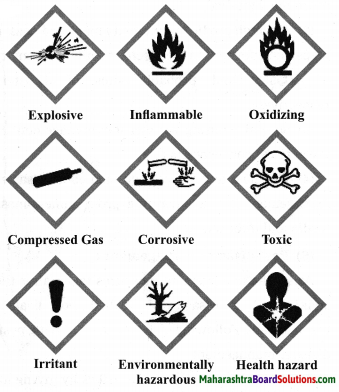
Maharashtra Board Class 10 Science Solutions Part 2 Chapter 10 Disaster Management 7
Answer:
The above signs are warning symbols which should never be ignored.
The meaning of each is given below. They are giving warnings about explosive, inflammable, oxidizing, compressed gas, corrosive, toxic, irritant, environmentally hazardous and health hazard.

(1) Explosive: Some materials are explosive. While handling such materials care should be taken. We should not take anything that would cause fire leading to explosion. If explosion occurs, there would be a major disaster causing great loss of life and property. Thus if this sign is seen, great care has to be taken.

(2) Inflammable: Similar to explosive substances, the inflammable materials can also catch fire easily. Therefore, to warn people such sign is given on materials that can cause hazard by burning.

(3) Oxidizing: Some chemical substances are oxidizing. They carry out chemical reactions with a rapid speed. E.g. If potassium permanganate falls on the cloth, it starts the reaction on its C-C bonds. Due to such property of carrying out reactions, the cloths may catch fire. Therefore, oxidizing substances should be handled with care.

(4) Compressed: Compressed substances are filled under pressure in some container. If mishandled, they can come out of the container by bursting it open. This can cause some injuries.

(5) Corrosive: The corrosive substances are very reactive. The mere touch of corrosive substances can cause destruction of skin, eyes, respiratory passages, digestive organs, etc. rapidly. Just touching or smelling of such substances can cause major injury and thus warning sign of corrosive substance should never be ignored.

(6) Toxic: To taste a toxic substance or even to smell it, can lead to death. The packing of these substances are therefore marked as dangerous. They should be avoided as far as possible.

(7) Irritant: When skin or any delicate part of the body comes in contact with the irritant substance, it can cause harmful reaction. Especially, eyes, nasal mucosa and skin are affected by contact with corrosive substances.

(8) Environmentally hazardous: Many sub¬stances cause harm to the environment due to their toxicity. Air, water or soil can be polluted due to such pollutants. When environment is affected, ultimately these hazardous effects come back to human species. Therefore, such substances should be carefully used. Their use should be judicious and controlled.

(9) Health hazard: The substances that can cause hazard to our health should always be distanced from us. Such substances should not be kept in proximity. As far as possible they should be kept away and handled with great care if needed for any work. Materials marked with health hazard can cause severe toxicity.

Maharashtra Board Class 10 Science Solutions Part 2 Chapter 10 Disaster Management

Question 9.
Explain that why is it said like that?
a. Mock drill is useful.
Answer:

  • Mock drill is the practice to check whether there is preparedness for dealing with the sudden attack of disaster.
  • For this purpose, virtual or apparent situations that simulate the disaster are created.
  • The reaction time for any type of disaster is checked by such activity. In the presence of trained personnel, the execution of the rescue plans are observed.
  • People also understand their responsibilities at the time of actual disaster.
  • The experts also check execution of plan designed for disaster redressal.
  • By such mock drills, the efficacy of the system can be understood. In future, when actual calamity strikes, there is already preparation for disaster redressal. Therefore, mock drill is useful.

b. Effective disaster management makes us well prepared for future.
Answer:

  • Disaster can strike any time. The sudden disasters can be man-made with some bad intentions or may be accidental.
  • When natural calamity strikes suddenly with a huge impact, large scale devastation of property and general environment degradation occurs along with substantial mortality of people and animals.
  • Therefore, it is most appropriate to have the preparedness to reduce the impact of any future disasters.
  • We cannot control the onset of the natural disaster, but we can definitely reduce the harsh effects of the disaster by following disaster management plan.

Question 10.
Complete the following chart.
Maharashtra Board Class 10 Science Solutions Part 2 Chapter 10 Disaster Management 8
Answer:
Maharashtra Board Class 10 Science Solutions Part 2 Chapter 10 Disaster Management 9

Question 11.
Following are the pictures of some disasters. How will be your pre and post-disaster management in case you face any of those disasters?
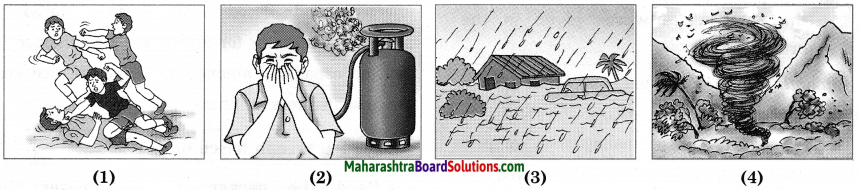
Maharashtra Board Class 10 Science Solutions Part 2 Chapter 10 Disaster Management 10
Answer:
In the pictures given, following disasters are shown:
(1) Two groups of children are fighting with each other.
(2) There is gas leakage from the LPG cylinder.
(3) There is heavy downpour due to cloud bursting which has led to waterlogging in the town.
(4) There is cyclone causing a tornado. (Commonly called a twister)
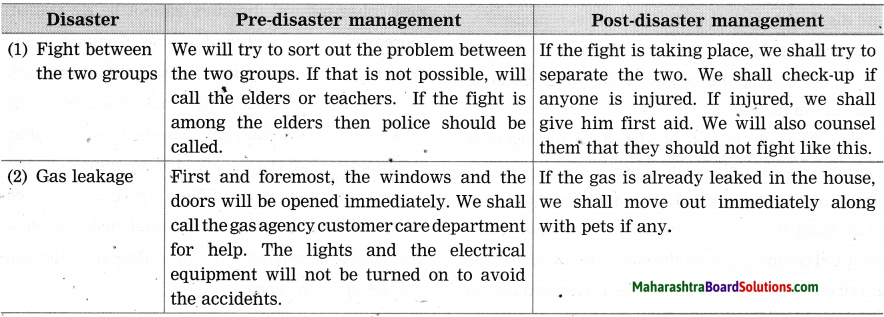
Maharashtra Board Class 10 Science Solutions Part 2 Chapter 10 Disaster Management 11
Maharashtra Board Class 10 Science Solutions Part 2 Chapter 10 Disaster Management 12

Projects:

Project 1.
Demonstrate the activities shown on page no. 106 of Std. IX Science and Technology textbook in front of the students of other classes. Make a video clip and send it to others.

Project 2.
Form a group of students from your school to demonstrate the mock drill and demonstrate it in the school

Maharashtra Board Class 10 Science Solutions Part 2 Chapter 10 Disaster Management

Can you recall? (Text Book Page No. 109)

Question 1.
What is disaster?
Answer:
Disaster is the incidence that occurs suddenly causing heavy damage to life and property. The disaster can be man-made or due to natural reason.

Question 2.
Which disasters have you experienced in your area?
Answer:
On September 2019, there was a heavy downpour in Pune. This disaster has been experienced recently.
On 26th November 2008 there was attack at several places by the Pakistani terrorists. The stories about the deaths and damage caused by this disaster were seen in films and learnt about this from our elders.

Question 3.
What are the effects of that disaster on local and surrounding conditions?
Answer:
Due to a heavy downpour in Pune, there was waterlogging in all the shallow areas. All the transport systems collapsed on that day. Large trees fell down injuring the people. The water logging caused condition like floods. Schools, colleges and offices were shut down. People were caught in troublesome situation.

On 26th November 2008 many innocent people lost their lives. There was tremendous damage caused to some of the important places like Taj Palace Hotel and Chabad house.

Use your brain power: (Text Book Page No. 111)

Question 1.
Depending upon information given on page 111, explain the various effects of the disaster of railway accident.
Answer:
The effects of disastrous railway accident:
The effect will be dependent upon the nature of the accident that has occurred. Whether, it is a collapse of bridge or due to derailment of the train, or due to collision of two moving trains, whether it is due to failure in signaling system, due to land slide or due to obstacle in the tunnel, that has to be understood. The impact of such railway accident will be dependent on the way that accident has occurred. Based on this impact the effects will take place.

(1) EnvironmentalThe entire surroundings will show destruction.
(2) Administrative/ ManagerialThe railway department will have stress and the time table will collapse. The regular use of tracks will hamper, resulting into delay in railway traffic.
(3) PoliticalMinistry of railways is considered to be responsible for the accident. Sometimes the Railway Minister resigns.
(4) MedicalThe passengers commuting in the train die or suffer from serious injuries.
(5) EconomicThe railways suffer huge financial loss.
(6) SocialThe railway traffic is disturbed. Passengers are troubled as they get held up at some place.

Observe/Discuss:
Let’s Discuss: (Text Book Page No. 110)
Question 1.
observe the images on textbook page no. 110. whether the places of disasters are known to you? Discuss the emfects of these disasters on public lire. How people could lave been saved from these disasters? Discuss with your friends in the classroom.
Answer:
Students should discuss the disasters given in the pictures by themselves after collecting the information.

Maharashtra Board Class 10 Science Solutions Part 2 Chapter 10 Disaster Management

Observe: (Text Book Page No. 114)

Question 1.
Observe the disaster cycle given below and explain each aspect of the disaster of earthquake.
Answer:
The main aspects of disaster cycle to tackle disaster of earthquake are as follows:
(1) Preparation : With the help of seismograph, the warning about forthcoming earthquake can be obtained these days. The intensity of the earthquake is also predicted with the help of technology. If the estimate of the Richter scale is on the higher sides, there would be more preparatory measures taken to tackle the forthcoming problem of earthquake.

(2) Redemption: Once this information is obtained the possible impact of the earthquake on the houses, buildings, people can be studied by the geological experts. The meetings of the Disaster Management Authority will be organized for same.

(3) Preparedness: What the general public should do and what action the reserved forces should take, will be decided in case of actual incidence of the earthquake. The schemes and plans will be made ready in this direction.

(4) Impact of Earthquake: In case of disaster of earthquake, people will be helped to safety. The trapped people will be rescued. First aid and other necessary help will be provided. The data about the losses and the intensity of this disaster will be noted and reported for the further process.

(5) Response: In this phase the response of the people as well as the action of Government can be well studied. The response should be quick and positive. The maximum lives and property should be saved by such responses. The disaster of earthquake should be managed with positivity and through help given to the sufferers.

(6) Resurgence: Earthquakes can destroy the entire households or even entire community. Such homeless people should be given the place to stay. Resurgence is important phase for the national welfare. If the citizens of India are cared for, the nation too will progress.

(7) Restoration: The earthquake victims should be settled by providing them with new settlements. Sometimes, entire village is to be settled. E.g. In Latur or Kutch, there twas very large scale devastation. But Government of India as well as some NGOs helped to reconstruct the houses. In such earthquake-prone areas, houses are built in specific pattern to withstand any possible future calamities.

Observe: (Text Book Page No. 117)

Question 1.
Give the reference of following pictures and explain importance of each of those in disaster management. Which are other such activities ?
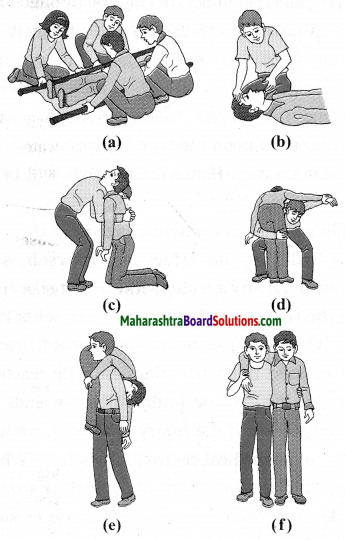
Maharashtra Board Class 10 Science Solutions Part 2 Chapter 10 Disaster Management 13
Answer:
The actions shown in the above pictures are as follows:
(a) The patient is made to lie on the stretcher. He must be unconscious and injured to greater extent, so that he cannot move by himself.
(b) The patient is helped by giving artificial respiration. Probably the victim is suffocated and needs oxygen supply.
(c) and (d) The patient is being picked up. Most probably the patient is unconscious.
The unconscious person who cannot move by himself is carried by these two methods. In method ‘c’, the weight of the patient is less and hence he can be lifted as shown in the picture. In picture ‘d’ the victim has to be lifted in other way, may be due to his greater body weight.
(e) The patient is carried on the back as in ‘carrying piggy back’ position. He too is unconscious and needs to be shifted for medical treatment.
(f) The patient in this picture is carried by ‘human crutch method’. When victim’s one leg is injured, he cannot walk without support. Hence, he needs to be carried in such a way.

In all the above methods, the injured person at the time of disaster is transported to hospital or dispensary for further medical help. The primary first-aid is given to the victim. Now the volunteer is taking him for further treatment. Such rescue activities depend upon the type of disaster and the extent of the injury. Hence the methods will be of different nature.

Maharashtra Board Class 10 Science Solutions Part 2 Chapter 10 Disaster Management

Let’s Think: (Text Book Page No. 111)

Question 1.
What will be the effect on yourself and surrounding, if any accident-like disaster occurs during the sports on playground or in school?
Answer:
When in school, there is an accident, first of all we get scared. But with caring help of the teacher, we will give the first aid to the injured friends by using first aid kit. If the injury is serious, we will take him to the medical centre of the school. While playing or during sports event, children flock around and make unnecessary crowding. In case of such accident, first of all the crowd will have to be dispersed. If there is major disaster, one should not fumble but manage the disaster in a wise way with the help of teachers.

Let’s Think: (Text Book Page No. 112)

Question 1.
Explain the nature and scope of the disaster of flood with the help of six points given on text book page no. 112.
Answer:
The nature and the scope of the disaster of flood can be described according to the six points:
(1) Pre-disaster phase: Due to Indian Meteorological Department the warning predictions are received before any climatic disaster strikes. If the scope of the flood is predicted to be high, then the people who may be affected by the calamity are relocated to a safer area.

(2) Warning phase: In the warning phase the Government warns the general public about the forthcoming disaster of floods through mass media like radio, television, newspapers, etc. In recent times, even the cellphone messages are sent to people for warning them. The people living in coastal areas will be worst affected and hence such people are given greater care and they are immediately made to leave their houses. They are taken to the safe places.

(3) Emergency phase: When the flood waters actually start rising up, the low-lying areas are submerged. Houses, roads and shops everything goes under water. The rescue operations are carried out by army men from National Disaster Rescue Force. They take every possible effort to rescue the trapped people. The emergency continues till the water does not recede. Later after the water starts receding, people who had been taken to places on heights, start coming back. During this phase, search, rescue operations, medical treatment, and first aid are all the aspects on which the attention is focussed.

(4) Rehabilitation phase: The people affected due to floods are given emotional and financial support. The fields, farms, houses or cattle-shed are under water. Such people are given transient accommodations. Many cattle and other animals die by drowning. Their rotting carcasses have to be disposed as soon as possible because the decaying process spreads epidemics of diseases. People are given vaccinations to protect them from diseases of such kind. Special care of young children and senior citizens is taken during this period. Supply of food and drinking water is also very important task during this time.

(5) Recovery phase: During recovery phase, the life comes gradually back to normalcy. The removal of dead, decaying material and the debris is the first priority. The water connections and electricity is restored back. Various NGOs or Government organizations provide help of various kind to the affected people. This help is to be distributed to those who are in real need. This work is also done by Disaster Management Department.

(6) Reconstruction phase: The houses and building that collapse due to floods are built back. Agricultural activities start again. Roads and water supply is once again normalized. Schools and colleges start once again. Thus, the once flood affected area comes back to routine functioning again.

Let’s Think: (Text Book Page No. 117)

Question 1.
Following are some pictures of disasters. Which precautions would you take during those disasters?
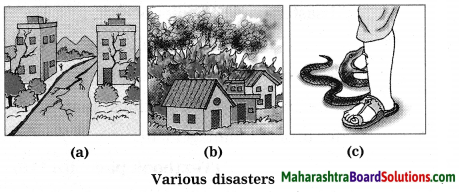
Maharashtra Board Class 10 Science Solutions Part 2 Chapter 10 Disaster Management 14
Answer:
The pictures shown above are showing earthquake, fire and snake bite respectively.
In the above disasters, the initial precautions to be taken are as follows:
(1) Earthquake: In case of earthquake, one should immediately come out of house and stand in the open ground. If this is not possible, one has to go below table or any other cover. During collapse of the building, there should not be a head injury. This precaution is basically for prevention of dangerous injuries and saving our life. Switch off the power supply. If in journey, stay inside the vehicle.

(2) Fire: First and foremost is to save ourselves from fire. Then one can help others in rescue operations. Help others to extinguish fire. Call the fire department for immediate action.

(3) Snake bite: Many a times the biting snake can be non-venomous too. But the victim is psychologically affected too. The tourniquet should be tied in the region above the snake bite. The rope, piece of cloth or even handkerchief can be used for this purpose, so that the venom, if any should not rise and reach vital organs. The wound should be made near the bite-wound so that the blood will ooze out and some venom can automatically flow out. Though these are first-aid measures, the victim should be rushed to a qualified doctor for an injection of antivenin.

Choose the correct alternative and write its alphabet against the sub-question number:

Question 1.
Disasters definitely affect the ………… of the nation.
(a) people
(b) economy
(c) security
(d) employment
Answer:
(b) economy

Question 2.
If local ………… is not strong enough, citizens become confused.
(a) leadership
(b) women
(c) politicians
(d) cattle
Answer:
(a) leadership

Question 3.
…………… problems arise diming the disaster.
(a) Local
(b) Global
(c) Administrative
(d) Private
Answer:
(c) Administrative

Question 4.
Stinking pollution caused due to decomposing corpses of humans and other animal is ………… disaster.
(a) environmental
(b) health
(c) necessary
(d) effective
Answer:
(a) environmental

Maharashtra Board Class 10 Science Solutions Part 2 Chapter 10 Disaster Management

Question 5.
After the subsidence of any type of disaster, rehabilitation work is started in ………… phase.
(a) later
(b) transitional
(c) terminal
(d) ultimate
Answer:
(b) transitional

Question 6.
…………. phase is highly complicated phase.
(a) Reconstruction
(b) Recycling
(c) Reuse
(d) Redevelopment
Answer:
(a) Reconstruction

Question 7.
There had been a huge ……….. in the village Malin, Tal. Ambegaon in 2014.
(a) earthquake
(b) storm
(c) landslide
(d) change
Answer:
(c) landslide

Question 8.
The atomic energy plant at Chernobyl was used only for generating ………….
(a) electricity
(b) solar power
(c) atomic energy
(d) agriculture
Answer:
(a) electricity

Question 9.
Supply of essential ………….. to the affected people can reduce the effect of the disaster.
(a) food
(b) water
(c) commodities
(d) money
Answer:
(c) commodities

Question 10.
Keeping …………. ready is a practice to check the preparedness of facing the disaster.
(a) First aid
(b) Mock drill
(c) Ambulance
(d) Fire brigade
Answer:
(b) Mock drill

Question 11.
Which of the following is man-made disaster. (March, July ’19)
(a) Earthquake
(b) Flood
(c) Meteor
(d) Leakage of toxic gases
Answer:
(d) Leakage of toxic gases

Question 12.
What should be done if gas cylinder at your house catches fire?
(a) Water should be sprinkled
(b) Sand, soil should be put on it
(c) Cylinder should be covered with wet blanket
(d) one should run away
Answer:
(c) Cylinder should be covered with wet blanket

Which type of disaster is described in the following statements:

Question 1.
On 26th July 2005, entire suburban Mumbai was waterlogged.
Answer:
Cloudbursting and severe downpour

Question 2.
Elephants in the Bandipur forest started running helter and skelter due to smoke.
Answer:
Forest fires

Question 3.
Many innocent people died in the bomb blast that occurred on 11th July 2006 in local trains.
Answer:
Bomb explosion-Terrorism

Question 4.
In Kutch, suddenly many school children were buried under the rubble.
Answer:
Earthquake

Maharashtra Board Class 10 Science Solutions Part 2 Chapter 10 Disaster Management

Question 5.
Because of lack of crops, people from Vidarbha are migrating to other regions.
Answer:
Dry famine

Question 6.
The huge waves in Chennai engulfed many human lives in December 2004.
Answer:
Tsunami.

Find the correlation:

Question 1.
Earthquake in recent times : Gujarat, Latur : : Devastating floods in 2018 : ………….
Answer:
Earthquake in recent times : Gujarat, Latur : : Devastating floods in 2018 : Kerala/Assam

Question 2.
Toxic gas leakage: Accidental disaster : : war : …………..
Answer:
Toxic gas leakage: Accidental disaster : : war : Intentional

Question 3.
Sun spots : Atmospheric type of disaster : : Salinization : …………..
Answer:
Sun spots : Atmospheric type of disaster : : Salinization : Geological type of disaster

Question 4.
Pre-disaster management : Preparation and warning : : Post-disaster management : ………..
Answer:
Pre-disaster management : Preparation and warning : : Post-disaster management : Resurgence and restoration.

Match the columns:

Question 1.

Column A: DisasterColumn B: Type
(1) Earthquake and volcano(a) Animal origin
(2) Snowfall and snowstorms(b) Geological
(c) Climatic
(d) Terrorism

Answer:
(1) Earthquake and volcano – Geological.
(2) Snowfall and snowstorms – Climatic.

Maharashtra Board Class 10 Science Solutions Part 2 Chapter 10 Disaster Management

Question 2.

Column A: DisasterColumn B: Type
(1) Aquatic weeds(a) Animal origin
(2) Attack by locusts (insects)(b) Plant origin
(c) Geological
(d) Climatic

Answer:
(1) Aquatic weeds – Plant origin
(2) Attack by locusts (insects) – Animal origin.

Question 3.

Column A: DisasterColumn B: Type
(1) Atomic tests(a) Intentional
(2) Terrorism(b) Unintentional
(c) Geological
(d) Animal origin

Answer:
(1) Atomic tests – Unintentional
(2) Terrorism – Intentional.

Question 4.

Column A: EffectColumn B: Effect
(1) Contamination of water(a) Economical
(2) Collapsing of transport system(b) Environmental
(c) Administrative
(d) Geological

Answer:
(1) Contamination of water – Environmental
(2) Collapsing of transport system – Administrative.

Question 5.

Column A: EffectColumn B: Problem
(1) Spread of epidemics(a) Economical
(2) Shortage of funds(b) Administrative
(c) Medical
(d) Physical

Answer:
(1) Spread of epidemics – Medical
(2) Shortage of funds – Economical.

Question 6.

Column A: EffectColumn B: Problem
(1) Rift due to religions(a) Economical
(2) Citizens getting confused(b) Social
(c) Political
(d) Environmental

Answer:
(1) Rift due to religions – Social
(2) Citizens getting confused – Political.

Identify the type of disaster and describe the effects of the same in brief:

Question 1.
Accident at Chernobyl.
Answer:
Man-made, unintentional. At Chernobyl in Russia there was the atomic energy plant, where disastrous accident took place. The radiations emitted through the reactors caused tremendous radiation pollution. These hazardous effects are even seen today.

Give reasons:

Question 1.
When there are riots, the cities, towns or villages show signs of tense atmosphere.
Answer:

  • During riots, there is financial loss for all the rioting groups.
  • The belongings, houses, shops, etc. are destroyed or damaged.
  • Property is looted. There is no guarantee of safety and security for anyone.
  • Women and children suffer the most as they are easily victimized. Therefore, when there are riots, the cities, towns or villages show signs of tense atmosphere.

Answer the following questions in detail:

Question 1.
which are the disaters that make Impact for longer duration? Give examples.
Answer:
Those disasters that make the impact for long duration and those disasters, whose after-elfbcts are either severe are long term disasters. Their severity increases with thme. Such disasters are famine, various problems of growth of crop, strikes of workers, rising levels of oceans, desertification, etc.

Question 2.
What types of disaster are the following? Explain their impacts.
(a) Floods (b) War. (Board’s Model Activity Sheet)
Answer:
(a) Flood is geophysical climatic disaster.
(b) War is man-made intentional disaster.

Impact of flood : The low-lying and the coastal areas are seen to be submerged. The entire region is waterlogged.
Impact of war: Tremendous destruction causing loss. Many lives are lost. The costs of all the items rise due to war conditions. Entire nation faces insecurity.

Maharashtra Board Class 10 Science Solutions Part 2 Chapter 10 Disaster Management

Question 3.
Explain in brief the sensitive issues of general public about disaster.
(OR)
Which are the three aspects of disaster tjiat are important for common citizens?
Answer:
The phase of emergency, transitional phase and reconstruction phase are the three phases of disaster that are important for common citizens.

(1) Phase of emergency: If timely and rapid action is taken during this phase, maximum lives can be saved. Search and rescue operations, medical help, first aid, restoring communication services, removing the people from affected area are done during this phase. The gravity of disaster can be estimated during this phase.

(2) Transitional Phase: The disaster subsides and then the work of transitional phase starts. The main concern is rehabilitation work for the affected and displaced people. This work includes clearing of debris, restoring water supply, repairing roads, etc. to bring normalcy in public life. Help from different voluntary and Government institute is taken to offer the monetary provision and essential commodities to affected victims. Permanent means of livelihood is given to the people to reduce their mental and emotional stress. The victims are truly rehabilitated.

(3) Reconstruction Phase: Reconstruction phase is a highly complicated phase which actually overlaps with transition stage. Help is offered to people to reconstruct their buildings. Other facilities like roads and water supply are restored. Farming practices are restarted. It is a very gradual phase that makes the victims to completely rehabilitate.

Question 4.
What are the objectives of mock drill?
Answer:
Objectives of Mock Drill:

  • To evaluate the response of the people to the disaster.
  • To improve the coordination between various departments of disaster control.
  • To identify one’s own abilities if disaster approaches.
  • To improve the ability to quick response to disaster and taking rapid action.
  • To check the competency of the planned actions.
  • To identify the possible errors and risks while dealing with disasters.

Question 5.
Write down the names of international organizations that work for disaster management.
Answer:
Following international organizations work for disaster management.

  • United Nations Disaster Relief Organization
  • United Nations Centre for Human Settlements
  • Asian Disaster Reduction Centre.
  • Asian Disaster Preparedness Centre.
  • World Health Organization.
  • United Nations Educational, Scientific and Cultural Organization.

Question 6.
The building in which you are residing ( has caught fire on the ground floor. What necessary rescue steps will you take? (July ’19)
Answer:

  • We shall call out for help.
  • We shall immediately call fire brigade.
  • We shall try to extinguish fire with the help of other people.
  • We will give first aid to people who are injured, fill the medical help arrives.
  • We will cover our nose and mouth with moist cloth to prevent suffocation.

Write short notes:

Question 1.
Pre-disaster management.
Answer:
The management measures taken before onset of a disaster is called pre-disaster management.
In pre-disaster management, complete preparation and planning to face any type of disaster is done. For this purpose, following steps are taken.

  • Identifying the areas where the disaster can strike. Such disaster-prone areas are to be thoroughly studied.
  • Through predictive intensity maps and hazard maps, the information is collected about the intensity of disaster and probable sites of disasters respectively.
  • Special training for disaster management is given to the concerned people.
  • The mass awareness is created about disaster management through training programmes, mass media and internet, etc.

Maharashtra Board Class 10 Science Solutions Part 2 Chapter 10 Disaster Management

Question 2.
Post-disaster management.
Answer:
The management measures taken after the striking of a disaster is called post-disaster management.
Following steps are taken during post-disaster management:

  • Helping the victims of disasters by giving all possible help needed for their survival.
  • Local people are trained to take part in the disaster management so that affected people can be saved rapidly.
  • Establishing the help centres that could provide all the necessary help. Such centres will be different in case of different disasters.
  • Collection and categorization of the material received from control centre for helping the victims. Distributing the same and reviewing the measures continuously.
  • Disaster rescue programmes are mainly focused.

Some symbols are given below. Explain those symbols. Which disasters may occur if those symbols are ignored?

Question 1.
Write what the signs indicate:

Maharashtra Board Class 10 Science Solutions Part 2 Chapter 10 Disaster Management 15
Answer:

  • Figure A indicates inflammable substances. They can catch fire if they come in contact with oxygen-rich air.
  • Figure B indicates corrosive substances which can cause damage to tissues of skin, eyes and other delicate organs etc.
  • Both the symbols are warning signs for people to keep away or handle carefully such substances.

Maharashtra Board Class 10 Science Solutions Part 2 Chapter 10 Disaster Management

Question 2.
What does the symbols below indicate? Write in brief. (Board’s Model Activity Sheet)

Maharashtra Board Class 10 Science Solutions Part 2 Chapter 10 Disaster Management 16
Answer:
(1) Symbol ‘A’ indicates Irritant. When skin or any delicate part of the body comes in contact with the irritant substance, it can cause harmful reaction. Especially, eyes, nasal mucosa and skin are affected by contact with corrosive substances.
(2) Symbol ‘B’ indicates toxic substance. To taste a toxic substance or even to smell it, can lead to death. The packing of these substances are therefore marked as dangerous. They should be avoided as far as possible.

Complete the paragraph by choosing the appropriate words given in the brackets:

(Capability, Rehabilitation, Commodities, Human, objectives, normalcy, amusements)
The ………. of disaster management comprise of the following aspects …………. life is saved from the disasters. People are helped to move away from the place of disasters. They are given essential ……….. by the government so that the gravity of disaster is reduced. The disaster conditions are brought back to ………… of the affected and displaced victims is done. Moreover, protective measures for future are also planned to develop ………… among the people to face any possible disasters in future.
Answer:
The objectives of disaster management, comprise of the following aspects. Human life is saved from the disasters. People are helped to move away from the place of disasters. They are given essential commodities by the government so that the gravity of disaster is reduced. The disaster conditions are brought back to normalcy. Rehabilitation of the affected and displaced victims is done. Moreover, protective measures for future are also planned to develop capability among the people to face any possible disasters in future.

Paragraph based questions:

1. Read the paragraph and answer the questions given below:
Disasters can be properly classified into three categories, viz. natural disasters, technological disasters and man-made disasters. The forces that cause natural disasters cannot be controlled. Moreover, they are becoming more frequent in the current years due to phenomena of climate change. On and off incidences of cyclones, cloud bursting, floods, etc. am creating havoc in the lives of people. Technological disasters are due to improper and callous behaviour at the different processes carried out in technical establishments. Man-made disasters are conflicts arising due to different religions, regions and-terrorism.

Questions and Answers:

Question 1.
What are three broad areas of disasters?
Answer:
Natural disasters, technological disasters and manmade disasters are three broad areas of disasters.

Question 2.
Which disasters cannot be controlled? Why?
Answer:
Natural disasters cannot be controlled as they are due to natural phenomena beyond the human power to stop them.

Question 3.
Which type of disasters were very common in Western Maharashtra in recent times? Why?
Answer:
Cloud bursting and floods were very common in Western Maharashtra caused due to climate change.

Question 4.
Give any one example of technological disaster that shook the entire India.
Answer:
Bhopal gas tragedy that occurred in 1984 was a worst disaster that shook the entire India.

Question 5.
Which types of disasters can be controlled in order to lead happy, peaceful and secured life? How?
Answer:
We have to control manmade disasters such as wars, riots, terrorism, etc. by having peaceful negotiations, respect for each human being and feeling of brotherhood among all.

Maharashtra Board Class 10 Science Solutions Part 2 Chapter 10 Disaster Management

Questions based on tables and charts:

Question 1.
Complete the chart: (Text Book Page No. 111)
Different problems occur with disasters. In the concept map different effects are mentioned. Read it and fill the blank places.
Answer:
(Answers are given directly in bold.)
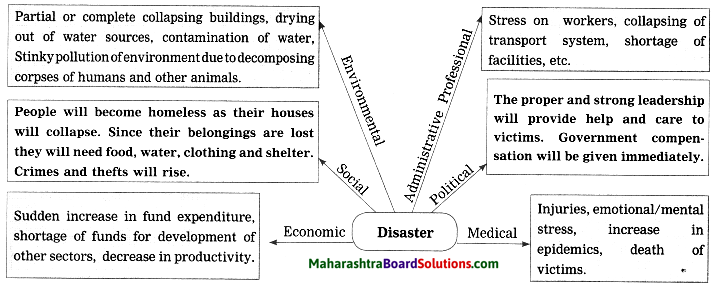
Maharashtra Board Class 10 Science Solutions Part 2 Chapter 10 Disaster Management 17

Question 2.
Complete the chart: (Text Book Page No. 117)
Complete the chart as per the objectives of the first aidr:t
Answer:
(Answers are given directly in bold.)
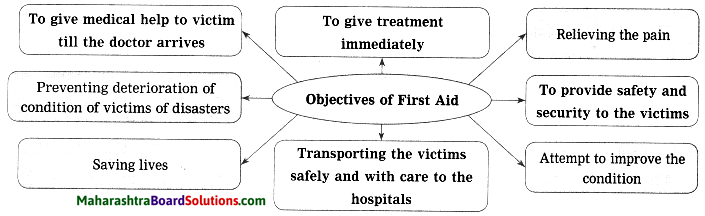
Maharashtra Board Class 10 Science Solutions Part 2 Chapter 10 Disaster Management 18

Activity based questions:

Question 1.
Observe the images ‘A’ and ‘B’ and answer the following questions.
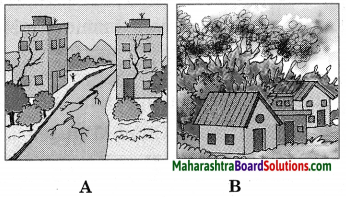
Maharashtra Board Class 10 Science Solutions Part 2 Chapter 10 Disaster Management 19
(i) Which disasters are shown in the images ?
Answer:
Image A is showing damage due to earthquake. Image B is showing house on fire.

(ii) Which primary precautions will you take in case of disaster shown in ‘A’?
Answer:
In the above disasters, the initial precautions to be taken are as follows :
Earthquake: In case of earthquake, one should immediately come out of house and stand in the open ground. If this is not possible, one has to go below table or any other cover. During collapse of the building, there should not be a head injury. This precaution is basically for prevention of dangerous injuries and saving our life. Switch off the power supply. If in journey, stay inside the vehicle.

(iii) Which type of first-aid is offered to the injured people in disaster ‘B’?
Answer:
First aid given to burn victim:

  • The person who is injured by fire should be dotised with cold water on his/her body. This will extinguish fire and give some relief caused due to inflammation. Do not break the blisters. Give water to drink.
  • Cover the burnt part by wet and moist cloth. Wash the wounds with antiseptic solution.
  • If the person is severely burnt, transfer him/her immediately to hospital.

Question 2.
Correct the following diagram:
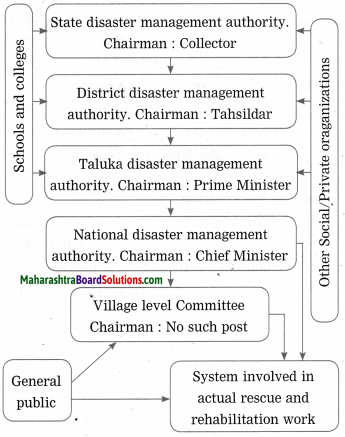
Maharashtra Board Class 10 Science Solutions Part 2 Chapter 10 Disaster Management 20
Answer:
Maharashtra Board Class 10 Science Solutions Part 2 Chapter 10 Disaster Management 21

Maharashtra Board Class 10 Science Solutions Part 2 Chapter 10 Disaster Management

Projects:

Project 1.
Can you tell? ( Textbook page no. 118)
Whether there had been mock drill by fire fighters under the disaster management scheme in your school? Which techniques did you see during the drill?

Project 2.
Try this: (Textbook page no. 115)
Which factors will you consider while designing the pre-disaster management plan for your school/home? Prepare a survey report with the help of your teacher.

Project 3.
Get information:
(1) Visit the district collector or Taluka Tehasildar office and collect the information about disaster management. (Textbook page no. 115)
(2) Meet the medical officer/doctor from your village and collect information about providing the first aid. (Textbook page no. 118)

Project 4.
Internet is my friend:
(1) Search for the video clips of disasters. Discuss in your class about effects of disasters and remedies over it. (Textbook page no. 110)
(2) Find out more about the activities of international organizations that work for disaster management.
(Textbook page no. 116)
1. United Nations Disaster Relief Organization.
2. United Nations Centre for Human Settlements.
3. Asian Disaster Reduction Centre.
4. Asian Disaster Preparedness Centre.
5. World Health Organization.
6. United Nations Educational, Scientific and Cultural Organization.

Maharashtra Board 10th Class Maths Part 1 Practice Set 3.4 Solutions Chapter 3 Arithmetic Progression

Balbharti Maharashtra State Board Class 10 Maths Solutions covers the Practice Set 3.4 Algebra 10th Class Maths Part 1 Answers Solutions Chapter 3 Arithmetic Progression.

Practice Set 3.4 Algebra 10th Std Maths Part 1 Answers Chapter 3 Arithmetic Progression

Question 1.
On 1st Jan 2016, Sanika decides to save ₹ 10, ₹ 11 on second day, ₹ 12 on third day. If she decides to save like this, then on 31st Dec 2016 what would be her total saving?
Solution:
Maharashtra Board Class 10 Maths Solutions Chapter 3 Arithmetic Progression Practice Set 3.4 1
∴ Sanika’s total saving on 31st December 2016 would be ₹ 70455.

Question 2.
A man borrows ₹ 8000 and agrees to repay with a total interest of ₹ 1360 in 12 monthly instalments. Each instalment being less than the preceding one by ₹ 40. Find the amount of the first and last instalment.
Solution:
i. The instalments are in A.P.
Amount repaid in 12 instalments (S12)
= Amount borrowed + total interest
= 8000 + 1360
∴ S12 = 9360
Number of instalments (n) = 12
Each instalment is less than the preceding one by ₹ 40.
∴ d = -40
Maharashtra Board Class 10 Maths Solutions Chapter 3 Arithmetic Progression Practice Set 3.4 2
∴ Amount of the first instalment is ₹ 1000 and that of the last instalment is ₹ 560.

Question 3.
Sachin invested in a national saving certificate scheme. In the first year he invested ₹ 5000, in the second year ₹ 7000, in the third year ₹ 9000 and so on. Find the total amount that he invested in 12 years.
Solution:
i. Amount invested by Sachin in each year are as follows:
5000, 7000, 9000, …
The above sequence is an A.P.
∴ a = 5000, d = 7000 – 5000 = 2000, n = 12

Maharashtra Board Class 10 Maths Solutions Chapter 3 Arithmetic Progression Practice Set 3.4 3
∴ The total amount invested by Sachin in 12 years is ₹ 1,92,000.

Question 4.
There is an auditorium with 27 rows of seats. There are 20 seats in the first row, 22 seats in the second row, 24 seats in the third row and so on. Find the number of seats in the 15th row and also find how many total seats are there in the auditorium?
Solution:
i. The number of seats arranged row-wise are as follows:
20, 22, 24,
The above sequence is an A.P.
∴ a = 20, d = 22 – 20 = 2, n = 27

ii. tn = a + (n – 1)d
∴ t15 = 20 + (15 – 1)2
= 20 + 14 × 2
= 20 + 28
∴ t15 = 48
∴ The number of seats in the 15th row is 48.
Maharashtra Board Class 10 Maths Solutions Chapter 3 Arithmetic Progression Practice Set 3.4 4
∴ Total seats in the auditorium are 1242.

Question 5.
Kargil’s temperature was recorded in a week from Monday to Saturday. All readings were in A.P. The sum of temperatures of Monday and Saturday was 5°C more than sum of temperatures of Tuesday and Saturday. If temperature of Wednesday was -30° Celsius then find the temperature on the other five days.
Solution:
Let the temperatures from Monday to Saturday in A.P. be
a, a + d, a + 2d, a + 3d, a + 4d, a + 5d.
According to the first condition,
(a) + (a + 5d) = (a + d) + (a + 5d) + 5°
∴ d = -5°
According to the second condition,
a + 2d = -30°
∴ a + 2(-5°) = -30°
∴ a – 10° = -30°
∴ a = -30° + 10° = -20°
∴ a + d = -20° – 5° = – 25°
a + 3d = -20° + 3(- 5°) = -20° – 15° = -35°
a + 4d = -20° + 4(-5°) = -20° – 20° = -40°
a + 5d = -20° + 5(-5°) = -20° – 25° = -45°
∴ The temperatures on the other five days are
-20°C, -25° C, -35° C, -40° C and -45° C.

Question 6.
On the world environment day tree plantation programme was arranged on a land which is triangular in shape. Trees are planted such that in the first row there is one tree, in the second row there are two trees, in the third row three trees and so on. Find the total number of trees in the 25 rows.
Solution:
i. The number of frees planted row-wise are as follows:
1,2,3,…
The above sequence is an A.P.
∴ a = 1, d = 2 – 1 = 1,n = 25
Maharashtra Board Class 10 Maths Solutions Chapter 3 Arithmetic Progression Practice Set 3.4 5
∴ The total number of trees in 25 rows are 325.

Maharashtra State Board Class 10 English Solutions

Maharashtra State Board Class 10 English Solutions

Students can crack the Maharashtra State Board Class 10 English Exam easily by taking help from the Kumarbharati Textbook 10th English Answers, Solutions. We have covered all the questions from the exercises in Maharashtra State Board Kumarbharati Textbooks in our Solutions. Detailed Solutions are given in simple and easy to understand language. Feel Confident in the board exam by beginning your preparation months ahead. You can download the Solution of 10th Class English Maharashtra Board PDF free of cost from here.

Maharashtra State Board 10th Std English Textbook Solutions

Maharashtra State Board Kumarbharati Textbook Solutions for Class 10 (SSC) English are solved by experts and will guide students in the right direction. Students can get how to tackle different questions easily by solving the English Kumarbharati Digest Std 10 PDF Solutions on a regular basis. We have curated the English Kumarbharati 10th Digest PDF 2020 Free Download through the direct links existing below.

Kumarbharati Textbook Solution of 10th Class English Maharashtra Board

English Kumarbharati 10th Digest PDF Free Download Solutions Unit 1

English Digest Std 10 PDF Download Maharashtra Board Solutions Unit 2

English Kumarbharati 10th Digest PDF Download Solutions Unit 3

Solution Of 10th Class English Maharashtra Board Unit 4

My English Coursebook Standard Ten Guide | My English Coursebook 10th Digest

The answers for My English Coursebook Standard Ten Guide Pdf Free Download are the best study material for students. These Solutions for My English Coursebook 10th Digest SSC Maharashtra State Board will help students understand the concepts better.

My English Coursebook Standard Ten Guide Unit 1

My English Coursebook 10th Digest Pdf Unit 2

My English Coursebook Standard Ten Digest Answers Pdf Unit 3

My English Coursebook 10th Class Solutions Pdf Unit 4

If you are unable to speak or write in English, you can download our English Grammar Notes & study material for free that helps you to improve your English communication skills.

Students can also read

Hope the knowledge provided regarding the Maharashtra State Board Class 10 English Solutions has helped you to the possible extent. For more info feel free to reach us and we will guide you at the earliest possibility. Stay connected to our site to avail latest updates on Maharashtra State Board Solutions for Various Classes instantly.

Maharashtra Board Class 10 English Solutions Unit 2.3 Connecting the Dots

Balbharti Maharashtra State Board Class 10 English Solutions Unit 2.3 Connecting the Dots Notes, Textbook Exercise Important Questions and Answers.

Maharashtra State Board Class 10 English Kumarbharati Textbook Solutions Unit 2.3 Connecting the Dots

Maharashtra Board Class 10 English Solutions Unit 2.3 Warming Up Questions and Answers

Question 1.
(A) Connect the dots to get what means a lot to you.
Maharashtra Board Class 10 English Solutions Unit 2.3 Connecting the Dots 1
The word is ……………………………… .
Answer:
Maharashtra Board Class 10 English Solutions Unit 2.3 Connecting the Dots 6
The word is SUN

Maharashtra Board Solutions

(B) With your benchmark, use the letters given above to make a word register of ‘computers’. Set a time -limit of 5 minutes and compare your list with that of other classmates.
Answer:
AI, adobe, android, arithmetic, binary, browser, byte, bit, download, document, data, database, disk, format, http, hardware, homepage, java, keyboard, key, Microsoft, malware, memory, network, netscape, program, reboot, spam, spreadsheet, software, virus, web, windows, update, zip.

Question 2.
You are quite familiar with computers, especially the personal computer. Form pairs and make a list of famous computer manufacturing companies. One is given to you.
(a) Apple
(b) ……………………….
(c) ……………………….
(d) ……………………….
(e) ……………………….
(f) ……………………….
Answer:
(a) Apple
(b) Samsung
(c) IBM
(d) Lenovo
(e) Foxconn
(f) HP Inc.

Question 3.
Complete the web by filling the various benefits of computers.
Maharashtra Board Class 10 English Solutions Unit 2.3 Connecting the Dots 2
Answer:
Maharashtra Board Class 10 English Solutions Unit 2.3 Connecting the Dots 5

Question 4.
(A) Expand the following into their full forms.
(a) that’s
(b) didn’t
(c) here’s
(d) can’t
(e) I’ve
Answer:
(a) that’s – that is
(b) didn’t – did not
(c) here’s – here is
(d) can’t – cannot
(e) I’ve – I have

(B) Write the shortened forms of the following.
(a) You have ……………………….
(b) I would ……………………….
(c) It is ……………………….
(d) You are ……………………….
(e) He will ……………………….
(f) I had ……………………….
(g) will not ……………………….
(h) shall not ……………………….
(i) are not ……………………….
(j) need not ……………………….
(k) must not ……………………….
(l) ought not ……………………….
Answer:
(a) you have – you’ve
(b) I would – I’d
(c) it is – it’s
(d) you are – you’re
(e) he will – he’ll
(f) I had – rd
(g) will not – won’t
(h) shall not – shan’t
(i) arc not – aren’t
(j) need not – needn’t
(k) must not – mustn’t
(l) ought not – oughtn’t

Maharashtra Board Solutions

Connecting the Dots Class 10 English Workshop Questions and Answers Maharashtra Board

Question 1.
(A) Rearrange the incidents in the life of Steve Jobs in chronological order.
(a) Steve Jobs started Next.
(b) Jobs underwent a surgery.
(c) Jobs learned about serif and sans serif type faces.
(d) Jobs returned to Apple Inc.
(e) Jobs married Laurene.
(f) Jobs was diagnosed with cancer.
(g) Jobs dropped out of Reed College.
Answer:
(a) Jobs started Next.
(b) Jobs underwent surgery.
(c) Jobs learned about serif and san serif typefaces.
(d) Jobs returned to Apple Inc.
(e) Jobs married Laurene.
(f) Jobs was diagnosed with cancer.
(g) Jobs dropped out of Reed College.

(B) Read the third story again. Complete the flow-chart given below.
Maharashtra Board Class 10 English Solutions Unit 2.3 Connecting the Dots 3
Answer:
Maharashtra Board Class 10 English Solutions Unit 2.3 Connecting the Dots 7

Maharashtra Board Solutions

Question 2.
Read the lesson. Refer to a dictionary and match the words in column ‘A’ with their meanings in column ‘B’.

No‘A’‘B’
(a)diagnosis(i)the power believed to control events
(b)devastating(ii)complete list of items especially in a special order and description.
(c)intuition(iii)act of identifying the nature of a problem or illness.
(d)calligraphy(iv)power of understanding situations or people’s feelings before hand.
(e)destiny(v)causing great destruction
(f)catalogue(vi)beautiful handwriting done with a special pen or brush.

Answer:

No‘A’‘B’
(a)diagnosis(iii)act of identifying the nature of a problem or illness.
(b)devastating(v)causing great destruction
(c)intuition(iv)power of understanding situations or people’s feelings before hand.
(d)calligraphy(vi)beautiful handwriting done with a special pen or brush.
(e)destiny(a)the power believed to control events
(f)catalogue(ii)complete list of items especially in a special order and description.

Question 3.
Go through all the three stories. Identify some qualities of Steve Jobs and complete the web chart.
Maharashtra Board Class 10 English Solutions Unit 2.3 Connecting the Dots 4
Answer:
Maharashtra Board Class 10 English Solutions Unit 2.3 Connecting the Dots 8

Maharashtra Board Solutions

Question 4.
Complete the following table.
‘The Three Stories in the Life of Steve Jobs’

AboutSetbacksReactionsAchievements and benefits
First story
Second story
Third story

Answer:

AboutSetbacksReac­tionsAchieve­ments and benefits
First storyCollege daysno boarding and lodgingmanaged with friends and at a templelearnt calligraphy
Second storystarting ’Apple’fired from the companystarted a new company ‘Next’most creative period; renaissance’ of ‘Apple’
Third storydeathdiagnosed with cancersurgery, curelearnt not to waste time living someone else’s life

Question 5.
Say HOW?
→ the calligraphy classes helped Steve Jobs after 10 years.
Answer:
10 years later when Steve Jobs was designing the first Macintosh computer, he recalled what he had learned in the calligraphy classes about serif and san serif typefaces as well as other elements that go into great typography. He designed all this into the Macintosh computer.

→ You can connect dots.
Answer:
We can’t connect dots by looking forward; we can only connect them looking backwards. We have to trust that the dots will somehow connect in our destiny.

→ Jobs reacted later on, after the shock of being fired from Apple.
Answer:
After he overcame the shock of being fired from Apple, Jobs felt the lightness of being a beginner again. He felt free to enter one of the most creative periods of his life. He started two companies – Next and Pixar.

Maharashtra Board Solutions

→ Jobs was cured of a rare cancer.
Answer:
Jobs was diagnosed with a very rare form of pancreatic cancer. It was curable by surgery. Jobs had the surgery and he was cured.

→ Jobs acquired the famous words ‘Stay Hungry. Stay Foolish’
Answer:
When Jobs was young, he used to read an amazing publication called The Whole Earth Catalogue’. In the final issue was a photograph of an early morning country road beneath which were the words ‘Stay Hungry, Stay Foolish’. Steve acquired these words from the magazine.

Question 6.
Besides those given at the end of the talk by Steve Jobs, pick out other pieces of advice that Jobs gives in his speech.
Answer:
(a) Learn to connect the dots.
(b) Learn whatever you can whenever you can.
(c) We can learn even from negative experiences.
(d) Have trust that somehow the dots will connect in your future.
(e) Have trust in your gut. destiny, life, karma, whatever …
(f) Love what you do.
(g) Keep looking for what you love and don’t ever settle for less.
(h) Even under the most devastating circumstances, you can start all over again.
(i) Don’t lose faith.
(j) Your time is limited, so don’t waste it lining someone else’s life.

Question 7.
(A) Use the following idioms/phrases in sentences of your own.
(a) drop in …………………..
(b) drop out …………………..
(c) stumble on …………………..
(d) look backwards …………………..
(e) look forward …………………..
(f) let (someone) down …………………..
(g) sign off …………………..
(h) begin anew …………………..
Answer:
(a) Though I am not a member of the club, I often play tennis there as a drop in.
(b) I decided to drop out of karate classes as it was taking too much of my time.
(c) While surfing the net, he stumbled into a portal that showed only horror movies.
(d) After his terrible experience in his native place, he went to the city and never looked backwards.
(e) He tried to forget his terrible experience in his native place and looked forward.
(f) He placed great trust in his secretary, and she never let him down.
(g) I would like to sign off by telling you a short story with a beautiful message.
(h) It is never too late to forget past mistakes and begin anew.

Maharashtra Board Solutions

(B) Fill in the gaps in choosing the appropriate idioms.
(drown out, hits in the head with a brick, get one’s affairs in order, connect the dots, begin to dawn, stay hungry)
(a) The wealthy landlord made a will before he could die.
(b) Those who aspire for success should always to learn more.
(c) If you you will realise that crime ultimately leads to poverty.
(d) The siren of the ambulance all other traffic noise.
(e) When the father learned about his son’s misdeeds, it
(f) On reading exactly same essays in both answer sheets, it the examiner, that the students had cheated during exams.
Answer:
(a) Getting his affairs in order
(b) Stay hungry
(c) Connect the dots
(d) Drowned out
(e) It hit him on the head with a brick.
(f) Began to dawn on

Question 8.
(A) Name the Tense of the Verbs underlined to include Time (Past/Present/Future) and Aspect (Simple/Continuous/Perfect/Perfect Continuous)
(1) I slept on the floor
(2) We were designing the first Macintosh computer
(3) It had made all the difference
(4) I am fine, now
(5) I have been facing death
(6) I shall be telling you three stories
Answer:
(1) Time – Past; Aspect – Simple.
(2) Time – Past Tense; Aspect – Progressive (continuous).
(3) Time – Past tense Aspect – Perfect
(4) Time – Present; Aspect – Simple.
(5) Time – Present; Aspect – Perfect.
(6) Time – Future; Aspect – Progressive (continuous).

(B) Change the Tense as instructed.
(1) I got fired. (Future Perfect)
(2) Life hits you in the head. (Present Perfect Continuous)
(3) The dots will somehow connect. (Past Perfect)
(4) I started a company. (Present Continuous)
(5) My doctor advised me. (Past Perfect Continuous)
Answer:
(1) Jobs got fired.
(2) Life hits you in the head.
(3) The dots had somehow connected.
(4) I started a company.
(5) My doctor had been advising me.

Maharashtra Board Solutions

Question 9.
Read the News item and write an application for a suitable job in the same company. Attach a seperate CV/Resume.
May 19, 2016
Apple Opens Development Office in Hyderabad
(A) The new office in Hyderabad will focus on development of maps, Apple products, like iPhone, iPad, Mac. etc. This will create upto 4000 jobs
Answer:

Answer:
Ratan Shah
11 Salsa Apts.
Hafeczpeth
Hyderabad
Telangana – 500 049.
27th May, 2020

The HR Manager
Apple Development Office
18-23, Rd Number 2
Financial District
Nanakram Guda
Hydcrabad
Telangana — 500 032.

Subject : Application for post of Systems Analyst ‘
Sir,
I read the news item in the Times of India’ dated May 20, which stated that Apple has opened a Development office in Hyderabad, which is likely to create up to 4000 jobs. I am interested in applying for the post of Systems Analyst.

I have a bachelor’s degree In Computer Information Systems (CIS) and 6 months experience in Cornputronic& Ltd. as Systems Analyst. I am well-versed in analyzing, designing and implementing Information Systems. I wish to further my prospects and hence am applying to your company.

I do hope that you will give me the opportunity to prove my mettle.

Yours truly,
Ratan Shah

Maharashtra Board Solutions

Attachments: CV, photocopies of Academic and Professional Certificates
Resume:
Name: Ratan Shah
Age: 24 years
Educational Qualification: B.Com (1st class); B.Computer Science (CIS)
Experience: 6 months experience in Computronics Ltd. as Systems Analyst
Marital Status: Single
Special Interests: Chess, Football, Cycling
Contact information: Address as above
Mobile no.: 097

(B) Imagine you are already working as an Engineer in Apple Development Office, Hyderabad. Write an application for 2 weeks leave to the HR Manager as you have to undergo an urgent surgery.
Answer:
Ms. Sara Kanchwala
11 Salsa Apts.
Hafeezpeth
Hyderabad
Telangana 500 049.
3 September, 2020

The HR Manager,
Apple Development Office
18-23, Rd. Number 2
Financial District
Nanakram Guda
Hyderabad
Telangana – 500 032.

Subject : ApplicatIon’ for leave of absence due to Imminent surgery (4th September to 17th September)

Dear Sir,
I had a bad fall a couple of days back and tore a ligament ‘In my knee. The pain is Intense and my doctor has advised me that immediate surgery is necessary.

Please grant me 2 weeks medical leave as the doctor has advised a fortnight’s complete bed rest post-op. Thanking you in advance,

I remain,
Yours truly,
Sara Kanchwala

Question 10.
Prepare a speech on the title “The Will to Win” to be delivered before the class during a competition.
Hints –

  • Title
  • Introduction
  • Objective and Illustrations
  • Specific examples
  • Purpose of the title.
  • Sources/Resourses for implementation.
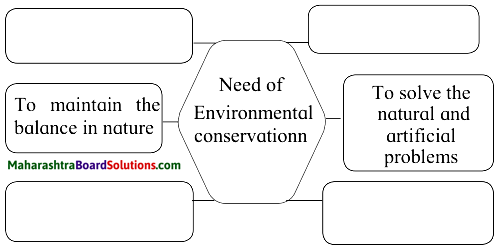
  • Usefulness/Benefits
  • Conclusion.

Answer:
The Will to Win

Friends,
The topic before us today is The Will to Win’. This title brings to my mind the story of the hare and the tortoise. When the hare challenged the tortoise to a race, the tortoise knew very well that its speed was in no way comparable to that of the hare. Yet this little animal agreed to the race. And why, may I ask you? Only because it had the will to win. Come what may, the tortoise had to prove to the hare that it could win if it wanted to. And finally it won!

This, in fact, is the driving force behind all great ventures and achievements. The Will to Win!

I remember the time when I went to Std. V. My father had been transferred from Agra to Bhusaval. A subject that I had trouble mastering was the language Marathi. Needless to say in the first term I flunked very badly. But I was a student who usually scored high marks in all subjects. This failure was devastating.

However, I did not let it faze me. I took great interest in class lessons. Read my Marathi textbook over and over. Made friends who spoke fluently in Marathi and ventured speaking to them. At first they poked fun at me. But within a month I had picked up the basic structure of the language and began writing answers to questions on my own. Believe it or not, at the end of the term I topped the class in Marathi. ; Today I can speak in the language as if it is my mother tongue.

Friends, my message to you today is that you can do anything. All you require is the will. If you have the will, the skill will follow. So set your goals, define your objectives and I wish all of you the very best in ; whatever you decide to do in life.

Be sure of one thing: If you have the will, You Will Win!

Thank you.

Maharashtra Board Solutions

Question 11.
Project :
Collect more information about Steve Jobs with the help of Internet. Complete it with images into a file.

Question 12.
Do you remember doing some activities in your childhood that you didn’t like it. Form pairs and make a list of all those activities. Do you think, any one of these activities have helped you in solving your problems? Share your experience with the class.

  • chopping vegetables:
  • cleaning the home; sweeping and dusting
  • hanging out clothes to dry
  • looking after my little brother
  • helping dad to repair the bicycle

Answer:
Once while driving home from school, the chain of my bicycle got dislodged and I almost fell off. There was no bicycle repair shop nearby and no passers-by were able to help me. Since I had experience helping dad to repair his bicycle, somehow I managed to get the chain fixed and wobbled back home. My hands were black and dirty with grease and oil, but at least I didn’t have to walk back home, pushing my bicycle along.

Question 13.
Write True or False for these statements: (The answers are given directly and underlined.)
Answer:
(1) Steve Jobs slept in his dorm room. False
(2) Steve took his required courses as a registered student of Reed College. False
(3) During Steve’s College days, one had to pay 5 cents deposit for a Coke bdttle. True
(4) Steve ha’d comfortable college experiences. False

Question 14.
What basic course in Reed College helped while designing the Mac?
Answer:
The basic course of calligraphy in Reed College helped while designing the Mac.

Question 15.
Arrange the following incidents in Steve Jobs’ life in proper sequence based on this passage:
(a) Jobs stayed as a drop-in for 18 months.
(b) Jobs used to sleep on the floor in his friend’s house.
Answer:
(a) Jobs stayed as a drop-in for 18 months.
(b) Jobs used to sleep on the floor in his friend’s house.

Question 16.
Complete the following: (The answers are given directly and underlined.)
(1) Steve’s first story is about connecting the dots.
(2) Steve got one good meal every Sunday night at the Hare Krishna temple.
Answer:
Connecting the dots.
Hare Krishna temple.

Question 17.
What did Steve Jobs do for two years after he joined Reed College?
Answer:
After joining Reed College, for two years Steve would stop taking the required classes that didn’t interest him. Instead he began dropping in on the ones that looked interesting.

Question 18.
List the hardships that Steve faced.
Answer:

  • Steve didn’t have a dorm room and so had to sleep on the floor in friends’ rooms.
  • Steve returned Coke bottles for the 5 cent deposits to buy food with.
  • Steve would walk seven miles across town every Sunday night to get one good meal a week at the Hare Krishna temple.

Maharashtra Board Solutions

Question 19.
Write from the passage a phrase that means ‘Apart from this, I have nothing more to tell.’
Answer:
That’s it.

Question 20.
Choose the correct contextual meaning of the phrase: connecting the dots.
(a) making a pattern with the help of dots
(b) associating one previous idea with other ideas that follow
(c) joining dots in a puzzle to get the correct picture
(d) understanding a procedure
Answer:
(b) associating one previous idea with other ideas that follow

Question 21.
Match the words in column A with their meanings in column B:

AB
(i) intuition (a) a set of characters like letters, symbols, etc. in one design
(ii) calligraphy (b) the style and appearance of printed matter
(iii) typography (c) power of understanding the feelings of people
(iv) typeface (d) beautiful handwriting done with a special pen or brush

Answer:

(i)intuition (c) power of understanding the feelings of people
(ii)calligraphy (d) beautiful handwriting done with a special pen or brush
(iii)ypography (b) the style and appearance of printed matter
(iv)typeface (a) a set of characters like letters, symbols, etc. in one design

Question 22.
It was one of the best decisions I ever made. (Rewrite using ‘better than’.)
Answer:
It was better than most other decisions I ever made.

Question 23.
Personal Response: What impression of Steve Jobs do you get from this passage?
Answer:
In this passage, it appears that Steve Jobs is a student who goes by his impulses. He has a thirst for knowledge, but prefers subjects that he finds interesting and avoids those that he finds uninteresting, even though he has enrolled for them. He is ready to face all kinds of hardships in order to study what he wants to. Steve Jobs had a natural curiosity and intuition. He also had an instinct about what makes something really great and the habit of storing it away in his mind for future use.
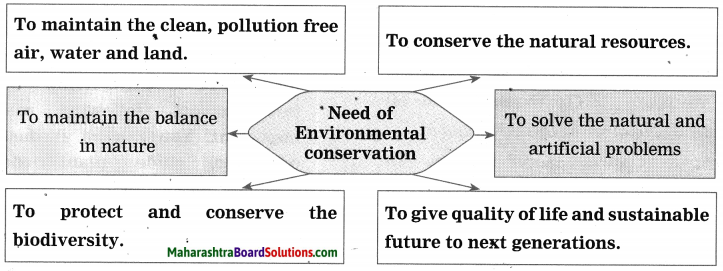
Question 24.
Fill in the blanks: (The answers are given directly and underlined.)
(1) Steve designed the Macintosh computer.
(2) Windows copied the Macintosh computer.
(3) It was impossible to connect the dots looking forward when Steve was in college.
(4) You can only connect the dots looking backward.
Answer:
(1) Macintosh
(2) Windows
(3) forward
(4) backward

Maharashtra Board Solutions

Question 25.
Complete the following: (The answers are given directly and underlined.)

(1) The Mac ‘computer which he designed would not have had multiple typefaces or proportionally spaced fonts.
(2) Since Windows just copied Mac, it was likely no personal computer would have had them.
Answer:
(1) not have had multiple typefaces or proportionally spaced fonts.
(2) no personal computer would have had them.

Question 26.
Complete the following: (The answers are given directly and underlined.)
Words connected with typography from the passage are: typeface and font.
Answer:
typeface and font.

Question 27.
Match the words /phrases in column A with their meanings in column B:

(A)(B)
(i) gut (a) Macintosh computer.
(ii) destiny (b) having several parts.
(iii) Mac (c) the power believed to control events.
(iv)multiple (d) courage and determination.
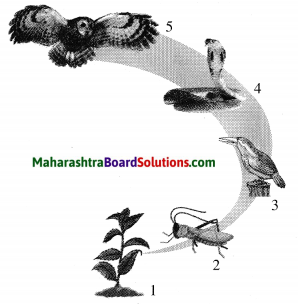
Answer:

AB
(i)gut(d)courage and determination
(ii)destiny(c) the power believed to control events
(iii)Mac(a) Macintosh computer
(iv)multiple(b) having several parts

Question 28.
It was impossible to connect the dots looking forward. (Pick out the verbs and say if they are finite or non-finite.)

Answer:
was – finite; to connect, looking – non-finites

Question 29.
It was very clear. (Rewrite as an exclamatory sentence.)
Answer:
How clear it was!

Question 30.
Mac would never have had multiple typefaces. (Rewrite as an interrogative sentence.)
Answer:
Would Mac ever have had multiple typefaces?

Maharashtra Board Solutions

Question 31.
Personal Response: Write about something which you learned in the past and which has helped you in the present.
Answer:
When I was in Std. V, mother enrol led me for dancing classes, I had to stop when I reached Std. IX. However, now whenever I need a break or I am feeling stressed, I put on some music and dance. That gives me relief from stress.

Question 32.
Name the following: (The answers are given directly and underlined.)
Answer:
(1) The world’s most successful animation studio. Pixar
(2) The company that Steve Jobs took five years to establish. Next
(3) The company that bought Next. Apple
(4) Steve Jobs’ wife. Laurene

Question 33.
What setback did Jobs suffer when he was thirty?
Answer:
When Jobs was thirty, he was fired from the company which he himself had started. This was devastating and a major setback in his life.

Question 34.
Match the words/phrases in column A with their meanings in column B:

AB
(i) renaissance (a) causing great destruction
(ii) to start over (b) lost one’s job
(iii) fired (c) revival
(iv) devastating (d) to begin again

Answer:

AB
(i) renaissance (c) revival
(ii) to start over (d) to begin again
(iii) fired (b) lost one’s job
(iv) devastating (a) causing great destruction

Question 35.
Fill in the blanks choosing the appropriate idioms: (at the heart of, hit him on the head with brick, begin to dawn, lose faith)
(1) Even if you don’t succeed at first, don’t lose faith in yourself.
(2) It is corruption in high places that lies at the heart of the non-development of this locality.
Answer:
(1) Lose faith
(2) At the heart of

Maharashtra Board Solutions

Question 36.
Personal Response: What does this second story of Jobs convey to you?
Answer:
The second story of Jobs – about love and loss – conveys to us that even if our efforts result in complete disaster, we should continue believing in ourselves. It tells us that we should love our work. If we haven’t yet found it, we should keep on searching. We should never accept less than what we aim for in life.

Question 37.
Which quality of Steve Jobs impresses you the most? How would you apply it in your life?
Answer:
I admire Steve’s quality of not giving up even after facing a terribly shocking loss. It inspires me never to be disheartened by failure, but to always keep trying. Even if one loses everything, one has to have the courage to start all over again.

Question 38.
Arrange the following incidents in Steve Jobs’ life in proper sequence based on this passage:
(a) Jobs was advised to get his affairs in order.
(b) Jobs was cured of a rare form of cancer.
Answer:
(a) Jobs was advised to get his affairs in order.
(b) Jobs was cured of a rare form of cancer.

Question 39.
Fill in the blanks: (The answers are given directly and underlined.)
(1) Steve’s third story is about death.
(2) The doctor describes the last stage of cancer as the ‘prepare to die’ stage.
(3) Steve ‘says that you should follow your heart and intuition.

(4) We should not waste time.
Answer:
(1) death
(2) ‘prepare to die’
(3) heart and intuition.
(4) time.

Question 40.
What does Jobs warn you about life and dogma?
Answer:
Jobs warns us not be trapped by dogma. Dogma is living with the results of other people’s thinking. The overpowering influence of other’s opinions should not drown out our own inner voice.

Question 41.
How does Jobs close his address to the graduate students?
Answer:
Steve Jobs closes his address to the graduate students by telling them about an amazing publication called The Whole Earth Catalogue’. In the final issue on the back cover there was a photograph of an early morning country road. Beneath it were the words ‘Stay Hungry, Stay Foolish’. Jobs wishes the students the same words as his farewell message to them.

Question 42.
Write from the passage four medical words / phrases / terms.
Answer:
pancreatic cancer, diagnosis, biopsy, surgery

Maharashtra Board Solutions

Question 43.
Match the words in column ‘A’ with their meanings in column ‘B’:

AB
(a) diagnosis (1) a set of beliefs held by an organisation which others are expected to accept without argument.
(b) catalogue (2) act of identifying the nature of a problem or illness.
(c) dogma (3) in a new or different way.
(d) anew (4) complete list of items especially in a special order and description.

Answer:

AB
(a)diagnosis(2) act of identifying the nature of a problem or illness.
(b)catalogue(4) complete list, of items especially in a special order and description.
(c)dogma(1) a set of beliefs held by an organisation which others are expected to accept without argument
(d)anew(3) in a new or different way.

Question 44.
Choose correct question tags for the sentences and rewrite: wasn’t it? isn’t it? aren’t I? will you?
(a) Don’t be trapped by dogma.
(b) It was their farewell message.
(c) Your time is limited.
(d) I’m fine now.
Answer:
(a) Don’t be trapped by dogma, will you?
(b) It was their farewell message, wasn’t it?
(c) Your time is limited, isn’t it?
(d) I’m fine now, aren’t I?

Question 45.
Don’t waste it. (Rewrite without ‘don’t’.)
Answer:
Avoid wasting it.

Question 46.
Personal Response: “Your time is limited. So don’t waste it living someone else’s life.” What are your views about these statements?
Answer:
These are the conclusions that Steve Jobs came to when he discovered that he was suffering from pancreatic cancer. Coming face to face with death, he realized how very little time we have on earth to realize our true potential. Most of our lives are spent following the dictates of others. By this statement, Steve Jobs means that we should spend every moment of our lives trying to discover our own potential and determine our own purpose and path in life.

Question 47.
(1) Pick out the compound words from the given words: dropping, calligraphy, backwards, graduate, photograph
(2) Pick out the gerund and use it in your own sentence: I could begin dropping in on the ones that looked interesting.
(3) Punctuate the sentence: heres one ekample reed college offered perhaps the best calligraphy instruction in the country
(4) Spot the error and rewrite the correct sentence: At the calligraphy class, I learn about what make great typography great.
(5) Identify the type of sentence: Don’t settle.
(6) Find out two hidden words of at least 4 letters each from the word ‘devastating’.
(7) Form present participles in which the last letter is doubled: drop, quit
(8) Arrange these words in alphabetical order: friend, follow, found, freed.
Answer:
(1) backwards = back + wards; photograph = photo + graph
(2) Gerund: dropping Sentence: Stop dropping in here without any warning.
(3) Here’s one example: Reed College offered perhaps the best calligraphy instruction in the country.
(4) At the calligraphy class, I learned about what makes great typography great.
(5) Imperative Sentence in the Negative.
(6) devastating-vast, taste (gate, stain.)
(7) dropping, quitting
(8) follow, found, freed, friend

Maharashtra Board Solutions

Question 48.
(1) Write the homophone for the word ‘story’ and frame a sentence.
(2) Rewrite the sentence using the past perfect continuous tense: We were designing the first Macintosh computer.
(3) Rewrite beginning with underlined part: The heaviness of being successful was replaced by the lightness of being a beginner again.
(4) Write a word register for the word: ‘doctor’ (4 words).
Answer:
(1) Homophones: story – storey Sentence: I live in a seven-storys building.
(2) We had been designing the first Macintosh computer.
(3) The lightness of being a beginner again replaced the heaviness of being successful.
(4) physician, surgeon, medico, healer, practitioner. (MD, medic, scientist, specialist)

Question 49.
(1) Use the word,‘trust’ in sentences as a noun as well as a verb.
(2) Underline the modal auxiliary and state its function: I had to take a calligraphy class.
Answer:
(1) (a) I have great trust in my teacher, (noun)
(b) Trust in God. (verb)
(2) I had to take a calligraphy class, (necessity/ obligation/compulsion)

Maharashtra Board Class 10 History Solutions Chapter 4 History of Indian Arts

Balbharti Maharashtra State Board Class 10 History Solutions Chapter 4 History of Indian Arts Notes, Textbook Exercise Important Questions and Answers.

Maharashtra State Board Class 10 History Solutions Chapter 4 History of Indian Arts

Question 1.
(A) Choose the correct option from the given options and complete the statement.
(1) The arts of painting and sculpting are …………….……. .
(a) visual arts
(b) performing arts
(c) folk arts
(d) classical arts
Answer:
(a) visual arts

Maharashtra Board Solutions

(2) The …………….……. saw the rise of Mathura school.
(a) Kushana period
(b) Gupta period
(c) Rashtrakuta period
(d) Maurya period
Answer:
(a) Kushana period

(B) Identify and write the wrong pair in the following set.
(1) Qutub Minar – Mehrauli
(2) Gol Gumbaz – Vijapur
(3) Chhatrapati Shivaji Maharaj Railway Terminus – Delhi
(4) Taj Mahal – Agra
Answer:
(3) Wrong Pair: Chhatrapati Shivaji Maharaj Railway Terminus – Delhi

Question 2.
Write short notes.
(1) Art
Answer:

  • It is a natural instinct in humans to share their emotions, experience, wisdom acquired with others.
  • This act of sharing, results in beautiful creation, called an ‘Art’.
  • Art gives us an experience of different elements.
  • These elements are expressed through sculpture, singing, painting and dance.
  • The crucial factors which are at the root of artistic creation are the imagination power of the artist.
  • The sensibility state of his emotions and skills.

(2) Hemadpanti style
Answer:

  1. Hemadpanti temples were primarily built in 12th- 13th century.
  2. The main feature of this style is its masonry. The walls are built without mortar, by locking stones, using the tenon and mortise joints technique.
  3. Hemadpanti temples are built in square¬shaped and star-shaped designs. In the star¬shaped plan, the outer walls of a temple has a zigzag design which gives interesting effect of alternating light and shadow.
  4. Tourists are attracted to see these beautiful designs. Hemadpanti temples are found at several places in Maharashtra.

(3) Maratha style of painting
Answer:

  • The Maratha style of paintings began to develop in the later half of the 17th century.
  • This style consists of coloured paintings which are in form of murals and miniatures used in manuscripts.
  • Murals of Maratha style can be seen at the entrance of old wadas, in drawing rooms and on the ceilings of the temples.
  • The Maratha style was influenced by the Rajput and European style of paintings.
  • The Maratha style of paintings helps us to understand various things about the times in which it was developed such as lifestyle, attires, customs, etc.

Question 3.
Explain the following statements with reasons.
(1) An expert with deep understanding of art history is required in the art market.
Answer:

  • There is an independent market for purchase and sale of art objects.
  • The authenticity of the object, its standards can only be assessed by an expert.
  • Only an artist can know the exact value of an art object or ensure if it is genuine or not.
  • So, when art objects are assessed all the above points are considered.
  • This requires special expertise. Hence an expert with deep understanding of art history is required for this task.

(2) It is necessary to preserve the tradition like Chitrakathi, which is on the verge of extinction.
Answer:

  1. The stories from Ramayana or Mahabharata narrated with the help of wooden puppets and paintings is known as Chitrakathi or Pinguli tradition.
  2. It is preserved by the Thakur community.
  3. As the Chitrakathi pictures are drawn on papers and painted using col9urs made from natural substances, they deteriorate rapidly if not maintained.
  4. Therefore it is necessarý to preserve the tradition like Chitrakathi as it is part of our glorious cultural heritage and is on the verge of extinction.

Question 4.
Complete the following table.

Temple Architecture NaagaraNaagaraDraavidaHemadpanti
Characteristics
Examples

Answer:

Styles of Temple ArchitectureNagaraDravidHemadpanti
Characteristics(1) Series of miniature towers are arranged
(2) Towers taper towards the top
(3) Tower appears to be continuously rising from the base of the temple to the top.
(1) Temple towers resembled pyramid shape.
(2) Gopura (main entrance) was large and magnificent than the tower.
(3) Mythological stories were carved on walls and ceilings.
(1) The temple structure was star-shaped with outer walls having zigzag design.
(2) The walls were built without using any mortar.
(3) The stones were locked by using the technique of tenon and mortise joints.
Examples(1) Konark Sun Temple
(2) Lingraj Temple of Bhubaneshwar
(3) Kandariya Mahadev temple at Khajuraho
(1) Meenakshi Temple at Madurai
(2) Chariot Temple at Mahabalipuram
(3) Brihadeeshvara temple at Thanjavur
(4) Tirupati Temple
(1) Gondeshwar temple at Sinnar
(2) Ambreshwar temple at Ambarnath
(3) Aundha Nagnath temple at Hingoli
(4) Kopeshwar temple at Khidrapur

Question 5.
Answer the following questions in detail.
(1) Write in detail about folk styles of painting.
Answer:

  • The art of rock painting dates back to Stone Age. These rock paintings have preserved the style of folk painting.
  • Rock paintings usually depict humans, animals and geometric figures.
  • The style of rock paintings seems to be changing according to the cultural changes from Stone age to the beginning of agriculture.
  • Man started depicting flora and fauna in a different style and also figures.
  • There was difference in colours too. Black and Red were used in rock paintings.
  • Colours extracted from natural substances were used.
  • The man started using the knowledge he got from the surroundings and nature and depicted it in the pictures.
  • In the later stage of development, man started customs such as decorating the walls and courtyards (Rangawali).
  • By drawing various figures and symbols or using panels of painting to narrate stories. It helped in the development of folk paintings.

(2) Explain the characteristics of the Islamic architecture in India by giving examples.
Answer:
A blend of Persian, Central Asian, Arabic and pre Islamic native Indian styles created the Islamic architecture of India.
Following are the characteristics of Islamic architecture developed in the medieval period under the patronage of Muslim sultanates:

  • Built in Islamic style, the Kutub Minor is the highest minaret in the world. It is 73 metres (240 ft) in height.
  • The Taj Mahal built by the Mughal emperor Shah Jah’an is looked’ upon as the paramount* example of Islamic’architecture.
  • The Gol Gumbaz at Bijapur in Karnataka built in 17th century is known for its echo which can be heard many times.
  • The forts at Agra and Delhi are known for their massive walls of redstone.
  • The walls are interrupted by graceful curves and lofty bastions. Red sandstone, domes, arches, minarets, magnificance all combined form characteristics of Islamic architecture.

(3) What kind of professional opportunities are available in the field of arts?
Answer:
Various opportunities are available in different fields of art:

  1. Art historian can work in field of journalism. Art students can work in museums, archives, libraries. Information Technology, archaeological research and Indology contribute to recently developed fields like Heritage Management and Cultural Tourism.
  2. An expert in art is required to assess the exact value of an art object and also in its sale and purchase. Experts are required in the field of manufacturing of objects for home decoration.
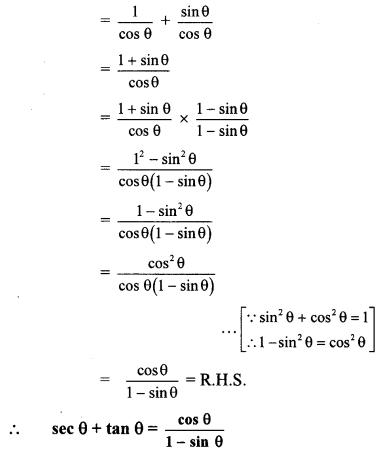
  3. Ornaments, artistic creations of metals, earthen pots with colourful designs, objects made from cane and bamboo, beautiful glass objects, attractive textiles and clothing all come are under applied arts.
  4. These fields require experts in manufacturing and sales. Hence many opportunities of employment are available in the field of arts.

(4) Observe the illustration of Warli painting on p. 23 and write about:
(a) Depiction of nature
(b) Drawings of human figures
(c) Depiction of occupations
(d) Houses
Answer:
Maharashtra Board Class 10 History Solutions Chapter 4 History of Indian Arts 1
The traditions of Warli painting and Pingul or Chitra Katha in Maharashtra are among the finest examples of folk style of paintings. Divya Somya Mashe, the artist in Thane district has played a great role in making the Warli style of paintings very popular. He has been honored with a number of national and international awards for his paintings. In the year 2011, he was awarded ‘Padmashree’.

Name of the painting tradition:
This picture is from Warli tradition.
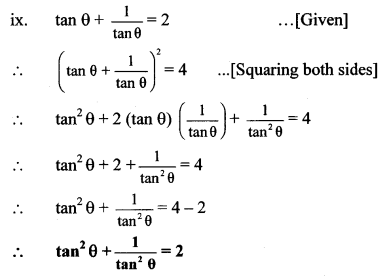
Nature’s description:
Artist has sketched trees, leaves and shrubs in the picture. A fish is also drawn.

Sketch of human activities:
Women dancing in a circular pattern is also sketched in the picture.

Designing features:
Pictures of men, women and children are sketched. Warli paintings do not portray the exact objects but only a sketch. Human figures are drawn with the help of a triangle, circle and square which are placed at the tip.

Project
(1) Collect additional information of the World Heritage sites in India.
(2) Observe the sculptors or image-makers at work in your locality and interview them.
Answer:

Memory Map
Maharashtra Board Class 10 History Solutions Chapter 4 History of Indian Arts 2

Question 6.
Complete the sentences by choosing a correct option:
(a) Lalit Kala is also known as …………………… .
(a) Folk art
(b) Aangik Kala
(c) Drik Kala
(d) Nagara art
Answer:
(b) Aangik Kala

(b) Jivya Somya Mashe, an artist in the Thane district played a great role in making the …………………… style of painting very popular.
(a) Chitrakathi
(b) Maratha
(c) Warli
(d) Classical
Answer:
(c) Warli

(c) The Chalukya King, Someshvara, mentioned in …………………… book the tradition of Chitrakathi.
(a) Natyashastra
(b) Kitab-e-Navras
(c) Paintings of Ajanta
(d) Manasollas
Answer:
(d) Manasollas.

(d) The ancient Indian texts mentioned …………………………. styles of Classical Art.
(a) Nine
(b) Thirty-six
(c) Sixty-four
(d) Eighty-four
Answer:
(c) Sixty-four

(e) During the reign, of Mughal Emperor …………………………., the Mughal miniature style showing a blend of Indian and Persian was developed.
(a) Akbar
(b) Aurangzeb
(c) Jahangir
(d) Babur
Answer:
(a) Akbar

(f) Some of the drawings of Gangaram Tambat are preserved in …………………………. university.
(a) Stanford
(b) Cambridge
(c) Oxford
(d) Yale
Answer:
(d) Yale

(g) …………………………. is the characteristic of European style of painting.
(a) Sketching
(b) Exact portrayal of object
(c) Natural colours
(d) Landscape
Answer:
(b) Exact portrayal of object

(h) Replicas of Ajanta paintings was made by
(a) Pestonji Bomanji
(b) Gangaram Tambat
(c) Raja Ravi Verma
(d) James Wales
Answer:
(a) Pestonji Bomanji.

(i) The lion capital of the Ashoka pillar found at …………………………. is the national emblem of India.
(a) Bodhgaya
(b) Patliputra
(c) Sanchi
(d) Sarnath
Answer:
(d) Sarnath

(j) The stupa at …………………………. in Indonesia is the largest stupa in the world.
(a) Ubud
(b) Sigiran
(c) Borobudur
(d) Palembang
Answer:
(c) Borobudur

(k) The …………………………. school of art laid the foundation of Indian iconography.
(a) Gandhar
(b) Nagara
(c) Dravid
(d) Mathura
Answer:
(d) Mathura

(l) The temple architecture developed in India around 4th century C.E. during the …………………………. period.
(a) Kushana
(b) Rashtrakuta
(c) Gupta
(d) Chola
Answer:
(c) Gupta

(m) …………………………. is a blend of Nagara style of architecture of North India and Dravid style of South India.
(a) Gandhar
(b) Mathura
(c) Bhoomija
(d) Vesara
Answer:
(d) Vesara.

(n) The two main branches of the Indian classical music are ………………………… .
(a) Folk music and Vocal
(b) Dadraa and Thumri
(c) Bhajans and Qawwalis
(d) Hindustani music and Carnatic music
Answer:
(d) Hindustani music and Carnatic music

(o) The text of …………………………. written by Bharatmuni is supposed to be the earliest one discussing music and theatre.
(a) Manasollas
(b) Abhilasha Chintamani
(c) Natyashastra
(d) Rasratnakar
Answer:
(c) Natyashastra

(p) Every year the …………………………. festival is held in Pune.
(a) Kala Ghoda
(b) Gunidas
(c) Savai Gandharva
(d) Gharapuri
Answer:
(c) Savai Gandharva

(q) The ruler of Bijapur, Ibrahim Adilshah wrote …………………………. text in Persian language.
(a) Tuzuk-i-Babari
(b) Padmavat
(c) Akbarnama
(d) Kitab-e-Navras
Answer:
(d) Kitab- e-Navras

(r) …………………………. is a prominent name among artists who created a new style of fusion of Indian and Western dance.
(a) Pandit Shivkumar Sharma
(b) Pandit Hariprasad Chaurasia
(c) Pandit Uday Shankar
(d) Ustad Zakir Hussain
Answer:
(a) Pandit Uday Shankar.

Question 7.
Identify the wrong pair in the following and write it:
(1)

Architectural structurePlace
(1) Kutub Minar(a) Mehrauli
(2) Gol Gumbaz(b) Bijapur
(3) Chhatrapati Shivaji Maharaj Railway Terminus(c) Delhi
(4) Taj Mahal(d) Agra

Answer:
Wrong pair: Chhatrapati Shivaji Maharaj Railway Terminus – Delhi

(2)

PictureStyle
(1) Murals seen in the old wadas at Wai, Menavali(a) Miniature style
(2) Bhimbetka(b) Folk painting
(3) Pictures narrating Ramayana and Mahabharata story(c) Chitrakathi
(4) Painting style in Thane district(d) Warli painting

Answer:
Wrong pair: Murals seen in the old wadas at Wai, Menavali – Miniature style

(3)

Architectural structureStyle
(1) Chhatrapati Shivaji Maharaj Railway Terminus(a) Gothic architecture
(2) Gol Gumbaz(b) Muslim architecture
(3) Temples in South India(c) Nagara architecture
(4) Gondeshwar Temple(d) Hemadpanti architecture

Answer:
Wrong pair: Temples in South India – Nagara architecture

(4)

MonumentEmperors
(1) Completed Kutub Minar(a) Altmash
(2) Construction of Taj Mahal(b) Emperor Akbar
(3) Gol Gumbaz(c) Mohammed Adilshah
(4) Built Sanchi Stupa(d) Emperor Ashoka

Answer:
Wrong pair: Construction of Taj Mahal – Emperor Akbar

Question 3.
Do as directed:
(A) Complete the following concept chart:
(1)
Maharashtra Board Class 10 History Solutions Chapter 4 History of Indian Arts 3
Answer:
Maharashtra Board Class 10 History Solutions Chapter 4 History of Indian Arts 4

(2)
Maharashtra Board Class 10 History Solutions Chapter 4 History of Indian Arts 5
Answer:
Maharashtra Board Class 10 History Solutions Chapter 4 History of Indian Arts 6

(3)
Maharashtra Board Class 10 History Solutions Chapter 4 History of Indian Arts 7
Answer:

Maharashtra Board Class 10 History Solutions Chapter 4 History of Indian Arts 8

(4)
Maharashtra Board Class 10 History Solutions Chapter 4 History of Indian Arts 9
Answer:
Maharashtra Board Class 10 History Solutions Chapter 4 History of Indian Arts 10

(5)
Maharashtra Board Class 10 History Solutions Chapter 4 History of Indian Arts 11
Answer:
Maharashtra Board Class 10 History Solutions Chapter 4 History of Indian Arts 12

(6)
Maharashtra Board Class 10 History Solutions Chapter 4 History of Indian Arts 13
Answer:
Maharashtra Board Class 10 History Solutions Chapter 4 History of Indian Arts 14

(B) Prepare a flow chart on the Development of Indian Iconography.
Answer:
Maharashtra Board Class 10 History Solutions Chapter 4 History of Indian Arts 15

Question 8.
Explain the following concepts:
(a) Style in Art:
Answer:

  • Every artist has its own method of working which becomes his style.
  • When this style is repeated by several artists over a prolonged period of time it becomes a tradition.
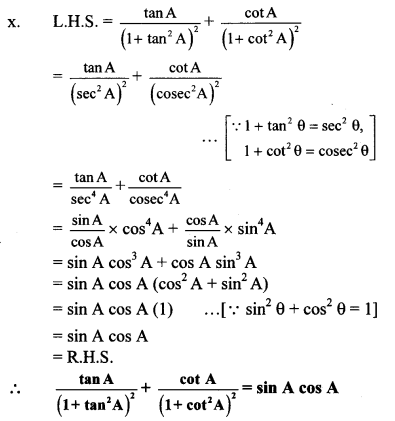
  • This tradition is known as an art ‘style’.
  • Such traditions are established in every art style. Various art styles are developed over the years in every culture.
  • The specific art styles indicate the characteristic of a certain region and period.
  • They help us to learn the history of arts of these civilizations.

(b) Classical Style of Paintings:
Answer:

  • Art which is expressed within an established frame of consistent rules is known as classical art. The ancient Indian texts mentioned altogether 64 arts.
  • The aft of painting is mentioned as alekhyam or alekhya vidya in these texts.
  • This alekhya vidya has six main aspects of paintings (Shadange).
  • They are shapes and forms (Roopbheda), expressions (Bhava).
  • Proportionate depiction of various features of an image (Pramana).
  • Aesthetics (Lavanyayojana), resemblance to reality (Sadrushyata) and colour composition (Varnikabhang).
  • Agama text of Jainism and in Puranas various arts like painting, sculpting are explained in context of temple architecture.

Question 9.
Write short notes:
(a) Chitrakathi:
Answer:

  1. The tradition of narrating stones from Ramayana and Mahabharata with the help of wooden puppets and paintings is known as Chitrakathi. It is also known as Pinguli.
  2. This tradition is mentioned in Manasollas, a book written by the Chalukya King Someshvara in the 12th century. People belonging to Thakur community stifi practise this art They are frm village, Pinguli near Kudal in Maharashtra.
  3. The Chitrakathi pictures are drawn on paper and painted with natural substances. To complete the narration of a single story it takes around 30 to 50 pictures.
  4. These pictures are preserved and are passed on from one generation to another. The artists and government are trying to preserve this tradition which is on the verge of extinction.
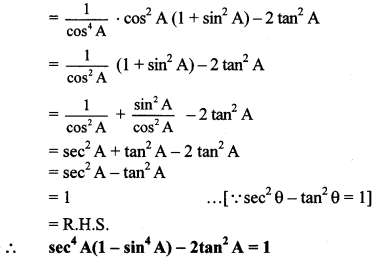
(b) Miniature Painting:
Answer:

  • Painting in a small size square is called Miniature painting.
  • The miniature reached people through manuscripts. The earlier period of miniature painting shows the influence of Persian style.
  • The Deccan miniature style was developed under the patronage of the Deccan Sultanate.
  • Mughal miniature painting style of painting’ was developed during the reign of Mughal Emperor Akbar. ¡t shows a blend of Indian and Persian style.

(c) Western style of painting:
Answer:

  • Indian artists came under the influence of European style of painting during the British period.
  • An art school at Shaniwar Wada at Pune was established under the leadership of Scottish artist James Wales.
  • J. J. School of art and industry was established in 1857 to offer the courses in European style of painting.
  • Pestonji Bomanji made replicas of Ajanta paintings.
  • lames Wales had done a portrait of Savai Madhavrao and Nana Phadnavis.
  • Exact portrayal of the object of the painting is a characteristic of European style.

(d) Gangaram Tambat:
Answer:

  • An art school was established under the leadership of Scottish artist James Wales at Shanivar Wada in Pune.
  • Marathi artist Gangaram Tambat worked with James Wales.
  • He made drawings of rock-cut caves at Verul and Karle.
  • Some of his drawings are preserved in the Yale Centre of British Art of Yale University.

(e) Temple architecture:
Answer:

  1. Temple architecture began to develop in India around 4th century C.E. during the Gupta period. In the initial stage of the Gupta period, the temples had only the Sanctum Sanctorum (Garbhagriha) and a Veranda with four columns.
  2. Temple architecture reached its peak by the 8th century C. E. and its example is the Kailas temple of Verul. By medieval period various types of temple architecture had developed in India.
  3. The styles of tower (Shikar) determined various styles of temple architecture in India. The Nagara style of North India and Dravid style of South India are two prominent styles of Indian temple architecture. A blend of Nagara and Dravid is known as Vesara style.
  4. Bhoomija style seen in temples of Maharashtra and Madhya Pradesh has very close resemblance to ‘Nagara’ style.

(f) Indo-Gothic Architecture:
Answer:

  1. During the British period, a new architectural style arose in India which was a blend of Indian and Gothic known as Indo-Gothic style of architecture.
  2. During the British period, buildings like churches, government offices, residences of top officials, railway stations were built in Indo-Gothic style of architecture.
  3. Chhatrapati Shivaji Maharaj Railway Terminus in Mumbai is the finest example of Indo- Gothic style of architecture.

(g) Ttitab-e-Navras:
Answer:

  1. Ibrahim Adilshah II, the ruler of Bijapur, wrote a book in Persian language entitled ‘Kitab- e-Navras’. This text is about Indian classical music.
  2. It includes the verses suitable for singing. It is a composition of excellent poetry expressed through Dhrupad style giving the experience of ecstasy to the interested audience.
  3. The Ncrvras mentioned in Sanskrit literature are explained in this text.

Question 10.
Explain the following sentences with reasons:
(a) Indian performing arts were enriched over time.
Answer:

  • A constant stream of rulers like the Greeks, Arabs, Mughals and the British came to India.
  • During their rule, Indian people came into contact with their styles of folk art.
  • The culture which they brought along lasted and blended with existing streams of Indian performing arts.
  • As a result, many styles of classical vocal music, instrumental music and dance came into existence.
  • Therefore Indian performing arts enriched over time.

(b) The field of Applied Arts needs professionals.
Answer:

  • An artistic creation is combined with utilitarian purpose to make it economically viable in applied arts.
  • Many stages of production are reached before the concept of creation becomes a reality.
  • Each field in applied arts requires detailed planning and meticulous management at each stage of production.
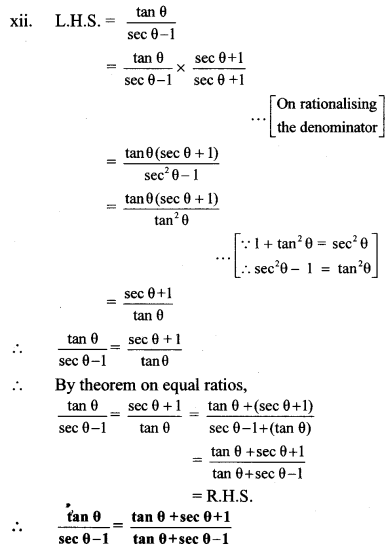
  • Ornaments, earthen pots with colourful designs, objects made from Cane and Bamboo, beautiful glass objects.
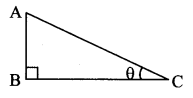
  • Attractive textiles and clothing all listed under applied arts essentially require trained and skilled individuals at every stage.
  • Some of the production processes of artistic objects have a history of certain traditions. It is important to have knowledge of those traditions.

Hence, it is essential to have trained and skilled professionals at every stage.

Question 11.
Answer the following question in 25-30 words:
(a) Write about follk traditions of sculptural art.
Answer:

  • The tradition of folk art dates back to the Stone Ages.
  • The custom of making clay images for rituals has been prevalent in India since Harappcin times.
  • It has continued even today in many regions of Bengal, Bihar, Gujarat and Rajasthan.
  • During the festivals, Ganesh idols are made along with the masks of Goddess Gauri.
  • Bull figurines are made for the festival of Bailpola.
  • Wooden memorials, Veergals (memorial stones), the decorated clay storage bins, etc.
  • Are examples of folk tradition of sculptural art.
  • The sculptures made for religious and festival reasons became masterpieces of artists’ creation.

(b) Write about Gandhara School of Art.
Answer:

  • The regions around Afghanistan showed great influence of Greeks and Persians from 2nd century B.C.E.
  • Gandhara style of art was a fusion of Greek- Roman and Indian style.
  • Gandhara school was heavily influenced by Greek methodologies.
  • The materials used to make sculptures were Grey sandstone. Mud, Lime and Stucco.
  • Grey sandstone is more prominently used in Gandhara School of Art.
  • The Gandhara school images are known for their anatomical accuracy, spatial depth and foreshortening.
  • The sculptures in Gandhara style are found in Taxila, Peshawar and on the North West Frontier.

(c) Write about development of Indian Iconography.
Answer:

  • The Kushana period from the 1st – 3rd century C.E. saw the rise of Mathura School of Art.
  • The Mathura School of Art laid the foundation of Indian iconography style.
  • The Kushana Kings made use of images of various deities on their coins.
  • During the Gupta period, the ieonographic rules were formulated and standards for sculptural- art were set.
  • The art of making bronze images was developed under the patronage of Chola Kings during 9th-13tji century.
  • Bronze idols of gods and goddesses like Siva-Parvati, Natraj, Lakshmi, Vishnu, etc. were made.

(d) Give information about the rock-cut caves in India.
Answer:

  • The tradition of rock-cut caves originated in India in the 3rd century B.C.E.
  • The entire composition of a rock-cut cave represents a union of architecture and sculptural art.
  • The entrances of such rock-cut caves, interiors with its carved columns and images are excellent specimens of sculptural art.
  • The paintings on the walls and ceilings have survived till today.
  • The rock-cut caves at Ajanta and Verul in Maharashtra were declared as World Heritage Sites in 1983.

(e) Elaborate on the development of temple architecture.
Answer:

  • The temple architecture began to develop in India during the Gupta period in 4th century C.E.
  • The temples built at the beginning of the Gupta period had only the sanctum sanctorum (Garbhagriha) and a veranda with four columns.
  • The magnificent structure of the Kailas temple of Verul gives testimony that temple architecture had reached its peak by the 8th century C.E.
  • Different styles of temple architecture were developed by the medieval period. Some of them are Nagara, Dravid, Vesara and Bhoomija.

(f) What efforts were taken in India to make dance and classical music easily accessible to common people?
Answer:
The following efforts were taken to make dance and music easily accessible to people:

  • Dance programmes and musical festivals were organised at various places.
  • Many people attend these festivals including Indians and foreigners.
  • The Savai Gandharva festival of Pune is very famous.

(g) Write about the work of Pandit Uday Shankar.
Answer:

  • Pandit Uday .Shankar created a fusion of Indian classical dance and European operti.
  • New styles of dancing were developed.
  • He also included various folk dances in his style of fusion.

Thus, the scope of Indian performing arts seems to be constantly expanding.

(h) Which fields are related to applied arts ?
Answer:

  1. An artistic creation with a utilitarian purpose is called applied arts. Industry and advertisement. Interior Design and production of ornamental objects, Art Design of stage backdrops, Art Direction for films and television are the fields of applied arts.
  2. Layout of books, magazines, production of greeting cards, invitation cards, gift objects, calligraphy are also related to applied arts.
  3. Still and animated graphics, created with the help of computers are used for various purposes. This field needs experts with technical knowledge.
  4. In short, whichever art is known and is applied to create something new becomes applied art.

Question 12.
Read the following passage and answer the questions:
(a) In which states of India are the sites of rock paintings found?
Answer:
The sites of rock paintings are found in the states of Madhya Pradesh, Uttar Pradesh, Bihar, Uttarakhand, Karnataka, Andhra Pradesh and Telangana.

(b) How old is the tradition of rock paintings?
Answer:
The tradition of rock painting dates back to the Stone Age.

(c) What are the features of rock paintings?
Answer:

  • Rock paintings depict humans, animals, geometric figures, flora and fauna in various figures and also in colour.
  • Natural colours in black and fed are used in them which are extracted from natural substances.
  • The style of rock paintings seems to be changing according to the cultural changes from Stone Age to the beginning of agriculture.
  • We get to know about ancient people, their natural surroundings and also the way they exploited available natural resources.

Question 13.
Answer the following questions in detail:

(a) Give information on Indian classical sculptural art.
Answer:
The development of folk styles of sculptural art led to the formation of rules for classical sculptural art and it evolved.

  1. The folk style of sculpture-making began during the Harappan period. Seals, stones and bronze statues that were made, gives a testimony that the art of sculpture was known to the Indians.
  2. It is about 5000 years old or even older tradition.
  3. The tradition of the erected stupa started in the times of Ashoka. The stupa at Borobudur in Indonesia is the largest stupa in the world.
  4. Gandhara style of sculptural art came to being in the 2nd century B.C.E. and has Greek and Persian influences.
  5. During the Kushana reign, Mathura School of art evolved which was a blend of Gandhara School of Art and indigenous art.
  6. The rules of Indian iconography was laid during the rule of the Gupta empire. Thus, Indian sculptural tradition has developed into a rich classical sculptural art.

(b) Differentiate between Classical and Folk: art.:
Answer:
Some differences are noted between Classical and Folk art. They are as follows: Classical Art Folk Art

Classical ArtFolk Art
1. Classical art does not have such a long tradition.1. The tradition of folk art has continued from the prehistoric times.
2. Classical art is not connected to everyday life.2. Folk art is an integral part of everyday life.
3. It takes a very long time period to master classical art.3. The creation of folk art has taken place naturally because of people’s involvement.
4. Classical art developed within the established frame of rules.4. Folk art developed as an integral part of the religious festivals and social life.
5. As classical art follows set rules, different types of styles, methods and schools are developed.5. Folk art is not bound by any rules.

Brain Teaser

Across:

  • Temples built in Maharashtra in 12-13th centuries in this style
  • The text written by the ruler of Bijapur, Ibrahim Adilshah II
  • Artist who created a fusion of Indian classical dance and European opera
  • His drawings are preserved in the Yale Centre of British Art of Yale University

Down:

  • The temple of Kailas at Verul
  • An art school was established under his leadership in the times of Savai Madhavrao Peshwe
  • The art of painting is mentioned as … in ancient Indian text
  • Murals of Maratha style of painting can be seen at this place

Maharashtra Board 10th Class Maths Part 2 Practice Set 6.1 Solutions Chapter 6 Trigonometry

Balbharti Maharashtra State Board Class 10 Maths Solutions covers the Practice Set 6.1 Geometry 10th Class Maths Part 2 Answers Solutions Chapter 6 Trigonometry.

Practice Set 6.1 Geometry 10th Std Maths Part 2 Answers Chapter 6 Trigonometry

Question 1.
If sin θ = \(\frac { 7 }{ 25 } \), find the values of cos θ and tan θ.
Solution:
sin θ = \(\frac { 7 }{ 25 } \) … [Given]
We know that,
sin2 θ + cos2 θ = 1
Maharashtra Board Class 10 Maths Solutions Chapter 6 Trigonometry Practice Set 6.1 1
…[Taking square root of both sides] Now, tan θ = \(\frac{\sin \theta}{\cos \theta}\)
Maharashtra Board Class 10 Maths Solutions Chapter 6 Trigonometry Practice Set 6.1 2
Alternate Method:
sin θ = \(\frac { 7 }{ 25 } \) …(i) [Given]
Consider ∆ABC, where ∠ABC 90° and ∠ACB = θ.
sin θ = \(\frac { AB }{ AC } \) … (ii) [By definition]
∴ \(\frac { AB }{ AC } \) = \(\frac { 7 }{ 25 } \) … [From (i) and (ii)]
Maharashtra Board Class 10 Maths Solutions Chapter 6 Trigonometry Practice Set 6.1
LetAB = 7k and AC = 25k
In ∆ABC, ∠B = 90°
∴ AB2 + BC2 = AC2 … [Pythagoras theorem]
∴ (7k)2 + BC2 = (25k)2
∴ 49k2 + BC2 = 625k2
∴ BC2 = 625k2 – 49k2
∴ BC2 = 576k2
∴ BC = 24k …[Taking square root of both sides]
Maharashtra Board Class 10 Maths Solutions Chapter 6 Trigonometry Practice Set 6.1 3

Question 2.
If tan θ = \(\frac { 3 }{ 4 } \), find the values of sec θ and cos θ.
Solution:
Maharashtra Board Class 10 Maths Solutions Chapter 6 Trigonometry Practice Set 6.1 4
Alternate Method:
tan θ = \(\frac { 3 }{ 4 } \) …(i)[Given]
Consider ∆ABC, where ∠ABC 90° and ∠ACB = θ.
tan θ = \(\frac { AB }{ BC } \) … (ii) [By definition]
∴ \(\frac { AB }{ BC } \) = \(\frac { 3 }{ 4 } \) … [From (i) and (ii)]
Maharashtra Board Class 10 Maths Solutions Chapter 6 Trigonometry Practice Set 6.1 5
Let AB = 3k and BC 4k
In ∆ABC,∠B = 90°
∴ AB2 + BC2 = AC2 …[Pythagoras theorem]
∴ (3k)2 + (4k)2 = AC2
∴ 9k2 + 16k2 = AC2
∴ AC2 = 25k2
∴ AC = 5k …[Taking square root of both sides]
Maharashtra Board Class 10 Maths Solutions Chapter 6 Trigonometry Practice Set 6.1 6

Question 3.
If cot θ = \(\frac { 40 }{ 9 } \), find the values of cosec θ and sin θ
Solution:
Maharashtra Board Class 10 Maths Solutions Chapter 6 Trigonometry Practice Set 6.1 7
..[Taking square root of both sides]
Maharashtra Board Class 10 Maths Solutions Chapter 6 Trigonometry Practice Set 6.1 8
Alternate Method:
cot θ = \(\frac { 40 }{ 9 } \) ….(i) [Given]
Consider ∆ABC, where ∠ABC = 90° and
∠ACB = θ
cot θ = \(\frac { BC }{ AB } \) …(ii) [By defnition]
∴ \(\frac { BC }{ AB } \) = \(\frac { 40 }{ 9 } \) ….. [From (i) and (ii)]
Let BC = 40k and AB = 9k
Maharashtra Board Class 10 Maths Solutions Chapter 6 Trigonometry Practice Set 6.1 9
In ∆ABC, ∠B = 90°
∴ AB2 + BC2 = AC2 … [Pythagoras theorem]
∴ (9k)2 + (40k)2 = AC2
∴ 81k2 + 1600k2 = AC2
∴ AC2 = 1681k2
∴ AC = 41k … [Taking square root of both sides]
Maharashtra Board Class 10 Maths Solutions Chapter 6 Trigonometry Practice Set 6.1 10

Question 4.
If 5 sec θ – 12 cosec θ = θ, find the values of sec θ, cos θ and sin θ.
Solution:
5 sec θ – 12 cosec θ = 0 …[Given]
∴ 5 sec θ = 12 cosec θ
Maharashtra Board Class 10 Maths Solutions Chapter 6 Trigonometry Practice Set 6.1 11
Maharashtra Board Class 10 Maths Solutions Chapter 6 Trigonometry Practice Set 6.1 12

Question 5.
If tan θ = 1, then find the value of
Maharashtra Board Class 10 Maths Solutions Chapter 6 Trigonometry Practice Set 6.1 13
Solution:
tan θ = 1 … [Given]
We know that, tan 45° = 1
∴ tan θ = tan 45°
∴ θ = 45°
Maharashtra Board Class 10 Maths Solutions Chapter 6 Trigonometry Practice Set 6.1 14

Question 6.
Prove that:
i. \(\frac{\sin ^{2} \theta}{\cos \theta}+\cos \theta=\sec \theta\)
ii. cos2 θ (1+ tan2 θ) = 1
iii. \(\sqrt{\frac{1-\sin \theta}{1+\sin \theta}}=\sec \theta-\tan \theta\)
iv. (sec θ – cos θ) (cot θ + tan θ) tan θ. sec θ
v. cot θ + tan θ cosec θ. sec θ
vi. \(\frac{1}{\sec \theta-\tan \theta}=\sec \theta+\tan \theta\)
vii. sin4 θ – cos4 θ = 1 – 2 cos2 θ
viii. \(\sec \theta+\tan \theta=\frac{\cos \theta}{1-\sin \theta}\)
Maharashtra Board Class 10 Maths Solutions Chapter 6 Trigonometry Practice Set 6.1 15
Proof:
i. L.H.S. = \(\frac{\sin ^{2} \theta}{\cos \theta}+\cos \theta\)
Maharashtra Board Class 10 Maths Solutions Chapter 6 Trigonometry Practice Set 6.1 16

ii. L.H.S. = cos2 θ(1 + tan2 θ)
= cos2 θ sec2 θ …[∵ 1 + tan2 θ = sec2 θ]
Maharashtra Board Class 10 Maths Solutions Chapter 6 Trigonometry Practice Set 6.1 17
= 1
= R.H.S.
∴ cos2 θ (1 + tan2 θ) = 1

Maharashtra Board Class 10 Maths Solutions Chapter 6 Trigonometry Practice Set 6.1 18

iv. L.H.S. = (sec θ – cos θ) (cot θ + tan θ)
Maharashtra Board Class 10 Maths Solutions Chapter 6 Trigonometry Practice Set 6.1 19
∴ (sec θ – cos θ) (cot θ + tan θ) = tan θ. sec θ

v. L.H.S. = cot θ + tan θ
Maharashtra Board Class 10 Maths Solutions Chapter 6 Trigonometry Practice Set 6.1 20
∴ cot θ + tan θ = cosec θ.sec θ

Maharashtra Board Class 10 Maths Solutions Chapter 6 Trigonometry Practice Set 6.1 21

vii. L.H.S. = sin4 θ – cos4 θ
= (sin2 θ)2 – (cos2 θ)2
= (sin2 θ + cos2 θ) (sin2 θ – cos2 θ)
= (1) (sin2 θ – cos2 θ) ….[∵ sin2 θ + cos2 θ = 1]
= sin2 θ – cos2 θ
= (1 – cos2 θ) – cos2 θ …[θ sin2 θ = 1 – cos2 θ]
= 1 – 2 cos2 θ
= R.H.S.
∴ sin4 θ – cos4 θ = 1 – 2 cos2 θ

viii. L.H.S. = sec θ + tan θ
Maharashtra Board Class 10 Maths Solutions Chapter 6 Trigonometry Practice Set 6.1 22

Maharashtra Board Class 10 Maths Solutions Chapter 6 Trigonometry Practice Set 6.1 23
Maharashtra Board Class 10 Maths Solutions Chapter 6 Trigonometry Practice Set 6.1 24

xi. L.H.S. = sec4 A (1 – sin4 A) – 2 tan2 A
= sec4 A [12 – (sin2 A)2] – 2 tan2 A
= sec4 A (1 – sin2A) (1 + sin2 A) – 2 tan2 A
= sec4 A cos2A (1 + sin2 A) – 2 tan2A
[ ∵ sin2 θ + cos2 θ = 1 ,∵ 1 – sin2 θ = cos2 θ]
Maharashtra Board Class 10 Maths Solutions Chapter 6 Trigonometry Practice Set 6.1 25
Maharashtra Board Class 10 Maths Solutions Chapter 6 Trigonometry Practice Set 6.1 26

Maharashtra Board Class 10 Maths Chapter 6 Trigonometry Intext Questions and Activities

Question 1.
Fill in the blanks with reference to the figure given below. (Textbook pg. no. 124)
Maharashtra Board Class 10 Maths Solutions Chapter 6 Trigonometry Practice Set 6.1 27a
Solution:

Maharashtra Board Class 10 Maths Solutions Chapter 6 Trigonometry Practice Set 6.1 28

Question 2.
Complete the relations in ratios given below. (Textbook pg, no. 124)
Maharashtra Board Class 10 Maths Solutions Chapter 6 Trigonometry Practice Set 6.1 29
Solution:
i. \(\frac{\sin \theta}{\cos \theta}\) = [tan θ]
ii. sin θ = cos (90 – θ)
iii. cos θ = (90 – θ)
iv. tan θ × tan (90 – θ) = 1

Question 3.
Complete the equation. (Textbook pg. no, 124)
sin2 θ + cos2 θ = [______]
Solution:
sin2 θ + cos2 θ = [1]

Question 4.
Write the values of the following trigonometric ratios. (Textbook pg. no. 124)
Maharashtra Board Class 10 Maths Solutions Chapter 6 Trigonometry Practice Set 6.1 30
Solution:
Maharashtra Board Class 10 Maths Solutions Chapter 6 Trigonometry Practice Set 6.1 31

Maharashtra Board Class 10 Maths Solutions

Maharashtra Board Class 10 English Solutions Unit 1.3 On Wings of Courage

Balbharti Maharashtra State Board Class 10 English Solutions Unit 1.3 On Wings of Courage Notes, Textbook Exercise Important Questions and Answers.

Maharashtra State Board Class 10 English Solutions Unit 1.3 On Wings of Courage

Maharashtra State Board Class 10 English Solutions Unit 1.3 Warming Up Questions and Answers

Question 1.
The ranks of officers in Indian Army, Navy and Air Force are jumbled up. Discuss with your group and put them in the appropriate boxes.

Commander, Brigadier, Wing-Commander, Vice-Admiral, Squadron-Leader, Major, Colonel, Field Marshal, Air Marshal, Admiral of Fleet, Lieutenant-General, Flying Officer, Commodore, Rear Admiral, Air-Commodore.
ARMYNAVYAIR FORCE
Maharashtra Board Solutions

Answer:

ArmyNavyAir Force
Brigadier,Commander,Wing-
Major, Colonel,Vice-Admiral,Commander,
Field Marshal,AdmiralSquadron-
Lieutenant-of Fleet,Leader, Air
GeneralCommodore,Marshal, Flying
Rear AdmiralOfficer, Air-Commodore

Question 2.
Homophones/ Homographs
(A) Make sentences to bring out the difference between-
(1) (a) wear ……………………………………..
(b) ware ……………………………………..
(2) (a) here ……………………………………..
(b) hear ……………………………………..
(3) (a) there ……………………………………..
(b) their ……………………………………..
(4) (a) cell ……………………………………..
(b) sell ……………………………………..
Answer:
(1) (a) wear: The little girl wanted to wear a pink, frilly dress.
(b) ware: The silver ware laid out on the King’s table was exquisite.

(2) (a) here: “You must sit here,” said the man to his guest.
(b) hear: The children could hear the sound of the planes quite clearly.

(3) (a) there: “I had kept my bag there,” said the woman to the policeman.
(b) their: The girls picked up their bags and went home.

(4) (a) cell: The prisoner sat in the dark cell without talking.
(b) sell: The hawker wanted to sell all his wares before evening.

Maharashtra Board Solutions

(B) Write what the underlined Homographs in the following sentences mean.
(1) (a) A bear is an omnivorous animal. ……………………………………..
(b) She could not bear the injustice. ……………………………………..
(2) (a) A bat is the only bird which is a mammal. ……………………………………..
(b) His bat broke as it struck the ball. ……………………………………..
(3) (a) He had to pay a fine for breaking the traffic signal. ……………………………………..
(b) Use a fine cloth for the baby’s clothes. ……………………………………..
(4) (a) We enjoyed a lot at the temple fair. ……………………………………..
(b) She has a fair complexion. ……………………………………..
Answer:
(1) (a) A bear is an omnivorous animal.
bear – a large, heavy animal
(b) She could not bear the injustice,
bear – to tolerate

(2) (a) A bat is the only bird which is a mammal.
bat – a mammal that flies
(b) His bat broke as it struck the ball.
bat – a wooden implement used for hitting the ball in many games.

(3) (a) He had to pay a fine for breaking the traffic signal.
fine – penalty
(b) Use a fine cloth for the baby’s clothes,
fine – delicate, soft

(4) (a) We enjoyed a lot at the temple fair.
fair – a gathering of stalls and amusements for public entertainment
(b) She has a fair complexion, fair – light, not dark

Maharashtra Board Solutions

Maharashtra Board Class 10 English Kumarbharati Unit 1.3 Questions and Answers

Question 1.
Read the text and fill in the flow chart of the promotions received by Arjan Singh.
Maharashtra Board Class 10 English Solutions Unit 1.3 On Wings of Courage 1
Answer:
Maharashtra Board Class 10 English Solutions Unit 1.3 On Wings of Courage 2

Question 2.
With the help of facts given in the text prepare a Fact file of Air Marshal Arjan Singh.
(a) Date of Birth
(b) Place of Birth
(c) Education
(d) First Assignments
(e) Important posts held
(a) In Air Force
(b) After retirement
(f) Awards
(g) Most outstanding contribution in IAF
(h) Retirement
Answer:
(a) Date of birth: April 15, 1919
(b) Place of birth: Lyalpur
(c) Education: at Montgomery; Empire Pilot Training Course at RAF (Cranwell)
(d) First Assignment: to fly Westland Wapiti biplanes in the North-Western Frontier Province as a member of the No. 1 RIAF Squadron
(e) Important posts held:
(1) In Air Force: Member of No. 1. RIAF, Flying Officer, Squadron Leader, Wing Commander, Group Captain, Air Commodore, Air Officer Commanding, Air Vice Marshal, Air Officer Commanding-in-Chief, Deputy Chief of Air Staff, Vice Chief of Air Staff, Chief of Air Staff, Air Chief Marshal.
(2) After retirement: Ambassador to Switzerland Lieutenant Governor of Delhi
(f) Awards: Distinguished Flying Cross (1944); Padma Vibhushan
(g) Most outstanding contribution in IAF: Transforming the IAF into one of the most potent air forces globally and the fourth biggest in the world.
(h) Retirement: in August 1969.

Maharashtra Board Solutions

Question 3.
Fill in the web.
Maharashtra Board Class 10 English Solutions Unit 1.3 On Wings of Courage 3
Answer:
(1) Singh had successfully led a young IAF during the 1965 Indo-Pak war.
(2) Singh played a major role in transforming the IAF into one of the most potent air forces globally and the fourth biggest in the world.
(3) Singh was honoured with the rank of Marshal on the Republic Day in 2002.
(4) Singh’s contribution was most outstanding during the 1965 Indo-Pak war.

Question 4.
Say what actions preceded the following promotions of Arjan Singh in his career in the IAF.
(a) Selected for Empire Pilot training course at RAF
(b) Promoted to Squadron Leader
(c) Leader of a flypast of over 100 aircraft at Red Fort, Delhi
(d) Awarded Padma Vibhushan
(e) First Air Chief Marshal of Indian Air Force
Answer:
(a) The authorities selected Singh for the Empire Pilot training course.
(b) He flew against the tribal forces and moved back to No. 1 Squadron as a Flying Officer to fly the Hawker Hurricane.
(c) On 15th August 1947, Arjan Singh achieved the unique honour of leading a fly-past of over a hundred IAF aircraft over the Red Fort in Delhi.
(d) He was awarded the Padma Vibhushan for his astute leadership of the Air Force and for inspiring the IAF to victory in the 1965 Indo-Pak war.
(e) He was a source of inspiration to all the personnel of the Armed Forces through the years.

Maharashtra Board Solutions

Question 5.
Replace the underlined words/phrases with the appropriate ones, to retain the proper meaning.
(be the epitome of, gear up, a brief stint, play a major role, in recognition of, take over reins)
(a) He contributed notably in bringing up the school.
(b) Our school cricket team got ready for the final match against P. Q. R. High School.
(c) After a short period of working as a lecturer, Ravi took up an important post in a multi-national company.
(d) Our class monitor is a perfect symbol of duty and discipline.
(e) Accepting the great value of his research; they awarded him with a Ph.D. (degree)
(f) After the murder of King Duncan, Macbeth took over the control of Scotland.
Answer:
(a) He played a major role in bringing up the school.
(b) Our school cricket team geared up for the final match against P.Q.R.High School.
(c) After a brief stint as a lecturer, Ravi took up an important post in a multinational company.
(d) Our class monitor is the epitome of duty and discipline.
(e) In recognition of his research, they awarded him with a Ph.D. (degree)
(f) After the murder of King Duncan, Macbeth took over the reins of Scotland.

Question 6.
Build the word wall with the words related to ‘Military’.
Maharashtra Board Class 10 English Solutions Unit 1.3 On Wings of Courage 5
Answer:
Maharashtra Board Class 10 English Solutions Unit 1.3 On Wings of Courage 4

Question 7.
(A) State the different meanings of the following pairs of Homophones and make sentences of your own with each of them.

WordMeaningSentence
(a) led
lead(b) role
roll(c) air
heir(d) feat
feet

(e) reign
rein
rain

…………………………..
…………………………………………………………
………………………………………………………
……………………………………………………….
…………………………..

…………………………..
…………………………..

…………………………..
……………………………………………………….
……………………………………………………….
……………………………………………………….
…………………………..

…………………………..
…………………………..

Answer:

WordMeaningSentence
(a) ledpast participle of lead (to guide or conduct)The captain led his team to safety.
leadgraphite used as part of a pencilDo you have a lead pencil?
(b) rolea part (in a play, film, etc.)Marie got the leading role in the new movie.
rollmove in a particular direction by turning over and overThe boy wanted to roll in the mud while playing.
(c) airthe invisible gaseous substance surrounding the earthThere Is a lot of humidity in the air during the monsoon.
heirsuccessor or inheritorThe family did not know who the heir to the property was.
(d) feata great achievementClimbing Mt. Everest is a feat.
feeta unit of measurementThe girl saw to her shock that the lion was only a few feet away.
(e) reignrule as king or queenQueen Elizabeth’s reign has been a long one.
reina restraining influenceThe new manager kept a tight rein on her employees.
rainwater that falls In drops from clouds in the skyChildren love to play in the rain.

Maharashtra Board Solutions

(B) The following Homographs have the same spelling and pronunciation but can have different meanings. Make sentences of your own to show the difference.
Maharashtra Board Class 10 English Solutions Unit 1.3 On Wings of Courage 6
Answer:
(a) firm: (i) My neighbour recently Joined an electronics firm as Sales Executive.
(ii) Many people feel that they must be firm with their children when they are growing.

(b) train: (i) The train left from platform 2 at seven p.m. sharp.
(ii) You must always train your pets to obey you.

(c) type: (i) The man asked his secretary to type the letter immediately.
(ii) Cows eat only a particular type of grass.

(d) post: (i) My aunt quit her job because she felt that the post was not suitable for her.
(ii) The little boy ran to the post office to post the letter to Santa Claus.

(e) current : (i) The minister was disturbed when he read about the current situation of unrest In the country.
(ii) It is a difficult task to row against the current in a river.

Question 8.
Glance through the text and prepare notes from the information that you get. Take only relevant points. Don’t use sentences. Arrange the points in the same order. You may use symbols or short forms. Present the points sequentially. Use highlighting techniques.
Answer:
Air Force Marshal Arjart Singh—Icon of India’s Military History

1. Date of Birth: 15 April, 1919
2. Qualifications: Empire Pilot Training Course at RAF (Cranwell)
3. Responsibilities:

  • first assignment to fly Westland Wapiti biplanes in No.l RIAF Squadron
  • brief stint in No.2 RIAF Squadron; moved back to No. 1 RIAF Squadron as Flying Officer
  • overall commander of ‘Shiksha’
  • led the IAF during the 1965 Indo-Pak war
  • led a squadron against the Japanese during the Arakan Campaign; assisted the advance of Allied Forces to Yangoon
  • led a fly-past on August 15, 1947
  • commanded Ambala in the rank of Group Captain; took over as AOC of an operational command
  • took over reins of the IAF
  • ambassador to Switzerland; Lieutenant Governor of Delhi

Maharashtra Board Solutions

(4) Achievements:

  • selected for the Empire Pilot Training Course at RAF (Cranwell) in 1938, at age 19
  • promoted to the rank of Squadron Leader in 1944
  • led a fly-past over the Red Fort on August 15, 1947
  • promoted to the rank of Wing Commander; promoted to the rank of Air Commodore in 1949
  • longest tenure as AOC (1949-1952 and 19571961)
  • appointed as Deputy Chief of Air Staff at the end of the 1962 war; appointed as Vice Chief of Air Staff in 1963
  • rank of Air Marshal in August 1964; took over reins of IAF
  • successfully led the IAF in 1965 Indo-Pak war
  • promoted as Air Vice Marshal; appointed as AOC-in-C of an operational command
  • first Air Chief to keep his flying currency till his CAS rank; has flown more than 60 different types of * aircraft
  • first and only Air Chief Marshal of the IAF

(5) Awards:

– Distinguished Flying Cross (1944)
– Padma Vibhushan

(6) After retirement: Ambassador to Switzerland; Lieutenant Governor of Delhi
(Students can put these points attractively in boxes and use highlighting techniques.)

Question 9.
Develop a story suitable to the conclusion/end given below. Suggest a suitable title.
………………………………………………….. (Title)
…………………………………………………………………………………………………………………..
…………………………………………………………………………………………………………………..
…………………………………………………………………………………………………………………..
…………………………………………………………………………………………………………………..
…………………………………………………………………………………………………………………..
…………………………………………………………………………………………………………………..
………………………………………………………….. and so, with tears of joy and pride, the 10 year old Sanyogita More received the National Bravery Award from the Prime Minister.
Answer:
A WONDERFUL ACT OF BRAVERY
It was the 26th of July in Mumbai. It was raining cats and dogs. Ten-year-old Sanyogita More stood at the door of her hut. The street was flooded with water. Sanyogita was frightened. Her parents had not returned from work and she was all alone.

Suddenly, she saw two little boys, Rohan and Sohan, come out from the neighbouring hut to play in the water. As Sanyogita watched, there came a sudden gush of water and the boys were dragged towards an open manhole, which had been marked with a pole. They caught hold of the pole, but the pole began to tilt. It would soon fall—and the boys would go down the manhole!

Maharashtra Board Solutions

Sanyogita ran as fast as she could towards the boys. Pulling a rope from a nearby door, she looped it around a large stone. She held onto the rope and extended her hand towards the boys. “Catch my hand, Sohan, Rohan,” she shouted. “Catch! Catch soon!”

The boys were in a panic but they did as they were told. Sohan held Rohan’s leg, Rohan held Sanyogita’s hand, and Sanyogita held onto the rope.

“Help! Help! she shouted, knowing that if the rope broke or the stone was dislodged, they would all go into the manhole.

She stood there shivering, her arms numb, for nearly 15 minutes before help arrived. Sanyogita collapsed after the incident. The news of her brave deed spread far and wide, and reached the ears of 1 the Prime Minister, who decided to honour her with an award. And so, with tears of joy and pride, the 10- I year-old Sanyogita More received the National Bravery ‘ Award from the Prime Minister.

Question 10.
You wish to join any one of the Indian Armed Forces. Fill in the following application form.
To
The Advertiser
N/AF Recruitment Service
Purangaon – 456 789

Affix recent
passport size
photograph

Application For Recruitment
Rect notice No 1234

1. Post applied for
2. Name and surname of Candidate (in Block letters)
3. Father’s Name ………………………………… Mother’s Name …………………………………
4. Date of Birth
5. Contact details :
Tel. No. (Res) ………………….. . Mobile No.
Email ID ………………….. .
6. Permanent Address :
House No./Street/Village ………………….. .
Post Office ………………….. .
District ………………….. State ………………….. .
Pincode ………………….. .
7. Educational Qualifications :

Serial NumberQualificationName of School/CollegeName of Board/UniversityPercentage obtained
Maharashtra Board Solutions

8. Whether registered at any employment exchange Yes/ No ………………….. (If yes, mention registration number and the name of the Employment Exchange.)

9. Outstanding achievements in extra-curricular activities/ sports/ games, etc.
………………………………………………………………………………………………………………………………………….
………………………………………………………………………………………………………………………………………….

10. Why you wish to join Armed Forces. …………………………………………………………………
………………………………………………………………………………………………………………………………………….
………………………………………………………………………………………………………………………………………….