Maharashtra Board OCM 12th Commerce Solutions Chapter 4 Business Services

Balbharti Maharashtra State Board Organisation of Commerce and Management 12th Textbook Solutions Chapter 4 Business Services Textbook Exercise Questions and Answers.

Maharashtra State Board 12th Organisation of Commerce and Management Solutions Chapter 4 Business Services

1. (A) Select the correct option and rewrite the sentence.

Question 1.
Door to door service is provided by …………….. transport.
(a) railway
(b) road
(c) air
Answer:
(b) road

Question 2.
…………….. creates time utility.
(a) Warehouse
(b) Transport
(c) Communication
Answer:
(a) Warehouse

Maharashtra Board OCM 12th Commerce Solutions Chapter 8 Marketing

Question 3.
…………….. warehouses provide facilities for perishable commodities.
(a) Bonded
(b) Cold storage
(c) Government
Answer:
(b) Cold storage

Question 4.
……………. policy covers all types of risks of a vessel while it is anchored at the port for a particular period of time.
(a) Port risk
(b) Voyage
(c) Floating
Answer:
(a) Port risk

Question 5.
Principle of …………….. is not applicable to life insurance.
(a) insurable interest
(b) utmost good faith
(c) indemnity
Answer:
(c) indemnity

1. (B) Match the pairs.

Question 1.

Group AGroup B
(A) Air Transport(1) Time utility
(B) Warehousing(2) Intangible in nature
(C) Money remittance(3) Fastest mode of transport
(D)  Pipeline Transport(4) April,2019
(E) Business Service(5) Western Union Money Transfer
(6) Fixed deposit account
(7) Petroleum and gas
(8) Tangible
(9) Place utility
(10)  Savings account

Answer:

Group AGroup B
(A) Air Transport(3) Fastest mode of transport
(B) Warehousing(1) Time utility
(C) Money remittance(5) Western Union Money Transfer
(D)  Pipeline Transport(7) Petroleum and gas
(E) Business Service(2) Intangible in nature

1. (C) Give one word/phrase/term for the following sentence.

Question 1.
These warehouses are owned, managed and controlled by central and state governments or public authorities.
Answer:
government warehouse

Question 2.
An art of exchanging ideas, facts, information etc. from one person or entity to another.
Answer:
Communication

Question 3.
A rail system in which the track consists of a single rail or a beam.
Answer:
monorail

Question 4.
A transport system used to carry petroleum and gases.
Answer:
pipeline transport

Question 5.
A ministry who looks after development of surface transport throughout country.
Answer:
Ministry of Road Transport and Highways

1. (D) State whether following statements are true or false.

Question 1.
Business services are important for the growth of business.
Answer:
True

Question 2.
Current Account is opened by salaried persons.
Answer:
False

Question 3.
NEFT stands for National Electric Fund Transfer.
Answer:
False

Question 4.
Air transport is cheapest mode of transport.
Answer:
False

Question 5.
The Internet is the global system of interconnected computer networks that use the internet protocol suite to link devices worldwide.
Answer:
True

1. (E) Find the odd one.

Question 1.
Primary credit co-operative society, state co-operative bank, district co-operative bank, exchange bank.
Answer:
exchange bank

Question 2.
NABARD, RBI, SIDBI, EXIM.
Answer:
RBI

Question 3.
Direct mail, Logistics post, Business post, Parcel
Answer:
Parcel

Question 4.
Endowment policy, Whole life policy, Money back policy, Blanket policy.
Answer:
Blanket policy.

1. (F) Complete the sentence.

Question 1.
The term bank comes from the French word …………….. .
Answer:
Banco

Question 2.
…………….. warehouses provide facilities for perishable commodities
Answer:
Cold storage

Question 3.
In ……………… policy, several ships belonging to one owner are insured under the same policy.
Answer:
fleet

Question 4.
…………….. banking refers to the use of banking services with the help of mobile phones.
Answer:
Mobile

1. (G) Select the correct option and complete the following table.

(RTGS, SIDBI, apex financial institution in banking industry of country, recurring deposit, long term loans)

Group AGroup B
A.……………fund transfer on real time and gross basis
B.loans to meet long term capital requirements……………
C.……………Account  operated  by  salaried  and businessmen both.
D.Central bank……………
E.……………Principal financial institution for MSMEs

Answer:

Group AGroup B
A.RTGSfund transfer on real time and gross basis
B.loans to meet long term capital requirementslong term loans
C.Recurring DepositAccount  operated  by  salaried  and businessmen both.
D.Central bankapex financial institution in banking industry of country
E.SIDBIPrincipal financial institution for MSMEs

1. (H) Answer in one sentence

Question 1.
What is debit card?
Answer:
A debit card is a card which is used by the cardholders to make purchases and avail of services at different places without making cash payment but payment is deducted from or debited to the account of the debit cardholders immediately.

Question 2.
What is ‘subject matter’ In insurance?
Answer:
‘Subject matter’ In Insurance refers to life, property, cargo or ship, etc. which is Insured against whose insurance policy Is taken.

Maharashtra Board OCM 12th Commerce Solutions Chapter 8 Marketing

Question 3.
What is government warehouse?
Answer:
The warehouses which are owned. managed and controlled by the Central and State Governments or public authorities to assist small farmers, businessmen, traders in storing goods at nominal charges are called government Warehouses.

Question 4.
What is air transport?
Answer:
The mode of transport which is operated above the surface of the earth and carries goods and passengers through airways by using different aircrafts Is called air transport.

Question 5.
What is communication?
Answer:
The term ‘communication’ means any exchange of Ideas, facts, information, messages. feelings and emotions among two or more persons in a way that they share common understanding about it.

1. (I) Correct the underlined word and rewrite the following sentences.

Question 1.
Overdraft facility is available for savings bank account holder.
Answer:
Current

Question 2.
Services are tangible in nature.
Answer:
Intangible

Question 3.
Insurance helps to maximize the risks in the business.
Answer:
Minimise

Question 4.
The foreign bank is the apex financial institution in banking industry in the country.
Answer:
Centrals

Question 5.
RTGS stands for Reasonable Time Gross Settlement.
Answer:
real

1. (J) Arrange in proper order.

Question 1.
Claim, Accident, Taking the policy, Compensation.
Answer:
Taking the policy, Accident, Claim, Compensation

Question 2.
Email, Inland letter, Courier
Answer:
Inland letter, Courier, E-mail

2. Explain the following terms/concepts.

Question 1.
Transport
Answer:
(1) Service or facility which creates physical movement of men, materials, goods. animals. etc. from one place (location) to another is called transport. Transportation can be defined as a means of carrying or transferring goods. people, animals, material. etc. from one place to another.

(2) Usually transportation is carried through various modes like land transport (i.e Railways and Roadways), water transport and air transport. It brings mobility both to human resources and physical resources. Transport plays key role in nations economy and economic development. After 1991, in India. development of infrastructure within the country has made progress at rapid rate and today there are different modes of transport operated in India. Transport helps in production. expands market, create place utility in goods and services, brings stability to prices, creates employment opportunities, improves standard of living of the people, provides help during emergency and facilitates economic development.

Question 2.
Communication
Answer:
(1) The term ‘communication’ means any interchange of ideas, messages, facts, information, feelings and emotions among two or more persons In a way that they share common understanding about it. It Is a process of giving away or passing on any information by any person to some other person with the help of some medium. Thus, receiver after receiving the message understands it in the desired form and acts accordingly.

(2) Means of communication consist of magazines, newspaper, post and telegraphs. telephone. Internet, e-mail, television, etc. Communication facilitates transmit business Information more quickly among the businessmen. The difficulty of distance is effectively solved by various means of communication. Effective communication facilitates the development and growth of domestic and international markets which bring prosperity to the country.

Maharashtra Board OCM 12th Commerce Solutions Chapter 8 Marketing

Question 3.
Banking
Answer:
(1) The term ‘Bank’ Is derived from the French word ‘Banco’ which means a ‘bench’. In olden days, moneylenders used to display coins and currencies on the tables or benches for the purpose of lending or exchanging. An organisation which is dealing with money is called bank. An institution offering certain financial services such as the safe keeping of money and lending money to needy people is called Bank.

(2) According to the Indian Banking Regulation Act, 1949, bankIng company means “any company which transacts the business of banking in India.” The word banking has defined further as “acceptingfor the purpose of lending or investment of deposits of money from the public repayable on demand or otherwise and withdrawable by cheques. drafts, order or otherwise.” Bank accepts deposits repayable on demand by cheques or drafts and lends or invests the surplus money as a part of normal business. It makes a profit by accepting deposits at a lower rate of Interest and lending money at a higher rate of Interest.

Question 4.
Insurance
Answer:
(1) Business involves various risks like accident, fire, theft, flood, cyclone, etc. It is very difficult for a trader to bear risks of loss. Similarly, human life is subject to various risks such as death by accident, premature death, etc. The specialised agency called insurance company has emerged to provide financial protection against the possible loss due to the happening of such events. Insurance company gives financial protection by charging certain amount as a premium. It. is a risk management, primarily meant to hedge or for compensating against the risk of a contingent or uncertain loss.

(2) Insurance is a contract between two parties whereby one of them (the insurer) agrees in return for a premium to indemnify the other (the insured) against a monetary loss that may be suffered by the other on the happening of some specified event. According to Insurance Act of 1938, “Insurance Is defined as, “A provision which a prudent man makes against inevitable contingencies”.

Question 5.
Warehousing
Answer:
(1) Warehousing means storing of goods in a godown to hold them in stock from the time of production or purchase till the time of their sale. It is generally used to denote all those activities which are concerned with the storage of goods in a godown or warehouse. One of the marketing processes or a group activity is to hold the goods in stock from the time of production till the time of consumption. When storage of goods is required to be arranged on a large scale In a specified manner, it is called warchousing’. Warehouse means a building in which especially retail goods are stored.

(2) Warehousing is defined as “an establishment for the storage of or accumulation of goocis.’ Warehousing gives protection to goods and helps businessmen to raise finance. It facilitates and provides space for grading. branding and processing. It creates time utility and help in price stabilisation of goods. Thus, warehousing implies a group of activities connected with the storing and preserving of stored goods from the time of their production or purchase till the Urne of their sale or consumption.

3. Study the following case/situation and express your opinion.

Question 1.
Ms. Harshali has started new business two years ago. Her customers are located in different parts of the country and hence they are directly depositing bill amount in her business account. At the same time she used to pay various payments from this account only.

(i) Identify Type of account maintained by Ms. Harshali.
(ii) Suggest any one modern way of money transfer to Ms.Harshali.
(iii) State any one facility she gets on her bank account?
Answer:
(i) Ms. Harshali is a businesswoman and hence she has maintained current account to suit the needs of her business.

(ii) NEFT which stands for National Electronic Funds Transfer is the one of the modern ways of transferring fund (money) from one branch to another branch or from one bank to another bank safely can be suggested to Ms. Harshall to transfer money.

(iii) Ms. Harshali gets overdraft facility on her current account.

Question 2.
Mr. Jagan is a salaried person. He wants to take policy for his two children which assures them protection as well as completes their financial needs once they become major by age.

(i) Suggest him a policy which can satisfy requirements of his children.
(ii) Who are beneficiaries of policy?
(iii) In above case which principle is involved?
Answer:
(i) Mr. Jagan. a salaried person should take “Child Insurance Policy” to satisfy the financial requirements of his children.
(ii) In child insurance policy, children of the insured person are the beneficiaries.
(iii) In the above case, principle of Insurable interest is involved.

Question 3.
Mr. Sharan is successful manufacturer. He is having production units at various locations. He is having multiple production units, he has large stock of raw material and finished goods. He is worried about safeguarding goods from any unwanted financial loss. He also requires to transfer raw material and finished goods from one unit to other but does not have any facility for that. He also requires funds for expansion.

(i) Name the service which will help him to safeguard goods from any damage?
(ii) Which service will help him to remove difficulty of place?
(iii) From which service sector will he get financial support?
Answer:
(i) Warehousing’ is the service that helps Mr. Sharan to safeguard his goods from any damage.
(ii) Transport service will help Mr. Sharan to remove the difficulty of place.
(iii) Mr. Sharan will get financial support from Banking sector.

Maharashtra Board OCM 12th Commerce Solutions Chapter 8 Marketing

Question 4.
Mr. Amit is a businessman. He has his own factories in Pune and Nashik. He lives in Pune with his wife and 2 daughters aged 5 and 8 years.

(i) Can Mr. Amit take a life insurance policy for his wife and 2 children?
(ii) Can Mr. Amit take a marine insurance policy for his factories?
(iii) Which type of insurance should Mr. Amit take for protecting his factories from loss due to fire?
Answer:
(i) Mr. Amit can take whole life policy or term insurance policy for his wife and child insurance policy or money back policy for his daughters.
(ii) Mr. Amit cannot take marine insurance policy for his factories.
(iii) Mr. Amit can take Floating Fire Insurance Policy for protecting his factories at Pune and Nashik.

4. Distinguish between.

Question 1.
Duty Paid Warehouse and Bonded Warehouse
Answer:

Duty Paid WarehouseBonded Warehouse
1. MeaningDuty-paid warehouse is a warehouse which stocks on which duty is already paid.Bonded warehouse is the warehouse which stocks goods the goods on which duty is yet to be paid.
2. LocationThese warehouses are situated near dock area or port.These warehouses are situated within the dock area.
3. MarketsGoods stored in duty-paid warehouses are meant mostly for the domestic markets.Goods stored in bonded warehouses are meant mostly for re-export.
4. SupervisionThese warehouses are free from the supervision of customs authority. However, they are controlled by port authorityThese warehouses are under the close supervision of customs authority.
5. DeliveryDelivery of goods is given only after the payment of rent and service charges of the warehouse.Goods are held in bond and its delivery is given only after the payment of import duty.
6. OwnershipThis warehouse is owned and managed by the dock (public) authorities.This warehouse is owned by the dock or private authorities.

Question 2.
Central Bank and Commercial Bank
Answer:

Central BankCommercial Bank
1. MeaningThe central bank regulates money supply in the country by exercising control over the commercial banks.A commercial bank accepts deposits from the public, grant loans to businessmen and public.
2. PrInting and CurrencyThe central bank is authorised to print currency notes.The commercial bank is not authorlsed to print currency notes.
3. Acceptance of depositsThe central bank does not accept deposit from the public.The commercial bank accepts deposit from general public.
4. LoansThe central bank provides loans and advances to banks and other financial institutions.The commercial bank grants loans and advances to businessmen, industry and people.
5. OwnershipThe central bank is owned and controlled by the Central government of the concerned country.The commercial banks can be owned and controlled by the government as well as private sector organisations.
6. NumberThere can be only one central bank for the whole country.There is a large network of different commercial banks in the country.

Question 3.
Road Transport and Air Transport
Answer:

Road TransportAir Transport
1. SpeedRoad Transport vehicles have limited speed particularly over long distances due to rough roads, hilly areas, traffic jams, observation of signaling system, road accidents, etc.Air transport has very high speed. It is fastest mode of transport. It is due to aerial route, no signaling system to observe, straight route, no disturbance in speed, etc.
2. SuitabilityIt is suitable for short distances and for carrying perishable goods such as fruits, fish, vegetables, foodgrains and other consumer goods.Air transport is suitable to carry light, perishable and valuable goods to any part of the world.
3. Door-to-door serviceIt provides door-to-door service. It reaches the goods at the doorsteps of the buyer.It cannot provide door to door services. It carries goods and passengers from one airport to other air port.
4. CostIt requires limited capital investment for construction of roads and their maintenance.It requires relatively huge capital investment in terms of construction of airport, aircraft, runways, air control towers and their maintenance.
5. Means of transportRoad transport uses bullock carts, cycles, motor- cycles, autorickshaws, cars, tempos, trucks, buses, etc.Air transport uses aircraft, cargo planes, jets, helicopters, etc.
6. AccidentsChances of accidents are more due to poor road conditions and negligent drivers.Changes of accident are very less because maintenance and appointment of expert and trained pilots.

Question 4.
Life Insurance and Marine Insurance
Answer:

Life InsuranceMarine Insurance
1. MeaningLife insurance is a contract whereby the insurance company in consideration of a premium, undertakes to pay a certain sum of money either on death of assured person or on maturity of policy whichever is earlier.Marine insurance is a contract of indemnity against loss or damage to cargo (goods) or ships arising due to perils of sea.
2. Who takes it?Life insurance policy is usually taken by an individual for his own life or for the benefit of his family members.Marine insurance policy is taken by importers, exporters and shipping companies.
3. Subject-matterIn life insurance, the life of the insured person is a subject-matter.In marine insurance, goods lying in the ship, cargo and freight are the subject-matter.
4. PeriodLife insurance is usually a long term contract, usually more than ten years or even death.Marine insurance is usually for a short period which may range from one month to a year.
5. Principle of IndemnityThe principle of indemnity is not applicable to life insurance contract because life of human being cannot be valued in terms of money for calculating actual loss.The principle of indemnity is applicable to marine insurance as insurance company indemnifies the financial loss to bring back insured in the same financial condition that he was before the event.
6. Insurable InterestIn life insurance contract, insurable interest must exist at the time of contract.The insurable interest must exist at the time of the contract and also at the time of happening of the event.

Question 5.
Savings Account and Current Account
Answer:

Savings AccountCurrent Account
1. MeaningA savings account is a type of bank account meant for any individual for safe keeping of his money and for making savings.A current account is a type of bank account meant for a businessman or a firm or commercial organisations for facilitating regular trading operations.
2. FacilitiesThe facilities of overdraft and cash credit Eire not given to the saving accountholders.Overdraft and cash credit facilities are given to the current accountholders only.
3. SuitabilitySaving account is suitable for regular income earners and salaried or wage earners.Current account is suitable for traders, businessmen, commercial organisations and institutions.
4. Restrictions on withdrawalThere are certain restrictions on the number of withdrawals and the amount to be withdrawn at a time.There are no restrictions on withdrawal of money from this account as long as there is balance in the account.
5. InterestInterest at low rate is credited monthly, quarterly, half-yearly and yearly basis in this account.No interest is paid in this account.
6. DocumentsThe documents like passbook, balance on SMS, account statement, etc. are provide in this account.Banks provide monthly statement of account every month in this account.

Question 6.
Life Insurance and Fire Insurance
Answer:

Life InsuranceFire Insurance
1. MeaningLife insurance is a contract whereby the insurance company in consideration of a premium, undertakes to pay a certain sum of money either on death of assured person or on maturity of policy whichever is earlier.Fire insurance is a contract of indemnity against loss or damage to goods or property arising from fire or related events.
2. Who takes it?Life insurance policy is usually taken by an individual for his own life or for the benefit of his family members.Fire insurance policy is taken by individuals, property owners or businessmen for their goods and business properties.
3. Subject-matterIn life insurance, the life of the insured person is a subject-matter.In fire insurance, the property, assets or goods of the insured is the subject-matter.
4. PeriodLife insurance is usually a long term contract, usually more than ten years or even death.Fire insurance contract is generally for one year or even for a lesser period.
5. Principle of indemnityThe principle of indemnity is not applicable to life insurance contract because life of human being cannot be valued in terms of money for calculating actual loss.The principle of indemnity is applicable to fire insurance contract because the amount of loss of property can be calculated easily. The-amount of loss or the policy amount whichever is less is paid to the insured.
6. Insurable interestIn life insurance contract, insurable interest must exist at the time of contract.In fire insurance contract, insurable interest must exist both at the time of taking policy and also at the time of event.

Maharashtra Board OCM 12th Commerce Solutions Chapter 8 Marketing

Question 7.
Road Transport and Rail Transport
Answer:

Road TransportRail Transport
1. MeaningRoad Transport vehicles have limited speed particularly over long distances due to rough roads, hilly areas, traffic jams, observation of signaling system, road accidents, etc.Rail transport operates at a high speed due to mechanical devices, straight railway tracks and absence of obstructions on the railway tracks.
2. SuitabilityIt is suitable for short distances and for carrying perishable goods such as fruits, fish, vegetables, foodgrains and other consumer goods.It is suitable for carrying heavy and bulky goods such as machinery, cotton, coal, etc. for long distances.
3. Door to Door servicesIt provides door-to-door services. It reaches the goods at the doorsteps of the buyer.It cannot provide door-to-door services. It carries goods and passengers from one railway station to another.
4. Carrying CapacityIt has limited carrying capacity.It has large carrying capacity.
5. Cost of construction and maintenanceIt requires relatively less capital investment in terms of construction of roads and their maintenance.The cost of construction and maintenance of trains, railway tracks and stations is very high.
6. Transport chargesTransport charges are not fixed but they are usually high due to increase in fuel charges.Transport charges are fixed according to the distance and they are relatively low.

Question 8.
Rail Transport and Air Transport
Answer:

Rail TransportAir Transport
1. SpeedRailway transport has comparatively low speed.Air transport has very high speed. It is the fastest mode of transport.
2. Carrying capacityIts carrying capacity is very high.Its carrying capacity is comparatively limited.
3. SuitabilityIt is more suitable to carry bulky and heavy goods over long distance.It is suitable to carry light, perishable and valuable goods to any part of the world.
4. Transport chargesTransport charges are relatively low.Transport charges are very high.
5. OwnershipIt is owned only by public sector i.e. the government.It is owned by both public sector as well as private sector.
6. Means of transportIt uses passenger trains and goods trains.It uses aircraft, jets, cargo planes, helicopters, etc.

Question 9.
Current Account and Fixed Deposit Account
Answer:

Current AccountFixed Deposit Account
1. MeaningA Current Account is a type of bank account under which there are no restrictions on depositing and withdrawing money.A Fixed Deposit Account is a type of bank account under which fixed amount is deposited for a fixed period of time.
2. WithdrawalsThere are no restrictions on withdrawal of money from this account as long as there is balance in the account.No withdrawal is permitted before the date of maturity. However, a certain amount by way of loan can be granted against the FDR.
3. FacilitiesOverdraft and cash credit facilities are given to the current account holders only.Overdraft and Cash credit facilities are not given to the fixed deposit account holders.
4. Rate of interestGenerally no interest is paid on the balance standing in this account.Banks offer higher rates of interest. Longer the period, higher will be the rate of interest and vice versa.
5. DurationThis account has no fixed duration. It may run as long as the accountholder desires.This account is run for a fixed period after which the amount is repaid along with interest thereon.
6. ReceiptBank provide statement of account at the end of every month to the current accountholders.A Fixed Deposit Receipt (FDR) is issued by the bank to the accountholder.

5. Answer in brief.

Question 1.
State four types of deposits.
Answer:
The different types of deposits are explained below:
(1) Fixed Deposits : Fixed deposit is a type bank account in which certain fixed amount is deposited and kept in the bank for certain fixed period of time bearing fixed interest rate. The rate of interest paid on fixed deposit is higher than the rate of interest paid on other types of deposits. This rate of interest varies with the deposit period. Interest may also be paid periodically or annually. On Premature withdrawal of deposit before maturity date lower rate of interest is given. The deposit holder gets Fixed Deposit Receipt (FDR) issued by the bank. Loan can be obtained against this FDR.

(2) Recurring deposit : Recurring deposit is an account where depositor is required to deposit certain fixed amount at regular interval say monthly for certain fixed period. On the date of maturity, depositor gets the total amount deposited and interest accrued on such deposit amount. Rate of interest paid is higher and varies according to period of time. The depositor is given pass j book to record the entries of deposits, ft is taken by salaried people and businessmen who have regular income.

(3) Demand deposit: The demand deposit is one in which deposited amount is repaid to the accountholder as and when demanded. The amount of money can be withdrawn by the accountholder from the bank by using withdrawal slips, cheques, ATM cards, online transfer, etc.

(4) Savings deposit : A bank account designed for the personal savings is called savings account. The main aim of this deposit account is to inculcate the regular habit of savings among the common people. This account is suitable for those people who have fixed and regular income like salaries, wages, etc. Although there is no restriction on the depositing of money but frequent withdrawals are not permitted by the bank. Interest on balance amount is credited in this account quarterly or half yearly. Pass book, cheque book, balance on SMS, account statement, etc. are provided to the accountholders to know the position of account.

Some banks provide to their accountholders flexi deposit facility which combines the advantages of savings account and fixed deposit account. In case of multiple option deposit account, the excess amount above certain predetermined limit gets automatically transferred from Savings Account to fixed deposit account. Under this type of account, if adequate fund is not available in savings account to honour the cheques, then the funds get transferred automatically from fixed deposit account to savings deposit account.

Question 2.
State four modes of transport.
Answer:
The four modes of transport are explained as follows:
(1) Road transport : Road transport is the oldest mode of transport. It means and includes various means of transport which move on the surface of the earth without the use of railway tracks. Roads are the means which connect people and places on the surface of the land. It provides connectivity on any terrain (land) in comparison to other modes of transport. The different types of vehicles plying on the road include bullock carts, cycles, motor-cycles, autorickshaws, cars, tempos, trucks, buses, etc. They are called means of road transport.

(2) Rail transport : The mode of transport which moves on the surface of the earth with the help of parallel railway tracks is called rail transport. In other words, transportation of goods and passengers over long distances on rail lines through trains is called rail transport. It is an important land transport system of our country. The services of railways are provided by Ministry of Railways. Indian Railways operate different types of trains such as passenger trains, mails, express and cargo or goods trains. Some popular trains run by Indian Railways are Rajdhani Express, Duronto Express, Shatabdi Express, Intercity Express, Vande Bharat Express, holiday special trains, etc. Some luxury trains like Palace on Wheels, Deccan Odyssey, Ramayana Express, Maharaja Express, etc. are run to promote domestic tourism business.

(3) Air transport: The mode of transport which is operated above the surface of the earth i.e., in the sky through airways is called air transport. It has recent origin. Air transport uses different air crafts such as passenger air crafts, cargo aircraft, helicopters, etc. to carry the goods and passengers through airways at distant places. As compared to other modes of transport, air transport has fastest speed. It does not provide door to door services. Air transport is convenient mode in hilly or mountainous areas where other modes of transport cannot reach. It is also suitable mode of transport in emergency situations like war, natural calamities, etc. Air transport is classified into domestic and international air transport. The different national and international private and public sector airways companies are giving services.

(4) Water transport: The mode of transport which is carried out on the surface of water is called water transport. It represents transport facilities in water. It is the cheapest mode of transport. Water transport carries passengers and goods to different places on water ways by using various means like boats, steamers, launches, ships, etc. Water transport can be sub-divided into two categories viz. inland water transport which carries goods and passengers within the country and ocean transport which carries goods and passengers on ocean, sea route. In India, the Ministry of Shipping takes care of development of ocean transport.

Maharashtra Board OCM 12th Commerce Solutions Chapter 8 Marketing

Question 3.
State four life insurance policies.
Answer:
The different types of life insurance policies are explained as follows:
(1) Whole Life Policy : Under this policy, whole life of a person is insured and that he is required to pay premium up to his death. The policy holder (assured) cannot get any benefits i.e. money from insurance policy till he is alive. After his death, the amount of the policy is paid to his nominee or to the legal heir. Such a policy is meant for making a provision for the dependents of the assured. The rate of premium is usually low.

(2) Endowment Insurance Policy : An endowment insurance policy is for a specific period and the amount of such a policy along with bonus is paid after the maturity to the assured himself or on the death of the assured to the nominee or his dependents whichever is earlier.

(3) Term Insurance Policy : This type of policy is issued for a specific period. Premium is very low, fixed and remains unchanged during the term of the policy. In case of untimely death of assured, the nominee or dependents are paid the benefit amount mentioned in the insurance policy.

(4) Annuity Policy : Under this policy, insured has to pay the premium in lump sum or in instalments over certain number of years. After that, a certain amount is paid to the assured ; regularly on monthly basis for fix period or up to his death. It is similar to pension payment scheme.

(5) Money back Policy : Under this policy, the policyholder is paid regular or pre-determined percentage of the sum assured after every 10 years or 5 years during life time of policy and also provided the benefit of full sum assured to the nominee or dependents in the event of untimely death of the assured. Usually money back policy is available for 12 years, 15 years, 20 years, 25 years, etc.

Question 4.
State any four features of business services.
Answer:
The features of business services are explained as follows:
(1) Intangibility : Business services are intangible in nature. This is because business services cannot be seen, touched and smelt. They are not physical or material product. For instance, the building of the insurance company can be seen but insurance services offered by such company cannot be seen. People can avail of the benefits of insurance services although they are intangible in nature. On account of intangibility, services cannot be demonstrated as like goods. Hence services providers have to provide quality services to create good impression on the customers.

(2) Inseparability: One of the important features of business service is that the service and service provider cannot be separated from each other. At the time of rendering the services to the customers, the presence of service provider is must, e.g. medical treatment given by doctor to patient. In the case of services, production and its use (consumption) take place simultaneously.

(3) Inconsistency : Business services are heterogeneous i.e. they are not identical or exactly similar in all cases. They may differ from one person to another and from one place to another although service provider remains same. In fact, business services are heterogeneous, e.g. the services of a salesman in a Mall may have good impact on one customer and may not be liked by another customer.

(4) Perishability : Business services are perishable in nature. Hence, they cannot be stocked. The production and consumption (use) of services cannot be separated because services cannot be stored for future consumption. Since business services are intangible and perishable, there can never be inventory of services. Unlike products services cannot be stored for future sale, e.g. vacant seats of a morning bus from Mumbai to Pune cannot be utilised for evening trip of the same bus.

(5) Non-transferability : Business services are non-transferable in nature. The ownership of business services cannot be exchanged. We can exchange the ownership of products but not of services. A lady goes to a beauty parlour and hires services of the beautician by paying the fees. The lady cannot buy the ownership as its ownership remains with the beautician. If she needs such services again, she has to go to the beauty parlour and pay the beautician again for her services.

(6) Consumer participation : The participation of consumer is important for services. The seller or service provider will not be able to provide its services in absence of a consumer and vice versa. So, the presence or participation of both is necessary.

Question 5.
State money remittance services of postal department.
Answer:
Money remittance services : The money remittance services are explained as follows:
(i) Electronic Money Transfer (eMO) : A money order is the most convenient method of remitting money to distant places. It is an order issued by one post office to another to pay a certain amount of money to a person specified therein. The person to whom money is to be paid is called ‘Payee’. Under this service of the post office, money is delivered at the house or the place of stay of the receiver.

(ii) Instant Money Order (iMO) : Instant Money Order (iMO) is an instant web based money transfer service by which minimum Rs 1000 and maximum Rs 50,000 can be transferred to distant places from designated iMO post offices. It is the instant on-line money transfer service which is safe, convenient, reliable and affordable. The money can be sent to close relative residing at distant place in India. It is simple, quick and economical to send and receive money.

(iii) International Money Transfer : International Money Transfer is the most convenient, quick and easy way of transferring personal remittances from foreign country to family members or other beneficiaries in India. Now this service is made available in all post offices in India by Department of Post, Government of India with the help of Western Union Financial Services. The remittances of money are permitted from around 195 countries to India.

6. Justify the following statements.

Question 1.
Air transport is fastest mode of transport.
Answer:
(1) The mode of transport which is operated above the surface of the earth i.e. in the sky through airways is called air transport. For carrying passengers and goods, air transport uses different aircrafts such as passengers aircrafts, cargo aircraft, helicopters, etc.

(2) Among the means of transport available at present, air transport is the fastest and the quickest means of transport. It uses natural ways and no separate construction of routes is required. It is also due to use of modern and advanced technology and highly qualified and professional technicians. Thick forests, high mountains, vast deserts and oceans cannot obstruct its speed and air routes.

(3) Air transport adopt shortest route to reach destination. It has faster speed without any disturbance of observing signal system speed. Air transport is useful to provide valuable services in hilly and mountainous areas, in situations like war and areas affected by natural calamities such as floods, cyclones, earthquakes, etc.

Maharashtra Board OCM 12th Commerce Solutions Chapter 8 Marketing

Question 2.
Communication is essential for growth of business.
Answer:
(1) Exchange of ideas, facts, information etc. from one person to another is called communication. It is a process of transfer of information from one place to another or from one person to another with the help of some medium. Means of communication comprise magazines, newspapers, post and telegraphs, radio and television, telephone, internet, e-mail, etc. Communication is essential for growth of business, which include industry, commerce, trade, etc.

(2) The difficulty of distance is effectively solved by various means of communication. Communication helps to transmit business information more quickly among the businessmen. Effective communication facilitates carrying required raw materials and other requirements from the place of their origin or market to the place of their production to facilitate large scale production. The communication also helps to carry finished products from the place of production to the places of consumption as well as market.

(3) Communication helps to make goods and services available wherever they are demanded. It helps to widen the market. Effective communications facilitates the development and growth of domestic and international market and bring prosperity to the country.

(4) Effective communication facilitates the reduction in the cost of production and distribution of goods at low prices which increase their demand and widen market. Increase in demand in turn leads to large scale production and supply. Thus, communication is essential for growth of business.

Question 3.
Principle of subrogation is applicable to all contracts of indemnity.
Answer:
(1) The principle of subrogation is a colliery to the principle of indemnity. According to the principle of subrogation, after the insured is fully compensated for the total loss of the property or goods insured by him, all the rights in such property or goods pass on to the insurer.

(2) Insured person cannot claim any right in the property saved from the damage or loss, once he is fully compensated by the insurer. This is necessary because, if part of the goods or property saved from the fire, accident, damage, floods or cyclone, etc. could fetch any price, the same cannot be retained by the policyholder or insured. In that case he would realise more than the actual loss, which is against the principle of indemnity.

(3) As like the principle of indemnity, the principle of subrogation is applicable to all insurance policies except life insurance policies. In life insurance contracts, the question of indemnity and subrogation does not arise. The insurer cannot indemnify the insured because the loss due to death cannot be determined exactly in terms of money.

(4) In all insurance contracts, except life insurance contract, principle of indemnity and principle of subrogation are applicable. On indemnifying the insured, the insurer can sell the remains of the property damaged and reduce his loss. However, this principle is applicable only if the damaged property has any value after the happening of the event.

Question 4.
Warehousing is important.
Answer:
(1) The term ‘warehousing’ is generally used to denote all those activities which are concerned with the storage of goods in a godown or warehouse. In modern days, these is a time gap between production of goods and their distribution. Warehousing is essential to hold the stock of goods till they have suitable demand.

(2) Agricultural goods such as rice, wheat, sugar, spices, etc. are produced seasonally but consumed throughout the year. It is necessary to store them in large quantity. Some goods may be required to be stored for conditioning, canning or processing, e.g. oil seeds, fish, fruits, etc. Some perishable goods such as eggs, meat, butter, fruits, vegetables, medicines, etc. are preserved in cold storage so that their quality remains as it is.

(3) Warehousing plays an important role in price stabilisation. It helps to protect the goods from theft, deterioration, i.e. future risks. Warehouses nowadays provide facilities like packing, processing, grading, etc. Warehousing is necessary to facilitate dispersion of goods from production centres to different markets.

Question 5.
Cash can be withdrawn from ATM at any time.
Answer:
(1) ATM is the abbreviation of Automated Teller Machine. It is popularly known as All Time Money or Any Time Money. ATM is an electronic cash dispensing machine. It is free standing self service terminal. There is no specific time limit for withdrawals of cash from ATM.

(2) ATM is one of important facilities provided by the bank to its savings accountholder. To avail of this facility, bank installs ATM terminals at the places of public utility such as railway stations, shopping malls, airports, post offices, busy streets, etc.

(3) For withdrawal of cash from ATM, every accountholder is given specific code number. By operating this system, the accountholder can withdraw the cash up to a specific limit or the quantum of amount available in the account whichever is less. ATM also provides other information like cash deposits, withdrawals, balance in the account, etc.

(4) Under this system, the accountholder has cent per cent liquidity of banking funds. ATM avails twenty four hours service. Hence, the accountholder can withdraw cash any time, i.e. even after banking hours, on holidays, Sundays or in the case of emergency by operating ATM. This facility is available in different parts of the country as well as outside the country.

7. Attempt the following.

Question 1.
Explain money remittance services of post department.
Answer:
Money remittance services : The money remittance services are explained as follows:
(i) Electronic Money Transfer (eMO) : A money order is the most convenient method of remitting money to distant places. It is an order issued by one post office to another to pay a certain amount of money to a person specified therein. The person to whom money is to be paid is called ‘Payee’. Under this service of the post office, money is delivered at the house or the place of stay of the receiver.

(ii) Instant Money Order (iMO) : Instant Money Order (iMO) is an instant web based money transfer service by which minimum Rs 1000 and maximum Rs 50,000 can be transferred to distant places from designated iMO post offices. It is the instant on-line money transfer service which is safe, convenient, reliable and affordable. The money can be sent to close relative residing at distant place in India. It is simple, quick and economical to send and receive money.

(iii) International Money Transfer : International Money Transfer is the most convenient, quick and easy way of transferring personal remittances from foreign country to family members or other beneficiaries in India. Now this service is made available in all post offices in India by Department of Post, Government of India with the help of Western Union Financial Services. The remittances of money are permitted from around 195 countries to India.

Maharashtra Board OCM 12th Commerce Solutions Chapter 8 Marketing

Question 2.
Explain marine insurance policies.
Answer:
The different types of marine policies are:
(1) Voyage Policy : Under the Voyage Policy, the cargo is insured for a specified voyage, from one port to another, irrespective of the time taken. For instance, the voyage may be from Mumbai to Tokyo. In this type of policy, risk begins as soon as ship starts from Mumbai and ends when it reaches Tokyo.

(2) Time Policy : Under the Time Policy, the subject-matter is insured for a specific period of time. It covers risks of the voyage undertaken during the specified period. Time policy cannot be issued for a period more than 1 year but may contain continuation clause which explains that if voyage is not completed within the specified time, the risk shall be covered until voyage is completed.

(3) Mixed Policy : This policy is the combination of the two policies, viz. time policy and voyage policy. It insures the cargo (i.e. goods loaded on a ship, etc.) on a particular voyage for a specific period of time. For instance, the policy may contain the clause ‘Mumbai to Singapore, for one month starting from 25th February, 2020 to 25th March, 2020’.

(4) Valued Policy : The valued policy is a policy in which the value of the subject-matter is agreed upon between the insurer and the insured at the time of taking out the insurance policy. Agreed amount of policy becomes payable by the insurance company to the insured i.e. policyholder in the event of loss. It facilitates easy settlement of claim, where it is difficult to find out real market value S of the cargo.

(5) Blanket Policy: Under this policy, the maximum limit of the needed amount of protection is estimated and premium is paid in advance. This policy gives information of nature of goods insured, ports and places of voyages, specific route and risks covered. This policy covers multiple 1 risks on one property or it may cover different properties under one policy.

(6) Port Risk Policy : This policy is taken by the shipowner. It undertakes to indemnify the shipowner for any loss that may occur to the ship while it is anchored at a port. This policy is held applicable till the departure of the vessel from the port.

(7) Composite Policy : This policy is purchased from many insurance companies when the amount of insurance is very high. However, the liability of each insurance company to pay the amount of j claim is separate and distinct.

(8) Single vessel policy : The small shipowner having only one ship in different fleets, usually purchases single vessel policy to cover the risk of loss. This policy covers the risk of one vessel of the insured.

(9) Fleet policy and Block policy : The marine policy which insures several ships belonging to one owner is called Fleet Policy. The Block Policy is another marine policy under which the cargo owner is given protection against the loss or damage of cargo in all modes of transport i.e. rail, road and sea.

Question 3.
Explain types of warehouses.
Answer:
The different types of warehouses are:
(1) Private warehouses : The warehouses owned and operated by the big manufacturers and wholesalers for storing their own goods are called private warehouses. Big companies which need large storage capacity on a regular basis, can afford to construct and maintain their own warehouses. Many public sector organisations also have their own private warehouses, e.g. the Food Corporation of India (FCI) has constructed warehouses in different parts of the country for its own use. Usually these warehouses are constructed near to ones business factory or industry for convenience. They have network of warehouses in different parts of the country.

(2) Public warehouses : Warehouses which are established to provide storage facilities to the general public, small manufacturers and traders on rental basis are called public warehouses. These warehouses are owned and managed by an individual or co-operative societies. These warehouses are located near railway junctions, highways, waterways, airport, seaport, etc. They are well guarded and specially designed to protect goods from several types of risks. These warehouses have to obtain licence from the government. They provide warehousing facilities at low cost. Many marketing facilities such as standardisation, grading, labelling, packing, branding, etc. are provided in these warehouses.

(3) Bonded warehouses : Warehouses which are licensed by the government to accept and store imported goods till the customs duties are not paid on such goods are called bonded warehouses. These warehouses are managed and controlled by customs authorities. These warehouses are located near the ports. The importers cannot take possession of goods from such warehouses unless and until the duty on the goods is paid. The warehouse-keeper is required to give undertaking or ‘Bond’ that without the consent of the customs authorities goods will not be removed from the warehouse. Hence, such warehouses are called ‘Bonded Warehouses’. If an importer is unwilling or unable to pay customs duty immediately, he can withdraw them in instalments and pay customs duty proportionately.

(4) Duty-paid warehouses : The duty-paid warehouses provide the facility of storing the imported goods but not yet sold or transported to importers’ place or godown. These warehouses are owned and managed by the dock authorities only and hence they are also known as public warehouses. These warehouses are located near port and dock areas. They are more useful to importers who re-export the imported goods. The concerned authorities take all the due and reasonable care to ensure their safety. Processing of imported goods such as sorting, re-packing is done in these warehouses.

(5) Government warehouses : Warehouses which are owned, managed and controlled by the Central and State Governments or public authorities are called Government warehouses. These warehouses offer storage facilities to small traders, farmers, businessmen, etc. who are in need of the same on payment of reasonable rent. Central Warehousing Corporation of India (CWC), State Warehousing Corporation (SWC) and Food Corporation of India (FCI) own warehouses for keeping stock of foodgrains and other goods In different states and countries.

(6) Co-operative warehouses : These are warehouses owned, run, managed and controlled by co-operative societies to provide warehousing facilities to the members who are farmers in rural areas. These warehouses are similar to private warehouses but they run on the principle of co-operation. They are used for storing agricultural commodities, consumer goods, raw materials, etc. Farmers, small producers and traders are benefited by such warehouses as they charge at economical rates.

(7) Cold storage warehouses : Cold storage warehouses are largely used to store and preserve perishable goods such as flowers, fish, eggs, meat, vegetables, fruits, medicines, dairy products, etc. These products are kept in cold storage warehouses at very low temperature so that their quality and freshness would remain intact. These warehouses ensure continuous supply of seasonal and perishable products throughout the year. International trade for seasonal and perishable goods such as green peas, mangoes, etc., becomes possible only because of cold storage facilities.

Question 4.
Explain utility function of banks.
Answer:
The utility functions of the commercial bank are explained as follows:
(1) Issue of drafts and cheques : The Bank draft/cheque is an order issued by the bank upon the other branch of the same bank or other bank to pay money to the person whose name is specified thereon. The bank issues bank drafts to its accountholders or non-account holders. However, cheque are issued by the bank only to its account holders. For issuing the bank draft, bank charges some commission.

(2) Locker facility: The bank provides safe deposit vaults to the customers for keeping their valuables like gold ornaments, jewels, securities, valuables, documents, etc. in safe custody. Safe deposit vaults/lockers are made available to the customers on rental basis.

(3) Project reports : As per the request of the clients, bank prepare project report and feasibility study (i.e. a study designed to determine practicability of a system or plan) on their behalf. This helps the business organisation to get funds from the market and clearance from the government authorities.

(4) Gift cheques : The commercial banks also issue gift cheques and gold coins to the customers as well as to the general public by charging nominal charges. It is more popular and has wider acceptance in India. Instead of giving gifts in cash, one can give gift cheques as a present on various occasions such as birthdays, weddings, marriage anniversaries, etc.

(5) Underwriting Services : Underwriting services are given by the banks to the companies in which the bank gives guarantee to the issuing company to purchase unsubscribed portion of the shares, debentures, bonds and other securities if the public demand is not enough to fulfil the minimum subscription amount. For this services bank charges underwriting commission.

(6) Gold related services : Nowadays, many commercial banks offer gold related services to its customers. The banks on commercial basis buy and sell gold and gold ornaments to the customers on large scale basis. Some banks even gives advisory services to its customers in regard to gold funds, gold Exchange Traded Fund (ETF) etc.

Question 5.
Explain modes of traditional communication.
Answer:
(I) Postal Services : The postal services in India are provided by the Department of Post which comes under Ministry of Communication and Information Technology. India has the largest postal network in the world with 1,54,965 post offices of which 1,49,067 are in the rural areas. The different types of postal services are explained below:
(1) Mail Services : The different types of mail services are described below:
(i) Inland letters : The inland letter is one of the cheapest means of conveying written message. It contains a blank sheet of paper of prescribed size and folding for writing messages. It is folded and sealed. Only names and addresses of the receiver and sender can be seen from outside. So, it ensures complete secrecy. Inland letters are used for transmission of messages within India only.

(ii) Envelopes : A postal envelope is a small size paper cover with postage stamps affixed on it having one side open to put in papers, written messages and enclosures like cheques, photos, resumes, etc. It ensures maximum secrecy. On the front outside space name and address of receiver are written and on the backside space name and address of sender are written.

(iii) Parcel : Parcels help to send small articles from one place to the other by post. Parcel post provides economical and reliable parcel delivery service. Parcels of specified weight and size can be sent at different places within the country as well as outside the country Anything except those items which are banned can be sent. Parcel can be insured by paying extra charges for insurance. In case of insured parcel is lost in transit post office pays insured amount.

(iv) Book post : Printed materials such as publications, newspapers, printed books, wedding, cards, greeting cards, periodicals, legal documents, etc. can be mailed as book post. The book post packets should simply be closed and should not be sealed. The words ‘Book Post’ should be written on the face of the cover.

Maharashtra Board OCM 12th Commerce Solutions Chapter 8 Marketing

(2) Specialised Postal Services : The following specialised postal services are provided by the post offices:
(i) Business Post : Business post arranges complete mailing services right from preparation of mail to delivery of mail. It is most suitable for small business and large companies. As per requirement, customers can select from a range of cost effective and professional mailing services which include printing, collating (comparing or examining), inserting, sealing and addressing. Indian post has established Business Post centres in major cities to handle business post consignment.

(ii) Logistics Post : Logistics post provides its business customers a cost-effective and timely solution that manages the entire value chain from collection to storage to transmission to distribution throughout the country.

(iii) Bill Mail Service : Communications in the nature of financial statements, bills, monthly account statements or any such other items of similar nature are sent by service providers to the customers by using bill mail service of post office. This service is used at least once in 90 days. Under this service, at a time minimum 5000 articles can be posted. The bill mail service does not include communication in the nature of letter mail or having personal communication or exclusive commercial publicity material. The mail is to be received at specified location provided. Bill mail is to be sorted pin code wide and bundled delivery post office wise.

(3) Money remittance services : The money remittance services are explained as follows:
(i) Electronic Money Transfer (eMO) : A money order is the most convenient method of remitting money to distant places. It is an order issued by one post office to another to pay a certain amount of money to a person specified therein. The person to whom money is to be paid is called ‘Payee’. Under this service of the post office, money is delivered at the house or the place of stay of the receiver.

(ii) Instant Money Order (iMO) : Instant Money Order (iMO) is an instant web based money transfer service by which minimum Rs 1000 and maximum Rs 50,000 can be transferred to distant places from designated iMO post offices. It is the instant on-line money transfer service which is safe, convenient, reliable and affordable. The money can be sent to close relative residing at distant place in India. It is simple, quick and economical to send and receive money.

(iii) International Money Transfer : International Money Transfer is the most convenient, quick and easy way of transferring personal remittances from foreign country to family members or other beneficiaries in India. Now this service is made available in all post offices in India by Department of Post, Government of India with the help of Western Union Financial Services. The remittances of money are permitted from around 195 countries to India.

(4) Retail services : The retail services are explained as follows:
(i) Retail post : Under retail post service, the department of post offers services to general public by making available some products and services of third party available in their areas through selected post offices. Under this, post offices offer a range of services including the collection of electricity bills, telephone bills, insurance premia, collection of taxes and fee for the government, etc. The post office also sells application form.

(ii) e-post : Recently, the department of posts has introduced e-post services, e-post service is service under which printed messages of customers are scanned and transmissed as email through internet. At the destination place or offices, these messages are printed, enveloped and delivered at the postal address. Thus, it is the combination of electronic transmission and physical delivery. Through e-post customers can send their messages to any address in India through network of more than 1,55,000 post offices. Corporate customers get special e-post rates and value additions.

Question 6.
Explain disadvantages of air transport.
Answer:
The disadvantages of air transport are as below:

  1. Costliest mode : In comparison to all other modes of transport air transport is most expensive.
  2. Affected by adverse weather conditions : It is exposed to the vagaries of weather changes, heavy rains, snow, storm, etc.
  3. Unsuitability : Air transport is not suitable for short distances. It is also not suitable for carriage of bulky and heavy goods.
  4. Huge capital investments : As compared to other modes of transport, air transport requires huge capital investment costs like construction of airports, aircrafts, runways, air traffic control tower, etc. Huge capital investment increases freight and fare charges.
  5. International restrictions : Air transport is required to observe international restrictions such as aeroplane of some nations are not permitted to fly over other countries.
  6. Limited carrying capacity : In comparison to other means of transport, the carrying capacity of air transport is very limited. It is not suitable to carry heavy and bulky goods.

Question 7.
Describe the role of transport.
Answer:
The role of transport are explained as follows:
(1) Helps in production : Transport carries raw materials and other requirements from the place of their origin or market to the place of their production to facilitate large scale production. It also carries labour from their residence to place of factory. It carries finished products from the place of production to the places of consumption or markets.

(2) Expanding markets : Producers and consumers are separated by geographical distance. Transport bridges this gap and facilitates distribution. It makes goods available wherever they are demanded. This helps to widen the market. With the development and growth of transport, the domestic and international markets for both agricultural and industrial products expand, bringing the prosperity to the country.

(3) Creates place utility : Transport is a public utility service which creates time and place utilities. Transport mainly creates place utility by carrying goods from the place of plenty to places where they are in more demand but not available, e.g. Apples which are produced on large quantity in Himachal Pradesh are brought over to Mumbai and other places throughout the country by transport to get high prices.

(4) Stability of prices : Transport carries goods from the areas of plenty to the areas of scarcity. It helps to regulate and balance the supply of goods and services in relation to demand and thereby helps to stabilise the prices of goods. The shortage of goods at any place can be easily removed by efficient transport system.

(5) Creates employment : Transport creates job opportunities directly for transport owners, drivers, conductors, cleaners, mechanics, helpers, etc. It helps to move labour and goods from the place of abundance to the place of scarcity. This movement of goods and labour creates indirect employment. Transport an industry by itself has provided job opportunities to millions of people all over the world.

(6) Improves standard of living : By generating employment, transport leads to increase purchasing power with people. Further, it makes products of their choice from different regions available in local markets. This results in higher standard of living.

(7) Cost reduction : Efficient, cheap and quick means of transport facilitate the reduction in the cost of production and distribution of goods. On account of low cost of production, the goods can be sold at low prices which increase their demand and widen market. Increase in demand again leads to large scale production of goods and supply.

(8) Provides help during emergency : The life of the people is badly affected during natural calamities such as floods, earthquakes, landslides, droughts, etc. and also during man-made disasters such as bomb blasts, riots, accidents, etc. In such circumstances, urgent and timely help in the form of food, water, medicines, clothes and other provisions, etc. can be provided quickly with the help of transport to save the lives of affected people. Rescue operations are possible only with the help of helicopters, fire brigades, railways, etc.

(9) Economic development : An efficient transportation system contributes to the rapid development of commerce and industry. Transport also helps to develop agriculture of a country. New industries are established and rapidly developed due to efficient network of transport. Further, a country can make progress in international trade and thereby earn foreign exchange only through efficient transport services.

Question 8.
What are the functions of warehouses?
Answer:
Functions : The functions of warehouses are explained as follows:
Function of Warehouses

  1. Storage
  2. Price Stabilisation
  3. Risk-Bearing
  4. Financing
  5. Grading and Packing
  6. Transportation
  7. Time and Place Utility
  8. Processing

1. Storage : Storage of goods is the basic function of warehousing. Warehouses provide space for storage of goods in large quantity and in good condition. The commodities which are not required immediately are stored in the warehouses. Stored goods are supplied as and when they are required by the customers.

2. Price stabilisation : Warehousing facilitates price stabilisation by maintaining proper balance between demand for and supply of commodities. It is achieved by creation of time utility by warehousing. Usually, large stock of goods is kept in the warehouse. Wherever, there is shortage of goods in the market, goods are released from the warehouse which increases supply and facilitates price stabilisation. Thus, it helps to avoid any rise in prices.

3. Risk-bearing : While the goods are stored in the warehouse, the warehouse-keeper takes reasonable care to protect the goods from risks of loss or damage due to heat, cold, moisture, dryness, insects, fire and thefts. This is because he has to return the goods in the same condition. For any loss or damage of goods during storage, warehouse-keeper will be held liable to the owner of the goods. Thus, the risk is transferred from the owner to the warehouse-keeper.

4. Financing : On the basis of goods stored in the warehouse, loans can be raised from the financial institutions or warehouse-keeper. The goods act as a security for financial institution. This loan can be used to meet other operations of business by the owners of goods.

5. Grading and Packing : Warehousing provides enough space for undertaking various marketing functions like grading, processing and packing of goods. Goods can be packed in suitable sizes as per the instructions of the owner. Thus, services of warehousing are very useful to manufacturers, wholesalers and the importers of goods.

6. Transportation : Some warehouses also provide transport facility to the traders who store large quantity of goods in the warehouse. It brings the goods from the places of production and also sends them to the places of delivery on behalf of depositors.

7. Time and Place Utility: Warehousing creates time utility by storing goods and releasing the same at the time when they are demanded. It also creates place utility by transporting goods at the far away places, where they are required.

8. Processing : For certain commodities processing is necessary to make them consumable or useable. This is because those commodities cannot be consumed in the form they are produced in the nature, e.g. paddy, raw fruits, etc. The activities such as polishing the paddy, ripening the fruits, etc. are undertaken by the warehouses on behalf of the owners.

8. Answer the following.

Question 1.
What is insurance ? Explain principles of insurance.
Answer:
[A] Meaning : The term insurance refers to the method (means) of protection from financial loss which may occur due to happening of specific uncertain events. It is a type of risk management primarily used to compensate against the risk of a contingent loss. Insurance is a contract between two parties whereby one of them (the insurer) agrees in return for a consideration (premium) to indemnify (compensate) the other (the insured) against a monetary loss that may be suffered by the other on the happening of some specified event.

According to Insurance Act of 1938, Insurance is defined as, “A provision which a prudent man makes against inevitable contingencies”.

[B] Principles of insurance : The different principles of insurance are:

  1. Principle of Utmost Good Faith
  2. Principle of Insurable Interest
  3. Principle of Indemnity
  4. Principle of Subrogation
  5. Principle of Contribution
  6. Principle of Mitigation of Loss
  7. Principle of Causa-Proxima

1. Principle of Utmost Good Faith : The principle of utmost good faith is applicable to all types of insurance. According to this principle, both the parties in an insurance contract are under am obligation to make the fullest disclosure of all material facts relating to the insurance contract clearly, correctly and completely. Insured must provide correct and complete information of the subject-matter of the insurance whereas insurer must provide correct and complete information about the terms and conditions of the insurance contract. Failure to provide correct, complete information on the part of insured may lead to non-settlement of claim by the insurer.

For example, Mr. Hari has not given information about his kidney ailment to the insurance company while taking policy. So, if the insurance company discovers it after his death, then his family will not get compensation.

Maharashtra Board OCM 12th Commerce Solutions Chapter 8 Marketing

2. Principle of Insurable Interest : No person can enter into a valid insurance contract unless he has insurable interest in the object insured. Insurable interest of an insured is said to have in the subject matter if the existence of it provides financial benefit to the insured and non-existence of that subject matter put the insured to financial loss. Principle of insurable interest is applicable to all contracts of insurance. In the case of life insurance it is enough if the insurable interest s exists at the time of entering into the contract. In the case of marine and fire insurance interest the insurable must exist both at the time of the contract as well as at the time of the happening of the event.

A person has insurable interest in his own life and his property. A businessman has insurable interest in the goods he trades and in his property. Similarly, a wife has insurable interest in the life of her husband and vice versa.

3. Principle of Indemnity : Indemnity refers to a guarantee or assurance given by the insurer to place the insured in same financial position in which he was before the happening of the uncertain event. Principle of indemnity is applicable to marine, fire and general insurance as in such cases actual loss can be measured in terms of 1 money. Under this principle, the insurer undertakes to indemnify the policyholder or insured to the extent of the policy amount or the actual monetary loss suffered, whichever is lower, e.g. if a property owner has insured his property for Rs 5 lakh and it is destroyed by fire and incurred a loss of Rs 2 lakh, then the property owner will be paid only Rs 2 lakh i.e. the actual loss. This principle prevents a policyholder from making a profit out of his actual loss. However, in case of death of the insured, insurance company pays the actual sum assured to the nominee of the insured.

4. Principle of Subrogation : The principle of subrogation is a corollary to the principle of indemnity and is applicable to all contracts of j indemnity. According to it, after the insured is fully compensated for the total loss of the property or goods insured by him, all the remaining rights in such property or goods pass on to the insurer. Suppose a car owner has insured his car for Rs 2,00,000 against risk of loss due to accidents. If his car meets with an accident and is completely damaged, the insurance company pays Rs 2,00,000, the policy amount, to the car owner. On indemnifying the insured, the insurer can sell the remains of the car in scrap and reduce his loss.

5. Principle of Contribution : The principle of contribution is applicable to all contracts of indemnity. A person can insure his property with two or more insurance companies. It is done mainly to have better security, i.e. if one insurer fails to pay the claim, it can be recovered from another insurer. In the case of loss, the insured cannot recover compensation from both the insurance companies. All the insurers will jointly compensate the total amount of loss. According to the principle of contribution, each insurance company will contribute to the loss in proportion to the amount of policy undertaken from each company. If the insured chooses to collect the amount of compensation from one particular insurer, the insurer can in turn recover proportionate amount from the other insurers.

For instance, Dr, Ashok has insured his property of Rs 2,00,000 with two insurance companies viz. with X insurance company for Rs 1,20,000 (i.e. 60% of property value) and with Y insurance company for Rs 80,000 (i.e. 40% of property value).

If Dr. Ashok’s property is destroyed and he incurred a loss of Rs 1,50,000, then both the insurance companies will contribute towards actual loss of Rs 1,50,000. Here X insurance company will pay Rs 90,000 (i.e. 60% of Rs 1,50,000) and Y insurance company will pay Rs 60,000 (i.e. 40% of Rs 1,50,000).

6. Principle of Mitigation of Loss : Under this principle, the insured is required to take all possible steps to minimise the loss to the insured property on the happening of the event. He should not remain indifferent merely because the property which is getting damaged is insured. For example, Mr. Kishor’s house is on fire due to short circuit. In this case Mr. Kishor, must take necessary steps to put off the fire and to save the insured property as much as possible.

7. Principle of Causa-Proxima : The term ‘Causa-Proxima’ means a proximate, i.e. nearest or immediate cause or reason. Accordingly, when loss is occurred due to more than one cause, then proximate or nearest cause of loss is taken into consideration to fix the liability of insurer. If proximate cause is one of the causes from list of insured causes, then insurer is liable to pay compensation. In other words, the insurance company will indemnify the insured only if it is definitely established that the said loss is caused directly by the occurrence of the event covered by the policy.

Question 2.
Define bank. Explain. Different types of banks.
Answer:
[A] Definition : Bank is a dealer in money and credit. It is a financial institution whose basic activities are to accept deposits and advance, lend money and provide other related services, According to The Indian Banking Regulation Act, 1949, “any company which transacts the business of banking in India.” The term banking is further defined as, “accepting for the purpose of lending or investment of deposits from the public, repayable on demand or otherwise and withdrawable by cheque, draft and order or otherwise.”

Types of Bank:

  1. Central Bank
  2. Commercial Bank
  3. Co-operative Bank
  4. Industrial Development Bank
  5. Exchange Bank
  6. Regional Rural Bank
  7. Savings Bank
  8. Investment Bank
  9. Specialised Bank

The different types of banks are explained below:
1. Central Bank: The central bank in a country is the financial institution at the top (apex) of all the banking institutions operating in the country. In India, The Reserve Bank of India was established in 1945 under a special statute called the Reserve Bank of India Act, 1944. It performs the functions like framing monetary policy, issuing currency notes, acting as a banker to the Government and acting as the banker’s bank to commercial and other banks in India.

2. Commercial Bank : The Commercial bank plays key role in the economic, industrial and social development of a country. It performs broadly two functions such as (i) Primary functions which include accepting deposits and lending money in different forms and (ii) Secondary function which include agency functions and utility functions. The different types of commercial banks in India are as follows:
(i) Public Sector Banks : The banks in which majority of the share capital or stake (interest) is held by the Government of India are called Public Sector Bank, e.g. State Bank of India, Bank of India, etc.

(ii) Private Sector Banks : The banks in which majority of the share capital or stake is held by private individuals are called Private Sector Banks, e.g. Axis Bank, HDFC Bank, etc.

(iii) Foreign Banks : The banks which are registered and have their headquarters in foreign country but operate in different countries including India through their branches established there, are called Foreign banks e.g. Standard Chartered Bank, American Express Bank, HSBC, etc.

3. Co-operative Banks : Co-operative banks are formed, registered and organised under the Indian Co-operative Societies Act and regulated under Banking Regulation Act. These banks are more popular in rural and semi-urban areas. These banks are primarily meant for catering to the financial needs of economically backward people, farmers and small scale units. They operate at three different levels:
(a) Primary Credit Societies : The primary credit societies work at village level. These credit societies collect the savings and surplus money in the form of deposits from members and common people. They are also financed by the State Co¬operative Banks and District Co-operative Banks for the purpose of lending to needy people for productive purpose.

(b) District Central Co-operative Banks : The District Central Co-operative Banks operating at district level and financed by the State Co-operative Bank for the purpose of providing finance to primary credit societies.

(c) State Co-operative Banks : The State Co-, operative Banks Eire working at state level. These banks provide funds to District Central Co-operative Banks and Primary Credit Societies to enable them to provide finance to rural and semi urban areas. Apart from this, they also supervise the working of district banks and credit co-operative societies.

4. Industrial Development Banks : The banks which provide medium and long term equipment, latest technology, expansion and modernisation of business, etc. are called Industrial Development Banks. Industrial Finance Corporation of India (IFCI), State Financial Corporations (SFCs), Maharashtra State Finance Corporation (MSFC), etc. are the examples of Industrial Development Banks. These banks perform the following functions:

  1. Provide medium and long term finance to business organisations for expansion and modernisation.
  2. Underwriting i.e. giving guarantee to buy shares issued by public limited companies.
  3. Purchase debentures and bonds.

5. Exchange Banks : An exchange bank specialises in financing import and export trade and in foreign exchange transactions. The American Express Bank, Bank of Tokyo, Barclays Bank, etc. are the examples of Exchange Banks functioning in India. The Exchange Banks perform the following functions:

  1. Finance foreign trade transactions,
  2. Issue letter of credit on behalf of importer,
  3. Discount foreign bills of exchange,
  4. Remit dividend, interests and profits.

6. Regional Rural Banks : These banks were constituted (established) in 1975 and are sponsored by large public sector banks. 50%, 35% and 15% of the capital of these banks are provided by the Central Government, sponsored banks and State Government respectively. These banks collect (mobilise) funds in the form of deposits from rural and semi-urban areas. They provide loans and advances to small and marginal farmers, agricultural workers, rural artisans for productive purpose.

7. Savings Bank : A savings bank is one which has the main object of inculcating the habit of saving among the community. It collects scattered savings of the community especially from rural areas and invests the same in good securities. In India, Postal Savings Bank is an example of such a bank. Commercial Banks and Co-operative Banks act as savings banks as they have separate savings accounts departments.

8. Investment Bank : Investment banks offer financial and advisory assistance to their customers which usually include business firms and government organisations. These banks provide advice on investment decisions and facilitate mergers and acquisitions by undertaking research. These Banks do not directly deal with the common people.

9. Specialised Banks: The banks which make available to the requirements of the business and provide possible support to set up business activities in specific area are called Specialised Banks. The different types of specialised banks are:
(a) Export Import Bank of India (EXIM Bank) : These banks provide the needed financial assistance and support to the exporters and importers in setting up business for exporting and importing products respectively. They work to expand and promote country’s international trade.

(b) Small Industries Development Bank of India (SIDBI) : SIDBI was established on 2nd April, 1990 under the Act of Parliament of India. Its main function is to act as the main institution for financing, promoting and developing the Micro, Small and Medium Enterprises (MSMEs) as well as co-ordinator of the institutions engaged in similar activities.

(c) National Bank for Agricultural and Rural Development (NABARD) : NABARD has been established to work as an apex institution to finance agricultural and rural sector. It provides long term and short term loans through regional rural banks. It provides loans to financial institutions and not individuals. It is also concerned with the function of policy planning and operations relating to agricultural credit and credit for other activities in rural areas.

Question 3.
What is warehouse? Explain its different functions.
Answer:
[A] Meaning : A warehouse can be defined as, “an establishment for the storage or accumulation of goods.” The term ‘warehousing’ is generally used to denote storage of goods and consists of all those activities which are connected with the storage and preservation of goods in a godown or warehouse. One of the group activity or functions is to hold the goods in stock from the time of production till the time of consumption is called storage of goods. When storage of goods is required to be arranged on a large scale in a specified manner, it is called ‘warehousing’.

[B] Functions : The functions of warehouses are explained as follows :
Function of Warehouses

  1. Storage
  2. Price Stabilisation
  3. Risk-Bearing
  4. Financing
  5. Grading and Packing
  6. Transportation
  7. Time and Place Utility
  8. Processing

1. Storage : Storage of goods is the basic function of warehousing. Warehouses provide space for storage of goods in large quantity and in good condition. The commodities which are not required immediately are stored in the warehouses. Stored goods are supplied as and when they are required by the customers.

2. Price stabilisation : Warehousing facilitates price stabilisation by maintaining proper balance between demand for and supply of commodities. It is achieved by creation of time utility by warehousing. Usually, large stock of goods is kept in the warehouse. Wherever, there is shortage of goods in the market, goods are released from the warehouse which increases supply and facilitates price stabilisation. Thus, it helps to avoid any rise in prices.

3. Risk-bearing : While the goods are stored in the warehouse, the warehouse-keeper takes reasonable care to protect the goods from risks of loss or damage due to heat, cold, moisture, dryness, insects, fire and thefts. This is because he has to return the goods in the same condition. For any loss or damage of goods during storage, warehouse-keeper will be held liable to the owner of the goods. Thus, the risk is transferred from the owner to the warehouse-keeper.

4. Financing : On the basis of goods stored in the warehouse, loans can be raised from the financial institutions or warehouse-keeper. The goods act as a security for financial institution. This loan can be used to meet other operations of business by the owners of goods.

5. Grading and Packing : Warehousing provides enough space for undertaking various marketing functions like grading, processing and packing of goods. Goods can be packed in suitable sizes as per the instructions of the owner. Thus, services of warehousing are very useful to manufacturers, wholesalers and the importers of goods.

6. Transportation : Some warehouses also provide transport facility to the traders who store large quantity of goods in the warehouse. It brings the goods from the places of production and also sends them to the places of delivery on behalf of depositors.

7. Time and Place Utility: Warehousing creates time utility by storing goods and releasing the same at the time when they are demanded. It also creates place utility by transporting goods at the far away places, where they are required.

8. Processing : For certain commodities processing is necessary to make them consumable or useable. This is because those commodities cannot be consumed in the form they are produced in the nature, e.g. paddy, raw fruits, etc. The activities such as polishing the paddy, ripening the fruits, etc. are undertaken by the warehouses on behalf of the owners.

Question 4.
What is Services? Explain in detail different business services.
Answer:
[A] Meaning : A service is an act of performance that one party offer to another for certain consideration. Service is essentially intangible i.e. cannot be touched, seen and felt. Services are neither manufactured nor stocked or transported. They are produced and consumed simultaneously. So, Services are intangible, heterogeneous, inseparable, inconsistent, instantly perishable in nature, not transferable and require consumer participation. Services which help in successful running of a business are called business services.

Business cannot be run without business services. These services are provided to the customers which fulfil their needs. Banking, insurance, transport, warehousing, communication, etc. are the examples of business services. According to American Marketing Association, services implies, “Activities, benefits or satisfaction which are offered for sale or provided in connection with the sale of goods.”

[B] Types : The different types of services are shown:

  1. Banking
  2. Insurance services
  3. Transport services
  4. Warehousing
  5. Communication

The different types of business services are explained as follows:
1. Banking : As the production has to take place on a large scale, adequate finance is required. Further, there must be facilities for the exchange of goods. Banks provide necessary finance and to facilitate exchange issue different types of facilities such as cheques, drafts, debit card, credit card, net banking, mobile banking, etc. The banks also provide loans to the business and industry to buy properties and to pay for routine expenses.

2. Insurance services : There are several business risks involved during the period from the stage of production to the stage of consumption. Insurance company in consideration of a definite fees called premium, undertakes all such risks through fire, marine, life and other insurance contracts. Insurance is a service contract in which insurance company in consideration of specific premium amount promises to pay a fixed amount to insured person either on the expiry of pre-determined fixed period or in case of happening of any unlucky accident whichever is earlier. Thus, by protecting the traders against the risks, an
insurance company enables the traders to concentrate on their day-to-day business activities.

3. Transport services : Transport is a service or facility which creates place utility by carrying essential products, raw materials and human resources from one place to another. It plays an important role in the development of all sectors of the economy. Transport helps to widen the market for agriculture and manufactured goods. The efficient transport network facilitates development of commercial activities. It facilitates movement of labour and capital assets from different areas to developed areas.

Maharashtra Board OCM 12th Commerce Solutions Chapter 8 Marketing

4. Warehousing : Warehouse is a place or a room or a building where goods are stored prior to their use, distribution or sale. Warehousing creates time utility. It solves the problem of holding the stock of goods during the time-gap between production and consumption. It also provides enough place to perform certain marketing services like grading, weighing, packing, branding, labelling, etc. Warehousing also equalises demand for and supply of goods in the market and helps to stabilise the prices of goods.

5. Communication : George Terry defines communication as, ‘the process of transmitting and interchanging ideas, facts and actions’. It is a main aid to trade. Communication services such as post, telegraph, telephone, cell phones, telex, fax, courier, e-mail, internet, etc. help to transmit and communicate business information quickly among the businessmen

Question 5.
What is communication? Explain in detail various types of communication.
Answer:
[A] Meaning : The term ‘communication’ means any interchange of ideas, messages, facts, information, feelings and emotions among two or more persons In a way that they share common understanding about it. It Is a process of giving away or passing on any information by any person to some other person with the help of some medium. Thus, receiver after receiving the message understands it in the desired form and acts accordingly.

[B] Types of Communication : The different types of communication are shown in the following diagram:
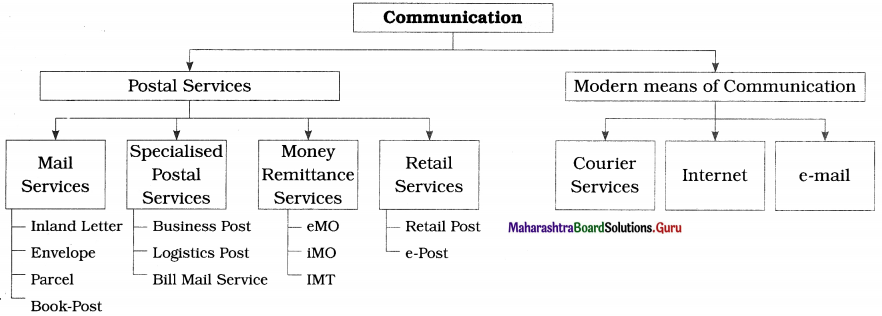
Maharashtra Board OCM 12th Commerce Solutions Chapter 4 Business Services 1
The different types of communication are explained below:
(I) Postal Services : The postal services in India are provided by the Department of Post which comes under Ministry of Communication and Information Technology. India has the largest postal network in the world with 1,54,965 post offices of which 1,49,067 are in the rural areas. The different types of postal services are explained below:
(1) Mail Services : The different types of mail services are described below:
(i) Inland letters : The inland letter is one of the cheapest means of conveying written message. It contains a blank sheet of paper of prescribed size and folding for writing messages. It is folded and sealed. Only names and addresses of the receiver and sender can be seen from outside. So, it ensures complete secrecy. Inland letters are used for transmission of messages within India only.

(ii) Envelopes : A postal envelope is a small size paper cover with postage stamps affixed on it having one side open to put in papers, written messages and enclosures like cheques, photos, resumes, etc. It ensures maximum secrecy. On the front outside space name and address of receiver are written and on the backside space name and address of sender are written.

(iii) Parcel : Parcels help to send small articles from one place to the other by post. Parcel post provides economical and reliable parcel delivery service. Parcels of specified weight and size can be sent at different places within the country as well as outside the country Anything except those items which are banned can be sent. Parcel can be insured by paying extra charges for insurance. In case of insured parcel is lost in transit post office pays insured amount.

(iv) Book post : Printed materials such as publications, newspapers, printed books, wedding, cards, greeting cards, periodicals, legal documents, etc. can be mailed as book post. The book post packets should simply be closed and should not be sealed. The words ‘Book Post’ should be written on the face of the cover.

(2) Specialised Postal Services : The following specialised postal services are provided by the post offices:
(i) Business Post : Business post arranges complete mailing services right from preparation of mail to delivery of mail. It is most suitable for small business and large companies. As per requirement, customers can select from a range of cost effective and professional mailing services ! which include printing, collating (comparing or examining), inserting, sealing and addressing. Indian post has established Business Post centres in major cities to handle business post consignment.

(ii) Logistics Post : Logistics post provides its business customers a cost-effective and timely solution that manages the entire value chain from collection to storage to transmission to distribution throughout the country.

(iii) Bill Mail Service : Communications in the nature of financial statements, bills, monthly account statements or any such other items of similar nature are sent by service providers to the customers by using bill mail service of post office. This service is used at least once in 90 days. Under this service, at a time minimum 5000 articles can be posted. The bill mail service does not include communication in the nature of letter mail or having personal communication or exclusive commercial publicity material. The mail is to be received at specified location provided. Bill mail is to be sorted pin code wide and bundled delivery post office wise.

(3) Money remittance services : The money remittance services are explained as follows:
(i) Electronic Money Transfer (eMO) : A money order is the most convenient method of remitting money to distant places. It is an order issued by one post office to another to pay a certain amount of money to a person specified therein. The person to whom money is to be paid is called ‘Payee’. Under this service of the post office, money is delivered at the house or the place of stay of the receiver.

(ii) Instant Money Order (iMO) : Instant Money Order (iMO) is an instant web based money transfer service by which minimum Rs 1000 and maximum Rs 50,000 can be transferred to distant places from designated iMO post offices. It is the instant on-line money transfer service which is safe, convenient, reliable and affordable. The money can be sent to close relative residing at distant place in India. It is simple, quick and economical to send and receive money.

(iii) International Money Transfer : International Money Transfer is the most convenient, quick and easy way of transferring personal remittances from foreign country to family members or other beneficiaries in India. Now this service is made available in all post offices in India by Department of Post, Government of India with the help of Western Union Financial Services. The remittances of money are permitted from around 195 countries to India.

(4) Retail services : The retail services are explained as follows:
(i) Retail post : Under retail post service, the department of post offers services to general public by making available some products and services of third party available in their areas through selected post offices. Under this, post offices offer a range of services including the collection of electricity bills, telephone bills, insurance premia, collection of taxes and fee for the government, etc. The post office also sells application form.

(ii) e-post : Recently, the department of posts has introduced e-post services, e-post service is service under which printed messages of customers are scanned and transmissed as email through internet. At the destination place or offices, these messages are printed, enveloped and delivered at the postal address. Thus, it is the combination of electronic transmission and physical delivery. Through e-post customers can send their messages to any address in India through network of more than 1,55,000 post offices. Corporate customers get special e-post rates and value additions.

(II) Modern means of communications : The modern means of communication are explained as follows:
(i) Courier Service : A courier service is a service that allows someone to send a parcel or consignment from one place to some other distant place. Usually, courier services are provided by a company and charge flat rates to the parties using the courier service regularly. Courier services differ from ordinary mail services in respect to speed, security, tracking, signature, delivery time, etc. Usually, premium courier services are more expensive as compared to ordinary mail services. DHL, DTDC, etc. are the examples of courier services.

(ii) Internet : The internet is one, in which users at one computer can, if it has permission, get information from other computer. It is a networking infrastructure. It connects millions of computers together globally, framing a network in which any computer can communicate with any other computer as long as they are both connected to internet. It is a network of networks that include of private, public, academic, business and government networks of local to global scope linked by a broad array of electronic, wireless and services such as world wide web, etc.

(iii) E-mail : E-mail stands for Electronic mail. E-mail refers to the transmission of information, from one computer terminal to another. It is a method of exchanging mail between the users of electronic devices. E-mail servers accept, forward, deliver and store messages. Users are not required to be online simultaneously. They are required to connect to a mail server briefly for as long as it takes to send or receive messages.

Question 6.
What is road transport. Explain its advantages and disadvantages.
Answer:
[A] Meaning : Road transport is the oldest mode of transport. It means and includes various means of transport which move on the surface of the earth without the use of railway tracks. Roads are the means which connect people and places on the surface of the land. It provides connectivity on any terrain (land) in comparison to other modes of transport. The different types of vehicles plying on the road include bullock carts, cycles, motor-cycles, autorickshaws, cars, tempos, trucks, buses, etc. They are called means of road transport.

[B] Advantages : The advantages of road transport are explained as follows:
(1) Cheaper mode of transport : As compared to other modes of transport, road transport is relatively cheaper mode of transport. Its operational cost is relatively low.

(2) Useful for perishable goods : Road transport is suitable and more useful to carry and deliver perishable goods such as milk, vegetable, fish, mutton, fruits, flowers, eggs, etc., over a short distance and that too at a faster speed.

(3) Flexible mode of transport : Road transport is flexible mode of transport because loading and unloading of goods are possible at any destination. Similarly, it is more flexible because of the choice of different routes, timings and types of vehicles.

(4) Door-to-Door service : Road transport facilitates door-to-door delivery of goods. It carries the goods and passengers directly to the godowns, factories and places of residence, i.e. user.

(5) Good reach : Roads constructed in plain areas and also in hilly areas can be used by different road vehicles such as trucks, tempos, motor cars and even carts driven by animals for carrying goods and passengers from one place to another. Wherever any other mode of transport cannot reach, road vehicles can easily reach and thus cover even hilly areas.

(6) Less capital investment : The cost of construction and maintenance of a road system is relatively less than that of railways.

Maharashtra Board OCM 12th Commerce Solutions Chapter 8 Marketing

[C] Disadvantages : The disadvantages of road transport are explained as follows:
(1) Not economical for long distance : In comparison to other modes of transport carrying capacity of road transport is very limited. High cost of fuel, tolls, etc. make the road transport uneconomical for long distance transportation.

(2) Not suitable for heavy and bulky goods : Road transport is not suitable for carrying heavy and bulky goods for any distance and involves high cost.

(3) Affected by adverse weather conditions : Road transport is affected more by adverse weather conditions such as fogs often greatly reducing visibility, heavy rain, floods, landslides, storm, etc.

(4) Accidents : The possibility of road accidents is frequent due to poor condition of roads and negligent drivers.

(5) Causes pollution : The vehicles plying on the road release smokes and gases. So, it creates air pollution which affect the health of the people.
Maharashtra Board Class 12 Physics Important Questions Chapter 14 Dual Nature of Radiation and Matter

Balbharti Maharashtra State Board 12th Physics Important Questions Chapter 14 Dual Nature of Radiation and Matter Important Questions and Answers.

Maharashtra State Board 12th Physics Important Questions Chapter 14 Dual Nature of Radiation and Matter

Question 1.
Explain Planck’s idea of quantization of energy.
Answer:
Max Planck, in 1900, put forward the idea of quantization of energy to explain the blackbody radiation spectrum. He proposed that atoms behave as tiny oscillators and emit electromagnetic radiation, not continuously but as little packets of energy called quanta. He assumed that the energy associated with a quantum of radiation (now called a photon) is proportional to the frequency v of the oscillator. Thus, E = nhv, where n = 1, 2, 3, 4, … etc., and h is a universal constant, now called Planck’s constant. For n = 1, E = hv. A quantum of radiation is emitted when there is a transition from higher quantized level of energy of an oscillator to lower quantized level.

[Note : Historically, various terms have been used to denote a particle of light; quantum of electromagnetic radiation ≡ photon ≡ packet of energy ≡ atom of energy ≡ quantum of radiation ≡ bundle of energy. Interaction between two charged particles involves exchange of photons. The photon has zero rest mass, no charge, unit spin and travels in free space at a speed of 2.99792458 × 10⁸ m/s exact by definition. There is no conservation law for photons, i.e., they can be produced / absorbed.]

Question 2.
What was Hertz’s observation regarding emission of electrons from a metal surface?
Answer:
During his experiments on electromagnetic waves in 1887, Heinrich Rudolph Hertz (1857-94), Ger-man physicist, noticed that electric sparks occurred more readily when one of the electrodes of his spark-gap transmitter was exposed to ultraviolet radiation. This discovery was called the Hertz effect and is now known as the photoelectric effect.

Although Hertz did not follow up his discovery, others quickly established that the cause of the sparking ease was due to emission of negatively charged particles from the electrode irradiated. These particles were identified as electrons after the discovery of the electron in 1897.

Maharashtra Board Class 12 Physics Important Questions Chapter 14 Dual Nature of Radiation and Matter

Question 3.
Draw a neat labelled diagram to illustrate photoelectric effect.
Answer:
Maharashtra Board Class 12 Physics Important Questions Chapter 14 Dual Nature of Radiation and Matter 1
[Note : Positive metal ions and atoms are not shown in the figure.]

Question 4.
What were the investigations of Hallwachs and Lenard regarding photoelectric effect?
Answer:
Wilhelm Hallwachs (1859-1922), German physicist, found that a metal plate irradiated with ultraviolet radiation lost its charge more rapidly when the plate is negatively charged than when it is neutral or positive.

Investigations of photoelectric effect by Phillipp Lenard (1862-1947), German physicist, showed that

  1. electron emission occurs only with radiations below a critical wavelength, i.e., above a critical frequency.
  2. kinetic energy of the emitted electrons increases as wavelength decreases i.e., frequency increases but is independent of the intensity of radiation which determines the rate of emission of electrons (the number of electrons emitted per unit time).

Question 5.
What is a photosensitive surface?
Answer:
The surface which emits electrons when illuminated by electromagnetic radiation of appropriate frequency is called photosensitive surface.
[Note : The material that exhibits photoelectric effect is called photosensitive material.]

Question 6.
Why are alkali metals most suitable as photo-sensitive surfaces?
Answer:
The alkali metals e.g., caesium, potassium and sodium emit photoelectrons even when visible radiation (light) is incident on them. Hence, they are most suitable as photosensitive surfaces.

Maharashtra Board Class 12 Physics Important Questions Chapter 14 Dual Nature of Radiation and Matter

Question 7.
With a neat diagram, describe the apparatus to study the characteristics of photoelectric effect.
Answer:
Apparatus : A photoelectric cell G consists of the emitting electrode E (emitter) of the material being studied and the collecting electrode C (collector). The electrodes are sealed in an evacuated glass envelope provided with quartz window W that allows the passage of UV radiation and visible light. Monochromatic light of variable frequency from a suitable source S (such as a carbon arc) passes through a pair of polarizers P (permitting a change in the intensity of radiation) and falls on the emitter.

The electric circuit, as shown in below figure, allows the collector potential to be varied from positive through zero to negative with respect to the emitter, and permits the measurement of potential difference and current between the electrodes. When the collector is made negative, the voltmeter is connected in reverse.
Maharashtra Board Class 12 Physics Important Questions Chapter 14 Dual Nature of Radiation and Matter 2
[ Note : The radiation coming out of a filter is not truly monochromatic, it lies in the wavelength range between λ and λ + ∆λ that depends on the source and the filter. ]

Question 8.
In the experiment to study photoelectric effect, describe the effects of the frequency and intensity of the incident radiation on the photoelectric current, for a given emitter material and potential difference across the photoelectric cell.
Answer:
The emitter of the photoelectric cell is irradiated with monochromatic light whose frequency and intensity can be varied continuously and measured. Initially, the collector is made positive with respect to the emitter, so that photoelectrons ejected move quickly from the emitter to the collector. About 10 V is sufficient to do this. The photoelectric current as a function of intensity and frequency of incident radiation is studied.

(1) Effect of frequency : Keeping the light intensity and the accelerating potential difference V constant, the frequency of the incident radiation is varied from that of far-UV to red. It is found that for every material (usually, a metal) irradiated there is a limiting frequency below which no photoelectrons are emitted irrespective of the intensity of the radiation. This frequency, v0, called the threshold frequency or cut-off frequency, is a characteristic of the material irradiated.

The graph of photoelectric current against frequency is shown in below figure; A and B represent two different metals. The photoelectric current is not the same in the two cases, because the intensity of light is different for different frequencies.
Maharashtra Board Class 12 Physics Important Questions Chapter 14 Dual Nature of Radiation and Matter 3
(2) Effect of intensity : With an emitter of a given material, the light intensity is varied by keeping the frequency v (≥ v0) of the light and the accelerating potential difference V constant. It is found that the rate of electron emission, as indicated by the photoelectric current, is proportional to the light intensity. The graph of photoelectric current against light intensity is a straight line through (0, 0), below figure; if we vary either the frequency of the light or the material irradiated, only the slope of the line changes. No electrons are emitted in the absence of incident radiation.
Maharashtra Board Class 12 Physics Important Questions Chapter 14 Dual Nature of Radiation and Matter 4
[Note : The dark current, i.e., the current observed in the absence of light, is extremely low. Hence, it is ignored.]

Maharashtra Board Class 12 Physics Important Questions Chapter 14 Dual Nature of Radiation and Matter

Question 9.
In the experiment to study photoelectric effect, describe the variation of the photoelectric current as a function of the potential difference across the photoelectric cell, for incident radiation of (1) a given frequency above the threshold but different intensities (2) a given intensity but different frequencies above the threshold.
Answer:
(1) The potential difference (p.d.) across the photo-electric cell is varied keeping both the frequency v (≥ threshold frequency v0) and the intensity of the light constant. Starting with the collector at about 10 V positive, we reduce this potential to zero and then run it negative.
Maharashtra Board Class 12 Physics Important Questions Chapter 14 Dual Nature of Radiation and Matter 5
When the p.d. across the tube is 10 V or more, all the emitted electrons are accelerated and travel across the tube, constituting the saturation current for a given light intensity; an increase in the potential of the collector does not cause an increase in current. As the collector potential is reduced from positive values through zero to negative values, the tube current reduces because of the applied retarding potential. In this case, some electrons stop and turn back before they can reach the collector. Eventually the potential difference is large enough to stop the current completely. This is called the stopping potential or cut-off potential VQ. The product of the stopping potential and electronic charge, V0e, is equal to the maximum kinetic energy that an electron can have at the time of emission.
V0e = KEmax \(\frac{1}{2}\)v2max

In above figure, I1 and I2 are two intensities of the incident radiation for the same frequency v ( > v0); I2 = 2I0. Doubling the intensity of light doubles the current at each potential, as in I2, but V0 is independent of I.

(2) The above experiment is repeated with different light frequencies for a given emitter material and light intensity. It is found that the stopping potential increases linearly with the frequency in below figure. Therefore, when photoejection occurs for frequencies above v0, the maximum kinetic energy of the photoelectrons increases linearly with the frequency of the radiation.
Maharashtra Board Class 12 Physics Important Questions Chapter 14 Dual Nature of Radiation and Matter 6
[Note : It was shown by Hughes that the stopping potential depends linearly on the frequency of incident radiation. Lawrence and Beams established that the time interval between arrival of a photon on a metal surface and emission of an electron is less than 3 × 10⁻⁹ sc.]

Question 10.
What is the effect of the intensity of incident radiation on the stopping potential in photo-electric emission?
Answer:
V0 is independent of intensity.

Question 11.
In the experiment to study photoelectric effect, discuss the effect and significance of extremely weak radiation of frequency greater than the threshold frequency for the emitter material.
Answer:
The emitter of the photoelectric cell is irradiated with monochromatic light whose frequency is greater than the threshold frequency for the emitter material. The collector is kept at 10 V positive with respect to the emitter, so that photoelectrons ejected move quickly from the emitter to the collector.

The light is made extremely dim (i.e., the intensity is extremely weak). In this case, the number of ‘ photoelectrons emitted per unit time is very small (and special techniques are required to detect them); but, however few, they are emitted almost instantaneously and with the same maximum kinetic energy as for bright light of the same frequency.

According to the wave theory of light, wave trains of pulsating electromagnetic field spread out from the source. Dim light corresponds to waves of small amplitudes and small energy. If dim light spreads over a surface, conservation of energy requires that the electrons must store energy over long periods of time, which can be several hours, before gathering enough energy to become free of the metal. The fact that photoelectrons appear immediately, within about 10-9 s, can be explained only by assuming that the light energy is not spread over the surface uniformly as required by the wave theory, but falls on the surface in concentrated bundles.

Question 12.
Define (1) threshold frequency (2) threshold wavelength (3) stopping potential.
Answer:
(1) The threshold frequency for a given metal surface is the characteristic minimum frequency of the incident radiation below which no photoelectrons are emitted from that metal surface (whatever may be the intensity of incident light).

(2) The threshold wavelength for a given metal surface is the characteristic maximum wavelength of the incident radiation above which no photoelectrons are emitted from that metal surface (whatever may be the intensity of incident light).

(3) The stopping potential is the value of the retarding potential difference that is just sufficient to stop the most energetic photoelectrons emitted from reaching the collector so that the photoelectric current in a photocell reduces to zero.

[Note : The threshold wavelength λ0 = c/v0, where c is the speed of light in free space and v0 is the threshold frequency for the metal.]

Maharashtra Board Class 12 Physics Important Questions Chapter 14 Dual Nature of Radiation and Matter

Question 13.
State the characteristics of photoelectric effect.
Answer:
Characteristics of photoelectric effect:
(1) For every metal surface there is a limiting frequency of incident radiation below which no photoelectrons are emitted from that metal surface. This frequency, called the threshold frequency, is characteristic of the metal irradiated.

(2) The time rate of emission of photoelectrons in-creases in direct proportion to the intensity, of incident radiation.

(3) The photoelectrons have different speeds at the time of emission ranging from zero to a certain maximum value, which is characteristic for a given metal for a given frequency of the incident radiation. The maximum kinetic energy of the photoelectrons at the time of emission is independent of the intensity but increases linearly with the frequency of the incident radiation.

(4) For incident radiation of frequency greater than or equal to the threshold frequency for a given metal surface, photoelectric emission from the surface is almost instantaneous, even under extremely weak irradiation.

Question 14.
Can we get photoemission with an intense beam of radio waves ? Is photoemission possible at all frequencies ?
Answer:
The frequency of the incident radiation and not its intensity is the criterion for photoelectric effect. The lowest frequency of electromagnetic waves that can cause photoemission is about 4.6 × 10¹⁴ Hz (for the alkali metal caesium). Since radio waves have frequencies 1 GHz or lower, they cannot cause photoemission.

Only alkali metals are photosensitive to visible light; other metals are photosensitive only to far ultraviolet radiations.

Question 15.
Explain how wave theory of light fails to explain the characteristics of photoelectric effect.
OR
Explain the failure of wave theory of light to account for the observations from experiments on photoelectric effect.
Answer:
According to the wave theory of light, electromagnetic waves carry the energy stored in oscillating electric and magnetic fields. When enough energy is absorbed by an electron in a substance, it should be liberated as a photoelectron. Frequency of light does not come into picture in this case. Hence, there should not be any threshold frequency for emission of electrons. But it is found that there exists threshold frequency and it depends on the metal.

Experimentally, the maximum kinetic energy of photoelectrons increases linearly with the frequency of light. This cannot be accounted by the wave theory of light.

If a source of light is weak or far away from a metal surface, emission of an electron will not be almost instantaneous. The electron may have to wait for several hours/days for absorption of enough energy from the incident light as by the wave theory of light, energy is spread over the wavefront. But experimentally, for an appropriate frequency of incident light, photoelectric effect is almost instantaneous.

Only one observation, photoelectric current ∝ intensity of incident light can be accounted by the wave theory of light.

Question 16.
Give Einstein’s explanation of the photoelectric effect.
Answer:
Max Planck put forward the quantum theory in 1900 to explain blackbody spectrum. In the theory, he proposed that the electromagnetic radiation emitted by the body consists of discrete concentrated bundles of energy, each equal to hv, where h is a universal constant (now called Planck’s constant) and v is the frequency of the radiation.

Einstein put forth (1905) that these energy quanta, called light quanta/later called photons, interact with matter much like a particle. When a photon collides with an electron in an atom, the electron absorbs whole of the photon energy hv in a single collision or nothing. The electron uses this energy (1) to liberate itself from the atom, (2) to overcome the potential energy barrier at the surface thus liberating itself from the metal, and (3) retains the remaining part as its kinetic energy. Different electrons need different energies in the first two processes. There are some electrons which use minimum energy in the two processes, and hence come out of the metal with maximum kinetic energy. The minimum energy required, in the form of electromagnetic radiation, to free an electron from a metal is called the photoelectric work function Φ of that metal. Thus, for the most energetic photoelectrons at the time of emission,
maximum kinetic energy of the electron = photon energy – photoelectric work function
∴ \(\frac{1}{2}\)\(m v_{\max }^{2}\) = hv – Φ ∴ hv = Φ + \(\frac{1}{2}\)\(m v_{\max }^{2}\)
The above equation is called Einstein’s photo-electric equation.

Light interacts with matter as concentrated bundles of energy rather than energy spread over a Huygens type wavefront. Even under weak irradiation, an electron absorbs a photon’s energy in a single collision. But the rate of incident photons in dim light being less, the chances of such absorption diminish and consequently the photoelectric current diminishes. However, a photoelectron is emitted as soon as a photon is absorbed.

[Note : Albert Einstein (1879-1955), German-Swiss- US theoretical physicist, gave his photoelectric equation in 1905. In the period 1912-1916, Robert Andrews Millikan (1868 -1953), US physicist, was the first to obtain the precise experimental data from which the straight-line graphs, like the one shown in Fig. 14.6, were plotted for various metals. Einstein’s theoretically predicted equation-clearly having the right form for a straight-line graph-was thus verified.]

Maharashtra Board Class 12 Physics Important Questions Chapter 14 Dual Nature of Radiation and Matter

Question 17.
Define photoelectric work function of a metal.
Answer:
The photoelectric work function of a metal is defined as the minimum photon energy that ejects an electron from the metal.
It is equal to hv0, where h is Planck’s constant and v0 is the threshold frequency for the metal.

Question 18.
Write Einstein’s photoelectric equation and explain its various tends. How does the equation explain the various features of the photoelectric effect?
Answer:
Einstein’s photoelectric equation :
hv = Φ + \(\frac{1}{2}\)\(m v_{\max }^{2}\) ………… (1)
where h ≡ Planck’s constant, v ≡ frequency of the electromagnetic radiation, hv ≡ energy of the photon incident on a metal surface, Φ ≡ photo-electric work function, i.e., the minimum energy of light quantum required to liberate an electron from the metal surface, vmax and – \(\frac{1}{2}\)\(m v_{\max }^{2}\) ≡ the maximum speed and maximum kinetic energy of the photoelectrons at the time of emission. Φ = hv0, where v0 is the threshold frequency for the metal.

Explanation of the characteristics of photoelectric effect:
(1) From the above equation we find that for photoejection, hv ≥ Φ. That is, hvmin = hv0 must be equal to Φ. Hence, photoelectric effect is observed only if hv ≥ hv0, i.e., v ≥ v0. This shows the existence of a threshold frequency v0 for which photoelectrons are just liberated from a metal surface (with zero kinetic energy). Since different metals differ in electronic configuration, the work function hv0 and, therefore, frequency v0 are different and characteristic of different metals.

(2) In this particle model of light,’ intensity of incident radiation’ stands for the number of photons incident on a metal per unit surface area per unit time. As the number of photons incident on a metal per unit surface area per unit time increases, there is a greater likelihood of a photon being absorbed by any electron. Therefore, the time rate of photoejection and hence photoelectric current increases linearly with the intensity of the incident radiation (v ≥ v0).

(3) From Eq. (1), \(\frac{1}{2}\)\(m v_{\max }^{2}\), = hv – Φ= h(v – v0)
This shows that the maximum kinetic energy in-creases linearly with the frequency v of the incident photon (v ≥ v0) and does not depend on the time rate at which photons are incident on a metal surface.

(4) As the incident energy is concentrated in the form of a photon, and not spread over a wavefront, it is expected that an electron is emitted from the metal surface as soon as a photon (v ≥ v0) is absorbed. This is in agreement with the experimental observation.

[ Note : The frequency v that appears in the formula E = hv is the frequency of the oscillating electric field / magnetic field in the electromagnetic wave. ]

Question 19.
Obtain the dimensions of Planck’s constant.
Answer:
The energy of a photon of frequency v is E = hv, where h is the Planck’s, constant.
∴ [h] = \(\frac{[E]}{[v]}=\frac{\mathrm{ML}^{2} \mathrm{~T}^{-2}}{\mathrm{~T}^{-1}}\) = ML2T-1

Question 20.
Is the kinetic energy of all photoelectrons the same when emitted from a certain metal ? Explain.
Answer:
No. Explanation : Depending upon the position and state of an electron in a metal when it absorbs an incident photon, a photoelectron can have kinetic energy ranging from 0 to a certain maximum value equal to the photon energy minus the work function of the metal. Hence, the emitted photoelectrons have this range of kinetic energies.

Maharashtra Board Class 12 Physics Important Questions Chapter 14 Dual Nature of Radiation and Matter

Question 21.
In photoelectric effect, what does the stopping potential depend upon ?
Answer:
In photoelectric effect, the stopping potential depends upon the energy of the incident photon and the work function for the metal irradiated (or upon the frequency/wavelength of the incident radiation and the threshold frequency/wavelength for the metal irradiated).

Question 22.
What does the maximum kinetic energy (or the maximum speed) of a photoelectron depend on?
Answer:
The maximum kinetic energy (or the maximum speed) of a photoelectron depends upon the energy of the incident photon and the work function for the metal irradiated (or upon the frequency /wavelength of the incident radiation and the threshold frequency/wavelength for the metal irradiated).

Question 23.
In photoelectric effect, if a graph of stopping potential versus frequency of the incident radiation is plotted, what does the intercept on the frequency axis (v corresponding to Vo = 0) represent?
Answer:
The intercept on the frequency axis (v corresponding to Vo = 0) represents the threshold frequency for the metal.

Question 24.
State the equation that relates the threshold wavelength (λo), the wavelength of incident radiation (λ) and the maximum speed of a photo-electron (vmax).
Answer:
\(\frac{h c}{\lambda}=\frac{h c}{\lambda_{0}}+\frac{1}{2} m v_{\max }^{2}\) is the required equation, where h is Planck’s constant, c is the speed of light in vacuum (free space) and m is the mass of the electron.

Question 25.
What is the energy of a photon (quantum of radiation) of frequency 6 × 10¹⁴ Hz?
[h = 6.63 × 10⁻³⁴ J∙s]
Answer:
hv = (6.63 × 10⁻³⁴)(6 × 10¹⁴)
= 3.978 × 10⁻¹⁹ J is the energy of the photon.

Question 26.
If the total energy of a radiation of frequency 1014 Hz is 6.63 J, calculate the number of photons in the radiation.
Answer:
E = nhv, where hv is the energy of a photon in a radiation of frequency v and n is the number of photons in the radiation.
∴ n = \(\frac{E}{h v}=\frac{6.63}{\left(6.63 \times 10^{-34}\right)\left(10^{14}\right)}\) = 1020

Question 27.
If in a photoelectric experiment, the stopping potential is 1.5 volts, what is the maximum kinetic energy of a photoelectron ? [e = 1.6 × 10⁻¹⁹ C]
Answer:
\(\frac{1}{2}\)\(m v_{\max }^{2}\) = Vse = ( 1.5)(1.6 × 10⁻¹⁹)
= 2.4 × 10⁻¹⁹ J is the required kinetic energy.

Maharashtra Board Class 12 Physics Important Questions Chapter 14 Dual Nature of Radiation and Matter

Question 28.
What is the photoelectric work function for a metal if the threshold wavelength for the metal is 3.315 × 10⁻⁷ m?
[h = 6.63 × 10⁻³⁴ J∙s, c = 3 × 10⁸ m/s]
Answer:
Photoelectric work function for the metal =
Maharashtra Board Class 12 Physics Important Questions Chapter 14 Dual Nature of Radiation and Matter 7

Question 29.
Explain the utilization of energy absorbed by an electron in a metal during its collision with a photon.
Answer:
When a photon collides with an atomic electron inside an emitter metal, the electron absorbs whole of the photon energy in a single shot or nothing. The electron uses the absorbed energy (1) to liberate itself from the atom, (2) to overcome the potential energy barrier at the surface thus liberating itself from the metal, and (3) retains the remaining part as its kinetic energy.

30. Solve the following :
(h = 6.63 × 10⁻³⁴ J∙s, c = 3 × 10⁸ m/s, e = 1.6 × 10⁻¹⁹ J, m (electron) = 9.1 × 10⁻³¹ kg)

Question 1.
Find the energy of a photon if
(i) the frequency of radiation is 100 MHz
(ii) the wavelength of radiation is 10000 Å.
Solution:
Data : h = 6.63 × 10⁻³⁴ J∙s, v = 100 MHz = 100 × 106 Hz, λ = 10000 Å = 106 m, c = 3 × 10⁸ m/s
(i) The energy of a photon, E = hv
= (6.63 × 10⁻³⁴)(100 × 106) = 6.63 × 10⁻²⁶ J

(ii) The energy of a photon, E = \(\frac{h c}{\lambda}\)
= \(\frac{\left(6.63 \times 10^{-34}\right)\left(3 \times 10^{8}\right)}{10^{-6}}\) = 1.989 × 10⁻¹⁹ J

Maharashtra Board Class 12 Physics Important Questions Chapter 14 Dual Nature of Radiation and Matter

Question 2.
A monochromatic source emits light of wavelength 6000 Å. If the power of the source is 10 W, find the number of photons emitted by it per second assuming that 1% of electric energy is converted into light.
Solution:
Data : λ = 6000 Å = 6 × 10⁻⁷ m ,h = 6.63 × 10⁻³⁴ J∙s, c = 3 × 10⁸ m/s, electric energy converted into light per second = \(\frac{1}{100}\) × 10W = 0.1J/s
Maharashtra Board Class 12 Physics Important Questions Chapter 14 Dual Nature of Radiation and Matter 8

Question 3.
Radiation of intensity 4 × 10⁻⁵ W/m2 is incident uniformly on a metal surface with work function 2.4 eV and area 1 cm2. Assume that the radius of a metal atom is 2.4 Å and photoelectrons are ejected only from the surface of the metal. On the basis of the wave theory of light, how long will it take for an electron to be ejected from the metal surface ? (Assume one free electron/metal atom.)
Solution:
Data : Power/area = 4 × 10⁻⁵ W/m2, Φ = 2.4 eV = 2.4 × 1.6 × 10-19 J = 3.84 × 10⁻¹⁹ J, A = 1 cm2 = 10-4 m2, r = 2.4 Å = 2.4 × 10⁻¹⁰ m
Number of metal atoms on the surface = \(\frac{A}{\pi r^{2}}\)
Maharashtra Board Class 12 Physics Important Questions Chapter 14 Dual Nature of Radiation and Matter 9
For a single free electron, radiant energy incident per unit time
Maharashtra Board Class 12 Physics Important Questions Chapter 14 Dual Nature of Radiation and Matter 10
Ignoring reflection/scattering of light, time needed to absorb energy equal to 3.84 × 10⁻¹⁹ J is
\(\frac{3.84 \times 10^{-19} \mathrm{~J}}{7.24 \times 10^{-24} \mathrm{~J} / \mathrm{s}}\) = 5.304 × 10⁴ s = 53040s
= 14 hours 44 minutes.

Question 4.
The energy of a photon is 2 eV. Find its frequency and wavelength.
Solution:
Data : E = 2 eV = 2 × 1.6 × 10-19 J, c = 3 × 10⁸ m/s, h = 6.63 × 10⁻³⁴ J∙s
(i) Frequency,
Maharashtra Board Class 12 Physics Important Questions Chapter 14 Dual Nature of Radiation and Matter 11
= 6.217 × 10-7 = 6.217 × 10-7 × 1010 Å
= 6217 Å = 621.7 nm

Question 5.
Find the wave number of a photon having an energy of 2.072 eV. [Given : e, c, h]
Solution:
Data : e = 1.6 × 10⁻¹⁹ C, c = 3 × 10⁸ m / s, h = 6.63 × 10⁻³⁴ J∙s,
E = 2.072 eV = 2.072 × 1.6 × 10-19 J
E = hv = \(\frac{h c}{\lambda}\)
Wave number, \(\frac{1}{\lambda}=\frac{E}{h c}\)
= \(\frac{2.072 \times 1.6 \times 10^{-19}}{\left(6.63 \times 10^{-34}\right)\left(3 \times 10^{8}\right)}\) = 1.666 × 10⁶ m-1

Question 6.
Calculate the energy of a photon, in joule and eV, in a light of wavelength 5000 Å.
Solution :
Data : λ = 5000 Å = 5000 × 10-10 m = 5 × 10⁻⁷ m, c = 3 × 10⁸ m/s, h = 6.63 × 10⁻³⁴ J∙s
Energy of a photon, E = hv = \(\frac{h c}{\lambda}\)
Maharashtra Board Class 12 Physics Important Questions Chapter 14 Dual Nature of Radiation and Matter 12

Question 7.
The photoelectric work function for a metal surface is 2.3 eV. 1f the light of wavelength 6800 Å is incident on the surface of the metal, find the threshold frequency and the incident frequency. Will there be an emission of photoelectrons or not? [Given : c, h]
Solution:
Data: c = 3 × 10⁸ m/s, h = 6.63 × 10⁻³⁴ J.s, Φ = 2.3 eV = 2.3 × 1.6 × 10-19 J, λ = 6800 Å = 6.8 × 10⁻⁷ m
(i) Threshold frequency (v0) : Φ = hv0
∴ v0 = \(\frac{\phi}{h}=\frac{2.3 \times 1.6 \times 10^{-19}}{6.63 \times 10^{-34}}\) = 5.550 × 10¹⁴ Hz

(ii) Incident frequency (v) : c = vλ
∴ v = \(\frac{c}{\lambda}=\frac{3 \times 10^{8}}{6.8 \times 10^{-7}}\) = 4.412 × 10¹⁴ Hz

(iii) Thus, v <v0
As the frequency of the incident orange light is less than the threshold frequency there will be no emission of photoelectrons.

Maharashtra Board Class 12 Physics Important Questions Chapter 14 Dual Nature of Radiation and Matter

Question 8.
If the work function of a metal is 3 eV, calculate the threshold wavelength of that metal. [Given : c, h, 1 eV = 1.6 × 10⁻¹⁹ J]
Solution:
Data : Φ = 3 eV, c = 3 × 10⁸ m/s, h = 6.63 × 10⁻³⁴ J.s, 1 eV = 1.6 × 10⁻¹⁹ J
∴ Φ = 3 × 1.6 × 10-19 J
Maharashtra Board Class 12 Physics Important Questions Chapter 14 Dual Nature of Radiation and Matter 13

Question 9.
The photoelectric work function of copper is 4.7 eV. What are the threshold frequency and wavelength for photoemission from a copper surface? [1 eV = 1.6 × 10⁻¹⁹ J]
Solution :
Data : Φ = 4.7 eV, 1 eV = 1.6 × 10⁻¹⁹ J, c = 3 × 10⁸ m/s, h = 6.63 × 10⁻³⁴ J.s
Maharashtra Board Class 12 Physics Important Questions Chapter 14 Dual Nature of Radiation and Matter 14

Question 10.
The work functions for potassium and caesium are 2.25 eV and 2.14 eV respectively. Will the photoelectric effect occur for either of these elements
(i) with incident light of wavelength 5650 Å
(ii) with light of wavelength 5180 Å?
Solution:
Data : Φ (potassium) = 2.25 eV,
Φ (caesium) = 2.14 eV, λ1 = 5650 Å = 5.650 × 10⁻⁷ m, λ2 = 5180 Å = 5.180 × 10⁻⁷ m, h = 6.63 × 10⁻³⁴ J.s, c = 3 × 10⁸ m/s
Φ (potassium) = 2.25 eV
= 2.25 × 1.6 × 10-19 J =3.6 × 10⁻¹⁹ J
Φ (caesium) = 2.14 eV = 2.14 × 1.6 × 10-19 J
= 3.424 × 10⁻¹⁹ J
Photon energy, E = \(\frac{h c}{\lambda}\)

(i) For λ1 = 5650 Å
E1 = \(\frac{h c}{\lambda_{1}}=\frac{6.63 \times 10^{-34} \times 3 \times 10^{8}}{5.650 \times 10^{-7}}\)
= 3.52 × 10⁻¹⁹ J
This is greater than Φ (caesium), but less than Φ (potassium). Hence, photoelectric effect will occur in case of caesium, but not in case of potassium.

(ii) For λ2 = 5180 Å
E2 = \(\frac{h c}{\lambda_{2}}=\frac{6.63 \times 10^{-34} \times 3 \times 10^{8}}{5.180 \times 10^{-7}}\)
= 3.84 × 10⁻¹⁹ J
This is greater than 0 for potassium and for caesium. Hence, photoelectric effect will occur in both the cases.

Question 11.
Photoemission just occurs from a lead surface when radiation of wavelength 3000 Å is incident on it. Find the maximum kinetic energy of the photoelectrons when the surface is irradiated by UV radiation of wavelength 2500 Å.
Solution:
Data : λ0 = 3000 Å = 3 × 10⁻⁷ m, λ = 2500 Å = 2.5 × 10⁻⁷ m, h = 6.63 × 10⁻³⁴ J∙s,c = 3 × 10⁸ m/s
According to Einstein’s photoelectric equation, the maximum kinetic energy of the photoelectrons
Maharashtra Board Class 12 Physics Important Questions Chapter 14 Dual Nature of Radiation and Matter 15

Question 12.
The photoelectric work function for a metal is 4.2 eV. If the stopping potential is 3 V, find the threshold wavelength and the maximum kinetic energy of emitted electrons. [Given : c, h, e]
Solution :
Data : e = 1.6 × 10⁻¹⁹ C, c = 3 × 10⁸ m/s, Φ = 4.2 eV = 4.2 × 1.6 × 10-19 J = 6.72 × 10⁻¹⁹ J, h = 6.63 × 10⁻³⁴ J∙s, v0 = 3 V
(i) Threshold wavelength.
Maharashtra Board Class 12 Physics Important Questions Chapter 14 Dual Nature of Radiation and Matter 16
= 2.960 × 10⁻⁷ m or 2960 Å

(ii) Maximum kinetic energy of emitted electrons,
KEmax = eV0 = (1.6 × 10⁻¹⁹)(3) = 4.8 × 10⁻¹⁹ J

Maharashtra Board Class 12 Physics Important Questions Chapter 14 Dual Nature of Radiation and Matter

Question 13.
Radiation of wavelength 2 × 10⁻⁷ m is incident on the cathode of a photocell. The current in the photocell is reduced to zero by a stopping potential of 2 V. Find the threshold wavelength for the cathode.
Solution:
Data : λ = 2 × 10-19 m, V0 = 2 V, e = 1.6 × 10⁻¹⁹ C, h = 6.63 × 10⁻³⁴ J∙s, c = 3 × 10⁸ m/s
According to Einstein’s photoelectric equation,
Maharashtra Board Class 12 Physics Important Questions Chapter 14 Dual Nature of Radiation and Matter 17
∴ The threshold wavelength, λ0 = 2.948 × 10⁻⁷ m

Question 14.
The photoelectric current in a photoelectric cell can be reduced to zero by a stopping potential of 1.8 volts. Monochromatic light of wavelength 2200 Å is incident on the cathode. Find the maximum kinetic energy of the photoelectrons in joule. [Charge on the electron = 1.6 × 10⁻¹⁹ C]
Solution:
Data: V0 = 1.8 V, e = 1.6 × 10⁻⁷ C .
The maximum kinetic energy of the photoelectrons,
KEmax = eV0
= (1.6 × 10⁻¹⁹) (1.8) = 2.88 × 10⁻¹⁹ J

Question 15.
The photoelectric work function of a metal is 3 eV. Find the maximum kinetic energy and maximum speed of photoelectrons when radiation of wavelength 4000 Å is incident on the metal surface.
Solution:
Data : Φ = 3 eV = 3 × 1.6 × 10-19 J, c = 3 × 10⁸ m / s, λ = 4000 Å = 4000 × 10-10 m, h = 6.63 × 10⁻³⁴ J∙s, m = 9.1 × 10⁻³¹ kg
(i) According to Einstein’s photoelectric equation, the maximum kinetic energy of photoelectrons,
Maharashtra Board Class 12 Physics Important Questions Chapter 14 Dual Nature of Radiation and Matter 18
= 1.725 × 10⁻²⁰ J

Maharashtra Board Class 12 Physics Important Questions Chapter 14 Dual Nature of Radiation and Matter 19
= 1.947 × 10⁵ m/s

Question 16.
The work function of tungsten is 4.50 eV. Calculate the speed of the fastest electron ejected from tungsten surface when light whose photon energy is 5.80eV shines on the surface.
Solution:
Data : Φ = 4.50 eV = 4.50 × 1.6 × 10-19 J = 7.2 × 10⁻¹⁹ J,
hv = 5.80eV = 5.80 × 1.6 × 10-19 J = 9.28 × 10⁻¹⁹ J,
m = 9.1 × 10⁻³¹ kg
Maharashtra Board Class 12 Physics Important Questions Chapter 14 Dual Nature of Radiation and Matter 20
This is the speed of the fastest electron ejected.

Question 17.
If the work function for a certain metal is 1.8 eV,
(i) what is the stopping potential for electrons ejected from the metal when light of 4000 Å shines on the metal
(ii) what is the maximum speed of the ejected electrons?
Solution:
Data: Φ = 1.8eV, λ = 4000 Å = 4 × 10⁻⁷ m,
h = 6.63 × 10⁻³⁴ J∙s, c = 3 × 10⁸ m/s,
m = 9.1 × 10⁻³¹ kg, e = 1.6 × 10⁻¹⁹ C
Maharashtra Board Class 12 Physics Important Questions Chapter 14 Dual Nature of Radiation and Matter 21
This is the maximum speed of the ejected electrons.

Maharashtra Board Class 12 Physics Important Questions Chapter 14 Dual Nature of Radiation and Matter

Question 18.
The work function of caesium is 2.14 eV. Find
(i) the threshold frequency for caesium
(ii) the wavelength of the incident light if photocurrent is brought to zero by a stopping potential of 0.60 V.
Solution:
Data : Φ = 2.14eV = 2.14 × 1.6 × 10-19 J = 3.424 × 10⁻¹⁹ J, VO = 0.60 V,h = 6.63 × 10⁻³⁴ J∙s, c = 3 × 10⁸ m/s, e = 1.6 × 10⁻¹⁹C
(i) Φ = hv0
∴ The threshold frequency, v0 = \(\frac{\phi}{h}\)
= \(\frac{3.424 \times 10^{-19}}{6.63 \times 10^{-34}}\) = 5.164 × 10¹⁴ Hz

(ii) VOe = 0.6 × 1.6 × 10-19 = 0.96 × 10⁻¹⁹ J
\(\frac{h c}{\lambda}\) – Φ = VOe ∴ \(\frac{h c}{\lambda}\) = Φ + VOe
∴ λ = \(\frac{h c}{\phi+V_{\mathrm{O}} e}\)
Maharashtra Board Class 12 Physics Important Questions Chapter 14 Dual Nature of Radiation and Matter 22
This is the required wavelength of the incident light.

Question 19.
The threshold wavelength for photoemission from silver is 3800 Å. Calculate the maximum kinetic energy in eV of photoelectrons emitted when ultraviolet radiation of wavelength 2600 Å falls on it. Also calculate the corresponding stop-ping potential. [1 eV = 1.6 × 10⁻¹⁹ J]
Solution:
Data : λ0 = 3800 A = 3.8 × 10⁻⁷ m,
λ = 2600 Å = 2.6 × 10⁻⁷ m, c = 3 × 10⁸ m/s, h = 6.63 × 10⁻³⁴ J∙s, 1 eV = 1.6 × 10⁻¹⁹ J
(i) According to Einstein’s photoelectric equation, the maximum kinetic energy of photoelectrons emitted,
Maharashtra Board Class 12 Physics Important Questions Chapter 14 Dual Nature of Radiation and Matter 23

Question 20.
When a surface is irradiated with light of wavelength 4950 Å, a photocurrent appears. The current vanishes if a retarding potential greater than 0.6 V is applied across the phototube. When a different source of light is used, it is found that the critical retarding potential is 1.1 V. Find the work function of the emitting surface and the wavelength of light from the second source.
Solution :
Data : λ1 = 4.95 × 10⁻⁷ m, VO1 = 0.6 V, VO2 = 1.1 V, h = 6.63 × 10⁻³⁴ J∙s, c = 3 × 10⁸ m/s, e = 1.6 × 10⁻¹⁹ C
Maharashtra Board Class 12 Physics Important Questions Chapter 14 Dual Nature of Radiation and Matter 24
∴ The wavelength of light from the second source,
Maharashtra Board Class 12 Physics Important Questions Chapter 14 Dual Nature of Radiation and Matter 25

Maharashtra Board Class 12 Physics Important Questions Chapter 14 Dual Nature of Radiation and Matter

Question 21.
The work function for the surface of aluminium is 4.2 eV. What potential difference will be required to stop the most energetic electrons emitted by light of wavelength 2000 Å? What should be the wavelength of the incident light for which the stopping potential is zero?
Solution:
Data: Φ = 4.2eV, λ1 = 2 × 10⁻⁷ m,VO2 = 0,
h = 6.63 × 10⁻³⁴ J∙s, c = 3 × 10⁸ m/s, e = 1.6 × 10⁻¹⁹ C
Maharashtra Board Class 12 Physics Important Questions Chapter 14 Dual Nature of Radiation and Matter 26

Question 22.
Radiation of wavelength 3000 Å falls on a metal surface having work function 2.3 eV. Calculate the maximum speed of ejected electrons.
Solution:
Data : λ = 3000 Å = 3 × 10⁻⁷ m, h = 6.63 × 10⁻³⁴ J∙s, Φ = 2.3 eV = 2.3 × 1.6 × 10-19 J, c = 3 × 10⁸ m/s, m = 9.1 × 10⁻³¹ kg
Maharashtra Board Class 12 Physics Important Questions Chapter 14 Dual Nature of Radiation and Matter 27

Question 23.
If the total energy of radiation of frequency 1014 Hz is 6.63 J, calculate the number of photons in the radiation. [Planck’s constant = 6.63 × 10⁻³⁴ J∙s]
Solution:
Data: v = 1014 Hz, h = 6.63 × 10⁻³⁴ J∙s
The energy of a photon in a radiation of frequency v is hv.
∴ E = nhv,
so that the number of photons in the radiation is
n = \(\frac{E}{h v}\)
= \(\frac{6.63}{\left(6.63 \times 10^{-34}\right)\left(10^{14}\right)}\) = 1020

Question 31.
Explain wave-particle duality of electromagnetic radiation.
Answer:
A particle is an object with a definite position in space at a given instant and having mass (or momentum), while a wave is a periodically repeated pattern in space and time, generally described by its velocity of propagation, wavelength and amplitude. It is a characteristic of a wave that it is not localized, i.e., it is spread over a region. Thus, these two concepts are contradictory and classical physics treats particles and waves as separate.

Under suitable circumstances, light and all other types of electromagnetic radiation exhibit typical ‘ wave phenomena like polarization, interference and diffraction. On the other hand, radiation exhibits a particle-like nature when it interacts with matter, as in the photoelectric effect and the Compton effect (scattering of X-rays by electrons in matter). It is emitted or absorbed only in terms of quanta of energy. This is the concept of photon : a particle with energy E = hv, where v is the frequency of the radiation and Planck’s constant h connects v and E, respectively the wave and particle aspects.

We see, therefore, that radiation exhibits a dual character. The synthesis of these two contradictory descriptions is called wave-particle duality of electromagnetic radiation.
[Notes : (1) Arthur Holly Compton (1892-1962), US physicist, discovered the effect, now known as the Compton effect, in 1923. (2) Planck’s constant h is also called the elementary quantum of action. Like e and c, it is one of the fundamental constants of nature.]

Maharashtra Board Class 12 Physics Important Questions Chapter 14 Dual Nature of Radiation and Matter

Question 32.
What is Compton effect? State the formula for the Compton shift and obtain its maximum value.
Answer:
When a high energy X-ray photon or γ-ray photon is scattered by an electron that is (almost) free, the photon loses energy and the electron gains energy shown in figure. This effect was discovered by A.H. Compton in 1923. It is now known as the Compton effect. This effect exhibits particle nature of electro-magnetic radiation.
Maharashtra Board Class 12 Physics Important Questions Chapter 14 Dual Nature of Radiation and Matter 28
If X is the wavelength of the incident photon, λ is the wavelength of the scattered photon, θ is the angle through which the photon is scattered, m0 is the rest mass of an electron, c is the speed of light in free space and h is Plank’s constant, then, the wavelength shift, called the Compton shift is given by
Maharashtra Board Class 12 Physics Important Questions Chapter 14 Dual Nature of Radiation and Matter 29
[Note : In a collision between a low energy photon and a high energy electron, scattering results in loss in the energy of the electron and gain in the energy of the photon. This effect is known as the inverse Compton effect.]

Question 33.
What is the implication of Einstein’s interpretation of the photoelectric effect?
OR
What is the significance of the photoelectric effect?
Answer:
The phenomena of interference and polarization exhibit the wave nature of light, and James Clerk Maxwell (1831 – 79), British physicist, had established by 1865 that light is, and propagates as, an electromagnetic wave.

In his interpretation of the photoelectric effect in 1905, Einstein proposed that electromagnetic radiation behaves as a series of small packets or quanta of energy, later called photons. If the frequency of radiation is v, each photon has energy hv and momentum hv/c, where c is the speed of light in free space. Einstein’s photoelectric equation was verified experimentally by Robert Andrews Millikan (1868-1953), US physicist, in 1916.

A very strong additional evidence in support of the quantum theory of radiation was the discovery (in 1923) and explanation of the inelastic scattering of X-rays or γ-rays by electrons in matter by Arthur Holly Compton (1892-1962), US physicist. This inelastic scattering in which a photon transfers part of its energy to an electron is known as the Compton effect. It is similar to the Raman effect. The Compton effect shows particle nature of electro-magnetic radiation.

Since energy and momentum are considered in classical physics as characteristic properties of particles, the photoelectric effect and Compton effect exhibit the particle nature of radiation. But, to describe the photon energy, the quantum theory needs the frequency of the radiation, which is necessarily an attribute associated with a wave in classical physics. Thus, radiation exhibits the dual, seemingly contradictory, characters of particle and wave. In an experiment, we need to use only one of the descriptions, not both at the same time.

[Note : The momentum p and energy £ of a photon are related by the equation, p = E/c, where c is the speed of light in free space.]

Question 34.
Give a brief summary of the quantum theory of radiation.
OR
What is the photon picture of electromagnetic radiation?
Answer:
Quantum theory of radiation (The photon picture of electromagnetic radiation) :
(1) In its interaction with matter, electromagnetic radiation behaves as particles or quanta of energy. A quantum of energy is called a photon.

(2) If the frequency of radiation is v, irrespective of the intensity of radiation, each photon has energy hv and momentum hv/c, where c is the speed of light in free space.

(3) Intensity of radiation corresponds to the number of photons incident per unit time per unit surface area.

(4) Photons are electrically neutral and have zero rest mass.

(5) A photonRarticle collision (such as a photon-electron collision) obeys (he principles of conservation of energy arid momentum. However, in such a collision, an incident photon may be absorbed and/or a new photon may be created, so that the number of photons may not be conserved. For example, a γ-ray photon of energy greater than 1.02 MeV can produce an electron-positron pair in the presence of a heavy nucleus such as lead. In this case, the photon disappears and two particles (electron and positron) are produced. The total energy and momentum are conserved.

[Note: Photons have unit spin. Photons are influenced by gravitational field. A gravitational field can change the path and/or frequency/wavelength of a photon. Even after more than a century of its introduction, the concept of photon is not fully understood.]

Maharashtra Board Class 12 Physics Important Questions Chapter 14 Dual Nature of Radiation and Matter

Question 35.
What is the momentum of a photon of energy 3 × 10-19 J? [c = 3 × 10⁸ m/s]
Answer:
Momentum of a photon = \(\frac{E}{c}=\frac{3 \times 10^{-19}}{3 \times 10^{8}}\)
= 10-27 kg∙m/s .

Question 36.
What is the momentum of a photon of wave length 3.315 × 10⁻⁷ m? [h = 6.63 × 10⁻³⁴J∙s]
Answer:
Momentum of a photon \(\frac{h}{\lambda}=\frac{6.63 \times 10^{-34}}{3.315 \times 10^{-7}}\)
= 2 × 10-27 kg∙m/s .

37. Solve the following :

Question 1.
Find the momentum of a photon if the wavelength of the radiation is 6630 Å.
Solution:
Data : λ = 6.63 × 10⁻⁷ m, h = 6.63 × 10⁻³⁴ J∙s
Energy of a photon, E = hv
c = λv
The momentum of a photon,
Maharashtra Board Class 12 Physics Important Questions Chapter 14 Dual Nature of Radiation and Matter 30

Question 2.
Find the momentum of a photon of energy 3 eV.
Solution :
Data : e = 1.602 × 10⁻¹⁹ C,
E = 3 eV = 3 × 1.6 × 10-19 J, c = 3 × 10⁸ m/s
The momentum of the photon,
p = \(\frac{E}{c}=\frac{3 \times 1.6 \times 10^{-19}}{3 \times 10^{8}}\) = 1.6 × 10⁻²⁷ kg∙m/s

Question 3.
Find the energy of a photon with momentum 2 × 10-27 kg∙m/s.
Solution :
Data : p = 2 × 10-27 kg∙m/s
The energy of the photon,
E = pc = (2 × 10-27)(3 × 10⁸) = 6 × 10-19 J
= \(\frac{6 \times 10^{-19}}{1.6 \times 10^{-19}}\) eV = 3.75 eV

Question 38.
What is a photocell or photoelectric cell?
Describe its construction and working with a neat labelled diagram.
Answer:
A photocell or photoelectric cell is a device in which light energy is converted into electrical energy by photoelectric effect.

Construction : One form of the photoelectric cell shown in figure consists of a highly evacuated or gas-filled glass tube, an emitter (cathode) and a collector (anode). The light enters through a quartz window W and falls on the semicylindrical cathode C coated with a photosensitive metal. The anode is in the form of a straight wire of platinum or nickel, coaxial with the cathode.

If the cell is required to respond to the visible part of the spectrum, the cathode is coated with potassium or rubidium and the quartz window is replaced by glass. If the UV radiation only is to be used, cadmium is used as the sensitive surface. The cell is either highly evacuated (for accurate photometry) or filled with an inert gas at low pressure (if a larger current is desired).
Maharashtra Board Class 12 Physics Important Questions Chapter 14 Dual Nature of Radiation and Matter 31
Working : A photocell is connected in series with a battery and a variable resistance. The collector is kept at a positive potential with respect to the emitter. When UV radiation or visible light of frequency greater than the threshold frequency for the emitter surface is incident on the emitter, the ejected photoelectrons are focused by the cylindrical emitter (cathode) towards the collector (anode).

The photoelectrons collected by the collector constitute a photocurrent which may be measured by a microammeter in series with the photocell, as in an exposure meter or lux meter. Otherwise, the photocurrent is used to operate a relay circuit as in an alarm, or to drive the coils of a speaker as in reading an optical sound track in a cine film. The photocurrent becomes zero when the incident light is cut off.

Maharashtra Board Class 12 Physics Important Questions Chapter 14 Dual Nature of Radiation and Matter

Question 39.
State any four applications of a photoelectric cell.
OR
Explain any two applications of photoelectric effect.
Answer:
Applications of a photoelectric cell :
(1) In an exposure meter used for photography: A photographic film must be exposed to correct amount of light which, for a given film speed and lens aperture, depends on the exposure time. An exposure meter consists of a photocell, battery and microammeter connected in series. When the meter is directed towards an object, light reflected by the object enters the photocell and the photocurrent is directly proportional to the intensity of this light.
Usually, the microammeter scale is calibrated to read the exposure time directly.

(2) As a lux meter : A lux meter is used to measure the illumination and is similar in working to an exposure meter, except that the scale is calibrated to read the illumination in lux.

(3) In a burglar alarm as a ‘normally closed’ light- activated switch : It consists of a photocell, battery, relay system and a small directed light source. The radiation from the source falls on the photocell. If the light beam is interrupted by an intruder, the photoelectric current stops. This activates the relay system which sets off an alarm.

(4) In an optical reader of sound track in a cine film : The sound track of a cine film is recorded on one side of the positive film that is run in a cinema hall. The track consists of a dark wavy patch modulated by the recorded sound. Light from the projector lamp also passes through the sound track and falls on a photocell behind. The photocurrent is proportional to the transmitted light intensity and changes according to the recorded sound wave. The photocurrent is amplified and is used to drive the loudspeaker.

(5) A photocell can be used to switch on or off street lights.

Question 40.
Name any two instruments in which photo-electric effect is used.
Answer:
Exposure meter used in photography and lux meter.

Question 41.
State the de Broglie hypothesis and the de Broglie equation.
Answer:
De Broglie hypothesis : Louis de Broglie (1892-1987), French physicist, proposed (in 1924) that the wave-particle duality may not be unique to light but a universal characteristic of nature, so that a particle of matter in motion also has a wave or periodicity associated with it which becomes evident when the magnitude of Planck’s constant h cannot be ignored.

De Broglie equation : A particle of mass m moving with a speed v should under suitable experimental conditions exhibit the characteristics of a wave of wavelength
λ = \(\frac{h}{m v}=\frac{h}{p}\)
where p = mv = momentum of the particle.
The relation λ = h/p is called the de Broglie equation, and the wavelength λ associated with a particle momentum is called its de Broglie wavelength. The corresponding waves are termed as matter waves or de Broglie waves or Schrodinger waves.

[Note: This hypothesis was revolutionary at that time and accepted by others because Einstein supported it. Erwin Schrodinger (1887-1961), Austrian physicist, formulated a wave equation for matter waves.]

Question 42.
Explain the concept of de Broglie waves or matter waves.
Answer:
According to de Broglie, a particle of mass m moving with a speed v should, under suitable experimental conditions, exhibit the characteristics of a wave of wavelength
λ = \(\frac{h}{m v}=\frac{h}{p}\) … ………. (1)
where p = mv ≡ momentum of the particle and h is Planck’s constant.

This dual character of matter contained in Eq. (1) is usually referred to as the wave nature of matter or matter waves. They are a set of waves that represent the behaviour of particles under appropriate conditions. It does not, however, mean that the particles themselves are oscillating in space.

Interpretation of matter waves by Max Born (1882-1970), German bom British physicist, is that they are waves of probability, since the square of their amplitude at a given point is linked to the likelihood of finding the particle there. Hence, the wavelength λ may be regarded as a measure of the degree to which the energy is localized. If λ is exceedingly small, the energy is very localized and the particle character of the object is dominant. On the other hand, if λ is very large, the energy is distributed over a large volume; under these circumstances, the wave behaviour is dominant.

The wave nature of material particles such as the electron, neutron and helium atom has been established experimentally beyond doubt.

Maharashtra Board Class 12 Physics Important Questions Chapter 14 Dual Nature of Radiation and Matter

Question 43.
Derive an expression for the de Broglie wavelength associated with an electron accelerated from rest through a potential difference V. Consider the nonrelativistic case.
Answer:
Consider an electron accelerated from rest through a potential difference V. Let v be the final speed of the electron. We consider the nonrelativistic case, v << c, where c is the speed of light in free space. The kinetic energy acquired by the electron is
\(\frac{1}{2}\) mv2 = \(\frac{1}{2m}\) (mv)2 = eV ………. (1)
where e and m are the electronic charge and mass (nonrelativistic).

Therefore, the electron momentum,
p = mv = \(\sqrt{2 m e V}\) ………… (2)
The de Broglie wavelength associated with the electron is
λ = \(\frac{h}{p}\) ………….. (3)
where h is Planck’s constant.
From Eqs. (2) and (3),
λ = \(\frac{h}{\sqrt{2 m e V}}\)
Equation (4) gives the required expression.
[Note : Substituting the values of h = 6.63 × 10⁻³⁴ J-s, m = 9.1 × 10⁻³¹ kg, e = 1.6 × 10⁻¹⁹ C in Eq. (4), we obtain λ = \(\sqrt{150 / V}\) × 10-10 m = \(\sqrt{150 / V}\) Å = \(12.25 / \sqrt{V}\) Å, where V is in volt. Therefore, electrons accelerated from rest through 150 volts have a de Broglie wavelength of 1 Å. This corresponds to the X-ray region of the electromagnetic spectrum.]

Question 44.
Derive an expression for the de Broglie wavelength.
Answer:
For the particle-like aspects of electromagnetic radiation, we consider radiation to consist of particles whose motion is governed by the wave propagation properties of certain associated waves.

To determine the wavelength of such waves, consider a beam of electromagnetic radiation of frequency v whose quanta have energy E.
E = hv
where h is the Planck constant.
For a quantum of radiation of momentum p, by Einstein’s theory,
E = pc
where c is the speed of propagation of the radiation in free space.
∴ pc = hv
∴ p\(\frac{c}{v}\) = h
The wavelength X of the associated wave governing the motion of the quanta is given by the relation
λ = c/v.
∴ pλ = h ∴ λ = \(\frac{h}{p}\)
V ’
This is the required expression.

Question 45.
What is the de Broglie wavelength associated with a particle having momentum 10-26 kg∙m/s? [h = 6.63 × 10⁻³⁴ J∙s]
Answer:
The de Broglie wavelength associated with the particle,
λ = \(\frac{h}{p}=\frac{6.63 \times 10^{-34}}{10^{-26}}\) = 6.63 × 10⁻⁸ m

Question 46.
With a neat labelled diagram, describe the Davisson and Germer experiment in support of the concept of matter waves.
Answer:
Davisson and Germer experiment (1927) :
The experimental arrangement, as shown in below figure, consists of an electron gun, a crystal holder and an electron detector enclosed in a vacuum chamber. In the electron gun, electrons emitted by a heated metallic filament (cathode) are accelerated by a potential difference V between the cathode and the anode, and emerge through a small hole in the anode. The electron gun directs a narrow collimated beam of electrons at a nickel crystal. Scattered electrons are detected by a movable detector.

The angle Φ between the incident and scattered beams is the scattering angle. Polar graphs of the number of scattered electrons as a function of angle Φ are plotted for different values of the accelerating voltage.
Maharashtra Board Class 12 Physics Important Questions Chapter 14 Dual Nature of Radiation and Matter 32
It is found that the electrons are scattered at a certain angle more than at others. Also, the number of scattered electrons in this direction is maximum for a certain kinetic energy of the incident electrons.
Maharashtra Board Class 12 Physics Important Questions Chapter 14 Dual Nature of Radiation and Matter 33
The detector registered a maximum at a scattering angle Φ = 50° for V = 54 V from figure. This electron diffraction can be understood only on the basis of de Broglie’s matter wave model. The de Broglie wavelength of the electrons accelerated from rest through a p.d. of 54 V is λ = \(\sqrt{150 / 54}\) Å = 1.67 Å
The wavelength calculated from the diffraction effect is 1.65 Å, nearly 1.67 Å.
[ Note : Clinton Joseph Davisson (1881 -1958), US physicist. Lester Halbert Germer (1896-1971), US physicist.]

Maharashtra Board Class 12 Physics Important Questions Chapter 14 Dual Nature of Radiation and Matter

47. Solve the following

Question 1.
(2) Find the momentum of the electron having de Brogue wavelength of 0.5 Å.
Solution:
Data: λ = 0.5Å = 5 × 10-11 m, h = 6.63 × 10⁻³⁴ J∙s
The momentum of the electron, .
p = \(\frac{h}{\lambda}=\frac{6.63 \times 10^{-34}}{5 \times 10^{-11}}\) = 1.326 × 10⁻²³ kg∙m/s

Question 2.
A cracker of mass M at rest explodes in two parts of masses m1 and m2 with non-zero velocities. Find the ratio of the de Broglie wavelengths of the two particles.
Solution:
The cracker has zero momentum before explosion. By the principle of conservation of momentum, after the explosion,
Maharashtra Board Class 12 Physics Important Questions Chapter 14 Dual Nature of Radiation and Matter 34

Question 3.
Calculate the de Brogue wavelength of a proton if it is moving with the speed of 2 × 10⁵ m/s. [mp = 1.673 × 10⁻²⁷ kg]
Solution:
Data: mp = 1673 × 10-27 kg, v = 2 × 10⁵ m/s, h = 6.63 × 10⁻³⁴ J∙s
De Brogue wavelength, λ = \(\frac{h}{p}=\frac{h}{m v}\)
∴ λ = \(\frac{6.63 \times 10^{-34}}{\left(1.673 \times 10^{-27}\right)\left(2 \times 10^{5}\right)}\)
= 1.981 × 10⁻¹² m

Question 4.
Calculate the de Brogue wavelength of an electron moving with \(\frac{1}{300}\) of the speed of light in vacuum. [Take m (electron) = 9.11 × 10⁻²⁸ g]
Solution:
Maharashtra Board Class 12 Physics Important Questions Chapter 14 Dual Nature of Radiation and Matter 35

Question 5.
Find the de Broglie wavelength of a dust particle of radius 1 μm and density 2.5 g/cm3 drifting at 2.2 m/s. (Take π = 3.14)
Solution:
Data : r = 1 μm = 10-6 m, h = 6.63 × 10⁻³⁴ J∙s, ρ = 2.5 g/cm3 = 2.5 × 10³ kg/m3, v = 2.2 m/s,
Maharashtra Board Class 12 Physics Important Questions Chapter 14 Dual Nature of Radiation and Matter 36

Maharashtra Board Class 12 Physics Important Questions Chapter 14 Dual Nature of Radiation and Matter

Question 6.
Find the de Broglie wavelength associated with a car (mass = 1000 kg) moving at 20 m/s.
Solution:
Data : m = 1000 kg, v = 20 m/s,h = 6.63 × 10⁻³⁴ J∙s
The de Broglie wavelength,
λ = \(\frac{h}{p}=\frac{h}{m v}=\frac{6.63 \times 10^{-34}}{(1000)(20)}\) = 3.315 × 10-38 m

Question 7.
What is the de Broglie wavelength of an electron accelerated from rest through 25000 volts ?
Solution:
Data: V = 25 × 103 V, e = 1.6 × 10⁻¹⁹ C, me = 9.11 × 10⁻³¹ kg, h = 6.63 × 10⁻³⁴ J∙s
Kinetic energy of the electron,
E = eV
=(1.6 × 10⁻¹⁹)(25 × 103 V)
=4 × 10-15 j
The momentum of the electron,
Maharashtra Board Class 12 Physics Important Questions Chapter 14 Dual Nature of Radiation and Matter 37
I Note : Here, the kinetic energy of the electron, 25 keV, is far less than the electron’s rest mass energy (m0c2) which is about 0.51 MeV. Hence, it is a nonrelativistic case.]

Question 8.
Find the de Broglie wavelength of a proton accelerated from rest by a potential difference of 50 V. [mp = 1.673 × 10⁻²⁷ kg]
Solution:
Data : mp = 1.673 × 10⁻²⁷ kg, h = 6.63 × 10⁻³⁴ J∙s, KE = 50 eV = 50 × 1.6 × 10-19 J = 8 × 10-18 J
The kinetic energy of the proton,
Maharashtra Board Class 12 Physics Important Questions Chapter 14 Dual Nature of Radiation and Matter 38
= 4.053 × 10⁻¹² m = 0.04053 A

Question 9.
A moving electron and a photon have the same de Brogue wavelength. Show that the electron possesses more energy than that carried by the photon.
Solution:
The de Brogue wavelength, λ = \(\frac{h}{p}\)
If an electron and a photon have the same de Brogue wavelength, they must have the same momentum, p.
For the photon, Ep = hv = \(\frac{h c}{\lambda}=\left(\frac{h}{\lambda}\right) c\) = pc … (1)
For the electron, mass m = \(\frac{m_{0}}{\sqrt{1-v^{2} / c^{2}}}\)
where m0 is the rest mass of the electron and y is its speed.
∴ \(m^{2}\left(\frac{c^{2}-v^{2}}{c^{2}}\right)=m_{0}^{2}\)
∴ m2c4 – m2v2c2 = \(m_{0}^{2} c^{4}\)
∴ (m2c4 = (m0c2)2 + p2c2 (where p = mv)
∴ \(E_{\mathrm{e}}^{2}\) = (m0c2)2 + p2c2
where Ee = mc2 = m0c2 + K is the total energy of the electron, m0c2 being he rest mass energy and K, the kinetic energy.
∴ Ee = \(\sqrt{\left(m_{0} c^{2}\right)^{2}+p^{2} c^{2}}\) …………. (2)
From Eqs. (1) and (2), we have Ee > Ep.
[Note : The result m = \(\frac{m_{0}}{\sqrt{1-v^{2} / c^{2}}}\) was obtained by Einstein in 1905.]

Multiple Choice Questions

Question 1.
The energy of a photon of wavelength λ is
Maharashtra Board Class 12 Physics Important Questions Chapter 14 Dual Nature of Radiation and Matter 39
Answer:
(D) \(\frac{h c}{\lambda}\)

Question 2.
The number of photoelectrons emitted
(A) varies inversely with the frequency of radiation
(B) varies directly with the frequency of radiation
(C) varies inversely with the intensity of radiation
(D) varies directly with the intensity of radiation.
Answer:
(D) varies directly with the intensity of radiation.

Maharashtra Board Class 12 Physics Important Questions Chapter 14 Dual Nature of Radiation and Matter

Question 3.
A metal emits no electrons if the incident light energy falls below certain threshold. For photo-emission, you would decrease
(A) the intensity of light
(B) the frequency of light
(C) the wavelength of light
(D) the collector potential.
Answer:
(C) the wavelength of light

Question 4.
When light of wavelength 5000 Å falls on a metal surface whose photoelectric work function is 1.9 eV, the kinetic energy of the most energetic photoelectrons is
(A) 0.59 eV
(B) 1.39 eV
(C)1.59eV
(D)2.59eV.
Answer:
(A) 0.59 eV

Question 5.
The threshold wavelengths for photoemission of two metals A and B are 300 nm and 600 nm, respectively. The ratio ΦAB of their photoelectric work functions is
(A) \(\frac{1}{4}\)
(B) \(\frac{1}{2}\)
(C) 2
(D) 4.
Answer:
(C) 2

Question 6.
The photoelectric threshold wavelength of a certain metal is 3315 Å. Its work function is
(A) 6 × 10-19 J
(B) 7.286 × 10⁻¹⁹ J
(C) 9 × 10-19 J
(D) 9.945 × 10⁻¹⁹ J.
Answer:
(A) 6 × 10-19 J

Question 7.
The photoelectric work function of a certain metal is 2.5 eV. If the metal is separately irradiated with photons of energy 3 eV and 4.5 eV, the ratio of the respective stopping potentials is
(A) 1
(B) \(\frac{2}{3}\)
(C) \(\frac{1}{4}\)
(D) \(\frac{1}{5}\)
Answer:
(B) \(\frac{2}{3}\)

Maharashtra Board Class 12 Physics Important Questions Chapter 14 Dual Nature of Radiation and Matter

Question 8.
Sodium and copper have photoelectric work functions 2.3 eV and 4.7 eV, respectively. The ratio λ0NaoCu 0f the threshold wavelengths for photoemission is about
(A) 1 : 4
(B) 1 : 2
(C) 2 : 1
(D) 4 : 1.
Answer:
(C) 2 : 1

Question 9.
When light of wavelength A falls on the cathode of a photocell, the kinetic energy of the most energetic photoelectrons emitted is £. If light of wavelength λ/2 is used, what can be said about the new value E’?
(A) E’ = E/2
(B) E’ = E
(C) E’ = 2E
(D) E’ > 2E.
Answer:
(D) E’ > 2E.

Question 10.
Electrons are ejected from a metallic surface when light with a wavelength of 6250 Å is used. If light of wavelength 4500 Å is used instead,
(A) there may not be any photoemission
(B) the photoelectric current will increase
(C) the stopping potential will increase
(D) the stopping potential will decrease.
Answer:
(C) the stopping potential will increase

Question 11.
UV radiation of energy 6.2 eV falls on molybdenum surface whose photoelectric work function is 4.2 eV. The kinetic energy of the fastest photoelectrons is
(A) 3.2 × 10⁻¹⁹ J
(B) 3.52 × 10⁻¹⁹ J
(C) 6.72 × 10⁻¹⁹ J
(D) 9.92 × 10⁻¹⁹ J.
Answer:
(A) 3.2 × 10⁻¹⁹ J

Question 12.
In a photocell, increasing the intensity of light increases
(A) the stopping potential
(B) the photoelectric current
(C) the energy of the incident photons
(D) the maximum kinetic energy of the photo-electrons.
Answer:
(B) the photoelectric current

Maharashtra Board Class 12 Physics Important Questions Chapter 14 Dual Nature of Radiation and Matter

Question 13.
In a photocell, doubling the intensity of the incident light (v > v0) doubles the
(A) stopping potential
(B) threshold frequency
(C) saturation current
(D) threshold wavelength.
Answer:
(C) saturation current

Question 14.
In the usual notation, the momentum of a photon is
(A) hvc
(B) \(\frac{h v}{c}\)
(C) \(\frac{h \lambda}{c}\)
(D) hλc.
Answer:
(B) \(\frac{h v}{c}\)

Question 15.
The momentum of a photon with λ = 3315 Å is
(A) 2 × 10-27 kg∙m/s
(B) 5 × 10-27 kg∙m/s
(C) 2 × 10-41 kg∙m/s
(D) 5 × 10-41 kg∙m/s.
Answer:
(A) 2 × 10-27 kg∙m/s

Question 16.
Let p and E denote the linear momentum and energy of emitted photon, respectively. If the wavelength of incident radiation is increased,
(A) both p and E decrease
(B) p increases and E decreases
(C) p decreases and E increases
(D) both p and E decrease.
Answer:
(C) p decreases and E increases

Maharashtra Board Class 12 Physics Important Questions Chapter 14 Dual Nature of Radiation and Matter

Question 17.
When radiations of wavelength λ1 and λ2 are incident on a certain photosensitive material, the energies of electron ejected are E1 and E2 respectively, such that E1 > E2. Then, Planck’s constant h is [c = speed of light]
Maharashtra Board Class 12 Physics Important Questions Chapter 14 Dual Nature of Radiation and Matter 40
Answer:
(C) \(\frac{\left(E_{1}-E_{2}\right) \lambda_{1} \cdot \lambda_{2}}{c\left(\lambda_{2}-\lambda_{1}\right)}\)

Question 18.
If the frequency of incident light falling on a photosensitive material is doubled, then the kinetic energy of the emitted photoelectron will be
(A) the same as its initial value
(B) two times its initial value
(C) more than two times its initial value
(D) less than two times its initial value.
Answer:
(C) more than two times its initial value

Question 19.
The kinetic energy of emitted photoelectrons is independent of
(A) the frequency of incident radiation
(B) the intensity of incident radiation
(C) the wavelength of incident radiation
(D) the collector plate potential.
Answer:
(B) the intensity of incident radiation

Question 20.
In a photon-electron collision
(A) only total energy is conserved
(B) only total momentum is conserved
(C) both total energy and total momentum are conserved
(D) both total momentum and total energy are not conserved.
Answer:
(C) both total energy and total momentum are conserved

Question 21.
The de Broglie equation for the wavelength of matter waves is
Maharashtra Board Class 12 Physics Important Questions Chapter 14 Dual Nature of Radiation and Matter 41
Answer:
(A) λ = \(\frac{h}{p}\)

Question 22.
The momentum associated with a photon is given by
(A) hv
(B) \(\frac{h v}{c}\)
(C) hE
(D) hλ
Answer:
(B) \(\frac{h v}{c}\)

Maharashtra Board Class 12 Physics Important Questions Chapter 14 Dual Nature of Radiation and Matter

Question 23.
The momentum of a photon of de Broglie wave-length 5000 Å is [h = 6.63 × 10⁻³⁴ J∙s]
(A) 1.326 × 10⁻²⁸ kg∙m/s
(B) 7.54 × 10⁻²⁸ kg∙m/s
(C) 1.326 × 10⁻²⁷ kg∙m/s
(D) 7.54 × 10⁻²⁷ kg∙m/s.
Answer:
(C) 1.326 × 10⁻²⁷ kg∙m/s

Question 24.
The de Broglie wavelength of a 100-m sprinter of mass 66 kg running at a speed of 10 m/s is about
[h = 6.63 × 10⁻³⁴ J∙s]
(A) 10-34 m
(B) 10-33 m
(C) 10-32 m
(D) 10-31 m.
Answer:
(C) 10-32 m

Question 25.
Which of the following particles moving with the same speed has the longest de Broglie wavelength?
(A) Proton
(B) Neutron
(C) α-particle
(D) β-particle
Answer:
(D) β-particle

Question 26.
If p and E are respectively the momentum and energy of a photon, the speed of the photon is given by
(A) p∙E
(B) E/p
(C) (E/p)2
(D) \(\sqrt{E / p}\)
Answer:
(B) E/p

Question 27.
If the kinetic energy of a free electron is doubled, its de Broglie wavelength
(A) decreases by a factor of 2
(B) increases by a factor of 2
(C) decreases by a factor of \(\sqrt {2}\)
(D) increases by a factor of \(\sqrt {2}\).
Answer:
(C) decreases by a factor of \(\sqrt {2}\)

Question 28.
The de Broglie wavelength of an a-particle accelerated from rest through a potential difference V is λ. In order to have the same de Broglie wavelength, a proton must be accelerated from rest through a potential difference of .
(A) V
(B) 2V
(C) 4V
(D) 8V.
Answer:
(D) 8V.

Question 29.
If a photon has the same wavelength as the de Broglie wavelength of an electron, they have the same
(A) velocity
(B) energy
(C) momentum
(D) angular momentum.
Answer:
(C) momentum

Maharashtra Board Class 12 Physics Important Questions Chapter 14 Dual Nature of Radiation and Matter

Question 35.
The de Broglie wavelength of a grain of sand, of mass 1 mg, blown by a wind at the speed of 20 m/s is [h = 6.63 × 10⁻³⁴ J∙s]
(A) 33.15 × 10-36m
(B) 33.15 × 10⁻³³ m
(C) 33.15 × 10⁻³⁰ m
(D) 33.15 × 10⁻³⁰ m.
Answer:
(C) 33.15 × 10⁻³⁰ m

Maharashtra Board Class 12 Physics Important Questions Chapter 6 Superposition of Waves

Balbharti Maharashtra State Board 12th Physics Important Questions Chapter 6 Superposition of Waves Important Questions and Answers.

Maharashtra State Board 12th Physics Important Questions Chapter 6 Superposition of Waves

Question 1.
What is a progressive wave?
Answer:
A progressive wave or wave motion is a periodic or oscillatory disturbance in a medium or in a vacuum which is propagated without any damping and obstruction from one place to another at a finite speed.
[Note: A progressive wave is also called a traveling wave.]

Question 2.
Define :

  1. transverse
  2. longitudinal progressive wave.

Answer:

  1. A progressive wave in which the vibration of the individual particles of the medium is perpendicular to the direction of propagation of the wave is called a transverse progressive wave.
  2. A progressive wave in which the vibration of the individual particles of the medium is along the line of propagation of the wave is called a longitudinal progressive wave.

Question 3.
What is a mechanical wave ? Explain.
Answer:
A mechanical wave is a wave motion in a material medium.

Such a wave originates in the displacement of some portion of an elastic medium from its normal position. This causes the layers of matter to oscillate about their equilibrium positions. Because of the elastic properties of the material, the disturbance is transmitted from one layer to the next and so the waveform progresses through the medium.

Maharashtra Board Class 12 Physics Important Questions Chapter 6 Superposition of Waves

Question 4.
What is a simple harmonic progressive wave ?
Answer:
A simple harmonic progressive wave is a periodic disturbance in a medium or in vacuum which propagates at a finite speed and in which the vibrations of the particles of the medium, as in a mechanical wave, or the oscillations of the electric and magnetic fields as in an electromagnetic wave are simple harmonic.

Question 5.
Define the following physical quantities related to a progressive wave :
(1) wave speed
(2) frequency (n)
(3) wavelength
(4) amplitude
(5) period
(6) wave number.
Answer:
(1) Wave speed : The distance covered by a progressive wave per unit time is called the wave speed.
(2) Frequency : The number of waves that pass per unit time across a given point of the medium is called the frequency of the wave.
[Note : It is equal to the number of vibrations per unit time made by a particle of the medium.]
(3) Wavelength : Wavelength is the distance between consecutive particles of the medium which are moving in exactly the same way at the same time and have the same displacement from their equilibrium positions.
[Note : Such particles are said to be in the same phase (the same state of vibration).]
(4) Amplitude : The magnitude of the maximum displacement of a particle of the medium from its equilibrium position is called the amplitude of the wave.
(5) Period : The time taken for a complete wave (one wavelength long) to pass a given point in the medium is called the period of the wave.
[Note : It is equal to the periodic time of the vibrational motion of a particle of the medium.]
(6) Wave number : The number of waves present per unit distance is called the wave number.

Question 6.
Write the equation of a progressive wave travelling along the positive x-direction.
Answer:
A progressive wave travelling along the positive x-direction is given by
y(x, t) = A sin (kx – ωt)
where A is the amplitude of the wave, k is the wave number and co is the angular frequency.
[Note : y(x, t) = A sin (kx – ωt), y(x, t) = A sin (ωt – kx), y(x, t) = A cos (kx – ωt), y(x, t) = A cos (ωt – kx) also represent a progressive wave travelling in the positive x-direction. Hence, any one of them can be used. y(x, t) can be written simply as y.]

Question 7.
Write the equation of a progressive wave travelling along the negative x-direction.
Answer:
A progressive wave travelling along the negative x-direction is given by y(x, t) = A sin (kx + ωt)
where A is the amplitude of the wave, k is the wave number and ω is the angular frequency.

Maharashtra Board Class 12 Physics Important Questions Chapter 6 Superposition of Waves

Question 8.
Express the equation of a simple harmonic progressive wave in different forms.
Answer:
A simple progressive wave travelling along the positive x-direction is given by y = A sin (ωt – kx) … (1)
where A is the amplitude of the wave, k is the wave number and co is the angular frequency.
Maharashtra Board Class 12 Physics Important Questions Chapter 6 Superposition of Waves Important Questions 1
Frequency of vibrations, n = \(\frac{1}{T}\), Eq. (2) can be written as
y = A sin 2π(\(\overline{\mathrm{T}}\) – \(\frac{x}{\lambda}\))
Equations (1), (2), (3), (4), (5) and (6) are the different forms of the equation of a simple harmonic progressive wave.

Question 9.
A simple harmonic progressive wave is given by y = A sin (ωt – kx), where the symbols have their usual meaning. What is

  1. the particle velocity at a point x and time t
  2. the wave speed ?

Answer:

  1. Particle velocity, \(\frac{d y}{d t}\) = ωA cos (ωt – kx)
  2. Wave speed, v = \(\frac{\omega}{k}\).

Question 10.
A simple harmonic progressive wave has frequency 25 Hz and wavelength 4 m. If the phase difference between motions of two particles is (π/10) rad, what is the corresponding path difference?
Answer:
Path difference = \(\frac{\lambda}{2 \pi}\) × phase difference
= \(\frac{4 \mathrm{~m}}{2 \pi \mathrm{rad}}\) × \(\frac{\pi}{10}\) rad = 0.2 m

Question 11.
A simple harmonic progressive of frequency 100 Hz and wavelength 0.5 m travels through a medium. If the path difference between two points in the path of the wave is 0.1 m, what is the corresponding phase difference ?
Answer:
Phase difference = \(\frac{2 \pi}{\lambda}\) × path difference
= \(\frac{2 \pi}{0.5 \mathrm{~m}}\) × 0.1 m = 0.4 rad

Question 12.
The displacement of a particle of a medium when sound wave propagates is represented by y = A cos (ax + bt) where A, a and b are positive constants. The wave is reflected by an obstacle situated at x = 0.

  1. What is the wavelength and frequency of the incident wave ?
  2. Write the equation of the reflected wave.

Answer:
The incident sound wave is represented by y = A cos (ax + bt) where A, a and b are positive constants. The equation of a progressive wave of amplitude A, wavelength λ and frequency n = ω/2π, travelling along the negative direction of the x-axis is
y = A cos (ωt + kx),
where k = 2π/λ is the propagation constant. Comparing the two equations, ω = b and k = a.

  1. Therefore, the wavelength of the incident wave,
    λ = \(\frac{2 \pi}{k}\) = \(\frac{2 \pi}{a}\) and its frequency, n = \(\frac{\omega}{2 \pi}\) = \(\frac{b}{2 \pi}\)
  2. The equation of a progressive wave travelling along the positive direction of the x-axis is
    y = A cos (ωt – kx)
    ∴ The equation of the reflected wave is
    y = A cos (bt – ax).

Question 13.
Solve the following :

Question 1.
A simple harmonic progressive wave travels along a string. The time for a particle of the string to move from maximum displacement to zero is 0.004 s. What are the period and frequency of the wave ? If the wavelength is 1.2 m, what is the wave speed?
Solution :
Data : t = 0.004 s, λ = 1.2 m
The period T of the wave = the periodic time of the vibrational motion of the particle of the string = 4t = 4 × 0.004 = 0.016
∴ The frequency of the wave,
n = \(\frac{1}{T}\) = \(\frac{1}{0.016}\) = 62.5 Hz
The wave speed, v = nλ = 1.2 × 62.5 = 75 m/s

Maharashtra Board Class 12 Physics Important Questions Chapter 6 Superposition of Waves

Question 2.
Write the equation of a simple harmonic progressive wave of amplitude 0.05 m and period 0.04 s travelling along the positive x-axis with a velocity of 12.5 m/s.
Solution:
Data : A = 0.05 m, T = 0.04 s, v = 12.5 m/s
∴ Equation of the wave travelling in the positive direction of the x-axis is
Maharashtra Board Class 12 Physics Important Questions Chapter 6 Superposition of Waves Important Questions 2

Question 3.
A simple harmonic progressive wave is given by the equation y = 0.1 sin 4π (50t – 0.1 x), in SI units. Find the amplitude, frequency, wavelength and speed of the wave.
Solution :
Data : y = 0.1 sin 4π (50t – 0.1 x)
= 0.1 sin 2π (100t – 0.2 x)
= 0.1 sin 2π( 100t – \(\frac{x}{5}\))
Let us compare this equation with that of a simple harmonic progressive wave.
∴ y = A sin 2π(nt – \(\frac{x}{2}\)) = 0.1 sin2π(100t – \(\frac{x}{5}\))
Comparing the quantities on both sides, we get,

  1. amplitude (A) = 0.1 m
  2. frequency (n) = 100 Hz
  3. wavelength (λ) = 5 m
  4. speed (v) = nλ = 100 × 5 = 500 m/s

Question 4.
The equation of a transverse wave on a stretched string is y = 0.2 sin 2π(\(\frac{t}{0.02}\) – \(\frac{x}{20}\)) where distances are in metre and time in second.
Find the

  1. amplitude
  2. frequency
  3. speed of the wave.

Solution:
Let us compare the given equation with the equation of a simple harmonic progressive wave :
Maharashtra Board Class 12 Physics Important Questions Chapter 6 Superposition of Waves Important Questions 3
Comparing the quantities on both sides, we get,
A = 0.2 m, T = 0.02 s, λ = 20 m

  1. Amplitude (A) = 0.2 m
  2. Frequency (n) = \(\frac{1}{T}\) = \(\frac{1}{0.02}\) = 50 Hz
  3. Speed (v) = nλ – 50 × 20 = 1000 m/s

Question 5.
The equation of a simple harmonic progressive wave is y = 0.4 sin 100π (t – \(\frac{x}{5}\)) where all quantities are in SI units. Calculate the

  1. wavelength
  2. speed of the wave.

Solution:
Maharashtra Board Class 12 Physics Important Questions Chapter 6 Superposition of Waves Important Questions 4
Comparing the quantities on both sides, we get,
A = 0.4 m, n = 50Hz and v = 40m/s

  1. Speed (v) =40 m/s
  2. Wavelength (λ) = \(\frac{v}{n}\) = \(\frac{40}{50}\) = 0.8 m

Question 6.
The equation of a simple harmonic progressive wave is given by y = 0.05 sin π (20t – \(\frac{x}{6}\)), where all quantities are in SI units. Calculate the displacement of a particle at 5 m from the origin and at the instant 0.1 second. Also find the phase difference between two particles separated by 5 m.
Solution :
Data : x = 5 m, t = 0.1 s
(i) The displacement of the particle,
Maharashtra Board Class 12 Physics Important Questions Chapter 6 Superposition of Waves Important Questions 5
Comparing the two sides, we get, λ = 12 m
The phase difference between two points separated by x = 5 m is given by
Maharashtra Board Class 12 Physics Important Questions Chapter 6 Superposition of Waves Important Questions 6

Question 7.
A sound wave of amplitude 0.2 cm, frequency 1000 Hz and wavelength 0.31 m is travelling in air. Calculate the displacement of the particle at 3.1 m from the origin after 1.004 s. What would be the phase difference for two positions of the vibrating particle after an interval of 0.001s?
Solution :
Data : A = 0.2 cm = 0.002 m, n = 1000 Hz, λ = 0.31 m, x = 3.1 m, t = 1.004 s, t2 – t1 = 0.001 s
(i) The displacement of the particle,
y = A sin 2π(nt – \(\frac{x}{\lambda}\))
= 0.002 sin 2π(1000 × 1.004 – \(\frac{3.1}{0.31}\))
= 0.002 sin 2π (1004 – 10)
= 0.002 sin 2π(994) = 0 [or y = 0 metre]

(ii) Phase difference = 2πn (t2 – t1)
= 2π × 1000 × 0.001 = 2π radians

Maharashtra Board Class 12 Physics Important Questions Chapter 6 Superposition of Waves

Question 8.
The equation of a simple harmonic progressive wave is given by y = 4 sin π(\(\frac{t}{0.02}\) – \(\frac{x}{75}\)). Find the displacement and velocity of a particle at 50 cm from the origin and at 0.1 second. (All quantities are expressed in CGS units.)
Solution :
Maharashtra Board Class 12 Physics Important Questions Chapter 6 Superposition of Waves Important Questions 7
The displacement of the particle, y = 3.464 cm = 3.464 × 10⁻² m
The velocity of the particle,
Maharashtra Board Class 12 Physics Important Questions Chapter 6 Superposition of Waves Important Questions 8

Question 14.
What is meant by reflection of a wave ?
Answer:
When a wave travelling in a medium is incident on a boundary with another medium, a part of it returns into the original medium with a change in its direction of propagation while a part of it is transmitted into the second medium. The phenomenon in which a part of the wave is returned into the original medium with reduction in its intensity and energy is called reflection.

Question 15.
Explain the reflection of transverse waves at the surface of
(1) a denser medium
(2) a rarer medium.
OR
Explain the effect on the phase of transverse waves reflected from
(1) a denser medium
(2) a rarer medium.
Answer:
(1) Reflection of transverse waves from a denser medium : Suppose that a crest of a transverse wave travels along a string and is incident on the surface of a denser medium such as a rigid wall at point B, as shown in below figure. As the crest cannot travel further, it is reflected.

Since point B is fixed, its displacement is always zero. Therefore, the crest must be reflected in such a way, that the displacement at B due to the reflected
Maharashtra Board Class 12 Physics Important Questions Chapter 6 Superposition of Waves Important Questions 9
wave is exactly equal in magnitude and opposite in direction to that due to the incident wave. Therefore, the crest is reflected as a trough. Hence, there is a phase change of 180° or π radians when transverse waves are reflected from a denser medium.

(2) Reflection of transverse waves from a rarer medium : In this case, the particles of the medium are free to vibrate. Hence,

  1. there is no change of phase
  2. a crest is reflected as a crest and a trough is reflected as a trough.

Question 16.
Consider a heavy string X and a light string Y joined together at point O. Explain what happens when a wave pulse
(1) travelling from the string X reaches the junction O
(2) travelling from the string Y reaches the junction O.
Answer:
The tension in both strings is the same. Hence, the junction O is a discontinuity between string X of greater linear density than string Y because the wave speed is less on X than on Y.

(1) When a pulse travelling on the heavy string X reaches O, the light string Y gets pulled upwards. Thus the pulse, gets partially transmitted and partially reflected as a crest, as shown in below figure. However, the amplitude of transmitted pulse is greater than that of the reflected pulse.
Maharashtra Board Class 12 Physics Important Questions Chapter 6 Superposition of Waves Important Questions 10

(2) When a pulse travelling on a light string Y reaches O, the heavier string X pulled slightly upwards. Thus, the pulse is partly transmitted as a crest but the reflected part is inverted as a trough, as shown in below figure. Here, the amplitude of transmitted pulse is smaller than that of the reflected pulse.
Maharashtra Board Class 12 Physics Important Questions Chapter 6 Superposition of Waves Important Questions 11
[Note : In either case, the relative heights of the reflected and transmitted pulses depend on the relative densities of the two strings. Obviously, if the strings are identical, there is no discontinuity at the boundary and no reflection takes place.]

Question 17.
A heavy string X is joined to a light string Y at point O. How will a pulse get reflected
(1) travelling on the string X towards O
(2) travelling on the string Y towards O ?
Answer:
(1) A pulse travelling on a heavy string will reflect without inversion at its boundary with a lighter string. Thus, a crest will reflect as a crest and a trough will reflect as a trough.

(2) When a pulse travelling on a light string encounters a boundary with a heavier string, the reflected pulse is inverted. Thus, a crest will reflect as a trough and vice versa.

Question 18.
Explain the reflection of sound waves (i.e., longitudinal waves) at the surface of
(1) a denser medium
(2) a rarer medium.
OR
Explain the effect on the phase of longitudinal waves reflected from
(1) a denser medium
(2) a rarer medium.
Answer:
(1) Reflection of a longitudinal wave from a denser medium : Consider a sound wave incident on a denser medium such as a rigid wall. When a compression is incident on the wall, the particles of air close to the wall are in a compressed state. To return to their normal condition, the particles begin to press in the opposite direction and therefore a compression gets reflected as a compression and a rarefaction is reflected as a rarefaction. However, the displacements of the particles in the reflected wave are opposite to their displacements in the incident wave, so that there is a change of phase of 180° or π radians.

(2) Reflection of a longitudinal wave from a rarer medium : When sound waves are reflected from
Maharashtra Board Class 12 Physics Important Questions Chapter 6 Superposition of Waves Important Questions 12
the surface of a rarer medium, there is no change of phase. Therefore, a compression is reflected as a rarefaction and vice versa. The reason is as follows :
When a compression is incident on the surface of a rarer medium, it can pass into that medium. This is because the particles of the rarer medium are free to move and they get compressed, leaving a rarefaction behind, which travels in the opposite direction. In a similar manner an incident rarefaction gets reflected as a compression.

Question 19.
State the principle of superposition of waves.
Answer:
Principle of superposition of waves : The displacement of a particle at a given point in space and time due to the simultaneous influence of two or more waves is the vector sum of the displacements due to each wave acting independently.

Notes :

  1. The principle of superposition is applicable to all types of waves.
  2. The phenomena of interference, beats, formation of stationary waves, etc. are based on the principle of superposition of waves.

Maharashtra Board Class 12 Physics Important Questions Chapter 6 Superposition of Waves

Question 20.
Explain the superposition of two wave pulses of equal amplitude and same phase moving towards each other.
OR
Explain constructive interference when two wave pulses of equal amplitude and same phase are superimposed.
Answer:
Consider two wave pulses of the same amplitude and phase moving towards each other, as shown in below figure.
Maharashtra Board Class 12 Physics Important Questions Chapter 6 Superposition of Waves Important Questions 13
When the two pulses cross each other, stages (b) to (d), the resultant displacement is equal to the vector sum of the displacements due to the individual pulses (shown by dashed lutes). Therefore, the resultant displacement at that point becomes maximum. This phenomenon is called constructive interference. After crossing each other, both the pulses continue to propagate with their initial amplitude.

Question 21.
Explain the superposition of two wave pulses of equal amplitude and opposite phase moving towards each other.
OR
Explain destructive interference when two wave pulses of equal amplitude and opposite phase are superimposed.
Answer:
Consider two wave pulses of the same amplitude but opposite phase moving towards each other, as shown in below figure.
Maharashtra Board Class 12 Physics Important Questions Chapter 6 Superposition of Waves Important Questions 14
When the two pulses cross each other, stages (b) to (d), the resultant displacement is equal to the vector sum of the displacements due to the individual pulses (shown by dashed lines). Therefore, the resultant displacement at that point becomes minimum, equal to zero, because the individual pulses are exactly 180° out of phase.

[Notes: Music lovers often find many types of ambient sounds that interfere with the sounds coming through their headphones. Active noise-cancelling headphones not only block out some high frequency sound waves but also actively cancel out lower-frequency sound waves by destructive interference. They actually create sound waves with the same amplitude that mimic the incoming noise but with inverted phase (also known as antiphase), i.e., exactly 180° out of phase to the original noise. This inverted signal (in antiphase) is then amplified and a transducer creates a sound wave directly proportional to the amplitude of the original waveform, creating destructive interference. This effectively reduces the volume
of the perceivable noise.]

Question 22.
Derive an equation for the resultant wave produced due to superposition of two waves. Hence, state the expression for the amplitude of the resultant wave when two waves are
(1) in phase
(2) out of phase.
Answer:
Consider two waves of the same frequency, different amplitudes A1 and A2 and differing in phase by φ. Let these two waves interfere at x = 0.
The displacement of each wave at x = 0 are
y1 = A1 sin ωt
y2 = A2 sin (ωt + φ)

According to the principle of superposition of waves, the resultant displacement at that point is
y1 = y1 + y2
= A1 sin ωt + A2 sin (ωt + φ)
Using the trigonometrical identity,
sin (C + D) = sin C cos D + cos C sin D,
y = A1 sin ωt + A2 ωt cos φ + A2 cos ωt sin φ
y = (A1 + A2 cos φ) sin ωt + A2 sin φ cos ωt … (1)
Let (A1 + A2 cos φ) = A cos θ … (2)
and A2 sin φ = A sin θ … (3)
Substituting Eqs. (2) and (3) in EQ. (1), we get the equation of the resultant wave as
y = A cos θ sin ωt + A sin θ cos ωt = A sin (ωt + θ) … (4)
It has the same frequency as that of the interfering waves. The amplitude A of the resultant wave is given by squaring and adding Eqs. (2) and (3).
Maharashtra Board Class 12 Physics Important Questions Chapter 6 Superposition of Waves Important Questions 15
Thus, the amplitude of the resultant wave is maximum when the two interfering waves are in phase.

Case (2) : When the two interfering waves are out of phase, ivarphi = ipi. Then, the amplitude of the resultant wave is,
Maharashtra Board Class 12 Physics Important Questions Chapter 6 Superposition of Waves Important Questions 16
Thus, the amplitude of the resultant wave is minimum when the two interfering waves are in opposite phase.

Question 23.
What is the relation between the amplitude of a wave and its intensity?
Answer:
The intensity of a wave is proportional to the square of its amplitude.

Question 24.
Two interfering waves of the same frequency are out of phase but have different amplitudes A1 and A2. What can you say about the intensity of the resultant wave ?
Answer:
The two interfering waves are out of phase. Thus, the amplitude and hence the intensity of the resultant wave is minimum, Imin ∝ (Amin)2 where (Amin)2 = (A1 – A2)2.

Question 25.
Two interfering waves of the same frequency are in phase but have different amplitudes A1 and A2. What can you say about the intensity of the resultant wave ?
Answer:
The two waves interfere in phase. Thus, the amplitude and hence the intensity of the resultant wave is maximum, Imax ∝ (Amin)2 where (Amax)2 = (A1 + A2)2.

Question 26.
What is a stationary wave? Why is it called stationary?
Answer:
When two progressive waves having the same amplitude, wavelength and speed, travel through the same region of a medium in opposite directions, their super-position under certain conditions creates a stationary interference pattern called as a stationary or standing wave.

It is called stationary because the resultant harmonic disturbance of the particles does not travel in any direction and there is no transport of energy in the medium.

Question 27.
Define :

  1. transverse stationary wave
  2. longitudinal stationary wave.

Answer:

  1. When two identical transverse progressive waves travelling in opposite directions along the same line superimpose, the resultant wave produced is called a transverse stationary wave.
  2. When two identical longitudinal progressive waves superimpose, the resultant wave produced is called a longitudinal stationary wave.

Question 28.
When stationary waves of wavelength 40 cm are formed in a medium, what is the distance between

  1. successive nodes
  2. a node and the next antinode?

Answer:

  1. 20 cm
  2. 10 cm.

Question 29.
The equation of a stationary wave is y = 0.04 cos \(\frac{2 \pi x}{0.6}\) sin 2π (100t) with all quantities in SI units. What is the length of one loop ?
Answer:
Comparing the given equation with
Maharashtra Board Class 12 Physics Important Questions Chapter 6 Superposition of Waves Important Questions 17
∴ Length of one loop = \(\frac{\lambda}{2}\) = 0.3 m.

Question 30.
What is the speed of the waves superposed ? For data, see Question 29.
Answer:
n = 100 Hz. v = nλ = 100 × 0.6 = 60 m/s.

Question 31.
What is the maximum speed of a particle at an antinode ? For data, see Question 29.
Answer:
vmax = 2A(2πn) = 0.04 × 2π × 100 = 8π m/s.

Question 32.
Distinguish between progressive waves and stationary waves.
Answer:
Progressive and stationary waves :

Progressive wavesStationary waves
1. They are produced when a disturbance is created in the medium.1. They are produced due to interference, under certain conditions, between two identical progressive waves travelling in opposite direc­tions.
2. They continuously travel away from the source and transport energy through the medium.2. They do not move in any direction and hence do not transport energy through the medium.
3. Every particle vibrates with the same amplitude.3. Amplitude of vibration is different for different par­ticles
4. Phase changes from particle to particle4. All the particles in the same loop have the same phase, while the particles in adjac­ent loops are in opposite phase.
5. Every particle of the medium is set into vibrations5. There are some particles of the medium which do not vibrate at all.

Question 33.
Solve the following :

Question 1.
A sound wave of frequency 1000 Hz and travelling with speed 340 m/s is reflected from the closed end of the tube. At what distance from that end will the adjacent node occur?
Solution :
Data : n = 1000 Hz, v = 340 m/s
The wavelength of the stationary wave set up in the tube, λ = \(\frac{v}{n}\).
The distance between successive nodes
Maharashtra Board Class 12 Physics Important Questions Chapter 6 Superposition of Waves Important Questions 20

Question 2.
Two simple harmonic progressive waves are represented by y1 = 2 sin 2π(100 t – \(\frac{x}{60}\)) cm and y2 = 2 sin 2π(100t + \(\frac{x}{60}\)) cm. The waves combine to form a stationary wave. Find

  1. the amplitude at an antinode
  2. the distance between adjacent node and antinode
  3. the loop length
  4. the wave speed.

Solution :
Maharashtra Board Class 12 Physics Important Questions Chapter 6 Superposition of Waves Important Questions 21
we get, λ = 60 cm and n = 100 Hz. Therefore,

  1. the amplitude at an antinode, | 2A | = 4 cm
  2. the distance between adjacent node and antinode \(\frac{\lambda}{4}\) = \(\frac{60}{4}\) = 15 cm
  3. the loop length = \(\frac{\lambda}{2}\) = \(\frac{60}{2}\) cm = 30 cm
  4. the wave speed = nλ= 100 × 60 = 6000 cm/s

Maharashtra Board Class 12 Physics Important Questions Chapter 6 Superposition of Waves

Question 3.
The equation of a standing wave is given by y = 0.02 cos (πx) sin (100 πt) m. Find the amplitude of either wave interfering, wavelength, time period, frequency and wave speed of interfering waves.
Solution :
Data : y = 0.02 cos (πx) sin (100 πt) m
Comparing this equation with
y = 2A cos\(\left(\frac{2 \pi x}{\lambda}\right)\) sin (2π nt)
we get for either interfering waves,

  1. the amplitude, | A | = \(\frac{0.02}{2}\) = 0.01 m
  2. the wavelength, λ = 2 m
  3. the time period, T = \(\frac{1}{n}\) = \(\frac{1}{50}\)s = 0.02 s
  4. the frequency, n = 50 Hz
  5. the wave speed = nλ = 50 × 2 = 100 m/s

Question 34.
Explain
(1) free vibrations
(2) forced vibrations.
Answer:
(1) Free vibrations : A body capable of vibrations is said to perform free vibrations when it is disturbed from its equilibrium position and left to itself.

In the absence of dissipative forces such as friction due to surrounding air and internal forces, the total energy and hence the amplitude of vibrations of the body remains constant. The frequencies of the free vibrations of a body are called its natural frequencies and depend on the body itself.

In the absence of a maintaining force, in practice, the total energy and hence the amplitude decreases due to dissipative forces and the vibration is said to be damped. The frequency of damped vibrations is less than the natural frequency.

(2) Forced vibrations : The vibrations of a body in response to an external periodic force are called forced vibrations.

The external force supplies the necessary energy to make up for the dissipative losses. The frequency of the forced vibrations is equal to the frequency of the external periodic force.

The amplitude of the forced vibrations depends upon the mass of the vibrating body, the amplitude of the external force, the difference between the natural frequency and the frequency of the periodic force, and the extent of damping.

Question 35.
Define resonance.
Answer:
Resonance : If a body is made to vibrate by an external periodic force, whose frequency is equal to the natural frequency (or nearly so) of the body, the body vibrates with maximum amplitude. This phenomenon is called resonance.
The corresponding frequency is called the resonant frequency.
Maharashtra Board Class 12 Physics Important Questions Chapter 6 Superposition of Waves Important Questions 22
For low damping, the amplitude of vibrations has a sharp maximum at resonance, as shown in above figure. The flatter curve without a pronounced maximum is for high damping.

Question 36.
Distinguish between
(1) free vibrations and resonance
(2) forced vibrations and resonance (Two points of distinction).
Answer:
(1) Free vibrations and resonance:

Free vibrationsResonance
1. These are produced when a body is distributed from its equilibrium position and released.1. It is produced by forced vibrations when the external periodic force has the frequency equal to the natural frequency (or nearly so) of the body.
2. The energy of the body remains constant in the absence of dissipative forces.2. Energy is supplied con­tinuously by the external periodic force to com­pensate the loss of en­ergy due to the dissi­pative forces.

(2) Forced vibrations and resonance :

Forced vibrationsResonance
1. These are produced by an external periodic force of any frequency.1. It is produced by an exter­nal periodic force whose frequency is equal to the natural frequency (or nearly so) of the body.
2. The frequency of vibrations is, in general, different from the natural frequency of the body2. The frequency of vibrations is the same (or nearly so) as the natural frequency of the body.
3. The amplitude of vibrations is usually very small.3. The amplitude of vibrations is large.
4. Vibrations stop as soon as the external force is removed.4. Vibrations continue for rela­tively longer time after the external force is removed.

Question 37.
Give any two applications of resonance.
Answer:

  1. A radio or TV receiver set is tuned to the frequency of the desired broadcast station by adjusting the resonant frequency of its electrical oscillator circuit.
  2. The speed of sound at room temperature can be determined by making the air column of a resonance tube resonate with a vibrating tuning fork of known frequency.
  3. The frequency of a tuning fork can be determined by making a sonometer wire, of known mass per unit length and under known tension, resonate with the vibrating fork.
  4. The amplitude of the oscillations of a child on a swing is increased by pushing with a frequency equal to the natural frequency of the swing.

Question 38.
Give any two disadvantages of resonance.
Answer:

  1. A column of soldiers marching in regular step on a narrow and structurally flexible bridge can set it into dangerously large amplitude oscillations. The bridge may even collapse at the resonance.
  2. Structural resonance of a suspension bridge induced by the winds can lead to its catastrophic collapse. Several early suspension bridges were destroyed by structural resonance induced by modest winds.
  3. Vibrations of a motor or engine can induce resonant vibrations in its supporting structures if their natural frequency is close to that of the vibrations of the engine. A common example is the rattling sound of a bus body when the engine is left idling. Vibrations in an aircraft are caused by the engine and the aerodynamic effects. The vibrations cause metal fatigue, especially in the fuselage, wings and tail, and eventually lead to metal fracture.
  4. Every ship has a natural period of rolling (side to side oscillation about an axis along its length). If the ship encounters a series of waves such that the wave period matches the rolling, it will have no time righting itself before the next wave strikes. Resonant conditions can occur when the combination of wave period, vessel speed and heading with respect to the waves lead to an encounter close to the natural roll period of the vessel. This situation, if not corrected, can lead to severe rolling, with roll angle exceeding 15°.
    Large containerships are particularly vulnerable to rolling. Possible consequences are loss of containers, machinery failure, structural damage and even capsizing of the ship. The speed and direction of the ship can be changed to avoid the consequences of synchronous rolling.

Question 39.
What are overtones? What is the meaning of first overtone ?
Answer:
The higher allowed harmonics above the first harmonic or fundamental are called overtones.
The first overtone is the higher allowed harmonic immediately above the first harmonic.

Maharashtra Board Class 12 Physics Important Questions Chapter 6 Superposition of Waves

Question 40.
Distinguish between harmonics and overtones.
Answer:

Harmonics

Overtones

1. The lowest allowed frequency of vibration (fundamental) of a bounded medium and all its integral multiples    are called harmonics.1. The higher allowed frequencies of vibration above the fundamental are called overtones.
2. The lowest allowed frequency (fundamental), n, is called the first harmonic. The second harmonic is In, third harmonic is 3n, … and so on.2. Above the fundamental, the first allowed frequency is called the first overtone which may be either the second or third harmonic. Depending on the system, the pth overtone corresponds to (p + 1)th or (2p + 1)th harmonic.

Question 41.
What is end correction ? State the cause of end correction. How is it estimated ?
Answer:
When sound waves are sent down the air column in a narrow closed or open pipe, they are reflected at the ends-without phase reversal at an open end and with a phase reversal at a closed end. Interference between the incident and reflected waves under appropriate conditions sets up stationary waves in the air column. Thus, the stationary waves have an antinode at an open end.

However, because air molecules in the plane of an open end are not free to move in all directions, reflection of the longitudinal waves takes place slightly beyond the rim of the pipe at an open end. The distance of the antinode from the open end of the pipe is called end correction. According to Reynolds, the distance of the antinode from the rim is approximately 30% of the inner diameter of a cylindrical pipe. This distance must be taken into account in accurate determination of the wavelength of sound. Hence, this distance is called the end correction.

Therefore, if d is the inner diameter of a cylindrical pipe, an end correction e = 0.3 d for each open end must be added to the measured length of the pipe. If l is the measured length, the effective length of the air column in the case of a pipe closed at one end is l + 0.3d, while that for a pipe open at both ends is l + 0.6 d.

Question 42.
What are the frequencies of the notes produced in an open and closed pipes in terms of the length of pipe L and velocity of waves v?.
Answer:
The frequencies of all the harmonics present in an open pipe are
Maharashtra Board Class 12 Physics Important Questions Chapter 6 Superposition of Waves Important Questions 26
The frequencies of the odd harmonics present in a closed pipe are
Maharashtra Board Class 12 Physics Important Questions Chapter 6 Superposition of Waves Important Questions 27
where p = 0,1, 2, 3, … .

Question 43.
State the factors on which the fundamental frequency of air column in a pipe depends.
Answer:

  1. Speed of sound in air
  2. length of the pipe
  3. diameter of the pipe.

Question 44.
The fundamental frequency of air column in a pipe closed at one end is 300 Hz. What is the frequency of the

  1. second overtone
  2. third harmonic ? (Ignore the end correction.)

Answer:
Closed pipe.

  1. Second harmonic = fifth harmonic = 5 × 300 = 1500 Hz
  2. Third harmonic = 3 × 300 = 900 Hz.

Question 45.
The fundamental frequency of air column in a pipe open at both ends is 200 Hz. What is the frequency of the

  1. second harmonic
  2. third overtone ? (Ignore the end correction.)

Answer:
Open pipe.

  1. Second harmonic = 2 × 200 = 400 Hz
  2. Third overtone = fourth harmonic
    = 4 × 200 = 800 Hz.

Question 46.
Stationary waves in the air column inside a pipe of length 50 cm and closed at one end have three nodes and three antinodes. What is the wavelength ?
Answer:
Here, L = 5\(\frac{\lambda}{4}\)
∴ Wavelength λ = \(\frac{4 L}{5}\) = \(\frac{4 \times 50 \mathrm{~cm}}{5}\) = 40 cm

Question 47.
Show that the fundamental frequency of vibration of the air column in a pipe open at both ends is double that of a pipe of the same length and closed at one end.
Answer:
Let LO and LC be the lengths of a pipe open at both ends and a pipe closed at one end, respectively. Let nO and nC be their corresponding fundamental frequencies. Then, ignoring the end corrections,
nO = \(\frac{v}{2 L_{\mathrm{O}}}\) and nC = \(\frac{v}{4 L_{\mathrm{C}}}\)
where v is the speed of the sound in air.
Given that LO = LC = L (say),
nO = \(\frac{v}{2 L}\) and nO = \(\frac{v}{4 L}\)
∴ nO = 2\(\left(\frac{v}{4 L}\right)\) = \(2 n_{\mathrm{C}}\)

Question 48.
Prove that a pipe of length 2L open at both ends has the same fundamental frequency as a pipe of length L closed at one end.
Answer:
Let LO and LC be the lengths of a pipe open at both ends and a pipe closed at one end, respectively. Let nO and nC be their corresponding fundamental frequencies. Then, ignoring the end corrections,
nO = \(\frac{v}{2 L_{\mathrm{O}}}\) and nC = \(\frac{v}{4 L_{\mathrm{C}}}\)
where v is the speed of the sound in air.
Given that LC = L and LO = 2L,
nO = \(\frac{v}{4 L}\) and nC = \(\frac{v}{4 L}\) ∴ nO = nC

Question 49.
A pipe open at both ends has the fundamental frequency n. If the pipe is immersed vertically in water up to half its length, what would be the fundamental frequency of the resulting air column?
Answer:
Let L be the length of the pipe open at both ends whose fundamental frequency is n. Then, ignoring the end correction, n = \(\frac{v}{2 L}\)
where v is the speed of sound in air.

When the pipe is immersed vertically in water up to half its length, it becomes a pipe closed at one end with an air column of length L’ = L / 2. Then, its fundamental frequency n’ is
Maharashtra Board Class 12 Physics Important Questions Chapter 6 Superposition of Waves Important Questions 28
which is equal to n, the fundamental frequency of the open pipe.

Maharashtra Board Class 12 Physics Important Questions Chapter 6 Superposition of Waves

Question 50.
The pth overtone of an organ pipe open at both ends has a frequency n. When one end of the pipe is closed, the qth overtone has a frequency N. Show that N = \(\frac{(2 q+1) n}{2(p+1)}\).
Answer:
Let L be the length of an organ pipe and v be the speed of sound in air.
When the pipe has both its ends open, the frequency of the pth overtone, ignoring the end correction, is (p + 1)\(\frac{v}{2 L}\).
Maharashtra Board Class 12 Physics Important Questions Chapter 6 Superposition of Waves Important Questions 29
When one end of the pipe is closed, the frequency of the qth overtone of a pipe of length L and closed at one end is (2q + 1)\(\frac{v}{4 L}\)
Maharashtra Board Class 12 Physics Important Questions Chapter 6 Superposition of Waves Important Questions 30
which is the required expression.

Question 51.
Two organ pipes open at both ends and of same length but different radii (or diameters) produce sounds of different frequencies. Why?
Answer:
Stationary waves formed in the air column of a pipe open at both ends have an antinode at each end. These antinodes are slightly beyond the rim of the pipe and an end correction of approximately 30% of the inner diameter must be added to the measured length of the air column for each open end.

Suppose two organ pipes, open at both ends and of same length 1, have inner diameters d1, and d2. Then, the effective lengths of the air columns are respectively L1 = l + 0.6dt and L2 = l + 0.6d2. The fundamental frequencies of the corresponding air columns are
Maharashtra Board Class 12 Physics Important Questions Chapter 6 Superposition of Waves Important Questions 31
where v is the speed of sound in air. Thus, if d1 and d2 are different, n1 and n2 will also be different.

Question 52.
Two organ pipes closed at one end have the same diameters but different lengths. Show that the end correction at each end is e = \(\frac{n_{1} l_{1}-n_{2} l_{2}}{n_{2}-n_{1}}\), where the symbols have their usual meanings.
Answer:
Suppose two organ pipes, closed at one end and of the same inner diameter d, have lengths l1 and l2.
Then, the effective lengths of the air columns are respectively
L1 = l1 + 0.3d and L2 = l2 + e = l2 + 0.3d
where e = 0.3d is the end correction for the open end.
The fundamental frequencies of the corresponding air columns are
Maharashtra Board Class 12 Physics Important Questions Chapter 6 Superposition of Waves Important Questions 32
where v j the speed of sound in air.
∴ v = 4n1(l1 + e) = 4n1(l2 + e)
∴ n1I1 + n1e = n2I2 + n2e
∴ n1I1 – n2I2 = (n2 – n1)e
∴ e = \(\frac{n_{1} l_{1}-n_{2} l_{2}}{n_{2}-n_{1}}\)
which is the required expression.

Question 53.
State any two limitations of end correction.
Answer:
Limitations of end correction :

  1. Inner diameter of the tube must be uniform.
  2. Effects of air flow and temperature outside the tube are ignored.
  3. The prongs of the tuning fork should be perpendicular to the air column in the tube, with their tips at the centre of the tube and a small distance above the rim of the tube.

Question 54.
A tuning fork is in resonance with a closed pipe. But the same tuning fork cannot be in resonance with an open pipe of the same length. Why ?
Answer:
For the same length of air column, and the same speed of sound, the fundamental frequency of the air column in a closed pipe is half that in an open pipe. Hence, a tuning fork in unison with the air column in a closed pipe cannot be in unison with the air column of the same length in an open pipe.

Question 55.
Solve the following :

Question 1.
Calculate the fundamental frequency of an air column in a tube of length 25 cm closed at one end, if the speed of sound in air is 350 m/s.
Answer:
v = 350 m/s, L = 25 cm = 0.25 m
∴ The fundamental frequency of the air column is
n = \(\frac{v}{4 L}\) = \([\frac{350}{4 \times 0.25}]\) = 350 Hz

Question 2.
A pipe which is open at both ends is 47 cm long and has an inner diameter of 5 cm. If the speed of sound in air is 348 m/s, calculate the fundamental frequency of the air column in that pipe.
Solution :
Data : l = 47 cm = 0.47 m, d = 5 cm = 0.05 m, v = 348 m/s
e = 0.3 d = 0.3 × 0.05 = 0.015 m
As the tube is open at both ends, the corrected length (L) is
L = l + 2e = 0.47 + (2 × 0.015) = 0.5 m
∴ The fundamental frequency of the air column is
n = \(\frac{v}{2 L}\) = \(\frac{348}{2 \times 0.5}\) = 348 Hz

Question 3.
A tube open at both ends is 47 cm long. Calculate the fundamental frequency of the air column. (Ignore the end correction. Speed of sound in air is 3.3 × 10² m/s.)
Solution :
Data : L = 47 cm = 0.47 m, v = 330 m/s.
The fundamental frequency of the air column,
n = \(\frac{v}{2 L}\) = \(\frac{330}{2 \times 0.47}\) = \(\frac{165}{0.47}\) = 351.1 Hz

Question 4.
The speed of sound in air at room temperature is 350 m/s. A pipe is 35 cm in length. Find the frequency of the third overtone in the pipe when it is
(i) closed at one end
(ii) open at both ends. Ignore the end correction.
Solution :
Data : v = 350 m/s, L = 35 cm = 35 × 10-2 m
(i) For a pipe closed at one end, the fundamental frequency is
Maharashtra Board Class 12 Physics Important Questions Chapter 6 Superposition of Waves Important Questions 33
As only odd harmonics are present in this case, the frequency of pth overtone is np = (p × 2 + 1) nC
∴ The frequency of the 3rd overtone is
n3 = (3 × 2 + 1)nC = 7nC = 7 × 250 = 1750 Hz

Maharashtra Board Class 12 Physics Important Questions Chapter 6 Superposition of Waves

(ii) For a pipe open at both ends, the fundamental frequency is
Maharashtra Board Class 12 Physics Important Questions Chapter 6 Superposition of Waves Important Questions 34
In this case, all harmonics are present.
∴ The frequency of the pth overtone is
np = (p + 1) nO
∴ The frequency of the 3rd overtone is n3 = (3 + 1) nO = 4nO = 4 × 500 = 2000 Hz

Question 5.
Find the frequency of the fifth overtone of an air column vibrating in a pipe closed at one end. The length of the pipe is 42.10 cm and the speed of sound in air at room temperature is 350 m/s. The inner diameter of the pipe is 3.5 cm.
Solution :
Data : L = 42.10 cm = 0.4210 m, v = 350 m/s, d = 3.5 cm = 3.5 × 10⁻² m, pipe closed at one end
Maharashtra Board Class 12 Physics Important Questions Chapter 6 Superposition of Waves Important Questions 35

Question 6.
Determine the length of a pipe open at both ends which is in unison with a pipe of length 20 cm closed at one end, in the fundamental mode. Ignore the end correction.
Solution :
Let nO and LO be the fundamental frequency and length respectively, of the pipe open at both ends and let nC and LC be the corresponding values for a pipe closed at one end. If v is the speed of sound in air,
nO = \(\frac{v}{2 L_{\mathrm{O}}}\) and nC = \(\frac{v}{4 L_{\mathrm{C}}}\)
As the air columns in the two pipes vibrate in unison,
nO = nC
∴ 2LO = 4LC ∴ LO = 2LC
But LC = 20cm, ∴ LO = 2 × 20 = 40 cm

Question 7.
The fundamental frequency of an air column in a pipe closed at one end is in unison with the third overtone of an open pipe. Calculate the ratio of the lengths of their air columns.
Solution :
Pipe closed at one end : fundamental frequency,
nC = \(\frac{v}{4 L_{C}}\)
column is 51.8 cm.
nO = \(\frac{v}{2 L_{\mathrm{O}}}\)
In this case, the frequency of the third over-tone = \(\frac{4 v}{2 L_{\mathrm{O}}}\) = \(\frac{2 v}{L_{\mathrm{O}}}\)
By the data, \(\frac{v}{4 L_{C}}\) = \(\frac{2 v}{L_{\mathrm{O}}}\)
∴ \(\frac{L_{\mathrm{O}}}{L_{\mathrm{C}}}\) = 8 or \(\frac{L_{\mathrm{C}}}{L_{\mathrm{O}}}\) = \(\frac{1}{8}\)

Question 8.
The consecutive overtones of an air column closed at one end are 405 Hz and 675 Hz respectively. Find the fundamental frequency of a similar air column but open at both ends.
Solution:
For the air column closed at one end, let
L = the length of the air column,
nC = the fundamental frequency,
nq, nq + 1 = the frequencies of the qth and (q + 1)th overtones, where q = 1, 2, 3, …
Since only odd harmonics are present as overtones, nq = (2q + 1)nC and nq + 1 = [2(q + 1) + n]nC
= (2q + 3)nC
Data : nq = 405 Hz, nq+1 = 675 Hz
Maharashtra Board Class 12 Physics Important Questions Chapter 6 Superposition of Waves Important Questions 36
Solving for q, q = 1
Therefore, the two given frequencies correspond to the first and second overtones, i.e., the third and fifth harmonics.
∴ 3nC = 405 Hz
∴ nC = 135 Hz
This gives the fundamental frequency of the air column closed at one end.
The fundamental frequency (nO) of an air column of same length but open at both ends is double that of the air column closed at one end (ignoring the end correction).
∴ nO = 2nC = 2 × 135 = 270 Hz
This gives the fundamental frequency of a similar air column but open at both ends.
Solution :
Data : n = 480 Hz, l1 = 16.8 cm, l2 = 51.8 cm
(1) The speed of sound in air is v = 2n (l2 – l1)
= 2 × 480 × (51.8 – 16.8) = 33600 cm/s = 336 m/s

(2) Let λ be the wavelength of sound waves and e be the end correction.
For the first resonance, l1 + e = \(\frac{\lambda}{4}\) … (1)
For the second resonance, l2 + e = \(\frac{3 \lambda}{4}\) … (2)
From Eq. (1), λ = 4(l1 + e).
Substituting this value in Eq. (2), we get,
Maharashtra Board Class 12 Physics Important Questions Chapter 6 Superposition of Waves Important Questions 37

Question 9.
In a resonance tube experiment, a tuning fork v resonates with an air column 10 cm long and again resonates when it is 32.2 cm long. Calculate the wavelength of the wave and the end correction.
Solution:
Maharashtra Board Class 12 Physics Important Questions Chapter 6 Superposition of Waves Important Questions 38
This gives the wavelength of the wave. We have,
Maharashtra Board Class 12 Physics Important Questions Chapter 6 Superposition of Waves Important Questions 39
This gives the end correction.

Question 10.
The length of air column in a resonance tube for fundamental mode is 16 cm and that for second resonance is 50.25 cm. Find the end correction.
Solution:
Data: l1 = 16 cm, l2 = 50.25 cm
End correction,
Maharashtra Board Class 12 Physics Important Questions Chapter 6 Superposition of Waves Important Questions 40

Question 56.
State the formula for the speed of transverse waves on a stretched string (or wire). Hence obtain an expression for the fundamental frequency of the vibrating string (or wire).
Answer:

  1. If a string (or a wire) stretched between two rigid supports is plucked at some point, the disturbance produced travels along the string in the form of transverse waves. If T is the tension applied to the string and m is the mass per unit length (i.e., linear density) of the string, the speed of the transverse waves is
    v = \(\sqrt{\frac{T}{m}}\)
  2. The transverse waves moving along the string are reflected from the supports. The reflected waves interfere and under certain conditions set up stationary waves in the string. At each support, a node is formed.
  3. The possible or allowed stationary waves are subject to the two boundary conditions that there must be a node at each fixed end of the string. The different ways in which the string can then vibrate are called its modes of vibration.
  4. In the simplest mode of vibration, there are only two nodes (N), one at each end and an antinode (A) is formed midway between them, as shown in
    Maharashtra Board Class 12 Physics Important Questions Chapter 6 Superposition of Waves Important Questions 41
    In this case, the distance between successive nodes is equal to the length of the string (L) and is equal to λ/2, where λ is the wavelength.
    ∴ L = \(\frac{\lambda}{2}\) or λ = 2L
    The frequency of vibrations is n = \(\frac{v}{\lambda}\)
    Substituting v = \(\sqrt{\frac{T}{m}}\) and λ = 2L in this relation, we get,
    n = \(\frac{1}{2 L} \sqrt{\frac{T}{m}}\)
    This is the lowest frequency of the stationary waves on a stretched string and is called the fundamental frequency.

Question 57.
What is the minimum frequency with which a stretched string of length L, linear density m can vibrate under tension T?
Answer:
The minimum frequency with which a stretched string of length L, linear density m can vibrate under tension T is the fundamental frequency given by n = \(\frac{1}{2 L} \sqrt{\frac{T}{m}}\).

Question 58.
The mass per unit length of a wire is 1 × 10⁻⁴ kg/m and the tension in the wire is 25 N. What is the speed of the transverse waves on the wire?
Answer:
Maharashtra Board Class 12 Physics Important Questions Chapter 6 Superposition of Waves Important Questions 42

Question 59.
With neat labelled diagrams, explain the three lowest modes of vibration of a string stretched between rigid supports.
Answer:
Consider a string of linear density m stretched between two rigid supports a distance L apart. Let T be the tension in the string.

Stationary waves set up on the string are subjected to two boundary conditions : the displacement y = 0 at x = 0 and at x = L at all times. That is, there must be a node at each fixed end. These conditions limit the possible modes of vibration to only a discrete set of frequencies such that there are an integral number of loops p between the two fixed ends.

Since, the length of one loop (the distance between consecutive nodes) corresponds to half a wavelength (λ),
Maharashtra Board Class 12 Physics Important Questions Chapter 6 Superposition of Waves Important Questions 43
In the simplest mode of vibration, only one loop (p = 1) is formed. The corresponding lowest allowed frequency, n, given by
n = \(\frac{1}{2 L} \sqrt{\frac{T}{m}}\) … (4)
is called the fundamental frequency or the first harmonic. The possible modes of vibration with frequencies higher than the fundamental are called the overtones.

In the first overtone, two loops are formed (p = 2). Its frequency,
n1 = \(\frac{2}{L} \sqrt{\frac{T}{m}}\) = 2n … (5)
is twice the fundamental and is, therefore, the second harmonic.

In the second overtone, three loops are formed (p = 3). Its frequency,
n2 = \(\frac{3}{2 L} \sqrt{\frac{T}{m}}\) = 3n … (6)
is the third harmonic.

Question 60.
The speed of transverse waves on a vibrating string is 50 m/s. If the length of the string is 0.25 m, what is the fundamental frequency of vibration?
Answer:
Fundamental frequency, n = \(\frac{v}{(2 L)}\) = \(\frac{50}{(2 \times 0.25)}\)
= 100 Hz

Maharashtra Board Class 12 Physics Important Questions Chapter 6 Superposition of Waves

Question 61.
State and explain the laws of vibrating strings.
Answer:
The fundamental frequency of vibration of a stretched string or wire of uniform cross section is 1
n = \(\frac{1}{2 L} \sqrt{\frac{T}{m}}\)
where L is the vibrating length, m the mass per unit length (linear density) of the string and T the tension in the string. From the above expression, we can state the following three laws of vibrating strings.

(1) Law of length : The fundamental frequency of vibrations of a stretched string is inversely proportional to its vibrating length, if the tension and mass per unit length are kept constant. If T and m are constant,
n ∝ \(\frac{1}{L}\) or nL = constant.

(2) Law of tension : The fundamental frequency of vibrations of a stretched string is directly proportional to the square root of the applied tension, if the length and mass per unit length are kept constant. If L and m are constant,
n ∝ or \(\sqrt{T}\) or n2/T = constant.

(3) Law of mass (or law of linear density) : The fundamental frequency of vibrations of a stretched string is inversely proportional to the square root of its mass per unit length, if the length and tension are kept constant. If L and T are constant,
n ∝ \(\frac{1}{\sqrt{m}}\) or n2m = constant.

Question 62.
How does the fundamental frequency of a vibrating string depend on the radius of cross section of the string and the mass density of the material of the string ?
Answer:
Consider a string stretched between two rigid supports a distance L apart. Let T be the tension in the string, r be its radius of cross section and p be the mass density of its material. Then, the mass of the string M = (πr2L)p, so that its linear density, i.e., mass per unit length, m = M/L = πr2p.

According to the law of mass of a vibrating string, the fundamental frequency (n) is inversely proportional to the square root of its linear density, when T and L are constant.
Maharashtra Board Class 12 Physics Important Questions Chapter 6 Superposition of Waves Important Questions 44

Question 63.
A string/wire is stretched between two rigid supports. State any two factors on which the fundamental frequency of the string/wire depends.
Answer:

  1. Tension in the string/wire
  2. length of the string/wire (or radius or mass per unit length or mass density of the material of the string/wire)

Question 64.
Why are strings of different thicknesses and materials used in a sitar or some other such instruments?
Answer:
The linear density of a string, m = πr2p, where r is the radius of cross section of the string and p is the mass density of its material. By the law of mass of a vibrating string, the frequency of vibrations n of the string is inversely proportional to \(\sqrt{m}\). Therefore, n ∝ \(\frac{1}{r}\) and n ∝\(\frac{1}{\sqrt{\rho}}\). Hence, the strings of different thicknesses and materials in a stringed musical instrument like sitar can be set to different scales.

Question 65.
If Y and ρ are Young’s modulus and mass density of the material of a stretched wire of length L, show that the fundamental frequency of vibration of the wire is n = \(\frac{1}{2 L} \sqrt{\frac{Y \Delta L}{\rho L}}\), where ∆L is the elastic extension of the wire.
Answer:
Consider a wire stretched between two rigid supports a distance L apart. Let T ≡ the tension in the wire, r ≡ the radius of cross section of the wire,
Y, ρ ≡ Young’s modulus and mass density of the material of the wire,
M,m ≡ the mass and linear density of the wire.
Then, M = (πr2L)ρ and m = \(\frac{M}{L}\) = πr2ρ … (1)
The stress in the wire = \(\frac{T}{\pi r^{2}}\)
∴ \(\frac{T}{m}\) = \(\frac{T}{\pi r^{2} \rho}\) = \(\frac{\text { stress }}{\rho}\) … (2)
The The fundamental frequency of vibration of the wire,
Maharashtra Board Class 12 Physics Important Questions Chapter 6 Superposition of Waves Important Questions 45
if ∆L is the elastic extension of the wire under tension T, strain = ∆L/L.
Maharashtra Board Class 12 Physics Important Questions Chapter 6 Superposition of Waves Important Questions 46
which is the required expression.

Question 66.
What is the linear density of a wire of mass density 8 g/cm3 and cross-sectional radius 0.05 mm ?
Answer:
Linear density of the wire = nr2p
= π(5 × 10⁻³)2 (8) = 2π × 10-4 g/cm.

Question 67.
Stationary waves on a vibrating string of length 30 cm has three loops. What is the wavelength ?
Answer:
Maharashtra Board Class 12 Physics Important Questions Chapter 6 Superposition of Waves Important Questions 47

Question 68.
Write a short note on sonometer.
Answer:
A sonometer consists of a uniform wire stretched over a rectangular sounding box, and passes over
Maharashtra Board Class 12 Physics Important Questions Chapter 6 Superposition of Waves Important Questions 48
two movable bridges (or knife edges) and a pulley, in above figure. It works on the phenomenon of resonance. The tension in the wire is adjusted by adding weights to the hanger attached to the free end of the wire. The length of the wire between the movable bridges, L, is adjusted to vibrate in unison with a given timing fork either by beats method or by paper-rider method. L is called the vibrating length. First, the vibrating length is set to minimum and then gradually increased in small steps. In the beats method, the wire and the tuning fork are simultaneously set into vibrations for each vibrating length. Beats can be heard when the two frequencies are very close. Then, a finer adjustment of the wire is needed so that no beats are heard. This is when the two are in unison.

For the paper-rider method, a small light paper in the form of Λ is placed on the wire at its centre. The stem of the vibrating timing fork is gently pressed on the sonometer box. The vibrating length is gradually increased from minimum till the paper rider vibrates and thrown off. Because, when the wire resonates with the tuning fork at its lowest fundamental mode, the wire vibrates with maximum amplitude and the centre of the wire is an antinode. Hence, the paper rider is thrown off.

A sonometer is used to determine the frequency of a tuning fork and to verify the laws of vibrating strings.

Question 69.
Explain the use of a sonometer to verify
(i) the law of length
(ii) the law of tension
(iii) the law of linear density.
Answer:
(i) Verification of law of length : According to this law, n ∝ \(\frac{1}{L}\), if T and m are constant. To verify this
law, the sonometer wire of given linear density m is kept under constant tension T. The length of the wire is adjusted for the wire to vibrate in unison with tuning forks of different frequencies n1, n2, n3,… . Let L1, L2, L3, … be the corresponding resonating lengths of the wire. It is found that, within experimental errors, n1L1 = n2L2 = n3L3 = …. This implies that the product, nL = constant, which vertifies the law of length.

(ii) Verification of law of tension : According to this law, n ∝ \(\sqrt{T}\), if L and m are constant. To verify this law, the vibrating length L of the sonometer wire of given linear density m is kept constant.

A set of tuning forks of different frequencies is used. The tension in the wire is adjusted for the wire to vibrate in unison with tuning forks of different frequencies n1, n2, n3,….. . T1, T2, T3, ….. corresponding tensions. It is found that, within experimental errors, \(\frac{n_{1}}{\sqrt{T_{1}}}\) = \(\frac{n_{2}}{\sqrt{T_{2}}}\) = \(\frac{n_{3}}{\sqrt{T_{3}}}\) = ….. This implies \(\frac{n_{1}}{\sqrt{T}}\) = constant which verifies the law of tension.

(iii) Verification of linear density : According to this law, n ∝ \(\frac{1}{\sqrt{m}}\), if T and L are constant. To verify this law, two wires having different linear densities m1 and m2 are kept under constant tension T.
A tuning fork of frequency n is used. The lengths of the wires are adjusted for the wires to vibrate in unison with the tuning fork. Let L1 and L2 be the corresponding resonating lengths of the wires. It is found that, within experimental errors, \(L_{1} \sqrt{m_{1}}\) = \(L_{2} \sqrt{m_{2}}\). This implies \(L \sqrt{m}\) = constant. According to the law of length of a vibrating string, n ∝ \(\frac{1}{L}\).
∴ n ∝ \(\frac{1}{\sqrt{m}}\) which verifies the law of linear density.

Question 70.
A stretched sonometer wire vibrates at 256 Hz. If its length is increased by 10%, without changing the tension in the wire, what will be the frequency of the wire ?
Answer:
L2 = 1.1 L1 = \(\frac{n_{2}}{n_{1}}\) = \(\frac{L_{2}}{L_{1}}\) ∴ \(\frac{n_{2}}{256}\) = 1.1
∴ n2 = 256 × 1.1 = 281.6 Hz

Question 71.
Solve the following :

Question 1.
Find the speed of a transverse wave along a string of linear density 3.6 × 10⁻³ kg/m, when it is under a tension of 1.8 kg wt.
Solution :
Data : m = 3.6 × 10⁻³ kg/m, g = 9.8 m/s2
∴ T = 1.8 kg wt = 1.8 × 9.8N
The speed of transverse waves along the string is
Maharashtra Board Class 12 Physics Important Questions Chapter 6 Superposition of Waves Important Questions 49

Maharashtra Board Class 12 Physics Important Questions Chapter 6 Superposition of Waves

Question 2.
The speed of a transverse wave along a uniform metal wire, when it is under a tension of 1000 g wt, is 68 m/s. If the density of the metal is 7900 kg/m3, find the area of cross section of the wire.
Solution :
Data : g = 9.8 m/s2, T = 1000 g wt = 1 kg wt = 9.8 N,
V = 68 m/s, ρ = 7900 kg/m3
Maharashtra Board Class 12 Physics Important Questions Chapter 6 Superposition of Waves Important Questions 50
This gives the area of cross section of the wire.

Question 3.
A transverse wave is produced on a string 0.7 m long and fixed at its ends. Find the speed of the wave when it vibrates emitting the second overtone of frequency 300 Hz.
Solution :
Data : L = 0.7 m, n (second overtone) = 300 Hz
In this case, three loops are formed on the string.
∴ L = 3\(\frac{\lambda}{2}\)
∴ λ = \(\frac{2 L}{3}\) ∴ v = nλ = \(\frac{2}{3}\)nL
∴ v = \(\frac{2}{3}\) × 300 × 0.7 = 140 m/s
This gives the speed of the wave.

Question 4.
A uniform wire under tension is fixed at its ends. If the ratio of the tension in the wire to the square of its length is 360 dyn/cm2 and the fundamental frequency of vibration of the wire is 300 Hz, find its linear density.
Solution :
Maharashtra Board Class 12 Physics Important Questions Chapter 6 Superposition of Waves Important Questions 51

Question 5.
A metal wire of length 20 cm and diameter 0.2 mm is stretched by a load of 2 kg wt. If the density of the material of the wire is 7.8 g/cm3, find the fundamental frequency of vibration of the wire.
Solution :
Data : L = 20 cm = 0.2 m, d = 0.2 mm, g = 9.8 m/s2, T = 2 kg wt = 2 × 9.8 N = 19.6 N, ρ = 7.8 g/cm3 = 7.8 × 10³ kg/m3
∴ r = \(\frac{d}{2}\) = 0.1 mm = 0.1 × 10⁻³ m
n = \(\frac{1}{2 L} \sqrt{\frac{T}{m}}\) and m = πr2ρ
Maharashtra Board Class 12 Physics Important Questions Chapter 6 Superposition of Waves Important Questions 52
The fundamental frequency of vibration of the wire is 707 Hz.

Question 6.
Two wires, each 1 m long and of the same diameter, have densities 8 × 10³ kg/m3 and 2 × 10³ kg/m3 and are stretched by tensions 196 N and 49 N, respectively. Compare their fundamental frequencies.
Solution :
Data : L1 = L2 = 1 m, d1 = d2 (∴ r1 = r2), ρ1 = 8 × 10³ kg/m3, ρ2 = 2 × 10³ kg/m3, T1 = 196 N, T2 = 49N
Maharashtra Board Class 12 Physics Important Questions Chapter 6 Superposition of Waves Important Questions 53
∴ Their fundamental frequencies are the same.

Question 7.
A uniform wire of length 49 cm and linear density 4 × 10⁻⁴ kg/m is subjected to a tension of 28 N. Determine its frequency for

  1. the fundamental mode
  2. the second harmonic
  3. the third overtone.

Solution :
Data : L = 49 cm = 0.49 m, T = 28 N, m = 4 × 10⁻⁴ kg/m

  1. Fundamental frequency :
    Maharashtra Board Class 12 Physics Important Questions Chapter 6 Superposition of Waves Important Questions 54
  2. Second harmonic : 2n = 2 × 270 = 540 Hz
  3. Third overtone : 4n = 4 × 270 = 1080 Hz

Question 8.
Two wires of the same material, having lengths in the ratio 2 : 1 and diameters in the ratio 3 :1 are subjected to tensions in the ratio 1 : 4. Find the ratio of their fundamental frequencies.
Solution :
Let n1, L1, T1, m1, r1 and ρ1 be the fundamental frequency, vibrating length, tension, mass per unit length, radius and density of the first wire respectively and let n2, L2, T2, m2, r2 and ρ2 be the corresponding quantities of the second wire.
Maharashtra Board Class 12 Physics Important Questions Chapter 6 Superposition of Waves Important Questions 55
Substituting these values in the above relation,
\(\frac{n_{1}}{n_{2}}\) = \(\frac{1}{2}\) × \(\frac{1}{3}\) × \(\sqrt{\frac{1}{4} \times 1}\) = \(\frac{1}{12}\)

Question 9.
A wire under a certain tension, gives a note of fundamental frequency 320 Hz. When the tension is changed, the frequency of the fundamental note rises to 480 Hz. Compare the tensions in the wire.
Solution :
Data : n1 = 320 Hz, n2 = 480 Hz Fundamental frequency is n = \(\frac{1}{2 L} \sqrt{\frac{T}{m}}\)
As the length (L) of the wire and its mass per unit length (m) are kept constant,
n ∝ \(\sqrt{T}\)
∴\(\frac{n_{1}}{n_{2}}\) = \(\sqrt{\frac{T_{1}}{T_{2}}}\)
∴ The ratio of the tensions in the wire,
\(\frac{T_{1}}{T_{2}}\) = \(\left(\frac{n_{1}}{n_{2}}\right)^{2}\) = \(\left(\frac{320}{480}\right)^{2}\) = \(\left(\frac{2}{3}\right)^{2}\) = \(\frac{4}{9}\)

Question 10.
A transverse wave is produced on a stretched string 0.9 m long and fixed at its ends. Find the speed of the transverse wave, when the string vibrates while emitting second overtone of frequency 324 Hz.
Solution :
Data : L = 0.9 m, n (second overtone) = 324 Hz
For the second overtone of a vibrating string, λ = \(\frac{2}{3}\)L
The speed of the transverse wave formed on the string, v = nλ
∴ v = n × \(\frac{2}{3}\)L = 324 × \(\frac{2}{3}\) × 0.9
= 324 × 0.6 = 194.4 m/s

Question 11.
The string of a guitar is 80 cm long and has a fundamental frequency of 112 Hz. If a guitarist wishes to produce a frequency of 160 Hz, where should the person press the string ?
Solution :
Data : L1 = 80 cm n1 = 112 Hz, n2 = 160 Hz
According to the law of length, n1L1 = n2L2.
∴ The vibrating length to produce the fundamental frequency of 160 Hz,
L2 = \(\frac{n_{1} L_{1}}{n_{2}}\) = \(\frac{112(80)}{160}\) = 56 cm

Question 12.
What should be the tension applied to a wire of length 1 m and mass 10 grams, if it has to vibrate with the fundamental frequency of 50 Hz ?
Solution :
Data : L = 1 m, mass of the wire = 10 g = 0.01 kg, n = 50 Hz
∴ m = mass per unit length of the wire = \(\frac{0.01}{1}\)
= 0.01 kg/m
n = \(\frac{1}{2 L} \sqrt{\frac{T}{m}}\)
∴ Tension = T = 4n2L2m
= 40(50)2(1)2(0.01)
= 4 × 2500 × 0.01 = 100 N

Question 13.
A sonometer wire of length 1 m weighing 2 g is subjected to a suitable tension. The vibrating length of the wire in unison with a tuning fork of frequency 512 Hz is 12 cm. If the vibrating length of the wire in unison with another fork under the same conditions is 12.8 cm, find the frequency of this fork.
Solution :
Data : L1 = 12 cm, n1 = 512 Hz, L2 = 12.8 cm n1L1 = n2L2
∴ The frequency of the second fork,
n2 = \(\frac{n_{1} L_{1}}{L_{2}}\) = \(\frac{512(12)}{12.8}\) = 480 Hz

Maharashtra Board Class 12 Physics Important Questions Chapter 6 Superposition of Waves

Question 14.
A stretched sonometer wire emits a fundamental note of frequency 256 Hz. Keeping the stretching force constant and reducing the length of the wire by 10 cm, the frequency becomes 320 Hz. Calculate the original length of the wire.
Solution:
Data : n1 = 256 Hz, T and m constant, L2 = L1 – 10 cm, n2 = 320 Hz
Maharashtra Board Class 12 Physics Important Questions Chapter 6 Superposition of Waves Important Questions 56
∴ 5L1 – 50 = 4L1
∴ L1 = 50 cm = 0.5 m

Alternative method :
Since T and m are constant, nL = constant.
∴ n1L1 = n2L2 ∴ \(\frac{L_{1}}{L_{2}}\) = \(\frac{n_{2}}{n_{1}}\)
∴ \(\frac{L_{1}}{L_{1}-10}\) = \(\frac{320}{256}\) = \(\frac{20}{16}\) = \(\frac{5}{4}\)
∴ 4L1 = 5L1 – 50
∴ 5L1 – 4L1 = 50
∴L1 = 50cm = 0.5 m

Question 15.
A sonometer wire, 36 cm long, vibrates with a frequency of 280 Hz in the fundamental mode when it is under a tension of 24.5 N. Calculate the linear density of the material of the wire.
Solution :
Data: L = 36 cm = 0.36 m, n = 280 Hz, T = 24.5 N,
Maharashtra Board Class 12 Physics Important Questions Chapter 6 Superposition of Waves Important Questions 57

Question 16.
A sonometer wire 36 cm long, vibrates with a fundamental frequency of 280 Hz, when it is under tension of 24.5 N. Calculate mass per unit length of wire.
Solution :
Data : L = 36 cm = 0.36 m, n = 280 Hz, T = 24.5 N
n = \(\frac{1}{2 L} \sqrt{\frac{T}{m}}\)
∴ Linear density, m = \(\frac{T}{4 L^{2} n^{2}}\)
∴ m = \(\frac{24.5}{4(0.36)^{2}(280)^{2}}\)
= 6.0 × 10⁻⁴ kg/m

Question 17.
The length of a sonometer wire between two fixed ends is 110 cm. Where should be the two bridges be placed so as to divide the wire into three segments, whose fundamental frequencies are in the ratio of 1: 2 : 3 ?
Solution :
Data : L1 + L2 + L3 = 110 cm, n1 : n2 : n3 = 1 : 2 : 3
According to the first law of length, n ∝ \(\frac{1}{L}\) if T and m are constant.
By given data, n1 = 2n2 = 3n3
∴ \(\frac{1}{L_{1}}\) = \(\frac{2}{L_{2}}\) = \(\frac{3}{L_{3}}\)
∴ L2 = 2L1 and L3 = 3L1
L1 + 2L1 + 3L1 = 110
∴ 6L1 = 110
∴ L1 = 18.3 cm
∴ L2 = 2 × 18.3 = 36.6 cm
∴ L3 = 3 × 18.3 = 54.9 cm
Therefore, the two bridge should be kept in such a way that the distance between them in 36.6 cm and distance of 1st bridge from the fixed end of the wire is 18.3 cm.

Question 72.
What are beats? Define
(1) the period of beats
(2) beat frequency (1 mark each)
Answer:
A periodic variation in loudness (or intensity) when two sound notes of slightly different frequencies are sounded
at the same time is called beats.

If two notes of slightly different frequencies n1 and n2 are played simultaneously, the resulting
note from their interference has a frequency of (n1 + n2)/2. However, the amplitude of this resulting note varies from the sum to the difference of the amplitudes of the two notes n1 and n2. An intensity maximum and an intensity minimum are respectively called waxing and waning. Thus, the resulting note will be heard as one of periodic loud (waxing) and faint (waning) sound. One waxing and one waning form one beat. Formation of beats is an example of interference in time.

The time interval between successive maxima or minima of sound at a given place is called the period of beats.
The number of beats produced per unit time is called the beat frequency.

Question 73.
Distinguish between stationary waves and beats. (Two points of distinction)
Answer:

Stationary waves

Beats

1. These are formed due to interference, under certain conditions, between two identical progressive waves travelling in opposite directions.1. These are formed due to interference between two progressive waves which need not be travelling in opposite directions.
2. Interfering waves must have the same frequency.2. Interfering waves must have slightly different frequencies.
3. At a given point, the amplitude is constant.3. At a given point, the amplitude changes with time.
4. Nodes and antinodes are produced.4. There is waxing and waning of resultant intensity.
5. The resultant wave does not travel in any direction.5. The resultant wave travels in the forward direction.
6. There is no energy transport through the medium.6. There is energy transport through the medium.

Question 74.
Discuss analytically the formation of beats and show that
(1) the beat frequency equals the difference in frequencies of two interfering waves
(2) the waxing and waning occur alternately and with the same period.
OR
Explain the production of beats and deduce analytically the expression for beat frequency.
Answer:
Consider two sound waves of equal amplitude (A) and slightly different frequencies n1 and n2 (with n1 > n2) propagating through the medium in the same direction and along the same line. These waves can be represented by the equations y1 = A sin 2πn1t and y2 = A sin 2πn2t at x = 0, where y denotes the displacement of the particle of the medium from its mean position.

By the principle of superposition of waves, the resultant displacement of the particle of the medium at the point at which the two waves arrive simultaneously is the algebraic sum
y = y1 + y2 = A sin 2πn1t + A sin 2πn2t
Now, sin C + sin D
Maharashtra Board Class 12 Physics Important Questions Chapter 6 Superposition of Waves Important Questions 58
∴y = R sin 2πnt

The above equation shows that the resultant motion has amplitude IRI which changes periodically with time. The period of beats is the period of waxing (maximum intensity of sound) or the period of waning (minimum intensity of sound). The intensity of sound is directly proportional to the square of the amplitude of the wave. It is maximum (waxing) when R becomes maximum;
Maharashtra Board Class 12 Physics Important Questions Chapter 6 Superposition of Waves Important Questions 59
The intensity of sound is minimum (waning) when R = 0
Maharashtra Board Class 12 Physics Important Questions Chapter 6 Superposition of Waves Important Questions 60
From Eqs. (1) and (2), it can be seen that the waxing and waning occur alternately and with the same period.

Question 75.
The speed of sound in air under certain conditions is 350 m/s. If two sound waves of wavelengths \(\) m and \(\) m arrive at a point at the same time, what will be the beat frequency?
Answer:
Beat frequency = |n1 – n2|
Maharashtra Board Class 12 Physics Important Questions Chapter 6 Superposition of Waves Important Questions 61

Question 76.
State the conditions for hearing beats.
Answer:
Conditions for hearing beats : For two sound waves to interfere and give rise to beats,

  1. they should travel in the same medium and arrive at the listener at the same time
  2. their frequencies should not differ by more than about 7 Hz for distinct beats
  3. their amplitudes should be equal or nearly so.

Question 77.
When two tuning forks of slightly different frequencies are sounded together to produce beats, what is the effect on the beat frequency if the prongs of the tuning fork with higher frequency are waxed a little or filed a little?
Answer:
Filing the prongs of a tuning fork reduces its mass and thereby raises its frequency. Applying a little wax to the prongs increases its mass and thereby reduces its frequency. Therefore, filing the prongs of the tuning fork of the higher frequency increases the beat frequency while applying a little wax to its prongs decreases the beat frequency.

Question 78.
When two tuning forks of slightly different frequencies are sounded together to produce beats, what is the effect on beat frequency if the prongs of the tuning fork with lower frequency is waxed a little or filed a little?
Answer:
Filing the prongs of a tuning fork reduces its mass and thereby raises its frequency. Applying a little wax to the prongs increases its mass and thereby reduces its frequency. Therefore, filing the prongs of the tuning fork of the lower frequency decreases the beat frequency while applying a little wax to its prongs increases the beat frequency.

Question 79.
A tuning fork has frequency 512 Hz. What can you say about its frequency when

  1. its prongs are filed
  2. some wax is applied to its prongs ?

Answer:

  1. Its frequency will be more than 512 Hz.
  2. Its frequency will be less than 512 Hz.

Maharashtra Board Class 12 Physics Important Questions Chapter 6 Superposition of Waves

Question 80.
Explain any two applications of beats.
Answer:
Applications of beats :

(1) Listening for beats – or rather, their absence-is the usual method of tuning musical instruments and in the determination of the frequency of a musical note.

(2) Ultrasonic vocal sounds made by bats and dolphins may be detected by superimposing a sound of different frequency to produce audible beats.

(3) In music, beats are used to produce a low frequency sound (a grave tone). Two notes whose difference in frequency is equal to the desired low frequency are used for this purpose. When two notes are nearly in tune, the beats are slow. But as the beat frequency increases to 20 Hz or more, the beats may ultimately merge into a continuous tone known as a difference tone.

(4) (i) Speed of a moving object can be determined using a Doppler RADAR. Radio waves from the RADAR are reflected off a moving object, such as an aeroplane. The superposition of the incident and reflected waves produces beats. The frequency of beats helps to determine the speed of the aeroplane.
The same principle is used in speed guns used by traffic police to determine the speed of cars on a highway.

(ii) In medicine, a Doppler ultrasound test (sonography) uses reflected sound waves to evaluate blood flow through the major arteries and veins of the arms, legs and neck. It can show blocked or reduced blood flow because of narrowing of the major arteries. Duplex (or 2D) Doppler, Colour Doppler and Power Doppler are different techniques of the same test.

Notes: Some other applications of beats are as follows :

  1. Detection of toxic gases inside mines, especially collieries : Air from inside a mine and pure air are blown through two separate identical organ pipes. If beats are heard it would indicate that the composition of air inside the mines is different from that outside. This can serve as an early warning system.
  2. In music, consonance and dissonance depend upon the beats produced when two notes are sounded simultaneously. A beat frequency between 10 Hz and 50 Hz (between the fundamental notes being played as well as any of their overtones) is unpleasant and results in dissonance.
  3. Superheterodyne reception of radio waves in most radio, television and radar receivers : A low-frequency signal produced in the receiver is beat against an incoming high-frequency radio signal to produce an intermediate (beat) frequency (IF). This IF signal retains the information of the incoming signal. The receiver can be tuned to different broadcast frequencies by adjusting the frequency of the low-frequency signal. The IF signal though can be kept the same in every case and can therefore be amplified with higher gain.]

Question 81.
If beat frequency is 10 Hz, what is the time interval between
(i) successive waxings
(ii) a waxing and subsequent waning of sound.
Answer:
Beat period = \(\frac{1}{\text { beat frequency }}\) = \(\frac{1}{10 \mathrm{~Hz}}\) = 0.1 s
Hence, the time interval will be 0.1 s in case (i) and 0.05 s in case (ii).

Question 82.
A sonometer wire of length L1 is in unison with a tuning fork of frequency n. When the vibrating length of the wire is reduced to L2, it produces x beats per second with the fork. Show that n = x2.\(\frac{L_{2}}{L_{1}-L_{2}}\).
Answer:
The fundamental frequency of vibration of a wire of length L1, mass per unit length m and under tension T is
n1 = \(\frac{1}{2 L_{1}} \sqrt{\frac{T}{m}}\) = n … (1)
since it is in unison with a tuning fork of frequency n. When the vibrating length of the wire is L2, its fundamental frequency is
n2 = \(\frac{1}{2 L_{2}} \sqrt{\frac{T}{m}}\) … (2)
T and m remaining constant.
∴ \(\frac{n_{2}}{n_{1}}\) = \(\frac{L_{1}}{L_{2}}\) … (3)
Since L2 < L1, n2 > n1 so that n2 – n1 = x
∴ n2 = n1 + x …. (4)
Substituting for n2 in Eq. (3),
\(\frac{n_{1}+x}{n_{1}}\) = \(\frac{L_{1}}{L_{2}}\) or \(\frac{x}{n_{1}}\) = \(\frac{L_{1}-L_{2}}{L_{2}}\)
∴ n1 = n = x.\(\frac{L_{2}}{L_{1}-L_{2}}\)
which is the required expression.

Question 83.
Solve the following :

Question 1.
A tuning fork C produces 6 beats/second- with another tuning fork D of frequency 320 Hz. When a little wax is put on the prongs of D, the number of beats reduces to 4 per second. Find the frequency of C.
Solution :

  1. Initially 6 beats per second are heard. Hence, the difference between the frequencies of the tuning forks is 6 Hz. As the frequency of fork D is 320 Hz, the frequency of fork C = 320 + 6 Hz
    = 326 Hz or 314 Hz
  2. When the prongs of fork D are loaded with a little wax, the frequency of fork D decreases and becomes less than 320 Hz.
  3. If the frequency of fork C is 326 Hz, the number of beats heard per second must increase.
  4. However, as the number of beats heard per second has decreased from 6 to 4, the frequency of fork C must be 314 Hz.

Question 2.
A tuning fork C produces 8 beats per second with another tuning fork D of frequency 340 Hz. When the prongs of tuning fork C are filed a little, the number of beats produced per second decreases to 4. Find the frequency of tuning fork C before filing its prongs.
Solution :
The frequency of timing fork D is 340 Hz. Let n be the frequency of tuning fork C. Since tuning forks C and D produce 8 beats per second when sounded together,
n – 340 = 8 or 340 – n = 8
∴ n = 348 Hz or 332 Hz
When the prongs of a tuning fork are filed a little, its frequency increases. Let n’ be its frequency after filing : n’ > n.

It is given that the beat frequency is reduced from 8 Hz to 4 Hz.
If n was 348 Hz, n’ will be more than 348 Hz. Hence, the beat frequency should increase. Hence, n ≠ 348 Hz.
∴ n = 332 Hz

Question 3.
A sonometer wire 100 cm long produces a resonance with a tuning fork. When its length is decreased by 10 cm, 8 beats per second are heard. Find the frequency of the tuning fork.
Solution :
Data : L1 = 100 cm, L2 = 100 – 10 = 90 cm, n2 – n1 = 8 beats per second
Maharashtra Board Class 12 Physics Important Questions Chapter 6 Superposition of Waves Important Questions 62
Now, n2 – n1 = 8 ∴ \(\frac{10}{9}\)n1 – n1 = 8
∴ 10n1 – 9n1 = 9 × 8 = 72
∴ n1 = 72 Hz
This gives the frequency of the tuning fork as the wire of length 100 cm is in unison with the fork.

Question 4.
A stretched sonometer wire is in unison with a tuning fork. When its length is increased by 4 %, the number of beats heard per second is 6. Find the frequency of the fork.
Solution :
Data : \(\frac{L_{2}}{L_{1}}\) = 1.04, n1 – n2 = 6Hz
n1 = \(\frac{1}{2 L_{1}} \sqrt{\frac{T}{m}}\) and n2 = \(\frac{1}{2 L_{2}} \sqrt{\frac{T}{m}}\)
∴ \(\frac{n_{1}}{n_{2}}\) = \(\frac{L_{2}}{L_{1}}\) = 1.04
∴ n1 = 1.04n2
Now, n1 – n2 = 6
∴ 1.04 n2 – n2 = 6
∴ n2 = \(\frac{6}{0.04}\) = 150 Hz
∴ n1 = n2 + 6 = 150 + 6 = 156 Hz
This gives the frequency of the tuning fork as initially the wire and the fork vibrate in unison.

Question 5.
The wavelengths of two notes in air are \(\frac{83}{170}\) m and \(\frac{83}{172}\) m. Each of these notes produces 4 beats per second with a third note of a fixed frequency. Find the speed of sound in air.
Solution :
Data : λ1 = 83/170 m, λ2 = 83/172 m
Let n1 and n2 be the corresponding frequencies.
∴ v = n1λ1 = n2λ2
where v is the speed of sound in air.
But λ1 > λ2
∴ n1 < n2
If n is the third frequency, n1 < n < n2
∴ n – n1 = 4 and n2 – n = 4
Method 1 :
∴ n2 – n1 = 8 ∴ \(\frac{v}{\lambda_{2}}\) – \(\frac{v}{\lambda_{1}}\) = 8
∴ v\(\left[\frac{172}{83}-\frac{170}{183}\right]\) = 8 ∴ v × \(\frac{2}{83}\) = 8
∴ v = 4 × 83 = 332 m/s
Method 2 :
∴ n1 = n – 4 and n2 = n + 4
∴ (n – 4) × \(\frac{83}{170}\) = (n + 4) × \(\frac{83}{172}\)
Simplifying, we get, 2n = 1368
∴ n = 684 Hz
∴ n1 = 684 – 4 = 680 Hz
∴ v = n1λ1 = 680 × \(\frac{83}{170}\) = 4 × 83
∴ v = 332 m/s

Question 6.
Two sound notes have wavelengths \(\frac{83}{170}\) m and \(\frac{83}{172}\) m in air. These notes, when sounded together, produce 8 beats per second. Calculate the velocity of sound in air and frequencies of the two notes.
Solution :
Data : λ1 = 83/170 m, λ2 = 83/172 m
Let nλ1 and nλ2 be the corresponding frequencies.
∴ v = n1λ1 = n2λ2
where v is the velocity of sound in air.
∴ n1 = \(\frac{v}{\lambda_{1}}\) and n2 = \(\frac{v}{\lambda_{2}}\) … (1)
But λ1 > λ2 ∴ n1 < n2
∴ n2 – n1 = 8
∴ v\(\left(\frac{1}{\lambda_{2}}-\frac{1}{\lambda_{1}}\right)\) = 8 [From Eq. (1)] …(2)
Maharashtra Board Class 12 Physics Important Questions Chapter 6 Superposition of Waves Important Questions 63

Question 7.
32 tuning forks are arranged in descending order of frequencies. If any two consecutive tuning forks are sounded together, the number of beats heard is eight per second. The frequency of the first tuning fork is octave of the last fork. Calculate the frequency of the first, last and the 21st fork.
Solution :
Data : n1 = 2n32, (n1 is octave of n32) beat frequency = 8 Hz
The set of tuning forks is arranged in descending order of their frequencies.
∴ n2 = n1 – 8
n3 = n2 – 8 = n1 – 2 × 8
n4 = n3 – 8 = n1 – 3 × 8
∴ n32 = n1 – 31 × 8 = n1 – 248
Since n1 = 2n31, n32 = 2n32 – 248
∴ The frequency of the last fork, n32 = 248 Hz
The frequency of the first fork, n1 = 2n32 = 2 × 248 = 496 Hz
∴ The frequency of the 21st fork, n21 = n1 – 20 × 8 = 496 -160 = 336 Hz

Maharashtra Board Class 12 Physics Important Questions Chapter 6 Superposition of Waves

Question 8.
A set of 12 tuning forks is arranged in order of increasing frequencies. Each fork produces V beats per second with the previous one. The last is an octave of the first. The fifth fork has a frequency of 90 Hz. Find V and the frequency of the first and the last tuning forks.
Solution :
Data : ni+1 – ni = Y, n12 = 2n1, n5 = 90 Hz n2 – n1 = Y beats/s
∴ n2 = n1 + Y beats/s
Similarly, n3 = n2 + Y = n1 + Y + Y
∴ n3 = n1 + 2Y = n1 + (3 – 1) Y
∴ nx = n1 + (x – 1) Y
Similarly, n12 = n1 + (12 – 1) Y = n1 + 11Y
∴ n12 = 2n1 = n1 + 11Y
∴ n1 = 11Y
Also, n5 = n1 + (5 – 1) Y = n1 + 4Y
∴ n5 = 11Y + 4Y = 15Y
∵ n5 = 90 Hz ∴ 15Y = 90 ∴ Y = 6
∴ n1 = 11Y beats/s = 11 × 6 beats/s = 66 Hz and n12 = 2n1 = 2 (66) = 132 Hz

Question 9.
Two tuning forks when sounded together produce 5 beats per second. A sonometer wire of length 0.24 m is in unison with one of the forks. When the length of wire is increased by 1 cm, it is in unison with the other fork. Find the frequencies of the tuning forks.
Solution :
Data :L1 = 0.24 m = 24 cm, L2 = 24 + 1 = 25 cm, beat frequency = 5 Hz
Maharashtra Board Class 12 Physics Important Questions Chapter 6 Superposition of Waves Important Questions 64
∴ n1 = n2 + 5 = 125 Hz
∴ The frequencies of the two tuning forks are 125 Hz and 120 Hz.

Question 10.
A closed pipe and an open pipe sounded together produce 5 beats/s. If the length of the open pipe is 30 cm, find by how much should the length of the closed pipe be changed to make the air columns in the two pipes vibrate in unison. [Speed of sound in air = 330 m/s]
Solution :
Data : Beat frequency = 5 s-1, LO = 0.3 m, v = 330 m/s
The fundamental frequencies of a closed pipe and open pipe are respectively
nC = \(\frac{v}{4 L_{\mathrm{C}}}\) and n0 = \(\frac{v}{2 L_{O}}\)
Let L’C and n’C be the changed length and frequency of the closed pipe,
n’C = nO
Maharashtra Board Class 12 Physics Important Questions Chapter 6 Superposition of Waves Important Questions 65
Method 1 :
Since the beat frequency = 5 Hz,
|nC – nO| = |nC – n’C| = 5
Maharashtra Board Class 12 Physics Important Questions Chapter 6 Superposition of Waves Important Questions 66
∴ The length of the given closed pipe should be changed by \(\frac{10}{11}\) % to bring it unison with the open pipe.

Method 2 :
Since the beat frequency = 5 Hz,
nC – nO = 5 or nO – nC = 5
i. e., nC = 555 Hz or 545 Hz
∴ LC = \(\frac{v}{4 n_{\mathrm{C}}}\) = \(\frac{330}{4(555)}\) or \(\frac{330}{4(545)}\)
= 0.1486 m or 0.1514 m
= 14.86 cm or 15.14 cm
∴ The length of the given closed pipe should be changed by 0.14 cm.

Question 11.
The forks, A and B, produce 4 beats/s when sounded together. Fork A is in unison with 30 cm length of a sonometer wire and fork B is in unison with 25 cm length of the same wire under the same tension. Calculate the frequencies of the forks.
Solution :
Data : LA = 30 cm, LB = 25 cm, beat frequency = 4 s-1
n ∝ \(\frac{1}{L}\)
Since LA > LB, nA < nB
∴ nB – nA = 4 Hz
and, for the same tension and linear density,
\(\frac{n_{\mathrm{B}}}{n_{\mathrm{A}}}\) = \(\frac{L_{\mathrm{A}}}{L_{\mathrm{B}}}\) = \(\frac{30}{25}\) = \(\frac{6}{5}\)
∴ \(\left(\frac{6}{5}-1\right)\)nA = 4
∴ \(\frac{1}{5}\)nA = 4
∴ nA = 20 Hz
∴ nB = 24 Hz

Question 84.
Explain the following characteristics of sound :
(1) loudness
(2) pitch
(3) quality or timbre.
Ans.
(1) Loudness : The loudness of a note is the magnitude of the sensation produced by the sound waves on the ear. It depends upon
(a) the energy of the vibration
(b) the sensitiveness of the individual ear
(c) the pitch of the sound.

The loudness of a sound depends on the intensity of the sound wave, which is in turn proportional to the square of the amplitude of the wave itself. Loudness is a physiological (subjective) sensation, while intensity is an objectively measurable physical property of the wave. There is no direct relation between loudness and intensity. Near the middle of the audible range of frequencies, the ear is very sensitive to changes in intensity, which it interprets as changes in loudness.

The unit of loudness is the phon. It is equal to the loudness in decibel of any equally loud pure tone of frequency 1000 Hz.

(2) Pitch : By pitch we mean whether the note is high or low. The pitch of a note depends upon the frequency of the sound. But pitch is not determined by frequency alone. A physiological factor is involved and the sense of pitch is modified by the loudness and quality of the sound.

The average range of frequencies that the human ear detects as sound is approximately 20 Hz to 20000 Hz (the audible range). The human ear is capable of detecting a difference in pitch between two notes. The smallest difference in frequency that the ear can detect as a difference in pitch is approximately proportional to the frequency of one of the notes. That is, a given change in frequency of a low note will produce a greater change in pitch than it will in a high note.

(3) Quality : By quality or timbre is meant that characteristic of a sound by which it is possible to distinguish it from all other sounds of the same pitch and loudness. The same note played at the same loudness on two different musical instruments are easily distinguished from each other by their timbre.

[Note : A pure note, consisting of only one frequency, is different from a musical note, which may be a combination of many different frequencies. A musical note has a fundamental, or lowest frequency, and superimposed on it are higher frequencies, called overtones or partials. The number and relative strengths of the partials present determines the timbre of the note. The ear always recognizes the fundamental as determining the pitch of the note.]

Question 85.
Define intensity of sound. State its unit.
Answer:
Definition : The intensity of sound at a point is the time rate of flow of sound energy passing normally through a unit area at that point.
SI unit: the joule per second square metre (j/s.m2) or watt per square metre (W/m2).

Question 86.
What are the factors affecting the loudness of sound ? Is intensity the same as loudness ?
Answer:
(1) The factors affecting the loudness of sound are

  1. the amplitude of the vibrations of the body
  2. the distance of the listener from the vibrating body
  3. the surface area of the vibrating body
  4. the density of the medium
  5. the presence of the resonating bodies
  6. the sensitivity of the ear of the listener.

(2) Intensity and loudness are related, but not the same. Intensity is a measurable quantity whereas loudness is a sensation which is not measurable. Loudness depends on the intensity of sound as well as the sensitivity of the ear of the listener.

Question 87.
Explain the term decibel
Answer:
The intensity level of a sound wave, by definition, is β = log10 \(\left(\frac{I}{I_{0}}\right)\)bels = 10 log10 \(\left(\frac{I}{I_{0}}\right)\) decibels as one decibel is 0.1 bel. Here, I0 (reference intensity) is taken as 10-12 W/m2.

Intensity level is expressed in decibel (dB). There is no direct relation between loudness and intensity. The decibel is not a unit of loudness.

[Note : The decibel, equal to 0.1 bel, is used for comparing two power levels, currents or voltages. The unit bel is named in honour of Alexander Graham Bell (1847-1922) British-American scientist, inventor of the telephone (1876).]

Question 88.
What is the difference between a musical sound and a noise ?
Answer:
A musical sound is pleasing to the listener while a noise is not. The pleasure derived from a musical note is because it strikes the ear as a perfectly undisturbed, uniform sound which remains unaltered as long as it exists. On the other hand, noise is accompanied by a rapid, irregular but distinct, alternations of various kinds of sounds.

A musical sound thus has a regularity or smoothness because the vibrations that cause the sound are periodic. But the converse, that if the vibrations are regular the sound is musical, is not always true. For example, a ticking clock does not produce a musical note, or the definite note produced by a card held against the teeth of a rotating toothed wheel is far from being pleasant to hear. Bearing such reservations in mind, the essential difference between music and noise is that the former is produced by periodic and continuous vibrations, while noise results from discontinuous sudden and sharp sounds with no marked periodicity.

Question 89.

  1. Which quantity out of frequency and amplitude determines the pitch of the sound?
  2. Which out of pitch and frequency is a measurable quantity ?

Answer:

  1. The frequency of sound determines its pitch. A high pitched or shrill sound is produced by a body vibrating with a high frequency and a low pitched or flat sound is produced by a body vibrating with a low frequency.
  2. Frequency is a measurable quantity whereas pitch is not a measurable quantity.

Question 90.
Write a note on the major diatonic scale.
OR
Explain what is a musical scale.
Answer:
A musical scale is constructed on the basis of certain groups of notes with simple intervals. A major chord or triad is a group of three notes with frequencies in the ratio 4:5:6 that produce a very pleasing effect when sounded together. The diatonic musical scale is composed of three sets of triads making eight notes.

Some note called the tonic, is chosen as the basis of the scale, and a triad is constructed using this note as the one of lowest frequency. Calling the tonic as the 1st, the major chords are 1st, 3rd and 5th, 4th, 6th and 8th, and 5th, 7th and 9th; 8th and 9th are respectively the octaves of the 1st and 2nd.

In addition to the eight notes of an octave, that form the major scale, five additional notes are also used. These are derived either by raising or lowering the pitch by the interval 25 / 24. If the pitch is raised the note is sharp, and when lowered, it is flat.
Maharashtra Board Class 12 Physics Important Questions Chapter 6 Superposition of Waves Important Questions 67

Question 91.
Write a short note on Indian musical scale.
Answer:
Indian music is chiefly based on melody, i.e., consonant notes in suitable succession. Besides this physiological sensation, there is a deep psychological involvement.
The notes or svaras (स्वर) used in an Indian musical scale have the same musical intervals as those of the major diatonic scale. The five additional notes in pure intonation, तीव्र (sharp) and कोमल (flat) are also used. Thus, the choice is usually made from the following twelve svaras : सा (shadja), रे(को) and रे (rishabha), ग(को) and ग g\(\bar{a}\)ndh\(\bar{a}\)ra), म and म(ती) (madhyam), प (pancham), ध (को) and ध (dhaivata), नी(को) and नी (nishad), सा. However, as compared to the fixed frequency of the tonic in western music, an Indian vocalist or musician has the freedom to set any frequency as the tonic. Besides, unlike western music, dissonant intervals are sometimes introduced to enhance the musical effect.

However, the whole structure of Indian music is based on r\(\bar{a}\)gas (राग), which are well-established melody types with a wide variety of emotional content. They can be courageous, amorous, melancholy, cheerful, soothing, or ecstatic. R\(\bar{a}\)gas are capable of conveying these emotions to the listener and different r\(\bar{a}\)gas are assigned to different seasons and different parts of the day.

Question 92.
Give reasons :
The notes of a sitar and a guitar sound different even if they have the same loudness and the pitch.
Answer:
The quality or timbre of the sound of a sitar is different from that of a guitar. The number of overtones or partials present and their relative intensities determine the quality or timbre of the sound of a musical instrument. Therefore, even if the pitch and the loudness are the same, the notes of a sitar and a guitar sound different.

Question 93.
Which are the three broad types of musical instruments ?
OR
Write a short note on types of musical instruments.
Musical instruments have been classified in various ways. One ancient system that was based on the primary vibrating medium distinguished three main types of instruments : stringed, wind and percussion.
Examples :
(1) Stringed instruments (stretched strings) :
(a) Plucked : Tanpura, sitar, veena, guitar, harp
(b) Bowed : Violin
(c) Struck : Santoor, pianoforte )

(2) Wind instruments :
(a) Free (air not confined) : Harmonica or mouth organ (without keyboard), harmonium (with keyboard). (Both are reed instruments in which free brass reeds are vibrated by air, blown or compressed.)
(b) Edge (air blown against an edge) : Flute
(c) Reedpipes : Saxophone (single reed), shehnai and bassoon (double reeds)

(3) Percussion instruments :
(a) Stretched skin heads : Tabla, mridangam, drums
(b) Metals (struck against each other or with a beater) : Cymbals, Xylophone

Question 94.
A simple harmonic wave of frequency 20 Hz is travelling in the positive direction of x-axis with a velocity of 30 m/s. Two particles in the path of the wave, 0.45 m apart, differ in phase by
(A) \(\frac{\pi}{3}\) rad
(B) \(\frac{\pi}{2}\) rad
(C) 0.6 π rad
(D) π rad.
Answer:
(C) 0.6 π rad

Question 95.
What is the period of the wave given by y = 0.003 sin (\(\frac{\pi}{0.08}\)t + \(\frac{\pi}{8}\)x ) (in SI units) ?
(A) 0.08 s
(B) 0.16 s
(C) 0.32 s
(D) 0.8 s.
Answer:
(B) 0.16 s

Maharashtra Board Class 12 Physics Important Questions Chapter 6 Superposition of Waves

Question 96.
The equation of a progressive wave is y = 7 sin(4t – 0.02x), where x and y are in centimetre and time t in second. The maximum velocity of a particle is
(A) 28 cm/s
(B) 32 cm/s
(C) 49 cm/s
(D) 112 cm/s.
Answer:
(A) 28 cm/s

Question 97.
When a longitudinal wave is incident at the boundary of a denser medium, then
(A) a compression reflects as a compression
(B) a compression reflects as a rarefaction
(C) a rarefaction reflects as a compression
(D) a longitudinal wave reflects as a transverse wave.
Answer:
(A) a compression reflects as a compression

Question 98.
A transverse wave travelling in a denser medium is reflected from a rarer medium. Then,
(A) an incident crest is reflected as a crest
(B) an incident crest is reflected as a trough
(C) there is a phase change of 2π rad
(D) there is a phase change of π/2 rad.
Answer:
(A) an incident crest is reflected as a crest

Question 99.
Two simple harmonic waves of the same amplitude and frequency, but 90° out of phase, pass through the same region in a medium. The resultant wave has
(A) an amplitude greater than either of the component waves
(B) an amplitude smaller than either of the component waves
(C) zero amplitude
(D) an amplitude slowly varying with time.
Answer:
(A) an amplitude greater than either of the component waves

Question 100.
At a given instant two vibrating particles in the same loop of a stationary wave have
(A) the same phase
(B) opposite phases
(C) slightly different phases
(D) opposite velocities.
Answer:
(A) the same phase

Question 101.
Two vibrating particles in the adjacent loops of a stationary wave have ….. at a given instant.
(A) the same phase
(B) opposite phases
(C) slightly different phases
(D) the same velocity
Answer:
(B) opposite phases

Question 102.
A stretched string, 2 m long, vibrates in its third overtone. The distance between consecutive nodes is
(A) 40 cm
(B) 50 cm
(C) 66.7 cm
(D) 100 cm.
Answer:
(B) 50 cm

Question 103.
A stretched string of length l vibrates in the third overtone. The wavelength of stationary wave formed is
(A) \(\frac{l}{2}\)
(B) \(\frac{l}{4}\)
(C) l
(D) 21.
Answer:
(A) \(\frac{l}{2}\)

Question 104.
A stretched string tied between two rigid supports vibrates with a frequency double the fundamental frequency. The point midway between the supports is
(A) a node
(B) an antinode
(C) either a node or an antinode
(D) neither a node nor an antinode.
Answer:
(A) a node

Question 105.
A travelling wave of frequency 100 Hz along a string is reflected from a fixed end. The stationary wave formed has the nearest node at a distance of 10 cm from the fixed end. The speed of the travelling wave was
(A) 40 m/s
(B) 20 m/s
(C) 10 m/s
(D) 5m/s.
Answer:
(B) 20 m/s

Question 106.
Stationary waves are produced on a 10 m long stretched string fixed at both ends. If the string vibrates in 5 segments and the wave velocity is 20 m/s, the frequency of the waves is
(A) 10 Hz
(B) 5 Hz
(C) 4 Hz
(D) 2 Hz.
Answer:
(B) 5 Hz

Question 107.
The fundamental frequency of transverse vibrations of a stretched string of radius r is proportional to
(A) r-2
(B) r-1
(C) \(r^{-\frac{1}{2}}\)
(D) r2.
Answer:
(B) r-1

Question 108.
A stretched string of length 50 cm vibrates in five segments when stationary waves are formed on it. If the wave speed is 14 m/s, its frequency of vibration is
(A) 28 Hz
(B) 35 Hz
(C) 70 Hz
(D) 140 Hz.
Answer:
(C) 70 Hz

Question 109.
Two strings A and B are identical except that the diameter of A is twice the diameter of B. The ratio of the frequency of sound from A to that from B is
(A) 2 : 1
(B) \(\sqrt{2}\) : 1
(C) 1 : \(\sqrt{2}\)
(D) 1 : 2.
Answer:
(D) 1 : 2.

Question 110.
Two strings, A and B, have the same tension and length. The string A has a mass m while the string B has a mass Am. If the speed of the waves in string A is v, that on string B is
(A) \(\frac{1}{2}\)v
(B) v
(C) 2v
(D) v.
Answer:
(A) \(\frac{1}{2}\)v

Question 111.
An organ pipe is closed at one end. The pth overtone is the ….. th harmonic.
(A) 2p + 1
(B) 2p – 1
(C) p + 1
(D) P – 1
Answer:
(A) 2p + 1

Question 112.
Of two narrow organ pipes A and B, A is open at one end and B at both ends. Both the pipes have the same fundamental frequency. If A is 1.2 m long, how long is B?
(A) 0.8 m
(B) 1.8 m
(C) 2.4 m
(D) 3.0 m
Answer:
(C) 2.4 m

Question 113.
The value of end correction for an open organ pipe of radius r is
(A) 0.3 r
(B) 0.6 r
(C) 0.9 r
(D) 1.2 r.
Answer:
(D) 1.2 r.

Question 114.
Of two long narrow organ pipes A and B, A is open at one end and B at both ends. If both the pipes have the same fundamental frequency, the first overtone of A is ….. the first overtone of B.
(A) half of
(B) \(\frac{2}{3}\) of
(C) equal to
(D) twice
Answer:
(B) \(\frac{2}{3}\) of

Question 115.
In an open organ pipe, the first overtone produced is of such frequency that the length of the pipe is equal to
(A) \(\frac{\lambda}{4}\)
(B) \(\frac{\lambda}{3}\)
(C) \(\frac{\lambda}{2}\)
(D) λ
Answer:
(D) λ

Question 116.
A sonometer wire vibrates with three nodes and two antinodes. The corresponding mode of vibration is
(A) the first overtone
(B) the second overtone
(C) the third overtone
(D) the fourth overtone.
Answer:
(A) the first overtone

Question 117.
Velocity of a transverse wave along a stretched string is proportional to [T = tension in the string]
(A) \(\sqrt{T}\)
(B) T
(C) \(\frac{1}{\sqrt{T}}\)
(D) \(\frac{1}{T}\)
Answer:
(A) \(\sqrt{T}\)

Question 118.
The frequency of the second overtone of the vibration of a stretched string is
A. \(\frac{1}{l} \sqrt{\frac{T}{m}}\)
B. \(\frac{3}{2 l} \sqrt{\frac{T}{m}}\)
C. \(\frac{1}{2 l} \sqrt{\frac{T}{m}}\)
D. \(\frac{2}{3 l} \sqrt{\frac{T}{m}}\)
Answer:
B. \(\frac{3}{2 l} \sqrt{\frac{T}{m}}\)

Question 119.
When the air column in a pipe closed at one end vibrates such that three nodes are formed in it, the frequency of its vibrations is ….. times the fundamental frequency.
(A) 2
(B) 3
(C) 4
(D) 5
Answer:
(D) 5

Question 120.
One beat means that the intensity of sound should be
(A) once maximum
(B) once minimum
(C) once maximum and once minimum
(D) twice maximum and twice minimum.
Answer:
(C) once maximum and once minimum

Question 121.
Let n1 and n2 be two slightly different frequencies of sound waves. The time interval between a waxing and the immediate next waning is
(A) \(\frac{1}{n_{1}-n_{2}}\)
(B) \(\frac{2}{n_{1}-n_{2}}\)
(C) \(\frac{n_{1}-n_{2}}{2}\)
(D) \(\frac{1}{2\left(n_{1}-n_{2}\right)}\)
Answer:
(D) \(\frac{1}{2\left(n_{1}-n_{2}\right)}\)

Question 122.
In the formation of beats, the resultant amplitude varies with a frequency equal to
(A) the beat frequency
(B) the average frequency
(C) half the beat frequency
(D) double the beat frequency.
Answer:
(C) half the beat frequency

Question 123.
A tuning fork A of frequency 512 Hz produces 3 beats per second with another tuning fork B of frequency 515 Hz. If the prongs of B are filed a little, the number of beats produced per second will
(A) increase
(B) decrease
(C) remain the same
(D) increase or decrease.
Answer:
(A) increase

Question 124.
A tuning fork gives 1 beat in 2 seconds with a timing fork of frequency 341.3 Hz. If the beat frequency decreases when the first fork is filed a little, its original frequency was
(A) 336.3 Hz
(B) 340.8 Hz
(C) 341.8 Hz
(D) 346.3 Hz.
Answer:
(B) 340.8 Hz

Question 125.
In a set of 25 tuning forks, arranged in order of increasing frequency, each fork gives 3 beats per second with the succeeding one. If the frequency of the 10th fork is 127 Hz, the frequency of the 16th fork is
(A) 139 Hz
(B) 145 Hz
(C) 148 Hz
(D) 151 Hz.
Answer:
(B) 145 Hz

Maharashtra Board Class 12 Physics Important Questions Chapter 6 Superposition of Waves

Question 126.
If two sound waves with the same amplitude but slightly different frequencies n1 and n2 superpose to produce beats, the resultant wave motion has frequency
(A) |n1 – n2|
(B) n1 + n2
(C) \(\frac{\left|n_{1}-n_{2}\right|}{2}\)
(D) \(\frac{n_{1}+n_{2}}{2}\)
Answer:
(D) \(\frac{n_{1}+n_{2}}{2}\)

Maharashtra Board OCM 12th Commerce Solutions Chapter 8 Marketing

Balbharti Maharashtra State Board Organisation of Commerce and Management 12th Textbook Solutions Chapter 8 Marketing Textbook Exercise Questions and Answers.

Maharashtra State Board 12th Organisation of Commerce and Management Solutions Chapter 8 Marketing

1. (A) Select the correct options and rewrite the sentence

Question 1.
The term market is derived from the ………………. word ‘mercatus’.
(a) French
(b) Latin
(c) Italian
Answer:
Latin

Question 2.
In the ………………. concept of market, emphasis is given on ‘buying and selling of goods or services’.
[a) Place
(b) Exchange
(c) Customer
Answer:
Exchange

Maharashtra Board OCM 12th Commerce Solutions Chapter 8 Marketing

Question 3.
Perishable goods such as vegetables, fruits, milk products, etc. are sold in ………………. Market
(a) Very Short Period
(b) Short Period
(c) Long Period
Answer:
Very Short Period

Question 4.
Retail market is the market where retailer sells goods directly to the ……………… in small quantities.
(a) producer
(b) wholesaler
(c) consumer
Answer:
consumer

1. (B) Match the pairs

Question 1.

Group AGroup B
(A) Market(1) Single Seller
(B) Registered brands(2) Stock Market
(C) Monopoly(3) Distinct Name
(D) Branding(4) Mercatus
(E) Digital(5) Single Buyer
(6) ISI
(7) Trademark
(8) Use of traditional media Marketing
(9) Multiple seller
(10) Use of digital media

Answer:

Group AGroup B
(A) Market(4) Mercatus
(B) Registered brands(7) Trademark
(C) Monopoly(1) Single Seller
(D) Branding(3) Distinct Name
(E) Digital(10) Use of digital media

1. (C) Give one word/phrase/term for the following statements

Question 1.
The market for the commodities which Eire produced in one country and sold in other countries.
Answer:
International market

Question 2.
Type of market where durable commodities which are generally non-perishable in nature are sold.
Answer:
Long period Market

Question 3.
The market where goods Eire sold to the ultimate consumers or the users of the product.
Answer:
Retail Market

Question 4.
Two sellers, selling either a homogeneous product or a differentiated product.
Answer:
Duopoly

Question 5.
Giving of distinct name to one’s product.
Answer:
Branding

1. (D) State whether following the statements are True or False

Question 1.
The term market is derived from the Latin word ‘mercatus’.
Answer:
True

Question 2.
Market may be defined as aggregate demand by potential buyers for a product or service.
Answer:
True

Question 3.
The market for the commodities which are produced in one country and sold in another countries is known as national market.
Answer:
False

Maharashtra Board OCM 12th Commerce Solutions Chapter 8 Marketing

Question 4.
In wholesale market sellers are known as retailers and buyers are known as wholesaler.
Answer:
False

Question 5.
Regulated Market operates according to forces of demand and supply.
Answer:
False

1. (E) Find the odd one

Question 1.
Primary Market, Secondary Market, Retail Market, Terminal Market
Answer:
Retail Market

Question 2.
Stock Exchange, Foreign Exchange, Bullion Market, Manufactured Goods Market
Answer:
Manufactured Goods Market

Question 3.
Price, People, Promotion, Product
Answer:
People

Question 4.
People, Promotion, Physical Environment, Process
Answer:
Promotion

1. (F) Complete the sentences

Question 1.
……………. is the place where transaction of buying and selling of goods and services take place in exchange of money or money’s worth.
Answer:
Market

Question 2.
…………… refers to a market situation when there is a single buyer of a commodity or service.
Answer:
Monopsony

Question 3.
…………….. is a slip which is found on the product and provides all the information regarding the product and its producer.
Answer:
Label

1. (G) Select the correct option and complete the following table

(Mercatus, Industrial goods, Oligopoly, E. Jerome McCarthy, Booms & Bitner)

Group AGroup B
1.Commodity Market————–
2.————–A few sellers
3.——————To trade merchandise
4.4 Ps————–
5.————–3 Ps

Answer:

Group AGroup B
1.Commodity MarketIndustrial goods
2.OligopolyA few sellers
3.MercatusTo trade merchandise
4.4 PsE Jerome McCarthy
5.Booms & Bitner3 Ps

1. (H) Answer in one sentence

Question 1.
What do you mean by ‘Local Market’?
Answer:
Local Market refers to local geographical area in the region within which goods and services are bought and sold, e.g. purchase of grocery from the grocery shop located near to residential area.

Question 2.
What do you mean by ‘Regulated Market’ ?
Answer:
Market which is governed (regulated) by the statutory or legal provisions of the country is called regulated market, e.g. Stock exchange, Foreign exchange, etc.

Question 3.
Define Market.
Answer:
Market is the place where two or more parties, i.e buyer and seller are involved in buying and selling of goods and services for money or money’s worth.

Question 4.
What do you mean by Standardisation?
Answer:
Standardisation means setting up of standards or fixing certain norms in relation to design, quality, size, process, weight, colour, etc. of the product.

Question 5.
What do you mean by Branding?
Answer:
Branding refers to a process in which separate identity to a product is given through unique brand name to differentiate it from other products.

1. (I) Correct the underlined word and rewrite the sentence

Question 1.
Commodity Market refers to the market for borrowing and lending long term capital required by business.
Answer:
Capital Market refers to the market for borrowing and lending long term capital required by business.

Question 2.
In duopoly there is a single seller.
Answer:
In monopoly there is a single seller.

Maharashtra Board OCM 12th Commerce Solutions Chapter 8 Marketing

Question 3.
Pricing bridges the time gap between production and sale of goods.
Answer:
Warehousing bridges the time gap between production and sale of goods.

Question 4.
Branding is the process of classification of products according to similar characteristics and/or quality.
Answer:
Grading is the process of classification of products according to similar characteristics and/or quality.

Question 5.
Grading helps in avoiding breakage, damage and destruction of the product.
Answer:
Packaging helps in avoiding breakage, damage and destruction of the product.

1. (J) Arrange in proper order

Question 1.
Local market, International market, National market.
Answer:
Local market, National market, International market.

Question 2.
Grading, Market Planning, Distribution.
Answer:
Market Planning, Grading, Distribution.

2. Explain the following terms/concepts

Question 1.
Market.
Answer:
(1) The word ‘market’ has originated from the Latin word ‘mercatus’ which means ‘to trade’, ‘to trade merchandise’ or ‘a place where business is transacted’. Thus, market refers to the specific place where buyers, sellers and other middlemen gather and buy and sell commodities for certain price which is predetermined or bargained.

(2) In earlier days, place played a significant role in defining the term ‘market’. However, in modern days of information technology it has got wider meaning. Now the term ‘market’ is no more restricted to specific place or area, but it implies a complex network of dealers linked physically by telephone, computer, internet and many other arrangements and facilities which effect transfer of goods and services at a place.

Question 2.
Place Concept of Market.
Answer:
Place concept of market : The place concept of market is usually taken to mean the place where the goods and services are bought and sold for money or money’s worth. In the place concept of market, emphasis is given on the place where trading takes place. It is referred to a place where buyers, sellers and other intermediaries meet and buy and sell goods and services. In ancient days the term market was defined on the basis of place only. However in recent era of information and technology market has wider meaning and not just a place.

Question 3.
Commodity Concept of Market.
Answer:
Commodity concept of market : In this concept of market more stress (significance) is given on exchange of goods and services. In this concept the process of exchange of goods and services is more important and not the place of exchange. The buyer and seller and commodity bought and sold among them play significant role in this process. Accordingly, commodity concept of market means ‘buying and selling of goods and services’.

Question 4.
Digital Concept of Market.
Answer:
Space or Digital concept of market : Growth and development of information technology gave rise to the new concept of the market known as space or digital concept. Now people can buy and sell any commodity easily and conveniently with the help of new and sophisticated E-commerce portals and mobile applications. The direct contact between buyer (customer) and seller is now possible through the communication media such as telephone, mobile, computer, internet, etc.

Question 5.
Product.
Answer:
Product : An article, goods, commodity, or service that is manufactured and offered to the customers for sale is called product. It has capacity to satisfy desire or need of the customers. The products may be either tangible or intangible. It can be in the form of goods or services. By undertaking extensive market research the business enterprises are required to decide the right type of products to be produced and sold. The product creates impact on the mind of the customers on which success or failure of business firm depends.

Question 6.
Price.
Answer:
Price : The amount of money given or required to buy a product is called price. It is essentially the amount that customer ready to pay for a product. The cost of the product, willingness of the customers to pay for the product, value and utility of the product are the main factors that businessmen have to considered while (determining) deciding the price of a product. Price of the product should be neither too high which affects the demand adversely nor too low which reduces the profitability of the business.

Question 7.
Promotion.
Answer:
Promotion : Promotion is one of the basic elements of marketing because it makes the customers aware of its product, creates brand recognition and sales. Promotion refers to any type of marketing communication used to inform and persuade potential buyers or consumers to buy the products by explaining them the regular merits of products, service, brand, etc. Promotion mix comprises of different tools such as advertising, sales promotion, direct marketing, personal selling, etc. promotional strategies to be used in the business depends on various factors such as budget, target market and the message wants to communicate.

Maharashtra Board OCM 12th Commerce Solutions Chapter 8 Marketing

Question 8.
Marketing Mix.
Answer:
(1) The term ‘marketing mix’ is of recent origin and it is often used in modern marketing. Marketing mix refers to the mixture or combination of various marketing variables that the business enterprises intermix and control to get expected result from the target market. In other words, marketing mix means placing the right product, at right price, in right place and at right time. It is considered as one of the important tools of marketing. Every business enterprise must develop appropriate marketing mix to expand turnover and achieve its objectives.

(2) The 4 Ps of marketing mix viz. product, price, place and promotion were introduced by E. Jerome McCarthy in 1960. Then in 1981, 4 Ps were further extended by Booms and Bitner by adding 3 new elements viz. People, Process and Physical Environment. The marketing mix is broadly categorised into two types, viz. Product Marketing Mix (first 4 Ps) and Service Marketing Mix (newly added 3 Ps). In brief, marketing mix implies taking appropriate decisions in the above stated 7 broad areas which are supplementary to one another by the business enterprise.

Question 9.
Packaging.
Answer:
Packaging : The term ‘Pack’ means a collected amount of anything wrapped up or tied together for carrying. Package is a parcel, box or container in which things are packed accordingly, packaging means a process by which a finished product is made ready for storage, delivery or transportation, usually by placing the product in container or providing it with a wrapping. It implies designing the package for the product. The aim of packaging is to protect the goods during transport and storage and to preserve the contents and the quality of the product. It facilitates easy handling of goods in transit and helps to avoid breakage, leakage, damage, spoilage, pilferage and destruction of the product.

Question 10.
Labelling.
Answer:
Labelling : The term, ‘label’ means a piece of paper, card or other material attached to an object. It is a slip affixed on the product which provides all detail information in respect to product and its producers. It also gives details of ingredients and their quantity used in the product. Labelling also gives information about the product i.e. its weight, size, price, date of manufacture and expiry name and address of manufacturer, etc. The slip on which all these information are printed is called label and its process is called labelling. A label may be part of the package or it may be attached as a tag on the product. Labelling serves as an effective tool of marketing the product. Label is used to indicate the brand, grade, quality, etc. of the product. Good labelling adds to products overall attractiveness.

3. Study the following case/situation and express your opinion

Question 1.
Mr X purchases goods from nearest shop. Mr Y purchases mobiles from Tokyo. Mr Z of Nandurbar purchases electronic goods from Delhi.

(i) From which type of market does Mr. X purchase?
(ii) Name the type of market from where Mr. Y deals.
(iii) State the type of market from where Mr. Z purchases goods.
Answer:
(i) Mr. X purchases goods from Local market.
(ii) Mr. Y purchase mobiles from Tokyo (foreign market) and hence he deals in International market.
(iii) Mr. Z of Nandurbar purchases electronic goods from Delhi, i.e. from National market.

Question 2.
Mr. X deals in import and export business so he needs different foreign currencies. For the expansion of his business, he borrows money from bank. He invests his funds in the equity shares.

(i) Name the market from where Mr. X borrows money.
(ii) Name the market where Mr. X invests his funds.
(iii) Which type of currency is required for international market?
Answer:
(i) Mr. X borrows money from capital market.
(ii) Mr. X invests his funds in the regulated market.
(iii) The different foreign currency is required by Mr. X for international market.

4. Answer in brief

Question 1.
Explain in detail the significance of marketing to the society.
Answer:
(1) Increase in standard of living : The main aim of marketing is to supply goods and services to fulfil the customers’ requirements. Marketing finds out the requirements of the customers and accordingly make efforts to supply quality products at cheaper prices. This in turn helps to maintain and raise the standard of living of the customers. In recent era, large scale production of products and services have considerably reduced their prices due to which poor people also attain reasonable level of living.

(2) Provide employment : Modern marketing i undertakes almost all functions of organisation such as buying, selling, financing, transport, warehousing, risk bearing, research and development, etc. which generate and create more job opportunities in different capacities and help to solve the problem of unemployment.

(3) Decreases distribution coats : Effective and proper utilisation of channel of distribution reduces overall cost of the products and services, Thus, marketing activities make the goods and services available to the society at cheaper prices. Due to reduction in the cost, number of potential consumers will also increase. It also gives guarantee of timely availability of the product.

(4) Consumer awareness : Marketing helps the society by educating consumers and by giving information of new products and services available in the requirements of consumers by providing relevant information, goods and services to the people as per their demand and taste. Marketing also includes information to help in making a purchase.

(5) Increase in National income : The scientifically well organised marketing activities facilitates rapid economic development of the nation. Well organised and effective marketing of products and services facilitates industrialisation, increases job opportunities and develop the economy. Effective marketing integrates agriculture and industry which in turn bring rapid development in the country.

(6) Managing consumer expectations : Marketing research enables the business organisations to understand the requirements of the consumers which helps in development of products to satisfy the customers expectation. The business organisations make certain changes in the product by considering customers’ review. Through marketing, business enterprises inform consumers about the major changes such as mergers, transfer in ownership which affect product offerings. Government regulations stop marketers to make false and misleading claims.

Question 2.
Explain 4Ps of product marketing mix.
Answer:
7 Ps of marketing are explained as follows:
(1) Product : An article, goods, commodity, or service that is manufactured and offered to the customers for sale is called product. It has capacity to satisfy desire or need of the customers. The products may be either tangible or intangible. It can be in the form of goods or services. By undertaking extensive market research the business enterprises are required to decide the right type of products to be produced and sold. The product creates impact on the mind of the customers on which success or failure of business firm depends.

(2) Price : The amount of money given or required to buy a product is called price. It is essentially the amount that customer ready to pay for a product. The cost of the product, willingness of the customers to pay for the product, value and utility of the product are the main factors that businessmen have to considered while (determining) deciding the price of a product. Price of the product should be neither too high which affects the demand adversely nor too low which reduces the profitability of the business.

(3) Place : The distribution or placement of product is a significant aspect of the marketing, Place is the element of marketing mix that ensures that right product is distribute and made conveniently available to the potential consumers or buyers at right price, at right location and at right time too. The business enterprises are required to distribute the products at a place easily approachable to the potential consumers or buyers. Place in this respect covers location, distribution and the ways of giving the products in the hand of the customers. The system of distribution decides the coverage of the product in the market.

(4) Promotion : Promotion is one of the basic elements of marketing because it makes the customers aware of its product, creates brand recognition and sales. Promotion refers to any type of marketing communication used to inform and persuade potential buyers or consumers to buy the products by explaining them the regular merits of products, service, brand, etc. Promotion mix comprises of different tools such as advertising, sales promotion, direct marketing, personal selling, etc. promotional strategies to be used in the business depends on various factors such as budget, target market and the message wants to communicate.

Maharashtra Board OCM 12th Commerce Solutions Chapter 8 Marketing

Question 3.
Explain 3Ps in marketing of services.
Answer:
1. People : The employees, i.e. people inside the business and consumers/customers, i.e. people outside of the business create direct or indirect impact (influence) on the business. People include all individuals that play key role in offering the product or service to the buyer or customer. People inside the business comprise employees who assist to deliver services to the customers. Right people appointed to work at right place definitely add value to the business. The management or employer of the business enterprises are required to recruit right people, train them, develop their skill and retain them for their success.

2. Process : The steps taken by the business organisation in carrying the products and services from the place of business to the doorsteps of customer are called process. Processes are significant to provide a quality service. Good process ensures same standard of service to the customers, save time and cost by enhancing efficiency. The growth and development of technology enable the business organisations in effective monitoring of the process of business and help to take corrective action if necessary.

3. Physical environment : Marketing environment in which the interaction between customer and firm takes place is called physical environment. While providing (offering) intangible services, the service providers always try to incorporate certain tangible elements into their offering to increase experience of customers. In the service market, physical or tangible evidence is essential to ensure that the service is successfully provided. Physical evidence enables the customers to trace conveniently the brand leaders in the market. The physical evidence comprises of location, layout, packaging, branding, interior design, dress of the employees, their action, waiting area, etc.

Question 4.
Explain types of market on the basis of area covered.
Answer:
On the basis of area covered:
(i) Local market: Local market refers to local geographical area in the region within which goods and services are bought and sold, e.g. purchase of grocery from grocery shop located in a market near to residential place.

(ii) National market : National market refers to the area of a country within which goods and services are bought and sold, e.g. purchase of apples on wholesale from the state of Haryana by a customer staying in Mumbai.

(iii) International market : The market where the goods and services which are manufactured in one country and sold in many other countries is called international market, e.g. purchase of petrol by Government of India from Saudi Arabia.

Question 5.
Explain types of market on the basis of time.
Answer:
On the Basis of time:
(i) Very short period market : The market which is organised and carried on for very short period of time is called very short period market. This market has existence for very short period say few hours or for a day at a particular time and place, e.g. market for perishable goods such as vegetables, milk, fish, milk products, meat, fruits, etc.

(ii) Short period market : The market which is organised and carried out its functions for short period of time is called short period market. This market has existence for a short period, weekly market, festival market, market during fairs, etc. are known as short period market. In this market mostly perishable goods and semi-durable goods are bought and sold.

(iii) Long period market : The market which is organised and continued its functions for long period of time is called long period market. This market has existence for long period of time. In this market usually durable commodities are bought and sold.

5. Justify the following statements

Question 1.
Marketing is significant to the consumers.
Answer:
Importance of marketing to the consumers:
(1) Promotes product awareness : Many companies undertake different marketing activities to promote their products and services. Marketing makes consumers aware about the different products, various brands and features of products and services available in the market. Marketing facilitates the consumers to take right decision on purchases of products. On the basis of marketing information consumers can compare product features, availability, price and other essentials. Marketing also improves the quality of life of the consumers.

(2) Provides quality products : On account of increasing competition in the market, consumers easily get information about the product and services available in the market. Marketing creates moral pressure on the business enterprises to sell quality products and services to the consumers. If business enterprises supply defective products to the consumers, sooner or later, it will create negative image of the business and adversely affect customers’ loyalty towards business and products.

(3) Provides variety of products : Marketing provides information to the consumers about the product and attracts them to purchase the same market segment or marketing plan becoming critical in any business on account of increase in customer population their preferences and availability of competitive options. The business organisation are required to launch product by considering market segment. The business organisations are required to make available variety of goods to fulfil the requirements of different market segments of the consumers. According to price, size and quality of products, variety’ may change.

(4) Helps in selection : In the competitive markets, different variety of products with different brands are available. Marketing enables the consumers to select the best products and services from the different options available.

Maharashtra Board OCM 12th Commerce Solutions Chapter 8 Marketing

Question 2.
Promotion plays an important role in marketing.
Answer:
(1) Promotion means any type of marketing communication used by the business enterprises to inform and persuade potential buyers to buy the products or services. In promotion merits of products, services, brand benefits, etc. are explained to the potential buyers to attract them towards the products. Promotion mix comprises of different tools such as advertising, sale, promotion, direct marketing, personal selling, publicity, etc.

(2) Business enterprises make use of combination of all or some of these five methods for promotion of their products and services as per the need of the business. Promotional activities help the organisation to increase brand awareness in the market. In brief promotion is concerned with informing the customers about the products of the firm and persuading them to buy the products.

(3) Promotional strategy to be used in the organisation depends on the various factors such as budget, the message it wants to communicate and target market. Promotion is an important element of marketing that creates brand recognition and ultimately increase sales.

(4) Business enterprises through promotion attract consumers to buy and taste the products. Promotion mix to be used will depend upon the nature of the product, type of customers, stage of demand, degree of competition, etc. Promotion helps business organisations to enhance the sales. Increase in sales, increases profit for the organisation. If the increased profit and income is reinvested in the business, it will earn more and more profits in the future. Promotion helps the organisation to create awareness about existing products, new arrivals and the company selling certain products in the market. It creates brand image among the buyers. Business organisations also use promotion to build customers’ layout base. This in turn expands sales and profits.

Question 3.
Market can be classified on the basis of competition.
Answer:
On the basis of competition:
(i) Perfect market : A type of market in which large numbers of buyers and large numbers of sellers exist to buy and sell homogeneous product at prevailing market price is called perfect market. In this market, all buyers and all sellers have equal access to all information and have perfect knowledge about the market conditions. Neither single buyer nor a single seller can influence price. One uniform single price prevails in the market, This model of perfect market is frequently used in economic analysis.

(ii) Imperfect market : A type of market which has distinct features of market imperfection such as single seller, imperfect knowledge of market conditions on the part of buyers or sellers, failure to make adjustment in demand and supply, etc. is called imperfect market, e.g. monopoly market. Imperfect market is further sub-divided into the following categories:

(a) Monopoly : The word monopoly is the combination of two words, viz. ‘mono’ means one and ‘poly’ means seller. Accordingly, a market structure which is characterised by a single seller selling unique product in the market is called monopoly. In monopoly, seller faces no competition as he is the sole seller of goods with no close substitute. He controls the entire supply and enjoys the power of setting the price for his goods. He is price maker.

(b) Duopoly : A market situation in which two suppliers dominate the entire market for a commodity or service. In this market, there are two sellers, who either sell a homogeneous product or differentiated product. They enjoy a monopoly in the product produced and sold by them.

(c) Oligopoly : Oligopoly is a state of limited competition in which market is shared by a limited number (few) of producers or sellers producing and selling either a homogeneous product or a differentiated product.

(d) Monopsony : Market situation in which there is only one buyer substantially controls the market as major and single purchaser of goods and services offered by many producers or sellers, is called monopsony market, e.g. labour market, a firm is the sole purchaser of a certain kind of labour.

Question 4.
Marketing helps in increasing consumer awareness.
Answer:
(1) Many companies undertake different marketing activities to promote their products and services. Marketing makes consumers aware about the different products, brands, features and usefulness of the products and services available in the market. Marketing facilitates the consumers to take right decisions on the purchases of right products and services.

(2) Marketing helps the society by educating consumers and through giving information of new products and services available in the market and their usefulness. Marketing identifies and satisfies the requirements of consumers by providing relevant information, goods and services to the people as per their demand and preferences. Marketing provides information to consumers to take right decisions.

(3) On the basis of marketing information, consumers can compare products features, availability, price and other essentials and chooses right products at right prices. Marketing also helps to improve the quality of life of the consumers. Marketing helps to create awareness about the existing products, new products entering into the market and the company selling specific products in the market. This in turn helps to raise awareness among the potential and prospective consumers. Marketing also creates brand image among the consumers.

(4) The business organisations use marketing to create awareness among the consumers regarding major changes such as mergers and transfer of ownership that influence products offerings or way to improve quality. Thus, marketing creates awareness among the consumers about the products available in the market and attracts the customers to buy the same.

Maharashtra Board OCM 12th Commerce Solutions Chapter 8 Marketing

Question 5.
There is a need of branding to get’ recognition among the consumers.
Answer:
(1) A name, design, term, symbol, sign, numeral or combination of them given to the product to identify the goods or services of the one manufacturer and to differentiate them from those of competitors, is called a brand. Branding, therefore means, giving a distinctive identity to a product. Bata, Surf, Coca-Cola, 501 soap, 50-50, etc. are some of the well-known brands. Registered brand is called trade mark. Trade mark cannot be copied by other firms. Branding is done mostly for manufactured goods.

(2) Brands are very effective for wide publicity. It helps sampling. Effectively established brands increases value of business in the industry. Good brand expands the business and create a positive impact on the business and the customers. The customers attracted towards the products are assured dependability and loyalty by using branded products. Strong branding helps to generate new customers and maintain the existing and regular customers.

(3) Branding helps the products and producers to get recognition among the consumers. Branding facilitates advertising and price control. Branded goods enjoy a wider market as the necessity or personal inspection or sample is avoided. By registering his brand, a businessman can protect his products from imitation.

(4) Branding helps to get new business and increase brand awareness in the market. It creates trust in the mind of consumers, potential consumers and people. The consumers prefer to do business with a company that has professional brand name in the market.

6. Attempt the following

Question 1.
Give classification of market in detail on the basis of ‘Volume of Transaction
Answer:
On the basis of volume of transaction:
(i) Wholesale market : Wholesale market refers to market in which goods purchased and sold in bulk (large) quantity at lower (cheaper) prices. In this market goods are purchased by the wholesalers in large quantity from manufacturers. He then sells these goods in moderate quantity to retailers who then sell these goods to consumers in small quantity. In brief, it is a market for bulk purchases and sales of goods. In this type of market, wholesalers are know as sellers and retailers are known as buyers.

(ii) Retail market : Retail market refers to market in which retailers sell goods directly to the ultimate consumers in small quantity or one to one basis, e.g. General provisional goods shop localised in market.

Question 2.
Give classification of market on the basis of ‘Time’.
Answer:
On the Basis of time:
(i) Very short period market : The market which is organised and carried on for very short period of time is called very short period market. This market has existence for very short period say few hours or for a day at a particular time and place, e.g. market for perishable goods such as vegetables, milk, fish, milk products, meat, fruits, etc.

(ii) Short period market : The market which is organised and carried out its functions for short period of time is called short period market. This market has existence for a short period, weekly market, festival market, market during fairs, etc. are known as short period market. In this market mostly perishable goods and semi-durable goods are bought and sold.

(iii) Long period market : The market which is organised and continued its functions for long period of time is called long period market. This market has existence for long period of time. In this market usually durable commodities are bought and sold.

Question 3.
Explain packaging and labelling.
Answer:
(1) Packaging : The term ‘Pack’ means a collected amount of anything wrapped up or tied together for carrying. Package is a parcel, box or container in which things are packed accordingly, packaging means a process by which a finished product is made ready for storage, delivery or transportation, usually by placing the product in container or providing it with a wrapping. It implies designing the package for the product. The aim of packaging is to protect the goods during transport and storage and to preserve the contents and the quality of the product. It facilitates easy handling of goods in transit and helps to avoid breakage, leakage, damage, spoilage, pilferage and destruction of the product.

Sealed packaging reduces the chances of adulteration or duplication of the products. Materials like bottles, containers, plastic bags, bubble bags, tin, jute bags, wooden boxes, packing foam, etc. are used for packing the product. Packaging decorates and beautifies a product and thereby creates a desire in the minds of the customers to buy the product even through they have no immediate need for it. Good packing increases durability of the product. In brief, packaging is an indispensable technique by which the goods are protected, handled, identified, advertised and sold on large scale. Thus, modern packaging promotes sales.

(2) Labelling : The term, ‘label’ means a piece of paper, card or other material attached to an object. It is a slip affixed on the product which provides all detail information in respect to product and its producers. It also gives details of ingredients and their quantity used in the product. Labelling also gives information about the product i.e. its weight, size, price, date of manufacture and expiry name and address of manufacturer, etc. The slip on which all these information are printed is called label and its process is called labelling. A label may be part of the package or it may be attached as a tag on the product. Labelling serves as an effective tool of marketing the product. Label is used to indicate the brand, grade, quality, etc. of the product. Good labelling adds to products overall attractiveness.

Question 4.
Explain standardisation and grading.
Answer:
(1) Standardisation : The term standard means an object, quality or measure serving as a basis or example to which others should confirm. It is a criterion, rule norm or measurement used for distinguishing one product from another so far its quality is concerned. Accordingly standardisation means fixing or determining certain norms or criteria with regard to the quality of a product. It may be related to process, size, quality, design, weight, colour, etc. of the product. It is a mental process of establishing standard as indicator of certain quality. It facilitates grading. Standardised commodities are easily and quickly sold even at high price in the market due to uniformity in their quality. Standardisation helps to achieve customers’ loyalty towards the product.

(2) Grading : The term ‘grade’ means a class or a category. Accordingly grading means physical sorting or classifying of products into different categories of similar characteristics or quality or set standards. Grading is done on the basis of certain features like size, shape, quality, etc. On the basis of grading, the goods are described as superior, good, better, best, inferior, medium, etc. It is necessary in agriculture, dairy, forest and mineral products. Standardisation and grading are interrelated process because without standardisation grading cannot take place and standardisation has no scope without grading.

Maharashtra Board OCM 12th Commerce Solutions Chapter 8 Marketing

Question 5.
Explain importance of marketing to the firm.
Answer:
The importance of marketing to the firm is explained as follows:
(1) Increases awareness : Marketing provides information and creates understanding among the consumers about the existing products, new arrivals and the company selling a particular product in the market. This in turn increases awareness among the potential consumers and creates brand image among the consumers.

(2) Increases sales : After providing information successfully about the products or services among the consumers, marketing attracts them to buy the products or services. Successful marketing campaign enables the business organisations to enhance the sales of the organisation. Expansion in sales increases profit for the organisation which is in turn reinvested in the business to earn more and more profits in the future. In recent era, survival of the business organisations depends on the effective and efficient marketing function.

(3) Create trust : The consumers usually prefer to buy required goods and services from those business enterprises which have trustworthy reputation in the market. To create trust among the customers longer time is required. Trustworthy business enterprises earn loyal customers. This trust worthiness creates customers loyalty. Satisfied customers enhance the brand image of the organisation in the market. Efficient and effective marketing plays significant role in creating good relationship between the customers and the organisation. Efficient pricing policy and appropriate after sales service improve image of the business enterprises. Majority of marketing activities move towards building brand equity of the business.

(4) Basis of making decisions : Every business organisation is required to take several decisions before delivering the final products or services to the consumers. The business organisation is required to considered or face many problems such as what to produce, how to produce, when to produce, and for whom to produce? When business expands, the decision making process becomes more complex. Effective marketing facilitates organisation to take right decisions at right time.

(5) Source of new ideas : Marketing enables the business organisations to know the requirements of the consumers. Feedbacks received from the consumers helps the manufacturers or producers to make improvement or desired changes in the existing products. Tastes and preferences of the consumers change rapidly. Due to marketing, business enterprises understand these changes and new demand pattern emerges in the market. Accordingly, Research and Development department develops the products. In the field of product development 4 Ps of marketing mix viz. product, price, place and promotion play major role. Inventions and innovations are made by the Research and Development team of the business when the need arises.

(6) Tackling the competition : On account of ; increasing competition among all the sectors of the economy, it is now difficult for any business enterprise to create monopoly for its products or services. Marketing creates brand loyalty in the mind of potential buyers. Marketing facilitates organisations to communicate the salient features and advantages of products and services to consumers and induce them to buy the same. Efficient marketing strategies depict better image of the business than competitors. The efficient management always uses modern technology for effective marketing.

7. Answer the following

Question 1.
Define Marketing and explain in detail the concepts of marketing.
Answer:
[A] Definition : The concept of ‘marketing’ has originated from the term ‘market’. The term ‘market’ implies any arrangement by which the buyers and sellers come into contact directly or indirectly to exchange goods and services at a price. Accordingly, marketing means an action or business of promoting and selling products including market research and advertising. It includes all the activities responsible for the flow of goods and services from the centre of production to ultimate consumers.

In brief, the sum total of all the activities involved in the promotion, distribution and selling of product or service from the producer or seller to the consumer or buyer is called marketing. According to Philip Kotler, “Marketing is a social process by which individuals and groups obtain what they need and want through creating, offering and freely exchanging products and services of value with others’’. Marketing is consumer-oriented. It creates customers for the goods produced in advance.

[B] Concept of marketing : The different concepts of marketing are explained below:
(1) Place concept of market : The place concept of market is usually taken to mean the place where the goods and services are bought and sold for money or money’s worth. In the place concept of market, emphasis is given on the place where trading takes place. It is referred to a place where buyers, sellers and other intermediaries meet and buy and sell goods and services. In ancient days the term market was defined on the basis of place only. However in recent era of information and technology market has wider meaning and not just a place.

(2) Commodity concept of market : In this concept of market more stress (significance) is given on exchange of goods and services. In this concept the process of exchange of goods and services is more important and not the place of exchange. The buyer and seller and commodity bought and sold among them play significant role in this process. Accordingly, commodity concept of market means ‘buying and selling of goods and services’.

(3) Exchange concept of market : Exchange concept of market has given stress on the selling and buying of goods and services between buyers and seller with free consent and mutual trust. During the buying and selling any coercion, undue influence or fraud should not be applied by either party to the transaction. The process between buyer and seller should be voluntary.

(4) Area concept of market: Area concept of market associated with exchange concept. This concept gives more stress on free association between buyers and seller to determine the price of goods to be bought and sold. To fix price it is not essential for buyer and seller to meet each other personally. With the help of different modern communication media, buyers and sellers can fix the price and complete the transaction of exchange of goods or services.

(5) Demand or customer concept of market : According to this concept, customer being the king of the market, so important side of the market is to assess (measure) then needs or demand of the customers. As per this concept market can be studied from the total size of demand or customers. This concept states that the aggregate (total) demand of prospective (potential) buyers for any product is a market.

(6) Space or Digital concept of market : Growth and development of information technology gave rise to the new concept of the market known as space or digital concept. Now people can buy and sell any commodity easily and conveniently with the help of new and sophisticated E-commerce portals and mobile applications. The direct contact between buyer (customer) and seller is now possible through the communication media such as telephone, mobile, computer, internet, etc.

Now it is easy for the customers to get information of quality, features, price, terms and conditions etc. of any products of any company. In brief, Digital market may be defined as, “market which uses Information Technology for buying and selling of the products or services and facilitate communication of quality, features, price, terms of exchange among them.

Question 2.
Explain different types of market in detail.
Answer:
Maharashtra Board OCM 12th Commerce Solutions Chapter 8 Marketing 1
(1) On the basis of area covered:
(i) Local market: Local market refers to local geographical area in the region within which goods and services are bought and sold, e.g. purchase of grocery from grocery shop located in a market near to residential place.

(ii) National market : National market refers to the area of a country within which goods and services are bought and sold, e.g. purchase of apples on wholesale from the state of Haryana by a customer staying in Mumbai.

(iii) International market : The market where the goods and services which are manufactured in one country and sold in many other countries is called international market, e.g. purchase of petrol by Government of India from Saudi Arabia.

(2) On the Basis of time:
(i) Very short period market : The market which is organised and carried on for very short period of time is called very short period market. This market has existence for very short period say few hours or for a day at a particular time and place, e.g. market for perishable goods such as vegetables, milk, fish, milk products, meat, fruits, etc.

(ii) Short period market : The market which is organised and carried out its functions for short period of time is called short period market. This market has existence for a short period, weekly market, festival market, market during fairs, etc. are known as short period market. In this market mostly perishable goods and semi-durable goods are bought and sold.

(iii) Long period market : The market which is organised and continued its functions for long period of time is called long period market. This market has existence for long period of time. In this market usually durable commodities are bought and sold.

Maharashtra Board OCM 12th Commerce Solutions Chapter 8 Marketing

(3) On the basis of volume of transaction:
(i) Wholesale market : Wholesale market refers to market in which goods purchased and sold in bulk (large) quantity at lower (cheaper) prices. In this market goods are purchased by the wholesalers in large quantity from manufacturers. He then sells these goods in moderate quantity to retailers who then sell these goods to consumers in small quantity. In brief, it is a market for bulk purchases and sales of goods. In this type of market, wholesalers are know as sellers and retailers are known as buyers.

(ii) Retail market : Retail market refers to market in which retailers sell goods directly to the ultimate consumers in small quantity or one to one basis, e.g. General provisional goods shop localised in market.

(4) On the basis of importance:
(i) Primary market : The market for primary products like agricultural and forest products are called primary market, e.g. market for food grains, vegetables, fruits, etc.

(ii) Secondary market : The market for semi-manufactured goods and semi-processed goods is called secondary market, e.g. iron ore market, yarn market.

(iii) Terminal market : The market where finished goods are bought and then sold to the ultimate consumers or the users of the product.

(5) On the basis of nature of goods:
(i) Commodity market : The market for goods, material or produce is called commodity market, e.g. market for consumer goods, industrial goods, etc.

(ii) Capital market : A market place where long term funds required by business enterprises are borrowed and lent is called capital market, The financial assets which are bought and sold in the capital market have long or indefinite maturity period. It deals in both debt and equity with maturity ranging from 1 year to 10 years.

(6) On the basis of regulation:
(i) Regulated market : Markets which are governed (regulated) and controlled by the statutory or legal provisions of the country are called regulated market, e.g. stock exchanges, foreign exchanges, commodity exchanges, etc.

(ii) Unregulated or free market : The markets which are usually regulated and operated according to the forces of demand and supply and not controlled by any statutory provisions are called unregulated or free market, e.g. market for various S commodities and services.

(7) On the basis of competition:
(i) Perfect market : A type of market in which large numbers of buyers and large numbers of sellers exist to buy and sell homogeneous product at prevailing market price is called perfect market. In this market, all buyers and all sellers have equal access to all information and have perfect knowledge about the market conditions. Neither single buyer nor a single seller can influence price. One uniform single price prevails in the market, This model of perfect market is frequently used in economic analysis.

(ii) Imperfect market : A type of market which has distinct features of market imperfection such as single seller, imperfect knowledge of market conditions on the part of buyers or sellers, failure to make adjustment in demand and supply, etc. is called imperfect market, e.g. monopoly market. Imperfect market is further sub-divided into the following categories:

(a) Monopoly : The word monopoly is the combination of two words, viz. ‘mono’ means one and ‘poly’ means seller. Accordingly, a market structure which is characterised by a single seller selling unique product in the market is called monopoly. In monopoly, seller faces no competition as he is the sole seller of goods with no close substitute. He controls the entire supply and enjoys the power of setting the price for his goods. He is price maker.

(b) Duopoly : A market situation in which two suppliers dominate the entire market for a commodity or service. In this market, there are two sellers, who either sell a homogeneous product or differentiated product. They enjoy a monopoly in the product produced and sold by them.

(c) Oligopoly : Oligopoly is a state of limited competition in which market is shared by a limited number (few) of producers or sellers producing and selling either a homogeneous product or a differentiated product.

(d) Monopsony : Market situation in which there is only one buyer substantially controls the market as major and single purchaser of goods and services offered by many producers or sellers, is called monopsony market, e.g. labour market, a firm is the sole purchaser of a certain kind of labour.

Question 3.
Explain in detail 7Ps of Marketing.
Answer:
7 Ps of marketing are explained as follows:
(1) Product : An article, goods, commodity, or service that is manufactured and offered to the customers for sale is called product. It has capacity to satisfy desire or need of the customers. The products may be either tangible or intangible. It can be in the form of goods or services. By undertaking extensive market research the business enterprises are required to decide the right type of products to be produced and sold. The product creates impact on the mind of the customers on which success or failure of business firm depends.

(2) Price : The amount of money given or required to buy a product is called price. It is essentially the amount that customer ready to pay for a product. The cost of the product, willingness of the customers to pay for the product, value and utility of the product are the main factors that businessmen have to considered while (determining) deciding the price of a product. Price of the product should be neither too high which affects the demand adversely nor too low which reduces the profitability of the business.

(3) Place : The distribution or placement of product is a significant aspect of the marketing, Place is the element of marketing mix that ensures that right product is distribute and made conveniently available to the potential consumers or buyers at right price, at right location and at right time too. The business enterprises are required to distribute the products at a place easily approachable to the potential consumers or buyers. Place in this respect covers location, distribution and the ways of giving the products in the hand of the customers. The system of distribution decides the coverage of the product in the market.

(4) Promotion : Promotion is one of the basic elements of marketing because it makes the customers aware of its product, creates brand recognition and sales. Promotion refers to any type of marketing communication used to inform and persuade potential buyers or consumers to buy the products by explaining them the regular merits of products, service, brand, etc. Promotion mix comprises of different tools such as advertising, sales promotion, direct marketing, personal selling, etc. promotional strategies to be used in the business depends on various factors such as budget, target market and the message wants to communicate.

(5) People : The employees, i.e. people inside the business and consumers/customers, i.e. people outside of the business create direct or indirect impact (influence) on the business. People include all individuals that play key role in offering the product or service to the buyer or customer. People inside the business comprise employees who assist to deliver services to the customers. Right people appointed to work at right place definitely add value to the business. The management or employer of the business enterprises are required to recruit right people, train them, develop their skill and retain them for their success.

(6) Process : The steps taken by the business organisation in carrying the products and services from the place of business to the doorsteps of customer are called process. Processes are significant to provide a quality service. Good process ensures same standard of service to the customers, save time and cost by enhancing efficiency. The growth and development of technology enable the business organisations in effective monitoring of the process of business and help to take corrective action if necessary.

(7) Physical environment : Marketing environment in which the interaction between customer and firm takes place is called physical environment. While providing (offering) intangible services, the service providers always try to incorporate certain tangible elements into their offering to increase experience of customers. In the service market, physical or tangible evidence is essential to ensure that the service is successfully provided. Physical evidence enables the customers to trace conveniently the brand leaders in the market. The physical evidence comprises of location, layout, packaging, branding, interior design, dress of the employees, their action, waiting area, etc.

Maharashtra Board OCM 12th Commerce Solutions Chapter 8 Marketing

Question 4.
Explain the functions of marketing in detail.
Answer:
The functions of marketing are explained as follows:
(1) Marketing research : The process of identifying the need and want of the customers, gathering information from the consumers, analysing and interpreting that information is called marketing research. Marketing research helps to assess the need in the market, requirements of consumers, time of purchases, quantity of purchases and prices at which products are bought and sold, etc. Marketing Research helps the business organisations to take various decisions on the marketing of products.

(2) Buying and assembling : Buying and assembling involve buying and bringing raw materials at one place for production purpose. This marketing functions is more important because quality and price of raw materials determine (fix) cost and quality of the final product.

(3) Market planning : After estimating the need of marketing the business enterprises are required to outiine the marketing plan and strategies to accomplish the predetermined aims and objectives. Marketing planning refers to the process of defining, determining and organising the marketing aims and objectives of the business and preparing strategies to accomplish those aims and objectives. In brief, market planning is nothing but a comprehensive blueprint that outlines overall marketing efforts of the business enterprises.

(4) Product development : In recent years, product development and design become an important function of marketing. It plays significant role in marketing (selling) the products. Every business organisation is required to develop its products to suit the needs of the consumers. Product design implies decisions in the areas of quality, colour, standards, shape, design, packing, etc. of the product. Most of the consumers always buy better and attractively designed products. Good and attractive design of the product also provides competitive benefits to the business by increasing its turnover. Product development is ongoing process because the needs of the consumers change as time passes.

(5) Standardisation and grading : Standardisation means setting up of standards or fixing certain norms in relation to design, quality, size, process, weight, colour, etc. of the product. Standardisation ensures uniformity in quality of products and helps to gain customers’ loyalty towards the product. Grading means physical sorting and classifying of the products according to standards set up, i.e. similar characteristics or features. Grading is completed on the basis of some features such as size, shape, quality, etc. Usually grading is done in the case of agricultural commodities like rice, wheat, potatoes, sugar, cotton, etc.

(6) Packing and labelling : Attractive package and label make the product successful and create long lasting impression on the consumers about the product. Designing the package for the product in attractive manner is called packaging, Packaging protects the product from breakage, leakage, damage, and destruction. Botties, plastic bags, wooden boxes, bubble bags, containers, tins, jute bags, packing foams, etc. are used for packing the products. A slip providing information of product and its producer pasted or affixed on the product container is called label. It gives protection to the product and serves as an effective tool of marketing.

(7) Branding : Branding means giving a name, symbol, mark or numeral to a product for the purpose of giving a distinct identity to that product is called branding. A brand which is registered is called Trademark. No one can copy trademark in marketing field. Branding gives the product a separate identity and recognition among the consumers which helps to expand business and increase brand awareness in the market.

(8) Customer support service : As the customer is regarded as centre point or the king of the market, business organisation must take required steps to satisfy the customers. The business organisations are also required to take every possible steps to render support services to the customers. Regular support services given to the customers increase their loyalty towards the business organisation. The support services like pre-sales services, after-sales services, consumer helpline, technical assistance, product demonstration, etc. are usually provided to the customers by the businessmen. Customer support services facilitate the business organisations to get, retain and increase the customers.

(9) Pricing of product : Pricing of product is an important and challenging functions of marketing and plays significant role in the market having cut-throat competition. Many times success or failure of products depend on the price charged for the product. While fixing the price of the product the business organisation is required to considered several factor such as cost, desired profit, price of the competitions product, market condition, demand for the product, etc. As per the requirement of market, the businessmen are required to change the prices of the products. The price fixed should neither be too high which may lose customers nor too low which may compel business to incur loss. Hence for deciding the right price, extensive market research should be undertaken.

(10) Promotional channels : The process of convening the consumers information of the products, their features, prices, uses, etc. and inducing them to buy the products is called promotion. Important tools of promotion include personal selling, advertisement, publicity and sales promotion. The businessmen can use some of the tools or combination of some tools for promotion of their products. Promotional activities increase brand awareness in the market.

(11) Distribution: The activities which are related to movement of finished products from the place of business to the doorsteps of consumers are called distribution. The distribution comprises of transportation, material handling, order processing, packaging, warehousing, inventory control, market forecasting, plant and warehousing location and customer service. The business organisation is required to spend major part of marketing budget of the business or the distribution. The significance of physical distribution for business organisation mostly depends on the type of product and level of customer satisfaction.

(12) Transportation : Physical movement of finished products as well as raw material from the s place of origin or production to the doorsteps of consumers is called transportation. Transportation is necessary because production, sale and consumption cannot take place at one place. By carrying the products from the place of plenty to place of scarcity the transport creates place utility into the products. The factors such as geographical boundaries, nature of products, cost, target ; market, speed, reliability, frequency, safety, etc. help to decide the mode of transport to be used. The modes of transport used by the business are categorised as road, air, water, railways, pipeline transport.

(13) Warehousing : Warehousing means storing of goods in a godown to held them in stock from the time of production or purchase till the time of their sale. Warehousing enables the business organisation to keep and maintain a smooth flow of goods by maintaining balance between supply and demand of the products warehousing helps to stabilizes the prices in the market. This marketing function is carried out by manufacturers, wholesalers and retailers. By holding the stock of products over certain period, warehousing creates time utility in the products.

Question 5.
Explain importance of marketing to the society and consumers.
Answer:
[A] Importance of marketing to the society:
(1) Increase in standard of living : The main aim of marketing is to supply goods and services to fulfil the customers’ requirements. Marketing finds out the requirements of the customers and accordingly make efforts to supply quality products at cheaper prices. This in turn helps to maintain and raise the standard of living of the customers. In recent era, large scale production of products and services have considerably reduced their prices due to which poor people also attain reasonable level of living.

(2) Provide employment : Modern marketing i undertakes almost all functions of organisation such as buying, selling, financing, transport, warehousing, risk bearing, research and development, etc. which generate and create more job opportunities in different capacities and help to solve the problem of unemployment.

(3) Decreases distribution coats : Effective and proper utilisation of channel of distribution reduces overall cost of the products and services, Thus, marketing activities make the goods and services available to the society at cheaper prices. Due to reduction in the cost, number of potential consumers will also increase. It also gives guarantee of timely availability of the product.

(4) Consumer awareness : Marketing helps the society by educating consumers and by giving information of new products and services available in the requirements of consumers by providing relevant information, goods and services to the people as per their demand and taste. Marketing also includes information to help in making a purchase.

(5) Increase in National income : The scientifically well organised marketing activities facilitates rapid economic development of the nation. Well organised and effective marketing of products and services facilitates industrialisation, increases job opportunities and develop the economy. Effective marketing integrates agriculture and industry which in turn bring rapid development in the country.

(6) Managing consumer expectations : Marketing research enables the business organisations to understand the requirements of the consumers which helps in development of products to satisfy the customers expectation. The business organisations make certain changes in the product by considering customers’ review. Through marketing, business enterprises inform consumers about the major changes such as mergers, transfer in ownership which affect product offerings. Government regulations stop marketers to make false and misleading claims.

[B] Importance of marketing to the consumers:
(1) Promotes product awareness : Many companies undertake different marketing activities to promote their products and services. Marketing makes consumers aware about the different products, various brands and features of products and services available in the market. Marketing facilitates the consumers to take right decision on purchases of products. On the basis of marketing information consumers can compare product features, availability, price and other essentials. Marketing also improves the quality of life of the consumers.

(2) Provides quality products : On account of increasing competition in the market, consumers easily get information about the product and services available in the market. Marketing creates moral pressure on the business enterprises to sell quality products and services to the consumers. If business enterprises supply defective products to the consumers, sooner or later, it will create negative image of the business and adversely affect customers’ loyalty towards business and products.

(3) Provides variety of products : Marketing provides information to the consumers about the product and attracts them to purchase the same market segment or marketing plan becoming critical in any business on account of increase in customer population their preferences and availability of competitive options. The business organisation are required to launch product by considering market segment. The business organisations are required to make available variety of goods to fulfil the requirements of different market segments of the consumers. According to price, size and quality of products, variety’ may change.

(4) Helps in selection : In the competitive markets, different variety of products with different brands are available. Marketing enables the consumers to select the best products and services from the different options available.

Maharashtra Board OCM 12th Commerce Solutions Chapter 8 Marketing

(5) Consumer satisfaction : The main and primary aim of marketing policy is to advertise and give assurance of good quality product to the consumer. When the expectations and requirements of customers are fulfilled, the customers become more comfortable and get satisfied. Marketing efforts result into customers’ satisfaction by way of honest advertising, assurance of quality products and accessibility of innovative products. In this manner, marketing makes efforts to give satisfaction to the consumers.

(6) Regular supply of goods : Regular supply of goods to the consumers is practicable through effective and efficient distribution channel of marketing. Marketing also helps to keep and maintain the balance between demand and supply. As a result, prices get stabilised.

Maharashtra Board OCM 12th Commerce Solutions Chapter 7 Consumer Protection

Balbharti Maharashtra State Board Organisation of Commerce and Management 12th Textbook Solutions Chapter 7 Consumer Protection Textbook Exercise Questions and Answers.

Maharashtra State Board 12th Organisation of Commerce and Management Solutions Chapter 7 Consumer Protection

1. (A) Select the correct options and rewrite the sentence

Question 1.
In India, the Consumer Protection Act was initiated in the year ………………
(a) 1947
(b) 1989
(c) 1986
Answer:
(c) 1986

Maharashtra Board OCM 12th Commerce Solutions Chapter 7 Consumer Protection

Question 2.
The President of District Commission is a ………………..
(a) District Judge
(b) High Court Judge
(c) Supreme Court Judge
Answer:
(a) District Judge

Question 3.
The main objective of the consumer organization is to protect the interest of the …………………
(a) consumer
(b) trader
(c) producer
Answer:
(a) consumer

Question 4.
……………… is the highest authority to settle the consumer dispute under Act.
(a) State Commission
(b) National Commission
(c) District Commission
Answer:
(b) National Commission

Question 5.
The Government has established ……………… to settle the consumer disputes by compromise.
(a) District Commission
(b) Lok Adalat
(c) Consumer organisation
Answer:
(b) Lok Adalat

Question 6.
National Commission has ……………… members.
(a) 2
(b) 3
(c) 4
Answer:
(c) 4

Question 7.
District Commission entertains complaints of consumer for compensation which is less than ………………..
(a) one crore
(b) ten lacs
(c) ten crore
Answer:
(a) one crore

Question 8.
…………………. is celebrated as World Consumer Day.
(a) 24th December
(b) 26th January
(c) 15th March
Answer:
(c) 15th March

Question 9.
In modern competitive market, consumer is regarded as the ………………
(a) King
(b) Agency
(c) Owner
Answer:
(a) King

1. (B) Match the pairs

Question 1.

Group AGroup B
(A) King of the market(1) 1930
(B) National Commission(2) Socialist
(C) Mumbai Grahak Panchayat(3) Exceeds Rs ten crore
(D) Sale of Goods Act(4) Non-Government Organisation
(E) Consumer Right(5) Consumer
(6) Legislative Measures
(7) Exceeds Rs one crore but does not exceed Rs ten crore.
(8) 1956
(9) Consumer Protection Act
(10) Right to Information

Answer:

Group AGroup B
(A) King of the market(5) Consumer
(B) National Commission(3) Exceeds Rs ten crore
(C) Mumbai Grahak Panchayat(4) Non-Government Organisation
(D) Sale of Goods Act(1) 1930
(E) Consumer Right(10) Right to Information

1. (C) Give one word/phrase/term for the following statement

Question 1.
The commission which entertains case where the value of the goods or services paid as consideration does not exceed Rs one crore.
Answer:
District Commission

Question 2.
A legal action initiated in a court of law regarding a matter of general public interest.
Answer:
Public Interest Litigation

Question 3.
Organizations which aim at promoting the welfare of the people.
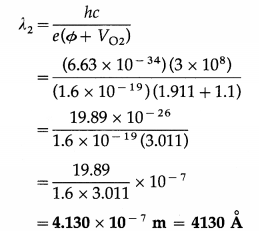
Answer:
Non-Government Organizations

Question 4.
The right of consumer which is about safety and protection to his life and health.
Answer:
Right to Safety

Maharashtra Board OCM 12th Commerce Solutions Chapter 7 Consumer Protection

Question 5.
One who consumes or uses any commodity or service.
Answer:
Consumer.

1. (D) State whether the following statements are True or False

Question 1.
The seller has to recognize the rights of Consumer.
Answer:
True

Question 2.
Consumer Protection Act provides protection to the producer.
Answer:
False

Question 3.
Consumer Protection Act is not required in India.
Answer:
False

Question 4.
Lok Adalat cam righty be described as “People’s Court”.
Answer:
True

Question 5.
Consumer, being the king of market, does not have any responsibility.
Answer:
False

1. (E) Find the odd one

Question 1.
District Commission, State Commission, NGO, National Commission.
Answer:
NGO

Question 2.
District Judge, High Court Judge, Commissioner, Supreme Court Judge.
Answer:
Commissioner

1. (F) Complete the sentences

Question 1.
National Commission is to be established by ………………. Government.
Answer:
Centred

Question 2.
Any person who does not agree with the decision of District Commission can appeal to the ……………….
Answer:
State Commission

Maharashtra Board OCM 12th Commerce Solutions Chapter 7 Consumer Protection

Question 3.
State commission has ……………….. members.
Answer:
four

Question 4.
The President of National Commission is ………………. judge.
Answer:
Supreme Court

Question 5.
National Commission entertains complaints of consumer for compensation that exceeds Rs ………………
Answer:
ten crore

Question 6.
The Consumer Protection Act established ………………… tier quasi judicial system for consumer protection.
Answer:
three

1. (G) Select the correct option and complete the following table

(High Court Judge, Four, Consumer Organisations, does not exceeds Rs one crore, 2019)

Group AGroup B
A.Amount of compensation in District Commission—————
B.———————-State Commission
C.Consumer Protection Act——————
D.———————Non-profit and non Political organisation
E.Members of National Commission——————-

Answer:

Group AGroup B
A.Amount of compensation in District CommissionDoes not exceed Rs one crore
B.High Court JudgeState Commission
C.Consumer Protection Act2019
D.Consumer OrganisationsNon-profit and non Political organisation
E.Members of National Commission4

1. (H) Answer in one sentence

Question 1.
When do we observe a National Consumer Day?
Answer:
On 24th December every year we observe a National Consumer Day.

Question 2.
Who is a consumer?
Answer:
A consumer means any person who buys any goods, hires any service or services for a consideration which has been paid or promised to be paid in future or under any system of deferred payment.

Question 3.
What information should one check before buying a product?
Answer:
Before buying a product the consumer should enquire about the quality, quantity, price, utility of goods and services, etc.

Question 4.
Which forum is set up at the national level for redressal of consumer complaints?
Answer:
National Consumer Disputes Redressal Commission or National Commission is set up at the national level for redressal of consumer complaints.

Question 5.
Who shall be appointed as President of National Commission?
Answer:
A person, who is or has been a Judge of the Supreme Court, shall be appointed by the Central Government as the President of National Commission in consultation with Chief Justice of India.

Question 6.
When do we observe World Consumer’s Rights Day?
Answer:
On 15th March every year we observe World Consumer’s Rights Day.

1. (I) Arrange in proper order

Question 1.
National Commission, District Commission, State Commission.
Answer:
District Commission, State Commission, National Commission.

Question 2.
District Judge, Supreme Court Judge, High Court Judge.
Answer:
District Judge, High Court Judge, Supreme Court Judge.

1. (J) Correct the underlined word and rewrite the sentence

Question 1.
An appeal can be filed against the order of the National Commission to the State forum.
Answer:
Supreme Court

Question 2.
National Commission is established by the State Government.
Answer:
Central Government

Question 3.
District Commission is also referred as People’s Court.
Answer:
Lok Adalat

Question 4.
In India, sellers are widely dispersed and are not united.
Answer:
consumers

Maharashtra Board OCM 12th Commerce Solutions Chapter 7 Consumer Protection

Question 5.
National Commission entertains complaints where the value of the goods or services paid as consideration does not exceed Rs one crore.
Answer:
District Commission.

2. Explain the following term/concept:

Question 1.
District Commission.
Answer:
(1) Meaning : A consumer redressal agency established by the State Government in each district to give relief or settle the disputes of consumers who complain against manufacturers or traders, is called District Commission.

(2) Territorial Jurisdiction : District Commission can exercise its jurisdiction within the limits of its district.

(3) Monetary jurisdiction : District Commission has the jurisdiction to entertain complaints where the value of goods and services, including compensation, if any, does not exceed Rs 1 crore.

(4) Appeal : Any person not satisfied with the order of District Commission can appeal against it to the State Commission within 45 days from the date of the order in such form and manner may be prescribed.

Question 2.
National Commission.
Answer:
Meaning : A consumer disputes redressal agency at the national level established by the Central Government by notification is known as National Commission. It is also called as National Consumer Disputes Redressal Commission.

Composition : The National Commission shall consist of:
(a) President: A person who is or has been a Judge of the Supreme Court to be appointed by the Central Government as President of National Commission. Such appointment shall be made after consultation with the Chief Justice of India.

(b) Tenure : Every member of the National Commission shall hold office for a term of 5 years or up to the age prescribed whichever is earlier.

Question 3.
State Commission.
Answer:
Meaning : A consumer disputes redressal agency at state level established by each State Government is known as State Commission.

Composition : Each State Commission shall consist of:
(a) President : A person who is or has been a Judge of a High Court, shall be appointed by the State Government as the president of the State Commission in consultation with the Chief Justice of the High Court.

(b) Members : The number of other members shall not be less than 4 or not more than such number of members as may be prescribed in consultation with the Central Government.

(c) Tenure : Every member of the state commission shall hold office for a term of 5 years or up to the age of 67 years whichever is earlier.

Question 4.
Lok Adalat.
Answer:
Lok Adalat : Lok Adalat, i.e. People’s Court is established by the government to settle the disputes by compromise. It is the effective and economical system for quick redressal of public complaints and grievances. In this system the aggrieved party can directly approach the Lok Adalat with his complaint. In Lok Adalat, issues are discussed immediately and decisions are taken without delay.

The order passed by the Lok Adalat is given statutory recognition. In public sector, some organisations such as Railways, Maharashtra State Electricity Distribution Co. Ltd (MSEDCL). Maharashtra State Road Transport Corporation (MSRTC), Insurance Companies, Banks, etc. regularly hold Lok Adalat to resolve consumer’s problems through compromise.

Question 5.
Janhit Yachika.
Answer:
Public Interest Litigation (Janahit Yachika) : As name indicates it is a legal action initiated in a court of law in regard to a matter of general public interest. Under this, any person can approach a court of law in the interest of the public and ask for justice. It does not involve individual interest but interest of unrepresented groups of the society. After studying and verifying the case, the court gives justice which will benefit the specific group of society or entire society. It can be filed by any party which may not be related to grievance. In some cases Janahit Yachika can be filed in the High Court as well as in Supreme Court directly.

3. Study the following case/situation and express your opinion

Question 1.
Mr. Ashok visited a shop to buy a pair of shoes for Rs 700. The salesman forced him to buy a pair of bigger size shoes of ordinary company by claiming this size would be suitable to him. After reaching home, he discovered that shoes are still too big for him. He complained about the shoes to the shopkeeper. It was denied by the shopkeeper to replace the shoes despite of availability of stock. In above case-
(i) Which right has been violated?
(ii) Comment on the right which has been violated.
(iii) Where can Mr. Ashok file his complaint?
Answer:
(i) In the above case, Right to Choose has been violated.

(ii) In India, the choices are available to consumers to select goods and different services like telecommunications, travel and tourism, banking, electronics, consumer goods, etc. According to right to choose, consumer should be given full liberty j to select an article as per his requirements, liking and purchasing capacity. The seller cannot force or compel the customer to buy specific product or service In this manner monopoly is avoided and j prevented.

(iii) According to the Right to be Heard, Mr. Ashok can lodge complaint to the consumer forum. Mr Ashok can also file online complaint through portal or mobile applications to the trader as well as to the appropriate consumer commission or forum.

Maharashtra Board OCM 12th Commerce Solutions Chapter 7 Consumer Protection

Question 2.
Mrs. Meera a resident of Nagpur District bought a washing machine worth Rs 50,000 without cash memo with a warranty period of 2 years. After 1.5 years she noticed some defect and asked the company to repair or replace it. The company did not accept her complaint despite of the defective product.
In the above case,
(i) Suggest suitable redressal machinery to protect her right.
(ii) If she is not satisfied with the decision given by redressal machinery, where should she appeal?
(iii) What was the negligence of Mrs. Meera while buying the washing machine?
Answer:
(i) According to Right to Redressal, Mrs. Meera should file complaint for fair settlement of claim. This right enables Mrs. Meera to demand repair or replacement or compensation for defective product i.e., in above case washing machine supplied. Three tier quasi-judicial consumer dispute redressal machinery is established for the settlement of claim. Mrs. Meera can file complaint in District Commission established in her district as the value of machinery does not exceed Rs 1 crore.

(ii) If Mrs. Meera is not satisfied with the order or judgement given by District Commission, then she can appeal against such order to State Commission within 45 days from the date of such order, in such form and manner as may be prescribed.

(iii) Mrs. Meera did not collect or ask for cash memo and guarantee/warranty card for a period of 2 years as soon as she purchased the washing machine worth Rs 50,000.

4. Distinguish between

Question 1.
District Commission and State Commission
Answer:

District CommissionState Commission
1. MeaningA consumer disputes redressal agency at the district level established by the State Government is known as District Commission.A consumer disputes redressal agency at the state level established by the State Government is known as State Commission.
2. PresidentA person who is or retired or qualified as a judge of a district court is appointed as president of the. District Commission.A person who is or retired as a judge of a High Court is appointed as president of State Commission
3. Membership tenureEvery member of District Commission shall hold office for a term of 5 years or up to the age of 65 years whichever is earlier.Every member of State Commission shall hold office for a term of 5 years or up to the age of 67 years whichever is earlier.
4. Area coveredIt has jurisdiction over a particular District.It has jurisdiction over a particular State.
5. Monetary jurisdictionIt has the jurisdiction to entertain complaints where the value of goods or services, including compensation, if any, does not exceed Rs 1 crore.It has the jurisdiction to entertain complaints where the value of goods or services, including compensation, if any, exceeds Rs 1 crore but does not exceed Rs 10 crore.
6. AppealAny person not satisfied with the order of District Commission can appeal against such order to the State Commission within 30 days of the order.Any person not satisfied with the order of the State Commission can appeal against such order to the National Commission within 30 days of the order.

Question 2.
State Commission and National Commission
Answer:

State CommissionNational Commission
1. MeaningA consumer disputes redressal agency at the state level established by each State Government is known as State Commission.A consumer disputes redressal agency at the national level established by the Centred Government is known as National Commission.
2. PresidentA person who is or retired or qualified as a judge of a High Court is appointed as president of State Commission.A person who is or retired as a judge of a Supreme Court is appointed as president of National Commission.
3. Membership TenureEvery member of District Commission shall hold office for a term of 5 years or up to the age of 65 years whichever is earlier.Every member of State Commission shall hold office for a term of 5 years or up to the age of 67 years whichever is earlier.
4. Area coveredIt has jurisdiction over a particular State.It has jurisdiction over the entire nation
5. Monetary jurisdictionIt has the jurisdiction to entertain complaints where the value of goods or services, including compensation, if any, exceeds Rs 1 crore, but does not exceed Rs 10 croreIt has the monetary jurisdiction to entertain complaints where the value of goods and services, including compensation, if any, exceeds Rs 10 crore.
6. AppealAny person not satisfied with the order of District Forum can appeal against such order to the State Commission within 30 days of the order.Any person not satisfied with the order of the National Commission may appeal against such order to the Supreme Court within a period of 30 days from the date of the order.

Question 3.
District Commission and National Commission
Answer:

District CommissionNational Commission
1. MeaningA consumer disputes redressal agency at the district level established by the State Government is known as District Commission.A consumer disputes redressal agency at the national level established by Central Government is known as National Commission.
2. Nature of complaintIt can entertain only original cases which are within the local limits of district.It can entertain original cases as well as appeals against the order of State Commission which are within the geographical limits of the entire nation.
3. Membership TenureEvery member of District Forum shall hold office for a term of 5 years or up to the age of 65 years whichever is earlierEvery member of National Commission shall hold office for a term of 5 years or up to the age prescribed whichever is earlier.
4. Area coveredIt has jurisdiction over a particular district.It has jurisdiction over the entire nation.
5. Monetary jurisdictionIt has the jurisdiction to entertain complaints where the value of goods and services, including compensation, if any, does not exceed Rs 1 crore.It has the jurisdiction to entertain complaints where the value of goods and services, including compensation, if any, exceeds Rs 10 crore.
6. AppealAny person not satisfied with the order of District Commission can appeal against such order to the State Commission within 30 days of the order.Any person not satisfied with the order of National Commission can appeal against such order to the Supreme Court within a period of 30 days from the date of the order.

5. Answer in brief

Question 1.
Explain any four needs of consumer protection.
Answer:
The need of consumer protection is explained as follows:
(1) Need of participation of consumers : It is noticed that most of the organisations or manufacturing companies take certain decisions which directly or indirectly affect the consumers’ interest without consulting them or their organisations. This leads to consumer exploitation. Only a Strong consumers’ organisation can force business organisations to allow consumers to participate in the decision-making process.

(2) Lack of information : Today consumers live in a dynamic and complex world. Due to vast distance between manufacturer and consumer, it is very difficult to establish direct contact between them. Now market is fully flooded with domestic as well as foreign products due to globalisation and liberalisation. However, it is very difficult for the consumer to get correct and reliable information about the products before they are purchased. He has to rely on trial and error method or on advertisements. In both the cases chances of consumer exploitation cannot be denied.

(3) Ignorance : One of the important causes of consumer exploitation is ignorance of consumers. In India, consumers are mostly ignorant about their rights, market conditions, price levels, product details, etc. Many a time consumers are not aware that they are being cheated by the sellers. An appropriate system is required to protect consumers from business malpractices.

(4) Unorganised consumers : The consumers are widespread and unorganised. Moreover, they are not united. Hence, they are easily exploited by the producers and sellers. Sellers are in better position as compared to unorganised consumers. An individual consumer cannot fight against the powerful manufacturers or sellers.

Question 2.
State any four rights of the consumer.
Answer:
The rights of consumers are explained as follows:
(1) Right to Safety : The right to safety means the right to be protected against products, production processes and services which are hazardous to consumer’s lives or health and property. It includes consumer’s long term interest and immediate requirements. This right demands that consumer must get full safety and protection to his/her life and health in relation to medicines, food, electrical appliances, etc. AGMARK, ISI – Indian Standard Institute, BIS – Bureau of Indian standards, Hallmark, etc. are the safety standards prescribed by the Government of India (GOI).

(2) Right to Information : The consumer has a right to get correct and adequate information of all aspects of goods and services like price, name of manufacturer, contents used, batch number, date of manufacture and expiry date, use manual and safety instructions, etc. This information helps the consumers to make right choice of goods and services. This right is applicable to medicines, food products, spare parts and other consumer products or services.

(3) Right to Choose : According to this right, the consumer has full freedom to select or choose the product or service as per his/her liking, requirement and purchasing capacity. The seller cannot force a consumer to purchase a particular product. This right aims at removing monopoly. The choices available to consumers in India include goods and different services such as telecommunications, travel and tourism, banking, electronics, Fast Moving Consumer Goods (FMCG) etc.

(4) Right to Be Heard : It is the responsibility of every business organisation to listen and solve difficulties, complaints and grievances of the consumers. This right gives an opportunity to the consumers to express and voice their complaints to the consumer forum. The consumers also have rights to give suggestions to the manufacturer as well as to the trader on the quality, quantity, price, packaging, etc. of the products they use. Nowadays consumers can file online complaints through portal or mobile applications.

Maharashtra Board OCM 12th Commerce Solutions Chapter 7 Consumer Protection

Question 3.
Explain any four responsibilities of the consumer.
Answer:
The responsibilities of the consumer are explained as follows:
(1) Consumer should use his rights : The consumers have many rights in respect to the goods and services they purchase. They must be aware of their rights while buying the products. They can use their rights if they are misled by advertisement or get faulty or defective articles.

(2) Cautious consumer : The consumers should be alert while dealing with the trader. They should be aware of their responsibilities while buying goods and services. Before buying any product or service, the consumer should make detail enquiry about the quality, quantity available, price, date of manufacture, expiry date, utility of goods and services, etc.

(3) Filing of complaint : If consumer has complaint about the products or services he has purchased, he should immediately approach the officer concerned and lodge complaints about the products or services. A delay in making complaints loses the rights and results in expiry of guarantee or warranty. If consumers ignore the dishonest acts of the traders, it may indirectly amount to encouragement to unethical business practices.

(4) Quality conscious : It is the responsibility of the consumers to buy quality goods. They should never compromise on the quality of goods. They should never buy inferior goods out of greed at lesser prices. For such behaviour of consumers, there is no protection. It is the responsibility of the consumer to ensure about the quality symbols like, ISI, AGMARK, Hallmark, Fruit Products Order (FPO), Food Safety and Standards Authority of India (FSSAI), etc. These are indicative of the good quality of the goods.

Question 4.
State the role of NGO in consumer protection.
Answer:
The role of Non-Government Organisations (NGOs) in consumer protection is explained as follows:
(1) NGOs organise campaigns and various programmes on consumer issues to create social awareness.

(2) They initiate and organise training i programmes for the consumers and make them : aware and conscious of their rights and various modes of redressal of their grievances.

(3) They publish journals and periodicals at regular interval to make the consumers understand and keep them informed about various consumer ) related developments.

(4) They provide legal advice free of charge to the members on the matters of consumer interest and help them to put up grievances before appropriate authority.

(5) NGO’s active members interact (communicate) with the businessmen and Chambers of Commerce and Industry for ensuring better deal for the consumers.

6. Justify the following statements

Question 1.
The Consumer Protection Act was passed in the interest of consumers.
Answer:
(1) The Consumer Protection Act came into force from 1986. Thereafter the Ministry of Law and Justice proposed new act in 2019. The Act has for the first time recognised six rights of the consumer:

  • the right to be protected against marketing of hazardous goods
  • the right to be informed about the price and features of goods
  • the right to make a choice out of a variety of goods
  • the right to make a complaint against unsatisfactory goods
  • the right to seek redressal against unfair trade practices
  • the right to consumer education. All the above rights are in the interest of the consumer and not the seller.

(2) The Act has made provision for the establishment of Consumer Protection Councils at the central and state levels for promoting and protecting these rights.

(3) The Act has created a quasi-judicial machinery consisting of the District Commission, State Commission and National Commission to entertain complaints and to give fair justice to the aggrieved consumers. The Act prescribes punishment of imprisonment not less than one month which may extend to 3 years and a fine which shall not be less than ? 25,000 which may extend to Rs 1 lakh or with both for guilty person.

(4) The strict enforcement of these rights creates a competition among the sellers. Consequently, the consumers get quality goods at fair prices. The government has also adopted various measures for creating public awareness about the rights of consumers. Various programmes are shown on television channels as well as programmes are broadcasted by All India to educate consumers.

Question 2.
Consumers have many responsibilities.
Answer:
The responsibilities of the consumer are explained as follows:
(1) Consumer should use his rights : The consumers have many rights in respect to the goods and services they purchase. They must be aware of their rights while buying the products. They can use their rights if they are misled by advertisement or get faulty or defective articles.

(2) Cautious consumer : The consumers should be alert while dealing with the trader. They should be aware of their responsibilities while buying goods and services. Before buying any product or service, the consumer should make detail enquiry about the quality, quantity available, price, date of manufacture, expiry date, utility of goods and services, etc.

(3) Filing of complaint : If consumer has complaint about the products or services he has purchased, he should immediately approach the officer concerned and lodge complaints about the products or services. A delay in making complaints loses the rights and results in expiry of guarantee or warranty. If consumers ignore the dishonest acts of the traders, it may indirectly amount to encouragement to unethical business practices.

(4) Quality conscious : It is the responsibility of the consumers to buy quality goods. They should never compromise on the quality of goods. They should never buy inferior goods out of greed at lesser prices. For such behaviour of consumers, there is no protection. It is the responsibility of the consumer to ensure about the quality symbols like, ISI, AGMARK, Hallmark, Fruit Products Order (FPO), Food Safety and Standards Authority of India (FSSAI), etc. These are indicative of the good quality of the goods.

(5) Beware from exaggerated advertisement: The sellers always provide various information of the products or services through advertisements to buyers. Many a time they exaggerate the facts in their advertisements. It is the responsibility of the consumers to find out or identify the truth of advertisement and then buy the products, or services.

Maharashtra Board OCM 12th Commerce Solutions Chapter 7 Consumer Protection

Question 3.
Aim of consumer organization is to protect the rights of the consumers.
Answer:
The role of Non-Government Organisations (NGOs) in consumer protection is explained as follows:
(1) NGOs organise campaigns and various programmes on consumer issues to create social awareness.

(2) They initiate and organise training i programmes for the consumers and make them : aware and conscious of their rights and various modes of redressal of their grievances.

(3) They publish journals and periodicals at regular interval to make the consumers understand and keep them informed about various consumer ) related developments.

(4) They provide legal advice free of charge to the members on the matters of consumer interest and help them to put up grievances before appropriate authority.

(5) NGO’s active members interact (communicate) with the businessmen and Chambers of Commerce and Industry for ensuring better deal for the consumers.

(6) They file Public Interest Litigation (Janhit Yachika) on important consumer issues like ban on a product or medicine injurious to public health. They also file cases in the court of law to safeguard the rights and protect the interest of general public.

(7) Few examples of NGOs working for the consumers are : Consumer Guidance Society of India (CGSI), Voluntary Organisation in Interest of Consumer Education (VOICE), Consumer Education and Research Centre (CERC), Consumers Association of India (CAI), Mumbai Grahak Panchayat (MGP), Grahak Shakti (GS), etc.

7. Attempt the following

Question 1.
State rights of the consumer.
Answer:
The rights of consumers are explained as follows:
(1) Right to Safety : The right to safety means the right to be protected against products, production processes and services which are hazardous to consumer’s lives or health and property. It includes consumer’s long term interest and immediate requirements. This right demands that consumer must get full safety and protection to his/her life and health in relation to medicines, food, electrical appliances, etc. AGMARK, ISI – Indian Standard Institute, BIS – Bureau of Indian standards, Hallmark, etc. are the safety standards prescribed by the Government of India (GOI).

(2) Right to Information : The consumer has a right to get correct and adequate information of all aspects of goods and services like price, name of manufacturer, contents used, batch number, date of manufacture and expiry date, use manual and safety instructions, etc. This information helps the consumers to make right choice of goods and services. This right is applicable to medicines, food products, spare parts and other consumer products or services.

(3) Right to Choose : According to this right, the consumer has full freedom to select or choose the product or service as per his/her liking, requirement and purchasing capacity. The seller cannot force a consumer to purchase a particular product. This right aims at removing monopoly. The choices available to consumers in India include goods and different services such as telecommunications, travel and tourism, banking, electronics, Fast Moving Consumer Goods (FMCG) etc.

(4) Right to Be Heard : It is the responsibility of every business organisation to listen and solve difficulties, complaints and grievances of the consumers. This right gives an opportunity to the consumers to express and voice their complaints to the consumer forum. The consumers also have rights to give suggestions to the manufacturer as well as to the trader on the quality, quantity, price, packaging, etc. of the products they use. Nowadays consumers can file online complaints through portal or mobile applications.

(5) Right to Consumer Education : The consumers have right to know about consumer rights and solutions to their problems. This is to create awareness among the consumers to make rational choice of goods and services and to protect themselves from the exploitation of unscrupulous (dishonest) businessmen. In this regard, the government, media and various Non-Government Organisations (NGOs) can play an important role to create awareness among the consumers and to educate them, e.g. Jago Grahak Jago campaign.

(6) Right to Represent : The Consumer Protection Act, 2019 gave an opportunity to individual consumer as well as to consumer groups to be represented by a person who is not professional advocate for consumer’s interest or complaint before consumer forum. This provision made in the Act in recognition of consumers’ right to represent.

Question 2.
State responsibilities of the consumer.
Answer:
The responsibilities of the consumer are explained as follows:
(1) Consumer should use his rights : The consumers have many rights in respect to the goods and services they purchase. They must be aware of their rights while buying the products. They can use their rights if they are misled by advertisement or get faulty or defective articles.

(2) Cautious consumer : The consumers should be alert while dealing with the trader. They should be aware of their responsibilities while buying goods and services. Before buying any product or service, the consumer should make detail enquiry about the quality, quantity available, price, date of manufacture, expiry date, utility of goods and services, etc.

(3) Filing of complaint : If consumer has complaint about the products or services he has purchased, he should immediately approach the officer concerned and lodge complaints about the products or services. A delay in making complaints loses the rights and results in expiry of guarantee or warranty. If consumers ignore the dishonest acts of the traders, it may indirectly amount to encouragement to unethical business practices.

(4) Quality conscious : It is the responsibility of the consumers to buy quality goods. They should never compromise on the quality of goods. They should never buy inferior goods out of greed at lesser prices. For such behaviour of consumers, there is no protection. It is the responsibility of the consumer to ensure about the quality symbols like, ISI, AGMARK, Hallmark, Fruit Products Order (FPO), Food Safety and Standards Authority of India (FSSAI), etc. These are indicative of the good quality of the goods.

(5) Beware from exaggerated advertisement: The sellers always provide various information of the products or services through advertisements to buyers. Many a time they exaggerate the facts in their advertisements. It is the responsibility of the consumers to find out or identify the truth of advertisement and then buy the products, or services.

(6) Demand of Invoice and Guarantee, Warranty Card : After purchasing the products, the consumer should ask for cash memo, guarantee or warranty card. The consumer should read and understand the contents of guarantee or warranty card. He should preserve the cash memo and guarantee or warranty card. If the products purchased are of inferior quality or become defective these cards are useful to settle the disputes and claim compensation or replacement of articles.

(7) Pre-planned buying : It is the responsibility of the consumer to make proper planning before buying any product. He should make an estimate of products they want to buy and quantity required, money to spend, etc. He should also decide in advance from which place to buy the products. He should not buy any product in a hurry or without thought.

(8) Organised efforts : The consumer is expected to shoulder the responsibility to promote and protect the interests of his own and other consumers. He should join the group or organisation which is working for the welfare of consumers. It is the responsibility of every consumer to unite for the welfare of all the consumers.

Maharashtra Board OCM 12th Commerce Solutions Chapter 7 Consumer Protection

Question 3.
State the need of consumer protection.
Answer:
The need of consumer protection is explained as follows:
(1) Need of participation of consumers : It is noticed that most of the organisations or manufacturing companies take certain decisions which directly or indirectly affect the consumers’ interest without consulting them or their organisations. This leads to consumer exploitation. Only a Strong consumers’ organisation can force business organisations to allow consumers to participate in the decision-making process.

(2) Lack of information : Today consumers live in a dynamic and complex world. Due to vast distance between manufacturer and consumer, it is very difficult to establish direct contact between them. Now market is fully flooded with domestic as well as foreign products due to globalisation and liberalisation. However, it is very difficult for the consumer to get correct and reliable information about the products before they are purchased. He has to rely on trial and error method or on advertisements. In both the cases chances of consumer exploitation cannot be denied.

(3) Ignorance : One of the important causes of consumer exploitation is ignorance of consumers. In India, consumers are mostly ignorant about their rights, market conditions, price levels, product details, etc. Many a time consumers are not aware that they are being cheated by the sellers. An appropriate system is required to protect consumers from business malpractices.

(4) Unorganised consumers : The consumers are widespread and unorganised. Moreover, they are not united. Hence, they are easily exploited by the producers and sellers. Sellers are in better position as compared to unorganised consumers. An individual consumer cannot fight against the powerful manufacturers or sellers.

(5) Spurious Goods : The consumers also face a major problem of duplicate goods. Some traders cheat the consumers by supplying them duplicate or defective goods of the popular brands. It is not possible for the consumers to find difference between genuine and duplicate product. It is therefore necessary to protect the consumers from such exploitation by fixing prescribed norms of quality and safety standards.

(6) Misleading advertising : Sometimes the advertisements of goods and services shown on television, in newspapers and magazines are misleading. They make tall claims about the benefits of the products but do not disclose the drawbacks. Most of the consumers are misled by the misleading advertisement and do not know the real and true quality of advertised products. Appropriate system or mechanism is required to prevent misleading advertisements.

(7) Malpractices of Businessmen : Many businessmen adopt fraudulent, unethical and monopolistic trade practices to earn more money. This leads to exploitation of consumers. Some times consumers get defective, inferior and substandard goods and services. Appropriate measures are necessary to protect the consumers against such malpractices.

(8) Trusteeship : The Gandhian philosophy states that businessmen are the trustees of the society’s wealth. So they should not misuse the society’s wealth for their own benefits. They should use the wealth of the society for the benefit of the people.
Question 4.
State the role of NGOs and consumer protection.
Answer:
The role of Non-Government Organisations (NGOs) in consumer protection is explained as follows:
(1) NGOs organise campaigns and various programmes on consumer issues to create social awareness.

(2) They initiate and organise training i programmes for the consumers and make them : aware and conscious of their rights and various modes of redressal of their grievances.

(3) They publish journals and periodicals at regular interval to make the consumers understand and keep them informed about various consumer ) related developments.

(4) They provide legal advice free of charge to the members on the matters of consumer interest and help them to put up grievances before appropriate authority.

(5) NGO’s active members interact (communicate) with the businessmen and Chambers of Commerce and Industry for ensuring better deal for the consumers.

(6) They file Public Interest Litigation (Janhit Yachika) on important consumer issues like ban on a product or medicine injurious to public health. They also file cases in the court of law to safeguard the rights and protect the interest of general public.

(7) Few examples of NGOs working for the consumers are : Consumer Guidance Society of India (CGSI), Voluntary Organisation in Interest of Consumer Education (VOICE), Consumer Education and Research Centre (CERC), Consumers Association of India (CAI), Mumbai Grahak Panchayat (MGP), Grahak Shakti (GS), etc.

Question 5.
State the composition and monetary jurisdiction of district commission.
Answer:
Composition : Each District Commission shall consist of-

  • President : A person who is or has been a .judge of a district court is appointed as president
    of the District Commission.
  • Members : The number of other members shall not be less than 2 and not more than such number of members as may be prescribed in consultation with the Central Government.
  • Tenure : President and every member of the District Commission shall hold office for a term of 5 years or up to the age of 65 years whichever is earlier.

Monetary jurisdiction : District Commission has the jurisdiction to entertain complaints where the value of goods and services, including compensation, if any, does not exceed Rs 1 crore.

Question 6.
State the composition and monetary jurisdiction of state commission.
Answer:
(2) Composition : Each State Commission shall consist of:

  • President : A person who is or has been a Judge of a High Court, shall be appointed by the State Government as the president of the State Commission in consultation with the Chief Justice of the High Court.
  • Members : The number of other members shall not be less than 4 or not more than such number of members as may be prescribed in consultation with the Central Government.
  • Tenure : Every member of the state commission shall hold office for a term of 5 years or up to the age of 67 years whichever is earlier.

Monetary Jurisdiction : To entertain complaints where the value of the goods or services and compensation exceeds Rs 1 crore but is not more than Rs 10 crore.

Question 7.
State the composition and monetary jurisdiction of national commission.
Answer:
Composition : The National Commission shall consist of:
(a) President: A person who is or has been a Judge of the Supreme Court to be appointed by the Central Government as President of National Commission. Such appointment shall be made after consultation with the Chief Justice of India.
(b) Tenure : Every member of the National Commission shall hold office for a term of 5 years or up to the age prescribed whichever is earlier.

Monetary Jurisdiction : To entertain the complaints where the value of the goods or services and compensation exceeds Rs 10 crore.

8. Answer the following

Question 1.
Who is Consumer? Explain the rights of the consumers.
Answer:
[A] Meaning : The word ‘consumer’ is derived from the Latin word ‘consumere’ which means ‘to eat or drink’. Accordingly consumer is one who consumes or uses any product or service available to him either from nature or through market. In other words, a consumer means any person who buys any product, hires any service or services for certain consideration in exchange of money which has been paid or promised to be paid in future for consumption or use and not for resale. For instance, if a businessman purchases furniture for selling it to the buyers, he is not a consumer. But if he buys a sofa set for his own use in his house, he becomes a consumer. We are all consumers when we use or consume foodgrains or use services like railways, hospitals, banks, etc.

[B] Rights of the Consumers : The rights of the consumers are shown:
Consumer Rights:

  1. Right to Safety
  2. Right to Information
  3. Right to Choose
  4. Right to be Heard
  5. Right to Consumers Education
  6. Right to Represent
  7. Right to Redress
  8. Right to Healthy
  9. Environment
  10. Right to Protect from Unfair Business Practices
  11. Right against Spurious Goods

The rights of consumers are explained as follows:
1. Right to Safety : The right to safety means the right to be protected against products, production processes and services which are hazardous to consumer’s lives or health and property. It includes consumer’s long term interest and immediate requirements. This right demands that consumer must get full safety and protection to his/her life and health in relation to medicines, food, electrical appliances, etc. AGMARK, ISI – Indian Standard Institute, BIS – Bureau of Indian standards, Hallmark, etc. are the safety standards prescribed by the Government of India (GOI).

2. Right to Information : The consumer has a right to get correct and adequate information of all aspects of goods and services like price, name of manufacturer, contents used, batch number, date of manufacture and expiry date, use manual and safety instructions, etc. This information helps the consumers to make right choice of goods and services. This right is applicable to medicines, food products, spare parts and other consumer products or services.

3. Right to Choose : According to this right, the consumer has full freedom to select or choose the product or service as per his/her liking, requirement and purchasing capacity. The seller cannot force a consumer to purchase a particular product. This right aims at removing monopoly. The choices available to consumers in India include goods and different services such as telecommunications, travel and tourism, banking, electronics, Fast Moving Consumer Goods (FMCG) etc.

Maharashtra Board OCM 12th Commerce Solutions Chapter 7 Consumer Protection

4. Right to Be Heard : It is the responsibility of every business organisation to listen and solve difficulties, complaints and grievances of the consumers. This right gives an opportunity to the consumers to express and voice their complaints to the consumer forum. The consumers also have rights to give suggestions to the manufacturer as well as to the trader on the quality, quantity, price, packaging, etc. of the products they use. Nowadays consumers can file online complaints through portal or mobile applications.

5. Right to Consumer Education : The consumers have right to know about consumer rights and solutions to their problems. This is to create awareness among the consumers to make rational choice of goods and services and to protect themselves from the exploitation of unscrupulous (dishonest) businessmen. In this regard, the government, media and various Non-Government Organisations (NGOs) can play an important role to create awareness among the consumers and to educate them, e.g. Jago Grahak Jago campaign.

6. Right to Represent : The Consumer Protection Act, 2019 gave an opportunity to individual consumer as well as to consumer groups to be represented by a person who is not professional advocate for consumer’s interest or complaint before consumer forum. This provision made in the Act in recognition of consumers’ right to represent.

7. Right to Redress : Right to redress implies fair settlement, just and reasonable claims of the consumers. In other words, consumer has the right to receive a fair amount of compensation or get the articles replaced or repaired free of cost for defective products and for poor services received from the manufacturer or trader. It is done through the Consumer Protection Act, 1986 under which District Commission, State Commission and National Commission are established. Thus, consumers are protected from cheating and malpractices.

8. Right to Healthy Environment: A consumer has a right to have a clean and healthy physical environment which is badly affected by pollution of noise, air and water. This is the direct effect of speedy industrialisation. Certain industries like chemicals, fertilisers, etc., add considerably to the pollution. As per this right, consumer can demand actions against such business organi¬sations. Businessmen and companies must take suitable measures to control pollution. All consumers have right to clean and healthy environment in present as well as in the future.

9. Right to Protect against Unfair Business Practices : This right protects the consumers against any kind of unfair business practices. The consumers have right to reuse the voice against the unfair business practices adopted by any trader e.g. using false measurement (weights), hoarding or stocking products to create artificial scarcity, black marketing, profiteering, adulteration, charging exorbitant high prices, selling goods after their expiry dates, etc.

10. Right against Spurious Goods : This right is against the marketing of goods which are health hazards, spurious (false or not genuine) and pose a danger to life itself. This right protects public health and life.

Question 2.
Explain the ways and means of Consumer Protection.
Answer:
The ways and means of consumer protection are stated as follows:

  1. Lok Adalat (People’s Court)
  2. Public Interest Litigation (Janhit Yachika)
  3. Redresssl Forums
  4. Awareness Programmes
  5. Consumer Organisations
  6. Consumer Welfare Fund
  7. Legislative Measures

1. Lok Adalat : Lok Adalat, i.e. People’s Court is established by the government to settle the disputes by compromise. It is the effective and economical system for quick redressal of public complaints and grievances. In this system the aggrieved party can directly approach the Lok Adalat with his complaint. In Lok Adalat, issues are discussed immediately and decisions are taken without delay. The order passed by the Lok Adalat is given statutory recognition. In public sector, some organisations such as Railways, Maharashtra State Electricity Distribution Co. Ltd (MSEDCL). Maharashtra State Road Transport Corporation (MSRTC), Insurance Companies, Banks, etc. regularly hold Lok Adalat to resolve consumer’s problems through compromise.

2. Public Interest Litigation (Janahit Yachika) : As name indicates it is a legal action initiated in a court of law in regard to a matter of general public interest. Under this, any person can approach a court of law in the interest of the public and ask for justice. It does not involve individual interest but interest of unrepresented groups of the society. After studying and verifying the case, the court gives justice which will benefit the specific group of society or entire society. It can be filed by any party which may not be related to grievance. In some cases Janahit Yachika can be filed in the High Court as well as in Supreme Court directly.

3. Redressal Forums : Under the Consumer Protection Act, 2019, Consumer Dispute Redressal agencies have been established by the Government to protect the rights of consumers and to offer speedy and inexpensive redressal for their complaints. These agencies are District Commission at district level. State Commission at state level and National Commission at national level. Any aggrieved consumer or association of consumers can file a complaint with respective commission depending on the value of goods and amount of claim for compensation.

4. Awareness Programmes : The Government of India has initiated various publicity measures such as use of journals, brochures, booklets and various posters depicting the rights and responsibilities of consumers redressal machineries, i.e. consumer courts, observation of International (World) Consumer Rights Day on 15th March and National Consumer Day on 24th December every year to create awareness among the consumers about their rights and responsi¬bilities. Various consumer related programmes are also telecast on various TV channels and broadcasted on radio, FM channels and social media to create awareness among the consumers.

5. Consumer Organisations : Many consumer organisations such as Consumer Guidance Society of India, Grahak Panchayat, Grahak Shakti, Consumers’ Association, etc., are active throughout India to fight for consumers’ rights through protest, campaigning, lobbying, etc. Consumer movement is also well active in India and helps individuals to get quick and adequate compensation and justice for their grievances. It is also necessary to strengthen consumer movement throughout India.

6. Consumer Welfare Fund (CWF) : This fund is created by the Department of Consumer Affairs for providing financial help to voluntary consumer movement specially in rural areas. This financial assistance is used for training and research in consumer education, complaint handling, counselling and guidance mechanism, product testing labs, etc.

7. Legislative Measures : The Government of India has passed several acts such as Sale of Goods Act, 1930; Essential Commodities Act, 1955; the Standards of Weights and Measures Act, 1956; Bureau of Indian Standards Act, 1969; Food Safety and Standards Act, 2006; National Food Security Act, 2013, etc. to protect the interest of consumers from unethical practices of businessmen.

However, these laws could not protect the consumers as such and therefore the Government of India has passed a powerful Act known as Consumer Protection Act, 2019 to protect the interest of consumers.

Maharashtra Board OCM 12th Commerce Solutions Chapter 7 Consumer Protection

Question 3.
Explain the three tier quasi-judicial machinery under the Act.
Answer:
The Consumer Protection Act, 2019
provides for three-tier quasi-judicial machinery as follows:

  1. District Commission
  2. State Commission
  3. National Commission

1. District Commission :
A. Meaning : A consumer redressal agency established by the State Government in each district to give relief or settle the disputes of consumers who complain against manufacturers or traders, is called District Commission.

B. Composition : Each District Commission shall consist of-

  • President : A person who is or has been a .judge of a district court is appointed as president
    of the District Commission.
  • Members : The number of other members shall not be less than 2 and not more than such number of members as may be prescribed in consultation with the Central Government.
  • Tenure : President and every member of the District Commission shall hold office for a term of 5 years or up to the age of 65 years whichever is earlier.

C. Qualifications : The members of a District Commission shall have the following qualifications :

  • Age : The age of each member should not be less than 35 years.
  • Education : They should possess a Bachelor’s Degree from a recognised University.
  • Experience : Members should have adequate knowledge and experience of at least 10 years in dealing with problems related to economics, law, commerce, accountancy, industries, public affairs or administration.

D. Territorial Jurisdiction : District Commission can exercise its jurisdiction within the limits of its district.

E. Monetary jurisdiction : District Commission has the jurisdiction to entertain complaints where the value of goods and services, including compensation, if any, does not exceed Rs 1 crore.

F. Appeal : Any person not satisfied with the order of District Commission can appeal against it to the State Commission within 45 days from the date of the order in such form and manner may be prescribed.

2. State Commission:
A. Meaning : A consumer disputes redressal agency at state level established by each State Government is known as State Commission.

B. Composition : Each State Commission shall consist of:

  • President : A person who is or has been a Judge of a High Court, shall be appointed by the State Government as the president of the State Commission in consultation with the Chief Justice of the High Court.
  • Members : The number of other members shall not be less than 4 or not more than such number of members as may be prescribed in consultation with the Central Government.
  • Tenure : Every member of the state commission shall hold office for a term of 5 years or up to the age of 67 years whichever is earlier.

C. Qualifications : The members shall have the following qualifications:

  • Age : The age of each member should not be less than 35 years.
  • Education : They should possess a Bachelor’s Degree from a recognised University.
  • Experience : Members should have adequate knowledge and experience of at least 10 years in dealing with problems related to economics, law, commerce, accountancy, industries, public affairs or administration.

D. Territorial Jurisdiction : The State Commission entertains original cases as well as appeals against the order of District Commission within the geographical limits of the state.

E. Monetary Jurisdiction : To entertain complaints where the value of the goods or services and compensation exceeds Rs 1 crore but is not more than Rs 10 crore.

(6) Appeal : Any person aggrieved by an order passed by the State Commission may make an appeal against such order to the National Commission within a period of 30 days from the date of the order in such form and manner as may be prescribed.

3. National Commission
A. Meaning : A consumer disputes redressal agency at the national level established by the Central Government by notification is known as National Commission. It is also called as National Consumer Disputes Redressal Commission.

B. Composition : The National Commission shall consist of:

  • President: A person who is or has been a Judge of the Supreme Court to be appointed by the Central Government as President of National Commission. Such appointment shall be made after consultation with the Chief Justice of India.
  • Tenure : Every member of the National Commission shall hold office for a term of 5 years or up to the age prescribed whichever is earlier.

Maharashtra Board OCM 12th Commerce Solutions Chapter 7 Consumer Protection

C. Qualifications : The members shall have the following qualifications :

  • Age : The age of each member should not be less than 35 years.
  • Education : They should possess a Bachelor’s Degree from a recognised University.
  • Experience : The members should have adequate knowledge and experience of at least 10 years in dealing with problems related to economics, law, commerce, accountancy, industries, public affairs or administration.

D. Territorial Jurisdiction : National Commission entertains original cases as well as appeals against the order passed by the State Commission which are within the geographical limits of the state.

E. Monetary Jurisdiction : To entertain the complaints where the value of the goods or services and compensation exceeds Rs 10 crore.

F. Appeal : Any person who does not agree with the order of the National Commission can appeal to the Supreme Court within 30 days from the date of such order.

Maharashtra Board Class 12 Physics Important Questions Chapter 7 Wave Optics

Balbharti Maharashtra State Board 12th Physics Important Questions Chapter 7 Wave Optics Important Questions and Answers.

Maharashtra State Board 12th Physics Important Questions Chapter 7 Wave Optics

Question 1.
Name the various theories of the nature of light.
Answer:
The various theories of the nature of light from the 17th century to the modern times are

  1. Descartes’ corpuscular theory of light (1637)
  2. Newton’s corpuscular theory (1666)
  3. Huygens’ wave theory of light propagation (1678), modified, verified and put on a firm mathematical base by Young, Fraunhofer, Fresnel and Kirchhoff (in the 1800s)
  4. Maxwell’s electromagnetic theory (1865)
  5. the light quantum, i.e., the photon model of the modern quantum theory by Planck (1900) and Einstein (1905).

Question 2.
State the postulates of Newton’s corpuscular theory of light.
Answer:
Sir Isaac Newton developed the corpuscular theory of light proposed by Rene’ Descartes (1596-1650), French philosopher and mathematician. The theory assumed that light consists of a stream of corpuscles emitted by a luminous source.
Postulates of Newton’s corpuscular theory of light:

  1. Light corpuscles are minute, light and perfectly elastic particles.
  2. A luminous source emits light corpuscles in all directions which then travel at high speed in straight lines in a given medium.
  3. The constituent colours of white light are due to different sizes of the corpuscles.
  4. The light corpuscles stimulate the sense of sight on their impact on the retina of the eye.
  5. A reflective surface exerts a force of repulsion normal to the surface on the light corpuscles when they strike the surface.
  6. A transparent medium exerts a force of attraction normal to the surface on the light corpuscles striking the surface. This force is different for different mediums.

Notes :

  1. A consequence of the assumption (6) is that, according to the corpuscular theory, the speed of light in a denser medium is greater than that in air and has different values for different mediums.
  2. It was known from earliest recorded times that when light is incident on the surface of glass or water, it is partly reflected and partly transmitted, simultaneously. To explain this, Newton postulated that the corpuscles must have fits of easy reflection and fits of easy transmission and must pass periodically from one state to the other.

Maharashtra Board Class 12 Physics Important Questions Chapter 7 Wave Optics

Question 3.
State the drawbacks of Newton’s corpuscular theory of light.
Answer:
Drawbacks of Newton’s corpuscular theory of light:

  1. The theory predicted that the speed of light in a
    denser medium should be greater than that in air. This was disproved when experiment showed that the speed of light in water is less than that in air (carried out in 1850 by French physicist Jean Bernard Leon Foucault). ,
  2. The theory could not satisfactorily explain the phenomenon of polarization and the simultaneousness of reflection and refraction.
  3. The corpuscular theory failed to explain the phenomena of diffraction and interference.
  4. There was no basis for the hypothesis that the constituent colours of white light are due to different sized corpuscles.

Question 4.
What is a ray of light?
Answer:
A ray of light is the path along which light energy is transmitted from one point to another in an optical system.

Question 5.
What is meant by ray optics or geometrical optics?
Answer:
The formation of

  1. shadows, and
  2. images by mirrors and lenses can be explained by assuming that light propagates in a straight line in terms of rays. The study of optical phenomena under this assumption is called ray optics. It is also called geometrical optics as geometry is used in this study.

Question 6.
Give a brief account of Huygens’ wave theory of light. State its merits and demerits.
Answer:
Huygens’ wave theory of light [Christiaan Huygens (1629-95), Dutch physicist] :

  1. Light emitted by a source propagates in the form of waves. Huygens’ original theory assumed them to be longitudinal waves.
  2. In a homogeneous isotropic medium, light from a point source spreads by spherical waves.
  3. It was presumed that a wave motion needed a medium for its propagation. Hence, the theory postulated a medium called luminiferous ether that exists everywhere, in vacuum as well as in transparent bodies. Ether had to be assigned some extraordinary properties, a high modulus of elasticity (to account for the high speed of light), zero density (so that it offers no resistance to planetary motion) and perfect transparency.
  4. The different colours of light are due to different wavelengths.

Merits :

  1. Huygens’ wave theory satisfactorily explains reflection and refraction as well as their simultaneity.
  2. In explaining refraction, the theory concludes that the speed of light in a denser medium is less than that in a rarer medium, in agreement with experimental findings.
  3. The theory was later used by Young in 1800-04, Fraunhofer and Fresnel in 1814 to satisfactorily explain interference, diffraction and rectilinear propagation of light. The phenomenon of polarization could also be explained considering the light waves to be transverse.

Demerits :

  1. It was found much later that the hypothetical medium, luminiferous ether, has no experimental basis. Einstein discarded the idea of ether completely in 1905.
  2. Phenomena like absorption and emission of light, photoelectric effect and Compton effect, cannot be explained on the basis of the wave theory.

[Note: To decide between the particle and wave theories of light, Dominique Francois Jean Arago (1786-1853), French physicist, suggested the measurement of the speed of light in air and water. The experiment was performed in 1850 by Leon Foucault (1819-68), French physicist, using Arago’s experimental equipment. He found that the speed of light in water is less than that in air.]

Question 7.
What is meant by wave optics?
Answer:
It is not possible to explain certain phenomena of light, such as interference, diffraction and polarization, with the help of ray optics (geometrical optics). The branch of optics which uses wave nature of light to explain these optical phenomena is called wave optics.

Maharashtra Board Class 12 Physics Important Questions Chapter 7 Wave Optics

Question 8.
What was Maxwell’s concept of light?
Answer:
In 1865, James Clerk Maxwell developed a mathematical theory on the intimate relationship between electricity and magnetism. His theory predicted light to be a high-frequency transverse electromagnetic wave in ether. Electric and magnetic fields in the wave vary periodically in space and time at right angles to each other and to the direction of propagation of the wave.

The speed of the electromagnetic waves in a medium, as calculated on the basis of Maxwell’s theory, was experimentally found to be equal to the measured speed of light in that medium. Maxwell’s electromagnetic theory of light, with addition by others till 1896, could account for all the known phenomena regarding the propagation (or transmission) of light through space and through matter.

Question 9.
What is the photon model or quantum hypothesis of light ?
Answer:
To explain the interaction of light and matter (as in the emission or absorption of radiation), Max Planck, in 1900, and Einstein, in 1905, hypothesized light as concentrated or localized packets of energy. Such an energy packet is called a quantum of energy, which was given the name photon much later, in 1926, by Frithiof Wolfers and Gilbert Newton Lewis. For a radiation of frequency v, a quantum of energy is hv, where h is a universal constant, now called Planck’s constant.

[Note : ‘Localisation’ of energy in a region gives light its particle nature while frequency is a wave characteristic. The complementary properties of particle and wave of light quanta are reconciled as follows : light propagates as wave but interacts with matter as particle.]

Question 10.
Give a brief account of the wave nature of light.
Answer:

  1. Light is a transverse, electromagnetic wave.
  2. A light wave consists of oscillating electric and magnetic fields that are perpendicular to each other and also perpendicular to the direction of propagation of the wave.
  3. Like all other electromagnetic waves, light waves do not require any material medium as they can travel even through vacuum.
  4. In a material medium, the speed of light depends on the refractive index of the medium, which, in turn depends on the permeability and permittivity of the medium.

Question 11.
Define absolute refractive index of a medium.
Answer:
The absolute refractive index of a medium is defined as the ratio of the speed of light in vacuum to the speed of light in the medium.
[Note : Absolute refractive index of a medium (n) =
Maharashtra Board Class 12 Physics Important Questions Chapter 7 Wave Optics 1
The absolute refractive index of vacuum is 1 (by definition) and that of air is greater than 1, but very nearly equal to 1.]

Question 12.
State the characteristics of the electromagnetic waves.
Answer:

  1. The electromagnetic waves are transverse in nature as they propagate by oscillating electric and magnetic fields that are perpendicular to each other and also perpendicular to the direction of propagation of the wave.
  2. These waves do not require any material medium for their propagation, i.e., they can travel even through vacuum.
  3. The wavelength of the electromagnetic waves ranges from very small (< 1 fm) to very large (> 1 km). The waves are classified in the order of increasing wavelength as γ-rays, X rays, ultraviolet, visible, infrared, microwave and radio waves.
  4. In vacuum, the speed of electromagnetic waves does not depend on the frequency of the wave. But, in a material medium, it depends on the frequency. For a given frequency, the speed is different in different mediums.
    [Note : 1 fm (femtometre) = 10-15 m]

Question 13.
Define and explain :
(a) a wave normal
(b) a ray of light.
Answer:
(a) Wavenormal: A wave normal at a point on a wavefront is defined as a line drawn perpendicular to the wavefront in the direction of propagation of the wavefront.

In a homogeneous isotropic medium, a wavefront moves parallel to itself. Thus, at any point in the medium, the direction in which the wavefront moves is always perpendicular to the wavefront at that point. This direction is given by the wave normal at that point.

(b) Ray of light: The direction in which light is propagated is called a ray of light.

This term (ray of light) is also used to mean a narrow beam of light waves. Only in a homogeneous isotropic medium is a ray of light the same as a wave normal. For spherical wavefronts spreading out from a point source, the rays are radially divergent. The rays corresponding to a plane’ wavefront form a parallel beam.

Question 14.
What is a cylindrical wavefront? Draw the corresponding diagram.
Answer:
Cylindrical wavefront: An extended linear source, such as an aperture in the form of a narrow slit, gives rise to cylindrical wavefronts. All the points equidistant from the source lie on the curved surface of a cylinder. Thus, the shape of the wavefront is cylindrical.
Maharashtra Board Class 12 Physics Important Questions Chapter 7 Wave Optics 2

Question 15.
What is a plane wavefront? Draw the corresponding diagram.
Answer:
Plane wavefront: It may be treated as a part of a spherical or cylindrical wavefront at a very great distance from the source, such that the wavefront has a negligible curvature.
Maharashtra Board Class 12 Physics Important Questions Chapter 7 Wave Optics 3

Question 16.
Draw a neat labelled diagram illustrating spherical wavefronts corresponding to a diverging beam of light.
Answer:
Maharashtra Board Class 12 Physics Important Questions Chapter 7 Wave Optics 4
Note : Lenses can be used to obtain

  1. a converging beam of light
  2. a diverging beam of light.

Question 17.
State Huygens’ principle.
Answer:
Huygens’ principle : Every point on a wavefront acts as a secondary source of light and sends out secondary wavelets in all directions. The secondary wavelets travel with the speed of light in the medium. These wavelets are effective only in the forward direction and not in the backward direction. At any instant, the forward-going envelope or the surface of tangency to these wavelets gives the position of the new wavefront at that instant.

Maharashtra Board Class 12 Physics Important Questions Chapter 7 Wave Optics

Question 18.
Explain the construction and propagation of a plane wavefront using Huygens’ principle.
Answer:
Huygens’ construction nf a plane wavefront: A plane wavefront may be treated as a part of a spherical or cylindrical wave at a very great distance from a point source or an extended source, such that the wavefront has a negligible curvature. Let A, B, C, D, …, be points on a plane wavefront in a homogeneous isotropic medium in which the speed of light, taken to be monochromatic, is v.
Maharashtra Board Class 12 Physics Important Questions Chapter 7 Wave Optics 5
In a time, t = T, secondary wavelets with points A, B, C, D,…, as secondary sources travel a distance vT. To find the position of the wavefront after a time t = T, we draw spheres of radii vT with A, B, C,…, as centres. The envelope or the surface of tangency to these spheres is a plane A’B’C’. This plane, the new wavefront, is at a perpendicular distance vT from the original wavefront in the direction of propagation of the wave. Thus, in an isotropic medium, plane wavefronts are propagated as planes.

Question 19.
Explain the construction and propagation of a spherical wavefront using Huygens’ principle.
Answer:
Huygens’ construction of a spherical wavefront: Consider a point source of monochromatic light S in a homogeneous isotropic medium. The light waves travel with the same speed v in all directions. After time f, the wave will reach all the points which are at a distance vt from S. This is spherical wavefront XY. Let, A, B, C, …,, be points on this wavefront.
Maharashtra Board Class 12 Physics Important Questions Chapter 7 Wave Optics 6
To find the new wavefront after time T, we draw spheres of radius vT with A, B, C,…, as centres. The envelope or the surface of tangency of these spheres is the surface A’B’C’. This is the new spherical wavefront X’Y’. Thus, in an isotropic medium, spherical wavefronts are propagated as concentric spheres.

Question 20.
Suppose a parallel beam of monochromatic light is incident normally at a boundary separating two media. Explain what happens to the wavelength and frequency of the light as it propagates from medium 1 to medium 2. What happens when the medium 1 is vacuum ?
Answer:
Consider a parallel beam of monochromatic light incident normally on interface PQ separating a rarer medium (medium 1) and a denser medium (medium 2).

The three successive wavefronts AB, CD and EF are separated by a distance λ1, the wavelength of light in first medium. The corresponding three wavefronts after refraction, are A’B’, C’D’ and E’F’. Due to the denser medium, the speed of light reduces and hence the wavefronts cover a less distance than that covered in the same time in the first medium. Thus, the wavefronts are comparitively more closely spaced than in the first medium. This distance between successive wavefronts is λ2, the wavelength of light in the second medium. Thus, λ2 is less than λ1,. To find the relation between λ1 and λ2, let us consider the wavefront AB reaching
Maharashtra Board Class 12 Physics Important Questions Chapter 7 Wave Optics 7
PQ at time t = 0. The next wavefront CD, separated from AB by distance λ1, will reach PQ at time t = T. Let v1 and v2 be the speeds of light in medium 1 and medium 2 respectively. T is the time during which light covers distance λ1 in medium 1 and λ2 in medium 2.
Maharashtra Board Class 12 Physics Important Questions Chapter 7 Wave Optics 8
This shows how the wavelength of light changes in refraction.

If the first medium is vacuum where the wavelength of light is λ0 and n is the absolute refractive index of medium 2, then
λ2 = λ0\(\left(\frac{v_{2}}{c}\right)\) = \(\frac{\lambda_{0}}{n}\) (as v1 = c) …(3)
Now, speed = frequency × wavelength.
Hence, the ratio of the frequencies v1 and v2, of the wave in the two mediums can be written using
EQ. (2) as, \(\frac{v_{1}}{v_{2}}\) = \(\frac{v_{1} / \lambda_{1}}{v_{2} / \lambda_{2}}\) = 1 …(4)

Thus, the frequency of a wave remains unchanged while going from one medium to another. Thus, v0 = v1 = v2, where v0 is the frequency of light in vacuum.

Question 21.
The refractive indices of diamond and water with respect to air are 2.4 and 4/3 respectively. What is the refractive index of diamond with respect to water ?
Answer:
Maharashtra Board Class 12 Physics Important Questions Chapter 7 Wave Optics 9
is the refractive index of diamond with respect to water.

Question 22.
What is the refractive index of water with respect to diamond ? For data, see Question 21. above.
Answer:
Maharashtra Board Class 12 Physics Important Questions Chapter 7 Wave Optics 10
is the refractive index of water with respect to diamond.

Question 23.
What happens to the frequency, wavelength and speed of light as it passes from one medium to another?
Answer:
The wavelength and speed of light change, but the frequency remains the same.

Question 24.
The refractive index of water with respect to air, for light of wavelength Aa in air, is 4/3. What is the wavelength of the light in water?
Answer:
Maharashtra Board Class 12 Physics Important Questions Chapter 7 Wave Optics 11
as the wavelength of the light in water.

Question 25.
If the frequency of certain light is 6 × 10¹⁴ Hz, what is its wavelength in free space ? [c = 3 × 10⁸ m/s]
Answer:
Maharashtra Board Class 12 Physics Important Questions Chapter 7 Wave Optics 12
is the required wavelength.

Question 26.
If the wavelength of certain light in air is 5000 Å and that in a certain medium is 4000 Å, what is the refractive index of the medium with respect to air ?
Answer:
Maharashtra Board Class 12 Physics Important Questions Chapter 7 Wave Optics 13
is the refractive index of the medium with respect to air.

Data : c = 3 × 10⁸ m/s

Maharashtra Board Class 12 Physics Important Questions Chapter 7 Wave Optics

Question 27.
Solve the following :

Question 1.
If the refractive index of glass is 3/2 and that of water is 4/3 respectively, find the speed of light in glass and in water.
Solution:
Let ng and nw be the refractive indices of glass and water respectively. Also let va, vg and vw be the speeds of light in air, glass and water, respectively.
Maharashtra Board Class 12 Physics Important Questions Chapter 7 Wave Optics 14

Question 2.
The refractive indices of water and diamond are 4/3 and 2.42 respectively. Find the speed of light in water and diamond.
Solution :
Maharashtra Board Class 12 Physics Important Questions Chapter 7 Wave Optics 15
This is the speed of light in diamond.

Question 3.
The refractive indices of glass and water with respect to air are \(\frac{3}{2}\) and \(\frac{4}{3}\), respectively. Determine the refractive index of glass with respect to water.
Solution :
Maharashtra Board Class 12 Physics Important Questions Chapter 7 Wave Optics 16
Maharashtra Board Class 12 Physics Important Questions Chapter 7 Wave Optics 25
This is the refractive index of glass with respect to water.

Question 4.
A diamond (refractive index = 2.42) is dipped into a liquid of refractive index 1.4. Find the refractive index of diamond with respect to the liquid.
Solution :
Data : nd = 2.42, n1 = 1.4
The refractive index of diamond with respect to liquid,
Maharashtra Board Class 12 Physics Important Questions Chapter 7 Wave Optics 26

Question 5.
The refractive index of glycerine is 1.46. What is the speed of light in glycerine ? [Speed of light in vacuum = 3 × 10⁸ m/s]
Solution :
Data : ng = 1.46, c = 3 × 10⁸ m/s c
ng = \(\frac{c}{v}\)
v = \(\frac{c}{n}\) = \(\frac{3 \times 10^{8}}{1.46}\) = 2.055 × 10⁸ m/s
This is the speed of light in glycerine.

Question 6.
The refractive indices of glycerine and diamond with respect to air are 1.46 and 2.42 respectively. Calculate the speed of light in glycerine and in diamond. From these calculate the refractive index of diamond with respect to glycerine.
Solution:
Let ng and nd be the refractive indices of glycerine and diamond respectively. Also, let va, vg and vd be the speeds of light in air, glycerine and diamond respectively.
Data : va = 3 × 10⁸ m/s, ng = 1.46, nd = 2.42
(i) Refractive index of glycerine with respect to air,
Maharashtra Board Class 12 Physics Important Questions Chapter 7 Wave Optics 27

(ii) Refractive index of diamond with respect to air,
nd = \(\frac{v_{\mathrm{a}}}{v_{\mathrm{d}}}\)
Maharashtra Board Class 12 Physics Important Questions Chapter 7 Wave Optics 28

(iii) Refractive index of diamond with respect to glycerine,
Maharashtra Board Class 12 Physics Important Questions Chapter 7 Wave Optics 29

Question 7.
The wavelengths of a certain light in air and in a medium are 4560 Å and 3648 Å, respectively. Compare the speed of light in air with its speed in the medium.
Solution:
Let va and vm be the speeds of light in air and in the medium respectively and let λa and λm be the wavelengths of light in air and in the medium respectively. Let v be the frequency of light in air.
When light passes from one medium to another, its frequency remains unchanged.
Maharashtra Board Class 12 Physics Important Questions Chapter 7 Wave Optics 30

Question 8.
Monochromatic light of wavelength 632.8 nm is incident from air on a water surface. What are the wavelength, frequency and speed of (a) reflected and (b) refracted light ? [Given : Refractive index of water = 1.33]
Solution:
Let v be the frequency of the light, and λ1 and λ2 the wavelengths of reflected and refracted light respectively.
Data : λ1 = 632.8 nm = 632.8 × 10⁻⁹ m,
c = 3 × 10⁸ m/s, anw = 1.33
(a) For reflected light:
When the wave travels in air, its speed v1 = c
Maharashtra Board Class 12 Physics Important Questions Chapter 7 Wave Optics 31

(b) For refracted light:
Frequency does not change while going from one medium to other.
∴ V = 4.741 × 10¹⁴ Hz
Maharashtra Board Class 12 Physics Important Questions Chapter 7 Wave Optics 32
This is the speed of the light in water.

Question 9.
The refractive indices of water for red and violet colours are 1.325 and 1.334, respectively. Find the difference between the speeds of the rays of these two colours in water. [c = 3 × 10⁸ m/s]
Solution :
Data : nr = 1.325, nv = 1.334, c = 3 × 10⁸ m/s
Maharashtra Board Class 12 Physics Important Questions Chapter 7 Wave Optics 33

Question 10.
If the difference in speeds of light in glass and water is 2.505 × 10⁷ m/s, find the speed of light in air. [Refractive index of glass = 1.5, refractive index of water = 1.333]
Solution :
Maharashtra Board Class 12 Physics Important Questions Chapter 7 Wave Optics 34
Maharashtra Board Class 12 Physics Important Questions Chapter 7 Wave Optics 35
This is the speed of light in air.

Question 11.
If the difference in speeds of light in glass and water is 0.25 × 10⁸ m/s, find the speed of light in air. [ng = 1.5 and nw = \(\frac{4}{3}\)]
Solution :
Maharashtra Board Class 12 Physics Important Questions Chapter 7 Wave Optics 36
∴ The speed of light in air, c = 12 (nw – vg)
= 12 × 0.25 × 108
= 3 × 10⁸ m/s

Question 12.
Red light of wavelength 6400 Å in air has wavelength 4000 Å in glass. If the wavelength of violet light in air is 4400 Å, what is its wavelength in glass? Assume that the glass has the same refractive index for red and violet colours.
Solution :
Maharashtra Board Class 12 Physics Important Questions Chapter 7 Wave Optics 37
[ Note : This problem was asked in Board examination in October 2014. The assumption nr(glass) = nv(glass) is manifestly gross. No glass can have the same refractive index for red and violet colours.]

Question 13.
A ray of light passes from air to glass. If the angle of incidence is 74° and the angle of refraction is 37°, find the refractive index of the glass.
Solution :
Data : i = 74°, r = 37°
n = \(\frac{\sin i}{\sin r}\) = \(\frac{\sin 74^{\circ}}{\sin 37^{\circ}}\) = \(\frac{0.9613}{0.6018}\)
∴ n = 1.597
This is the refractive index of the glass.

Question 14.
A ray of light is incident on a glass slab making an angle of 30° with the surface. Calculate the angle of refraction in glass and the speed of light in glass. The refractive index of glass and speed of light in air are 1.5 and 3 × 10⁸ m/s, respectively. Solution :
Data : vair = 3 × 10⁸ m/s; n = 1.5
The angle of incidence (i) is the angle made by the incident ray with the normal drawn to the refracting surface.
∴ i = 90° – 30° = 60°
(a) Angle of refraction (r) in glass :
Maharashtra Board Class 12 Physics Important Questions Chapter 7 Wave Optics 38

(b) Speed of light (vglass) in glass :
Maharashtra Board Class 12 Physics Important Questions Chapter 7 Wave Optics 39

Question 15.
A ray of light is incident on a water surface of refractive index \(\frac{4}{3}\) making an angle of 40° with the surface. Find the angle of refraction.
Solution :
Maharashtra Board Class 12 Physics Important Questions Chapter 7 Wave Optics 40
∴ The angle of refraction, r = sin-1(0.5745) = 35°4′

Question 16.
A ray of light travelling in air is incident on a glass slab making an angle of 30° with the surface. Calculate the angle by which the refracted ray in glass is deviated from its original path and the speed of light in glass [Refractive index of glass = 1.5].
Solution:
Solve for the speed (ug) of light in glass and the angle of refraction (r) in glass as in Solved Problem (14). ug = 2 × 10⁸ m/s and r = 35°16′
The angle of incidence (z), i.e., the angle between the incident ray and the normal to the glass surface, is i = 90° – 30° = 60°.
Hence, the angle by which the refracted ray is deviated from the original path is δ = i – r = 60° – 35°16′ = 24°44′

Question 17.
The wavelength of blue light in air is 4500 A. What is its frequency? If the refractive index of glass for blue light is 1.55, what will be the wavelength of blue light in glass ?
Solution :
Data : λa = 4500 Å = 4.5 × 10⁻⁷ m, ng = 1.55, va = 3 × 10⁸ m/s
va = vaλa
Maharashtra Board Class 12 Physics Important Questions Chapter 7 Wave Optics 41
This is the wavelength of blue light in glass.

Question 18.
White light consists of wavelengths from 400 nm to 700 nm. What will be the wavelength range seen when white light is passed through glass of refractive index 1.55 ?
Solution:
Let λ1 and λ2 be the wavelengths of light in water for 400 nm and 700 nm (wavelengths in vacuum) respectively. Let λa be the wavelength of light in vacuum.
Maharashtra Board Class 12 Physics Important Questions Chapter 7 Wave Optics 42
The wavelength range seen when white light is passed through the glass would be 258.06 nm to 451.61 nm.

Question 19.
Determine the change in wavelength of electro-magnetic radiation as it passes from air to glass, if the refractive index of glass with respect to air for the radiation under consideration is 1.5 and the frequency of the radiation is 3.5 × 10¹⁴ Hz. [Speed of the radiation in air (c) = 3 × 10⁸ m/s]
Solution:
Let v be the frequency of the electromagnetic radiation and c its speed in air. Let λa and λb be the wavelengths of the radiation in air and glass, respectively.
Maharashtra Board Class 12 Physics Important Questions Chapter 7 Wave Optics 43

Question 20.
Determine the change in wavelength of light during its passage from air to glass, if the refractive index of glass with respect to air is 1.5 and the frequency of light is 5 × 10¹⁴ Hz. [Speed of light in air = (c) = 3 × 10⁸ m/s] Solution:
Let v be the frequency of the electromagnetic radiation and c its speed in air. Let λa and λb be the wavelengths of the radiation in air and glass, respectively.
Maharashtra Board Class 12 Physics Important Questions Chapter 7 Wave Optics 43
λa = 6000 Å, λg = 4000 Å ∴ λa – λg = 2000 Å

Question 21.
A light beam of wavelength 6400 Å is incident normally on the surface of a glass slab of thickness 5 cm. Its wavelength in glass is 4000 A. The beam of light takes the same time to travel from the source to the surface as it takes to travel through the glass slab. Calculate the distance of the source from the surface.
Solution :
Data : λa = 6400 Å, sg = thickness of the glass slab = 5 cm, λg = 4000 Å
The speeds of light in glass and air are, respectively, vg = λgv and va = λav
where the frequency of the light v remains un-changed with the change of medium.
The time taken to travel through the glass slab,
tg = \(\frac{\mathrm{Sg}}{v_{\mathrm{g}}}\) = \(\frac{S_{g}}{\lambda_{g} v}\)
The time taken to travel through air,
ta = \(\frac{S_{a}}{v_{a}}\) = \(\frac{d}{\lambda_{\mathrm{a}} v}\)
where sa = d is the distance of the glass surface from the source.
Since ta = tg
\(\frac{d}{\lambda_{\mathrm{a}} v}\) = \(\frac{s_{\mathrm{g}}}{\lambda_{\mathrm{g}} v}\)
∴ d = \(\frac{\lambda_{\mathrm{a}}}{\lambda_{\mathrm{g}}} \mathrm{s}_{\mathrm{g}}\)Sg = \(\frac{6400}{4000}\) × 5 = 1.6 × 5 = 8 cm

Question 22.
A parallel beam of monochromatic light is incident on a glass slab at an angle of incidence 60°. Find the ratio of the width of the beam in glass to that in air if the refractive index of glass is \(\frac{3}{2}\).
Data: i = 60, ang = 1.5
By Snell’s law, ang = \(\frac{\sin i}{\sin r}\) ∴ sin r = \(\frac{\sin i}{\mathrm{a} n_{\mathrm{g}}}\)
Solution:
Maharashtra Board Class 12 Physics Important Questions Chapter 7 Wave Optics 44

Question 23.
The width of a plane incident wavefront is found to be doubled in a denser medium if it makes an angle of 70° with the surface. Calculate the refractive index for the denser medium.
Solution :
Maharashtra Board Class 12 Physics Important Questions Chapter 7 Wave Optics 44
Data : i = 70°, \(\frac{\mathrm{CD}}{\mathrm{AB}}\) = 2
\(\frac{\cos r}{\cos i}\) = \(\frac{\mathrm{CD}}{\mathrm{AB}}\) = 2
∴ cos r = 2 cos 70° = 2 × 0.3420 = 0.6840
∴ r = cos-10.6840 = 46°51′
The refractive index of the denser medium relative to the rarer medium
= \(\frac{\sin i}{\sin r}\) = \(\frac{\sin 70^{\circ}}{\sin 46^{\circ} 51^{\prime}}\) = \(\frac{0.9397}{0.7296}\) = 1.288

Question 24.
A ray of light travelling through air falls on the surface of a glass slab at an angle i. It is found that the angle between the reflected and the refracted rays is 90°. If the speed of light in glass is 2 × 10⁸ m/s, find the angle of incidence.
Solution :
Data : c = 3 × 10⁸ m/s, vg = 2 × 10⁸ m/s, angle between the reflected ray and the refracted ray = 90°
ng = \(\frac{c}{v_{g}}\) = \(\frac{3 \times 10^{8}}{2 \times 10^{8}}\) = 1.5
The angle between the reflected and refracted rays = (90° – i) + (90° – r) = 180° – (i + r) = 90° (by the data)
i + r = 90° ∴ r = 90° – i
∴ sin r = sin(90° – i) = cos i
ng = \(\frac{\sin i}{\sin r}\) = \(\frac{\sin i}{\cos i}\) = tan i
∴ The angle of incidence,
i = tan-1 ng = tan-1 1.5 = 56°19′

Question 28.
What is meant by polarized light ? How does it differ from unpolarized light?
Answer:
According to the electromagnetic theory of light, a light wave consists of electric and magnetic fields vibrating at right angles to each other and to the direction of propagation of the wave. If the vibrations of the electric field \(\vec{E}\) in a light wave are confined to a single plane containing the direction of propagation of the wave so that its electric field is restricted along one particular direction at right angles to the direction of propagation of the wave, the wave is said to be plane-polarized or linearly polarized.

If the vibrations of \(\vec{E}\) in a light wave are in all directions perpendicular to the direction of propagation of the light wave, the light wave is said to be unpolarized. Ordinary light, e.g. that emitted by a bulb, is unpolarized.

According to Biot, unpolarized light may be considered as a superposition of many linearly polarized waves, with random orientations. Also, these component waves are noncoherent, that is, irregular in their phase relationships.

[Note : Ordinary light consists of wave trains, each coming from a separate atom in the source. A beam of ordinary light in a single direction consists of millions of such wave trains from the very large number of atoms in the source radiating in that direction. Hence, the vibrations of \(\vec{E}\) are in all transverse directions with equal probability. Thus, light from an ordinary source is.un-polarized.]

Question 29.
How are polarized light and unpolarized light represented in a ray diagram ?
OR
How will you distinguish between polarized and unpolarized light in a ray diagram?
Answer:
Linearly polarized light is represented in a ray diagram by double-headed arrows or short lines drawn perpendicular to the direction of propagation of light, as shown in below figure.
Maharashtra Board Class 12 Physics Important Questions Chapter 7 Wave Optics 45
An unpolarized light beam is represented by both dots and arrows, as shown in above figure. The dots are the ‘end views’ of arrows that are oriented normal to the plane of the diagram.

[Note : The length of an arrow or line represents the amplitude of the electric field (\(\vec{E}\)) in the plane of the diagram and the direction indicates the polarization axis of the beam, i.e., the direction of vibration of \(\vec{E}\). According to Jean Biot (1774-1862), French physicist, unpolarized light may be considered as a superposition of many linearly polarized waves, with random orientations in planes perpendicular to the direction of propagation. In an analytical treatment, the electric vectors may be resolved along two mutually perpendicular directions so that the multiplicity of vectors in can be replaced by the two mutually perpendicular vectors as in, both perpendicular to the direction of
Maharashtra Board Class 12 Physics Important Questions Chapter 7 Wave Optics 46
propagation of light. Sir David Brewster (1781-1868), British physicist, conceived the ordinary unpolarized light to consist of two perpendicular, polarized components of equal intensity.]

Question 30.
What is a polarizer?
Answer:
When a beam of unpolarized light is passed through certain types of materials (or devices), these materials (or devices) allow only those light waves to pass through which have their electric field along a particular direction. All the other waves with the electric field in other directions are blocked. A material (or a device) which exhibits this special property is called a polarizer.

Question 31.
Explain the terms :

  1. polarizing axis of a polarizer
  2. plane of vibration
  3. plane of polarization.

Answer:

  1. Polarizing axis of a polarizer : When unpolarized light is incident on a polarizer, the particular direction along which the electric field of the emergent wave is oriented is called the polarizing axis of the polarizer.
  2. Plane of vibration : The plane of vibration of an electromagnetic wave is the plane of vibration of the electric field vector containing the direction of propagation of the wave. Experiment shows that it is the electric field vector E which produces the optical polarization effects.
  3. Plane of polarization : The plane of polarization of an electromagnetic wave is defined as the plane perpendicular to the plane of vibration. It is the plane containing the magnetic field vector and the direction of propagation of the wave.
    Maharashtra Board Class 12 Physics Important Questions Chapter 7 Wave Optics 47

Note :
For vision, photography, action of light on electrons and many other observed effects of light, it is the electric vector that is more important than the magnetic one. Hence, nowadays the plane of polarization is taken to be the plane of vibration. Most authoritative; modern books on Optics do not, therefore, explicitly define the plane of vibration. The above convention is obsolete and redundant.

Question 32.
What is a Polaroid? Explain its construction.
Answer:
A Polaroid is a synthetic dichroic sheet polarizer packed with tiny dichroic crystals oriented parallel to each other such that the transmitted light is plane polarized.

Construction : The first large polarizing sheet filter was made by US inventor Edwin H. Land (1909-91). He used the microscopic needlelike crystals of iodoquinine sulphate (known as herapathite) made into a thick colloidal dispersion in nitrocellulose. This material was squeezed through a long narrow slit which forced the needles to orient parallel to one another. The material was then dried to form a solid plastic sheet.

[Note : The modern version of Polaroid is made from long-chain polymer, polyvinyl alcohol. The transmission axis of a Polaroid is the plane of vibration of a plane polarized light which passes through with minimum absorption.]

If the vibrations of the electric field \(\vec{E}\) in a light wave are confined to a single plane containing the direction of propagation of the wave so that its electric field is restricted along one particular direction at right angles to the direction of propagation of the wave, the wave is said to be plane-polarized or linearly polarized.

This phenomenon of restricting the vibrations of light, i.e., of the electric field vector in a particular direction, which is perpendicular to the direction of the propagation of the wave is called polarization of light.
Maharashtra Board Class 12 Physics Important Questions Chapter 7 Wave Optics 48

Consider an unpolarized light wave travelling along the x-direction. Let c, v and λ be the speed, frequency and wavelength, respectively, of the wave. The magnitude of its electric field (\(\vec{E}\)) is,
E = E0 sin (kx – ωt), where E0 = Emax = amplitude of the wave, ω = 2πv = angular frequency of the wave and k = \(\frac{2 \pi}{\lambda}\) = magnitude of the wave vector or propagation vector.
The intensity of the wave is proportional to |E0|2. The direction of the electric field can be anywhere in the y-z plane. This wave is passed through two identical polarizers as shown.
Maharashtra Board Class 12 Physics Important Questions Chapter 7 Wave Optics 49

When a wave with its electric field inclined at an angle φ to the axis of the first polarizer is passed through the polarizer, the component E0 cos φ will pass through it. The other component E0 sin φ which is perpendicular to it will be blocked.

Now, after passing through this polarizer, the intensity of this wave will be proportional to the square of its amplitude, i.e., proportional to |E0 cos φ|2.

The intensity of the plane-polarized wave emerging from the first polarizer can be obtained by averaging E0 cos φ|2 over all values of φ between 0 and 180°. The intensity of the wave will be
proportional to \(\frac{1}{2}\) |E0|2 as the average value of cos2 φ over this range is \(\frac{1}{2}\). Thus the intensity of an unpolarized wave reduces by half after passing through a polarizer.

When the plane-polarized wave emerges from the first polarizer, let us assume that its electric field (\(\overrightarrow{E_{1}}\)) is along the y-direction. Thus, this electric field is,
\(\overrightarrow{E_{1}}\) = \(\hat{i}\)E10 sin (kx – ωt) … (1)
where, E10 is the amplitude of this polarized wave. The intensity of the polarized wave,
I1 ∝|E10|2 …(2)

Now this wave passes through the second polarizer whose polarization axis (transmission axis) makes an angle θ with the y-direction. This allows only the component E10 cos θ to pass through it. Thus, the amplitude of the wave which passes through the second polarizer is E20 = E10 cos θ and its intensity,
I2 ∝|E20|2
∴ I2 ∝ | E10|2 cos2 θ
∴ I2 = I1 cos2 θ … (3)

Thus, when plane-polarized light of intensity I1 is incident on the second identical polarizer, the intensity of light transmitted by the second polarizer varies as cos2 θ, i.e., I2 = I1 cos2 θ, where θ is the angle between the transmission axes of the two polarizers. This is known as Malus’ law.

[Note : Etienne Louis Malus (1775-1812), French military engineer and physicist, discovered in 1809 that light can be polarized by reflection. He was the first to use the word polarization, but his arguments were based on Newton’s corpuscular theory.]

Question 33.
Unpolarized light is passed through two polarizers. Under what condition is the intensity of the emergent light
(i) maximum
(ii) zero?
Answer:
If the angle θ between the axes of polarization of the two polarizers, is 0°, i.e., the polarization axes of the two polarizers are parallel, the intensity of emergent light is maximum. If θ = 90°, i.e., the polarization axes of the two polarizers are perpendicular, no light emerges from the second polarizer, thus the intensity of emergent light is minimum.
[Note: θ = 0° and 90° are known as parallel and cross settings of the two polarizers.]

Question 34.
With a neat labelled diagram, explain the use of a pair of polarizers to vary the intensity of light. What are crossed polarizers?
Answer:
Consider an unpolarized light beam incident perpendicularly on the first polarizing sheet, called the polarizer, whose transmission axis is vertical, say. The light emerging from this sheet is polarized vertically, and the transmitted electric field is \(\overrightarrow{E_{0}}\).

The polarized light beam then passes through a second polarizing sheet, called the analyser, which is placed parallel to the polarizer with its transmission axis at an angle θ to the transmission axis of the polarizer. The component of \(\overrightarrow{E_{0}}\) which is perpendicular to the axis of the analyser is completely absorbed, and the component parallel to that axis is E0 cos θ.
Maharashtra Board Class 12 Physics Important Questions Chapter 7 Wave Optics 50
Since intensity varies as the square of the amplitude, the transmitted intensity varies as I = I0 cos2 θ

where I0 is the incident light intensity on the analyser. This expression (known as Malus’s law) shows that the transmitted intensity is maximum when the transmission axes are parallel and zero when the transmission axes are perpendicular to each other.

Crossed polarizers are a pair of polarizers with their transmission axes perpendicular to each other so that the transmitted light intensity is zero.

Question 35.
If the angle made by the axis of polarization of the second polarizer to that of the first polarizer is 60°, what can you say about the intensity of the light transmitted by the second polarizer?
Answer:
If I1 is the intensity of the light incident on the second polarizer and I2 is the intensity of the light transmitted by the second polarizer,
I2 = I1 cos2 θ = I1 cos2 60°
= I1\(\left(\frac{1}{2}\right)^{2}\)
= \(\frac{\boldsymbol{I}_{1}}{4}\)

Question 36.
If 75% of incident light is transmitted by the second polarizer, what is the angle made by the transmission axis of the second polarizer to the transmission axis of the first polarizer?
Answer:
Maharashtra Board Class 12 Physics Important Questions Chapter 7 Wave Optics 51

Question 37.
Explain the phenomenon of polarization of light by reflection.
Answer:
Consider a ray of unpolarized monochromatic light incident at an angle θB on a boundary between two transparent media as shown. Medium 1 is a rarer medium with refractive index n1 and medium 2 is a denser medium with refractive index n2. Part of incident light gets refracted and the rest
Maharashtra Board Class 12 Physics Important Questions Chapter 7 Wave Optics 52
gets reflected. The degree of polarization of the reflected ray varies with the angle of incidence.

The electric field of the incident wave is in the plane perpendicular to the direction of propagation of incident light. This electric field can be resolved into a component parallel to the plane of the paper, shown by double arrows, and a component perpendicular to the plane of the paper shown by dots, both having equal magnitude. Generally, the reflected and refracted rays are partially polarized, i.e., the two components do not have equal magnitude.

In 1812, Sir David Brewster discovered that for a particular angle of incidence. θB, the reflected wave is completely plane-polarized with its electric field perpendicular to the plane of the paper while the refracted wave is partially polarized. This particular angle of incidence (θB) is called the Brewster angle.

For this angle of incidence, the refracted and reflected rays are perpendicular to each other. For angle of refraction θr,
θB + θr = 90° …… (1)
From Snell’s law of refraction,
∴ n1 sin θB = n2 sin θr … (2)
From Eqs. (1) and (2), we have,
Maharashtra Board Class 12 Physics Important Questions Chapter 7 Wave Optics 53
This is called Brewster’s law.

Maharashtra Board Class 12 Physics Important Questions Chapter 7 Wave Optics

Question 38.
Define polarizing angle. At the polarizing angle, what is the plane of polarization of the reflected ray ?
Answer:
Polarizing angle : The polarizing angle for an interface is the angle of incidence for a ray of unpolarized light at which the reflected ray is completely polarized.

At the polarizing angle, the reflected ray is completely plane polarized in the plane of incidence.

Question 39.
Give one example in which polarization by reflection is used.
Answer:
Polarization by reflection is used to cut out glare from nonmetallic surfaces. Special sunglasses are used for this purpose. Sunglasses fitted with Polaroids reduce the intensity of partially or completely polarized / reflected light incident on the eyes from reflecting surfaces.

Question 40.
State any four uses of a Polaroid.
Answer:

  1. A Polaroid lens filter makes use of polarization by reflection. This filter is used in photography to reduce or eliminate glare from reflective nonmetallic surfaces like glass, rock faces, water and foliage. It can also deepen the colour of the skies.
  2. Polaroid sunglasses reduce the transmitted intensity by a factor of one half and also reduce or eliminate glare from nonmetallic surfaces such as asphalt roadways and snow fields.
  3. Polaroid filters are used in liquid crystal display (LCD) screens.
  4. Polaroids are used to produce and show 3-D movies to give the viewer a perception of depth.

[Note :Three-dimensional movies are filmed from two slightly different camera locations and shown at the same time through two projectors fitted with polarizers having different transmission axes. The audience wear glasses which have two Polaroid filters whose transmission axes are the same as those on the projectors.]

Question 41.
Explain the phenomenon of polarization by scattering.
Answer:
When a beam of sunlight strikes air molecules or dust particles whose size is of the order of wavelength of light, the beam gets scattered. The scattered light observed in a direction perpendicular to the direction of incidence, is plane polarized. This phenomenon is called polarization by scattering.
Maharashtra Board Class 12 Physics Important Questions Chapter 7 Wave Optics 54
As shown in above figure, a beam of an un-polarized light is incident along the Z-axis on a molecule. Light waves being transverse in nature, all the possible directions of vibration of electric field vector in the unpolarized light are confined to the XY plane. The light incident on the molecule is scattered by the electromagnetic field of the molecule.

When observed along the X-axis, only the vibrations of electric field vector which are parallel to Y-axis can be seen. In the similar manner, when observed along the Y-axis, only the vibrations of electric field vector which are parallel to the X-axis can be seen. Thus, the light scattered in a direction perpendicular to the incident light is plane polarized.

Question 42.
Solve the following.

Question 1.
The angle between the transmission axes of two polarizers is 45°. What will be the ratio of the intensities of the original light and the transmitted light after passing through the second polarizer?
Solution :
Data : θ = 45°
According to Malus’ law,
I2 = I2 cos2 θ
Maharashtra Board Class 12 Physics Important Questions Chapter 7 Wave Optics 55
= 2
This is the required ratio.

Question 2.
Two polarizers are so oriented that the maximum amount of light is transmitted. To what fraction of its maximum value is the intensity of the transmitted light reduced when the second polarizer is rotated through
(a) 300
(b) 600?
Solution:
Data : θ = 30°, 60°,
I2 = I2 cos2θ
where I1 is the intensity of the incident light and I2 is that of the transmitted light.
(i) For θ = 30°
Maharashtra Board Class 12 Physics Important Questions Chapter 7 Wave Optics 56
I2 = 0.75 I1
= 75% of I1

(ii) For θ = 60°
I2 = I1 (cos 60°)2
= I1\(\left(\frac{1}{2}\right)^{2}\) = \(\frac{1}{4}\)I1
= 0.25 I1 = 25% of I1

Question 3.
For a glass plate as a polarizer with refractive index 1.633, calculate the angle of incidence at which reflected light is completely polarized.
Solution :
Data : n = 1.633
tan θB = n = 1.633
∴ The polarizing angle,
θB = tan-1 1.633 = 58°31′

Question 4.
Find the refractive index of glass if the angle of incidence at which the light reflected from the surface of the glass is completely polarized is 58°.
Solution :
Data : θB = 58°
ng = tan θB = tan 58° .
= 1.6003
This is the refractive index of the glass.

Question 5.
The critical angle for a glass-air interface is sin-1\(\frac{5}{8}\). A ray of unpolarized monochromatic light in air is incident on the glass. What is the polarizing angle?
Solution :
Data : θc = sin-1 \(\frac{5}{8}\)
∴ sin θc = \(\frac{5}{8}\)
∴ n = \(\frac{1}{\sin \theta_{\mathrm{c}}}\) = \(\frac{8}{5}\) = 1.6
Also, n = tan θB
∴ θB = tan-1 n
∴ The polarizing angle, θB = tan-1 1.6 = 58°

Maharashtra Board Class 12 Physics Important Questions Chapter 7 Wave Optics

Question 6.
The refractive index of a medium is \(\sqrt{3}\). What is the angle of refraction, if the unpolarized light is incident on it at the polarizing angle of the medium?
Solution :
Maharashtra Board Class 12 Physics Important Questions Chapter 7 Wave Optics 57
This is the angle of refraction.

Question 7.
For a given medium, the polarizing angle is 60°. What is the critical angle for this medium ?
Solution :
Maharashtra Board Class 12 Physics Important Questions Chapter 7 Wave Optics 58
This is the critical angle for the medium.

Question 8.
Unpolarized light is incident on a plane glass surface. What should be the angle of incidence so that the reflected and refracted rays are perpendicular to each other? [Given n = 1.5]
Solution :
Data : Refractive index, n = 1.5
The reflected and refracted rays will be perpendicular to each other, when the angle of incidence = the polarizing angle θB,
tan θB = n = 1.5
∴ θB = tan-1 (1.5) = 56°19′

Question 9.
If a glass plate of refractive index 1.732 is to be used as a polarizer, what would be the
(i) polarizing angle and
(ii) angle of refraction?
Solution :
Data : ng = 1.732
ng = tan θB
0B = tan-1 (1.732) = 60°
This is the polarizing angle,
Maharashtra Board Class 12 Physics Important Questions Chapter 7 Wave Optics 59
∴ θr = sin-1\(\left(\frac{0.8660}{1.732}\right)\)
= sin-1 (0.5) = 30°
This is the angle of refraction.

Question 10.
For a certain unpolarized monochromatic light incident on glass and water, the polarizing angles are 59°32′ and 53°4′, respectively. What would be the polarizing angle for the light if it is incident from water on to the glass?
Solution:
Maharashtra Board Class 12 Physics Important Questions Chapter 7 Wave Optics 60

Question 11.
The wavelengths of a certain blue light in air and in water are 4800 Å and 3600 Å, respectively. Find the corresponding Brewster angle.
Solution:
Maharashtra Board Class 12 Physics Important Questions Chapter 7 Wave Optics 61
This is the Brewster angle for the given light incident on water surface.

Question 12.
A ray of light is incident on a glass slab at the polarizing angle of 58°. Calculate the change in the wavelength of light in glass.
Solution :
Maharashtra Board Class 12 Physics Important Questions Chapter 7 Wave Optics 62
Maharashtra Board Class 12 Physics Important Questions Chapter 7 Wave Optics 63
∴ The change in the wavelength of the light in glass, λa – λb = 0.37514λa, i.e., 37.51% of its wavelength in air.

Question 13.
For what angle of incidence will light incident on a bucket filled with liquid having refractive index 1.3 be completely polarized after reflection ?
Solution:
The reflected light will be completely polarized when the angle of incidence is equal to the Brewster’s angle which is given by θB = tan-1 \(\frac{n_{2}}{n_{1}}\), where n1 and n2 are refractive indices of the first and the second medium respectively. In this case, n1 = 1 and n2 = 1.3.
Thus, the required angle of incidence = Brewster’s angle = tan-1\(\frac{1.3}{1}\) = 52.26°

Question 43.
State and explain the principle of superposition of waves.
Answer:
Principle of superposition of waves : The dis-placement at a point due to the combined effect of a number of waves arriving simultaneously at the point is the vector sum of the displacements due to the individual waves arriving at the point.

Explanation : This is a general principle of linear systems applied to wave phenomena. When two or more wave trains arrive at a point simultaneously, they interpenetrate without disturbing each other. The resultant displacement at that point is the vector sum of the displacements due to the individual waves arriving at the point. The amplitude and phase angle of the resulting disturbance are functions of the individual amplitudes and phases.

Notes :

  1. In the case of mechanical waves, e.g., sound, the displacement is that of a vibrating particle of the medium.
  2. When we consider superposition of electromagnetic waves, light in this chapter, the term displacement refers to the electric field component of the electromagnetic wave.

Question 44.
Explain what you understand by interference of light.
Answer:
The phenomenon in which the superposition of two or more light waves produces a resultant disturbance of redistributed light intensity or energy is called the interference of light.

Light waves are transverse in nature. If two monochromatic light waves of the same frequency arrive in phase at a point, the crest of one wave coincides with the crest of the other and the trough of one wave coincides with the trough of the other. Therefore, the resultant amplitude and hence the resultant intensity of light at that point is maximum and the point is bright. This phenomenon is called constructive interference. If two light waves having the same amplitude are in opposite phase, the crest of one wave coincides with the trough of the other. Therefore, the resultant amplitude, and hence the intensity, at that point is minimum (zero) and the point is dark. This phenomenon is called destructive interference. If the amplitudes are unequal, the resultant amplitude is minimum, but not zero. At other points, the intensity of light lies between the maximum and zero.

Question 45.
Explain how the phenomenon of interference can be demonstrated in a ripple tank.
Answer:

  1. ‘Two pins, a small distance d apart, are attached to the electrical vibrator or an electrically maintained tuning fork of a ripple tank. The pins are kept vertical with their tips in contact with the surface of water in the ripple tank.
  2. When the vibrator is switched on, the two pins vibrate together in phase with the same frequency and the same amplitude. Their tips form the sources S1 and S2 of circular waves which spread outward along the water surface.
    Maharashtra Board Class 12 Physics Important Questions Chapter 7 Wave Optics 64
  3. The waves from the two sources interfere constructively at points where they meet in phase. Thus, where the crest of a wave from S1 is superposed on the crest of a wave from S2 (such as point A), and where the trough of a wave from S1 is superposed on the trough of a wave from S2 (such as point B), the water molecules have maximum amplitude of vibration.
  4. The waves from the two sources interfere destructively at points where they meet in opposite phase. Thus, where the crest of a wave from S1 is superposed on the trough of a wave from S2 (such as point C), and where the trough of a wave from S1 is superposed on the crest of a wave from S2 (such as point D), the water molecules have minimum amplitude of vibration.

Question 46.
What are coherent sources? Is it possible to observe interference pattern with light from any two different sources ? Why ?
Answer:
Coherent sources : Two sources of light are said to be coherent if the phase difference between the emitted waves remains constant.

It is not possible to observe interference pattern with light from any two different sources. This is because, no observable interference phenomenon occurs by superposing light from two different sources. This happens due to the fact that different sources emit waves of different frequencies. Even if the two sources emit light of the same frequency, the phase difference between the wave trains from them fluctuates randomly and rapidly, i.e., they are not coherent.

Consequently, the interference pattern will change randomly and rapidly, and steady interference pattern would not be observed.

Question 47.
State the conditions for constructive and destructive interference of light.
Answer:
(1) Constructive interference (brightness) : There is constructive interference at a point and the brightness or intensity is maximum there, if the two waves of light of the same frequency arrive at the point in phase, i.e., with a phase difference of zero or an integral multiple of 2π radians.
A phase difference of 2π radians corresponds to a path difference λ, where λ is the wavelength of light. Since

Maharashtra Board Class 12 Physics Important Questions Chapter 7 Wave Optics 65
for constructive interference with maximum intensity of light, phase difference = 0, 2π, 4π, 6π, … rad
= n(2π) rad
or path difference = 0, λ, 2λ, 3λ, …, etc.
= nλ
where n = 0, 1, 2, 3, …, etc.

(2) Destructive interference (darkness) : There is destructive interference at a point and the point is the darkest, i.e., the intensity of light is minimum, if the two waves of light of the same frequency and intensity arrive at the point in opposite phase, i.e., with a phase difference of an odd-integral multiple of π radians. A phase difference 2π radians corresponds to a path difference λ, where λ is the wavelength of light.
∴ For destructive interference with minimum intensity of light, phase difference = π, 3π, 5π, … rad
= (2m – 1)π rad
or path difference = λ/2, 3λ/2, 5λ/2, …, etc.
= (2m – 1)\(\frac{\lambda}{2}\)
where m = 1, 2, 3, …, etc.

Question 48.
In Young’s double-slit experiment using light of wavelength 5000Å, what phase difference corresponds to the 11th dark fringe from the centre of the interference pattern?
Answer:
The required phase difference is (2m – 1)π rad = (2 × 11 – 1)π rad = 21π rad.

Question 49.
In Young’s double-slit experiment, if the path difference at a certain point on the screen is 2.999 λ, what can you say about the intensity of light at that point ?
Answer:
The intensity of light at that point will be close to the maximum intensity and the point will be nearly bright as the path difference = 2.999 λ \(\approx\) 3λ (integral multiple of λ).

Question 50.
In Young’s double-slit experiment, if the path difference at a certain point on the screen is 7.4999 λ, what can you say about the nature of the illumination at that point ?
Answer:
The point will be nearly dark as the path difference = 7.4999 λ \(\approx\) (8 – 0.5) λ, which is of the form
(m – \(\frac{1}{2}\))λ, where m = 1, 2, … …. 8

Question 51.
How is Young’s interference experiment performed using a single source of light?
Answer:
When a narrow slit is placed in front of an intense source of monochromatic light, cylindrical wave-fronts propagate from the slit. In Young’s experiment, two coherent sources are then obtained by wavefront splitting by placing a second screen with two narrow slits at a small distance from the first slit.

Question 52.
State any two points of importance of Young’s experiment to observe the interference of light.
Answer:
Importance of Young’s experiment observe the interference of light:

  1. It was the first experiment (1800-04) in which the interference of light was observed.
  2. This experiment showed that light is propagated in the form of waves.
  3. From this experiment, the wavelength of monochromatic light can be determined.

Question 53.
What is the nature of the interference pattern obtained using white light?
Answer:
With white light, one gets a white central fringe at the point of zero path difference along with a few coloured fringes on both the sides, the colours soon fade off to white.

The central fringe is white because waves of all wavelengths constructively interfere here. For a path difference of \(\frac{1}{2}\)λviolet, complete destructive interference occurs only for the violet colour; for waves of other wavelengths, there is only partial destructive interference. Consequently, we have a line devoid of violet colour and thus reddish in appearance. A point for which the path difference = \(\frac{1}{2}\)λred is similarly devoid of red colour, and appears violettish. Thus, following the white central fringe we have coloured fringes, from reddish to violettish. Beyond this, the fringes disappear because there are so many wavelengths in the visible region which constructively interfere that we observe practically uniform white illumination.

Question 54.
In Young’s double-slit experiment, the second minimum in the interference pattern is exactly in front of one slit. The distance between the two slits is d and that between the source and screen is D. What is the wavelength of the light used ?
Answer:
The distance of the mth minimum from the central fringe is,
Maharashtra Board Class 12 Physics Important Questions Chapter 7 Wave Optics 66
This is the wavelength of the light used.

Question 55.
In Young’s double-slit experiment, a glass slide of refractive index ng and thickness b is placed in front of one of the slits. What happens to the interference pattern and fringe width ? Derive an expression for the positions of the bright fringes in the interference pattern.
Answer:
Suppose, in Young’s double-slit experiment, a glass slide of refractive index ng and thickness b is placed in front of the slit S1.
Maharashtra Board Class 12 Physics Important Questions Chapter 7 Wave Optics 67

If the experiment is set up in free space, this introduces an additional optical path length (ng – 1)b in the path S1P.
Then, the optical path difference to the point P from S1 and S2 is,
∆l = S2P – [S1P + (ng – 1)b] = (S2P – S1P) – (ng – 1)b = y\(\frac{d}{D}\) – (ng – 1)b … (1)
where y = PO’, d is the distance between S1 and S2, and D is the distance of the screen from S1 and S2. Thus, point P will be bright (maximum intensity) if ∆l = nλ, where n = 0, 1, 2, … . The central bright fringe, corresponding to n = 0, will be obtained at a distance y0 from O’ such that,
∆l = yo\(\frac{d}{D}\) – (ng – 1)b = 0
∴ yo\(\frac{d}{D}\) = (ng – 1)b ∴ y0 = \(\frac{D}{d}\)(ng-l) b …(2)
Therefore, the central bright fringe and the interference pattern will shift up (towards P) by a distance y0 given by EQ. (2).
The distance of the nth bright fringe from O’ towards P is,
Maharashtra Board Class 12 Physics Important Questions Chapter 7 Wave Optics 68
The distance of the (n + l)th bright fringe from O’ towards P is
Maharashtra Board Class 12 Physics Important Questions Chapter 7 Wave Optics 69
Therefore, the fringe width,
w = yn+1 – yn = \(\frac{\lambda D}{d}\) ….(5)
Thus, the fringe width remains unchanged.

Question 56.
What happens to the interference pattern when the phase difference between the two sources of light changes with time ?
Answer:
If the two sources do not maintain their phase relation during the time required for observation, the intensity of light at any point on the screen and consequently the interference pattern changes rapidly, and hence steady interference pattern is not observed.

Maharashtra Board Class 12 Physics Important Questions Chapter 7 Wave Optics

Question 57.
Obtain expressions in terms of electric field, for the resultant amplitude and the intensity for the interference pattern produced by monochromatic light waves from two coherent sources.
Answer:
Consider a two-source interference pattern produced by superposition of monochromatic light waves of angular frequency ω, wavelength λ and constant phase difference, φ. At the centre of a bright fringe, there is constructive interference. Here, the amplitude of the resultant wave is double the amplitude of the wave incident on AB. Now, the intensity is proportional to the square of the amplitude of the wave. Hence, the resultant intensity is, I = 4I0, where I0 is the intensity of the incident wave. At the centre of a dark fringe, there is destructive interference. Here, the amplitude of the resultant wave and hence the intensity is zero. At other points the intensity is between 4I0 and zero, depending on the phase difference.
Maharashtra Board Class 12 Physics Important Questions Chapter 7 Wave Optics 70
Let the equations of the two waves coming from S1 and S2 at some point in the interference pattern be, E1 = E2 sin ωt and E2 = E0 sin (ωt + φ) respectively, where E0 is the amplitude of the electric field vector.

By the principle of superposition of waves, the resultant electric field at that point is the algebraic sum, E = E1 + E2
∴ E = E0 sin ωt + E0 sin (ωt + φ)
= E0 [sin ωt + sin (ωt + φ)]
= 2E0 sin (ωt + φ/ 2) cos (φ/2)
The amplitude of the resultant wave is 2 E0 cos (φ/2).
Therefore, the intensity at that point is I ∝ |2 E0 cos (φ/2) |2
∴ I = 4I0 cos2 (φ/2)
as I0 ∝ |E0|2.

Question 58.
Monochromatic light waves of amplitudes E10 and E20 and a constant phase difference φ produce an interference pattern. State an expression for the resultant amplitude at a point in the pattern. Hence, deduce the conditions for
(i) constructive interference with maximum intensity
(ii) destructive interference with minimum intensity. Also show that the ratio of the maximum and minimum intensities is
\(\frac{I_{\max }}{I_{\min }}\) = \(\left(\frac{\boldsymbol{E}_{10}+\boldsymbol{E}_{20}}{\boldsymbol{E}_{10}-\boldsymbol{E}_{20}}\right)^{2}\)
Answer:
Consider a two-source interference pattern produced by monochromatic light waves of angular frequency ω, wavelength λ, amplitudes E10 and E20 and a constant phase difference φ.

Let the individual electric fields along the same line due to the waves at some point in the interference pattern be
E1 = E10 sin ωt and E2 = E20 sin (ωt + φ)
By the principle of superposition of waves, the resultant electric field (displacement) at that point is the algebraic sum
Maharashtra Board Class 12 Physics Important Questions Chapter 7 Wave Optics 71
Since, the intensity of a wave is proportional to the square of its amplitude, the resultant intensity at P,
I ∝ |R|2
Maharashtra Board Class 12 Physics Important Questions Chapter 7 Wave Optics 72
Thus, the intensity depends on cos φ.
The condition for constructive interference with maximum intensity is cos φ is maximum, equal to 1, i.e., φ = 2nπ (n = 0, 1, 2, 3…) … (3)
The condition for destructive interference with minimum intensity is cos φ is minimum equal to
Maharashtra Board Class 12 Physics Important Questions Chapter 7 Wave Optics 73

Question 59.
If the amplitude ratio (E20/E10) of two interfering coherent waves producing an interference pattern is 0.5, what is the ratio of the minimum intensity to maximum intensity?
Answer:
Maharashtra Board Class 12 Physics Important Questions Chapter 7 Wave Optics 74

Question 60.
If the amplitude ratio (E20/E10) of two interfering coherent waves producing an interference pattern is 0.8, what is the ratio of the maximum intensity to the minimum intensity?
Answer:
Maharashtra Board Class 12 Physics Important Questions Chapter 7 Wave Optics 75

Question 61.
Two slits in Young’s experiment have widths in the ratio 2 : 3. What is the ratio of the intensities of light waves coming from them?
Answer:
The required ratio is \(\frac{I_{1}}{I_{2}}\) = \(\frac{w_{1}}{w_{2}}\) = \(\frac{2}{3}\)

Question 62.
Monochromatic light waves of intensities I1 and I2, and a constant phase difference φ produce an interference pattern. State an expression for the resultant intensity at a point in the pattern. Hence deduce the expressions for the resultant intensity, maximum intensity and minimum intensity if I1 = I2 = I0.
Answer:
Consider a two-source interference pattern produced by monochromatic light waves of intensities I1 and I2, and a constant phase difference φ. The resultant intensity at a point in the pattern is
Maharashtra Board Class 12 Physics Important Questions Chapter 7 Wave Optics 76
At a point of constructive interference with maximum intensity, cos φ = 1.
∴ Imax = 2I0(1 + 1) = 4I0 …(3)
At point of destructive interference, with minimum intensity, cos φ = – 1.
∴ Imin = 2I0(1 – 1) = 0… (4)
Notes :

(1) Since 1 + cos φ = 2 cos2φ, EQ. (2) above can be expressed as I = 4I0 cos2\(\frac{\phi}{2}\) = Imax cos2\(\frac{\phi}{2}\).

(2) The average of cos2 \(\frac{\phi}{2}\), averaged over one cycle, is \(\frac{1}{2}\).
Therefore, the average intensity of a bright and dark fringe in an interference pattern is Iav = 4I0 × \(\frac{1}{2}\) = 2I0. The graph of l versus φ is shown, in which the dotted line shows Iav.
Maharashtra Board Class 12 Physics Important Questions Chapter 7 Wave Optics 77
In the absence of interference phenomenon, the intensity at a point due to two waves each of intensity I0 is 2I0, which is the same as the average intensity in an interference pattern. Thus, interference of light is consistent with the law of conservation of energy. Interference produces a redistribution of energy out of regions where it is destructive into the regions where it is constructive.

Question 63.
At a point in an interference pattern, the two interfering coherent waves of equal intensity I0 have phase difference 60°. What will be the resultant intensity at that point ?
Answer:
Resultant intensity, I0 = 2I0 (1 + cos φ)
= 2I0(1 + cos 60°) = 2I0(1 + \(\frac{1}{2}\)) = 3I0.

Question 64.
Solve the following :

Question 1.
Find the ratio of intensities at two points X and Y on a screen in Young’s double-slit experiment where waves from the slits S1, and S2 have path difference of 0 and \(\frac{\lambda}{4}\) respectively.
Solution :
Maharashtra Board Class 12 Physics Important Questions Chapter 7 Wave Optics 78

Question 2.
Two coherent sources, whose intensity ratio is 81 : 1, produce interference fringes. Calculate the ratio of the intensities of maxima and minima in the fringe system.
Solution :
Data : I1 : I2 = 81 : 1
If E10 and E20 are the amplitudes of the interfering waves, the ratio of the maximum intensity to the minimum intensity in the fringe system is
Maharashtra Board Class 12 Physics Important Questions Chapter 7 Wave Optics 79
Maharashtra Board Class 12 Physics Important Questions Chapter 7 Wave Optics 80

Question 3.
In Young’s double-slit experiment, the ratio of the intensities at the maxima and minima in the interference pattern is 36 : 16. What is the ratio of the widths of the two slits?
Answer:
Maharashtra Board Class 12 Physics Important Questions Chapter 7 Wave Optics 81

Question 4.
In Young’s double-slit experiment, the ratio of the intensities of the maxima and minima in an interference pattern is 36 : 9. What is the ratio of the intensities of the two interfering waves?
Answer:
Maharashtra Board Class 12 Physics Important Questions Chapter 7 Wave Optics 82
∴ The ratio of the intensities of the two interfering waves is 9 : 1.

Question 5.
Two slits in Young’s double-slit experiment have widths in the ratio 81 : 1. What is the ratio of the amplitudes of light waves coming from them?
Solution:
Data : w1 : w2 = 81 : 1
Since the intensity of a wave is directly proportional to the square of its amplitude,
\(\frac{I_{1}}{I_{2}}\) = \(\left(\frac{E_{10}}{E_{20}}\right)\) …. (1)
Also, the intensity of a wave coming out of a slit is directly propotional to the slit width.
∴ \(\frac{I_{1}}{I_{2}}\) = \(\frac{w_{1}}{w_{2}}\) …. (2)
From Eqs. (1) and (2),
Maharashtra Board Class 12 Physics Important Questions Chapter 7 Wave Optics 83
The ratio of the amplitudes of light waves from the slits is 9: 1.

Question 6.
Two monochromatic light waves of equal intensities produce an interference pattern. At a point in the pattern, the phase difference between the interfering waves is π/3 rad. Express the intensity at this point as a fraction of the maximum intensity in the pattern.
Solution :
Data : I1 = I2 = I0, φ = π/3 rad
The resultant intensity at the point in the pattern is
Maharashtra Board Class 12 Physics Important Questions Chapter 7 Wave Optics 84

Question 7.
In Young’s double-slit experiment using monochromatic light of wavelength λ, the intensity of light at a point on the screen where the path difference is λ is I. What is the intensity of light at a point where the path difference is λ/3 ?
Solution :
Data : ∆l1 = λ, I1 = I, ∆l2 = λ/3
We assume that light waves coming out of the two slits are of equal intensity I0.
Then, at a point in the interference pattern where the phase difference between the interfering waves is φ, the resultant intensity is,
I = 2I0 (1 + cos φ)
Phase difference (φ) = \(\frac{2 \pi}{\lambda}\) × path difference (∆l)
Maharashtra Board Class 12 Physics Important Questions Chapter 7 Wave Optics 85
Maharashtra Board Class 12 Physics Important Questions Chapter 7 Wave Optics 86
∴ A The intensity of light at a point where the path difference is λ/3 is λ/4.

Question 8.
The optical path difference between identical waves from two coherent sources and arriving at a point is 87λ. What can you say about the resultant intensity at the point? If the path difference is 49.19 μm, calculate the wavelength of light.
Solution :
Data : Path difference = 87λ = 49.19 /rm.
(i) Path difference = 87λ = nλ, where n = 87. As the path difference is an integral multiple of the wavelength λ, the point where the waves interfere is a bright point with maximum intensity.

(ii) 87 λ = 49.19 μn = 49.19 × 10⁻⁶ m .
∴ λ = \(\frac{49.19 \times 10^{-6}}{87}\) = 5.654 × 10⁻⁷ m = 5654 Å

Question 9.
The optical path difference between identical waves from two coherent sources and arriving at a point is 172. What can you say about the resultant intensity at the point? If the path difference is 9.18 μm, calculate the wavelength of light.
Solution :
Data : Path difference = 17λ = 9.18 μm
(i) Path difference = 17λ = nλ, where n = 17
As the path difference is an integral multiple of the wavelength λ, the point where the waves interfere is a bright point with maximum intensity.

(ii) 17λ = 9.18 μm = 9.18 × 10⁻⁶ m
Maharashtra Board Class 12 Physics Important Questions Chapter 7 Wave Optics 87

Question 10.
At a point on the two-slit interference pattern obtained using a source of green light of wavelength 5500 Å, the path difference is 4.125 pm. Is the point at the centre of a bright or dark fringe ? Hence, find the order of the fringe.
Solution :
Data : Path difference, ∆l = 4.125 × 10⁻⁶ λ = 5500 Å = 5.5 × 10⁻⁷ m
Maharashtra Board Class 12 Physics Important Questions Chapter 7 Wave Optics 88
As the path difference is an odd integral multiple of \(\frac{\lambda}{2}\) the point is at the centre of a dark fringe.
∴ p = 2m – 1 (m = 1, 2, 3…)
∴ 2m – 1 = 15 ∴ m = 8
∴ The order of the fringe is 8 (i.e., the point lies at the centre of the 8th dark fringe.)

Question 11.
The two slits in an interference experiment are illuminated by light of wavelength 5600 A. Deter-mine the path difference and phase difference between the waves arriving at the centre of the eighth dark fringe on the screen.
Solution :
Data : λ = 5600 A = 5.6 × 10⁻⁷ m
Order of the dark fringe is 8, ∴ m = 8
For the fringe to be dark, path difference
= (2m – 1)\(\frac{\lambda}{2}\)
∴ Path difference, ∆l = (2 × 8 – 1)\(\frac{\lambda}{2}\) = 7.5λ
= 7.5 × 5.6 × 10-7 m
= 4.2 × 10⁻⁶ m
Phase difference, φ = \(\frac{2 \pi}{\lambda}\) × ∆l
= \(\frac{2 \pi}{5.6 \times 10^{-7}}\) × 4.2 × 10-6 = 15π

Question 12.
In Young’s double-slit experiment, interference fringes are observed on a screen 1 m away from the two slits which are 2 mm apart. A point P on the screen is 1.8 mm from the central bright fringe,
(i) Find the path difference at P.
(ii) If the wavelength of the light used in 4800 Å, what can you say about the illumination at P?
Solution :
Data : D = 1 m, d = 2 mm = 2 × 10⁻³ m, y = 1.8 mm = 1.8 × 10⁻³ m, λ = 4800 Å = 4.8 × 10⁻⁷ m
Maharashtra Board Class 12 Physics Important Questions Chapter 7 Wave Optics 89
∴ Path difference = 15\(\frac{\lambda}{2}\)
As the path difference is an odd integral multiple of \(\frac{\lambda}{2}\), point P is a dark point with minimum intensity.

Question 13.
Two slits 1.25 mm apart are illuminated by light of wavelength 4500 Å. The screen is 1 m away from the plane of the slits. Find the separation between the 2nd bright fringe on one side and the 2nd bright fringe on the other side of the central maximum.
Solution :
Data : D = 1 m, d = 1.25 mm = 1.25 × 10⁻³ m,
λ = 4500 Å = 4500 × 10-10 m = 4.5 × 10⁻⁷ m
Since, it is a second bright fringe, n = 2. If s is the distance between the 2nd bright fringe on one side and the 2nd bright fringe on the other side of the central maximum, then
s = 2y = 2nλ\(\frac{D}{d}\)
Maharashtra Board Class 12 Physics Important Questions Chapter 7 Wave Optics 90
= 14.4 × 10⁻⁴ m
W = 1.44 mm

Maharashtra Board Class 12 Physics Important Questions Chapter 7 Wave Optics

Question 14.
A plane wavefront of light of wavelength 5000 Å is incident on two slits in a screen perpendicular to the direction of light rays. If the total separation of 10 bright fringes on a screen 2 m away is 4 mm, find the distance between the slits.
Solution:
Given : λ = 5000 Å = 5 × 10⁻⁷ m,
D = 2 m and the total separation of 10 fringes = 4 mm = 4 × 10⁻³ m
Maharashtra Board Class 12 Physics Important Questions Chapter 7 Wave Optics 91

Question 15.
In Young’s double-slit experiment with slits of equal width, a point P on the screen is at a distance equal to one-fourth of the fringe width from the central maximum. If the intensity at the central maximum is Ic, find the intensity at P.
Solution :
Maharashtra Board Class 12 Physics Important Questions Chapter 7 Wave Optics 92
Since, the slits have equal width, the intensities of the two interfering waves are equal, say I0. Then the intensity at a point on the screen is
I = 4I0 cos2 \(\frac{\phi}{2}\)
At the central maximum, φ = 0.
Maharashtra Board Class 12 Physics Important Questions Chapter 7 Wave Optics 93
The intensity at P is half that at the central maximum.

Question 16.
In a double-slit experiment, the optical path difference between the waves coming from two coherent sources at a point P on one side of the central bright band is 7.5 × 10⁻⁶ m and that at a point Q on the other side of the central bright band is 1.8 × 10⁻⁶ m. How many bright and dark bands are observed between points P and Q if the wavelength of light used is 6 × 10⁻⁷ m ?
Solution :
Data : ∆l1 = 7.5 × 10⁻⁶ m, ∆l2 = 1.8 × 10⁻⁶ m λ = 6 × 10⁻⁷ m
For point P : Let p\(\frac{\lambda}{2}\) = ∆l1
Maharashtra Board Class 12 Physics Important Questions Chapter 7 Wave Optics 94
The path difference ∆l1 is an odd integral multiple of λ/2 : ∆l1 = (2m – 1)\(\frac{\lambda}{2}\), where m is an integer,
∴ 2m – 1 = 25 ∴ m = 13
∴ Point P is at the centre of the 13th dark band.
For point Q :
Let q\(\frac{\lambda}{2}\) = ∆l2
Maharashtra Board Class 12 Physics Important Questions Chapter 7 Wave Optics 95
The path difference ∆l2 is an even integral multiple of \(\frac{\lambda}{2}\) : ∆l2 = (2n)\(\frac{\lambda}{2}\), where n is an integer
∴ 2n = 6 ∴ n = 3
∴ Point Q is at the centre of the 3rd bright band. Between points P and Q, excluding the respective bands at P and Q, the number of dark bands = 12 + 3 = 15 and the number of bright bands (including the central bright band) = 12 + 2 + 1 = 15

Question 17.
In Young’s double-slit experiment, light waves of wavelength 5.2 × 10⁻⁷ m and 6.5 × 10⁻⁷ m are used in turn keeping the same geometry. Compare the fringe widths in the two cases.
Solution :
Data : λ1 = 5.2 × 10⁻⁷ m, λ2 = 6.5 × 10⁻⁷ m
As, W = \(\frac{\lambda D}{d}\) and the geometry is the same, i.e., D and d remain the same,
Maharashtra Board Class 12 Physics Important Questions Chapter 7 Wave Optics 96

Question 18.
Two coherent sources are 1.8 mm apart and the fringes are observed on a screen 80 cm away from them. It is found that with a certain source of light, the fourth bright fringe is situated at a distance of 1.08 mm from the central fringe. Calculate the wavelength of light.
Solution :
Data : d = 1.8 mm = 1.8 × 10⁻³ m
D = 80 cm = 0.8 m
For fourth bright fringe, n = 4
Maharashtra Board Class 12 Physics Important Questions Chapter 7 Wave Optics 97
This is the wavelength of light.

Question 19.
Green light of wavelength 5100 Å from a narrow slit is incident on a double-slit. If the overall separation of 10 fringes on a screen 200 cm away from it is 2 cm, find the slit-separation.
Solution :
Data : λ = 5100 Å = 5.1 × 10⁻⁷ m,
W = \(\frac{2}{10}\) cm = 2 × 10⁻³ m,
D = 200 cm = 2 m
W = \(\frac{\lambda D}{d}\)
∴ d = \(\frac{\lambda D}{W}\) = \(\frac{5.1 \times 10^{-7} \times 2}{2 \times 10^{-3}}\)
= 5.1 × 10⁻⁴ m
This is the slit-separation.

Question 20.
Sodium light of wavelength 5.896 × 10⁻⁷ m is passed through two pinholes 0.5 mm apart, and an interference pattern is formed on a screen kept parallel to the plane of the pinholes and 1.2 m from them. Find the distance between
(i) the second and the fifth bright fringes
(ii) the third and the seventh dark fringes on the same side of the central bright point.
Solution :
Data : λ = 5.896 × 10⁻⁷ m, d = 0.5 mm= 0.5 × 10⁻³ m, D = 1.2 m
(i) The distance of the nth bright fringe from the central bright point is
Maharashtra Board Class 12 Physics Important Questions Chapter 7 Wave Optics 98
The distance between the second and the fifth bright fringes on the same side of the central bright point is 4.245 × 10⁻³ m.

(ii) The distance of the mth dark fringe from the central bright point is
Maharashtra Board Class 12 Physics Important Questions Chapter 7 Wave Optics 99
= 5.66 × 10⁻³ m
The distance between the third and the seventh dark fringes on the same side of the central bright point is 5.66 × 10⁻³ m.

Question 21.
In Young’s double-slit experiment, the two slits are 2 mm apart. The interference fringes for light of wavelength 6000Å are formed on a screen 80 cm away from them.
(i) How far is the second bright fringe from the central bright point?
(ii) How far is the second dark fringe from the central bright point?
Solution:
Data: D = 80 cm = 0.8 m,
d = 2 mm = 2 × 10⁻³ m, λ = 6000Å = 6 × 10⁻⁷ m
(i) For the second bright fringe from the central bright point, n = 2
Maharashtra Board Class 12 Physics Important Questions Chapter 7 Wave Optics 100
This is the required distance.

(ii) For the second dark fringe from the central bright point, m = 2
Maharashtra Board Class 12 Physics Important Questions Chapter 7 Wave Optics 101
This is the required distance.

Question 21.
In Young’s double-slit experiment, the distance between two consecutive bright fringes on a screen placed at 1.5 m from the two slits is 0.6 mm. What would be the fringe width, if the screen is brought towards the slits by 50 cm, keeping rest of the setting the same?
Solution:
Let λ be the wavelengths of light used and d the distance between the two sources (i.e., slits), if D is the distance between the sources and the screen, the fringe width is
w = \(\frac{\lambda D}{d}\)
For the same λ and d, W ∝ D.
∴ \(\frac{W_{2}}{W_{1}}\) = \(\frac{D_{2}}{D_{1}}\)
Data:
W1 = 0.6 mm = 6 × 10⁻⁴ m,
D1 = 1.5 m, D2 = 1 m
Maharashtra Board Class 12 Physics Important Questions Chapter 7 Wave Optics 102
This is the required fringe width.

Question 22.
On passing light of wavelength 5000 Å through two pinholes 2 mm apart, an interference pattern is formed on a screen kept parallel to the plane of the pinholes and 100 cm from them. Find the distance between the fifth bright band on one side of the central bright band and the sixth dark band on the other side.
Solution :
Data : λ = 5000 Å = 5 × 10⁻⁷ m, d = 2 mm = 2 × 10⁻³ m, D = 100 cm = 1 m
Maharashtra Board Class 12 Physics Important Questions Chapter 7 Wave Optics 103
∴ y6d = (6 – \(\frac{1}{2}\)) × 2.5 × 10⁻⁴m = 1.375 × 10⁻³ m
∴ y5b + y6d = 1.25 × 10⁻³m + 1.375 × 10⁻³m
= 2.625 × 10⁻³ m = 2.625 mm
This is the required distance.

Maharashtra Board Class 12 Physics Important Questions Chapter 7 Wave Optics

Question 23.
Monochromatic light from a narrow slit illuminates two narrow slits 3 mm apart, producing an interference pattern with bright fringes 0.15 mm apart on a screen 75 cm away from the slits. Find the wavelength of the light. How will the fringe width be altered if
(a) the distance of the screen from the slits is doubled
(b) the separation between the slits is doubled ?
Solution :
Data : d = 3 mm = 3 × 10⁻³ m,
W = 0.15 mm = 1.5 × 10⁻⁴ m, D = 75 cm = 0.75 m
Maharashtra Board Class 12 Physics Important Questions Chapter 7 Wave Optics 104

Question 24.
In Young’s double-slit experiment the slits are 2 mm apart and interference is observed on a screen placed at a distance of 100 cm from the slits. It is found that the ninth bright fringe is at a distance of 2.208 mm from the second dark fringe from the centre of the fringe pattern. Find the wavelength of light used.
Solution :
Data : d = 2 mm = 2 × 10⁻³ m,
Maharashtra Board Class 12 Physics Important Questions Chapter 7 Wave Optics 105

Question 25.
In Young’s double-slit experiment, the two slits separated by 4 mm are illuminated by light of wavelength 6400 Å. Interference fringes are obtained on a screen placed at a distance of 60 cm from the slits. Find the change in the fringe width if the separation between the slits is
(i) increased by 1 mm
(ii) decreased by 1 mm.
Solution :
Data : d = 4 mm = 4 × 10⁻³ m, λ = 6.4 × 10⁻⁷m, D = 0.6 m, d’ = 5 mm = 5 × 10⁻³ m, d” = 3 mm = 3 × 10⁻³m
Fringe width, W = \(\frac{\lambda D}{d}\) ∴ W ∝ \(\frac{1}{d}\)
(i) Since d’ > d, W’ < W, i.e., the fringe width decreases.
Decrease in the fringe width = W – W
Maharashtra Board Class 12 Physics Important Questions Chapter 7 Wave Optics 106

(ii) Since d” < d, W” > W, i.e., the fringe width increases.
Increase in the fringe width = W” – W
Maharashtra Board Class 12 Physics Important Questions Chapter 7 Wave Optics 107

Question 26.
In Young’s double-slit experiment, the separation between the slits is 3 mm and the distance between the slits and the screen is 1 m. If the wavelength of light used is 6000 Å, calculate the fringe width. What will be the change in the fringe width if the entire apparatus is immersed in a liquid of refractive index \(\frac{4}{3}\)?
Solution :
Data : d = 3 × 10⁻³ m, D = 1 m, λ = 6 × 10⁻⁷ m, n = \(\frac{4}{3}\)
Maharashtra Board Class 12 Physics Important Questions Chapter 7 Wave Optics 108

Question 27.
In Young’s double-slit experiment using monochromatic light, the fringe pattern shifts by certain distance on the screen when a mica sheet of refractive index 1.6 and thickness 1.964 microns is introduced in the path of one of the interfering waves. The mica sheet is then removed and the slits-to-screen distance is doubled. It is found that the distance between successive maxima now is the same as the observed fringe shift with the mica sheet. Calculate the wavelength of the monochromatic light used.
Solution :
Data : nm = 1.6, b = 1.964 microns
= 1.964 × 10⁻⁶ m,
D2 = 2D1, W2 = y0
The fringe shift with the mica sheet,
y0 = \(\frac{D_{1}}{d}\)(nm – 1)b
Subsequent to the removal of the mica sheet and doubling the slits-to-screen distance, the new fringe width is,
Maharashtra Board Class 12 Physics Important Questions Chapter 7 Wave Optics 109

Question 28.
What must be the thickness of a thin film which, when kept near one of the slits shifts the central fringe by 5 mm for incident light of wavelength 5890 Å in Young’s double-slit interference experiment ? The refractive index of the material of the film is 1.1 and the distance between the slits is 0.5 mm.
Solution :
Data : λ = 5890 Å, nm = 1.1, the shift of the central bright fringe = 5 mm

Let t be the thickness of the film and P the point on the screen where the central fringe has shifted. Suppose the film is kept in front of slit S1. Due to the film, the optical path travelled by the light passing through it increases by (1.1 – 1)f = 0.1t. Thus, the optical paths between the two beams passing through the two slits are not equal at the midpoint of the screen but are equal at P, 5 mm away from the centre. At this point the distance travelled by light from the other slit S2 to the screen is larger than that travelled by light from S1 by 0.1t.

The difference in distances, S2P – S1P = yλ/d, where y is the distance along the screen = 5 mm = 5 × 10⁻³m and d = 0.5 mm = 5 × 10⁻⁴ m.

This has to be equal to the difference in optical paths introduced by the film.
Thus, 0.1t = 5 × 10-3 × 5890 × 10-10/5 × 10-4.
∴ t = 5890 × 10-8m = 5.89 × 10⁻⁵ m = 0.0589 mm

Question 29.
In a biprism experiment, the eyepiece is placed at a distance of 1.2 metres from the source. The distance between the virtual sources was found to be 7.5 × 10⁻⁴ m. Find the wavelength of light if the eyepiece is to be moved transversely through a distance of 1.888 cm for 20 fringes.
Solution :
Data : D = 1.2 m, d = 7.5 × 10⁻⁴ m,
20 W = 1.888 cm = 1.888 × 10⁻² m
Maharashtra Board Class 12 Physics Important Questions Chapter 7 Wave Optics 110

Question 30.
A biprism is placed 5 cm from the slit illuminated by sodium light of wavelength 5890 Å. The width of the fringes obtained on a screen 75 cm from the biprism is 9.424 × 10⁻² cm. What is the distance between the two coherent sources?
Solution :
Data : D = 5 cm + 75 cm = 80 cm = 0.8 m,
λ = 5890 Å = 5.890 × 10⁻⁷ m,
W = 9.424 × 10⁻² cm = 9.424 × 10⁻⁴ m
Fringe width, W = \(\frac{\lambda D}{d}\)
∴ The distance between the two coherent sources,
Maharashtra Board Class 12 Physics Important Questions Chapter 7 Wave Optics 111
= 5 × 10⁻⁴ m = 0.5 mm

Question 31.
In a biprism experiment, the distance of the 20th bright band from the centre of the interference pattern is 8 mm. Calculate the distance of the 30th bright band from the centre.
Solution :
Data : y20 = 8 mm (bright band)
The distance of the nth bright band from the centre of the interference pattern,
Maharashtra Board Class 12 Physics Important Questions Chapter 7 Wave Optics 112
The distance of the 30th bright band from the centre of the interference pattern is 12 mm.

Question 32.
In a biprism experiment, a source of light having wavelength 6500 Å is replaced by a source of light having wavelength 5500 Å. Calculate the change in the fringe width, if the screen is at a distance of 1 m from the sources which are 1 mm apart.
Solution :
Maharashtra Board Class 12 Physics Important Questions Chapter 7 Wave Optics 113
The fringe width decreases by 1 × 10⁻⁴ m = 0.1 mm.

Question 33.
In a biprism experiment, light of wavelength 5200 Å is used to get an interference pattern on the screen. The fringe width changes by 1.3 mm when the screen is moved towards the biprism by 50 cm. Find the distance between the two virtual images of the slit.
Solution :
Data : λ = 5200 Å = 5.2 × 10⁻⁷ m,
W1 – W2 = 1.3 mm = 1.3 × 10⁻³ m,
D1 – D2 = 50 cm = 0.5 m
Maharashtra Board Class 12 Physics Important Questions Chapter 7 Wave Optics 114
This is the distance between the two virtual sources.

Maharashtra Board Class 12 Physics Important Questions Chapter 7 Wave Optics

Question 34.
In a biprism experiment, the 10th dark band is observed at 2.09 mm from the central bright point on the screen with red light of wavelength 6400 Å. By how much will the fringe width change if blue light of wavelength 4800 A is used with the same setting?
Solution :
Maharashtra Board Class 12 Physics Important Questions Chapter 7 Wave Optics 115

Question 35.
In a biprism experiment, the slit is illuminated by red light of wavelength 6400 Å, and the cross wire of the eyepiece is adjusted at the centre of the 3rd bright band. On using blue light, it is found that the 4th bright band is on the cross wire. Find the wavelength of blue light.
Solution :
Data : λr = 6400 Å, y3 (red, bright)
Maharashtra Board Class 12 Physics Important Questions Chapter 7 Wave Optics 116
This is the wavelength of blue light.

Question 36.
In a biprism experiment, the wavelength of red light used is 6000 Å and the nth bright band is obtained at a point P on the screen. Keeping the same setting, the source is replaced by a source of green light of wavelength 5000 Å and the (n + 1)th bright band of green light coincides with point P. Find n.
Solution :
Maharashtra Board Class 12 Physics Important Questions Chapter 7 Wave Optics 117

Question 37.
In a biprism experiment, the slit is illuminated by light of wavelength 4800 Å. The distance between the slit and the biprism is 15 cm and that between the biprism and the eyepiece is 85 cm. If the distance between the virtual sources is 3 mm, determine the distance between the 4th bright band on one side and the 4th dark band on the other side of the central band.
Solution :
Data : λ = 4800 Å = 4.8 × 10⁻⁷ m,
d = 3 mm = 3 × 10⁻³ m,
D = distance between the slit and the biprism + distance between the biprism and the eyepiece = 15 + 85 = 100 cm = 1 m The distance of the nth bright band from the central band is
Maharashtra Board Class 12 Physics Important Questions Chapter 7 Wave Optics 118
This is the required distance.

Question 38.
An isosceles prism of refracting angle 179° and refractive index 1.6 is used as a biprism by keeping it 10 cm away from a slit, the edge of the biprism being parallel to the slit. The slit is illuminated by a light of wavelength 600 nm and the screen is 90 cm away from the biprism. Calculate the location of the centre of the 10th dark band from the centre of the interference pattern and the path difference at this location.
Solution :
Maharashtra Board Class 12 Physics Important Questions Chapter 7 Wave Optics 119
Maharashtra Board Class 12 Physics Important Questions Chapter 7 Wave Optics 120

Question 39.
In a biprism experiment, the distance between the second and tenth dark bands on the same side of the central bright band is 0.12 cm, that between the slit and the biprism is 20 cm and that between the biprism and the eyepiece is 80 cm. If the slit images given by the lens in the two positions are 4.5 mm and 2 mm apart, find the wavelength of light used.
Solution :
The distance between the second and tenth dark bands on the same side of the central band is equal to 8 times the fringe width (W).
∴ 8 W = 0.12 cm (by the data)
∴ W = \(\frac{0.12}{8}\) cm = 0.015 cm = 0.015 × 10⁻² m
The distance (D) between the slit and the eyepiece is equal to the sum of the distance between the slit and the biprism and the distance between the biprism and the eyepiece.
∴ D = 20 + 80 = 100 cm = 1 m (by the data)
Also, d1 = 4.5 mm and d2 = 2 mm
∴ The distance (d) between the virtual images of the slit is
d = \(\sqrt{d_{1} d_{2}}\) = \(\) mm = 3 mm
= 3 × 10⁻³ m
∴ The wavelength of light,
Maharashtra Board Class 12 Physics Important Questions Chapter 7 Wave Optics 121

Question 40.
In a biprism experiment, the slit and the eyepiece. are 10 cm and 80 cm away from the biprism. When a convex lens was interposed at 30 cm from the slit, the separation of the two magnified images of the slit was found to be 4.5 mm. If the wavelength of the source is 4500 Å, calculate the fringe width.
Solution:
Data : d1 = 4.5 mm = 4.5 × 10⁻³ m,
λ = 4500 Å = 4.5 × 10⁻⁷ m,
distance between the slit and the eyepiece (D) = distance between the slit and the biprism + distance between the biprism and the eyepiece = 10 cm + 80 cm = 90 cm = 0.9 m, u1 = 30 cm = 0.3 m v1 = D – u1 = 0.9m – 0.3m = 0.6 m
Linear magnification of a lens,
Maharashtra Board Class 12 Physics Important Questions Chapter 7 Wave Optics 122

Question 65.
Describe with a neat labelled ray diagram the Fraunhofer diffraction pattern due to a single slit. Obtain the expressions for the positions of the intensity minima and maxima. Also obtain the expression for the width of the central maximum.
Answer:
When a parallel beam of monochromatic light of wavelength λ illuminates a single slit of finite width a, we observe on a screen some distance from the slit, a broad pattern of alternate dark and bright fringes. The pattern consists of a central bright fringe, with successive dark and bright fringes of diminishing intensity on both sides. This is called ‘ the diffraction pattern of a single slit.

Consider a single slit illuminated with a parallel beam of monochromatic light perpendicular to the plane of the slit. The diffraction pattern is obtained on a screen at a distance D (» a) from the slit and at the focal plane of the convex lens.
Maharashtra Board Class 12 Physics Important Questions Chapter 7 Wave Optics 123

We can imagine the single slit as being made up of a large number of Huygens’ sources evenly distributed over the width of the slit. Then the maxima and minima of the pattern arise from the interference of the various Huygens’ wavelets.
Now, imagine the single slit as made up of two adjacent slits, each of width a/2. Since, the incident plane wavefronts are parallel to the plane of the slit, all the Huygens sources at the slit will be in phase. They will therefore also in phase at the point P0 on the screen, where P0 is equidistant from all the Huygens sources. At P0, then, we get the central maximum.

For the first minimum of intensity on the screen, the path difference between the waves from the Huygens sources A and O (or O and B) is λ/2, which is the condition for destructive interference. Suppose, the nodal line OP for the first minimum subtends an angle θ at the slit; θ is very small. With P as the centre and PA as radius, strike an arc intersecting PB at C. Since, D » a, the arc AC can be considered a straight line at right angles to PB. Then, ∆ ABC is a right-angled triangle similar to A OP0P.
This means that, ∠BAC = θ
∴ BC = a sin θ
∴ Difference in path length,
BC = PB – PA = (PB – PO) + (PO – PA)
Maharashtra Board Class 12 Physics Important Questions Chapter 7 Wave Optics 124
(∵ θ is very small and in radian)
The other nodal lines of intensity minima can be understood in a similar way. In general, then, for the with minimum (wi = +1, ±2, ±3, …).
θm = \(\frac{m \lambda}{a}\) (with minimum) … (2)
as θm is very small and in radian.
Between the successive minima, the intensity rises to secondary maxima when the path difference is an odd-integral multiple of \(\frac{\lambda}{2}\) :
Maharashtra Board Class 12 Physics Important Questions Chapter 7 Wave Optics 125
(mth secondary maximum) … (3)
Width of the central maximum :
Equation (1) gives the angular half width of the central maximum. Therefore, the angular width of the central maximum is,
2θ = \(\frac{2 \lambda}{a}\) … (4)
From ∆OP0P, P0P = D tan θ \(\simeq\) D sin θ
(∵ θ is very small and in radian)
∴ y1 = P0P = \(\frac{D \lambda}{a}\) [from Eq. (1)] … (5)
This is the distance of the first minimum from the centre of the central maximum.
∴ Width of the central bright fringe :
Wc = 2y1d = 2W = 2\(\left(\frac{\lambda D}{a}\right)\) …(6)

The central bright fringe is spread between the first dark fringes on either side. Thus, the width of the central bright fringe is the distance between the centres of the first dark fringe on either side.

If the lens is very close to the slit, D is very nearly equal to f, where f is the focal length of the lens. Then Wc = 2\(\left(\frac{\lambda D}{a}\right)\) = 2\(\left(\frac{\lambda f}{a}\right)\) … (7)
Maharashtra Board Class 12 Physics Important Questions Chapter 7 Wave Optics 126

Question 66.
Represent graphically intensity distribution in
(a) Young’s double-slit interference
(b) single- slit diffraction and
(c) double-slit diffraction
Answer:
Maharashtra Board Class 12 Physics Important Questions Chapter 7 Wave Optics 127
Maharashtra Board Class 12 Physics Important Questions Chapter 7 Wave Optics 128

Question 67.
State the characteristics of a single-slit diffraction pattern.
Answer:
Characteristics of a single-slit diffraction pattern :

  1. The image cast by a single-slit is not the expected purely geometrical image.
  2. For a given wavelength, the width of the diffraction pattern is inversely proportional to the slit width.
  3. For a given slit width a, the width of the diffraction pattern is proportional to the wavelength.
  4. The intensities of the non-central, i.e., secondary, maxima are much less than the intensity of the central maximum.
  5. The minima and the non-central maxima are of the same width, Dλ/a.
  6. The width of the central maximum is 2Dλ/a. It is twice the width of the non-central maxima or minima.

Question 68.
Explain briefly the double-slit diffraction pattern.
Answer:
The double-slit diffraction pattern is determined by the diffraction patterns due to the individual slits, and by the interference between them.
Maharashtra Board Class 12 Physics Important Questions Chapter 7 Wave Optics 129

We can see narrow interference fringes similar to those obtained in Young’s double-slit experiment. These fringes vary in brightness and the shape of their envelope as that of the single-slit diffraction pattern.

Question 69.
What should be the order of the size of an obstacle or aperture to produce diffraction of light?
Answer:
For pronounced diffraction, the size of an obstacle or aperture should be of the order of the wavelength of light or greater.
[Note : For diffraction from a single slit of width a with monochromatic light of wavelength λ, the condition for first minimum (dark fringe) is
sin θ1 = \(\frac{\lambda}{a}\)
When a = λ, θ1 = 90° and the central maximum spreads over 180°; then, while the diffraction is maximum, no fringe pattern is seen at all.

When a » X (say, a is of the order of a centimetre or more), θ1 is so small that there is practically no diffraction and the illuminated region on the screen is almost as given by geometrical optics. However, diffraction pattern due to a straight-edge will always be seen at the edge of the illuminated region. Hence, for an observable fringe pattern due to a single slit, a should be of the order of X with a > λ..]

Maharashtra Board Class 12 Physics Important Questions Chapter 7 Wave Optics

Question 70.
Solve the following.

Question 1.
Plane waves of light from a sodium lamp are incident on a slit of width 2 μm. A screen is located 2 m from the slit. Find the spacing between the first secondary maxima of two sodium lines as measured on the screen.
(Given : λ1 = 5890 Å and 2 = 5896 Å)
Solution:
Maharashtra Board Class 12 Physics Important Questions Chapter 7 Wave Optics 130
Maharashtra Board Class 12 Physics Important Questions Chapter 7 Wave Optics 131
This is the required spacing.

Question 2.
The diffraction pattern of a single slit of width 0. 5 cm is formed by a lens of focal length 40 cm. Calculate the distance between the first dark and the next bright fringe from the axis. The wavelength of light used is 4890 Å.
Solution :
Data : a = 0.5 cm = 0.5 × 10⁻² m,
D \(\simeq\) f = 40 cm = 0.4 m, λ = 4890 Å = 4.890 × 10⁻⁷ m
The distance between the first dark fringe and the next bright fringe = \(\frac{\lambda D}{2 a}\)
Maharashtra Board Class 12 Physics Important Questions Chapter 7 Wave Optics 132

Question 3.
Light of wavelength 6000 Å is incident on a slit of width 0.3 mm. A screen is placed parallel to the slit 2 m away from the slit. Find the position of the first dark fringe from the centre of the central maximum. Also, find the width of the central maximum.
Solution :
Data : λ = 6 × 10⁻⁷ m, a = 0.3 mm = 3 × 10⁻⁴ m,
D = 2 m
The distance ym of the m th minimum from the centre of the central maximum is
Maharashtra Board Class 12 Physics Important Questions Chapter 7 Wave Optics 133
The first dark fringe is 4 mm from the centre of the central fringe.
∴ Half-width of the central maximum = 4 mm
∴ The width of the central maximum = 2 × 4 mm = 8 mm

Question 4.
In a single-slit diffraction pattern, the distance between the first minimum on the right and the first minimum on the left is 5.2 mm. The screen on which the pattern is displayed is 80 cm from the slit and the wavelength of light is 5460 Å. Calculate the slit width.
Solution :
Data : y1 (minimum, right) + y1 (minimum, left)
Maharashtra Board Class 12 Physics Important Questions Chapter 7 Wave Optics 134

Question 5.
In a single-slit diffraction pattern, the distance between the first minimum on the right and the first minimum on the left of the central maximum is 4 mm. The screen is 2 m from the slit and the wavelength of light used is 6000 Å. Calculate the width of the slit and the width of the central maximum.
Solution :
Data : y1 (minimum, right) + y1 (minimum, left)
= 4 mm = 4 × 10⁻³ m, D = 2 m, λ = 6 × 10⁻⁷ m
Maharashtra Board Class 12 Physics Important Questions Chapter 7 Wave Optics 135

Question 6.
Determine the angular spread between the central maximum and first order maximum of the diffraction pattern due to a single slit of width 0.25 mm, when light of 6650 Å is incident on it normally.
Solution:
Data : λ = 6650 Å = 6650 × 10-10m, a = 0.25 mm
Maharashtra Board Class 12 Physics Important Questions Chapter 7 Wave Optics 136
This is the required angular spread.

Question 71.
Explain and define the resolving power of an optical instrument.
Answer:
Resolving power of an optical instrument:
The primary aim of using an optical instrument is to see fine details, whether observing a star system through a telescope or a living cell through a microscope. After passing through an optical system, light from two adjacent parts of the object should produce sharp, distinct (separate) images of those parts. The objective lens or mirror of a telescope or microscope acts like a circular aperture. The diffraction pattern of a circular aperture consists of a central bright spot (called the Airy disc and corresponds to the central maximum) and concentric dark and bright rings.

Light from two close objects or parts of an object after passing through the aperture of an optical system produces overlapping diffraction patterns that tend to obscure the image. If these diffraction patterns are so broad that their central maxima overlap substantially, it is difficult to decide if the intensity distribution is produced by two separate objects or by one.

The resolving power of an optical instrument, e.g., a telescope or microscope, is a measure of its ability to produce detectably separate images of objects that are close together.

Definition : The smallest linear or angular separation between two point objects which appear just resolved when viewed through an optical instrument is called the limit of resolution of the instrument and its reciprocal is called the resolving power of the instrument.

Question 72.
State and explain Rayleigh’s criterion for minimum resolution.
Answer:
Rayleigh’s criterion for minimum resolution : Two overlapping diffraction patterns due to two point sources are acceptably or just resolved if the centre of the central peak of one diffraction pattern is as far as the first minimum of the other pattern.

The ‘sharpness’ of the central maximum of a diffraction pattern is measured by the angular separation between the centre of the peak and the first minimum. It gives the limit of resolution.
Maharashtra Board Class 12 Physics Important Questions Chapter 7 Wave Optics 137

Two overlapping diffraction patterns due to two point sources are not resolved if the angular separation between the central peaks is less than the limit of resolution. They are said to be just separate, or resolved, if the angular separation between the central peaks is equal to the limit of resolution. They are said to be well resolved if the angular separation between the central peaks is more than the limit of resolution.

Question 73.
Explain the Rayleigh criterion for the limit of resolution for
(i) two linear objects
(ii) a pair of point objects.
Answer:
(i) The Rayleigh criterion for the limit of resolution for two linear objects : Consider, two self luminous objects or slits separated by some distance. Let λ be the wavelength of the light and a the width of the slits. As per the Rayleigh criterion, the first minimum of the diffraction pattern of one of the sources should coincide with the central maximum of the other. Thus, it is at the just resolved condition.
The angular separation dθ (position) of the first principal minimum is,
dθ = \(\frac{\lambda}{a}\) …(1)
This angular separation between the two objects must be minimum as this minimum coincides with the central maximum of the other. This is called the limit of resolution of that instrument. It is written as,
limit of resolution, dθ = \(\frac{\lambda}{a}\)
Minimum separation between the two linear objects that are just resolved, at distance D from the instrument is, ni
y = D(dθ) = \(\frac{D \lambda}{a}\) …(2)
It is the distance of the first minimum from the centre.

(ii) The Rayleigh criterion for the limit of resolution for a pair of point objects : The objects to be viewed through a microscope are often of the point-size. The diffraction pattern of such objects consists of a central bright spot called the Airy disc and corresponds to the central maximum surrounded by concentric dark and bright rings called Airy rings.
Maharashtra Board Class 12 Physics Important Questions Chapter 7 Wave Optics 138
If a red laser beam passes through a 90 µm pinhole aperture, the Airy disc and several orders (rings) of diffraction are as shown.
Maharashtra Board Class 12 Physics Important Questions Chapter 7 Wave Optics 143

According to Lord Rayleigh, for such objects to be just resolved, the first dark ring of the diffraction pattern of the first object should be formed at the centre of the diffraction pattern of the second object and vice versa. Thus, the minimum separation between the images on the screen should be equal to the radius of the first dark ring.
This is applicable to the eye, microscope, telescope, etc.

Question 74.
Define and explain the resolving power of a microscope. State the expressions for the resolving power of
(i) a microscope with a pair of non-luminous objects
(ii) a microscope with self luminous point objects.
OR
What is meant by the limit of resolution and the resolving power of a microscope?
Answer:
Definition : The limit of resolution of a microscope is the least separation between two-closely spaced points on an object which are just resolved when viewed through the microscope.

Definition : The resolving power of a microscope is defined to be the reciprocal of its limit of resolution.

In a compound microscope, the objective lens forms a real, magnified image of an object placed just beyond the focal length of the lens. The objective has a short focal length (for greater magnification) and is held close to the object so that it gathers as much of the light scattered by the object as possible.

Let a be the least separation between two point objects O and O’ viewed through an objective AB of a compound microscope. The medium between the object and the objective has a refractive index n. The images of the objects O and O’ are I and I’ respectively. In this case, the angular separation between the objects, at the objective is 2α. D is the diameter of the objective AB.
Maharashtra Board Class 12 Physics Important Questions Chapter 7 Wave Optics 144

According to the Rayleigh criterion, the first dark ring due to O’ should coincide with I and that of O should coincide with I’. The nature of illumination at a point on the screen is determined by the effective path difference at that point. Let us consider point I to be symmetric with respect to O. Paths of the extreme rays reaching I from O’ are O’AI and O’BI. The paths AI and BI are equal. Thus, the actual path difference is O’B – O’A.
Maharashtra Board Class 12 Physics Important Questions Chapter 7 Wave Optics 145
The enlarged view of the region around O and O’ is as shown.
From this,
path difference = DO’ + O’C
= 2a sin α

(i) Microscope with a pair of non-luminous objects (dark objects):
In actual practice, the objects O and O’ viewed through a microscope are illuminated by the same source. Often the eyepiece of the microscope is filled with some transparent material of refractive index n. Then the wavelength of light in this material is
λn = \(\frac{\lambda}{n}\) where λ is the wavelength of light in air.

In such a set up the path difference at the first dark ring in λn. Thus, from eq (1),
Maharashtra Board Class 12 Physics Important Questions Chapter 7 Wave Optics 146
The factor n sin a is called numerical aperture (NA). The resolving power of the microscope is
R = \(\frac{1}{a}\) = \(\frac{2 \mathrm{NA}}{\lambda}\) …. (3)

(ii) Microscope with self luminous point objects : Applying Abbe’s theory of Airy discs and rings to Fraunhofer diffraction due to a pair of self luminous point objects, the path difference between the extreme rays, at the first dark ring is 1.22 λ, thus, for the requirement of just resolution,
Maharashtra Board Class 12 Physics Important Questions Chapter 7 Wave Optics 147
The resolving power of the microscope is,
R = \(\frac{1}{a}\) = \(\frac{\mathrm{NA}}{0.61 \lambda}\) …. (5)
When the value of a is minimum, the quality of resolution is high.
Notes:

  1. If f and D are the focal length and the diameter of the microscope objective.
    sin imax \(\simeq \frac{D / 2}{f}\) so that Eq. (3) can be written as resolving power = \(\frac{n D}{f \lambda}\)
  2. Ernst Abbe(1840 -1905), German physicist and developer of optical instruments.

Question 75.
Explain why microscopes of high magnifying power have oil filled (oil-immersion) objectives.
Answer:
Higher angular magnification of a high magnifying power microscope is of little use if the finer details in a tiny object are obscured by diffraction effects. Hence, a microscope of high magnifying power must also have a high resolving power.
Resolving power ot a microscope = \(\frac{2 n \sin \alpha}{\lambda}\)
Where α ≡ the half angle of the angular separation between the objects, at the objective lens. n ≡ the refractive index of the medium between the object and the objective, λ ≡ the wavelength of the light used to illuminate the object.

The factor n sin α is called the numerical aperture of the objective and the resolving power increases with increase in the numerical aperture. To increase α the diameter of the objective would have to be increased. But this increase in aperture would degrade the image by decreasing the resolving power. Hence, in microscopes of high magnifying power, the object is immersed in oil that is in contact with the objective. Usually cedarwood oil having a refractive index 1.5 (close to that of the objective glass) is used. Closeness of the refractive indices also reduces loss of light by reflection at the objective lens.

Maharashtra Board Class 12 Physics Important Questions Chapter 7 Wave Optics

Question 76.
On what factors does the resolving power of a microscope depend? How can it be increased?
Answer:
Resolving power of a microscope
= \(\frac{2 n \sin \alpha}{\lambda}\) = \(\frac{2 \mathrm{NA}}{\lambda}\)

where, α ≡ the half angle of the angular separation between the objects at the objective lens. n ≡ the refractive index of the medium between the object and the objective, λ ≡ the wavelength of the light used to illuminate the object, NA = n sin α = the numerical aperture of the objective.

Thus, the resolving power of a microscope depends directly on the NA and inversely on λ.
The resolving power is increased by,

  1. increasing the numerical aperture using oil-immersion objective.
  2. illuminating the object with smaller wavelength radiation. But our eyes are not very sensitive to the shorter wavelength blue end of the visible spectrum. Hence, ultraviolet radiation is used for illumination with quartz lenses, but then photographs must be taken to examine the image.

Question 77.
With a neat ray diagram, explain the resolving power of a telescope. On what factors does it depend ?
OR
What is meant by the angular limit of resolution and resolving power of a telescope?
Answer:
The resolving power of a telescope is defined as the reciprocal of the angular limit of resolution between two closely-spaced distant objects so that they are just resolved when seen through the telescope.

Consider two stars seen through a telescope. The diameter (D) of the objective lens or mirror corresponds to the diffracting aperture. For a distant point source, the first diffraction minimum is at an angle θ away from the centre such that
Maharashtra Board Class 12 Physics Important Questions Chapter 7 Wave Optics 148

Dsin θ = 1.22 λ
where λ is the wavelength of light. The angle 9 is usually so small that we can substitute sin θ \(\approx\) θ (θ in radian). Thus, the Airy disc for each star will be spread out over an angular half-width θ = 1.22 λ/D about its geometrical image point. The radius of the Airy disc at the focal plane of the objective lens is r = fθ = 1.22fλ/D, where f is the focal length of the objective.

When observing two closely-spaced stars, the Rayleigh criterion for just resolving the images as that of two point sources (instead of one) is met when the centre of one Airy disc falls on the first minimum of the other pattern. Thus, the angular limit (or angular separation) of resolution is
θ = \(\frac{1.22 \lambda}{D}\) … (1)

and the linear separation between the images at the focal plane of the objective lens is
y = fθ … (2)
∴ Resolving power of a telescope.
R = \(\frac{1}{\theta}\) = \(\frac{D}{1.22 \lambda}\) … (3)

It depends

  1. directly on the diameter of the objective lens or mirror,
  2. inversely on the wavelength of the radiation.

Question 78.
How can the resolving power of a telescope be increased?
Answer:
The resolving power of an astronomical telescope depends directly on the diameter of the objective lens or mirror, and inversely on the wavelength of radiation. Hence, the resolving power can be increased by

  1. using an objective lens/mirror of larger diameter
  2. observing a celestial object at smaller wavelengths.

Question 79.
Define the resolving power of a telescope and state its formula. What are the advantages of using a large objective lens in an astronomical telescope:
Answer:
Definition: The resolving power of a telescope is defined as the reciprocal of the angular limit of resolution between two closely-spaced distant objects so that they are just resolved when seen through the telescope.
Formula : Resolving power of a telescope
R = \(\frac{1}{\theta}\) = \(\frac{D}{1.22 \lambda}\)
where θ ≡ the minimum angular separation of two closely-spaced celestial objects or the angular limit of resolution, D ≡ the diameter of the objective lens of the telescope, λ ≡ the wavelengh of light.

Advantages of a large objective lens in an astronomical telescope :

  1. The resolving power is directly proportional to the diameter of the objective lens. Hence, a large objective lens results in a smaller Airy disc and a sharper image.
  2. It collects more of the incident radiation from a distant object which results in a brighter image.

Question 80.
What is the resolving power of a telescope if the diameter of the objective of the telescope is 1.22 m and the wavelength of light is 5000 Å ?
Answer:
Resolving power of the telescope = \(\frac{D}{1.22 \lambda}\)
= \(\frac{1.22}{1.22 \times 5 \times 10^{-7}}\)
= \(\frac{10 \times 10^{6}}{5}\) = 2 × 10⁶ rad-1

Question 81.
Briefly explain about radio telescope.
Answer:
A radio telescope is an astronomical instrument consisting of a radio receiver and an antenna system used to detect radio-frequency radiation emitted by extraterrestrial sources. The wavelength of radio-frequency radiation is very long. Hence, it is expressed in metre. In order to attain the resolution of an optical telescope, the radio telescope should be very large. A single disc of such large diameters is impracticable. In such cases arrays of antennae spread over several kilometres are used. Giant Metrewave Radio Telescope (GMRT) located at Narayangaon, Pune, Maharashtra uses such an array consisting of 30 dishes of diameter 45 m each. It spreads over 25 km. It is the largest distance between two of its antennae. The highest angular resolution achievable ranges from about 60 arcsec at the lowest frequency of 50 MHz to about 2 arcsec at 1.4 GHz.
Maharashtra Board Class 12 Physics Important Questions Chapter 7 Wave Optics 149

Question 82.
Solve the following :

Question 1.
Light of wavelength 650 nm falls on the objective of a microscope having total angle of angular w separation as 60°. Calculate the resolving power of the microscope. [Refractive index of air = 1]
Solution :
Data : λ = 650 nm = 6.5 × 10⁻⁷m, n = 1,
2α = 60°
∴ α = 30°
Resolving power of the microscope = \(\frac{2 n \sin \alpha}{\lambda}\)
= \(\frac{2 \times 1 \times \sin 30^{\circ}}{6.5 \times 10^{-7}}\) = \(\frac{10}{6.5}\) × 106

Question 2.
The semi vertical angle of the cone of the rays incident on the objective of a microscope is 20°. If the wavelength of incident light is 6600 Å, calculate the smallest distance between two points which can be just resolved.
Solution :
Data : α = 20°, λ = 6600 Å = 6.6 × 10⁻⁷ m, n = 1 (air) resolution between two closely-spaced distant objects so that they are just resolved when seen through the telescope.
Formula : Resolving power of a telescope
R = \(\frac{1}{\theta}\) = \(\frac{D}{1.22 \lambda}\)
where θ ≡ the minimum angular separation of two closely-spaced celestial objects or the angular limit of resolution, D ≡ the diameter of the objective lens of the telescope, λ ≡ the wavelengh of light.

Advantages of a large objective lens in an astronomical telescope :

  1. The resolving power is directly proportional to the diameter of the objective lens. Hence, a large objective lens results in a smaller Airy disc and a sharper image.
  2. It collects more of the incident radiation from a distant object which results in a brighter image.

Question 83.
What is the resolving power of a telescope if the diameter of the objective of the telescope is 1.22 m and the wavelength of light is 5000 Å ?.
Answer:
Resolving power of the telescope = \(\frac{D}{1.22 \lambda}\)
Maharashtra Board Class 12 Physics Important Questions Chapter 7 Wave Optics 150

Question 84.
Briefly explain about radio telescope.
Answer:
A radio telescope is an astronomical instrument consisting of a radio receiver and an antenna system used to detect radio-frequency radiation emitted by extraterrestrial sources. The wavelength of radio-frequency radiation is very long. Hence, it is expressed in metre. In order to attain the resolution of an optical telescope, the radio telescope should be very large. A single disc of such large diameters is impracticable. In such cases arrays of antennae spread over several kilometres are used. Giant Metrewave Radio Telescope (GMRT) located at Narayangaon, Pune, Maharashtra uses such an array consisting of 30 dishes of diameter 45 m each. It spreads over 25 km. It is the largest distance between two of its antennae. The highest angular resolution achievable ranges from about 60 arcsec at the lowest frequency of 50 MHz to about 2 arcsec at 1.4 GHz.
Maharashtra Board Class 12 Physics Important Questions Chapter 7 Wave Optics 151

Question 85.
Solve the following :

Question 1.
Light of wavelength 650 nm falls on the objective of a microscope having total angle of angular separation as 60°. Calculate the resolving power of the microscope. [Refractive index of air = 1]
Solution :
Data : λ = 650 nm = 6.5 × 10⁻⁷m, n = 1, 2α = 60°
∴ α = 30°
Resolving power of the microscope = \(\frac{2 n \sin \alpha}{\lambda}\)
Maharashtra Board Class 12 Physics Important Questions Chapter 7 Wave Optics 152
= 1.538 × 10⁶ m-1

Maharashtra Board Class 12 Physics Important Questions Chapter 7 Wave Optics

Question 2.
The semi vertical angle of the cone of the rays incident on the objective of a microscope is 20°. If the wavelength of incident light is 6600 Å, calculate the smallest distance between two points which can be just resolved.
Solution :
Data : α = 20°, λ = 6600 Å = 6.6 × 10⁻⁷ m, n = 1 (air)
The numerical aperture, NA = n sin α
= 1 × sin 20° = 0.3420
The limit of resolution for an illuminated object,
Maharashtra Board Class 12 Physics Important Questions Chapter 7 Wave Optics 153

Question 3.
What is the minimum distance between two objects which can be resolved by a microscope having the visual angle of 30° when light of wavelength 600 nm is used ?
Solution :
Maharashtra Board Class 12 Physics Important Questions Chapter 7 Wave Optics 154

Question 4.
The two headlights of an approaching automobile are 1.22 m apart. At what maximum distance will eye resolve them? Assume a pupil diameter of 5.0 mm and λ = 5500 Å. Assume also that this distance is determined only by the diffraction effect at the circular aperture.
Solution:
Data : y = 1.22 m, diameter D = 5 × 10⁻³ m,
Maharashtra Board Class 12 Physics Important Questions Chapter 7 Wave Optics 155
This is the required distance.

Question 5.
What is the minimum angular separation between two stars if a telescope is used to observe them with an objective of aperture 20 cm? The wavelength of light is 5900 Å.
Solution :
Data : D = 20 cm = 0.2 m,
λ = 5900 Å = 5.9 × 10⁻⁷ m
Maharashtra Board Class 12 Physics Important Questions Chapter 7 Wave Optics 156
This is the required angular separation.

Question 6.
The diameter of the objective of a telescope is 10 cm. Find the resolving power of the telescope is 10 cm. Find the resolving power of the telescope if the wavelength of light is 5000 Å.
Solution :
Data : D = 10 cm = 0.1 m, λ = 5000 Å = 5 × 10⁻⁷ m
The resolving power of the telescope D 0.1
Maharashtra Board Class 12 Physics Important Questions Chapter 7 Wave Optics 157

Question 7.
A telescope has an objective of diameter 2.44 m. What is its angular resolution when it observes at 5500 A?
Solution :
Data : λ = 5500A = 5.5 × 10⁻⁷ m,
D = 2.44 m
Angular resolution. ∆θ = 1.22λ/D, D being the diameter of the aperture.
∴ ∆θ = 1.22 × 5.5 × \(\frac{10^{-7}}{2.44}\)= 2.75 × 10⁻⁷ rad
= 0.0567 arcsec

Question 8.
The minimum angular separation between two stars is 4 × 10⁻⁶ rad when a telescope is used to observe them with an objective of aperture 16 cm. Find the wavelength of the light.
Solution :
Data : θ = 4 × 10⁻⁶ rad, D = 16 cm = 0.16 m
θ = \(\frac{1.22 \lambda}{D}\)
∴ The wavelength of the light used,
Maharashtra Board Class 12 Physics Important Questions Chapter 7 Wave Optics 158

Question 9.
Estimate the smallest angular separation of two stars which can be just resolved by the telescope having objective of diameter 25 cm. The mean wavelength of light is 555 nm.
Solution :
Data : λ = 555 nm 555 × 10-9 m
D = 25 cm = 25 × 10-2 m
Maharashtra Board Class 12 Physics Important Questions Chapter 7 Wave Optics 159
= 2.708 × 10⁻⁶ rad
This is the required angular separation.

Question 86.
Huygens’ wave theory could not explain
(A) interference
(B) reflection
(C) photoelectric effect
(D) refraction.
Answer:
(C) photoelectric effect

Question 87.
The wavefront originating from a point source of light at finite distance is a wavefront.
(A) circular
(B) spherical
(C) plane
(D) cylindrical
Answer:
(B) spherical

Question 88.
In an isotropic medium, the secondary wavelets centred on every point of a given wavefront are all
(A) spherical
(B) cylindrical
(C) oval
(D) of arbitrary shape.
Answer:
(A) spherical

Question 89.
Consider a medium through which light is propagating with a speed v. Given a wavefront, in order to determine the wavefront after a time interval ∆t, the secondary wavelets are drawn with
a radius.
(A) of unit length
(B) v ∆ t
(C) \(\frac{\Delta t}{v}\)
(D) \(\frac{v}{\Delta t}\)
Answer:
(B) v ∆ t

Question 90.
Two points, equidistant from a point source of light, are situated at diametrically opposite positions in an isotropic medium. The phase difference between the light waves passing through the two points is
(A) zero
(B) π/2 rad
(C) π rad
(D) finite, but not these.
Answer:
(A) zero

Question 91.
Wavenormals to spherical wavefronts can be
(A) only diverging
(B) only converging
(C) parallel to each other
(D) diverging or converging.
Answer:
(D) diverging or converging.

Question 92.
Huygens’ principle is used to
(A) obtain the new position of wavefront geometrically
(B) explain the principle of superposition of waves
(C) explain the phenomenon of interference
(D) explain the phenomenon of polarization.
Answer:
(A) obtain the new position of wavefront geometrically

Question 93.
When a ray of light enters into water from air,
(A) its wavelength decreases
(B) its wavelength increases
(C) its frequency increases
(D) its frequency decreases.
Answer:
(A) its wavelength decreases

Question 94.
A parallel beam of light travelling in water is incident obliquely on a glass surface. After refraction, its width
(A) decreases
(B) increases
(C) remains the same
(D) becomes zero.
Answer:
(B) increases

Question 95.
Light of a certain colour has 1800 waves to the millimetre in air. What is its frequency in water?
[n = \(\frac{4}{3}\) for water]
(A) 1.67 × 10⁶ Hz
(B) 4.05 × 10¹⁴ Hz
(C) 5.4 × 10¹⁴ Hz
(D) 7.2 × 10¹⁴ Hz.
Answer:
(C) 5.4 × 10¹⁴ Hz

Question 96.
A ray of light, in passing from vacuum into a medium of refractive index n, suffers a deviation d equal to half the angle of incidence. Then, the refractive index is
(A) sin δ
(B) 2 sin δ
(C) cos δ
(D) 2 cos δ.
Answer:
(D) 2 cos δ.

Question 97.
A ray of light passes from vacuum to a medium of refractive index n. The angle of incidence is found to be twice the angle of refraction. The angle of incidence is
(A) cos-1 \(\left(\frac{n}{2}\right)\)
(B) cos-1 (n)
(C) 2cos-1 \(\left(\frac{n}{2}\right)\)
(D) 2sin-1 \(\left(\frac{n}{2}\right)\).
Answer:
(C) 2cos-1 \(\left(\frac{n}{2}\right)\)

Maharashtra Board Class 12 Physics Important Questions Chapter 7 Wave Optics

Question 98.
If the polarizing angle for a given medium is 60°, then the refractive index of the medium is
(A) \(\frac{1}{\sqrt{3}}\)
(B) \(\frac{\sqrt{3}}{2}\)
(C) 1
(D) \(\sqrt{3}\)
Answer:
(D) \(\sqrt{3}\)

Question 99.
A narrow beam of light in air is incident on glass at an angle of incidence of 58°. If the reflected beam is completely plane polarized, the refractive index of the glass is
(A) 1.9
(B) 1.8
(C) 1.7
(D) 1.6.
Answer:
(D) 1.6.

Question 100.
Polarization of light CANNOT be produced by
(A) reflection
(B) double refraction
(C) dichroism
(D) diffraction.
Answer:
(D) diffraction.

Question 101.
A glass plate of refractive index 1.732 is to be used as a polarizer. Its polarizing angle is
(A) 30°
(B) 45°
(C) 60°
(D) 90°.
Answer:
(C) 60°

Question 102.
Light transmitted through a Polaroid P1 has an intensity I and is incident on a crossed Polaroid P2. The intensity of the light transmitted by P2 is
(A) zero
(B) \(\frac{1}{2}\)I
(C) I
(D) 2I.
Answer:
(A) zero

Question 103.
At points of constructive interference with maximum intensity of two coherent monochromatic waves (wavelength λ), the path difference between them is
(A) zero or an integral multiple of λ
(B) zero or an integral multiple of λ/2
(C) zero or an even integral multiple of λ/2
(D) an odd integral multiple of λ/2.
Answer:
(A) zero or an integral multiple of λ

Question 104.
Two sources of light are said to be coherent if light from them have
(A) the same speed and the same phase
(B) the same phase and the same or nearly the same amplitude
(C) constant phase difference and nearly the same frequency
(D) zero, or some constant, phase difference.
Answer:
(D) zero, or some constant, phase difference.

Question 105.
In a two-source interference pattern, the phase difference between the waves reaching a dark point in radian is (m = 1, 2, 3, …)
(A) 0
(B) mπ
(C) (2m – 1)\(\frac{\pi}{2}\)
(D) (2m – 1)π
Answer:
(D) (2m – 1)π

Question 106.
For destructive interference, the phase difference (in radian) between the two waves should be
(A) 0, 2π, π, …
(B) 0, 2π, 4π, …
(C) π, 3π, 5π, …
(D) \(\frac{\pi}{2}\), \(\frac{3 \pi}{2}\), \(\frac{5 \pi}{2}\), …..
Answer:
(C) π, 3π, 5π, …

Question 107.
For constructive interference, the phase difference (in radian) between the two waves should be
(A) 0, \(\frac{\pi}{2}\), π, …
(B) 0, 2π, 4π, …
(C) π, 3π, 5π, …
(D) \(\frac{\pi}{4}\), \(\frac{\pi}{2}\), \(\frac{3 \pi}{4}\), …..
Answer:
(B) 0, 2π, 4π, …

Question 108.
If λ is the wavelength of light used in Young’s double-slit experiment, the path difference for a phase difference of 11π rad is
(A) 23 λ
(B) 11 λ
(C) 11\(\frac{\lambda}{2}\)
(D) 23\(\frac{\lambda}{2}\)
Answer:
(C) 11\(\frac{\lambda}{2}\)

Question 109.
The fringe width in an interference pattern is W. The distance between the 6th dark fringe and the 4th bright fringe on the same side of the central bright fringe is
(A) 1.5 W
(B) 2 W
(C) 2.5 W
(D) 10.5 W.
Answer:
(A) 1.5 W

Question 110.
Which of the following graphs shows the variation of the fringe width with the frequency of light in a two-source interference pattern ?
Maharashtra Board Class 12 Physics Important Questions Chapter 7 Wave Optics 160
Answer:
Maharashtra Board Class 12 Physics Important Questions Chapter 7 Wave Optics 161

Question 111.
In an interference pattern using two coherent sources of light, the fringe width is
(A) directly proportional to the wavelength
(B) inversely proportional to the square of the wavelength
(C) inversely proportional to the wavelength
(D) directly proportional to the square of the wavelength.
Answer:
(A) directly proportional to the wavelength

Question 112.
Two slits, 2 mm apart, are placed 300 cm from a screen. When light of wavelength 6000 Å is used, the separation (in mm) between the successive bright lines of the interference pattern is
(A) 0.9
(B) 4.5
(C) 6
(D) 9.
Answer:
(A) 0.9

Question 113.
In two separate setups of Young’s double-slit experiment, the wavelengths of the lights used are in the ratio 1 : 2 while the separation between the slits are in the ratio 2 : 1. If the fringe widths are equal, the ratio of the distances between the slit and the screen is
(A) 1 : 4
(B) 1 : 2
(C) 2 : 1
(D) 4 : 1.
Answer:
(D) 4 : 1.

Question 114.
In Young’s double-slit experiment, the slit separation is reduced to half while the distance of the screen from the slits is increased by 50%. In terms of the initial fringe width, W, the new fringe width is,
(A) \(\frac{1}{4}\) W
(B) \(\frac{3}{4}\) W
(C) \(\frac{3}{2}\) W
(D) 3 W.
Answer:
(D) 3 W.

Question 115.
A pair of slits 1.5 mm apart is illuminated with monochromatic light of wavelength 5500 Å and the interference pattern is obtained on a screen 1.5 m from the slits. The least distance of a point from the central maximum where the intensity is minimum is
(A) 0.275 mm
(B) 0.55 mm
(C) 2.75 mm
(D) 5.5 mm.
Answer:
(A) 0.275 mm

Question 116.
In Young’s double-slit experiment, if a thin transparent sheet covers one of the slits, the optical path of the wave from that slit
(A) increases
(B) decreases
(C) changes by \(\frac{D}{d}\) (nm – 1)t
(D) is not affected.
Answer:
(A) increases

Question 117.
In Young’s double-slit experiment, if a thin mica sheet of thickness t and refractive index nm covers one of the slits, the optical path of the wave from that slit
(A) increases by (nm – 1 )t
(B) decreases by (nm – 1) t
(C) changes by \(\frac{D}{d}\) (nm – 1) t
(D) is not affected.
Answer:
(A) increases by (nm – 1 )t

Maharashtra Board Class 12 Physics Important Questions Chapter 7 Wave Optics

Question 118.
In a two-slit intereference experiment, if a thin transparent sheet of thickness f and refractive index nm covers both the slits, the optical path difference between the two interfering waves
(A) increases by (nm – 1)t
(B) decreases by (nm – 1)t
(C) changes by \(\frac{D}{d}\)(nm – 1)t
(D) is not affected.
Answer:
(D) is not affected.

Question 119.
In a biprism experiment two interfering waves are produced by division of
(A) amplitude
(B) wavefront
(C) amplitude and wavefront
(D) neither wavefront nor amplitude.
Answer:
(B) wavefront

Question 120.
In Fresnel’s biprism experiment, with the eyepiece 1 m from the two coherent sources, the fringe width obtained is 0.4 mm. If just the eyepiece is moved towards the biprism by 25 cm, then the fringe width
(A) decreases by 0.01 mm
(B) decreases by 0.1 mm
(C) increases by 0.01 mm
(D) increases by 0.1 mm.
Answer:
(B) decreases by 0.1 mm

Question 121.
In a biprism experiment, keeping the experimental setup unchanged, the fringe width
(A) increases with increase in wavelength
(B) decreases with increase in wavelength
(C) increases with decrease in wavelength
(D) remains unchanged with change in wavelength.
Answer:
(A) increases with increase in wavelength

Question 122.
In finding the distance between the two coherent sources in Fresnel’s biprism experiment by the conjugate foci method, one uses
(A) a long focus convex lens that forms real images of the virtual sources
(B) a short focus concave lens that forms real images of the virtual sources
(C) a short focus convex lens that forms virtual images of the virtual sources
(D) a short focus convex lens that forms real images of the virtual sources.
Answer:
(D) a short focus convex lens that forms real images of the virtual sources.

Question 123.
Using a light of wavelength 4800 Å in Fresnel’s biprism experiment, 21 fringes are obtained in a given region. If light of wavelength 5600 Å is used, the number of fringes in the same region will be
(A) 14
(B) 18
(C) 21
(D) 24.
Answer:
(B) 18

Question 124.
To obtain pronounced diffraction with a single slit illuminated by light of wavelength λ, the slit width should be
(A) of the same order as λ
(B) considerably larger than λ
(C) considerably smaller than λ
(D) exactly equal to λ/2.
Answer:
(B) considerably larger than λ

Question 125.
In single-slit diffraction, which of the following are equal ?
(A) Widths of all bright and dark fringes
(B) Intensities of non-central bright fringes
(C) Widths of non-central bright fringes
(D) Both widths and intensities of noncentral bright fringes.
Answer:
(C) Widths of non-central bright fringes

Question 126.
In single slit diffraction (at a narrow slit of width a), the intensity of the central maximum is
(A) independent of a
(B) proportional to a
(C) proportional to a2
(D) inversely proportional to a.
Answer:
(D) inversely proportional to a.

Question 127.
For a single slit of width a, the diffraction pattern minima are located at angles θm, where m is a positive, non-zero integer. Which of the following expressions is most correct ?
(A) a sin θm = mλ
(B) a sin θm = \(\frac{m \lambda}{2}\)
(C) a sin θm = (2m + 1)\(\frac{\lambda}{2}\)
(D) a sin θm = (2m – 1)\(\frac{\lambda}{2}\)
Answer:
(A) a sin θm = mλ

Question 128.
In a diffraction pattern due to a single slit of width a with incident light of wavelength λ, at an angle of diffraction θ, the condition for the first minimum is
(A) λ sin θ = a
(B) a cos θ = λ
(C) a sin θ = λ
(D) λ cos θ = a.
Answer:
(C) a sin θ = λ

Question 129.
The fringes produced in a diffraction pattern are of
(A) equal width with the same intensity
(B) unequal width with varying intensity
(C) equal intensity
(D) equal width with varying intensity.
Answer:
(B) unequal width with varying intensity

Question 130.
For a single slit of width a, the first diffraction maximum with light of wavelength λ subtends an angle θ such that sin θ is equal to
(A) \(\frac{\lambda}{2 a}\)
(B) \(\frac{\lambda}{a}\)
(C) \(\frac{1.5 \lambda}{a}\)
(D) \(\frac{2 \lambda}{a} .\)
Answer:
(C) \(\frac{1.5 \lambda}{a}\)

Question 131.
Fraunhofer diffraction pattern of a parallel beam of light (wavelength λ) passing through a narrow slit (width a) is observed on a screen using a convex lens (focal length f). The angular half-width of the central fringe is
(A) \(\frac{2 \lambda f}{a}\)
(B) \(\frac{\lambda f}{a}\)
(C) \(\frac{2 \lambda}{a}\)
(D) \(\frac{\lambda}{a}\)
Answer:
(D) \(\frac{\lambda}{a}\)

Question 132.
A parallel beam of light (λ = 5000 Å) is incident normally on a narrow slit of width 0.2 mm. The angular separation between the first two minima is
(A) 2.5 × 10⁻³ degree
(B) 2.5 × 10⁻³ rad
(C) 5 × 10⁻³ degree
(D) 5 × 10⁻³ rad.
Answer:
(B) 2.5 × 10⁻³ rad

Question 133.
A parallel beam of light (λ = 5000 Å) is incident normally on a narrow slit of width 0.2 mm. The Fraunhofer diffraction pattern is observed on a screen placed at the focal plane of a convex lens (f = 20 cm). The first two minima are separated by
(A) 0.005 cm
(B) 0.05 cm
(C) 2.5 mm
(D) 5 mm.
Answer:
(B) 0.05 cm

Question 134.
A plane wave of wavelength 5500 Å is incident normally on a slit of width 2 × 10⁻² cm. The width of the central maximum on a screen 50 cm away is
(A) 2.50 × 10⁻³ cm
(B) 2.75 × 10⁻³ cm
(C) 2.75 × 10⁻³ m
(D) 5.50 × 10⁻³ m.
Answer:
(D) 5.50 × 10⁻³ m.

Question 135.
If NA is the numerical aperture of a microscope objective, then its resolving power with an illumination of wavelength λ is
(A) \(\frac{0.5 \lambda}{\mathrm{NA}}\)
(B) \(\frac{0.61 \lambda}{\mathrm{NA}}\)
(C) \(\frac{1.22 \mathrm{NA}}{\lambda}\)
(D) \(\frac{2 \mathrm{NA}}{\lambda}\)
Answer:
(A) \(\frac{0.5 \lambda}{\mathrm{NA}}\)

Maharashtra Board Class 12 Physics Important Questions Chapter 7 Wave Optics

Question 136.
A microscope with numerical aperture 0.122 is used with light of wavelength 6000 A. The limit of resolution is
(A) 3.33 × 10⁶ m
(B) 3.33 mm
(C) 3 × 10⁻⁶ m
(D) 3 × 10⁻⁷ m.
Answer:
(C) 3 × 10⁻⁶ m

Question 137.
The objective lens of a telescope has a diameter D. The angular limit of resolution of the telescope for light of wavelength λ is
(A) \(\frac{D}{1.22 \lambda}\)
(B) \(\frac{1.22 \lambda}{D}\)
(C) \(\frac{D}{0.61 \lambda}\)
(D) \(\frac{0.61 \lambda}{D} .\)
Answer:
(B) \(\frac{1.22 \lambda}{D}\)

Question 138.
Two closely-spaced distant stars are just resolved when seen through a telescope with an objective lens of diameter D and focal length f. The separation between their images is given by.
(A) \(\frac{D}{1.22 \lambda f}\)
(B) \(\frac{f \mathcal{D}}{1.22 \lambda}\)
(C) \(\frac{1.22 \lambda f}{D}\)
(D) \(\frac{1.22 D \lambda}{f}\)
Answer:
(C) \(\frac{1.22 \lambda f}{D}\)

Question 139.
High magnifying power microscopes have oil-immersion objectives
(A) to increase the fringe width
(B) to increase the numerical aperture of the objective
(C) to decrease the wavelength of light
(D) because oil does not damage the observed sample.
Answer:
(B) to increase the numerical aperture of the objective

Question 140.
If the numerical aperture of a microscope is increased, then its
(A) resolving power decreases
(B) limit of resolution decreases
(C) resolving power remains constant
(D) limit of resolution increases
Answer:
(B) limit of resolution decreases

Question 141.
The numerical aperture of the objective of a microscope is 0.12. The limit of resolution, when light of wavelength 6000 A is used to view an object, is
(A) 0.25 × 10⁻⁷ m
(B) 2.5 × 10⁻⁷m
(C) 25 × 10-7 m
(D) 250 × 10-7 m.
Answer:
(C) 25 × 10-7 m

Question 142.
The resolving power of a refracting telescope is increased by
(A) using oil-immersion objective
(B) increasing the diameter D of the objective lens
(C) resorting to short-wavelength radiation
(D) increasing D and using smaller λ.
Answer:
(D) increasing D and using smaller λ.

Question 143.
The resolving power of a telescope of aperture 100 cm, for light of wavelength 5.5 × 10⁻⁷ m, is
(A) 0.149 × 10⁷
(B) 1.49 × 10⁷
(C) 14.9 × 10⁷
(D) 149 × 107
Answer:
(A) 0.149 × 10⁷

Question 144.
The resolving power of a telescope depends upon the
(A) length of the telescope
(B) focal length of the objective
(C) diameter of the objective
(D) focal length of the eyepiece.
Answer:
(C) diameter of the objective

Question 145.
If a is the aperture of a telescope and 2 is the wavelength of light then the resolving power of the telescope is
(A) \(\frac{\lambda}{1.22 a}\)
(B) \(\frac{1.22 a}{\lambda}\)
(C) \(\frac{1.22 \lambda}{a}\)
(D) \(\frac{a}{1.22 \lambda}\)
Answer:
(D) \(\frac{a}{1.22 \lambda}\)

Question 146.
Using a monochromatic light of wavelength 2 in Young’s double-slit experiment, the eleventh dark fringe is obtained on the screen for a phase difference of
(A) \(\frac{11}{2}\) π rad
(B) \(\frac{21}{2}\) π rad
(C) 13 π rad
(D) 21 π rad
Answer:
(D) 21 π rad

Maharashtra Board Class 12 Physics Important Questions Chapter 15 Structure of Atoms and Nuclei

Balbharti Maharashtra State Board 12th Physics Important Questions Chapter 15 Structure of Atoms and Nuclei Important Questions and Answers.

Maharashtra State Board 12th Physics Important Questions Chapter 15 Structure of Atoms and Nuclei

Question 1.
What was Dalton’s atomic theory of chemistry?
Answer:
John Dalton (1766-1844), British meteorologist, in his atomic theory of chemistry (1808-1810) proposed the following postulates :
(1) Matter consists of very small indivisible particles called atoms.
(2) Each element consists of a characteristic kind of identical atoms. There are consequently as many different kinds of atoms as there are elements.
(3) When different elements combine to form a compound, the smallest unit of the compound consists of a definite number of atoms of each element. These ‘compound atoms’ are now called molecules.
(4) In chemical reactions, atoms are neither created nor destroyed, but only rearranged.

Question 2.
Explain Thomson’s model of the atom. What are its drawbacks?
Answer:
The first model of the atom with a sub-structure was put forward in 1898 by Sir J.J. Thomson (1856-1940), a British physicist. According to this model, an atom consists of a sphere with a uniform distribution of positive charge and electrons embedded in it such that the atom is electrically neutral and stable.

Drawbacks : This model, known as the plumpudding model, failed to account for the observed scattering of α-particles and spectra of various elements.
[Note : It can be shown that the Thomson atom cannot be stable.]

Maharashtra Board Class 12 Physics Important Questions Chapter 15 Structure of Atoms and Nuclei

Question 3.
Who suggested the famous a-particle scattering experiment? Why?
Answer:
Sir Ernest Rutherford (1871-1937), New Zealand- British physicist, following his pioneering work on radioactivity and properties of a-particles, had noted that a narrow stream of α-particles gets somewhat broadened or scattered on passing through a thin metal foil or mica sheet. Since most of the α-particles remained undeviated, this suggested that atoms could not be solid spheres as proposed in Thomson’s model and kinetic theory of gases. To probe into the effects of the distribution of an atom’s mass and charge on the a-particles, he suggested his collaborator Geiger and the latter’s student Marsden to see if any α-particles are scattered through a large angle.

Question 4.
With the help of a neat labelled diagram, describe the Geiger-Marsden experiment.
Answer:
The Geiger-Marsden a-scattering (or gold foil) experiment (1908) : Geiger and Marsden made a stream of a-particles strike a very thin gold foil about 40 jum thick. Their apparatus is shown schematically in figure.

Apparatus: A radium compound, an intense source of a-particles, was placed in the lead enclosure B, provided with a small hole. The stream of α-particles was collimated by lead bricks. The number of particles scattered through each angle θ were counted by a rotatable detector. The detector consisted of a small zinc sulphide screen S at the focus of a low power microscope M. Each incidence produced a scintillation-a momentary pinpoint of fluorescence. These scintillations were observed and counted using the microscope.
Maharashtra Board Class 12 Physics Important Questions Chapter 15 Structure of Atoms and Nuclei 1
Geiger-Marsden experiment of scattering of a-particles by a gold foil

Observations: Most of the α-particles passed through the foil almost undeviated, with less than 0.2% deflected by more than 1°. Still smaller fractions were found to be deflected by 90° or more, sometimes almost straight back towards the source.

Rutherford quantitatively accounted for the distribution of small and large angle scattering by considering each scattering to be a single collision of an a-particle with a positive ‘central charge’ Ne concentrated at a point. Since the probability of an a-particle coming very close to such a point charge was small, this explained the very small number of a-particles deflecting through large angles.
Maharashtra Board Class 12 Physics Important Questions Chapter 15 Structure of Atoms and Nuclei 2
Scattering of a-particles by a gold foil

[Notes : (1) Hans Wilhelm Geiger (1882-1945), German physicist and Sir Ernest Marsden (1889-1970), English-New Zealand physicist. (2) In 1908 and 1909, they conducted a series of a-scattering experiments with gold and silver foils of different thicknesses and a thick platinum plate. Rutherford reported (in 1911) that “about 1 in 20000 were turned through 90° on passing through a gold foil about 40 nm thick.” The number ‘1 in 8000’ was reported (in 1909) by Geiger and Marsden for reflection off a thick platinum plate ‘at large angle.]

Maharashtra Board Class 12 Physics Important Questions Chapter 15 Structure of Atoms and Nuclei

Question 5.
Explain Rutherford’s model of the atom.
Answer:
Rutherford’s model of the nuclear atom (1911) :
(1) An atom has a very small nucleus which contains all the positive charge and almost all the mass of the atom.
(2) The nuclear size (radius about 10-14 m) is very small compared to the atomic size (radius about 10-10m), about 10000 times smaller.
(3) Electrons revolve in circular orbits around the nucleus. The electrostatic force (Coulomb force) of attraction between the positively charged nucleus and the negatively charged electron is the centripetal force required for the orbital motion of the electron.
(4) Since an atom as a whole is electrically neutral, the positive charge on the nucleus must be equal to the total negative charge of all the orbiting electrons.
As this model resembles the solar system, it is known as the planetary atom model.

Question 6.
Solve the following :
(1) An a-particle having a kinetic energy of 8 MeV is projected directly toward the nucleus of an atom of \(\begin{gathered}
208 \\
82
\end{gathered}\)Pb. Find the distance of closest approach.
(e = 1.6 × 10⁻¹⁹ C, ε0 = 8.85 × 10⁻¹² C2/N∙m2)
Solution :
Data : e = 1.6 × 10⁻¹⁹ C, Z(Pb) = 82, ε0 = 8.85 × 10⁻¹² C2/N∙m2, (KE)α = 8 MeV
If d is the distance of closest approach, we must have, by the principle of conservation of energy, initial kinetic energy of the a-particle = potential energy of the a-particle when it is at the distance d from the centre of the nucleus of
\(\begin{gathered}
208 \\
82
\end{gathered}\) Pb.
Maharashtra Board Class 12 Physics Important Questions Chapter 15 Structure of Atoms and Nuclei 3

(2) An α-particle projected directly toward the nucleus of an atom of \(\begin{gathered}
208 \\
82
\end{gathered}\)Pb comes to rest momentarily at the surface of the nucleus. Find the initial kinetic energy and speed of the α-particle.
[m(α) = 6.68 × 10⁻²⁷ kg, r1(α) = 1.8 × 10⁻¹⁵ m, r2(Pb) = 7.11 × -15 m, e = 1.6 × 10⁻¹⁹ C, \(\frac{1}{4 \pi \varepsilon_{0}}\) = 9 × 10⁹ N-m2/C2]
Solution:
For reference, see the solved problem (1) above.
Maharashtra Board Class 12 Physics Important Questions Chapter 15 Structure of Atoms and Nuclei 4
This is the initial speed of the α-particle.
[Note : 3.564 × 10⁷ m/s is about 12% of the speed of light in vacuum.]

Maharashtra Board Class 12 Physics Important Questions Chapter 15 Structure of Atoms and Nuclei

Question 7.
What is the emission spectrum of a substance? Explain in brief.
Answer:
The emission spectrum of a substance is the distribution of electromagnetic radiations emitted by the substance when it is heated, or bombarded by electrons, or ions or photons. The distribution is arranged in order of increasing (or decreasing) frequency (or wavelength) and is characteristic of the substance unless the temperature of the substance is very high when the distribution is continuous. The spectrum may be a line spectrum or band spectrum. The intensities corresponding to different frequencies are different.
[Note : The absorption spectrum is formed by absorption of electromagnetic radiation when the substance is exposed to radiation of all frequencies.]

Question 8.
State and explain the formula that gives wavelengths of lines in the hydrogen spectrum.
Answer:
Formula : \(\frac{1}{\lambda}=R\left[\frac{1}{n^{2}}-\frac{1}{m^{2}}\right]\), where λ is the wavelength of a line in the hydrogen spectrum, R is a constant, now called the Rydberg constant, and n and m are integers with n = 1,2,3,… and m = n + 1, n + 2, n + 3,
For a fixed value of n, λ decreases as m increases and has minimum value as m → ∞ λ = \(\frac{n^{2}}{R}\) as
Maharashtra Board Class 12 Physics Important Questions Chapter 15 Structure of Atoms and Nuclei 5
Lyman, Balmer and Paschen series in the hydrogen spectrum (For reference only)
[Note : A line spectrum is atomic in origin. It is a signature of the element, i.e., we can determine the elements present in a mixture of elements by studying the line spectrum of the mixture.]

Question 9.
State the equations corresponding to Bohr’s atomic model.
Answer:
Maharashtra Board Class 12 Physics Important Questions Chapter 15 Structure of Atoms and Nuclei 6
Here, me is the mass of the electron, e is the electron charge, Z is the atomic number of the atom, rn is the radius of the nth stable orbit, vn is the speed of the electron in the nth orbit and ε0 is the absolute premittivity of free space. In hydrogen, Z = 1.
me vn rn = n\(\frac{h}{2 \pi}\) …………… (2)
[Angular momentum of the electron]

where n ( = 1, 2, 3, …) is the positive integer, called the principal quantum number, and h is Planck’s constant, n denotes the number of the orbit.
Em – En = hv …………. (3)

Here, Em is the energy of the electron in the mth orbit, En is the energy of the electron in the nth orbit (m > n), hv is the energy of the photon emitted and v is the frequency of the electromagnetic radiation emitted.
[Note : Niels Bohr (1885-1962), Danish theoretical physicist, made significant contribution to atomic and
nuclear physics.]

Maharashtra Board Class 12 Physics Important Questions Chapter 15 Structure of Atoms and Nuclei

Question 10.
What is the minimum angular momentum of the electron in an hydrogen atom?
Answer:
\(\frac{h}{2 \pi}\).

Question 11.
Which physical quantity of an atomic electron has the dimensions same as that of h?
Ans.
Angular momentum.

Question 12.
What is meant by a stationary orbit?
Answer:
In the Bohr model of the hydrogen atom, a stationary orbit refers to any of the discrete allowed orbits such that the electron does not radiate energy while it is in such orbits.

Question 13.
Derive an expression for the linear speed of an electron in a Bohr orbit. Hence, show that it is inversely proportional to the principal quantum number.
Answer:
Consider an electron revolving in the nth Bohr orbit around the nucleus of an atom with the atomic number Z. Let m and – e be the mass and charge of the electron, r the radius of the orbit and v the linear speed of the electron.

According to Bohr’s first postulate, centripetal force on the electron = electrostatic force of attraction exerted on the electron by the nucleus.
∴ \(\frac{m v^{2}}{r}=\frac{Z e^{2}}{4 \pi \varepsilon_{0} r^{2}}\) ………….. (1)
where ε0 is the permittivity of free space.
∴mv2 = \(\frac{Z e^{2}}{4 \pi \varepsilon_{0} r}\) ………….. (2)
According to Bohr’s second postulate, the orbital angular momentum of the electron is quantized :
mvr = \(\frac{n h}{2 \pi}\) ………… (3)
where h is Planck’s constant and n is the principal quantum number which takes integral values 1, 2, 3, …, etc.
∴ r = \(\frac{n h}{2 \pi m v}\)
Substituting this expression for r in Eqn (2), we get,
Maharashtra Board Class 12 Physics Important Questions Chapter 15 Structure of Atoms and Nuclei 7
as Z, e, ε0 and h are constants.
[Note : In this topic, unless stated otherwise, m = me, r = rn, and v = vn.]

Maharashtra Board Class 12 Physics Important Questions Chapter 15 Structure of Atoms and Nuclei

Question 14.
What is the angular momentum of the electron in the third Bohr orbit in the hydrogen atom ?
[\(\frac{h}{2 \pi}\) = 1.055 × 10⁻³⁴ kg∙m2/s
Answer:
Angular momentum, L = mvr = \(\frac{nh}{2 \pi}\)
For n = 3, L = 3(\(\frac{h}{2 \pi}\)) = 3 (1.055 × 10⁻³⁴)
= 3.165 × 10⁻³⁴ kg∙m2/s

Question 15.
Derive an expression for the radius of the nth Bohr orbit in an atom. Hence, show that the radius of the orbit is directly proportional to the square of the principal quantum number.
Answer:
Consider an electron revolving in the nth orbit around the nucleus of an atom with the atomic number Z. Let m and – e be the mass and charge of the electron, r the radius of the orbit and v the linear speed of the electron.

According to Bohr’s first postulate, centripetal force on the electron = electrostatic force of attraction exerted on the electron by the nucleus.
Maharashtra Board Class 12 Physics Important Questions Chapter 15 Structure of Atoms and Nuclei 8
where h is Planck’s constant and n is the principal quantum number which takes integral values 1, 2, 3, …… etc.
Maharashtra Board Class 12 Physics Important Questions Chapter 15 Structure of Atoms and Nuclei 9
Since, ε0, h, Z, in and e are constants, it follows that r ∝ n2, i.e., the radius of a Bohr orbit of the electron in an atom is directly proportional to the square of the principal quantum number.

Question 16.
The radius of the first Bohr orbit in the hydro gen atom is 0.5315 Å. What is the radius of the second Bohr orbit in the hydrogen atom?
Ans.
In the usual notation,
Maharashtra Board Class 12 Physics Important Questions Chapter 15 Structure of Atoms and Nuclei 10
∴ r2 = 4r1 = 4 × 0.5315 = 2.125 Å is the required radius.
[Note : r1 is also denoted by a0.]

Question 17. Show that the angular speed of an electron in the nth Bohr model is ω = \(\frac{\pi m e^{4}}{2 \varepsilon_{0}^{2} h^{3} n^{3}}\) and the corresponding frequency of the revolution of the electron is f = \(\) .
Answer:
The radius of the nth Bohr orbit is
r = \(\frac{\varepsilon_{0} h^{2} n^{2}}{\pi m Z e^{2}}\) ………….. (1)
and the linear speed of an electron in this orbit is
v = \(\frac{Z e^{2}}{2 \varepsilon_{0} n h}\) ………….. (2)
where ε0 ≡ permittivity of free space, h ≡ Planck’s constant, n ≡ principal quantum number, m ≡ electron mass, e ≡ electronic charge and Z ≡ atomic number of the atom.

Since angular speed ω = \(\frac{v}{r}\), then from Eqs. (1) and (2) we get,
Maharashtra Board Class 12 Physics Important Questions Chapter 15 Structure of Atoms and Nuclei 11
which gives the required expression for the angular speed of an electron in the nth Bohr orbit.
From Equestion (3), the frequency of revolution of the electron,
Maharashtra Board Class 12 Physics Important Questions Chapter 15 Structure of Atoms and Nuclei 12

Maharashtra Board Class 12 Physics Important Questions Chapter 15 Structure of Atoms and Nuclei

Question 18.
The angular speed of an electron in the first orbit in H-atom is 4.105 × 10¹⁶ rad/s. Find the angular speed of the electron in the second orbit.
Answer:
Maharashtra Board Class 12 Physics Important Questions Chapter 15 Structure of Atoms and Nuclei 13
= 5.131 × 10¹⁵ rad/s This is the required quantity.

Question 19.
The frequency of revolution of the electron in the second Bohr orbit in the hydrogen atom is 8.158 × 10¹⁴ Hz. What is the frequency of revolution of the electron in the fourth Bohr orbit in the hydrogen atom ?
Ans.
In the usual notation,
Maharashtra Board Class 12 Physics Important Questions Chapter 15 Structure of Atoms and Nuclei 14

Question 20.
Show that the energy of the electron in the nth stationary orbit in the hydrogen atom is
En = -Rch/n2.
Answer:
The energy of the electron in the nth stationary orbit in the hydrogen atom is
En = \(-\frac{m e^{4}}{8 \varepsilon_{0}^{2} h^{2} n^{2}}\)
and the Rydberg constant is
R = \(\frac{m e^{4}}{8 \varepsilon_{0}^{2} h^{3} c}\)
where m = mass of electron, e = electronic charge, h = Planck’s constant, c = speed of light in free space and i, = permittivity of free space.
Maharashtra Board Class 12 Physics Important Questions Chapter 15 Structure of Atoms and Nuclei 15

Question 21.
State the limitations of Bohr’s atomic model.
Answer:
Limitations of Bohr’s atomic model:

  1. The model cannot explain the relative intensities of spectral lines even in the hydrogen spectrum.
  2. The model cannot explain the atomic spectra of many-electron atoms of higher elements.
  3. The model cannot account for the Zeeman effect and Stark effect (fine structure of spectral lines as revealed in the presence of strong magnetic field and electric field, respectively).

[Note : In 1896, Pieter Zeeman (1865-1943), Dutch physicist, discovered the splitting of spectral lines by magnetic field. In 1913, Johannes Stark (1874-1957), German physicist, discovered the splitting of spectral lines by electric field.]

Question 22.
Draw a neat, labelled energy level diagram for the hydrogen atom. Hence explain the different series of spectral lines for hydrogen.
Answer:
According to Bohr’s model of the hydrogen atom, an atom exists most of the time in one of a number of stable and discrete energy states. The various states arranged in order of increasing energy constitute the energy level diagram of the atom, as shown in below figure for the hydrogen atom. Here, the higher (less negative) energies are at the top while the lower (more negative) energies are toward the bottom.
Maharashtra Board Class 12 Physics Important Questions Chapter 15 Structure of Atoms and Nuclei 16
According to Bohr’s theory, electromagnetic radiation of a particular wavelength is emitted when there is a transition of the electron from a higher energy state to a lower energy state. Let the quantum number n = m represent a higher energy state and n = n represent a lower energy state (m > n). The formation of the different series of spectral lines is explained from the energy level diagram.

(1) Lyman series : This series in the far UV region of the spectrum arises due to the transitions of the electron to n = 1 from m = 2, 3, 4, …, etc. The wavelengths (λ) of the spectral lines in this series are given by
\(\frac{1}{\lambda}=R\left(\frac{1}{1^{2}}-\frac{1}{m^{2}}\right)\) (m = 2, 3, 4, ……….,∞)
where R is the Rydberg constant.

(2) Balmer series : This series in the visible region of the spectrum arises due to the transitions to n = 2 from m = 3, 4, 5, …, etc. The wavelengths (λ) of the spectral lines in this series are given by
\(\frac{1}{\lambda}=R\left(\frac{1}{2^{2}}-\frac{1}{m^{2}}\right)\) (m = 3, 4, 5, …. ∞)

(3) Paschen, Brackett and Pfiind series : These three series in the infrared region of the spectrum arise due to the transitions to n = 3, 4 and 5, respectively from m=n + 1, n + 2, etc. The wavelengths (λ) of the lines are given by
Maharashtra Board Class 12 Physics Important Questions Chapter 15 Structure of Atoms and Nuclei 17
In each series, the smallest quantum of radiation (smallest frequency, longest wavelength) arises from the transition from m = n +1 to n, and the largest quantum (highest frequency, shortest wavelength — short wavelength limit or series limit) is for the transition from m = ∞ to n.
[Notes :
(1) The lines in the Lyman and Balmer series, beginning with the longest wavelength, are labelled with the Greek letters α, β, γ, δ, ε, …. Thus, the lines in the Lyman series are called Lα, Lβ, Lγ, Lδ … lines while those in the Balmer series are called Hα, Hβ, Hγ, Hδ, … lines. Thus, the Lα, line has a wavelength λ, where
Maharashtra Board Class 12 Physics Important Questions Chapter 15 Structure of Atoms and Nuclei 18

(2) The first four prominent hydrogen lines (Hα, Hβ, Hγ, Hδ) lie in the visible region and were discovered in the solar spectrum by Anders Angstrom (the first three in 1862 and the fourth in 1871); he also measured their wavelengths to high accuracy.

Johann Jakob Balmer (1825 – 98), Swiss mathema-tician, discovered in 1884 that their wavelengths fitted
the relation λ = \(\frac{B m^{2}}{m^{2}-4}\), where m has integral values 3, 4, 5 and 6 for successive lines and B here is a constant equal to 3645.6 Å. This is Balmer’s formula; originally empirical, it pointed to the need to find an explanation. This led through Rydberg’s work to Bohr’s theory.

(3) Lyman series was discovered between 1906-14, Paschen series in 1908, Brackett series in 1922 and Pfiind series in 1924. A sixth, and the last of the named series in the hydrogen spectrum, is the Humphreys series which results from transitions to n = 6 from m = 7, 8, 9, … etc. The Paschen series lies in the near-infrared region while Pfiind and Humphreys series lie in the far-infrared region.

Further series are unnamed but follow the same pattern. Their lines are increasingly faint showing that they correspond to increasingly rare atomic events.]

Maharashtra Board Class 12 Physics Important Questions Chapter 15 Structure of Atoms and Nuclei

Question 23.
Obtain the expressions for longest and shortest wavelengths of spectral lines in ultraviolet region for hydrogen atom.
Answer:
For hydrogen,
Maharashtra Board Class 12 Physics Important Questions Chapter 15 Structure of Atoms and Nuclei 19
where R is the Rydberg constant, and m and n are the principal quantum numbers of the initial and final energy states. The Lyman series in the far UV region of the spectrum arises due to the transitions of the electron to n = 1 from,m = 2, 3,4, …, etc.
For the longest wavelength λ in the Lyman series, m = 2.
Maharashtra Board Class 12 Physics Important Questions Chapter 15 Structure of Atoms and Nuclei 20

Question 24.
How many spectral series are possible in the hydrogen spectrum?
Answer:
Infinite. The last (sixth) of the named series in the hydrogen spectrum is the Humphreys series which results from transitions to nf = 6 from ni = 7, 8, 9, … etc. in the far-infrared region. Further series are unnamed but follow the same pattern. Their lines are increasingly faint showing that they correspond to increasingly rare atomic events.
[Note : There are infinite number of lines in each series. The spacing between adjacent lines decreases with decreasing wavelength, converging to the so-called series limit or short-wavelength limit.]

Question 25.
The energy of the electron in the first Bohr orbit in the hydrogen atom is -13.6 eV. What is its energy in the second and third Bohr orbit?
Answer:
Maharashtra Board Class 12 Physics Important Questions Chapter 15 Structure of Atoms and Nuclei 21

Question 26.
The potential energy of the electron in the first Bohr orbit in the hydrogen atom is -27.2 eV. What is its kinetic energy and binding energy in the same orbit?
Answer:
Kinetic energy = –\(\frac{\text { potential energy }}{2}=-\frac{27.2}{2}\)
= 13.6 eV and
binding energy = – total energy – (potential energy + kinetic energy)
= – (-27.2 + 13.6) = 13.6 eV

Maharashtra Board Class 12 Physics Important Questions Chapter 15 Structure of Atoms and Nuclei

Question 27.
Obtain the ratio of the longest wavelength of spectral line in the Paschen series to the longest wavelength of spectral line in the Brackett series.
Answer:
The Bohr formula for the wave number of a spectral line in the hydrogen spectrum is
\(\bar{v}=\frac{1}{\lambda}=R\left(\frac{1}{n^{2}}-\frac{1}{m^{2}}\right)\)
where is the wavelength of the emitted radiation when the electron jumps from a higher energy state of principal quantum number m to a lower energy state of principal quantum number n. R is the Rydberg constant.

The Paschen series and Brackett series of spectral lines arise due to the transitions to n = 3 and m = 4, respectively. The longest wavelength lines (λ and λBx) in these series arise due to the transitions from m =4 and m = 5, respectively.
Maharashtra Board Class 12 Physics Important Questions Chapter 15 Structure of Atoms and Nuclei 22

Question 28.
Obtain the ratio of the wavelength of the Hα line to the wavelength of the Hγ. line in the Balmer series.
Ans.
The Bohr formula for the wave number of a spectral line in the hydrogen spectrum is
\(\bar{v}=\frac{1}{\lambda}=R\left(\frac{1}{n^{2}}-\frac{1}{m^{2}}\right)\)
where λ is the wavelength of the emitted radiation when the electron jumps from a higher energy state of principal quantum number m to a lower energy state of principal quantum number n. R is the Rydberg constant.

The Balmer series of spectral lines arises due to the transitions to n = 2. The Hα and Hγ lines in this series arise due to the transitions from m = 3 and 5, respectively.
Maharashtra Board Class 12 Physics Important Questions Chapter 15 Structure of Atoms and Nuclei 23

Question 29.
On the basis of the de Broglie hypothesis, obtain Bohr’s condition of quantization of angular momentum.
Answer:
By the de Broglie equation, the wavelength associated with an electron having momentum p = mv is
λ = \(\frac{h}{p}=\frac{h}{m v}\) ……….. (1)
In a hydrogen atom in its ground state, the de Broglie wavelength associated with the electron is the same as the circumference of the first Bohr orbit. Therefore, the electron orbit in a hydrogen atom in its ground state corresponds to one complete electron wave joined on itself.

Thus, a stationary orbit can be intepreted as one which can accommodate an integral number of de Broglie wavelength so that the associated matter wave will be in phase with itself and constructive interference will allow a standing wave along the orbit.
Maharashtra Board Class 12 Physics Important Questions Chapter 15 Structure of Atoms and Nuclei 24
Therefore, for a stationary Bohr orbit of circumference 2πr,
2πr = nλ
where n is a positive integer.
∴ 2πr = \(\frac{n h}{m v}\) …………. [From Eqn (1)]
∴ Angular momentum, L = mvr = n(\(\frac{h}{2 \pi}\))
which is just the Bohr condition of angular momentum quantization for stable or allowed orbits.

30. Solve the following :
Data: e = 1.6 × 10⁻¹⁹ C, me = 9.1 × 10⁻³¹ kg, h = 6.63 × 10⁻³⁴ J∙s, c = 3 × 10⁸ m/s. I eV = 1.6 × 10⁻¹⁹ J, ε0 = 8.85 × 10⁻¹² F/m, R = 1.097 × 10⁷ m 1, 1/4πε0 = 9 × 10⁹ N∙m2/C2

Question 1.
The radius of the first orbit of the electron in a hydrogen atom is 0.53 Å. Find the centripetal force acting on the electron.
Solution:
Data : r = 5.3 × 10⁻¹¹ m
The centripetal force on the electron = the electrostatic force between the proton and electron
Maharashtra Board Class 12 Physics Important Questions Chapter 15 Structure of Atoms and Nuclei 25

Question 2.
Calculate the angular momentum of the electron in the third Bohr orbit of hydrogen atom.
Solution:
Data: n = 3
The angular momentum, L = \(\frac{n h}{2 \pi}\)
= \(\frac{3\left(6.63 \times 10^{-34}\right)}{2(3.142)}\) = 3.165 × 10⁻³⁴ kg.m2/s

Maharashtra Board Class 12 Physics Important Questions Chapter 15 Structure of Atoms and Nuclei

Question 3.
Calculate the potential energy of the electron in the second Bohr orbit of hydrogen atom in electron volt. The radius of the Bohr orbit is 2.12 Å.
Answer:
Data : r = 2.12 × 10⁻¹⁰ m
The potential energy of the electron
Maharashtra Board Class 12 Physics Important Questions Chapter 15 Structure of Atoms and Nuclei 26

Question 4.
Calculate the radius of the first Bohr orbit in the hydrogen atom. [ε0 = 8.85 × 10⁻¹² C2/N∙m2 e = 1.6 × 10⁻¹⁹ C, m(electron) = 9.1 × 10⁻³¹ kg, h = 6.63 × 10⁻³⁴ J∙s]
Solution:
Data : ε0 = 8.85 × 10⁻¹² C2/N∙m2 e = 1.6 × 10⁻¹⁹ C,
h = 6.63 × 10⁻³⁴ J∙s, m = 9.1 × 10⁻³¹ kg
The radius of a Bohr orbit,
Maharashtra Board Class 12 Physics Important Questions Chapter 15 Structure of Atoms and Nuclei 27
This is the radius of the third Bohr orbit in a hydrogen atom.

Question 5.
Find the ratio of the diameter of the first Bohr orbit to that of the fourth Bohr orbit in a hydrogen atom.
Solution:
The radius of a Bohr orbit,
Maharashtra Board Class 12 Physics Important Questions Chapter 15 Structure of Atoms and Nuclei 28

Question 6.
Calculate the frequency of revolution of the electron in the second Bohr orbit of the hydrogen atom. The radius of the orbit is 2.14 Å and the speed of the electron in the orbit is 1.09 × 10⁶ m/s.
Solution:
Data: r = 2.14Å = 2.14 × 10⁻¹⁰ m, v = 1.09 × 10⁶ m/s
v = ωr = (2πf)r
∴ The frequency of revolution of the electron in the second Bohr orbit,
Maharashtra Board Class 12 Physics Important Questions Chapter 15 Structure of Atoms and Nuclei 29

Question 7.
The speed of the electron in the first Bohr orbit (in H atom) of radius 0.5 Å is 2.3 × 10⁶ m/s. Calculate the period of revolution of the electron in this orbit.
Solution:
Data: r = 0.5 Å = 5 × 10¹¹ m, v = 2.3 x 10⁶ m/s
Period of revolution of the electron,
Maharashtra Board Class 12 Physics Important Questions Chapter 15 Structure of Atoms and Nuclei 30

Maharashtra Board Class 12 Physics Important Questions Chapter 15 Structure of Atoms and Nuclei

Question 8.
The energy of the electron in the ground state of the hydrogen atom is -13.6 eV. Find its KE and PE in the same state.
Solution:
Maharashtra Board Class 12 Physics Important Questions Chapter 15 Structure of Atoms and Nuclei 31

Question 9.
An electron is orbiting in the 3rd Bohr orbit in H atom. Calculate the corresponding ionization energy, if the ground state energy is – 13.6 eV.
Solution:
Data : E1 = -13.6 eV, n1 = 1, n3 = 3, E = 0 eV
The energy of the electron in the nth Bohr orbit,
Maharashtra Board Class 12 Physics Important Questions Chapter 15 Structure of Atoms and Nuclei 32

Question 10.
Find the energy of the electron in the fifth Bohr orbit of the hydrogen atom. [Energy of the electron in the first Bohr orbit -13.6 eVI
Solution:
Data : E1 = -13.6 eV
Maharashtra Board Class 12 Physics Important Questions Chapter 15 Structure of Atoms and Nuclei 33

Question 11.
Calculate the energy of the electron in the ground state of the hydrogen atom. Express it in joule and in eV.
[melectron = 9.11 × 10⁻³¹ kg, e = 1.6 × 10⁻¹⁹ C, h = 6.63 × 10⁻³⁴ J∙s, ε0 = 8.85 × 10⁻¹² C2/N∙m2]
(3 marks)
Solution:
Data: m = 9.11 × 10⁻³¹ kg, e = 1.6 × 10⁻¹⁹ C, h = 6.63 × 10⁻³⁴ J∙s, ε0 = 8.85 × 10⁻¹² C2/N∙m2
The energy of electron in nth Bohr orbit is
Maharashtra Board Class 12 Physics Important Questions Chapter 15 Structure of Atoms and Nuclei 34

Maharashtra Board Class 12 Physics Important Questions Chapter 15 Structure of Atoms and Nuclei

Question 12.
The energy of the electron in an excited hydrogen atom is – 0.85 eV. Find the corresponding angular momentum of the electron.
[h = 6.63 × 10⁻³⁴ J∙s, π = 3.142, E1 = -13.6 eV]
Solution :
Data : En = – 0.85 eV, h = 6.63 × 10⁻³⁴ J∙ s, π = 3.142, E1 = -13.6 eV
Maharashtra Board Class 12 Physics Important Questions Chapter 15 Structure of Atoms and Nuclei 35

Question 13.
A photon of energy 12.75 eV is absorbed by an electron in the ground state of a hydrogen atom and raises it to an excited state. Find the quantum number of this state.
Solution:
Data : hv = 12.75 eV
The energy of the electron in the ground state of the hydrogen atom, E1 = -13.6 eV
On absorbing a photon of energy hv = 12.75 eV,
its final energy state is
E1 = Ei + hv = – 13.6.+ 12.75 = -0.85 eV
En = \(-\frac{13.6}{n^{2}}\) eV
∴ Ef = -0.85 = \(-\frac{13.6}{n^{2}}\)
∴ n = \(\sqrt{\frac{13.6}{0.85}}\) = 4
∴ The principal quantum number of the final state of the electron = 4

Question 14.
Determine the linear momentum of the electron in the second Bohr orbit in a hydrogen atom. Hence determine the linear momentum in the third Bohr orbit.
Solution:
The linear speed of the electron in the nth Bohr orbit,
vn = \(\frac{e^{2}}{2 \varepsilon_{0} n h}\)
∴ The linear momentum of the electron in the second orbit,
Maharashtra Board Class 12 Physics Important Questions Chapter 15 Structure of Atoms and Nuclei 36

Question 15.
A quantum of monochromatic radiation of wavelength λ is incident on an hydrogen atom that takes it from the ground state to the n = 3 state. Find λ and the frequency of the radiation.
[E1 = -13.6 eV, E3 = -1.51 eV]
Solution :
Data : ni = 3, nf = 1, E1 = -13.6 eV, E3 = 1.51 eV, h = 6.63 × 10⁻³⁴ J∙s, e = 1.602 × 10⁻¹⁹ C, c = 3 × 10⁸ m/s
The energy of the incident radiation,
hv = E3 – E1
∴ The frequency of the incident radiation,
Maharashtra Board Class 12 Physics Important Questions Chapter 15 Structure of Atoms and Nuclei 37

Maharashtra Board Class 12 Physics Important Questions Chapter 15 Structure of Atoms and Nuclei

Question 16.
A hydrogen atom undergoes a transition from a state with n = 4 to a state with n = 1. Calculate the change in the angular momentum of the electron and the wavelength of the emitted radiation.
[h = 6.63 × 10⁻³⁴ J∙s, R = 1.097 × 10⁷ m-1]
Solution :
Data : h = 6.63 × 10⁻³⁴ J∙s, R = 1.097 × 10⁷ m-1
(i) The angular momentum of the electron in the nth orbit of the hydrogen atom is
Ln = \(\frac{n h}{2 \pi}\)
The change in the angular momentum when the electron jumps from the 4th orbit to the 1st orbit is
Maharashtra Board Class 12 Physics Important Questions Chapter 15 Structure of Atoms and Nuclei 38

Question 17.
Find the Rydberg constant given the energy of the electron in the second orbit in hydrogen atom is -3.4 eV.
Solution:
Data: E2 = -3.4 eV = -3.4 × 1.6 × 10-19 J, h = 6.63 × 10⁻³⁴ J∙s, c = 3 × 10⁸ m/s
Maharashtra Board Class 12 Physics Important Questions Chapter 15 Structure of Atoms and Nuclei 39

Question 18.
Find the energy of the electron in eV in the third Bohr orbit of the hydrogen atom.
[R = 1.097 × 10⁷ m -1, c = 3 × 10⁸ m/s, h = 6.63 × 10⁻¹⁹ J∙s, e = 1.6 × 10⁻¹⁹ C]
Solution:
Data : n = 3, R = 1.097 × 10⁷ m -1, c = 3 × 10⁸ m/s, h = 6.63 × 10⁻¹⁹ J∙s, e = 1.6 × 10⁻¹⁹ C
Maharashtra Board Class 12 Physics Important Questions Chapter 15 Structure of Atoms and Nuclei 40

Question 19.
Calculate the wavelength of the first two lines of the Balmer series in the hydrogen spectrum.
Solution :
Maharashtra Board Class 12 Physics Important Questions Chapter 15 Structure of Atoms and Nuclei 41
∴ The wavelength of the second Balmer line,
λ = \(\frac{16}{3.291}\) × 10-7 = 4.862 × 10⁻⁷ m = 4862 Å

Maharashtra Board Class 12 Physics Important Questions Chapter 15 Structure of Atoms and Nuclei

Question 20.
The wavelength of H line of the Balmer series is 4860Å. Calculate the wavelength of the Balmer Hx line.
Solution:
Data : λβ = 4860 Å
Maharashtra Board Class 12 Physics Important Questions Chapter 15 Structure of Atoms and Nuclei 42

Question 21.
The short wavelength limit of the Lyman series is 911.3 Å. Compute the short wavelength limit of the Balmer series.
Solution:
Data : λ∞L = 911.3 Å
The wavelengths of the lines in the Lyman series are given by
\(\frac{1}{\lambda}=R\left(\frac{1}{1^{2}}-\frac{1}{m^{2}}\right)\) (m = 2, 3, 4, ……..)
For the shortest wavelength line, m = ∞. Therefore, the short wavelength limit of the Lyman series is given by
Maharashtra Board Class 12 Physics Important Questions Chapter 15 Structure of Atoms and Nuclei 43

Question 22.
The second member of the Balmer series for the hydrogen atom has wavelength 4860 Å. Calculate Rydberg’s constant.
Solution:
Maharashtra Board Class 12 Physics Important Questions Chapter 15 Structure of Atoms and Nuclei 44

Question 23.
Find the shortest wavelength of the Paschen series, given that the longest wavelength of the Balmer series in the hydrogen spectrum is 6563 Å.
Solution:
Let λ and λP∞ be the wavelength of the first line, i.e., the longest wavelength line, of the Balmer series and the shortest wavelength of the Paschen series, respectively.
Data : λ = 6560 Å
Maharashtra Board Class 12 Physics Important Questions Chapter 15 Structure of Atoms and Nuclei 45

Question 24.
Find the longest wavelength in the Paschen series. [R = 1.097 × 10⁷ m-1]
Solution:
Data: R = 1.097 × 10⁷ m-1
\(\frac{1}{\lambda}=R\left(\frac{1}{n^{2}}-\frac{1}{m^{2}}\right)\)
For the longest wavelength line in the Paschen series, m = 4 and n = 3.
Maharashtra Board Class 12 Physics Important Questions Chapter 15 Structure of Atoms and Nuclei 46

Maharashtra Board Class 12 Physics Important Questions Chapter 15 Structure of Atoms and Nuclei

Question 25.
Find the ratio of the longest to shortest wavelengths in the Paschen series.
Solution:
Maharashtra Board Class 12 Physics Important Questions Chapter 15 Structure of Atoms and Nuclei 47

Question 26.
Find the ratio of the longest wavelength in the Paschen series to the shortest wavelength in the Balmer series.
Solution:
Maharashtra Board Class 12 Physics Important Questions Chapter 15 Structure of Atoms and Nuclei 77

Question 27.
Compute the shortest and the longest wavelength in the Lyman series of hydrogen atom.
Solution:
Maharashtra Board Class 12 Physics Important Questions Chapter 15 Structure of Atoms and Nuclei 49

Maharashtra Board Class 12 Physics Important Questions Chapter 15 Structure of Atoms and Nuclei

Question 28.
The wavelength of the first line of the Balmer series is 6563 Å. Calculate the wavelength of the first line of (i) the Lyman series (ii) the Paschen series.
Solution:
Maharashtra Board Class 12 Physics Important Questions Chapter 15 Structure of Atoms and Nuclei 50
∴ The wavelength of the first line of the Lyman series,
Maharashtra Board Class 12 Physics Important Questions Chapter 15 Structure of Atoms and Nuclei 51

Question 31.
Name the constituents of an atomic nucleus. What is a nucleon?
Answer:
The constituents of an atomic nucleus are (1) the proton, a positively charged particle (2) the neutron, a neutral (uncharged) particle. The term nucleon (nuclear constituent) refers to a proton as well as a neutron.

[Note : The electron was discovered by J. J. Thomson in 1897. The proton was discovered by Ernest Rutherford in 1919. The neutron was discovered in 1932 by James Chadwick (1891-1974), British physicist. The existence of the neutron and the deuteron was predicted by Rutherford in 1920. The proton has a mass about 1836 times that of the electron, but the magnitude of the electric charge is the same for both. The mass of the neutron is slightly more than that of the proton.]

Question 32.
Define (i) atomic number (ii) mass number. Give their symbols.
Answer:

  1. The number of protons in the nucleus of an atom of an element is called the atomic number of the element. It is also known as the proton number.
    It is denoted by Z.
  2. The number of nucleons (protons and neutrons) in the nucleus of an atom is called the mass number or the atomic mass number. It is denoted by A.

[Notes : (i) The number of neutrons in the nucleus of an atom is known as the neutron number, denoted by N. It is usually greater than Z, with the exceptions of helium (2 protons, 2 neutrons) and hydrogen (1 proton, no neutron) (ii) A = Z + N.]

Question 33.
Write the atomic symbol for an element giving the atomic number and mass number. Give two examples. Which of the two numbers is characteristic of the element? Why?
Answer:
An atom is represented as \(\frac{A}{Z}\)X, where X is the chemical symbol for the element, Z is the atomic number and A is the mass number.
Examples : Fluorine, \(\begin{aligned}
&19 \\
&9
\end{aligned}\)F; Phosphorus, \(\begin{aligned}
&31 \\
&15
\end{aligned}\)P; Gold, \(\begin{aligned}
&197 \\
&79
\end{aligned}\)Au.

The atomic number of an element, which is the number of protons in the nucleus of an atom of the element, is characteristic of the element. It equals the number of electrons in the atom and hence determines the chemical properties of the element and its place in the modern periodic table.

Maharashtra Board Class 12 Physics Important Questions Chapter 15 Structure of Atoms and Nuclei

Question 34.
What are isotopes? Give an example.
Answer:
Atoms of an element having the same atomic number (Z) but different mass numbers (A) are called the isotopes of that element.

Isotopes of an element have different neutron numbers but the same chemical properties.

Example : Hydrogen has three isotopes, namely, hydrogen \( (\begin{aligned}
&1 \\
&1
\end{aligned}\) H), deuterium \( (\begin{aligned}
&2 \\
&1
\end{aligned}\) D) and tritium \( (\begin{aligned}
&3 \\
&1
\end{aligned}\) T). Deuterium and tritium have one and two neutrons in their nuclei, respectively, in addition to the single proton (Z = 1).

Question 35.
What are isobars? Give an example.
Answer:
Atoms of different elements that have the same mass number (A) but different atomic numbers (Z) are called isobars.

Although isobars have the same mass number, they are different elements because the chemical nature of an element is determined by its atomic number. Isobars have different neutron numbers.

Example : \(\begin{array}{r}
13 \\
6
\end{array}\)C and \(\begin{array}{r}
13 \\
7
\end{array}\)N are isobars. They have
the same mass number, A (viz., 13), but their different proton numbers, Z (6 and 7) make them different elements.

Question 36.
What are isotones? Give an example.
Answer:
Atoms of different elements that have the same neutron number (N) but different atomic numbers (Z) are called isotones.

Although isotones have the same neutron number, they are different elements because the chemical nature of an element is determined by its atomic number.

Maharashtra Board Class 12 Physics Important Questions Chapter 15 Structure of Atoms and Nuclei 52

Question 37.
What is unified atomic mass unit? Express it in J/c2 and MeV/c2.
Answer:
The unified atomic mass unit is an accepted but non-SI unit of mass. It is defined to be equal to \(\frac{1}{12}\) of the mass of a free atom of the isotope of carbon with mass number 12 which is at rest and in its ground state. It is denoted by u.

Its value in SI unit is obtained experimentally. 1 u = 1.660538782 (83) × 10-27 kg, with the standard uncertainty in the last two digits given in v parenthesis.
Taking, 1 u = 1.660538782 × 10⁻²⁷ kg
c = 2.99792458 × 10⁸ m/s,
e = 1.602176462 × 10⁻¹⁹ C and
using the relation E = me2 { ≡ m ≡ E / c2),
we get, 1 u = 1.49241783 × 10⁻¹⁰ J/c2
≅ 1.492 × 10⁻¹⁰ J/c2
and 1 u = 931.494042 MeV / c2
≅ 931.5 MeV/c2

Maharashtra Board Class 12 Physics Important Questions Chapter 15 Structure of Atoms and Nuclei

Question 38.
How is the nuclear size determined ? State the relation between nuclear size (radius) and mass number.
Answer:
The nuclear size is determined from particle scattering experiments using fast electrons or neutrons. The de Broglie wavelength of the bombarding electrons or neutrons should be less than the radius of the nucleus under study.

It is found that the volume of a nucleus is directly proportional to the mass number A, i.e., to the number of nucleons in the nucleus. For many purposes, nuclei may be assumed to be spherical.
Thus, a nucleus of radius R has a volume \(\frac{4}{3}\) πR3
∴ R3 ∝ A or R ∝ A\(\frac{1}{3}\)
∴ R = R0A\(\frac{1}{3}\)
where R0 ≈ 1.2 × 10⁻¹⁵ m = 1.2 fm.
∴ R ≈ 1.2 AA\(\frac{1}{3}\) fm

[Note : A nucleus does not have a sharp boundary. Also, electron scattering and neutron scattering yield slightly different values of R0. Hence, the relation above is only representative of effective nuclear size. 1 femtometre or 1 fm = 10-15 m; an earlier non-SI unit of the same value called fermi, in honour of Enrico Fermi (1901-54), Italian-US nuclear physicist, is no longer accepted in SI.]

Question 39.
Nuclear density is essentially the same for all nuclei. Justify.
Given 1 u = 1.66 × 10⁻²⁷ kg and R0 ≈ 1.2 fm, estimate the nuclear density.
Answer:
Relative atomic mass rounded to the nearest integral value equals the atomic mass number A. Thus, ignoring the masses of the atomic electrons and binding energies, nuclear mass expressed in unified atomic mass unit = A u. Also, it is experimentally found that the volume of a nucleus is directly proportional to the mass number A. As both nuclear mass and volume are proportional to the mass number, nuclear density is essentially the same for all nuclei.
Maharashtra Board Class 12 Physics Important Questions Chapter 15 Structure of Atoms and Nuclei 53
The order of nuclear density is 1017 kg/m3.

[Note : Some stars, with masses between 1.4\(M_{\odot}\) and 3\(M_{\odot}\), where \(M_{\odot}\) denotes the mass of our Sun, undergo supernova at the end of their active life and collapse into neutron stars of densities comparable with nuclear v density.]

Question 40.
Define mass defect and state an expression for it.
Answer:
The difference between the sum of the masses of all the individual nucleons in a nucleus and the mass of the nucleus is known as the mass defect.

Mass defect, ∆m = (Zmp + Nmn) – M where mp is the proton mass, mn is the neutron mass, M is the mass of the nucleus, Z is the atomic number and N = A – Z is the neutron number.

Maharashtra Board Class 12 Physics Important Questions Chapter 15 Structure of Atoms and Nuclei

Question 41.
Explain the term nuclear binding energy and express it in terms of mass defect. What is binding energy per nucleon? Write the expression for it.
Answer:
In the atomic nucleus, the protons and the neutrons are bound together by a strong, short range and charge independent, attractive force called the nuclear force. It is necessary to supply energy to break the nucleus. The minimum energy required to separate a nucleus into its free constituents, i.e., protons and neutrons, is known as the nuclear binding energy. It is the mass energy of the nucleons minus the mass energy of the nucleus.

The mass defect of a nucleus, of mass M, mass number A, proton number Z and neutron number N = A – Z, is
∆m = (Zmp + Nmn) – M
where, mp is the proton mass and mn is the neutron mass. Then, from Einstein’s mass-energy relation,
nuclear binding energy = ∆mc2
= [(Zmp -(- Nmn) – M] c2 (in joule)
= [(Zmp + Nmn) – M] \(\frac{c^{2}}{e}\) (in eV)

where c is the speed of light in free space and e is the elementary charge. In calculations using the above equations, mp is replaced by mH (mass of hydrogen atom). M is taken to be the atomic mass and not nuclear mass because the electron masses cancel out and the difference in electronic binding energies can be ignored as these are 106 times smaller than the nuclear binding energy.
∴ Nuclear binding energy
≅ [(ZmH + Nmn) – Matom] c2 (in joule)
The minimum energy required on the average to separate a nucleon from a given nucleus is called the binding energy per nucleon for that nucleus. It is the nuclear binding energy for a nucleus divided by its mass number.
∴ Binding energy per nucleon = \(\frac{\Delta m c^{2}}{A}\)
= [(Zmp + Nmn) – M] \(\frac{c^{2}}{A}\)
≅ [(ZmH + Nmn) – Matom] \(\frac{c^{2}}{A}\)

Question 42.
What is the significance of binding energy per nucleon?
Answer:
The greater the binding energy per nucleon in a nucleus, the greater is the minimum energy needed to remove a nucleon from the nucleus. Thus, binding energy per nucleon indicates the stability of a nucleus.

[Note : The binding energy per nucleon is high when both Z and N are even numbers, and such nuclei are most common. Nuclei with both Z and N odd are very rare.]

Question 43.
What are stable nuclei? What decides nuclear stability? What are the properties of nuclear force?
Answer:
Those nuclei which for certain combinations of neutrons and protons do not spontaneously disintegrate are called stable nuclei. There are two aspects that decide the stability of a nucleus. Firstly, the existence of nuclear energy levels implies certain configurations to achieve potential energy minimum, and secondly, the balance of forces.

Just like energy levels in atoms, nuclear energy levels are filled in sequence obeying the exclusion principle. Thus, there is a tendency for N to equal Z, or to have both even Z and even N.
Properties of the nuclear force :
(1) The nucleons in a nucleus are held .together by the attractive strong nuclear force. This force is much stronger than gravitational force and electromagnetic force.

(2) Nucleons interact strongly only with their nearest neighbours because the nuclear force has an extremely short range. Gravitational force and electromagnetic force are long range forces. They tend to zero only when the separation between two particles tends to infinity.

(3) Inside a nucleus, this force appears to be the same between two protons, a proton and a neutron, and two neutrons. However, between two protons there is also Coulomb repulsion which has a much longer range and, therefore, has appreciable magnitude throughout the entire nucleus. In nuclei having 2 ≤ Z ≤ 83, with neutrons present, the nuclear force is strong enough to overcome the Coulomb repulsion.

For light nuclei (A < 20), N ≥ Z, but is never smaller (except in \(\begin{aligned} &1 \\ &1 \end{aligned}\)H and \(\begin{aligned} &3 \\ &2 \end{aligned}\)H). However, with more than about 10 protons, an excess of neutrons is required to form a stable nucleus; for high atomic numbers, N/Z = 1.6. For Z > 83, even an excess of neutrons cannot prevent spontaneous disintegration and there are no stable nuclei.
[Note : The strength of the nuclear force is evident from the nuclear binding energy.]

Question 44.
Draw a neat labelled graph showing the variation of binding energy per nucleon as a function of mass number. What can we infer from the
graph?
Answer:
Figure shows the plot of the binding energy per nucleon (BE/A, in MeV per nucleon) against mass number A.

From Figure, we can draw the following inferences :
(1) The greater the binding energy per nucleon, the more stable is the nucleus because greater is the minimum energy needed to remove a nucleon. Thus, the nuclei appearing high on the plot are more tightly bound.
Maharashtra Board Class 12 Physics Important Questions Chapter 15 Structure of Atoms and Nuclei 54

(2) BE/A has a maximum value of about 8.8 MeV per nucleon at A = 56 (56Fe nuclide) and then decreases to 7.6 MeV per nucleon at A = 238 (238U nuclide). Thus, the iron nuclide 56Fe has the maximum binding energy per nucleon and is the most stable nuclide. Also, the peak at A = 4 shows that the 4He nucleus (α particle) has higher binding energy per nucleon compared to its neighbours in the periodic table and is exceptionally stable.

(3) The increase in BE /A as A decreases from 240 to 60 shows that if a heavy nucleus splits into two medium-sized fragments, each of the new nuclei will have more BE / A than the original nucleus. The binding energy difference, which can be very large, will then be released. The process of splitting a heavy nucleus is called nuclear fission. The energy released in a fission of 235U nucleus is about 200 MeV.

(4) Joining together, or fusing, two very light nuclei to form a single nucleus will also lead to larger BE/A in the new heavier nucleus. Again, the binding energy difference will be released. This process,which is called nuclear fusion, is also a very effective way of obtaining energy.

Maharashtra Board Class 12 Physics Important Questions Chapter 15 Structure of Atoms and Nuclei

45. Solve the following :
Question 1.
Find the nuclear radii of 206Pb and 208Pb.
Solution:
Data : R0 = 1.2 × 10⁻¹⁵ m
Nuclear radius, R=R0A\(\frac{1}{3}\)
(i) For 206Pb, A = 206
∴ R = (1.2 × 10⁻¹⁵) (206)\(\frac{1}{3}\)
= 1.2 × 10-15 × 5.906
= 7.087 × 10⁻¹⁵ m = 7.087 fm

(ii) For 208 Pb, A = 208
∴ R = (1.2 × 10⁻¹⁵)(208)\(\frac{1}{3}\)
= 1.2 × 10-15 × 5.925
= 7.11 × 10⁻¹⁵ m = 7.11 fm

Question 2.
Given the atomic mass of the isotope of iron 56Fe is 55.93 u, find its nuclear density.
Solution :
Data : A = 56, m = 55.93 u = 55.93 × 1.66 × 10-27 kg, R0 = 1.2 × 10⁻¹⁵ m .
Maharashtra Board Class 12 Physics Important Questions Chapter 15 Structure of Atoms and Nuclei 55

Question 3.
Given the nuclear radius of 16O is 3.024 fm, find that of 235U.
Solution:
Data : A1 = 16 and R1 = 3.024 fm (for 16O),
A2 = 235 (for 235U)
Maharashtra Board Class 12 Physics Important Questions Chapter 15 Structure of Atoms and Nuclei 56

Question 4.
The mass defect of He nucleus is 0.0304 u. Calculate its binding energy.
Solution:
Data: ∆m = 0.0304 u, 1 u = 931.5 \(\frac{\mathrm{MeV}}{c^{2}}\)
The binding energy of He nucleus
= ∆mc2
= 0.0304 × 931.5
= 28.32 MeV

Question 5.
Calculate the mass defect and binding energy of \(\begin{aligned}
&59 \\
&27
\end{aligned}\) Co which has a nucleus of mass 58.933 u. [Take mp = 1.0078 u, mn = 1.0087 u]
Solution:
Data: mp = 1.0078 u, mn = 1.0087 u, mCo = 58.933 u,
1 u = 931.5 \(\frac{\mathrm{MeV}}{c^{2}}\)
For \(\begin{aligned}
&59 \\
&27
\end{aligned}\)Co, A = 59, Z = 27
∴ N = A – Z = 59 – 27 = 32
The mass defect,
∆m=(Zmp + Nn) – mCo
= (27 × 1.0078 + 32 × 1.0087) – 58.933
= (27.2106 + 32.2784) – 58.933
= 59.4890 – 58.933 = 0.556 u
∴ The binding energy
= ∆mc2
= 0.556 uc2 × 931.5 \(\frac{\mathrm{MeV}}{uc^{2}}\) = 517.8 MeV

Maharashtra Board Class 12 Physics Important Questions Chapter 15 Structure of Atoms and Nuclei

Question 6.
Find the mass energy of a particle of mass 1 u in joule and electronvolt.
Solution:
Data : m = 1 u = 1.66 × 10⁻²⁷ kg, c = 3 × 10⁸ m/s,
1 eV = 1.602 × 10⁻¹⁹ J
The mass energy,
E = mc2
= (1.66 × 10⁻²⁷) (3 × 10⁸)8
= 1.66 × 9 × 10-11 n
= 1.494 × 10⁻¹⁰ J
= \(\frac{1.494 \times 10^{-10}}{1.602 \times 10^{-19}}\) eV
= 9.326 × 10⁸ eV or 932.6 MeV
[Note : The answer differs from the accepted value of about 931.5 MeV because of the rounding off errors in the data used.]

Question 7.
Find the mass energy of a proton at rest in MeV. [mp = 1.673 × 10⁻²⁷kg]
Solution:
Data : mp = 1.673 × 10⁻²⁷ kg, c = 3 × 10⁸ m/s,
1 eV = 1.602 × 10⁻¹⁹ J
∴ 1 MeV = 106 × 1.602 × 10-19 J = 1.602 × 10⁻¹³ J
The mass energy of a proton at rest,
Maharashtra Board Class 12 Physics Important Questions Chapter 15 Structure of Atoms and Nuclei 57

Question 8.
Find the mass energy of a particle of mass 1 g in joule.
Solution:
Data : m = 1 g = 1 × 10⁻³ kg, c = 3 × 10⁸ m/s,
1 eV = 1.602 × 10⁻¹⁹ J
The mass energy,
E = mc2
= (1 × 10⁻³)(3 × 10⁸)2
= 9 × 10¹³ J

Question 46.
What is radioactivity? OR Define radioactivity.
Answer:
Radioactivity is the phenomenon in which unstable nuclei of an element spontaneously distintegrate into nuclei of another element by emitting a or β particles accompanied by γ-rays. Such transformation is known as radioactive transformation or radioactive decay.

Question 47.
Who discovered radioactivity? Give a brief account of the first observation of radioactivity.
Answer:
Antoine Henri Becquerel (1852-1908), French physicist, discovered radioactivity in 1896.

He had kept photographic plates wrapped in a thick black paper in a drawer of his desk. Later, he also kept uranium salts near the photographic plates. After some days he developed the photographic plates and was surprised to find that they were fogged although he had protected them from light. Becquerel concluded that uranium salts must be emitting some invisible rays which affected the photographic plates. In this way, radioactivity was discovered by Becquerel.

Maharashtra Board Class 12 Physics Important Questions Chapter 15 Structure of Atoms and Nuclei

Question 48.
What is a radioactive element? Give two examples of radioactive elements.
Answer:
The element which exhibits the property of radioactivity, i.e., spontaneous disintegration of unstable nuclei of the element by emission of α or β particles accompanied by γ-rays is called a radioactive element. Examples : Uranium, thorium, polonium, radium, actinium.

Question 49.
Name the three radioactive decay processes. State the nature of particle/radiation emitted in each process. What is meant by the Q value or Q factor of the decay?
Answer:
The processes by which a radioactive element can decay are :
(1) α-decay, by emission of an α-particle (\(\begin{aligned}
&4 \\
&2
\end{aligned}\) He nucleus),
(2) β-decay, by emission of an electron (\(\begin{aligned}
&0 \\
&-1
\end{aligned}\)e) or a positron \(\begin{aligned}
&0 \\
&1
\end{aligned}\)e), and

(3) γ-decay, by emitting electromagnetic radiations (γ-rays) of very short wavelength of about 10-12 m to 10-14 m.

In a radioactive decay, the difference in the energy equivalent of the mass of the parent atom and that of the sum of the masses of the products is called the Q value or Q factor of the decay. It is also called disintegration energy.

Question 50.
State the observations which lead to the conclusion that radioactivity is a nuclear phenomenon.
Answer:
The rate of disintegration of a radioactive material is not affected by changes in physical and chemical conditions such as (1) temperature and pressure (2) action of electric and magnetic fields (3) chemical composition of the material. The above changes affect the orbital electrons, but not the nucleus. Therefore, we conclude that radioactivity is a nuclear phenomenon.

Question 51.
State the nature and properties of a-particles.
Answer:
Nature of α-particles :
(1) An alpha particle is a helium nucleus, i.e., a doubly ionized helium atom. It consists of two protons and two neutrons.
(2) Mass of the α-particle ≅ 4u
Charge on the α-particle = 2 × charge on the proton
Properties of α-particles :
(1) Of the three types of radioactive radiations, α- particles have the maximum ionizing power. It is about 100 times that of β-particles and 104 times that of γ-rays.

(2) They have the least penetrating power, about 100 times less than that of β-particles and 104 times less than that of γ-rays. They can pass through very thin sheets of paper but are scattered by metal foils and mica. Since α-particles produce intense ionization in a medium, they lose their kinetic energy quickly. As a result, they do not penetrate more than a few centimetres (about 2.7 cm to 8.6 cm) in air under normal conditions.

(3) They are deflected by electric and magnetic fields since they are charged particles. Their deflection is less than that of β-particles in the same field.

(4) They affect photographic plates.
(5) They cause fluorescence in fluorescent materials such as zinc sulphide.
(6) They emerge from the nuclei with tremendous speeds in the range of \(\frac{1}{100}\)th to \(\frac{1}{10}\)th of the speed of light in free space.
(7) They destroy living cells.
[Note : α-rays and β-rays were discovered by Henri BecquereL]

Maharashtra Board Class 12 Physics Important Questions Chapter 15 Structure of Atoms and Nuclei

Question 52.
State the nature and properties of β-particles.
Answer:
Nature of β-particles : A β-particle is an electron or a positron.
Properties of β-particles :

  1. β-particles have a moderate ionizing power. It is about 100 times less than that of α-particles, but 100 times more than that of γ-rays.
  2. They have a moderate penetrating power. It is about 100 times more than that of α-particles, but 100 times less than that of γ-rays.
  3. They are deflected by electric and magnetic fields. Their deflection is more than the deflection of α-particles in the same field but in the opposite direction.
  4. They affect photographic plates.
  5. They cause fluorescence in a fluorescent material such as zinc sulphide.
  6. Their energies and speeds are very high. Their speed is of the order of 108 m/s. Some β-particles have speeds of the order of 0.99 c, where c is the speed of light in free space.
  7. They cause more biological damage than α-particles, because they have more penetrating power.

[Note : When a nucleus emits an electron, one of its neutrons changes to a proton; the electron is accompanied by a neutral and almost massless particle called antineutrino \(\bar{v}_{\mathrm{e}}\) with which the electron shares its energy and momentum. Hence, β-particles are emitted with speeds ranging from about 0 to 0.99 c.

The properties of a positron are identical to those of an electron except that it carries a positive charge of the same magnitude as an electron. A positron emission in a β+ decay is accompanied by a neutrino ve. A positron is an anti-particle of an electron, and an antineutrino is an antiparticle of neutrino.

The existence of a small neutral particle, emitted simultaneously with the electron in β-decay, was proposed in 1931 by Wolfgang Pauli (1900 -1958), Austrian-US theoretical physicist. It was confirmed experimentally in 1956 by Frederic Reines and Clyde Lorrain Cowan, Jr., US physicists. This neutral particle, that appears in β+ -decay, was called the neu-trino. It travels with a speed very close to that of light in free space. The existence of positron (in 1928) and other antiparticles was predicted by Paul Adrien Maurice Dirac (1902 – 84), British theoretical physicist. All these predictions were eventually confirmed experimentally; the positron was discovered in 1932 by Carl David Anderson, US physicist.]

Question 53.
State the nature and properties of γ-rays.
Answer:
Nature of γ-rays :

  1. γ-rays are electromagnetic waves of very short wavelength (about 10-12 m to 10-14 m).
  2. They are uncharged.

Properties of γ-rays :

  1. γ-rays produce feeble ionization. Their ionizing power is 104 times less than that of a-particles and 100 times less than that of β-particles.
  2. They have the maximum penetrating power. It is about 100 times that of β-particles and 104 times that of α-particles.
  3. They are not deflected by electric and magnetic fields as they are uncharged.
  4. They affect photographic plates.
  5. They cause fluorescence in a fluorescent material such as zinc sulphide.
  6. Their speed in free space is 3 × 10⁸ m/s( the same as that of light waves and X-rays in free space).
  7. γ-rays can be diffracted by crystals. In recent times, γ-ray diffraction has emerged as a powerful tool in structural and defect studies of crystals.
  8. They destroy living cells and tissues and are used for destroying cancer cells.

[Note : γ-rays (not established clearly in Berquerel’s work) were discovered in 1900 by Paul Villard (1860-1934), French physicist.]

Question 54.
(a) What is α-decay? What is the consequence of an α-decay on a radioactive element? What is the Q value or Q factor in this case ?
Q = [mU – mTh – mα]c2
(b) What is β-decay ? What is the consequence of a β-decay on a radioactive element? What is the Q value or Q factor in this case ?
Answer:
(a) A radioactive transformation in which an a-particle is emitted is called α-decay.
In an α-decay, the atomic number of the nucleus decreases by 2 and the mass number decreases by 4.
Example : \({ }_{92}^{38} \mathrm{U} \rightarrow{ }_{90}^{234} \mathrm{Th}+{ }_{2}^{4} \alpha\)
Q = [mU – mTh – mα]c2

(b) A radioactive transformation in which a β-particle is emitted is called β-decay.
In a β -decay, the atomic number of the nucleus increases by 1 and the mass number remains unchanged.
Example : \({ }_{90}^{23} \mathrm{Th} \rightarrow{ }_{91}^{234} \mathrm{~Pa}+{ }_{-1}^{0} e+\bar{v}_{\mathrm{e}}\)
where \(\bar{v}_{\mathrm{e}}\) is the antineutrino emitted to conserve the momentum, energy and spin.
Q = [mTh – mPa – me]c2
In a β+-decay, the atomic number of the nucleus decreases by 1 and the mass number remains unchanged.
Example : \({ }_{15}^{30} \mathrm{P} \rightarrow{ }_{14}^{30} \mathrm{Si}+{ }_{+1}^{0} e+v_{\mathrm{e}}\)
where ve is the neutrino emitted to conserve the momentum, energy and spin.
Q = [mP – mSi – me]c2
[Note : The term fi particle refers to the electron (or positron) emitted by a nucleus.]

Maharashtra Board Class 12 Physics Important Questions Chapter 15 Structure of Atoms and Nuclei

Question 55.
Why are α- and β-particle emissions often accompanied by γ-rays?
Answer:
A given nucleus does not emit α- and βparticles simultaneously. However, on emission of α or β-particles, most nuclei are left in an excited state. A nucleus in an excited state emits a γ-ray photon in a transition to the lower energy state. Hence, α- and β-particle emissions are often accompanied by γ-rays.

Question 56.
State the law of radioactive decay and express it in the exponential form.
OR
State the law of radioactive decay. Hence derive the relation N = N0e-λt, where the symbols have their usual meanings.
OR
Show that the number of nuclei of a radioactive material decreases exponentially with time.
Answer:
Law of radioactive decay : At any instant, the rate of radioactive distintegration is directly proportional to the number of nuclei of the radioactive element present at that instant.

Derivation : Let N0 be the number of nuclei present at time t = 0, and N the number of nuclei present at time t.
Maharashtra Board Class 12 Physics Important Questions Chapter 15 Structure of Atoms and Nuclei 58
where λ is a constant of proportionality called the radioactive decay constant or the distintegration constant. It is a constant for a particular radioactive element. The minus sign indicates that N decreases as t increases.
Integrating Eqn (1),
Maharashtra Board Class 12 Physics Important Questions Chapter 15 Structure of Atoms and Nuclei 59
This is the exponential form of the law of radioactive decay. It shows that the number of nuclei present decreases exponentially with time.
[Note : This equation is also written in the form
N(t) = N0e-λt]

Question 57.
If the number of nuclei of a radioactive substance becomes \(\frac{1}{e}\) times the initial number in 10 days, what is the decay constant of the substance ?
Answer:
Maharashtra Board Class 12 Physics Important Questions Chapter 15 Structure of Atoms and Nuclei 60

Maharashtra Board Class 12 Physics Important Questions Chapter 15 Structure of Atoms and Nuclei

Question 58.
What is meant by the activity of a sample of radioactive element? State the expression for it and also the units.
Answer:
The rate of disintegration of a sample of a radioactive element is called its activity. Let A denote the activity at time t and A0 the initial activity. Then,
Maharashtra Board Class 12 Physics Important Questions Chapter 15 Structure of Atoms and Nuclei 61
The SI unit of activity is called the becquerel (Bq) in honour of Henri Becquerel. 1 Bq = 1 disintegration per second.

The earlier unit, the curie (Ci) was based on the activity of 1 gram of 226Ra. 1 Ci = 3.7 × 10¹⁰ Bqn It was named after Marie Curie, Polish-bom French chemist.
[Note : Eqn (1) is also written in the form A (t) = A0e-λt]

Question 59.
Define half-life a radioactive element and obtain the relation between half-life and decay constant.
Answer:
The half-life of a radioactive element is defined as the average time interval during which half of the initial number of nuclei of the element disintegrate.

Let N0 be the number of nuclei of a radioactive element present at time t = 0 and N, the number of nuclei present at time t. From the law of radioactive decay,
N = N0e-λt
where λ is the decay constant of the element.
If T is the half-life of the element, then, N = \(\frac{N_{0}}{2}\) when t = T.
Maharashtra Board Class 12 Physics Important Questions Chapter 15 Structure of Atoms and Nuclei 62
This is the relation between the half-life and the decay constant of a radioactive element.

[Note : Radioactive decay law is statistical in nature and applicable only when the number of nuclei in the sample under consideration is very large. λ gives the probability that a nucleus of the element will decay in one second. We cannot know the exact number of nuclei that would decay in a given time interval. Hence, the use of the term average in the definition of half-time.]

Question 60.
What is meant by average life or mean life of a radioactive species ? How is it related to the half-life?
Answer:
Let N0 = number of nuclei present at time t = 0 and λ = decay constant of a radioactive species.
| dN | = | λNdt |. ∴ The number of nuclei decaying between time tand t + dt is λN0e-λtdt. The life time of these nuclei is t. The average life or mean life of a radioactive species is denoted by t and is, by definition,
Maharashtra Board Class 12 Physics Important Questions Chapter 15 Structure of Atoms and Nuclei 63

Question 61.
Define decay constant or distintegration constant of a radioactive element. If λ is the decay constant of a radioactive element, show that about 37% of the original nuclei remains undecayed after a time interval of λ-1.
Answer:
The decay constant or disintegration constant of a radioactive element is defined as the ratio of the disintegration rate at an instant to the number of undecayed nuclei of the element present at that instant.

Let N0 be the number of nuclei of a radioactive element present at time t = 0 and N, the number of undecayed nuclei at time t. From the radioactive law,
N = N0e-λt
where λ is the decay constant. At t = λ-1, the fraction of undecayed nuclei is
\(\frac{N}{N_{0}}\) = e-λ × λ-1 = e-1 = \(\frac{1}{e}\)
Since e ≅ 2.718,
\(\frac{N}{N_{0}}=\frac{1}{2.718}\) = 0.3679
Therefore, about 36.79% ≈ 37% of the original nuclei remains undecayed after a time λ-1. Since λ is the probability that a nucleus of the element will decay in one second, λ-1 gives the mean-life or the mean life time τ of the radioactive element measured in second; τ = λ-1.

Maharashtra Board Class 12 Physics Important Questions Chapter 15 Structure of Atoms and Nuclei

Question 62.
Show graphically how the number of nuclei (N) of a radioactive element varies with time (t).
Answer:
Maharashtra Board Class 12 Physics Important Questions Chapter 15 Structure of Atoms and Nuclei 64

Question 63.
The half-life of a radioactive material is 4 days. Find the time required for 1/4 of the initial number of radioactive nuclei of the element to remain undisintegrated.
Answer:
For t = nT, N = N0/ 2n. In this case, n = 2.
∴ f = 2T = 2 × 4 = 8 days is the required time.

Question 64.
A radioactive sample with half-life 2 days has initial activity 32 μCi. What will be its activity after 8 days?
Answer:
Here, t = 8d and T = 2d
∴ t =4T
For t = nT, N = N0/ 2n and activity ∝ N
∴ A = A0/24 = A0/16 = 32 /16
= 2 μCi is the required activity.

Question 65.
In successive radioactive decay if the decrease in mass number is 32 and the decrease in atomic number is 8, how many (i) α particles (ii) β particles are emitted in the process ?
Answer:

  1. Number of α-particles emitted = 32/4 = 8
  2. Number of β-particles emitted = 16 – 8 = 8.

66. Solve the following :
Question 1.
The decay constant of a radioactive substance is 4.33 × 10⁻⁴ per year. Calculate its half-life and average life.
Solution:
Data : λ = 4.33 × 10⁻⁴ per year
The half-life period of the radioactive substance.
Maharashtra Board Class 12 Physics Important Questions Chapter 15 Structure of Atoms and Nuclei 65

Question 2.
The half-life of \(\begin{array}{r}
226 \\
88
\end{array}\)Ra is 1620 y. Find its decay constant in SI unit.
Solution:
Data: T = 1620 y = 1620 × 365 × 8.64 × 104 s
= 5.109 × 10¹⁰ s
The decay constant of \(\begin{array}{r}
226 \\
88
\end{array}\)Ra is
λ = \(\frac{0.693}{T}=\frac{0.693}{5.109 \times 10^{10}}\) = 1.356 × 10⁻¹¹ s-1

Question 3.
The half-life of \(\begin{array}{r}
210 \\
84
\end{array}\)Po is 138 d. Find the time required for 75% of the initial number of radio active nuclei of \(\begin{array}{r}
210 \\
84
\end{array}\)Po to disintegrate.
Solution:
Data: T = 138 d, = \(\frac{N}{N_{0}}=\frac{1}{4}\) (since only 25% of the
initial number of nuclei remains undisintegrated)
In one half-life (t = T), \(\frac{N}{N_{0}}=\frac{1}{2}\). In two half-lives (t = 2T), \(\frac{N}{N_{0}}=\frac{1}{4}\)
∴ The time for 75% of \(\begin{array}{r}
210 \\
84
\end{array}\)Po nuclei to disintegrate is 2T = 2 × 138 = 276 d.

Question 4.
Protactinium \(\begin{array}{r}
233 \\
91
\end{array}\)Pa decays to \(\frac{1}{5}\)th of its initial quantity in 62.7 days. Calculate its decay constant, mean-life and half-life.
Solution:
Data : \(\frac{N}{N_{0}}=\frac{1}{5}\), t = 62.7d
Maharashtra Board Class 12 Physics Important Questions Chapter 15 Structure of Atoms and Nuclei 66

Question 5.
The half-life of \(\begin{array}{r}
210 \\
82
\end{array}\)Pb is 2.2.3 y. How long will it take for its activity to reduce to 30% of the initial activity?
Solution:
Data : T = 22.3 y, A = 0.3 A0
By the radioactive decay law,
N = N0e-λt
∴ λN = λN0e-λt
∴ λ = A0e-λt
where A0 = AN0 is the initial activity and A = λN is the activity at time t.
Maharashtra Board Class 12 Physics Important Questions Chapter 15 Structure of Atoms and Nuclei 67
∴It will take 38.75 y for the activity of \(\begin{array}{r}
210 \\
82
\end{array}\)Pb to reduce to 30% of the initial activity.

Maharashtra Board Class 12 Physics Important Questions Chapter 15 Structure of Atoms and Nuclei

Question 6.
Radioactive sodium \(\begin{aligned}
&24 \\
&11
\end{aligned}\)Na has half-life of 15 h. Find its decay constant and mean-life. How much of 10 g of \(\begin{aligned}
&24 \\
&11
\end{aligned}\)Na will be left after 24 h?
Answer:
Data : T = 15 h, m0 = 10 g, t = 24 h
Maharashtra Board Class 12 Physics Important Questions Chapter 15 Structure of Atoms and Nuclei 68
since mass of a sample is directly proportional to the number of atoms or nuclei present.
Maharashtra Board Class 12 Physics Important Questions Chapter 15 Structure of Atoms and Nuclei 69

Question 7.
Thorium \(\begin{gathered}
232 \\
90
\end{gathered}\)Th disintegrates into lead \(\begin{gathered}
200 \\
82
\end{gathered}\)Pb. Find the number of α and β particles emitted in the disintegration.
Solution:
An α-particle is a helium nucleus with mass number 4 and atomic number 2. In an α-decay, the mass number of the disintegrating nucleus decreases by 4 and its atomic number decreases by 2.

A β-particle is an electron with mass number 0 and atomic number – 1. In a β-decay, the mass number of the disintegrating nucleus remains unchanged and its atomic number increases by 1.

Let x α-particles and y ß-particles be emitted in the disintegration of \(\begin{gathered}
232 \\
90
\end{gathered}\)Th into \(\begin{gathered}
200 \\
82
\end{gathered}\)Pb.
\({ }_{90}^{232} \mathrm{Th} \stackrel{x \alpha+y \beta^{-}}{\longrightarrow}{ }_{82}^{200} \mathrm{~Pb}\)
∴ 232 – 4x – 0(y) = 200
∴ 4x = 232 – 200 = 32
∴ x = 8
Also, 90 – 2x + 1(y) = 82
∴ 90 – 2(8) + y = 82
∴ y = 82 + 16 – 90 = 8
∴ 8 α-particles and 8 ß-particles are emitted in the decay series of 232Th to 200Pb.

Question 67.
What is nuclear energy?
Answer:
Energy released in a nuclear reaction such as a spontaneous or induced nuclear fission, or nuclear fusion, or in interaction of two nuclei, is called nuclear energy.

[Note : It is far greater from that released in a chemical reaction.]

Question 68.
What is a nuclear reaction? Give one example.
Answer:
A reaction between the nucleus of an atom and a bombarding particle leading to the production of a new nucleus and, in general, the ejection of one or more particles is known as a nuclear reaction.

Maharashtra Board Class 12 Physics Important Questions Chapter 15 Structure of Atoms and Nuclei 70

Question 69.
What are the quantities conserved in a nuclear reaction?
Answer:
The total momentum, energy, spin, charge and number of nucleons are conserved in a nuclear reaction.

Maharashtra Board Class 12 Physics Important Questions Chapter 15 Structure of Atoms and Nuclei

Question 70.
What is fission? Who discovered nuclear fission?
Answer:
Nuclear fission is a nuclear reaction in which a heavy nucleus of an atom, such as that of uranium, splits into two or more fragments of comparable size, either spontaneously or as a result of bombardment of a neutron on the nucleus (induced fission). It is followed by emission of two or three neutrons.

The mass of the original nucleus is more than the sum of the masses of the fragments. This mass difference is released as energy, which can be enormous as in the fission of 235U.

Nuclear fission was discovered by Lise Meitner, Otto Frisch, Otto Hahn and Fritz Strassmann in 1938.

[Notes : (1) Lise Meitner (1878-1968), Austrian- Swedish physicist and radiochemist. Otto Frisch (1904-79), Austrian-British physicist and Meitner’s nephew. Otto Hahn (1879-1968), German radiochemist. Friedrich Wilhelm “Fritz” Strassman (1902-1980), German chemist. (2) In 1934, Enrico Fermi bombarded uranium with neutrons to produce nuclear reactions leading to formation of transuranic elements (Z > 92). In the process, he had carried out nuclear fission, but he misinterpreted the results. The experiments and analysis carried out by Meitner, Hahn and Strassman, and the theoretical work by Meitner and Frisch led to the discovery of fission in 1938-39.

Frisch named the phenomenon fission. Fermi, for his work in the area of nuclear science, was awarded the 1938 Nobel Prize for physics. Hahn was awarded the 1944 Nobel Prize for chemistry; it was not shared by Meitner as her important role in the discovery of fission came to light much later. (3) The most abundant urnanium isotope 238U (abundance 99.28%) can be fissioned by neutrons with high kinetic energy (called fast neutrons), at least 1.3 MeV. 235U (abundance 0.72%) can be fissioned by thermal (or low energy) neutrons having kinetic energy about 0.025 eV. Some types of nuclear reactors require the natural uranium to be enriched to increase its 235U content to about 3%.]

Question 71.
What are the products of the fission of uranium 235 by thermal neutrons?
Answer:
The products of the fission of 235U by thermal neutrons are not unique. A variety of fission fragments are produced with mass number A ranging from about 72 to about 138, subject to the conservation of mass-energy, momentum, number of protons (Z) and number of neutrons (N). A few typical fission equations are
Maharashtra Board Class 12 Physics Important Questions Chapter 15 Structure of Atoms and Nuclei 71

Question 72.
What is nuclear fusion? Give one example with an equation.
Answer:
A type of nuclear reaction in which lighter atomic nuclei (of low atomic number) fuse to form a heavier nucleus (of higher atomic number) with the’ release of enormous amount of energy is called nuclear fusion.

Very high temperatures, of about 107 K to 108 K, are required to carry out nuclear fusion. Hence, such a reaction is also called a thermonuclear reaction.

Example : The D-T reaction, being used in experimental fusion reactors, fuses a deuteron and a triton nuclei at temperatures of about 108 K.
Maharashtra Board Class 12 Physics Important Questions Chapter 15 Structure of Atoms and Nuclei 72
(2) The value of the energy released in the fusion of two deuteron nuclei and the temperature at which the reaction occurs mentioned in the textbook are probably misprints.]

Maharashtra Board Class 12 Physics Important Questions Chapter 15 Structure of Atoms and Nuclei

Question 73.
Give one area of application of (i) nuclear fission (ii) nuclear fusion.
Answer:
(i) Nuclear fission is used in (1) a nuclear reactor as very efficient and the least-polluting source of energy to generate electricity (2) atomic bombs.

(ii) Nuclear fusion is used in (experimental) fusion reactors to generate electricity without the hazards of radioactive radiations and radioactive pollution which happens with fission reactors. Nuclear fusion reactions in the interior of stars are the source of their energy output and the means of synthesis of higher elements like carbon, nitrogen and silicon from hydrogen and helium.

Question 74.
Explain the basic exothermic reaction in stars.
Answer:
The fusion of hydrogen nuclei into helium nuclei results in release of energy. It is the basic exothermic reaction in stars.
(1) The proton-proton cycle :
Maharashtra Board Class 12 Physics Important Questions Chapter 15 Structure of Atoms and Nuclei 73
Maharashtra Board Class 12 Physics Important Questions Chapter 15 Structure of Atoms and Nuclei 74
The total energy released is 24.7 MeV.

Question 75.
What is a nuclear reactor?
Answer:
A nuclear reactor is a device in which a nuclear fission chain reaction is used in a controlled manner (i) to produce energy in form of heat which is then converted into electricity or (ii) to produce radioisotopes or (iii) to produce new nuclides using a suitable fissionable material such as uranium or plutonium.
In a uranium reactor, \(\begin{gathered}
235 \\
92
\end{gathered}\)U is bombarded by slow neutrons to produce \(\begin{gathered}
235 \\
92
\end{gathered}\)U which undergoes fission.

Maharashtra Board Class 12 Physics Important Questions Chapter 15 Structure of Atoms and Nuclei

Question 76.
What is a chain reaction? How is it produced?
Answer:
A chain reaction is a self-multiplying process in which neutrons ejected in a nuclear fission strike neighbouring nuclei of fissionable material and cause more fissions.
A fission of \(\begin{gathered}
235 \\
92
\end{gathered}\)U nucleus by a thermal neutron leads to ejection of two or three neutrons (2.7 neutrons on an average) having high kinetic energy of about 2 MeV. The kinetic energy of at least one of these neutrons is lowered to about 0.025 eV by a suitable moderator and the neutron is used to cause further fission. The process continues and hence it is called a chain reaction.
Maharashtra Board Class 12 Physics Important Questions Chapter 15 Structure of Atoms and Nuclei 75

Multiple Choice Questions

Question 1.
The linear momentum of an electron in a Bohr orbit of an H-atom (principal quantum number n) is proportional to
(A) \(\frac{1}{n^{2}}\)
(B) \(\frac{1}{n}\)
(C) n
(D) n2.
Answer:
(B) \(\frac{1}{n}\)

Question 2.
The angular momenta of the electron in successive Bohr orbits differ by
(A) \(\frac{n h}{2 \pi}\)
(B) h
(C) \(\frac{h}{2 \pi}\)
(D) (n – 1)\(\frac{h}{2 \pi}\)
Answer:
(C) \(\frac{h}{2 \pi}\)

Question 3.
The angular momentum of the electron in the second Bohr orbit of hydrogen atom is l. Its angular moementum in the third Bohr orbit is
(A) \(\frac{2}{3}\) l
(B) \(\frac{3}{2}\) l
(C) 3l
(D) \(\frac{4}{3}\) l.
Answer:
(B) \(\frac{3}{2}\) l

Question 4.
The time taken by an electron moving with a speed of 2.18 × 10⁶ m/s to complete one revolution in the first orbit (radius 0.53 A) of hydrogen atom is
(A) 1.527 × 10⁻¹⁵ s
(B) 1.527 × 10⁻¹⁶ s
(C) 1.527 × 10⁻¹⁷ s
(D) 1.527 × 10⁻¹⁸ s.
Answer:
(B) 1.527 × 10⁻¹⁶ s

Maharashtra Board Class 12 Physics Important Questions Chapter 15 Structure of Atoms and Nuclei

Question 5.
If the electron in a hydrogen atom is raised to one of its excited energy states, the electron’s
(A) potential energy increases and kinetic energy decreases
(B) potential energy decreases and kinetic energy increases
(C) potential energy increases with no change in kinetic energy
(D) potential energy decreases but kinetic energy remains constant.
Answer:
(A) potential energy increases and kinetic energy decreases

Question 6.
The potential energy of the electron in a hydrogen atom in its ground state is
(A) – 6.8 eV
(B) – 13.6 eV
(C) – 27.2 eV
(D) 13.6 eV.
Answer:
(C) – 27.2 eV

Question 7.
The kinetic energy of the orbital electron in a hydrogen atom in the excited state corresponding to n = 2 is
(A) 3.4 eV
(B) 6.8 eV
(C) 13.6 eV
(D) 27.2 eV.
Answer:
(A) 3.4 eV

Question 8.
The ratio of the kinetic energy of an electron in a Bohr orbit to its total energy in the same orbit is
(A) -1
(B) 2
(C) \(\frac{1}{2}\)
(D) -0.5.
Answer:
(A) -1

Question 9.
The energy of an electron in the nth Bohr orbit is proportional to
(A) n2
(B) n
(C) \(\frac{1}{n}\)
(D) \(\frac{1}{n^{2}}\)
Answer:
(D) \(\frac{1}{n^{2}}\)

Maharashtra Board Class 12 Physics Important Questions Chapter 15 Structure of Atoms and Nuclei

Question 10.
The radius of the first Bohr orbit is 0.53 Å and that of nth orbit is 212 Å. The value of n is
(A) 2
(B) 12
(C) 20
(D) 400.
Answer:
(C) 20

Question 11.
The radius and the energy of the first Bohr orbit in a hydrogen atom are r1 and E1. If the orbital electron makes a transition to a orbit of radius 4rv the energy of the electron changes to
(A) \(\frac{E_{1}}{4}\)
(B) \(\frac{E_{1}}{2}\)
(C) 2E1
(D) 4E1
Answer:
(A) \(\frac{E_{1}}{4}\)

Question 12.
A hydrogen atom in its ground state is excited to the state of energy E3 by an electron colliding with it. The minimum energy that the colliding electron must have is
(A) 10.2 eV
(B) 12.09 eV
(C) 12.5 eV
(D) 13.6 eV.
Answer:
(B) 12.09 eV

Question 13.
The energy of the electron in a hydrogen atom is raised from a state of energy E2 to that of energy E4. In the process, its
(A) energy doubles
(B) angular momentum doubles
(C) velocity doubles
(D) linear momentum doubles.
Answer:
(B) angular momentum doubles

Question 14.
Given that R is the Rydberg constant for hydrogen, the Hα line in the hydrogen spectrum has a wavelength
(A) \(\frac{1}{6 R}\)
(B) 6R
(C) \(\frac{5 R}{36}\)
(D) \(\frac{36}{5 R}\)
Answer:
(D) \(\frac{36}{5 R}\)

Maharashtra Board Class 12 Physics Important Questions Chapter 15 Structure of Atoms and Nuclei

Question 15.
When the electron in a hydrogen atom jumps from the second orbit to the first orbit, the wavelength of the emitted rediation is λ. When the electron jumps from the third orbit to the first orbit, the wavelength of the emitted radiation would be
(A) \(\frac{27}{32}\) λ
(B) \(\frac{32}{27}\) λ
(C) \(\frac{2}{3}\) λ
(D) \(\frac{3}{2}\) λ.
Answer:
(A) \(\frac{27}{32}\) λ

Question 16.
In hydrogen atom, the Balmer series is obtained when the electron jumps from
(A) a higher orbit to the first orbit
(B) the first orbit to a higher orbit
(C) a higher orbit to the second orbit
(D) the second orbit to a higher orbit.
Answer:
(C) a higher orbit to the second orbit

Question 17.
The nuclei having the same number of protons but different number of neutrons are called
(A) isobars
(B) α-particles
(C) isotopes
(D) γ-particles.
Answer:
(C) isotopes

Question 18.
The nuclear volume of \(\begin{aligned}
&8 \\
&4
\end{aligned}\) Be is ………. that of \(\begin{aligned}
&1 \\
&1
\end{aligned}\) H.
(A) equal to
(B) two times
(C) four times
(D) eight times.
Answer:
(D) eight times.

Question 19.
The nuclear radius of the tungsten nuclide 74W is twice that of the sodium nuclide \(\begin{aligned}
&23 \\
&11
\end{aligned}\) Na. The neutron number of the tungsten nuclide is
(A) 82
(B) 100
(C) 110
(D) 184.
Answer:
(C) 110

Question 20.
When a β-particle is emitted by a nucleus, its mass number
(A) decreases
(B) remains the same
(C) increases
(D) may decrease or increase.
Answer:
(B) remains the same

Maharashtra Board Class 12 Physics Important Questions Chapter 15 Structure of Atoms and Nuclei

Question 21.
When an α-particle is emitted by a nucleus, its mass number
(A) increases by 4
(B) decreases by 4
(C) increases by 2
(D) decreases by 2.
Answer:
(B) decreases by 4

Question 22.
When a γ-ray photon is emitted by an unstable nucleus,
(A) Z increases
(B) Z decreases
(C) A increases
(D) Z and A remain the same.
Answer:
(D) Z and A remain the same.

Question 23.
In a radioactive transformation, a change in the mass number occurs with
(A) α- or β-decay
(B) β-decay
(C) γ-decay
(D) α-decay.
Answer:
(D) α-decay.

Question 24.
The half-life of radium is 1600 y. How much of 1 μg of radium will remain undistintegrated after 8000 y?
(A) \(\frac{1}{8}\) μg
(B) \(\frac{1}{16}\) μg
(C) \(\frac{1}{32}\) μg
(D) \(\frac{1}{64}\) μg.
Answer:
(C) \(\frac{1}{32}\) μg

Question 25.
In one mean lifetime of a radioactive element, the fraction of the nuclei that has disintegrated is [e is the base of natral logarithm.]
(A) \(\frac{1}{e}\)
(B) 1 – \(\frac{1}{e}\)
(C) e
(D) e – 1.
Answer:
(B) 1 – \(\frac{1}{e}\)

Question 26.
The decay constant of a radioactive element is λ After a time 2λ-1 of the original number of radioactive nuclei about ……………….. remains undecayed.
(A) 37%
(B) 27%
(C) 25%
(D) 13.7%
Answer:
(D) 13.7%

Maharashtra Board Class 12 Physics Important Questions Chapter 15 Structure of Atoms and Nuclei

Question 27.
Complete the following fission reaction :
Maharashtra Board Class 12 Physics Important Questions Chapter 15 Structure of Atoms and Nuclei 76
Answer:
(D) \({ }_{35}^{85} \mathrm{Br}+3{ }_{0}^{1} \mathrm{n}\)

Question 28.
The energy generated in the stars is because of
(A) radioactivity
(B) nuclear fission
(C) nuclear fusion
(D) photoelectric phenomenon.
Answer:
(C) nuclear fusion

Maharashtra Board OCM 12th Commerce Solutions Chapter 6 Social Responsibilities of Business

Balbharti Maharashtra State Board Organisation of Commerce and Management 12th Textbook Solutions Chapter 6 Social Responsibilities of Business Textbook Exercise Questions and Answers.

Maharashtra State Board 12th Organisation of Commerce and Management Solutions Chapter 6 Social Responsibilities of Business

1. (A) Select the correct options and rewrite the sentence

Question 1.
Business is a ………………. activity.
(a) socio-economic
(b) service
(c) charitable
Answer:
socio-economic

Question 2.
Business organisation should try to make ……………… utilisation of natural resources.
(a) minimum
(b) maximum
(c) optimum
Answer:
optimum

Maharashtra Board OCM 12th Commerce Solutions Chapter 6 Social Responsibilities of Business

Question 3.
For economic growth and national security ………………. stability is required.
(a) political
(b) social
(c) economic
Answer:
political

Question 4.
Making timely payment of proper taxes is the responsibility of organisation towards ………………
(a) Shareholders
(b) Customers
(c) Government
Answer:
Government

Question 5.
Businessmen are ………………… of the society.
(a) Representatives
(b) Leaders
(c) Trustees
Answer:
Trustees

Question 6.
Business should provide periodic information to ………………
(a) customers
b) owners
(c) employees
Answer:
owners

Question 7.
Business should offer adequate opportunities of promotion to their ………………
(a) employees
(b) customers
(c) investors
Answer:
employees

Question 8.
The term ‘Ethics’ is derived from the ………………. word ‘Ethos’ which means character.
(a) Latin
(b) French
(c) Greek
Answer:
Greek

Question 9.
Business ethics refers to the ……………… system of principles.
(a) economic
(b) social
(c) moral
Answer:
moral

Question 10.
Business organisation should protect health and provide safety measures to ………………
(a) employees
(b) owners
(c) investors
Answer:
employees

Question 11.
At least ………………….. of the average net profit should be spent on C.S.R.
(a) 5%
(b) 2%
(c) 3%.
Answer:
2%.

1. (B) Match the pairs

Question 1.

Group AGroup B
(A) Employees(1) Good quality product
(B) Responsibility to investors(2) To maintain solvency and prestige
(C) Responsibility towards government(3) To serve society
(D) Economic objective(4) Voluntary
(E) Business ethics(5) Job security
(6) Compulsory
(7) Respecting rules and regulations
(8) To earn profit
(9) Branch of Social Science
(10) Protection and environment

Answer:

Group AGroup B
(A) E-business(5) Job security
(B) B2C(2) To maintain solvency and prestige
(C) Outsourcing(7) Respecting rules and regulations
(D) Digital cash(8) To earn profit
(E) Registration(9) Branch of Social Science

1. (C) Give one word/phrase/term for the following statement

Question 1.
Name the philosophy related to social responsibility propounded by Mahatma Gandhi.
Answer:
Trusteeship

Question 2.
Duties, obligations of business directed towards welfare of society.
Answer:
Social Responsibility

Question 3.
Getting good quality products is the basic right of this group of society.
Answer:
Consumers

Question 4.
Providing fair returns on investment is the responsibility of organisation towards this group.
Answer:
Investors

Maharashtra Board OCM 12th Commerce Solutions Chapter 6 Social Responsibilities of Business

Question 5.
Rules of standard dealing with morality in business environment.
Answer:
Business Ethics

Question 6.
An activity motivated by profit.
Answer:
Business

Question 7.
Earning foreign exchange is the responsibility of the organisation towards this group.
Answer:
Government

Question 8.
Employment generation is the responsibility of the organisation towards this group.
Answer:
Society

1. (D) State whether following statement are true or false

Question 1.
Businessmen are trustees of the society.
Answer:
True

Question 2.
Business ethics is a code of conduct.
Answer:
True

Question 3.
The commercial organisation are expected to uplift the weaker section of the society.
Answer:
True

Question 4.
It is the responsibility of commercial organisation to maintain industrial peace.
Answer:
True

Question 5.
Owners should not get complete and accurate information about the financial position.
Answer:
False

Question 6.
Media does not play important role in public life.
Answer:
False

Question 7.
Social responsibility is broader than legal responsibility of business.
Answer:
True

1. (E) Find the odd one

Question 1.
Job security, health and safety measures, good working condition, reasonable profit.
Answer:
reasonable profit

Question 2.
Good quality products, fair prices, honest advertising, prevent congestion in cities.
Answer:
prevent congestion in cities

Question 3.
Timely payment of taxes, earning foreign exchange, creating goodwill, political stability.
Answer:
creating goodwill

Question 4.
Protection of environment, maintain transparency, employment generation, development of backward region.
Answer:
maintain transparency

Question 5.
Proper conduct of meeting, careful use of capital, fair prices of products, maintain solvency and prestige.
Answer:
fair prices of products.

1. (F) Complete the sentences

Question 1.
Business organisation can maximise profitability by …………….. wastage.
Answer:
minimising

Question 2.
Social responsibility is broader than …………….. responsibility.
Answer:
legal

Question 3.
The concept of trusteeship was propounded by ……………….
Answer:
Mahatma Gandhi

Question 4.
Business should earn ………………. profit.
Answer:
reasonable

Maharashtra Board OCM 12th Commerce Solutions Chapter 6 Social Responsibilities of Business

Question 5.
……………….. should be fixed according to the nature and importance of work.
Answer:
Remuneration

Question 6.
The word ‘Ethics’ is derived from the Greek word ………………..
Answer:
Ethos

1. (g) Select the correct option

(Responsibilities towards shareholders, Responsibilities towards consumers, Responsibilities towards government. Responsibilities towards society)

Group AGroup B
1.(1) After sales service————–
2.(2) Timely payment of proper taxes————–
3.——————Protest Anti-Social activities
4.—————–Fair practices on Stock Exchange

Answer:

Group AGroup B
1.After sales serviceResponsibilities towards consumers
2.Timely payment of proper taxesResponsibilities towards Government
3.Responsibilities towards SocietyProtest Anti-Social activities
4.Responsibilities towards shareholdersFair practices on Stock Exchange

1. (H) Answer in one sentence

Question 1.
Who can raise voice against business malpractices?
Answer:
Media can raise voice against business malpractices.

Question 2.
What should be done by management to keep workers updated?
Answer:
Guidance methods like ‘Introduction Training’, Refresher Training should be conducted to keep employees updated on the latest development to increase their efficiency and confidence.

Question 3.
What type of advertising should be avoided?
Answer:
False, misleading and vulgar advertisement should be avoided by the organisations.

Question 4.
What organisation should do to improve quality of goods and to reduce cost of production?
Answer:
Organisation should conduct research and development to improve the quality of goods and to reduce the cost of production which in turn will minimise the final prices charged to consumers.

1. (I) Correct the underlined word and rewrite the sentence

Question 1.
Social responsibility is narrower term than legal responsibility of business.
Answer:
Social responsibility is broader term than legal responsibility of business.

Question 2.
All sorts of fair practices related to stock exchange should be avoided.
Answer:
All sorts of unfair practices related to stock exchange should be avoided.

Question 3.
Management and union should agree strikes and lockouts to protect the interest of both the parties.
Answer:
Management and union should ban strikes and lockouts to protect the interest of both the parties.

Question 4.
MRP (Maximum Retail Price) should not be printed on every packet.
Answer:
MRP (Maximum Retail Price) should be printed on every packet.

Question 5.
Dishonest advertising can be appreciated by customers in the long run.
Answer:
Honest advertising can be appreciated by customers in the long run.

Question 6.
Financial help should be provided by business organisation for anti-social activities.
Answer:
Financial help should not be provided by business organisation for anti-social activities.

Question 7.
Business ethics is a compulsory term.
Answer:
Business ethics is a voluntary term.

Maharashtra Board OCM 12th Commerce Solutions Chapter 6 Social Responsibilities of Business

Question 8.
Business ethics is not a relative term.
Answer:
Business ethics is a relative term.

Question 9.
Social values are based on perceptions of right or wrong.
Answer:
Moral values are based on perceptions of right or wrong.

Question 10.
Moral values provide general guidelines for social conduct.
Answer:
Social values provide general guidelines for social conduct.

2. Explain the following term/concept

Question 1.
Social Responsibility.
Answer:
(1) Good Quality Products : It is the responsibility of a commercial organisation to produce and supply good quality products and services. To improve the quality, every business unit must have quality control department to reject inferior and substandard products. In this respect, International Standards Organisation (ISO) is the latest trend towards quality control. This ensures customers’ loyalty to products.

(2) Fair Prices : The commercial organisation must charge fair and reasonable prices for its goods. Maximum Retail Price (M.R.E) inclusive of all taxes must be printed on all packed products. The customers should not be cheated by being charged higher prices. It is not fair and practicable to fool the customers every time. Such practices bring disrepute to the organisation and spoil its image in the long run.

(3) Customer’s Safety : The organisation must ensure that the product supplied has no adverse effect on the life and health of the consumers. Unsafe products must not be marketed by the organisation. The manufacturers of the genuine products must warn the consumers about the imitation and unsafe products well in time.

Question 2.
Concept of Trusteeship.
Answer:
(1) Trusteeship is a socio-economic philosophy that was propounded by Mahatma Gandhi. According to the principle of trusteeship, “A business must be carried out in trust, legally and morally for the benefit and welfare of the people.” Businessmen are treated to be trustees of society.

(2) Trusteeship provides a means through which rich or wealthy people become trustees of different trusts that take care or look after the welfare (well-being) of the people in the society. Business organisations function and operate within society. They are the part and parcel of the society to which they belong. Therefore, it is now realised that the activity which is harmful to the society is not good (suitable) for the business organisations.

Question 3.
Business Ethics.
Answer:
Meaning : The word ‘ethics’ is derived from Greek word ‘Ethos’ which refers to human character and conduct. The dictionary meaning of ‘ethics’ is moral principles that control or influence a person’s behaviour. The term ‘business ethics’ refers to a system of moral principles or rules of conduct applied to business operations or activities. It is a code of conduct for regulating the activities of business towards society and others. Ethics is a branch of social science.

According to Wheeler, “Business ethics is an art or science of maintaining harmonious relationship with society, its various groups and institutions as well as reorganising the moral responsibility for the right or wrong conduct of business

Question 4.
Moral Values.
Answer:
(1) Moral values are the standards of right and wrong which govern an individual’s behaviour and choices. Moral values may be derived from society, government, religion or self. Moral values are based on the understanding of right and wrong. Business ethics deals with morality in the business environment.

(2) Business may be guided by some moral principles such as not to get involved in unfair trade practices, to be honest and truthful about quality, not to sell adulterated products as pure product, not to give false and misleading advertisements, charging fair prices, paying taxes, duties and fees to the government honestly, and in schedule time, etc.

Question 5.
Social Values.
Answer:
(1) Social values are set of moral principles that provide the general guidelines for our social conduct. Social values constitute an important aspect of the culture of the society. They are based on tradition, ego, honesty, integrity, fairness, hard work, co-operation, forgiveness, etc.

(2) Social values are the values (standards) concerned with the social aspects of human life, e.g. truth, justice, kindness, generosity, tolerance, patriotism, respect for seniors, excellence, etc. The business organisations should develop social, values through educative advertising, cultural programmes, national integration programmes, assistance to the educational institutes, etc.

3. Study the following case/situation and express your opinion

Question 1.
Yashwant Co. Ltd. is providing facilities for their female staff like day care centre for kids and work from home facility. Even management takes their suggestions while taking the decisions though they are members of trade union.

(i) By doing this they are following social responsibilities towards which interest groups?
(ii) What values are they presenting?
(iii) What kind of responsibilities employer follows in above case?
Answer:
(i) By treating the staff with dignity and respect the company follows the social responsibilities towards the employees.
(ii) Yashwant Co. Ltd. are presenting social values by showing co-operation to their female staff.
(iii) Management takes the employees’ suggestions while taking the decisions even though they are members of trade union. By doing this, management recognizes the right of employees to join, Trade Unions. The company also does not restrict employees from forming Trade Union. Thus they follow social responsibility towards employees.

Question 2.
An organisation manufacturing paints has been enjoying a prominent market position since many years. It has been dumping its untreated poisonous waste on the river bank: which has created many health problems for the nearby villages.

(i) Which responsibility is neglected by manufacturing organisation?
(ii) What kind of pollution are they doing?
(iii) What precautionary measures they need to take?
Answer:
(i) Responsibility towards protection of environment is regulated by manufacturing industries.
(ii) They are creating water pollution by dumping its untreated poisonous waste on the river bank.
(iii) Proper waste management techniques should be adopted by the organisation under which waste should be reduced, effort should be made to reuse the waste. Waste that cannot be reduced or reused should be recycled.

Question 3.
A vehicle manufacturing company has adopted the following practices:
(A) Only those components will be used by the company which are environment-friendly.
(B) There will be discharge of harmful wastes only after their proper treatment.
(C) Pollution level of every vehicle will be maintained as per international standards.

(i) By doing this, business organisation follows social responsibility towards which interest group?
(ii) What kind of pollution do they want to avoid ?
(iii) What kind of message do they want to convey ?
Answer:
(i) Business organisation follows social responsibility towards society for protection of environment.
(ii) They want to avoid air pollution.
(iii) They want to convey the message that business should be committed to protect the environment and should not create imbalance in nature.

4. Answer in brief

Question 1.
Give any four types of social responsibilities towards consumers.
Answer:
The social responsibilities of commercial organisation towards consumers are explained as follows:
(1) Good Quality Products : It is the responsibility of a commercial organisation to produce and supply good quality products and services. To improve the quality, every business unit must have quality control department to reject inferior and substandard products. In this respect, International Standards Organisation (ISO) is the latest trend towards quality control. This ensures customers’ loyalty to products.

(2) Fair Prices : The commercial organisation must charge fair and reasonable prices for its goods. Maximum Retail Price (M.R.E) inclusive of all taxes must be printed on all packed products. The customers should not be cheated by being charged higher prices. It is not fair and practicable to fool the customers every time. Such practices bring disrepute to the organisation and spoil its image in the long run.

(3) Customer’s Safety : The organisation must ensure that the product supplied has no adverse effect on the life and health of the consumers. Unsafe products must not be marketed by the organisation. The manufacturers of the genuine products must warn the consumers about the imitation and unsafe products well in time.

(4) Honest Advertising : The advertisement conveys varied information of the products like the facts, features, side effects, advantages, uses, etc. to the customers. The commercial organisations must see to it that their advertisement should not mislead the consumers by exaggerating the actual facts. The commercial organisations must not indulge in vulgar, false and misleading advertisement. Honest advertisements are always appreciated by the consumers and become beneficial in the long run.

(5) After Sales Service: The commercial organisation should offer quick, satisfactory and efficient after sales service specially in the case of consumer durable products for their maintenance during the period of warranty. Effective and efficient after sales services enable them to establish and maintain good relation with the consumers.

Maharashtra Board OCM 12th Commerce Solutions Chapter 6 Social Responsibilities of Business

Question 2.
What is Business Ethics ? What are elements of business ethics ?
Answer:
[A] Meaning : The word ‘ethics’ is derived from Greek word ‘Ethos’ which refers to human character and conduct. The dictionary meaning of ‘ethics’ is moral principles that control or influence a person’s behaviour. The term ‘business ethics’ refers to a system of moral principles or rules of conduct applied to business operations or activities. It is a code of conduct for regulating the activities of business towards society and others. Ethics is a branch of social science.

According to Wheeler, “Business ethics is an art or science of maintaining harmonious relationship with society, its various groups and institutions as well as reorganising the moral responsibility for the right or wrong conduct of business.

[B] Elements of business ethics : The elements of business ethics are explained as follows:
(1) Trustworthiness : Every business unit or organisation must work in all areas to maintain trustworthiness. This increases the confidence of clients or customers in the organisation. The clients usually believe in organisations for reliability and quality performance. Company or organisation functions and prospers on character, i fairness, truth, honour and ability.

(2) Honest service delivery : It is much better to be honest about what one can do rather than making empty promises. Empty or false promises ruin the reputation of the business organisation. Business organisation should fulfil or complete all its commitments and obligations and leave every customer feeling well served and satisfied.

(3) Confidentiality : The company or business organisation should strictly obey and follow its i internal confidential policy. It is utmost important for every business organisation to keep in secret the confidential details of its own clients. For private gain it should not disclose such information to any one. Similarly, it should not use any means to get information from competitors about certain formulae or methods of production.

(4) Openness : Good business ethics and continuous improvement also come from keeping an open mind. Business unit should follow the principle of openness. It should regularly demand opinions and feedback from both clients and team members. Even in times of business disagreement, business unit should welcome other’s opinions and ideas with respect and courtesy.

(5) Other common business ethics : (1) A large portion of our society is composed of common people with low purchasing power. Business enterprises should consider likes, dislikes and financial position of these people and accordingly manufacture and provide goods and services. (2) The guaranties and warranties given by the manufacturer should be proper and acceptable by the customers. (3) Advertisements given by the businessmen should not cross limit of decency.

Question 3.
State responsibilities of business towards government.
Answer:
Responsibilities of business towards government:
(1) Timely payment of taxes : Business organisations are expected to pay various taxes such as sales tax, income tax, corporate tax, excise duty, wealth tax, etc. levied by the government from time to time. These funds enable the government to undertake various development projects.

(2) Observing rules and regulations : The business organisations are expected to comply with the various laws, rules and regulations enacted by the government. The company should follow the laws regarding obtaining license of business operation, price determination and production, etc. They should conduct business in lawful manner.

(3) Earning foreign exchange : The business organisations Eire expected to export their products to foreign countries to earn foreign exchange. Foreign exchange is required by the government to import various goods, valuable and important products.

(4) Economic development : The government sets the targets for balanced growth and rapid economic development of the country. The business organisation is expected to provide necessary support to the government.

(5) Implementing socio-economic policies : The business organisations are expected to provide co-operation and required funds to the government in implementing various socio-economic programmes and policies.

Question 4.
State any four CSR activities.
Answer:
CSR, supports the following activities:

  1. Eradicating hunger, poverty & malnutrition, promoting preventive health care & sanitation & making available safe drinking water.
  2. Promoting education, including special education & employment enhancing vocation skills especially among children, women, elderly & the differently abled & livelihood enhancement projects.
  3. Reducing child mortality and improving maternal health by providing good hospital facilities and low cost medicines.
  4. Ensuring environmental sustainability, ecological balance, protection of flora & fauna, animal welfare, agro forestry, conservation of natural resources & maintaining quality of soil, air & water.
  5. Employment enhancing vocational skills, etc.

5. Justify the following statements.

Question 1.
Role of media has major influence on business organisation.
Answer:
(1) Media refers to the various means used by advertisers to inform the public about the products or services. The mass media include the press, social media, radio and television. Active media plays crucial role in the life of the people. Through internet, reach of social media to common people has become very easy.
(2) Media has efficiency to disburse any information, wrong policy, unfair trade practice adopted by any business organisation at a very fast pace to public at large that too at every corner of the world. Media is very vibrant and active.

(3) Media connects the people and creates influence on masses. It can make propaganda (or raise voice) against business malpractices and exploitation of consumers. It can do publicity through repetition of messages by different means.

(4) Newspapers, radio, television, internet, social media, etc. can easily give publicity to unfair practices of business organisations. So, media makes business organisations understand social values and exerts major influence.

Question 2.
Business should allow workers participation in management.
Answer:
(1) Workers are the real architects of success in any business unit. Investments in human resources (capital) gives rich rewards in the long run.

(2) The success and failure of the business organisations to greater extent depend on the support and participation of employees. Therefore, business organisations should encourage workers to participate in management through various schemes like giving suggestions, saving costs, quality circles, profit sharing co-ownership, etc.

(3) When workers are given opportunity to participate in the management, it will raise their morale. This in turn will give the workers a sense of belongingness. They will take an active part in completion of the work assigned to them.

(4) Workers’ participation in the management r enables the organisation to win the confidence of employees. It creates and maintains good, healthy and improved relationship between labour and management which is necessary for the success of any organisation.

Question 3.
Expectations of society towards business are changing.
Answer:
(1) Today the world is changing and expanding very fast. Social demands have changed gradually over the years. The business has to respond them positively.

(2) Now the people all over the globe are well aware of their rights. Overall knowledge level has also increased. In order to fulfil the growing needs of the people, the business firms must operate as per the expectations of society. Business units must give society what it actually wants.

(3) Consumer satisfaction is the ultimate purpose of business activities. A business organisation must give priority to consumer satisfaction over profit motive. Its survival, progress and reputation depend upon the consumer satisfaction. It must win the confidence of its customers by giving them useful services.

(4) Business organisations are expected to act in broad public interest and serve the objectives of mankind and society at large along with the objectives of earning profit. It must provide quality products to society at reasonable prices and above all contribute to the social welfare.

Question 4.
Business organisations should avoid environmental pollution and ecological imbalance.
Answer:
(1) Functioning of business units and industrialisation create air, water and sound pollution. The carbon particles, dust, harmful gases, chemicals, etc. create air pollution.

(2) Harmful chemicals, untreated sewage, industrial waste, fertilizers, pesticides, refuse, e-waste, etc. when get mixed with water, creates water pollution. Aeroplanes, motor vehicles, construction machines and industrial equipment create sound pollution.

(3) The business organisations are expected to take all possible measures to prevent air, water and sound pollution and to maintain the ecological balance. For the well-being of society every organisation should assist the concerned organisations engaged in pollution control programmes such as plantation of trees, preservation of wildlife and natural resources.

(4) Protecting the environment and maintaining ecological balance in the following manner:

  1. Business organisations save cost and money through minimising waste
  2. Business organi¬sations which follow green practices (plantation of more and more trees) get support from customers
  3. Business organisations which take precautions to protect environment create awareness among employees
  4. Protection of environment process cut carbon emission and create conditions for green growth which is beneficial to society
  5. Business organisations showing awareness towards environment protection get support and encouragement from the government.
    Thus, business organisation should avoid environmental pollution and ecological imbalance.

Question 5.
All sorts of unfair practices related to stock exchange should be avoided.
Answer:
(1) The persons who provide finance for short term as well as for long term to the company are called owners or investors. They invest their money and accept risk factor. Management is expected to provide full and factual information about the financial performance of the company to the owners and investors.

(2) Securities and Exchange Board of India (SEBI) plays a pivotal role in regulating and maintaining the interests of investors in the securities market. Law prohibits any sort of activity that are manipulative or unfair in the securities market. Thus, business organisations must avoid unfair practices related to stock exchange like insider trading, providing wrong and secret information about buying/selling or dealing with securities, etc. Any breach in the above mentioned practices may be considered unlawful and be made accountable by SEBI.

(3) Therefore, business organisation should consider responsibilities toward the owners and should avoid all sorts of unfair practices related to stock exchange.

Maharashtra Board OCM 12th Commerce Solutions Chapter 6 Social Responsibilities of Business

Question 6.
Business ethics contains moral and social values for doing business.
Answer:
(1) Business Ethics refer to code of conduct that a business organisation are expected to follow while doing a business. According to ‘Wheeler’, “Business ethics is an art or science of maintaining harmonious relationship with society, its various groups and institutions as well as recognizing the moral responsibility for right or wrong conduct of business. ”

(2) Moral values are based on perceptions of right and wrong. They provide the general guidelines for distinguishing between wrong and right path of business, between good and bad, fair and unfair, just and unjust, legal and illegal, proper and improper in respect to human actions. Ethics contain moral values for doing business, Honesty, transparency, fairness, integrity, etc. are moral values that create goodwill and gives economic gain in the long run.

(3) Social values form an important part of the culture of the society. They provide general guidelines for social conduct. Values such as fundamental rights, patriotism, respect for human dignity, rationality, sacrifice, equality, democracy, etc. influence our behaviour in many ways. These social values made the business socially acceptable. As business is a part of society, it can be successful in the long run by adopting social values.

Question 7.
Business ethics can be considered as a tool for social development.
Answer:
(1) Business ethics is a code of conduct evolved for regulating the activities of business towards the society and others.

(2) It calls for the importance of fair treatment to be given to the consumers, workers, suppliers, shareholders, competitors, government and the community at large. Business ethics promote the principles of honesty, sincerity, fairness, justice in business dealings.

(3) It protects the interests of all the constituents of the society. It creates healthy and competitive business atmosphere. It induces businessmen to introduce social security and welfare measures.

(4) The businessmen promote activities enhancing the cultural values of the society. Thus, business ethics, if practised by businessmen in the right spirit, can be considered as a tool for social development.

6. Attempt the following

Question 1.
What is social responsibility of commercial organisation towards consumers ?
Answer:
The social responsibilities of commercial organisation towards consumers are explained as follows:
(1) Good Quality Products : It is the responsibility of a commercial organisation to produce and supply good quality products and services. To improve the quality, every business unit must have quality control department to reject inferior and substandard products. In this respect, International Standards Organisation (ISO) is the latest trend towards quality control. This ensures customers’ loyalty to products.

(2) Fair Prices : The commercial organisation must charge fair and reasonable prices for its goods. Maximum Retail Price (M.R.E) inclusive of all taxes must be printed on all packed products. The customers should not be cheated by being charged higher prices. It is not fair and practicable to fool the customers every time. Such practices bring disrepute to the organisation and spoil its image in the long run.

(3) Customer’s Safety : The organisation must ensure that the product supplied has no adverse effect on the life and health of the consumers. Unsafe products must not be marketed by the organisation. The manufacturers of the genuine products must warn the consumers about the imitation and unsafe products well in time.

(4) Honest Advertising : The advertisement conveys varied information of the products like the facts, features, side effects, advantages, uses, etc. to the customers. The commercial organisations must see to it that their advertisement should not mislead the consumers by exaggerating the actual facts. The commercial organisations must not indulge in vulgar, false and misleading advertisement. Honest advertisements are always appreciated by the consumers and become beneficial in the long run.

(5) After Sales Service: The commercial organisation should offer quick, satisfactory and efficient after sales service specially in the case of consumer durable products for their maintenance during the period of warranty. Effective and efficient after sales services enable them to establish and maintain good relation with the consumers.

(6) Research and Development: The commercial organisation is expected to conduct research and development for the purpose of improving the quality of the product and reducing the cost of production. The commercial organisations must provide quality and branded products such as BIS – Bureau of Indian Standards, AGMARK – Agricultural Marketing, ISI – Indian Standards Institute, etc.

(7) Regular Supply: The commercial organisations are expected to provide goods and services to the consumers regularly as and when needed by them. The commercial organisations are not supposed to create artificial scarcity of goods by hoarding. They should not indulge in black marketing.

(8) Attend Complaints : The commercial organisations must attend to the complaints of consumers without any delay. For this, every organisation should implement quick, effective and suitable grievances redressal system. Suggestions of the customers for the improvement of products should be welcomed and gratefully acknowledged. Required modification in the products should be carried out.

(9) Training: The commercial organisation should organise training to their regular and potential consumers, from time to time, either free of cost or by charging nominal fees.

(10) Avoid Customer Exploitation : In order to avoid exploitation of consumers, the commercial organisations should not indulge in unfair trade practices. To protect the interest of consumers, organisations should avoid monopolistic competition in the market.

Question 2.
State different types of responsibilities towards society.
Answer:
The following are the social responsibilities of a business unit towards society community/ public in general:
(1) Protection of environment : In recent years, pollution becomes one of the major problems. Industries, chemical plants, cement plants, etc. create air pollution and water pollution. The business organisations must take all possible measures to prevent or minimise air and water pollution and maintain ecological balance.

(2) Better and maximum use of resources : The business firms must make proper and optimum use of available resources in the larger interest of the society. The resources such as water, land, fuel, raw materials, etc. should be used fairly and efficiently. However, care should be taken not to misuse or waste such resources.

(3) Reservation for weaker section : For upliftment of economically weaker section of society, the business organisations are expected to reserve certain positions in their organisations. They should also provide financial and other necessary help to them wherever expected.

(4) Development of backward regions : The society expects that the business firms should start their industries in less developed (backward) areas to create employment opportunities. It will increase purchasing power among these people. In this manner, business organisations should make development in backward regions.
(5) Protect against anti-social activities : The business organisations should neither undertake nor participate in anti-social activities. They should not provide any financial assistance to anti-social elements. The business firms should avoid anti-social activities such as smuggling, association with underworld (criminal) people, bribing government officials, etc.

Question 3.
Describe the responsibilities of commercial organisation towards investors.
Answer:
Responsibilities of business towards investors:
(1) Proper conduct of meetings : Whenever need arises, a company should call and organise meetings of investors to provide information about the business. Prior to meeting, proper notice and agenda should be sent well in advance. During the period of financial crisis, investors should be convinced and taken into confidence. Reasons for failure should be explained to the investors to gain their confidence.

(2) Return on Investment : Investors invest their money in the company by accepting risk. They are entitled by get fair returns on their investment at regular interval in the form of interest. Investors expect the following from the business organisations : (a) fair returns on their investment, (b) safety of their investment and (c) steady and gradual appreciation of the business.

(3) Handling grievances : A company is required to pay attention and handle the grievances and complaints of the investors amicably. There should be orderly procedure to solve and deal with grievances without any delay. The business management should answer all the queries of investors regarding any issue in satisfactory manner.

(4) Maintain transparency : Investors supply funds for long term and for working capital to carry on business more efficiently. Investors expect that business firms should maintain high degree of transparency in their operations.

(5) Proper disclosure of information : A company is expected to disclose full and factual information through regular reports, circulars and statement of profit. The company must provide its financial performance more correctly so that prospective investors are able to take right decisions to invest their money in future.

(6) Maintain solvency and prestige : Business organisation or a company is expected to maintain sound financial position, prestige, solvency and goodwill to gain confidence of investors. For this, company should undertake innovation, research and expansion programme on the continuous basis.

Question 4.
Describe the features of Business Ethics.
Answer:
The features of Business Ethics are explained as below:
(1) Code of conduct : Business ethics is a code of conduct developed and evolved for regulating business activities toward welfare of society. It explains what activities one is suppose to do and not do for the welfare of the society. All business units must follows this code of conduct.

(2) Based on moral and social values : Business ethics comprises social and moral principles i.e. rules for carrying out business activities smoothly. This contains self control, consumer protection and welfare, fair treatment to social group, service to society, not to harm (exploit) others, etc.

(3) Gives protection to social groups : Business ethics protects the interests of all the constituents (groups) of the society which include consumers, creditors, employees, small businessmen, shareholders, government, etc.

(4) Provides basic framework : Business ethics specifies the social, cultural, legal, economic and other limits of business within which business units are expected to plan, work out and conduct their functions and activities.

(5) Voluntary : The businessmen must follow (accept) business ethics voluntarily, i.e. on their own. Business ethics must be similar to self¬discipline. It should not be made compulsory by law.

(6) Requires education and guidance : Prior to introduction of business ethics in the organisation, businessmen must be properly educated, trained and given guidance. The businessmen must be convinced and motivated to implement business ethics.

(7) Relative term : Business ethics is a relative term. It differs or changes from one business to another business and from one country to another.
In one country whatever is considered good may be banned or bad for other country.

(8) New concept : Business ethics is considered as newer concept. It is strictly followed and applied in developed, i.e. advanced countries. It is not accepted and followed in developing and poor (backward) countries.

Maharashtra Board OCM 12th Commerce Solutions Chapter 6 Social Responsibilities of Business

Question 5.
What is Corporate Social Responsibility?
Answer:
(1) Corporate Social Responsibility (CSR) is the recent and newest management strategy which creates positive impact on society while doing business. It is a global concept. It is self regulating business model which aims at contributing towards social welfare and support ethically oriented practices. CSR makes a company socially accountable and responsible. CSR makes a company accountable towards itself, its stakeholders, public in general, etc. By undertaking and practising social responsibility company can be alert and awake about social, economic and environmental aspects of the society.

(2) According to UNIDO (United Nations Industrial Development Organization), “Corporate Social Responsibility is a management concept whereby companies integrate social and environmental concerns in their business operations and interactions with their stakeholders”.

According to Section 135 of the Companies Act, 2013 and Companies (CSR Policy) Rules 2014, the companies having net worth of 1500 Cr. or more or turnover of 1000 Cr. or more; or net profit of 15 Cr. or more during any financial year have to form a Corporate Social Responsibility Committee of the Board. The Board’s report will give information about the compositions of CSR committee with effect from 1st April, 2014.

(3) In every financial year, all companies should spend at least 2% of average net profits of last 3 years on their CSR policy. The CSR committee consists of 4 directors who meet at least 2 times in a year to discuss and review the CSR policy and CSR activities, prepare budget, explain the way to implement projects and to establish a transparent means to check progress.

(4) CSR, supports the following activities:

  1. Eradicating hunger, poverty & malnutrition, promoting preventive health care & sanitation & making available safe drinking water.
  2. Promoting education, including special education & employment enhancing vocation skills especially among children, women, elderly & the differently abled & livelihood enhancement projects.
  3. Reducing child mortality and improving maternal health by providing good hospital facilities and low cost medicines.
  4. Ensuring environmental sustainability, ecological balance, protection of flora & fauna, animal welfare, agro forestry, conservation of natural resources & maintaining quality of soil, air & water.
  5. Employment enhancing vocational skills, etc.

(5) Penalties for non-compliance of CSR activities (duties) would attract a fine of not less than Rs 50,000 which may increase to Rs 25,00,000 and every officer of the company in default is given punishment of imprisonment for 3 years or with fine of Rs 50,000 which may increase to Rs 5,00,000 or with both.

7. Answer the following

Question 1.
Explain the responsibilities of business towards employees.
Answer:
The responsibilities of business towards employees are explained as follows:
(1) Job security: Job security (guarantee) gives mental peace to the employees. In order to encourage employees to work with full concentration, dedication and commitment, the business organisation must give job security and frame rules for confirmation of their service and strictly adhere to them. This will in turn raise their morale, interest and loyalty towards the organisation.

(2) Fair remuneration : The business organisation should pay adequate and attractive salaries along with incentives like overtime allowance, bonus, etc. to all employees. Wages or salaries payable to employees should be fixed by considering nature of work. The business organisations should frame suitable wage plans for increments and timely revision of wages.

(3) Health and safety measures : The business organisations is expected to take necessary steps for protecting the health and hygiene of the employees. Proper sanitation, canteen, medical facilities, hygienic conditions, etc. must be provided to them. Proper maintenance of machines and premises must be done to prevent accidents and control pollution. Business organisation should provide safety equipment such as helmets, safety goggles, gloves, shoes, masks, etc. to the employees.

(4) Good working condition : The business organisations must provide good working conditions to their employees such as adequate lighting, ventilation, safe drinking water, etc. The business organisations are expected to take necessary steps to avoid and minimise air, sound and water pollution. The business organisation must fix proper working hours and norms (shiftwise, if any) with due provisions for lunch break, tea intervals, restrooms, etc.

(5) Recognition of Trade Unions : The business organisation must recognise the right of a worker to join a recognised trade union. The management or employer should not prevent workers from forming a trade union. The management should not follow the policy of “Divide and Rule”. Further, the management should solve the problems of the workers amicably by holding face to face interactions, talks, meetings and negotiations with unions. The management and union should agree to ban lockouts and strikes to protect the interest of both the parties. A business organisation is expected to maintain industrial harmony and peace.

(6) Education and training : The business organisations are expected to take efforts to educate and train the employees. Depending on the nature of job, the business organisation should offer education, training and guidance to their employees free of cost. To update their knowledge, on the latest development and to increase the S efficiency of the employees, the organisation should arrange ‘Refresher in service training’ and ‘Introduction Training’ at regular intervals.

(7) Workers participation in management : The business organisations are expected to encourage workers to participant in the management by forming workers’ committee. The management should encourage the workers ; through different schemes like suggestion schemes, profit sharing, etc. These schemes enable the management to raise employees’ morale and help the management to give them a sense of belonging.

(8) Promotion and career opportunities : Business organisations should offer enough opportunities of promotion to their qualified and talented employees. They should give detailed information about qualification, skills and I experience required to get promotions. This will increase awareness and motivate the workers to work hard.

(9) Proper grievance procedure : The organi-sation must introduce a suitable grievance (redressal) procedure to deal with the employees’ complaints. All their queries or problems should be sorted out and solved quickly and amicably.

The employees must feel satisfied that their complaints are attended properly. Management or employer must investigate and take necessary actions to settle the grievances and complaints.

(10) Miscellaneous : Management or employer should-

  1. give fair treatment to all employees.
  2. recognise, appreciate and encourage special skills and talents of the employees.
  3. introduce code of conduct for the employees.
  4. protect religious, social, political rights of the employees.
  5. allow employees to form informal groups.

Maharashtra Board OCM 12th Commerce Solutions Chapter 6 Social Responsibilities of Business

Question 2.
Define the concept of Social Responsibility and what is the need for social responsibility.
Answer:
[A] Meaning and Definition : Social responsibility is an obligation of the business organisation to take those decisions and perform those actions which are desirable to fulfil the objectives and add values to our society. The business organisations are expected to perform all the activities of their business in such a manner that such activities will not cause any harm to any part of the society.

In other words, the business enterprises should undertake such activities which will protect and contribute to the interest of society and fulfil their expectations. According to Howard D. Bowen “Social Responsibility is to pursue those policies to make those decisions, or to follow those lines of action which are desirable in terms of the objectives and values of our society.” In brief, social responsibility comprises of an element of voluntary action taken by the business people for the benefit of the society.

[B] Need for social responsibility:
(1) Concept of Trusteeship : Trusteeship is a socio-economic philosophy that was advocated by Mahatma Gandhi. According to it, rich (wealthy) people would be trustees of the trusts that take care of the welfare of the people in general. Businessmen are treated as trustees of society.

(2) Changing expectations of society : Over the years, society’s expectations from the business organisation have undergone severe change. In earlier days, business firms were recognised as the providers of goods and services. However in recent years society expects that every business organisation as a responsible citizen should contribute towards social welfare of the people in the society.

(3) Reputation : Business organisations spend large amount of money in brand building and in creating and strengthening their favourable image. The business organisations which care for every organ of the society and contribute to social well¬being enjoy a good reputation in the society. Such organisations always get good support from the public which in turn increases sales, profitability, attraction of talent and sustained growth.

(4) Protection of environment : It is the social responsibility of the business organisations to make proper and careful use of country’s natural resources. They should not cause environmental pollution (degradation) like contamination pollution of water resources, depletion of ozone layer, etc. Such type of pollutions result in poor health of the community and put a question mark on the survival of human species/race.

(5) Optimum utilisation of resources : Usually, large business organisations have huge amount of resources such as manpower, talent, finance and expert at their disposal to use. It is the social responsibility of business organisations to make optimum use of available resources to protect society’s interests. The organisation should always avoid wastage of resources.

(6) Pressure of trade union : The workers have now become more conscious of their rights and privileges. In recent years, trade unions play significant role in business environment. The workers have realised that their efforts contribute to the profits of the business organisation and expect management to pay them fair wages, bonus, etc. to minimise or avoid conflicts between trade unions and management. The business organisations should understand the responsibility towards employees to avoid conflicts and act accordingly.

(7) Growth of consumer movement : Advancement and growth in education, development of mass media and growing competition in the market create awareness among the consumers about their rights and powers. Hence, business organisation are required to follow consumer-oriented policies.

(8) Government control : From the side of business organisation, government rules and regulations are not desirable. This is because government put certain restrictions and limit the freedom of business organisations. In order to put moral and legal pressure on business, the government has enacted several laws such as Consumer Protection Act, 1986, Air Pollution Act, Food Adulteration Act, etc.

(9) Long term self interest : A business organisation and its image stand to earn handsome profit in the long run if its motive is providing services to the society. When the workers, consumers, shareholders, government officials and members of the public feel that a business organisation is indifferent to the social interests, they may withdraw their support to end co¬operation. Therefore, it is in the long-term interest of the business organisation to be socially useful and fulfil its social responsibility.

(10) Complexities of social problems : Many a time some business organisations themselves create social problems such as discrimination in treatment, unsafe workplaces, different types of pollutions, etc. It is the moral and social obligation of the business organisation to solve these social problems.

(11) Globalisation : In globalisation, business activities are conducted throughout the world. In recent years, the entire globe (world) has becomes the market place for buying and selling goods and services produced in any part of the world. Globalisation creates and provides more opportunities, threats and challenges to the business organisations. Those countries in the world which have followed good and fair trade practices capture and influence the entire world trade.

(12) Role of media : By using internet, it is easier to approach the common people. Media is dynamic and active which can influence large number of people in the society. Media is useful to raise voice against malpractice and exploitation of the consumers. Media plays important and active role in public life. Thus, Business organisation should not neglect the social values.
Question 3.
Explain the responsibilities of a business unit towards society at a large.
Answer:
The following are the social responsibilities of a business unit towards society community/ public in general:
(1) Protection of environment : In recent years, pollution becomes one of the major problems. Industries, chemical plants, cement plants, etc. create air pollution and water pollution. The business organisations must take all possible measures to prevent or minimise air and water pollution and maintain ecological balance.

(2) Better and maximum use of resources : The business firms must make proper and optimum use of available resources in the larger interest of the society. The resources such as water, land, fuel, raw materials, etc. should be used fairly and efficiently. However, care should be taken not to misuse or waste such resources.

(3) Reservation for weaker section : For upliftment of economically weaker section of society, the business organisations are expected to reserve certain positions in their organisations. They should also provide financial and other necessary help to them wherever expected.

(4) Development of backward regions : The society expects that the business firms should start their industries in less developed (backward) areas to create employment opportunities. It will increase purchasing power among these people. In this manner, business organisations should make development in backward regions.
(5) Protect against anti-social activities : The business organisations should neither undertake nor participate in anti-social activities. They should not provide any financial assistance to anti-social elements. The business firms should avoid anti-social activities such as smuggling, association with underworld (criminal) people, bribing government officials, etc.

(6) Financial assistance : The society expects financial helps and donations from the business organisations for various social welfare activities such as eradication of poverty, illiteracy, etc. The society also expects financial assistance from them to organise various awareness programmes like anti-drug campaigns, antinoise pollution campaigns, etc.

(7) Prevent congestions : The society expects that the business firms start industries in industrial zones and at different locations. It will minimise the adverse effects like pollution and overcrowded cities in residential areas. This facilitates business firms to provide jobs to local people. This in turn avoids congestion in big cities.
(8) Employment generation : The business units should generate and provide better job opportunities to young and well qualified people in all sections of the society. It should make maximum efforts to generate employment through expansion and diversification of its business. This will avoid unemployment and poverty in the society.

Maharashtra Board OCM 12th Commerce Solutions Chapter 6 Social Responsibilities of Business

Question 4.
What are the responsibilities of business towards investors and government?
Answer:
[A] Responsibilities of business towards investors:
(1) Proper conduct of meetings : Whenever need arises, a company should call and organise meetings of investors to provide information about the business. Prior to meeting, proper notice and agenda should be sent well in advance. During the period of financial crisis, investors should be convinced and taken into confidence. Reasons for failure should be explained to the investors to gain their confidence.

(2) Return on Investment : Investors invest their money in the company by accepting risk. They are entitled by get fair returns on their investment at regular interval in the form of interest. Investors expect the following from the business organisations : (a) fair returns on their investment, (b) safety of their investment and (c) steady and gradual appreciation of the business.

(3) Handling grievances : A company is required to pay attention and handle the grievances and complaints of the investors amicably. There should be orderly procedure to solve and deal with grievances without any delay. The business management should answer all the queries of investors regarding any issue in satisfactory manner.

(4) Maintain transparency : Investors supply funds for long term and for working capital to carry on business more efficiently. Investors expect that business firms should maintain high degree of transparency in their operations.

(5) Proper disclosure of information : A company is expected to disclose full and factual information through regular reports, circulars and statement of profit. The company must provide its financial performance more correctly so that prospective investors are able to take right decisions to invest their money in future.

(6) Maintain solvency and prestige : Business organisation or a company is expected to maintain sound financial position, prestige, solvency and goodwill to gain confidence of investors. For this, company should undertake innovation, research and expansion programme on the continuous basis.

[B] Responsibilities of business towards government:
(1) Timely payment of taxes : Business organisations are expected to pay various taxes such as sales tax, income tax, corporate tax, excise duty, wealth tax, etc. levied by the government from time to time. These funds enable the government to undertake various development projects.

(2) Observing rules and regulations : The business organisations are expected to comply with the various laws, rules and regulations enacted by the government. The company should follow the laws regarding obtaining license of business operation, price determination and production, etc. They should conduct business in lawful manner.

(3) Earning foreign exchange : The business organisations Eire expected to export their products to foreign countries to earn foreign exchange. Foreign exchange is required by the government to import various goods, valuable and important products.

(4) Economic development : The government sets the targets for balanced growth and rapid economic development of the country. The business organisation is expected to provide necessary support to the government.

(5) Implementing socio-economic policies : The business organisations are expected to provide co-operation and required funds to the government in implementing various socio-economic programmes and policies.

(6) Suggestions to the Government: The business organisations are expected to give suggestions to the government in framing important policies such as Industrial Policy, Import-Export Policy, Licensing Policy, etc. They are helpful to government in framing organisation friendly policies.

(7) No favours : The business organisation should not take any favour from the government officials by giving bribes or influencing them in any matter.

(8) Contributing to government treasury: The business organisation must contribute by extending financial aid to the government during emergencies and natural calamities like floods.

Maharashtra Board OCM 12th Commerce Solutions Chapter 5 Emerging Modes of Business

Balbharti Maharashtra State Board Organisation of Commerce and Management 12th Textbook Solutions Chapter 5 Emerging Modes of Business Textbook Exercise Questions and Answers.

Maharashtra State Board 12th Organisation of Commerce and Management Solutions Chapter 5 Emerging Modes of Business

1. (A) Select the correct options and rewrite the sentence

Question 1.
For online transactions ……………… is required.
(a) registration
(b) trading
(c) business
Answer:
(a) registration

Question 2.
The term ‘e-business’ is derived from the term ……………….. and e-commerce.
(a) Cash
(b) e-pay
(c) e-mail
Answer:
(c) e-mail

Maharashtra Board OCM 12th Commerce Solutions Chapter 5 Emerging Modes of Business

Question 3.
The transactions under ………………. are between consumers and consumers.
(a) B2B
(b) C2C
(c) B2C
Answer:
(b) C2C

Question 4.
The process of contracting a business function to someone else is called as …………….
(a) Outsourcing
(b) Trading
(c) e-business
Answer:
(a) Outsourcing

Question 5.
In online shopping customers put the product in the ……………..
(a) shopping mall
(b) shopping cart
(c) shopping bag
Answer:
(b) shopping cart

1. (B) Match the pairs

Question 1.

Group AGroup B
(A) E-business(1) Consumer to consumer
(B) B2C(2) Exist everywhere
(C) Outsourcing(3) First step
(D) Digital cash(4) Business to Consumer
(E) Registration(5) Electronic business
(6) BPO
(7) RTO
(8) Efficient business
(9) Exist only in cyberspace
(10) Last step

Answer:

Group AGroup B
(A) E-business(5) Electronic business
(B) B2C(4) Business to Consumer
(C) Outsourcing(6) BPO
(D) Digital cash(9) Exist only in cyberspace
(E) Registration(3) First step

1. (C) Give one word/phrase/term for the following statement

Question 1.
The stage where the goods bought are delivered to the customer.
Answer:
delivery stage

Question 2.
The term derived from the terms e-mail and e-commerce.
Answer:
e-business

Question 3.
The transaction which is done with the help of the internet.
Answer:
online transactions

Question 4.
The first step in online transaction.
Answer:
Registration

Question 5.
The process of contracting a business function to specialized agencies.
Answer:
outsourcing

Question 6.
Subset of outsourcing.
Answer:
BPO

Question 7.
Sub segment of BPO.
Answer:
KPO

Question 8.
One of the value added BPO service which involves legal work.
Answer:
LPO.

1. (D) State whether following statement are true or false

Question 1.
It is easy to set up e-business as compared to traditional business.
Answer:
True

Question 2.
The term e-business is derived from the term e-mail and e-commerce.
Answer:
True

Question 3.
e-business allows you to work across the globe in any field.
Answer:
True

Maharashtra Board OCM 12th Commerce Solutions Chapter 5 Emerging Modes of Business

Question 4.
LPO stands for legal product outsourcing.
Answer:
False

Question 5.
KPO requires advanced analytical and technical skills.
Answer:
True

Question 6.
With the help of outsourcing, company cannot focus on the core areas.
Answer:
False

1. (E) Find the odd one

Question 1.
BPO, RTO, LPO, KPO
Answer:
RTO

Question 2.
B2B, B2C, A2Z, C2C.
Answer:
A2Z

Question 3.
Debit card, Credit card, Aadhar card, ATM card.
Answer:
Aadhaar card

1. (F) Complete the sentences

Question 1.
E-business is an abbreviation for ………………….
Answer:
Electronic business

Question 2.
The term e-business came into existence in the year ………………..
Answer:
1997

Question 3.
E-business means using the …………….. to connect people and process.
Answer:
Internet

Question 4.
E-business is …………….. of e-commerce.
Answer:
superset

Question 5.
E-commerce is …………….. of e-business.
Answer:
subset

Question 6.
The process of contracting a business function to specialized agencies is known as ……………….
Answer:
Outsourcing

1. (G) Select the correct option and complete the following table

(Business to Business, First step, e-commerce, Payment mechanism, e-business)

Group AGroup B
A.Registration—————
B.Superset of e-commerce————–
C.——————Last step
D.Subset of e-business————-
E.—————–B2B

Answer:

Group AGroup B
A.RegistrationFirst step
B.Superset of e-commercee-business
C.Payment mechanismLast step
D.Subset of e-businesse-commerce
E.Business to Business.B2B

1. (H) Answer in one sentence

Question 1.
What is E-business?
Answer:
E-business i.e. electronic business means and includes buying and selling of goods and services along with providing technical or consumer support through internet.

Question 2.
What is outsourcing?
Answer:
Outsourcing is the process of contracting (transferring) any specific business activity, the non-core functions, of the business to specialised agencies to carry out for some money consideration.

Maharashtra Board OCM 12th Commerce Solutions Chapter 5 Emerging Modes of Business

Question 3.
What is online transaction?
Answer:
Online transaction refers to a process of buying and selling of goods and services with the help of internet.

Question 4.
What is Shopping cart?
Answer:
Shopping cart is an online record of what buyer has picked up while browsing the online store, i.e. number of units, quantity, price, etc.

Question 5.
What is digital cash?
Answer:
A form of electronic currency that exists only in cyberspace and has no real physical properties but offers the ability to use as real currency in am electronic format.

Question 6.
What is BPO?
Answer:
Business Process Outsourcing (BPO) refers to the outsourcing (transferring to perform) of peripheral (not important) activities (functions) of the organisation to am external organisation or a service provider to minimise cost and increase efficiency.

Question 7.
What is KPO?
Answer:
KPO i.e. Knowledge Process Outsourcing ; described as the functions related to knowledge and information outsourced (transferred to perform) to third party which may be in the same country or in an off shore location.

Question 8.
What is LPO?
Answer:
Legal Process Outsourcing (LPO) is a form of outsourcing in which legal services, ranging from drafting legal documents, performing legal research to offering legal advice are hired or obtained from outside law firm or legal support services company for money consideration.

1. (I) Correct the underlined word and rewrite the sentence:

Question 1.
E-business is hard to start.
Answer:
easy

Question 2.
There are five stages of online transactions.
Answer:
three

Question 3.
Registration is the Last step in online transaction.
Answer:
First

Question 4.
Digital cash is form of plastic currency.
Answer:
electronic currency

Question 5.
KPO includes less knowledge based and specialized work.
Answer:
more

1. (J) Arrange in proper order

Question 1.
Purchase or sale, Delivery stage, Pre purchase or sale.
Answer:
Pre purchase or sale, Purchase or sale, Delivery stage.

Question 2.
Placing an order, Cash on delivery, Registration
Answer:
Registration, Placing an order, cash on delivery

2. Explain the following term/concept:

Question 1.
E-business.
Answer:
(1) E-business is abbreviated form of electronic business which implies application and use of information and communication technologies (ICT) to conduct and complete all business activities. In 1997, International Business Machines (IBM) used this term. It refers to the use of the web, internet, intranets, extranets, etc. to connect people, process and to conduct business.

(2) The entire process of settling up a website, helping the customers navigate through the website, offering available products, discounts, to attract the prospective buyers, e-business establishes more closer relationship between partners, employees, suppliers and helps companies to manage their business efficiently.

In India, till today most of the business firms are managed as per traditional methods. Now most of the businesses are well aware of benefits of e-business and hence they started incorporating e-business in their business policy and strategy. Google pay, swiggy, ola, ebay are the examples of e-business. Various types of ’e’ business transactions are B2B, B2C, C2B, C2C, B2A, and C2A.

Question 2.
B2B.
Answer:
Business to Business (B2B) : The transactions under B2B include the transactions between one business firm with other business firms. In this type of transactions individual consumers are not involved. In order to get raw materials, catering services, manpower, components of machinery, etc., business firms interact with each other. B2B transactions include supplying ancillary parts/components to manufacturers, providing value added services like catering, providing man power, etc. The business must depend upon one another in order to survive.

Maharashtra Board OCM 12th Commerce Solutions Chapter 5 Emerging Modes of Business

Question 3.
B2C.
Answer:
Business to Consumer (B2C) : The transactions under B2C include transactions between business firms and consumers. When consumer identifies a need or requirement, he searches for the product or services to fulfil his need. He then selects a vendor, negotiates the price, receives product or services, makes payment and gets service and warranty claims. The business firms use their website for different range of marketing activities such as sales or product promotion, product information, reviews about the product or service and delivery of the products at doorstep. In order to get more response from the customers, the cost of products and services is kept low through this method and the speed of transaction is faster, e.g. www.flipkart.com, www.yebhi.com, etc.

Question 4.
C2C.
Answer:
Consumer to Consumer (C2C) : The transactions under Consumer to Consumer are between two people. Using e-business facility on internet, the consumers can buy and sell goods and services to other consumers, through some third party. A common consumer posts the product or services for sale with the price and other details online and other consumers tries to buy them. The sites are performing the role of intermediaries, just to match the consumers. For buying and selling, internet allows a lot of space for consumers group to be formed. The consumer forums interact with each other for best variety of goods and services. Through such groups redressal of complaints is also possible. One may sell his products through an online retail space operated by eBay or Yahoo! shopping, etc.
Question 5.
Outsourcing.
Answer:
(1) Outsourcing is a process of allocation of specific business processes or functions to a specialist external service provider or agency for certain monetary consideration. In outsourcing, the service provider or contractor enters into an agreement or formal contract with the company or the firm for providing services against certain monetary charges. After this the service provider, will take the responsibility of carrying out the tasks as per the expectation of the company.

(2) When services such as security, canteen, sanitation, etc. are outsourced by a company, then the security guards, waiters, cooks, sanitation scavangers, etc. are not the employees of the company although they work inside the company premises. They directly work under the control of service provider or contractor. Many organisations, companies, corporate houses, establishments, hospitals, shops, malls, housing societies, offices, etc. outsource their non-core (less important) areas of business such as canteen, sanitation, security services, etc. to outside agencies.

Question 6.
BPO.
Answer:
(1) BPO stands for Business Process Outsourcing. BPO basically refers to the outsourcing of some work or functions of the organisation to third party or service provider to save overall cost of the organisation. In other words, BPO is a business system in which one company hires another company or service provider to do certain process of work (or task) for certain money consideration.

(2) In brief, BPO is a subset of outsourcing that involves the contracting of the operations and responsibilities to a third party to minimise cost and increase efficiency.

Question 7.
LPO.
Answer:
(1) LPO stands for Legal Process Outsourcing. LPO is a type of KPO that renders legal services ranging from drafting legal documents, performing legal research to offering legal advice. LPO implies practice of law firm. It refers to obtaining legal services from outside legal support service company or law firm for certain consideration.

(2) In some industry or organisation in house legal department or a company outsourced legal work to such law firms where it can be done or performed at less cost. For instance, many companies in Europe or US outsource their legal work to Indian law firms where it can be done at considerably lower cost.

Question 8.
KPO.
Answer:
(1) KPO stands for Knowledge Process Outsourcing. In KPO, the important functions related to knowledge and information are outsourced (assigned to perform) to third party service providers. KPO is the sub-part (Section) of BPO in which services of outside or third party service provider are hired not only for its ability to do particular business process or function but also to provide expertise it has.

(2) KPO is nothing but the allotment of more important or relatively high level tasks or functions to an outside organisation or to a different group specially in a different geographic location. KPO is a subset of Business Process Outsourcing (BPO). KPO implies outsource of more important or core functions or business process to third party service provider or organisation to perform which may or may not reduce its cost of the parent company but surely assists in value addition.

3. Study the following case/situation and express your opinion

Question 1.
Abhay purchases some gift articles online from www.flipkart.com. At the same time Sheetal purchased gift from e-bay.com.

(i) Which website is related to C2C?
(ii) Which website is related to B2C?
(iii) What first step does Abhay need to follow?
Answer:
(i) eBay.com website is related to Consumer to Consumer (C2C).
(ii) www.flipkart.com website is related to Business to Consumer (B2C).
(iii) Before online shopping, Abhay has to register with the www.flipkart.com by filling up a registration form. Registration is the first step in online transaction. Abhay needs to login a particular website to buy particular gift articles.

Question 2.
Satvik purchases watch from Titan shop and his friend Shambhavi purchases watch from online shopping site.

(i) Which shopping is from traditional business?
(ii) Which shopping is from e-business?
(iii) Which business involved high risk ?
Answer:
(i) Purchase of watch by Satvik from Titan shop is an example of traditional business.
(ii) Purchase of watch by Shambhavi from online shopping site is an example of e-business.
(iii) e-business i.e. purchase of watch from online shopping site involves high risk as there is no direct contact between Shambhavi and e-business owner.

Question 3.
Mr. Ved made his payment by cheque at the same time Mr. Shlok made his payment by fund transfer.

(i) Whose payment is faster?
(ii) Whose payment is related to traditional business?
(iii) Whose payment is related to e-business?
Answer:
(i) The payment made by Mr. Shlok by fund transfer is faster than payment made by Mr. Ved through cheque.
(ii) The payment made by Mr. Ved by cheque is related to traditional business.
(iii) The payment made by Mr. Shlok by fund transfer is related to e-business.

4. Distinguish between

Question 1.
Traditional business and E-business
Answer:

Traditional businessE-business
1. MeaningBusiness which is managed and carried out in accordance with specific custom or a trading practice for long time is called traditional business.Business which is managed and carried out by using information technology i.e. the internet is called e-business.
2. FormationTraditional business is comparatively difficult to form as it requires lengthy and complicated procedure to start.E-business is comparatively easy to form.
3. Setting up costTo start, establish and manage traditional business large amount of capital is required.To start, establish and manage e-business very less amount of capital is required.
4. Risk involvedIn traditional business, less risk is involved as interaction between parties is possible due to personal contact.In e-business, high risk is involved as there is no direct contract between the parties.
5. Scope of businessTraditional business is limited to specific area so its scope is limited.E-business covers the entire world so its scope is vast and unlimited.
6. Physical inspection and delivery of goodsIn traditional business, goods can be inspected physically before they are purchased and their delivery is instant.In e-business, goods cannot be inspected physically before they are purchased and their delivery takes time.

Question 2.
E-business and E-commerce
Answer:

E-businessE-commerce
1. MeaningE-business means buying and selling of goods or services along with providing technical or customer support through the internet.E-commerce is the trading aspect of e-business where commercial transaction are done over internet.
2. What is it?E-business is superset of E-commerce.E-commerce is subset of E-business
3. FeaturesE-business involves all types of re-sale and post¬sale efforts.E-commerce just involves buying and selling of products and services.
4. ConceptE-business is broader concept. This is because it involves market surveying, supply chain, logistic management and using determining.E-commerce has narrow scope. This is because it is restricted to buying and selling of product and services.
5. TransactionE-business is used in the context of Business to Business (B2B) transactions.E-commerce is more suitable in Business to Consumer (B2C) transactions.
6. Which network is used?E-business includes the use of internet, intranet or extranet.E-commerce involves the compulsory use of internet.

Question 3.
BPO and KPO
Answer:

BPOKPO
1. MeaningBPO implies the outsourcing of non-primary peripheral activities of the organisation to an external organisation to decrease cost and increase efficiency of parent organisation.KPO is a form of outsourcing in which knowledge related and information related work are outsourced to third party service providers to help in value addition and to get cost benefits.
2. Degree of complexityBPO is comparatively less complex.KPO is relatively more complex.
3. RequirementBPO requires process expertise.KPO requires knowledge expertise.
4. Talent required in employeesBPO requires personnel having good communication skills.KPO requires professional qualified personnel.
5. Focus onBPO focus on low level process.KPO focus on high level process.

5. Answer in brief

Question 1.
What is Outsourcing? Illustrate with suitable example.
Answer:
(1) Outsourcing is a process of allocation of specific business processes or functions to a specialist external service provider or agency for certain monetary consideration. In outsourcing, the service provider or contractor enters into an agreement or formal contract with the company or the firm for providing services against certain monetary charges. After this the service provider, will take the responsibility of carrying out the tasks as per the expectation of the company.

(2) When services such as security, canteen, sanitation, etc. are outsourced by a company, then the security guards, waiters, cooks, sanitation scavangers, etc. are not the employees of the company although they work inside the company premises. They directly work under the control of service provider or contractor. Many organisations, companies, corporate houses, establishments, hospitals, shops, malls, housing societies, offices, etc. outsource their non-core (less important) areas of business such as canteen, sanitation, security services, etc. to outside agencies.

(3) Similarly arrangements for wedding, anniversary, birthday celebration, etc. can also be outsourced to such agencies. This is because many a time an organisation cannot handle all the functions or aspects of business process internally. Some processes are temporarily required to be performed. In such cases, organisation does not want to recruit and appoint professionals to perform such tasks. Most of the services require finely tuned skills which organisation cannot provide. With increasing global competition, most of the companies are focussing their attention on the improvement of quality of their products. Hence, they outsource their non-core business areas so that they can concentrate fully on their core business activities.

(4) Outsourcing benefits the organisation in two ways, viz. (i) It helps to reduce overall costs and (ii) It can use the expertise of the specialised agencies to perform certain tasks more efficiently.

Maharashtra Board OCM 12th Commerce Solutions Chapter 5 Emerging Modes of Business

Question 2.
What is BPO? Explain in detail.
Answer:
(1) BPO stands for Business Process Outsourcing. BPO basically refers to the outsourcing of some work or functions of the organisation to third party or service provider to save overall cost of the organisation. In other words, BPO is a business system in which one company hires another company or service provider to do certain process of work (or task) for certain money consideration.

(2) In brief, BPO is a subset of outsourcing that involves the contracting of the operations and responsibilities to a third party to minimise cost and increase efficiency.

(3) It refers to the outsourcing of less important (non-core) or non-primary activities of the organisation to an external organisation or service provider to minimise the cost and increase efficiency of the organisation.

(4) For instance, customer care centres for various banks, service providers, etc. BPO is less complex and requires process expertise. It also requires good communication skills. It focuses on low level process.

Question 3.
What is KPO? Explain in detail.
Answer:
(1) KPO stands for Knowledge Process Outsourcing. In KPO, the important functions related to knowledge and information are outsourced (assigned to perform) to third party service providers. KPO is the sub-part (Section) of BPO in which services of outside or third party service provider are hired not only for its ability to do particular business process or function but also to provide expertise it has.

(2) KPO is nothing but the allotment of more important or relatively high level tasks or functions to an outside organisation or to a different group specially in a different geographic location. KPO is a subset of Business Process Outsourcing (BPO). KPO implies outsource of more important or core functions or business process to third party service provider or organisation to perform which may or may not reduce its cost of the parent company but surely assists in value addition.

(3) Thus, in KPO the business processes which are outsourced are exceptionally more specialised and knowledge based in comparison to Business Process Outsourcings. In brief, KPO is a form of outsourcing in which knowledge related and information related work is done or carried out by the workers working in different company or by a subsidiary of the some organisation which may be in the same country or on off shore location to save cost.

(4) In KPO, both core as well as non-core activities are performed. It requires advanced analytical and technical skills and high degree of specialist expertise. Margarent Rouse defines KPO as, “KPO is the allocation of relatively high- level tasks to an outside organisation or a different group within the same organisation’’

Question 4.
What is LPO? Explain in detail.
Answer:
(1) LPO stands for Legal Process Outsourcing. LPO is a type of KPO that renders legal services ranging from drafting legal documents, performing legal research to offering legal advice. LPO implies practice of law firm. It refers to obtaining legal services from outside legal support service company or law firm for certain consideration.

(2) In some industry or organisation in house legal department or a company outsourced legal work to such law firms where it can be done or performed at less cost. For instance, many companies in Europe or US outsource their legal work to Indian law firms where it can be done at considerably lower cost.

(3) In recent years, LPO an high end industry has been growing rapidly in India. LPO is superficially a media invention which is derived from BPO. LPO has made tremendous progress in India in past few years.

(4) LPO gained success by producing and rendering services such as document review, legal research and writing, drafting of briefings, etc. Important benefits of outsourcing legal functions is cost savings and to access high level talent and niche expertise that may not exist within the firm or company.

6. Justify the following statements

Question 1.
It is easy to set up e-business as compared to traditional business,
Answer:
(1) e-business is run, managed and carried out with the help of information technology, i.e. web (internet). However, traditional business is run, managed and carried out in accordance with specific old custom or a trading practices of long lasting.

(2) In traditional business large, physical space is needed, to arrange and display the variety of goods. It needs large amount of capital to have infrastructure, staff and other required facilities, e-business can be started, managed and operated with the help of the internet from any place or even from one’s own home. Naturally, it requires very less capital. It is also easy to set up.

(3) In traditional business, time is required to travel, to convince, to negotiate and to interact with the customers. In such process lot of time, energy and money are wasted. While in e-business required information is provided and accepted with terms and conditions more instantly.

(4) e-business is also free from most of the problems as faced by the traditional business. Thus, it is easy to set up e-business.

Question 2.
E-business allows user to work across the globe in any field.
Answer:
(1) e-business i.e. electronic business may be defined as the application of information and technologies to support all the activities of business. It involves electronic buying and supply, chain management, processing orders electronically, online payments via debit or credit cards, handling customer service, etc.

(2) In order to begin with e-business, a business owner must have an internet presence. He has to obtain an e-mail address for communicating the same to the customers and other business associates. This helps speedy communication between business firms and customers. Communication is easy as there is no face to face interaction.

(3) Once the owner of e-business has acquired an electronic means of contact, he may sell goods to the customers residing in any part of the world. There is no need of any wholesalers, retailers, etc. This reduces costs and increases profit. In e-business, goods can be purchased on internet from any place across the globe, payments can be made with the help of debit, credit card, internet banking and the goods are physically delivered at the doorstep of the buyer.

(4) Similarly, he can do trading in any field, e-business uses internet to connect people and processes. The World Wide Web (WWW) offers lot of exposure to e-business on a global platform. International relationship is very strong in e-business. The Government also offers lot of support to e-business. Thus, it allows one to work across the globe in any field he likes.

Question 3.
Online transaction is done with the help of the internet.
Answer:
(1) Online transactions take place when a process of buying and selling are completed through the internet. For online transaction, registration is required. The consumer needs to login a particular website to buy a particular article or service. The customer’s email ID, name, address and other details are saved and safe with the website for further contact.

(2) When a customer likes a product or service, he/she selects, pick ups and drops the items or things in the shopping cart. The shopping cart keeps the systematic and detail record of what items have been picked up while browsing the online store.

(3) The buyer then proceeds to the payment option after selecting all the products. Payment can be made by accepting cash on delivery mode of payment, after receiving physical delivery of goods. The customer may pay in cash or by debit or credit card. The buyer also sends a cheque to the seller and the seller sends the products after the realisation of the cheque.

(4) If the payment is transferred by the buyer from his account to the seller’s account electronically, then after the payment is received by the seller, he sends the goods to buyer. The credit card or debit card is also used by the card holder for. making payment of purchases. The amount gets immediately transferred to vendor’s bank account. After the successful transfer of funds, goods are delivered by the vendor to buyer. Thus, all the aspects of online transaction are completed with the help of the internet.

7. Attempt the following

Question 1.
What are the advantages and disadvantages of e-business?
Answer:
[A] Advantages of e-business : The advantages of e-business are explained as follows:
(1) Ease of formation : In comparison to the traditional method of business, e-business is very easy to set up. The advent of internet has afforded entrepreneurs the ability to open small businesses with a minimal overhead.

(2) Lower investment requirements : As compared to traditional business, the investment requirements of e-business are very low. This is because for conducting e-business, the entrepreneurs do not need a large store or professional space, e-business can be managed with minimum manpower. If entrepreneurs have good contact (network), they can do extremely good business with less investments.

(3) Convenience : In e-business, seller and buyer get advantages of internet platform. Internet offers the convenience of 24 × 7 × 365 days a year to both buyer and seller. Business can be done any time with great flexibility. Truly speaking, e-business has enabled and enhanced by electronics. It offers benefits of accessing anything, anytime and from anywhere.

(4) Speed : Web facilitates direct communication between the seller and buyer. It helps the customer to direct or point out his needs and expectation. Similarly, using website seller can show the available products, offer discount and do everything 1 possible to sell his products. Thus, much of buying or selling involves exchange of information through internet at the click of mouse.

(5) Global access : Truly speaking, internet is boundaryless. Internet facilitates and allows the seller an access to the national as well as global market. Internet also offers freedom to buyer to select products from any part of world. There is no need of face to face interaction between buyer and seller. All the things are completed by using internet.

(6) Movement towards a paperless society : Use of internet has considerably reduced its dependence on the paperwork. Due to use of internet, recording and referencing of information are very easy and less time consuming.

(7) Government support : In e-business transactions, cost reduction and availability of products at relatively low prices are possible. This is beneficial to society at large. Hence, government always supports or favours e-business by providing favourable environment for establishing e-business. This support facilitates maximum transparency in the business.

(8) Easy payment : The payment in e-business can be done by credit card, debit card, fund transfer, etc. These facilities are available round the clock.

[B] Disadvantages of e-business : The disadvantages of e-business are explained as follows:
(1) Lack of personal touch : Before buying the products most of the customers want to see, handle, touch, inspect or test the products which is not possible in e-business system. Because of this reasons, most of the customers do not look for online purchase of products on the internet.

(2) Delivery time : In e-business, the delivery of products takes considerable time. In traditional business, immediate delivery of products is given to buyer after he buys the products. The considerable time lag discourages the customer to buy products from e-business. Now a days most of the e-business assures one day delivery. This improvement does not solve the issue completely.

(3) Security issues : The scam through online business by many people cannot be denied. It is also easier for hackers to obtain one’s financial details which can be misused for their personal gain. Thus, online business has less security and integrity issues. Because of these reasons the potential buyers are also discouraged to buy anything from e-business.

(4) Government interference : Many a time, the government monitors, interferes and controls the e-business system. This may put a great hurdle on its growth and prosperity.

(5) High risk : In e-business system, transaction risks such as supply of inferior quality of goods, supplied products do not match with the sample shown, high prices, defects in products, cheating, etc. cannot be denied. In case of any fraud, it becomes very difficult to take legal action due to lack of direct contact between the parties.

Maharashtra Board OCM 12th Commerce Solutions Chapter 5 Emerging Modes of Business

Question 2.
What are the types of e-buslness? Explain.
Answer:
The types of e-business is shown in the following:
e-business-

  1. Business to Business (B2B)
  2. Business to Consumer (B2C)
  3. Consumer to Business (C2B)
  4. Consumer to Consumer (C2C)
  5. Business to Administration (B2A)
  6. Consumer to Administration (C2A)

The type of e-business are explained as follows:
(1) Business to Business (B2B) : The transactions under B2B include the transactions between one business firm with other business firms. In this type of transactions individual consumers are not involved. In order to get raw materials, catering services, manpower, components of machinery, etc., business firms interact with each other. B2B transactions include supplying ancillary parts/components to manufacturers, providing value added services like catering, providing man power, etc. The business must depend upon one another in order to survive.

(2) Business to Consumer (B2C) : The transactions under B2C include transactions between business firms and consumers. When consumer identifies a need or requirement, he searches for the product or services to fulfil his need. He then selects a vendor, negotiates the price, receives product or services, makes payment and gets service and warranty claims.

The business firms use their website for different range of marketing activities such as sales or product promotion, product information, reviews about the product or service and delivery of the products at doorstep. In order to get more response from the customers, the cost of products and services is kept low through this method and the speed of transaction is faster, e.g. www.flipkart.com, www.yebhi.com, etc.

(3) Consumer to Business (C2B) : Consumer to Business is rapidly growing where the consumer demands or requests a specific service from the business lender. In this transaction, buyers quote their own price for specific product or services. A consumer who is in need of product or services posts his request with a specific budget. The companies interested in providing services or products review the customer’s requirement, negotiate price and finalise the deal. Pest control service, doorstep food delivery, taxi services, etc. are the examples of Consumer to Business transaction.

(4) Consumer to Consumer (C2C) : The transactions under Consumer to Consumer are between two people. Using e-business facility on internet, the consumers can buy and sell goods and services to other consumers, through some third party. A common consumer posts the product or services for sale with the price and other details online and other consumers tries to buy them. The sites are performing the role of intermediaries, just to match the consumers.
For buying and selling, internet allows a lot of space for consumers group to be formed. The consumer forums interact with each other for best variety of goods and services. Through such groups redressal of complaints is also possible. One may sell his products through an online retail space operated by eBay or Yahoo! shopping, etc.

(5) Business to Administration (B2A) : The transactions under Business to Administration are between the business and public administration. This part of e-commerce entirely includes all transactions conducted online between firm at one end and public administration on the other end. For instance, registration of companies, filing returns, payment of taxes, getting permits, etc.

(6) Consumer to Administration (C2A) : The transactions under Consumer to Administration are between the Consumer and Public Administration. This part of e-commerce includes entirely all transactions conducted online between consumer at one end and public administration on the other end. For instance, obtaining passport, aadhaar card, licenses, etc.

Question 3.
What are the advantages of outsourcing?
Answer:
Advantages : The advantages of outsourcing are explained as follows:
(1) Overall cost advantages : Outsourcing reduces cost. Outsourcing avoids the need to hire employees in houses. Hence, recruitment and training costs can be eliminated or minimised. It S also saves time and efforts on training the employees. Similarly, cost of outsourcing services is much less than recruiting work force for the company.

(2) Stimulates entrepreneurship, employment and experts : Outsourcing encourages and stimulates entrepreneurship, employment and expertness in the country from where outsourcing is done.

(3) Low manpower cost : In every organisation manpower is required to operate machineries, to do routine work, to perform jobs, to administer and manage business affairs. Recruitment and appointment of personnel on permanent basis are costly. Manpower through outsourcing is available at a lower cost. Outsourcing is beneficial in some portions of business process.

(4) Access to professional, expert and high quality services : Usually the non-core areas or tasks are given to the people who are expert, specialised and skilled in that particular field. These people provide better level of services. They commit less errors and avoid wastage and misuse.

(5) Emphasis on core process rather than the supporting ones : Outsourcing supporting the business processes, facilitates the organisation to concentration on its core (more important) areas to improve the quality of its products and services. This in turn leads to better profits and increase output and turnover.

(6) Investment requirements are reduced : By outsourcing the non-core areas, the organisation can easily save on investing in the latest technology. These organisation allow the outsourcing partners to handle the entire infrastructure. Thus, the organisation itself is required to manage only remaining portion of business process. Hence, investment requirements of the organisation are very less.

(7) Increased efficiency and productivity : Many a time tasks are outsourced to the vendors who are specialised in their fields. Outsourced vendors have deep knowledge, experience, specific equipment and technical expertise. They give performance or do assigned task much better than the ones at the outsourcing organisation. As a result the tasks can be completed faster, with greater efficiency and with better quality output.

(8) Knowledge sharing : Most of the times tasks are outsourced to the vendors who are specialised and expert in their fields. While working together outsourced partners (vendors) share their knowledge, experience, technical expertise, etc. with the employees of the organisation. This is one of the prime advantages of outsourcing. Organisation also uses and shares particular kind of service. Thus, outsourcing helps to develop both the companies and also boosts goodwill in the industry.

Question 4.
What are the disadvantages of outsourcing ?
Answer:
Disadvantages of outsourcing : The disadvantages of outsourcing are explained as follows:
(1) Lack of customer focus : An outsourced vendor may be catering to the expertise needs of several companies at a time. In such cases, the vendors may lack complete focus on outsourcing company’s needs or tasks. As a result, the quality of the outsourced service may not be up to the mark.

(2) A threat to security and confidentiality : When an organisation outsources some portions of business process, it involves a risk of exposing its confidential information to a third party. Similarly, there is danger of the misuse of company’s confidential information by the contractors. So outsourcing involves security issues.
(3) Dissatisfactory services : In case the organisation does not select right partner for outsourcing, it has to face several problems such as substandard quality output, delayed delivery, inappropriate categorisation of responsibilities, etc. It has to compromise on the quality of outsourcing.

(4) Ethical issues : In some cases, the company outsourcing its non-core areas, ignores ethical issues related to outsourcing. When the functions of the organisation are outsourced to a company from another country, the employment opportunities from one’s own country get reduced, which in turn aggravates the unemployment problem.

(5) Other disadvantages :

  1. Misunderstanding of contracts ultimately creates many problems for the organisations.
  2. Lack of effective communication also creates many problems to the organisations outsourcing their functions.
  3. Some times the quality of the outsourced service is not up to the mark, poor and delayed services. In such cases company has to suffer heavy loss on account of wastage.

Maharashtra Board OCM 12th Commerce Solutions Chapter 5 Emerging Modes of Business

8. Answer the following

Question 1.
Explain the steps involved in online transaction.
Answer:
In online transaction there are three stages, viz. pre-purchase/sale, actual purchase/ sale and delivery stage. Online transaction involves the following steps:
(1) Registration : Registration is compulsory for online transactions. One who wants to do online shopping is required to register his name with online vendor by filling up a registration form. The consumer is required to login a particular website. The customer’s details such as email ID, name, address and other information are saved and are safe with the website along with a ‘Password’ relating to the registered ‘account’ and ‘Shopping cart’. To avoid misuse by anyone ‘Account’ and ‘Shopping Cart’ are password protected.

(2) Placing an order : The online shopper can select, pick up and drop the items or things in the shopping cart. The shopping cart keeps the systematic and detail record of what items or things have been picked up, quantity to be bought, the price of each product while browsing the online store. After confirmation, the customer or shopper has to choose a payment option.

(3) Payment : Making payment is the last step in online transaction. The buyer is required to select the payment option. The payment systems in online transactions are secured with very high level encryption. Because of these arrangements, the personal financial information gets completely secured. Payment can be made in one of the following ways:
(i) Cash on Delivery (COD) : According to Cash on Delivery mode of payment, after receiving physical delivery of goods, payments is effected at the doorstep of the customer. The customer can make payment in cash or through debit or credit card.

(ii) Cheque : Under this mode of payment, the S vendor collects the cheque from the customer and j after realisation of the cheque, delivery of the goods is given to the buyer.

(iii) Net banking transfer : Under this mode, the payment is made by buyer to vendor by transfer of funds through the internet. The buyer transfers the agreed purchase amount to the online vendor’s account. It is an electronic facility i of transferring funds though the internet. After receiving the amount, the vendor delivers the goods to the buyer.

(iv) Credit or Debit Cards : Credit card and Debit card are also called Plastic Money. The vendor gets the amount from the buyer through credit or debit card. The amount gets immediately transferred to vendor’s bank account. After the successful transfer of funds, goods are delivered by the vendor to buyer.

(v) Digital Cash : Digital cash is a form of electronic currency which has no reed physical properties. However, digital cash offers the ability to use real currency in an electronic format.

Question 2.
What is Outsourcing? Explain the advantages and disadvantages of outsourcing.
Answer:
[A] Meaning : Outsourcing is a process of allocation of specific business processes or functions to a specialist external service provider or agency for certain monetary consideration. In outsourcing, the service provider or contractor enters into an agreement or formal contract with the company or the firm for providing services against certain monetary charges. After this the service provider, will take the responsibility of carrying out the tasks as per the expectation of the company.

[B] Advantages : The advantages of outsourcing are explained as follows:
(1) Overall cost advantages : Outsourcing reduces cost. Outsourcing avoids the need to hire employees in houses. Hence, recruitment and training costs can be eliminated or minimised. It is also saves time and efforts on training the employees. Similarly, cost of outsourcing services is much less than recruiting work force for the company.

(2) Stimulates entrepreneurship, employment and experts : Outsourcing encourages and stimulates entrepreneurship, employment and expertness in the country from where outsourcing is done.

(3) Low manpower cost : In every organisation manpower is required to operate machineries, to do routine work, to perform jobs, to administer and manage business affairs. Recruitment and appointment of personnel on permanent basis are costly. Manpower through outsourcing is available at a lower cost. Outsourcing is beneficial in some portions of business process.

(4) Access to professional, expert and high quality services : Usually the non-core areas or tasks are given to the people who are expert, specialised and skilled in that particular field. These people provide better level of services. They commit less errors and avoid wastage and misuse.

(5) Emphasis on core process rather than the supporting ones : Outsourcing supporting the business processes, facilitates the organisation to concentration on its core (more important) areas to improve the quality of its products and services. This in turn leads to better profits and increase output and turnover.

(6) Investment requirements are reduced : By outsourcing the non-core areas, the organisation can easily save on investing in the latest technology. These organisation allow the outsourcing partners to handle the entire infrastructure. Thus, the organisation itself is required to manage only remaining portion of business process. Hence, investment requirements of the organisation are very less.

(7) Increased efficiency and productivity : Many a time tasks are outsourced to the vendors who are specialised in their fields. Outsourced vendors have deep knowledge, experience, specific equipment and technical expertise. They give performance or do assigned task much better than the ones at the outsourcing organisation. As a result the tasks can be completed faster, with greater efficiency and with better quality output.

(8) Knowledge sharing : Most of the times tasks are outsourced to the vendors who are specialised and expert in their fields. While working together outsourced partners (vendors) share their knowledge, experience, technical expertise, etc. with the employees of the organisation. This is one of the prime advantages of outsourcing. Organisation also uses and shares particular kind of service. Thus, outsourcing helps to develop both the companies and also boosts goodwill in the industry.

Maharashtra Board OCM 12th Commerce Solutions Chapter 5 Emerging Modes of Business

[C] Disadvantages of outsourcing : The disadvantages of outsourcing are explained as follows:
(1) Lack of customer focus : An outsourced vendor may be catering to the expertise needs of several companies at a time. In such cases, the vendors may lack complete focus on outsourcing company’s needs or tasks. As a result, the quality of the outsourced service may not be up to the mark.

(2) A threat to security and confidentiality : When an organisation outsources some portions of business process, it involves a risk of exposing its confidential information to a third party. Similarly, there is danger of the misuse of company’s confidential information by the contractors. So outsourcing involves security issues.
(3) Dissatisfactory services : In case the organisation does not select right partner for outsourcing, it has to face several problems such as substandard quality output, delayed delivery, inappropriate categorisation of responsibilities, etc. It has to compromise on the quality of outsourcing.

(4) Ethical issues : In some cases, the company outsourcing its non-core areas, ignores ethical issues related to outsourcing. When the functions of the organisation are outsourced to a company from another country, the employment opportunities from one’s own country get reduced, which in turn aggravates the unemployment problem.

(5) Other disadvantages :

  1. Misunderstanding of contracts ultimately creates many problems for the organisations.
  2. Lack of effective communication also creates many problems to the organisations outsourcing their functions.
  3. Some times the quality of the outsourced service is not up to the mark, poor and delayed services. In such cases company has to suffer heavy loss on account of wastage.

Maharashtra Board Class 12 Physics Important Questions Chapter 16 Semiconductor Devices

Balbharti Maharashtra State Board 12th Physics Important Questions Chapter 16 Semiconductor Devices Important Questions and Answers.

Maharashtra State Board 12th Physics Important Questions Chapter 16 Semiconductor Devices

Question 1.
What is a PN-junction diode? What is a depletion region? What is barrier potential in a PN-junction?
Answer:
PN-junction diode: A two-terminal semiconductor device consisting of a PN-junction is called a PN- junction diode.
Depletion region: The neighbourhood of the junction between a p-type layer and an n-type layer within a single semiconducting crystal is depleted of free (or mobile) charge carriers. This is called the depletion region or depletion layer.

Barrier potential: The electric potential difference across the PN-junction is called the potential barrier or barrier potential.

[Note: Under the open-circuit condition (no applied potential difference), the width of the depletion region and the height of the potential barrier have their equilibrium values. The width of the depletion region in an unbiased pn-junction diode ranges from 0.5 pm to 1 pm and depends on the dopant concentrations. The barrier potential is about 0.3 V for Ge junction diode and about 0.7 V for Si junction diode.]

Question 2.
Explain the forward bias and reverse bias conditions of a diode.
Answer:
Forward-biased state : When the positive terminal of a cell is connected to the p side of the junction and the negative terminal to the n side, the diode is said to be forward biased. When forward biased, the depletion region narrows and, consequently, the potential barrier is lowered. This causes the majority charge carriers of each region to cross into the other region. This way the diode conducts when forward biased; the total current across the junction is called the forward current and is due to both electron and hole currents. Because of the narrowing of the depletion region, a forward-biased junction diode has a very low resistance and acts as a closed switch.

Reverse-biased state : A pn-junction diode is said to be reverse biased when the positive terminal of a cell or battery is connected to the n side of the junction, and the negative terminal to the p side. When reverse biased, the depletion region widens and the potential barrier is increased, the majority charge carrier concentration in each region decreases against the equilibrium values and the reverse-biased junction diode has a high resistance. The diffusion current across the junction becomes zero. Thus, the diode does not conduct when reverse biased and is said to be in a quiescent or non-conducting state, i.e., it acts as an open switch (almost).

Maharashtra Board Class 12 Physics Important Questions Chapter 16 Semiconductor Devices

Question 3.
What is rectification? What is a rectifier? How does a pn-junction diode act as a rectifier?
Answer:

  1. The process of converting an alternating voltage (or current) to a direct voltage (or current) is called rectification.
    A circuit or device that is used to convert an alternating voltage (or current) to a direct voltage (or current) is called a rectifier. A rectifier produces a unidirectional but pulsating voltage from an alternating voltage.
  2. When an alternating voltage is applied across a pn-junction diode, the diode is forward-biased and reverse-biased during alternate half cycles.
  3. During the half cycle when the diode is forward- – biased, it conducts. Therefore, there is a current through it from the p-region to the n-region.
  4. During the next half cycle, it is reverse-biased and does not conduct. Therefore, current passes only in one direction through the circuit. This way, a pn-junction diode acts as a rectifier.

Question 4.
Explain the need for rectification/rectifiers.
Answer:
Nowadays electrical energy is generated, transmitted and distributed in the form of alternating voltage because it is simpler and more economical than direct current transmission and distribution. Another important reason for the widespread use of alternating voltage in preference to direct voltage is the fact that alternating voltage can be conveniently changed in magnitude by means of a transformer.

However, most electrical and electronic systems need a dc voltage to work. Since the transmitted voltage is very high and alternating, we need to reduce the ac line voltage and then convert it to a relatively constant dc output voltage. The power-line voltage is sequentially stepped down at the distribution substations. At the consumer end, the ac voltage is rectified using junction diodes to dc voltage.

Question 5.
Draw a neat block diagram of a dc power supply and state the function of each part.
OR
With the help of a block diagram, explain the scheme of a power supply for obtaining dc output voltage from ac line voltage.
Answer:
A consumer electronic system called a dc power supply produces a fairly constant dc voltage from ac supply voltage. Below figure shows a functional block diagram of the circuits within a power supply.
Maharashtra Board Class 12 Physics Important Questions Chapter 16 Semiconductor Devices 1
Block diagram of dc power supply with waveforms at each stage

The ac supply voltage is usually stepped-down by a transformer and its secondary voltage is converted to a pulsating dc by a diode rectifier. By the superposition theorem, this rectifier output can be looked upon as having two different components : a dc voltage (the average value) and an ac voltage (the fluctuating part). The filter circuit smooths out the pulsating dc. It blocks almost all of the ac component and almost all of the dc component is passed on to the load resistor. Figure shows the filtered output for a rectified full-wave dc. The only deviation from a perfect dc voltage is the small ac load voltage called ripple. A well-designed filter circuit minimizes the ripple. In this way, we get an almost perfect dc voltage, one that is almost constant, like the voltage out of a battery.
The regulation of a power supply is its ability to hold the output steady under conditions of changing input or changing load. As power supplies are loaded, the output voltage tends to drop to a lower value. Nowadays, an integrated circuit (IC) voltage regulator is connected between a filter and the load resistor, especially in low-voltage power supplies. This device not only reduces the ripple, it also holds the output voltage constant under varying load and ac input voltage.
Maharashtra Board Class 12 Physics Important Questions Chapter 16 Semiconductor Devices

Question 6.
Distinguish between a half-wave rectifier and full-wave rectifier.
Answer:

Half-wave rectifierFull-wave rectifier
1. A device or a circuit which rectifies only one-half of each cycle of an alternat­ing voltage is called a half-wave rectifier.1. A device or a circuit which rectifies both halves of each cycle of an alternat­ing voltage is called a full-wave rectifier.
2. A half-wave rectifier cir­cuit uses a single diode which conducts for only one-half of each cycle.2. A full-wave rectifier cir­cuit uses at least two diodes which conduct alternately for consecu­tive halves of each cycle.

Question 7.
State any two advantages of a full-wave rectifier.
Answer:

  1. A full-wave rectifier rectifies both halves of each cycle of the ac input.
  2. Efficiency of a full-wave rectifier is twice that of a half-wave rectifier.
  3. The ripple in a full-wave rectifier is less than that in a half-wave rectifier.
    Ripple factors for a full-wave and half-wave rectifiers are respectively, 0.482 and 1.21.

Question 8.
Explain ripple in the output of a rectifier. What is ripple factor?
Answer:
The output of a rectifier is a pulsating dc. By the superposition theorem, this rectifier output can be looked upon as having two different components : a dc and an ac. The direct current is the average value of the pulsating current, averaged over each half cycle of the ac input. The ac component in the output is called the ripple. Ripple is undesirable in most electronic circuits and devices.

The ratio of the root-mean-square value of the ac component to the average value of the dc component in the filtered rectifier output is known as the ripple factor.
Ripple factor = \(\frac{(r m s \text { value of ac component })}{\text { (average value of dc component) }}\)
Percentage ripple = ripple factor × 100%
This factor mainly decides the effectiveness of a filter circuit in a power supply, i.e., smaller the value of this factor, lesser is the ac component in comparison to the dc component. Hence, more effective is the filter.

Maharashtra Board Class 12 Physics Important Questions Chapter 16 Semiconductor Devices

Question 10.
Explain the action of a capacitive filter with necessary diagrams.
Answer:
Consider a simple capacitive filter added to a full-wave rectifier circuit, Fig. 16.6(a). A capacitor is a charge storage device that it can deliver later to a load.
Maharashtra Board Class 12 Physics Important Questions Chapter 16 Semiconductor Devices 2
(a) Capacitive filter at the output of a full-wave rectifier (b) Waveform of filtered output
In the first quarter cycle, the capacitor charges as the rectifier output peaks. Later, as the rectifier output drops off during the second quarter cycle, the capacitor discharges and delivers the load current. The voltage across the capacitor, and the load, decreases up to a point B when the next voltage peak recharges the capacitor again. To be effective, a filter capacitor should be only slightly discharged between peaks. This will mean a small voltage change across the load and, thus, small ripple. As shown in Fig. (b), the capacitor supplies all the load current from A to B; from B to C, the rectifier supplies the current to the load and the capacitor.

The discharging time constant of a filter capacitor has to be long as compared to the time between the voltage peaks. For the same capacitor used with a half-wave rectifier, the capacitor will have twice the time to discharge, and the ripple will be greater. Thus, full-wave rectifiers are used when a low ripple factor is desired.

Question 11.
What is regulation in a dc power supply ? OR Explain unregulated power supply and regulated power supply.
Answer:
Voltage regulation is am important factor of a power supply. Regulation is its ability to hold the dc output steady under conditions of changing ac input or changing load. The output voltage under no-load condition (no current drawn from the supply) tends to drop to a lower value when load current is drawn from the supply (under load). The amount the dc voltage changes between the no-load and full-load conditions is described by a factor called voltage regulation.
Voltage regulation = \(\frac{\text { no-load voltage }-\text { full-load voltage }}{\text { full-load voltage }}\)

Question 12.
What is a regulated power supply?
Answer:
A dc power supply whose preset output voltage remains constant irrespective of variations in the line voltage or load current is called a regulated power supply.

Question 13.
What is a unregulated power supply ?
Answer:
A dc power supply whose output changes when a load is connected across it is called unregulated power supply.

Question 14.
Name any four common special-purpose diodes.
Answer:
Special-purpose diodes :

  1. Zener diode
  2. light emitting diode (LED)
  3. photodiode
  4. solar cell.

Question 15.
What is meant by breakdown of a pn-junction? Name two important mechanisms of junction breakdown.
Answer:
In a reverse-biased pn-junction, the depletion region is wider and the potential barrier is higher over equilibrium values. The majority charge carrier concentration in each region decreases from the equilibrium values and the diffusion current across the junction is zero. Only a very very small current flows due to the motion of minority charge carriers. Thus, the principal characteristic of a pn-junction diode is that it rectifies, i.e., it conducts significantly in one direction only.

When a sufficiently large reverse voltage is applied to a pn-junction, there is an abrupt strong increase in the reverse current and its rectifying properties are lost. This is known as junction breakdown. The absolute value VB of the voltage at which the phenomenon occurs is called breakdown voltage. The breakdown process is not inherently destructive and is reversible.

Two important breakdown mechanisms are the Zener breakdown (due to tunneling effect) and avalanche breakdown (due to avalanche multipli-cation).

Maharashtra Board Class 12 Physics Important Questions Chapter 16 Semiconductor Devices

Question 16.
Explain Zener breakdown.
Answer:
In a reverse-biased pn-junction, the depletion region is wider and the potential barrier is higher over equilibrium values. The electric field in the depletion region is from the n- to the p-region. When a sufficiently large reverse voltage is applied to a pn-junction, the junction breaks down and conducts a very large current. Of the two important breakdown mechanisms, Zener breakdown takes place in heavily doped diodes.

Usually, the energy that an electron can gain from even a strong field is very small. However, the depletion region is very narrow in a heavily doped diode. Because of this, the electric field across the depletion region is intense enough to break the covalent bonds between neighbouring silicon atoms and pull electrons out of their orbits. This results in conduction electrons and holes. In the energy band diagram representation, this corresponds to the transition of an electron from the valence band to the conduction band and become available for conduction.

The current increases with increase in applied voltage, but without further increase in voltage across the diode. This process, in which an electron of energy less than the barrier height penetrates through the energy bandgap, is called tunneling (a quantum mechanical effect). The creation of electrons in the conduction band and holes in the valence band by tunneling effect in a reverse- biased pn-junction diode is called the Zener effect.

[Notes : (1) Tunneling occurs only if the electric field is very high. The typical field for silicon and gallium arsenide is > 106 V / cm. To achieve such a high field, the doping concentrations for both p- and w-regions must be quite high (>1018 cm-3). (2) Zener breakdown or Zener effect is named in honour of Clarence M. Zener (1905-93), US physicist, who explained the breakdown mechanism. (3) Avalanche breakdown occurs in diodes with a doping concentration of ≅ 1017 cm-3 or less. The carriers gain enough kinetic energy to generate electron-hole pairs by the avalanche process when the value of reverse | V | becomes large. An electron in the conduction band can gain kinetic energy before it collides with a valence electron. The high-energy electron in the conduction band can transfer some of its kinetic energy to the valence electron to make an upward transition to the conduction band. An electron-hole pair is generated. All such electrons and holes accelerate in the high field of the depletion region and, in turn, generate other electron-hole pairs in a like manner. This process is called the avalanche process.]

Question 17. What is a Zener diode?
Answer:
A Zener diode is a heavily doped pn-junction diode operated in its breakdown region. Zener breakdown occurs when the breakdown voltage is less than about 6 V while avalanche breakdown occurs in lightly doped diodes and for breakdown voltage greater than 6 V. However, the Zener effect was discovered before the avalanche effect, so all diodes used in the breakdown region came to be known as Zener diodes.

Question 18.
Explain the use of a resistor in series with a Zener diode.
Answer:
The I-V characteristics in the breakdown region of a Zener diode is almost vertical. That is, the current IZ can rapidly increase at constant VZ. To prevent damage due to excessive heating, the Zener current should not exceed the rated maximum current, IZM. Hence, a current-limiting resistor Rs is connected in series with the diode.

IZ and the power dissipated in the Zener diode will be large for IL = 0 (no-load condition) or when IL is less than the rated maximum (when Rs is small and RL is large). The current-limiting resistor Rs is so chosen that the Zener current does not exceed the rated maximum reverse current, IZM when there is no load or when the load is very high.

The rated maximum power of a Zener diode is
PZM = IZM = VZ
At no-load condition, the current through Rs is Z = IZM and the voltage drop across it is V – VZ, where V is the unregulated source voltage. The diode current will be maximum when V is maxi-mum at Vmax and I = IZM. Then, the minimum value of the series resistance should be
Rs, min = \(\frac{V_{\max }-V_{Z}}{I_{Z M}}\)

A Zener diode is operated in the breakdown region. There is a minimum Zener current, IZ(min), that places the desired operating point in the breakdown region. There is a maximum Zener current, IZM, at which the power dissipation drives the junction temperature to the maximum allowed. Beyond that current the diode can be damaged. Hence, the supply voltage must be greater than Vz and the current-limiting resistor must limit the diode current to less than the rated maximum, IZM.

Maharashtra Board Class 12 Physics Important Questions Chapter 16 Semiconductor Devices

Question 19.
State any two applications of a Zener diode.
Answer:
Applications of a Zener diode :

  1. Voltage regulator
  2. Fixed reference voltage in biasing transistors
  3. Peak clipper in a wave shaping circuit
  4. Meter protection from voltage fluctuations.

Question 20.
Solve the following :
(1) A Zener diode has a Zener voltage of 2.4 V and a 500 mW power rating. What should be the maxi-mum current through the diode if you design conservatively with a safety factor of 2?
Solution:
Data : Vz = 2.4 V, PZM = 500 mW A conservative design includes a safety factor to keep the power dissipation well below the rated maximum power. Thus, with a safety factor of 2, the operating power of the Zener diode is
Maharashtra Board Class 12 Physics Important Questions Chapter 16 Semiconductor Devices 3

(2) A 10 V regulated power supply uses a Zener diode of 500 mW power rating with an input voltage of 15 V dc and a current limiting resistor of 500 Ω. If a load of 1 kΩ is connected across the diode, is the diode in the breakdown region?
Solution:
Data: V = 15V, VZ = 10V, Rs = 500 Ω, RL =1000 Ω
The supply current,
Maharashtra Board Class 12 Physics Important Questions Chapter 16 Semiconductor Devices 4
∴ The diode current, IZ = I – IL = 0
Thus, the Zener diode is at the threshold of break down and there will not be any regulation.

(3) A 10 V regulated power supply is designed using a Zener diode of 500 mW power rating with an input voltage of 15 V dc. A load of 1 kΩ is to be connected across the diode. Calculate (a) the rated maximum current through the diode (b) the mini mum value of the series resistance.
Solution:
Data: V = 15V, VZ = 10 V, PZM = 500 mW,
RL = 1000 Ω, Rs = 200 Ω
The rated maximum Zener current,
Maharashtra Board Class 12 Physics Important Questions Chapter 16 Semiconductor Devices 5

Maharashtra Board Class 12 Physics Important Questions Chapter 16 Semiconductor Devices

(4) In the above problem, calculate the load current. If a series resistance of 200 Ω is used, what is the Zener current ?
Solution:
Data : V = 15 V, VZ = 10 V, PZM = 500 mW, RL = 1000 Ω, Rs = 200 Ω
The current through Rs is
Maharashtra Board Class 12 Physics Important Questions Chapter 16 Semiconductor Devices 6
∴ The zener current,
IZ = Is – IL = 25 – 10 = 15 mA

(5) A Zener regulator has an input voltage that may vary from 15 V to 20 V while the load current may vary from 5 mA to 20 mA. If the Zener voltage is 12 V, calculate the maximum series resistance.
Solution:
Data : Vlow = 15 V, Vhigh = 20 V, VZ = 12 V,
IL, min = 5mA, IL, max = 20mA
Maharashtra Board Class 12 Physics Important Questions Chapter 16 Semiconductor Devices 7

Question 21.
What is a photodiode?
Answer:
A photodiode is a special purpose reverse-biased pn-junction diode that generates charge carriers in response to photons and high energy particles, and passes a photocurrent in the external circuit proportional to the intensity of the incident radiation. The term photodiode usually means a sensor that accurately detects changes in light level. Hence, it is sometimes called a photodetector or photosensor which operates as a photoelectric converter.

Question 22.
Explain the I-V characteristics of a photodiode.
Answer:
When a Si photodiode is operated in the dark (zero illumination), the current versus voltage characteristics observed are similar to the curve of a rectifier diode as shown by curve (1) in figure. This dark current in Si photodiodes range from 5 pA to 10 nA.

When light is incident on the photodiode, the curve shifts to (2) and increasing the incident illuminance (light level) shifts this characteristic curve still further to (3) in parallel. The magnitude of the reverse voltage has nearly no influence on the photocurrent and only a weak influence on the dark current. The normal reverse currents are in tens to hundreds of microampere range.
Maharashtra Board Class 12 Physics Important Questions Chapter 16 Semiconductor Devices 8
The I-V characteristics of a photodiode showing dark current and photocurrent for increasing illuminance

The almost equal spacing between the curves for the same increment in luminous flux reveals that the reverse current and luminous flux are almost linearly related. The photocurrent of the Si photo-diode is extremely linear with respect to the il-luminance. Since the total reverse current is the sum of the photocurrent and the dark current, the sensitivity of a photodiode is increased by minimizing the dark current.

Question 23.
Explain saturation current of a photodiode with a neat labelled diagram.
Answer:
When a reverse-biased photodiode is illuminated, the reverse current at a constant reverse voltage is directly proportional to the illuminance. The de-pendence of the photocurrent on the illuminance is very linear over six or more orders of illuminance, e.g., in the range from a few nanowatts to tens of milliwatts with an active area of a few mm2. But after a certain value of reverse current, the current does not increase further with increasing light intensity. This constant value is called the satura-tion current of the photodiode.
Maharashtra Board Class 12 Physics Important Questions Chapter 16 Semiconductor Devices 9

Question 24.
What is (i) dark current (ii) dark resistance of a photodiode?
Answer:
(i) Dark current: The current associated with a photo-diode with an applied reverse bias during operation in the dark (zero illumination) due to background radiation and thermally excited minority saturation current. It is of the order of picoamperes to nanoamperes. Larger active areas or increase in temperature and reverse bias result in higher dark current.

(ii) Dark resistance : The ratio of maximum withstandable reverse voltage to the dark current of a photo-diode is called dark resistance of that diode.
Dark resistance, Rd = \(\frac{\text { (maximum reverse voltage) }}{(\text { dark current })}\)

Maharashtra Board Class 12 Physics Important Questions Chapter 16 Semiconductor Devices

Question 25.
State any four advantages of a photodiode.
Answer:
Advantages of a photodiode :

  1. Quick response to light.
  2. High operational speed.
  3. Excellent linear response over a wide dynamic range.
  4. Low cost.
  5. Wide spectral response.
  6. Compact, lightweight, mechanically rugged and long life.

Question 26.
State any two disadvantages of a photodiode.
Answer:
Disadvantages of a photodiode :

  1. Poor temperature stability : Reverse current is temperature dependent.
  2. Reverse current for low illumination is small and requires amplification.

Question 27.
State any two applications of photodiodes.
Answer:
Applications of photodiodes :

  1. A reverse-biased photodiode conducts only when illuminated, assuming that the dark current is essentially zero. Due to its quick response to radi-ation and high operational speed, photodiodes are used in high-speed counting or switching applications.
  2. Extensively used in an fibreoptic communication system.
  3. As photosensors/photodetectors for detection of UV radiations and accurate measurement of illumination. Avalanche photodiodes have increased responsivity and can be used as photomultipliers, especially for low illumination.
  4. In burglar alarm systems as normally closed switch until exposure to radiation is interrupted. When interrupted, the reverse current drops to the dark current level and sounds the alarm.
  5. In an optocoupler, a photodiode is combined with a light-emitting diode to couple an input signal to the output circuit. The key advantage of an optocoupler is the electrical isolation between the input and output circuits, especially in high voltage applications. With an optocoupler, the only contact between the input and the output is a beam of light.

Question 28.
Name two types of solar energy devices.
Answer:
Two major types of devices converting solar energy in usable form are

  1. photothermal devices, which convert the solar energy into heat energy
  2. photovoltaic devices, which convert solar energy into electrical energy.

Maharashtra Board Class 12 Physics Important Questions Chapter 16 Semiconductor Devices

Question 29.
What is a solar cell ? State the principle of its working.
Answer:
A solar cell is an unbiased pn-junction that converts the energy of sunlight directly into electricity with a high conversion efficiency.

Principle : A solar cell works on the photovoltaic effect in which an emf is produced between the two layers of a pn-junction as a result of irradiation.

Question 30.
Describe the output characteristics of a solar cell with a neat labelled graph.
Answer:
Output characteristic of a solar cell : The output characteristic, I-V curve, of a solar cell exposed to sunlight is plotted by varying the load resistance (Rr) from zero to infinity and measuring the corresponding current and voltage.
Maharashtra Board Class 12 Physics Important Questions Chapter 16 Semiconductor Devices 10
The short-circuit condition occurs when RL = 0 so that V = 0. The current in this case is referred to as the short-circuit current ISC. The open-circuit condition occurs when RL = ∞. The net current in this case is zero and the voltage produced is called as the open-circuit voltage VOC. Increasing the lightsensing area or light intensity per single solar cell produces a proportionate increase in ISC. VOC is independent of these parameters.

The operating point of a solar cell module is the point (Vp, Ip) on the I-V curve which delivers maximum power to the load. For this, Vp/ Ip must be equal to RL.
[Note : The photocurrent in a solar cell is always in the reverse-bias direction so that the I-V graph is in the fourth quadrant.]

Question 31.
State the material selection criteria for solar cells.
Answer:
Criteria for materials to be used in solar cells :

  1. Band gap energy must be between 1 eV and 1.8 eV. (The best band gap of a solar cell is in the region of 1.5 eV.)
  2. It must have high optical absorption.
  3. It must have high electrical conductivity.
  4. The raw material must be available in abundance and the cost of the material must be low.

Question 32.
Name the common materials for solar cells.
Answer:
Optimized band gap for solar cells is close to 1.5 eV. Some of the common materials for solar cells are

  1. silicon (Si), EG = 1.12 eV – currently the most popular material but has low absorption coefficient and high temperature dependence,
  2. gallium arsenide (GaAs), EG = 1.42 eV -by far the most widely used, especially for high end applications like satellites. Its absorption coefficient is about ten times better than silicon and doesn’t have the same temperature dependence.
  3. copper-indium diselenide (CIS), EG = 1.01 eV – has the highest optical absorption, but gallium is introduced in the lattice to raise the band gap energy closer to the solar ideal. This resulted in the popular copper-indium-gallium diselenide (Culn- GaSe2 or CIGS) material for photovoltaic cell. By variation of Ga fraction, a band gap of around 1.48 eV has been achieved.
  4. cadmium telluride (CdTe), EG = 1.44 eV-made from the II-VI group elements.

Maharashtra Board Class 12 Physics Important Questions Chapter 16 Semiconductor Devices

[Notes : (1) By far the most widely used III-V solar cell is gallium arsenide (GaAs). Other III-V semiconductors-indium phosphide (InP), gallium antimonide (GaSb), aluminium gallium arsenide (AlGaAs), indium gallium phosphide (InGaP), and indium gallium arsenide (InGaAs)-exchange group III elements to make different band gap energies. III-V semiconductors offer a great host of advantages over silicon as a material for photovoltaics. However, the biggest drawback is cost. (2) The theoretical limit on the thermodynamic efficiency of single-junction solar cells is ~ 30%. Hence, today’s most efficient technology for the generation of electricity from solar radiation is the use of multi-junction solar cells made of III-V compound semiconductors. Efficiencies up to 39% have al-ready been reported under concentrated sunlight. These solar cells have initially been developed for powering satellites in space and are now starting to explore the terrestrial energy market through the use of photovoltaic concentrator systems. A triple-junction solar cell, Ga0.35In0.65P/Ga0.83In0.17As/Ge, has been demonstrated by a conversion efficiency of 41.1% at 454 kW/m2]

Question 33.
State any four uses of solar cells.
Answer:
Uses of solar cells :

  1. A solar cell array consisting of a set of solar cells is used during daylight hours to power an electrical equipment as well as to recharge batteries which can then be used during night.
  2. Solar cell arrays provide electrical power to equipment on a satellite as well as at remote places on the Earth where electric power lines are absent.
  3. Large-scale solar power generation systems linked with commercial power grid.
  4. Independent power supply systems for radar detectors, monitoring systems, radio relay stations, roadlights and roadsigns.
  5. Indoor uses include consumer products like, calculators, clocks, digital thermometers, etc. (They use very low levels of power and work under lowbrightness long-wavelength light from incandescent lamps, etc.)

Question 34.
What is a light-emitting diode (LED) ?
Answer:
A light-emitting diode (LED) is a forward-biased pn-junction diode formed from compound semiconductor materials such as gallium arsenide (GaAs) in which light emission can take place from direct radiative recombination of excess electron-hole pairs. A photon is emitted when an electron in the conduction band recombines with a hole in the valence band.

In infrared emitting LEDs, the encapsulating plastic lens may be impregnated or coated with phosphorus. Then, phosphorescence of the phos-phorus gives off visible light.

[Note: In an ordinary pn-junction diode, energy released in electron-hole recombination process is absorbed in the crystal structure as heat.]

Question 35.
Describe with a neat diagram the construction of an LED.
Answer:
Construction : A light-emitting diode is a forward- biased pn-junction diode formed from compound semiconductor materials. As shown in Fig. 16.14(a), the top metal contact to the n-layer (say) is provided with a window for the emitted light to escape. The diode chip is encapsulated in a transparent plastic lens. The cathode and anode leads from the metal contacts to the n-and p-layers, respectively, are provided for external connections, shown in figure.
The negative electrode (cathode) is identified by a notch or flat spot on the plastic body, or the cathode lead is shorter than the anode.
Maharashtra Board Class 12 Physics Important Questions Chapter 16 Semiconductor Devices 11

Maharashtra Board Class 12 Physics Important Questions Chapter 16 Semiconductor Devices

Question 36.
Draw the I-V forward characteristics of an LED and explain it.
Answer:
Explanation : The forward characteristic of an LED is similar to an ordinary junction diode. The diode starts conducting only after the forward-bias voltage overcomes the barrier potential. Thereafter the current increases exponentially beyond the knee region.
Maharashtra Board Class 12 Physics Important Questions Chapter 16 Semiconductor Devices 12
The threshold voltage is about 1.2 V for a standard red LED to about 3.6 V for a blue LED. However, these values depend on the manufacturer because of the different dopant concentrations used for the different wavelength ranges.

The intensity of the emitted light is directly propotional to the forward current. An LED is operated with a typical forward current of 20 mA- about 5 mA for a simple LED indicator to about 30 mA where a high intensity of light is needed. The LED forward current must be limited to a specified safe value using a series resistance.

The peak inverse voltage (PIV) or breakdown voltage of an LED is low, typically 5 V.

Question 37.
State any four advantages of an LED over common light sources.
Answer:
Advantages of an LED as a light source over common light sources :

  1. Energy efficiency : An LED is small in size, requires low operating voltage and power and is extremely energy efficient, consuming up to 90% less power than incandescent bulbs. LED’s are now capable of outputting 135 lumens/watt.
  2. Life and ruggedness : Being a solid state device, an LED is more rugged than bulbs with filament and has a typical life of 50000 hours or more.
  3. Fast switching : An LED is very fast, i.e., its switching (on / off) time is less than 1 ns.
  4. Brightness and colour control: The intensity of the emitted light can be varied continuously. The colour of the emitted light also can be controlled.
  5. Small size : Because of their small size, they can be used to produce self-luminous, static or running, seven-segment alphanumeric displays.
  6. Environmentally friendly : An LED being a semi-conductor device, does not contain hazardous substances like mercury (as in sodium and mercury vapour lamps).
  7. Operationally cheap : Since LEDs use only a fraction of the energy of an incandescent light bulb there is a dramatic decrease in power costs.

Question 38.
State any four disadvantages of an LED.
Answer:
Disadvantages of an LED light source :
(1) Blue light hazard : There is a photobiological con-cern that bright blue LEDs and cool-white LEDs are capable of exceeding safe limits.

(2) Light quality : Most cool-white LEDs have spectral output significantly different from the Sun or an incandescent bulb-peak output being at 460 nm rather than peak retinal sensitivity of 550 nm. This can cause the colour of objects to be perceived differently under cool-white LED illumination than sunlight or incandescent bulbs.

(3) Temperature dependence : An LED luminaire can overheat in high ambient temperatures and effective cooling methods using heat sinks are essential for high-power LEDs. (Although the thermal power involved is not very large, it is released within a very small volume and area.) This is especially important for automotive, medical and military applications where the light unit must operate over a large range of temperatures and yet have a low failure rate.

(4) High initial cost: LEDs are currently more expen-sive-price per lumen-in initial capital cost, than most conventional lighting technologies.

(5) Voltage sensitivity : LEDs must be operated with the voltage above the threshold and the current below the rated maximum. This requires current- limiting resistors or current-regulated power supplies.

(6) Blue light pollution : Cool-white LEDs emit pro-portionally more blue light than conventional out-door light sources such as high-pressure sodium lamps. Due to Rayleigh scattering, these LEDs can cause more light pollution than other light sources.

Maharashtra Board Class 12 Physics Important Questions Chapter 16 Semiconductor Devices

Question 39.
State any four applications of LEDs.
Answer:
Applications of LEDs :

  1. An LED is commonly used as an On/Off indicator lamp on electrical equipment.
  2. LEDs are used in self-luminous seven-segment alphanumeric displays of calculators and digital clocks and meters, signages, etc.
  3. Because of their low power consumption, LEDs are now commonly used in traffic signals, handheld torches, LED TV sets, domestic and decorative illumination and various indicator lamps in light motor vehicles and two-wheelers.
  4. Under certain conditions, the essentially monochromatic light emitted by an LED is also coherent. Such diode lasers have found applications in optical fibre communications, CD players, CDROM drives, laser printers, bar code scanners, laser pointers, etc.

Question 40.
What is a junction transistor?
Answer:
A junction transistor consists of two back-to-back pn-junctions forming a sandwich structure in which a thin layer of n-type or p-type semiconductor is sandwiched between two layers of opposite type semiconductor.

The three terminals of a transistor connected to its three layers are known as the emitter (E), base (B) and collector (C). One pn-junction is between the emitter and the base while the other pn-junction is between the collector and the base.

The electric current is transported by both type of carriers, electrons and holes; for this reason the device is called a bipolar junction transistor (BJT).

There are two types of junction transistors : (i) pnp transistor (ii) npn transistor.

[Note : The point-contact transistor was invented in 1947 by US physicists John Bardeen (1908-91), Walter Brattain (1902-87) and William Shockley (1910-89). A month later Shockley invented the junction transistor.]

Question 41.
Draw the circuit symbols of (i) a pnp transistor (ii) an npn transistor.
Answer:
Maharashtra Board Class 12 Physics Important Questions Chapter 16 Semiconductor Devices 13
The arrow on the emitter shows the direction of current when the base-emitter junction is forward- biased. If the arrow points in (Points iN), it indicates the transistor is a pnp. On the other hand, if the arrow points out, the transistor is an npn (Not Pointing iN).

Maharashtra Board Class 12 Physics Important Questions Chapter 16 Semiconductor Devices

Question 42.
How is a junction transistor formed? Draw schematic diagrams showing the structure of the two types of BJTs.
Answer:
A bipolar junction transistor has three separately doped regions and two pn-junctions. A pnp transistor is formed by starting with a p-type substrate. An zz-type region is grown by thermally diffusing do-nor impurities into this substrate. A very heavily doped p+ region is then diffused into the n-type region. The heavily doped p + -region is called the emitter, symbol E in below figure.The narrow central n-region, with lightly doped concentration, is called the base (symbol B). The width of the base is small compared with the minority carrier diffusion length. The moderately doped p-region is called the collector (symbol C). The doping concentration in each region is assumed to be uniform.

The npn transistor is the complementary structure to the pnp transistor : A narrow p region grown into an n type substrate, by thermally diffusing acceptor impurities, forms the base. The heavily doped n + region diffused into the base forms the emitter.
Maharashtra Board Class 12 Physics Important Questions Chapter 16 Semiconductor Devices 14

Question 43.
Draw diagrams showing the two-diode analogues of npn and pnp transistors.
Answer:
Maharashtra Board Class 12 Physics Important Questions Chapter 16 Semiconductor Devices 15
[Important note : The diode equivalents are pretty much useless except for biasing a transistor or testing with a ‘digital multimeter (DMM). The transistor action of a BJT, as explained in Question 55 is substantially different from that of two independent back-to-back pn-junctions.]

Question 46.
Explain the working of an npn transistor with a neatly labelled circuit diagram.
OR
Explain the action of a junction transistor with a neatly labelled circuit diagram.
Answer:
For normal operation of a junction transistor, the emitter-base junction is always forward biased and the collector-base junction is always reverse biased. Below figure shows the biasing of the junctions for an npn transistor connected as an amplifier with the common-base configuration, that is, the base lead is common to the input and output circuits. The emitter-base junction is forward biased by the battery VBB while the collector-base junction is reverse biased by the battery VCC. VBB should be greater than the emitter-base barrier potential (the threshold voltage). The arrows of the various currents indicate the direction of current under normal operating conditions (also called the active mode).
Maharashtra Board Class 12 Physics Important Questions Chapter 16 Semiconductor Devices 16
Since the emitter-base junction is forward biased, majority carriers electrons in the n+ emitter are injected into the base and holes (majority carriers in the p-type base) are injected from the base into the emitter. Under the ideal-diode condition, these two current components constitute the total emitter current IE.

The emitter is a very heavily doped n-type region. Hence, the current between emitter E and base B is almost entirely electron current from E into B across the forward-biased emitter junction.

The p-type base is narrow and the hole density in the base is very low. Therefore, virtually all the injected electrons (more than 95%) diffuse right across the base to the collector junction without recombining with holes. Since the collector junction is reverse biased, the electrons on reaching the collector junction are quickly swept by the strong electric field there into the n-type collector region, where they constitute the collector current IC.

In practice, about 1% to 5% of the holes from the emitter recombine with holes in the base layer and cause a small current IB in the base lead. Therefore,
IE = IB + IC ≈ IC
Therefore, carriers injected from a nearby emitter junction can result in a large current flow in a reverse-biased collector junction. This is the transistor action, and it can be realized only when the two junctions are physically close enough to interact as described.

If a pnp transistor is used, the battery connections must be reversed to give the correct bias. The conduction process is similar but takes place instead by migration of holes from emitter to collector. A few of these holes recombine with electrons in the base.

[Notes : (1) If, the two junctions are so far apart that all the injected electrons are recombined in the base before reaching the base-collector junction, then the transistor action is lost and the p-n-p structure becomes merely two diodes connected back to back. (2) Use of double-subscripted voltage notation in transistor circuits : same subscripts (viz., Vm and Vcc) represent the voltage of a biasing battery; different subscripts (viz, VBB and VCC) are used to indicate voltage between two points. Single subscripts (as in Fig. 16.19) are used for a node voltage, that is, the voltage between the subscripted point and ground.]

Maharashtra Board Class 12 Physics Important Questions Chapter 16 Semiconductor Devices

Question 47.
What are the different transistor configurations in a circuit? Show them schematically.
Answer:
There are three configurations in which a transistor may be connected in a circuit:
(a) Common-emitter (CE) : The emitter terminal is common to the input and output circuits.
(b) Common-base (CB) : The base terminal is common to the input and output circuits.
(c) Common-collector (CC) : The collector terminal is common to the input and output circuits.
Maharashtra Board Class 12 Physics Important Questions Chapter 16 Semiconductor Devices 17
[Notes : (1) CE: Produces the highest current and power gain of all the three bipolar transistor configurations the reason why it is the most commonly used configuration for transistor based amplifiers. The emitter is grounded and the input signal applied between the base and emitter. The input impedance is small due to the forward biasing of the EB-junction. The output taken from between the collector and emitter, as well as the outputimpedance, are large due to the reverse biased CB-junction. However, its voltage gain is much lower. – (2) CB : The base terminal is grounded, the input signal is applied between the base and emitter terminals while the output signal is taken from between the base and collector terminals. Though its high frequency response is good for single stage amplifier circuits, it is not very common due to its low current gain characteristics and low input impedance. (3) CC : Very useful for impedance matching applications because of the very large ratio of input impedance to output impedance. The collector is grounded and the input signal is directly given to the base. The output is taken across the load resistor in series with the emitter. Hence, the current through the load resistor is the emitter current and the current gain of the configuration is approximately equal to the β value of the transistor.]

Question 48.
State the relation between the dc common-base current ratio (αdc) and the dc common-emitter current ratio (βdc).
Answer:
Maharashtra Board Class 12 Physics Important Questions Chapter 16 Semiconductor Devices 18

Question 49.
Draw a neat labelled circuit diagram to study the characteristics of a transistor in common- emitter configuration.
Answer:
Maharashtra Board Class 12 Physics Important Questions Chapter 16 Semiconductor Devices 19

Maharashtra Board Class 12 Physics Important Questions Chapter 16 Semiconductor Devices

Question 50.
Explain with necessary graphs (1) input (base) (2) output (collector) characteristics of a transistor in common-emitter configuration.
Answer:
Common-emitter characteristics :
(1) Input or base characteristics : This is a set of curves of base current IB against base to emitter voltage VBE for different constant collector to emitter voltages VCE shown in figure.

Keeping collector voltage VCE constant, base voltage is gradually increased from zero. Initially, IB is zero till VBE is less than the threshold voltage for the forward-biased base-emitter junction, 0.7 V for silicon and 0.3 V for germanium. For VBE greater than the threshold voltage, IB increases steeply.
Maharashtra Board Class 12 Physics Important Questions Chapter 16 Semiconductor Devices 20
For a constant collector voltage VCE, the dynamic input resistance (ri) is defined as the ratio of the differential change in the base-to-emitter voltage (∆VBE) to the corresponding change in the base current (∆ICE).
ri = (\(\frac{\Delta V_{\mathrm{BE}}}{\Delta I_{\mathrm{B}}}\))VCE = constant

(2) Output or collector characteristics : This is a set of curves of collector current IC against collector-to- emitter voltage VCE for different constant base currents IB, shown in figure.

(i) For VBE less than the threshold voltage for the junction, IB = 0 and IC = 0, i.e., there is no current through the transistor. Both the junctions are reverse biased and the transistor acts like an open switch. Then the transistor is said to be switched Fully-OFF or in the cut-off region or OFF-mode.

(ii) The base current is set to a suitable value by varying the base-to-emitter voltage VBE to a value greater than the threshold voltage. Then, the collector-to-emitter voltage VCE is varied and the variation of IC is plotted against VCE. For very small values of VCE, ideally zero, IC is maximum, equal to VCC/ RL. Both the junctions are forward biased and the transistor acts like a closed switch. The transistor is said to be switched Fully-ON, or in the saturation region or ON-mode.

(iii) But for values of VCE above about the threshold voltage, IC is constant and VCE has relatively little effect on it. In this region, called as the active region, IC is determined almost entirely by IB. In this region, the common-emitter current gain β is large.
Maharashtra Board Class 12 Physics Important Questions Chapter 16 Semiconductor Devices 21
For a constant base current IB, the dynamic output resistance (r0) is defined as the ratio of the differential change in the collector-to-emitter voltage (∆VCE) to the corresponding change in the collector current (∆IC).
r0 = \(\left(\frac{\Delta V_{\mathrm{CE}}}{\Delta I_{\mathrm{C}}}\right)_{I_{\mathrm{B}}=\text { constant }}\)

Question 51.
What is an amplifier? Explain the use of a transistor as an amplifier.
OR
Draw a neat circuit diagram of a transistor CE- amplifier and explain its working.
Answer:
A device that increases the amplitude of voltage, current or power of a weak alternating signal, by drawing energy from a separate source other than the signal, is called an amplifier.

Principle : The collector current can be controlled by a small change in the base current.

Electric circuit: Consider the use of a npn transistor as an amplifier in the widely used common- emitter (CE) configuration in which the emitter is common to the input and output circuits, shown in figure. The emitter-base junction is forward biased by the battery VBB while the collector-base junction is reverse biased by the battery VCC.

The voltage Vi to be amplified, called the signal voltage, is applied between the base and the emitter.

Working : The collector characteristics shows that in the active region, the collector current Ic is determined almost entirely by the base current IB, and collector potential Vc has relatively little effect on it.
Maharashtra Board Class 12 Physics Important Questions Chapter 16 Semiconductor Devices 22
An npn transistor amplifier in CE configuration

For Vi = 0, applying Kirchhoff’s loop law to the output and input loops, we get respectively,
VCC – ICRL – VCE = 0 ……………. (1)
and PBB – IBRB – VBE = 0 …………… (2)
The applied signal voltage causes small changes ∆VBE in the emitter-base p.d. thereby producing variations ∆VBE in the base current.
∆VBE = ri∆IB …………. (3)
where ri is the dynamic input resistance.
BBB + Vi = IBRB + VBE + ∆IB(RB + ri)
∴ Vi = ∆IB(RB + ri) = ri∆IB

The variations in ∆IB cause proportionately larger variations ∆IC in the collector current because ∆IC = βac ∆IB, where the ac common-emitter current gain (βac) is always greater than 50. For normal operating voltages, βac is almost the same as βdc. From EQuestion(l), since VCC is constant,
∆VCC = ∆ICRL + ∆VCE = 0
The time-varying collector current produces a time-varying output voltage P0 across the load resistance RL.
V0 = ∆VCE = – ∆ICRL = – [βac∆IBRL

Thus, V0 > Vi, so that the circuit produces a voltage gain. The amplifier’s voltage gain (Av) is defined as the ratio of the output voltage to the input voltage.
Av = \(\frac{V_{\mathrm{o}}}{V_{\mathrm{i}}}=-\frac{\beta_{\mathrm{ac}} R_{\mathrm{L}}}{r_{\mathrm{i}}}\)

The minus sign indicates that the output voltage is 180° out of phase with the input voltage.
[ Note : Amplifiers use emitter bias by moving the resistor from the base circuit to the emitter circuit. This important change keeps the operating point of the transistor fixed and immune to changes in current gain. The base supply voltage is now applied directly to the base.]

Maharashtra Board Class 12 Physics Important Questions Chapter 16 Semiconductor Devices

Question 52.
Solve the following :
(1) The diagram shows a CE circuit using a silicon transistor. Calculate the (a) base current (b) collector current. [VBB = 2V, VCC = 10V, RB = 100 kΩ, RL = 1 kΩ, [βdc = 200]
Maharashtra Board Class 12 Physics Important Questions Chapter 16 Semiconductor Devices 23
Solution:
Data : VBB = 2 V, VCC = 10 V, RB = 100 kΩ, RL = 1 kΩ,
βdc = 200.
Since it is a silicon transistor, the emitter-base
barrier potential, VBE = 0.7 V.
The voltage across the base resistor is
VBB – VBE = 2 – 0.7 = 1.3 V
Therefore, the base current,
IB = \(\frac{V_{\mathrm{BB}}-V_{\mathrm{BE}}}{R_{\mathrm{B}}}=\frac{1.3}{10^{5}}\) = 1.3 × 10-5 = 13 μA
The collector current,
IC = βIB = 200 × 1.3 × 10-5 = 2.6 × 10⁻³ A = 2.6mA

(2) In the above problem, calculate the collector- emitter voltage (VCE).
Solution:
The collector-emitter voltage,
VCE = VCC – ICRL = 10 – (2.6 × 10⁻³)(103) = 2.6V

Question 53.
What is meant by an analog signal and an analog electronic circuit?
Answer:
An analog signal consists of a continuously varying voltage or current. An analog electronic circuit takes an analog signal as input and outputs a signal that varies continuously according to the input signal.

Question 54.
What is meant by a digital signal?
Answer:
A digital signal consists of a sequence of electrical pulses whose waveform is approximately regular, with the potential switching alternately between two values. The lower value of the potential is labelled as LOW or 0 and the higher value as HIGH or 1.

With just two bits of information, 1 or 0 (HIGH or LOW), digital circuits use binary system. A sequence of 1s and 0s is encoded to represent numerals, letters of the alphabet, punctuation marks and instructions.
Maharashtra Board Class 12 Physics Important Questions Chapter 16 Semiconductor Devices 24

[ Note : The meaning of a voltage being high or low at a particular location within a circuit can signify a number of things. For example, it may represent the on or off state of a switch or saturated transistor. It may represent one bit of a number, or whether an event has occurred, or whether some action should be taken. The high and low states can be represented as true and false statements, which are used in Boolean logic. When positive-true logic is used high = true, while high = false when negative-true logic is used.]

Question 55.
What is a digital circuit?
Answer:
An electronic circuit that processes only digital signals is called a digital circuit. There are only two voltage states present at any point within a digital circuit. These voltage states are either high or low.

The branch of electronics which deals with digital circuits is called digital electronics.

[Note : Digital circuits can store and process bits of information needed to make complex logical decisions. Digital electronics incorporate logical decision-making processes into a circuit.]

Maharashtra Board Class 12 Physics Important Questions Chapter 16 Semiconductor Devices

Question 56.
What are the three ways of representing a logic gate?
Answer:
A logic gate can be represented by its logic symbol, Boolean expression and the truth table.

Question 57.
How many rows are there in the truth table of a 3-input gate?
Answer:
Each of the 3 inputs can take 2 values (0 and 1).
Hence, the number of rows in the truth table of a 3-input gate = 2 × 2 × 2 = 23 = 8.

Question 58.
Name the common logic gates.
Answer:
The five common logic gates are the AND, OR, NOT, NAND and NOR gates.

Of these the AND, OR and NOT gates which respectively perform the logical AND, logical OR and logical NOT operations are called the basic logic gates. These three gates form the basis for other types of logical gates. The NAND and NOR are called the universal logic gates because any gate can be implemented by the combination of NAND and NOR gates.

Question 59.
Define the following logic gates :
(1) AND
(2) OR
(3) NOT.
Give the logic symbol, Boolean expression and truth table of each. (1 mark each )
Answer:
(1) The AND gate : It is a circuit with two or more inputs and one output in which the output signal is HIGH if and only if all the inputs are HIGH simultaneously.
The AND operation represents a logical multiplication.

Below figure shows the 2-input AND gate logic symbol and the Boolean expression and the truth table for the AND function.
Maharashtra Board Class 12 Physics Important Questions Chapter 16 Semiconductor Devices 25

(2) The OR gate : It is a circuit with two or more inputs and one output in which the output signal is HIGH if any one or more of the inputs is HIGH.
The OR operation represents a logical addition.

Below figure shows the 2-input OR gate logic symbol, and the Boolean expression and the truth table for the OR function.
Maharashtra Board Class 12 Physics Important Questions Chapter 16 Semiconductor Devices 26

(3) The NOT gate or INVERTER : It is a circuit with one input whose output is HIGH if the input is LOW and vice versa.
The NOT operation outputs an inverted version of the input. Hence, a NOT gate is also known as an INVERTER.

The small invert bubble on the output side of the inverter logic symbol, Fig. 16.30 and the over bar (__) in the Boolean expression represent the invert function.
Maharashtra Board Class 12 Physics Important Questions Chapter 16 Semiconductor Devices 27

Maharashtra Board Class 12 Physics Important Questions Chapter 16 Semiconductor Devices

Question 60.
A gate generates a HIGH output when at least one of its inputs is HIGH. Which is this gate?
Answer:
It is an OR gate.

Question 61.
How will a 2-input AND gate work when both its input terminals are shorted? Give the circuit symbol and truth table.
Answer:
When both the input terminals of a 2-input AND gate are shorted, i.e., the same signal X goes to both inputs, the output is Y = X ∙ X which will give 1 if X = 1, and 0 if X = 0; hence Y = X ∙ X = X.
Circuit symbol:
Maharashtra Board Class 12 Physics Important Questions Chapter 16 Semiconductor Devices 28
Truth table :
Maharashtra Board Class 12 Physics Important Questions Chapter 16 Semiconductor Devices 29
[Note : The OR operation gives exactly the same result. The laws Y = X ∙ X = X and Y = X + X = X are called idem potent laws.]

Question 62.
Write the Boolean expression and give the circuit symbol for a 3-input AND gate.
Answer:
Consider an AND gate with 3-inputs, A, B and C. Boolean expression : Y = A ∙ B ∙ C
Circuit symbol: Maharashtra Board Class 12 Physics Important Questions Chapter 16 Semiconductor Devices 30

Question 63.
If only 2-input OR gates are available, draw the circuit to implement the Boolean expression Y = A + B + C.
Answer:
Implementation of Y = A + B + C using two-input OR gates :
Maharashtra Board Class 12 Physics Important Questions Chapter 16 Semiconductor Devices 31

Question 64.
Define the logic gates (1) NAND (2) NOR.
Give the logic symbol, Boolean expression and truth table of each.
How are the above gates realized from the basic gates?
Answer:
(1) The NAND gate : It is a circuit with two or more inputs and one output, whose output is HIGH if any one or more of the inputs is LOW; the output is LOW if all the inputs are HIGH.
Maharashtra Board Class 12 Physics Important Questions Chapter 16 Semiconductor Devices 32
The NAND gate is a combination of an AND gate followed by a NOT gate so that the truth table of the NAND function is obtained by inverting the outputs of the AND gate.
Maharashtra Board Class 12 Physics Important Questions Chapter 16 Semiconductor Devices 33

(2) The NOR gate: It is a circuit with two or more inputs and one output, in which the output is HIGH if and only if all the inputs are LOW.
Maharashtra Board Class 12 Physics Important Questions Chapter 16 Semiconductor Devices 34
The NOR gate is realized by connecting the output of OR gate to the input of a NOT gate, so that the truth table of the NOR function is obtained by inverting the outputs of the OR gate.
Maharashtra Board Class 12 Physics Important Questions Chapter 16 Semiconductor Devices 35

Maharashtra Board Class 12 Physics Important Questions Chapter 16 Semiconductor Devices

Question 65.
How will a NAND gate work when all its input terminals are shorted?
Answer:
A NOT gate.

Question 66.
Define the XOR (Exclusive OR) logic gate. Give its logic symbol, Boolean expression and truth table. How is the XOR gate realized from the basic gates?
Answer:
The XOR (Exclusive OR) gate : It is a circuit with only two inputs and one output in which the output signal is HIGH if and only if the inputs are different from each other.
Maharashtra Board Class 12 Physics Important Questions Chapter 16 Semiconductor Devices 36

Question 67.
Prepare the truth tables for the following logic circuits. Write the Boolean expression for the output and name (or identify) the output function in each case.
Maharashtra Board Class 12 Physics Important Questions Chapter 16 Semiconductor Devices 37
OR
Draw the logic diagram and write the truth table for the Boolean equations
(1) Y = \(\overline{\mathrm{A}+\mathrm{B}}\)
(2) Y = \(\overline{\mathrm{A} \cdot \mathrm{B}}\)
(3) \(\overline{\mathrm{A}}+\overline{\mathrm{B}}=\overline{\mathrm{A} \cdot \mathrm{B}}\)
(4) \(\overline{\mathrm{A}} \cdot \overline{\mathrm{B}}=\overline{\mathrm{A}+\mathrm{B}}\)
Answer:
(1)
Maharashtra Board Class 12 Physics Important Questions Chapter 16 Semiconductor Devices 38
The same signal X is fed to both the inputs of the 2-input NOR gate.
Maharashtra Board Class 12 Physics Important Questions Chapter 16 Semiconductor Devices 39
The truth table shows that the output is HIGH if the input is LOW and vice versa. Therefore, the circuit functions as a NOT gate or INVERTER.
∴ Boolean expression for the output logic is Y = \(\overline{\mathrm{A}+\mathrm{B}}=\overline{\mathrm{X}}\)

(2)
Maharashtra Board Class 12 Physics Important Questions Chapter 16 Semiconductor Devices 40
The same signal X is fed to both the inputs of the 2-input NAND gate.
Truth table :
Maharashtra Board Class 12 Physics Important Questions Chapter 16 Semiconductor Devices 41
The truth table shows that the output is HIGH if the input is LOW and vice versa. Therefore, the circuit functions as a NOT gate or INVERTER.
∴ Boolean expression for the output logic is Y = \(\overline{\mathrm{A} \cdot \mathrm{B}}=\overline{\mathrm{X}}\)

(3)
Maharashtra Board Class 12 Physics Important Questions Chapter 16 Semiconductor Devices 42
Each input of the 2-input OR gate is fed through a NOT gate, i.e., the inputs to the OR gate are \(\overline{\mathrm{A}}\) and \(\overline{\mathrm{B}}\).
Truth table:
Maharashtra Board Class 12 Physics Important Questions Chapter 16 Semiconductor Devices 43
The truth table shows that the output is HIGH if any one of the inputs is LOW; the output is LOW if all the inputs are HIGH. Therefore, the circuit functions as a NAND gate.
∴ Boolean expression for the output logic is Y = latex]\overline{\mathrm{A}}+\overline{\mathrm{B}}=\overline{\mathrm{A} \cdot \mathrm{B}}[/latex]

(4)
Maharashtra Board Class 12 Physics Important Questions Chapter 16 Semiconductor Devices 44
Inverted inputs \(\overline{\mathrm{A}}\) and \(\overline{\mathrm{B}}\) are fed to the 2-input AND gate.
Truth table :
Maharashtra Board Class 12 Physics Important Questions Chapter 16 Semiconductor Devices 45
The truth table shows that the output is HIGH if and only if all the inputs are LOW. Therefore, the circuit functions as a NOR gate.
∴ Boolean expression for the output logic is Y = \(\overline{\mathrm{A}} \cdot \overline{\mathrm{B}}=\overline{\mathrm{A}+\mathrm{B}}\)

Question 68.
What is the equivalent logic gate for the following logic circuit?
Maharashtra Board Class 12 Physics Important Questions Chapter 16 Semiconductor Devices 46
Answer:
The given logic circuit (combination of logic gates) is
Maharashtra Board Class 12 Physics Important Questions Chapter 16 Semiconductor Devices 47
i. e., the output is HIGH if and only if both the inputs are LOW, which is obtained by a NOR gate.

Maharashtra Board Class 12 Physics Important Questions Chapter 16 Semiconductor Devices

Question 69.
Write the truth table for the Boolean equation Y = \(\overline{\mathrm{A}}\) – B + A – \(\overline{\mathrm{B}}\).
Answer:
Maharashtra Board Class 12 Physics Important Questions Chapter 16 Semiconductor Devices 48

Multiple Choice Questions

Question 1.
An electronic circuit which converts alternating voltage into unidirectional pulsating voltage is called
(A) a transistor
(B) a rectifier
(C) an oscillator
(D) a transformer.
Answer:
(B) a rectifier

Question 2.
A pn junction exhibits rectifying property because of
(A) the potential barrier across the pn junction
(B) the difference in the doping concentrations in the p- and n-layers
(C) the avalanche breakdown when reverse biased
(D) the Zener breakdown when reverse biased.
Answer:
(A) the potential barrier across the pn junction

Question 3.
The stepped down output of a transformer, with turns ratio 5 : 1, is fed to an ideal diode D and load resistance RL. The peak load voltage is
Maharashtra Board Class 12 Physics Important Questions Chapter 16 Semiconductor Devices 49
(A) 22 V
(B) 31 V
(C) 44 V
(D) 62 V
Answer:
(D) 62 V

Question 4.
In the given circuit, the peak value of the ac source voltage is 10 V, and the diode has a negligible forward resistance and infinite reverse resistance. During the negative half cycle of the source voltage, the peak voltage across the diode is
Maharashtra Board Class 12 Physics Important Questions Chapter 16 Semiconductor Devices 50
(A) – 10 V
(B) 0
(C) 5 V
(D) 10 V
Answer:
(A) – 10 V

Question 5.
A full-wave rectifier uses a grounded centre tap on the secondary winding of a transformer and a 60 Hz source voltage across the primary winding. The output frequency of the full-wave rectifier is
(A) 30 Hz
(B) 60 Hz
(C) 120 Hz
(D) 240 Hz.
Answer:
(C) 120 Hz

Question 6.
Avalanche breakdown in a Zener diode takes place due to
(A) thermal energy
(B) light energy
(C) magnetic field
(D) accelerated minority charge carriers.
Answer:
(D) accelerated minority charge carriers.

Question 7.
A Zener diode is used as a
(A) half wave regulator
(B) half wave rectifier
(C) simple voltage regulator
(D) voltage amplifier.
Answer:
(C) simple voltage regulator

Question 8.
The current through the Zener diode in the following circuit is
Maharashtra Board Class 12 Physics Important Questions Chapter 16 Semiconductor Devices 51
(A) 5 mA
(B) 10 mA
(C) 15 mA
(D) 30 mA.
Answer:
(A) 5 mA

Question 9.
In operation, a photodiode is
(A) unbiased
(B) always forward-biased
(C) always reverse-biased
(D) either forward-or reverse-biased.
Answer:
(C) always reverse-biased

Question 10.
The photocurrent in a photodiode is a few
(A) nanoamperes
(B) microamperes
(C) milliamperes
(D) amperes.
Answer:
(B) microamperes

Question 11.
A photodiode is used in
(A) a brake indicator
(B) an optocoupler
(C) a regulated power supply
(D) a logic gate.
Answer:
(B) an optocoupler

Question 12.
When the load resistance across a solar cell is zero, the current in the external circuit passed by the solar cell is called
(A) the open-circuit current
(B) the reverse saturation current
(C) the short-circuit current
(D) the photocurrent.
Answer:
(C) the short-circuit current

Question 13.
Which of the following is the correct circuit symbol for an LED ?
Maharashtra Board Class 12 Physics Important Questions Chapter 16 Semiconductor Devices 52
Answer:
Maharashtra Board Class 12 Physics Important Questions Chapter 16 Semiconductor Devices 54

Question 14.
The colour of light emitted by an LED depends upon
(A) its forward bias
(B) its reverse bias
(C) the band gap of the material of the semiconductor
(D) its size.
Answer:
(C) the band gap of the material of the semiconductor

Question 15.
The centre terminal of a junction transistor is called
(A) the emitter
(B) the opposite semiconductor
(C) the collector
(D) the base.
Answer:
(D) the base.

Question 16.
A transistor acts as a ‘closed switch’ when it is in
(A) the cutoff region
(B) the active region
(C) the breakdown region
(D) the saturation region.
Answer:
(D) the saturation region.

Question 17.
A junction transistor acts as
(A) a rectifier
(B) an amplifier
(C) the oscillator
(D) a voltage regulator.
Answer:
(B) an amplifier

Question 18.
When an npn junction transistor is used as an amplifier in CE-mode,
(A) the central p-type region is common to both input and output circuits
(B) the emitter terminal is common to both input and output circuits
(C) the emitter junction is reverse biased while the collector junction is forward biased
(D) the signal voltage is applied between the two n regions.
Answer:
(B) the emitter terminal is common to both input and output circuits

Question 19.
When a pnp transistor is operated in saturation region, then its
(A) the base-emitter junction is forward biased and base-collector junction is reverse biased
(B) both the base-emitter and base-collector junctions are reverse biased
(C) both the base-emitter and base-collector junctions are forward biased
(D) the base-emitter junction is reverse biased and base-collector junction is forward biased.
Answer:
(C) both the base-emitter and base-collector junctions are forward biased

Question 20.
Which logic gate corresponds to the logical equation, Y = \(\overline{\mathrm{A}+\mathrm{B}}\) ?
(A) NAND
(B) NOR
(C) AND
(D) OR
Answer:
(B) NOR

Question 21.
The output of a NAND gate is HIGH if
(A) any one or more of the inputs is LOW
(B) all the inputs are HIGH
(C) only all the inputs are simultaneously LOW
(D) only if an inverter is connected at its output.
Answer:
(A) any one or more of the inputs is LOW

Question 22.
The output of NOR gate is HIGH, when
(A) all inputs are HIGH
(B) all inputs are LOW
(C) only one of its inputs is HIGH
(D) only one of its inputs is LOW.
Answer:
(B) all inputs are LOW

Question 23.
Which logic gate corresponds to the truth table
Maharashtra Board Class 12 Physics Important Questions Chapter 16 Semiconductor Devices 53
(A) AND
(B) NOR
(C) OR
(D) NAND
Answer:
(B) NOR

Question 24.
The logic gate which produces LOW output when any one of the input is HIGH and produces HIGH output only when all of its inputs are LOW is called
(A) an AND gate
(B) an OR gate
(C) a NOR gate
(D) a NAND gate.
Answer:
(C) a NOR gate

Question 25.
The Boolean expression for an Exclusive OR gate is
(A) A + B
(B) A ⊕ B
(C) \(\overline{\mathrm{A}+\mathrm{B}}\)
(D) A ∙ B
Answer:
(B) A ⊕ B